International Federation of Red Cross and Red Crescent Societies

The way we finance An overview of our financial architecture

International Federation of Red Cross and Red Crescent Societies

The way we finance
An overview of our financial architecture

www.ifrc.org
Saving lives, changing minds.

1
The International Federation of Red Cross and Red Crescent
Societies (IFRC) is the world’s largest volunteer-based
humanitarian network, reaching 150 million people each year
through our 187 member National Societies. Together, we act
before, during and after disasters and health emergencies to
meet the needs and improve the lives of vulnerable people. We
do so with impartiality as to nationality, race, gender, religious
beliefs, class and political opinions.
Guided by Strategy 2020 – our collective plan of action to tackle
the major humanitarian and development challenges of this
decade – we are committed to ‘saving lives and changing minds’.
Our strength lies in our volunteer network, our communitybased expertise and our independence and neutrality. We
work to improve humanitarian standards, as partners in
development and in response to disasters. We persuade
decision-makers to act at all times in the interests of
vulnerable people. The result: we enable healthy and safe
communities, reduce vulnerabilities, strengthen resilience and
foster a culture of peace around the world.

© International Federation of Red Cross
and Red Crescent Societies, Geneva, 2013
Any part of this publication may be cited, copied,
translated into other languages or adapted to meet local
needs without prior permission from the International
Federation of Red Cross and Red Crescent Societies,
provided that the source is clearly stated.
Requests for commercial reproduction should be
directed to the IFRC Secretariat at secretariat@ifrc.org

P.O. Box 303
CH-1211 Geneva 19
Switzerland
Telephone: +41 22 730 4222
Telefax: +41 22 733 0395
E-mail: secretariat@ifrc.org
Web site: www.ifrc.org

All photos used in this study are copyright of the IFRC
unless otherwise indicated.

1264300 The Way We Finance
09/2013 E

Follow us:
International Federation of Red Cross and Red Crescent Societies

The way we finance An overview of our financial architecture

The financial architecture of the secretariat of the International Federation
of Red Cross and Red Crescent Societies (IFRC) supports a wide range
of services delivered to IFRC members and other stakeholders. It also
incorporates accountability requirements which vary for different stakeholders.
As such, finances at the IFRC are in many ways complex.
The purpose of this document is to provide a greater sense of clarity
and transparency into the IFRC’s financial management. It aims to foster a
common understanding of how the IFRC’s financial system is designed – to
be flexible and sustainable in support of the IFRC’s essential services and
commitments to stakeholders.
It is worth noting that the IFRC’s financial architecture is informed by four
key factors:
1.	The Constitution
2.	The Financial Regulations
3.	International Financial Reporting Standards (the accounting and financial
reporting rules the IFRC adheres to)
4.	Market factors (for example donor requirements and the demand for
supplementary services requested by members)

IFRC finances
at a glance
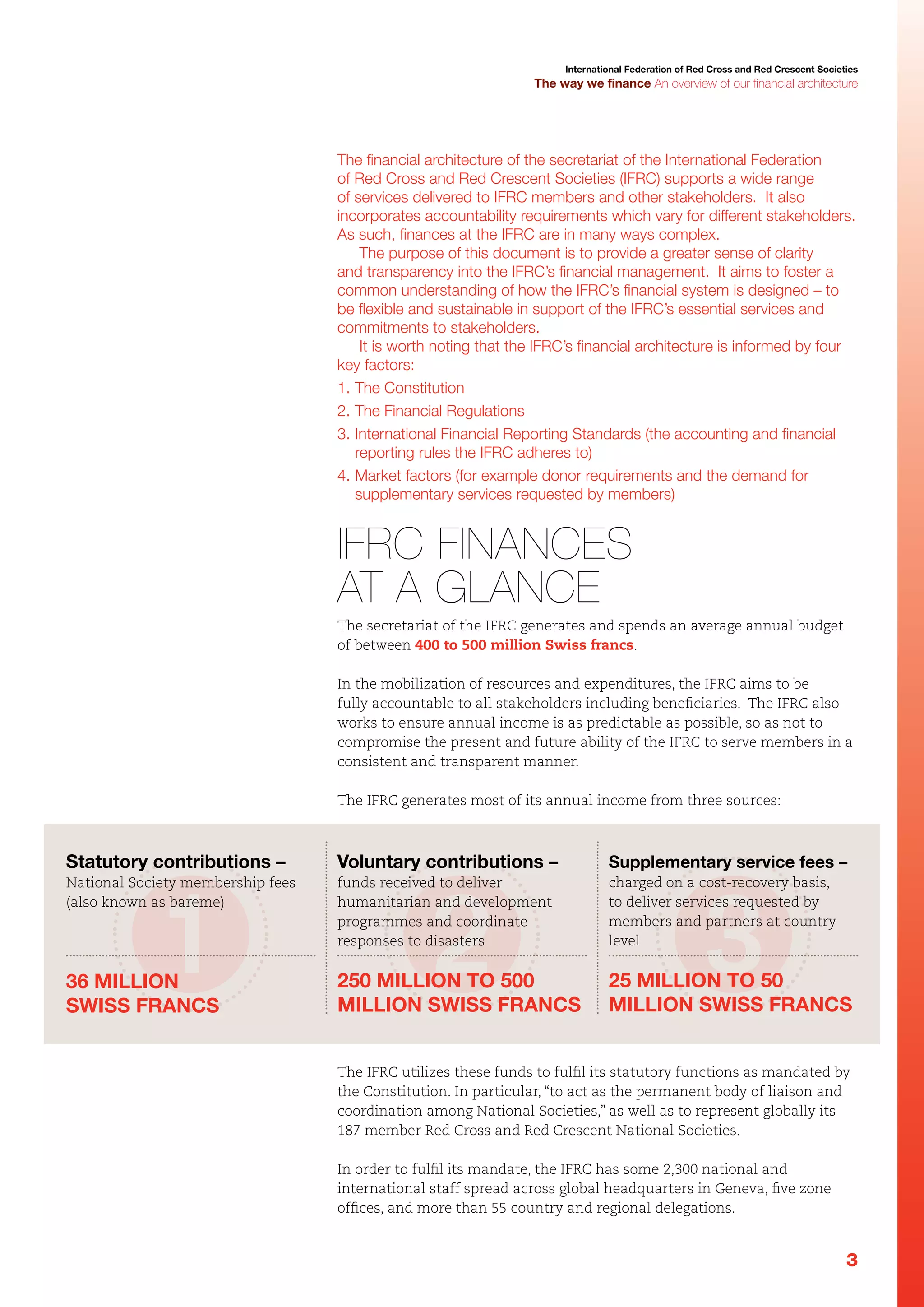
The secretariat of the IFRC generates and spends an average annual budget
of between 400 to 500 million Swiss francs.
In the mobilization of resources and expenditures, the IFRC aims to be
fully accountable to all stakeholders including beneficiaries. The IFRC also
works to ensure annual income is as predictable as possible, so as not to
compromise the present and future ability of the IFRC to serve members in a
consistent and transparent manner.
The IFRC generates most of its annual income from three sources:

Statutory contributions –

Voluntary contributions –

Supplementary service fees –

National Society membership fees
(also known as bareme)

funds received to deliver
humanitarian and development
programmes and coordinate
responses to disasters

charged on a cost-recovery basis,
to deliver services requested by
members and partners at country
level

36 million
Swiss francs

250 million to 500
million Swiss francs

25 million to 50
million Swiss francs

The IFRC utilizes these funds to fulfil its statutory functions as mandated by
the Constitution. In particular, “to act as the permanent body of liaison and
coordination among National Societies,” as well as to represent globally its
187 member Red Cross and Red Crescent National Societies.
In order to fulfil its mandate, the IFRC has some 2,300 national and
international staff spread across global headquarters in Geneva, five zone
offices, and more than 55 country and regional delegations.

3
International Federation of Red Cross and Red Crescent Societies

The way we finance An overview of our financial architecture

Statutory contributions
Voluntary comtributions
Supplementary services fees
Finance and sundry income

600

CHF million

500
400
300
200
100
0
2006

2007

2008

2009

2010

2011

2012

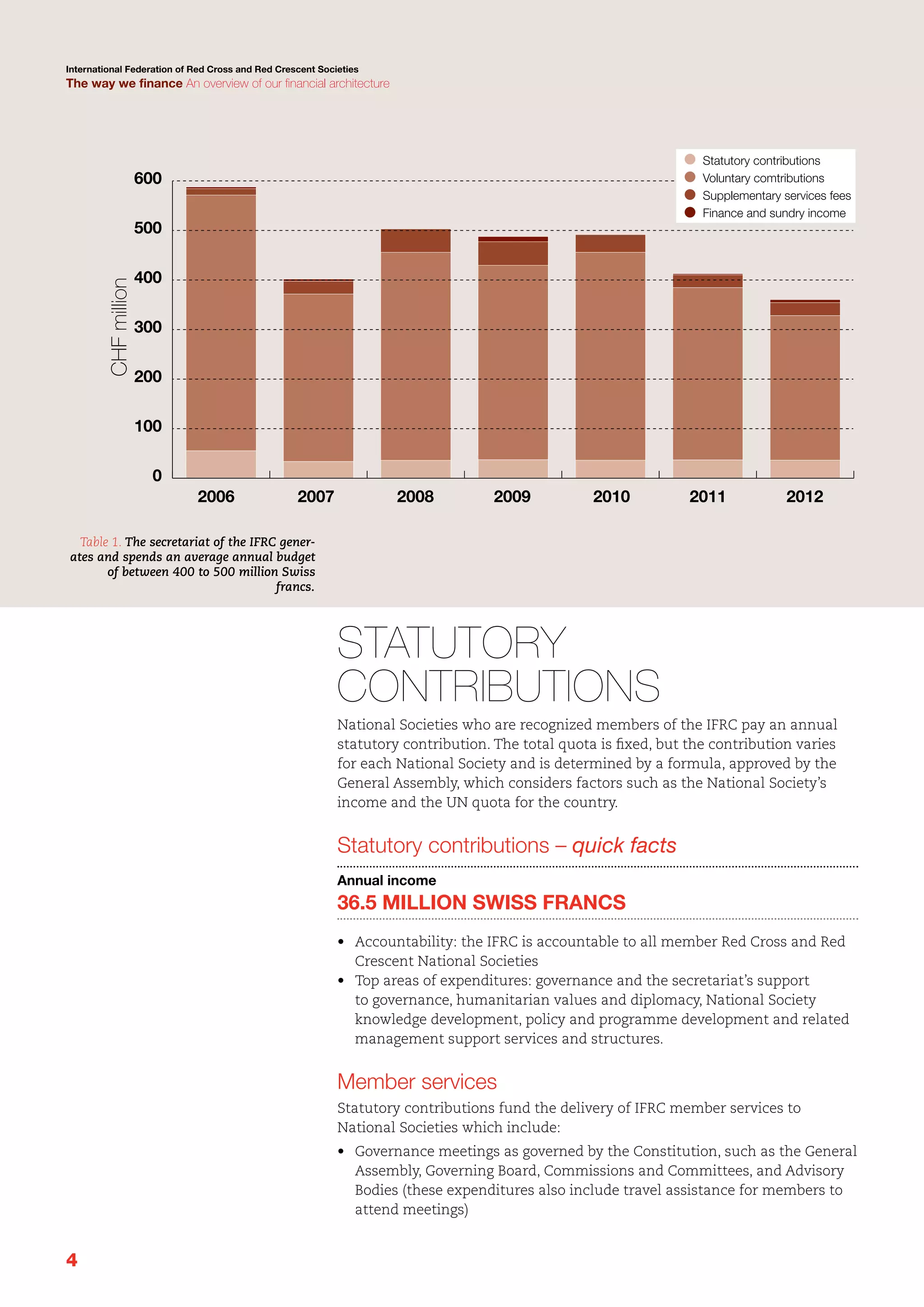
Table 1. The secretariat of the IFRC generates and spends an average annual budget
of between 400 to 500 million Swiss
francs.

Statutory
contributions
National Societies who are recognized members of the IFRC pay an annual
statutory contribution. The total quota is fixed, but the contribution varies
for each National Society and is determined by a formula, approved by the
General Assembly, which considers factors such as the National Society’s
income and the UN quota for the country.

Statutory contributions – quick facts
Annual income

36.5 million Swiss francs
•	 Accountability: the IFRC is accountable to all member Red Cross and Red
Crescent National Societies
•	 Top areas of expenditures: governance and the secretariat’s support
to governance, humanitarian values and diplomacy, National Society
knowledge development, policy and programme development and related
management support services and structures.

Member services
Statutory contributions fund the delivery of IFRC member services to
National Societies which include:
•	 Governance meetings as governed by the Constitution, such as the General
Assembly, Governing Board, Commissions and Committees, and Advisory
Bodies (these expenditures also include travel assistance for members to
attend meetings)

4
International Federation of Red Cross and Red Crescent Societies

The way we finance An overview of our financial architecture

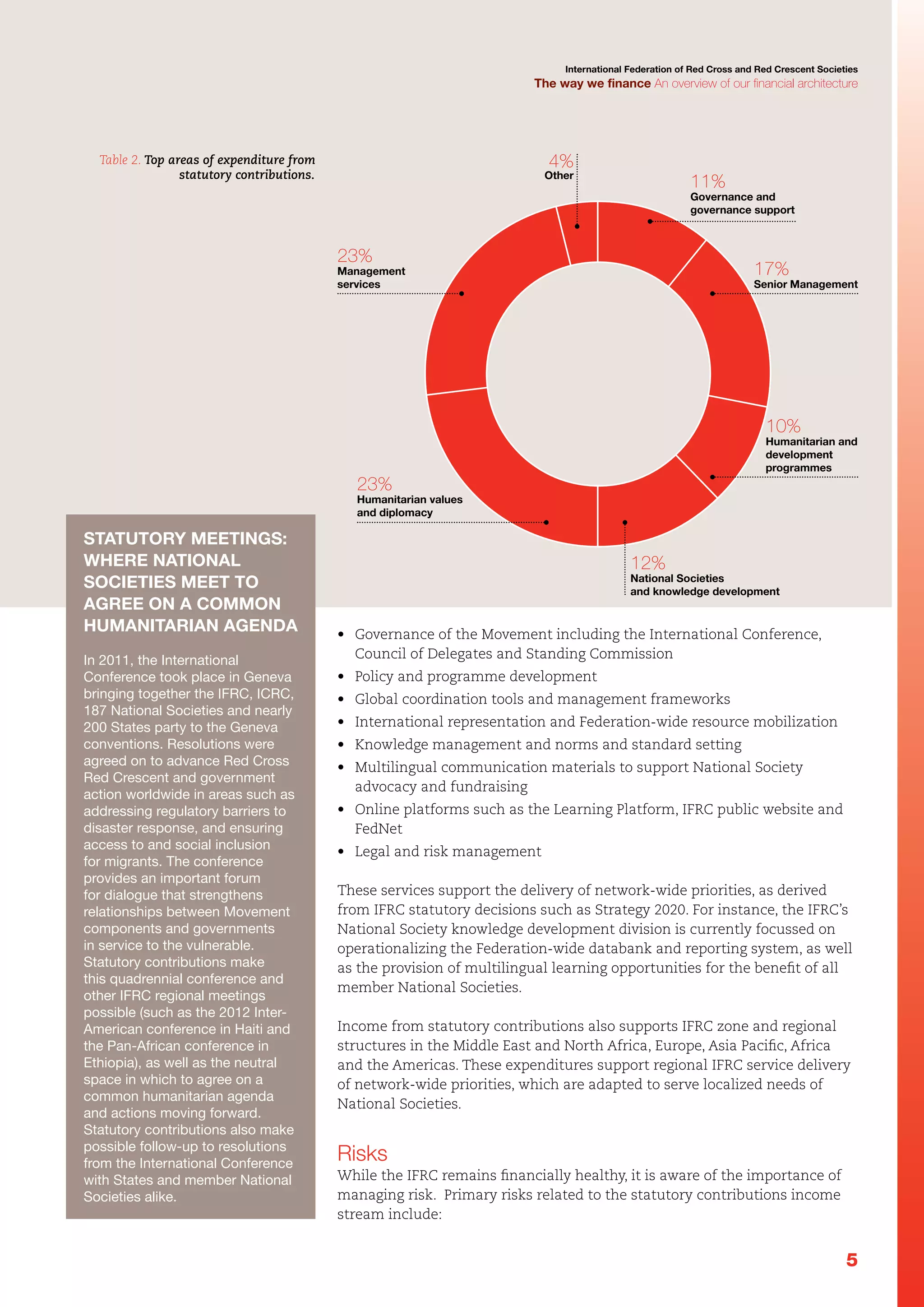
4%

Table 2. Top areas of expenditure from
statutory contributions.

Other

11%

Governance and
governance support

23%

17%

Management
services

Senior Management

10%

Humanitarian and
development
programmes

23%

Humanitarian values
and diplomacy

Statutory meetings:
where National
Societies meet to
agree on a common
humanitarian agenda
In 2011, the International
Conference took place in Geneva
bringing together the IFRC, ICRC,
187 National Societies and nearly
200 States party to the Geneva
conventions. Resolutions were
agreed on to advance Red Cross
Red Crescent and government
action worldwide in areas such as
addressing regulatory barriers to
disaster response, and ensuring
access to and social inclusion
for migrants. The conference
provides an important forum
for dialogue that strengthens
relationships between Movement
components and governments
in service to the vulnerable.
Statutory contributions make
this quadrennial conference and
other IFRC regional meetings
possible (such as the 2012 InterAmerican conference in Haiti and
the Pan-African conference in
Ethiopia), as well as the neutral
space in which to agree on a
common humanitarian agenda
and actions moving forward.
Statutory contributions also make
possible follow-up to resolutions
from the International Conference
with States and member National
Societies alike.

12%

National Societies
and knowledge development

•	 Governance of the Movement including the International Conference,
Council of Delegates and Standing Commission
•	 Policy and programme development
•	 Global coordination tools and management frameworks
•	 International representation and Federation-wide resource mobilization
•	 Knowledge management and norms and standard setting
•	 Multilingual communication materials to support National Society
advocacy and fundraising
•	 Online platforms such as the Learning Platform, IFRC public website and
FedNet
•	 Legal and risk management
These services support the delivery of network-wide priorities, as derived
from IFRC statutory decisions such as Strategy 2020. For instance, the IFRC’s
National Society knowledge development division is currently focussed on
operationalizing the Federation-wide databank and reporting system, as well
as the provision of multilingual learning opportunities for the benefit of all
member National Societies.
Income from statutory contributions also supports IFRC zone and regional
structures in the Middle East and North Africa, Europe, Asia Pacific, Africa
and the Americas. These expenditures support regional IFRC service delivery
of network-wide priorities, which are adapted to serve localized needs of
National Societies.

Risks
While the IFRC remains financially healthy, it is aware of the importance of
managing risk. Primary risks related to the statutory contributions income
stream include:

5
International Federation of Red Cross and Red Crescent Societies

The way we finance An overview of our financial architecture

•	 National Societies not being able to pay or being late in payment of their
membership fees, particularly in light of the economic and financial crisis
affecting some members; and
•	 Services provided to and on behalf of members by the IFRC secretariat
being perceived as having low or no value.

Voluntary
contributions
Voluntary contributions are funds the IFRC receives to deliver humanitarian
and development programmes, and coordinate responses to disasters.
Voluntary contributions represent the largest source of income to the IFRC.

Disaster response
in Haiti
When a devastating earthquake
struck Haiti in 2010, donors
worldwide bestowed more
than one billion Swiss francs to
the Red Cross Red Crescent
network to support response
needs and long-term recovery. By
coordinating with more than 130
contributing National Societies,
the IFRC was able to provide
life-saving supplies, technical
expertise to address multi-faceted
needs such as health and shelter,
and a Federation-wide reporting
system to ensure accountability at
all levels throughout this multiyear response which will continue
to 2015. Operational resources
beyond the existing infrastructure
at the Haitian Red Cross and the
IFRC secretariat were required
to implement these far-reaching
and life-saving programmes.
Voluntary contributions made it
possible for the IFRC to scale-up
required support to coordinate
and implement this largest-ever
Federation-wide response.

Voluntary contributions – quick facts
Annual average income

250 million to 500 million Swiss francs
•	 Accountability: the IFRC is accountable to recipient National Societies,
partner National Societies, donors (i.e., governments/back donors,
development agencies, corporations) and beneficiaries
•	 Top areas of expenditures: coordination of international disaster relief
operations, disaster risk reduction, health and social development-related
activities, customized technical support to National Society programmes
including capacity building and organizational development, as well as
Shelter Cluster coordination

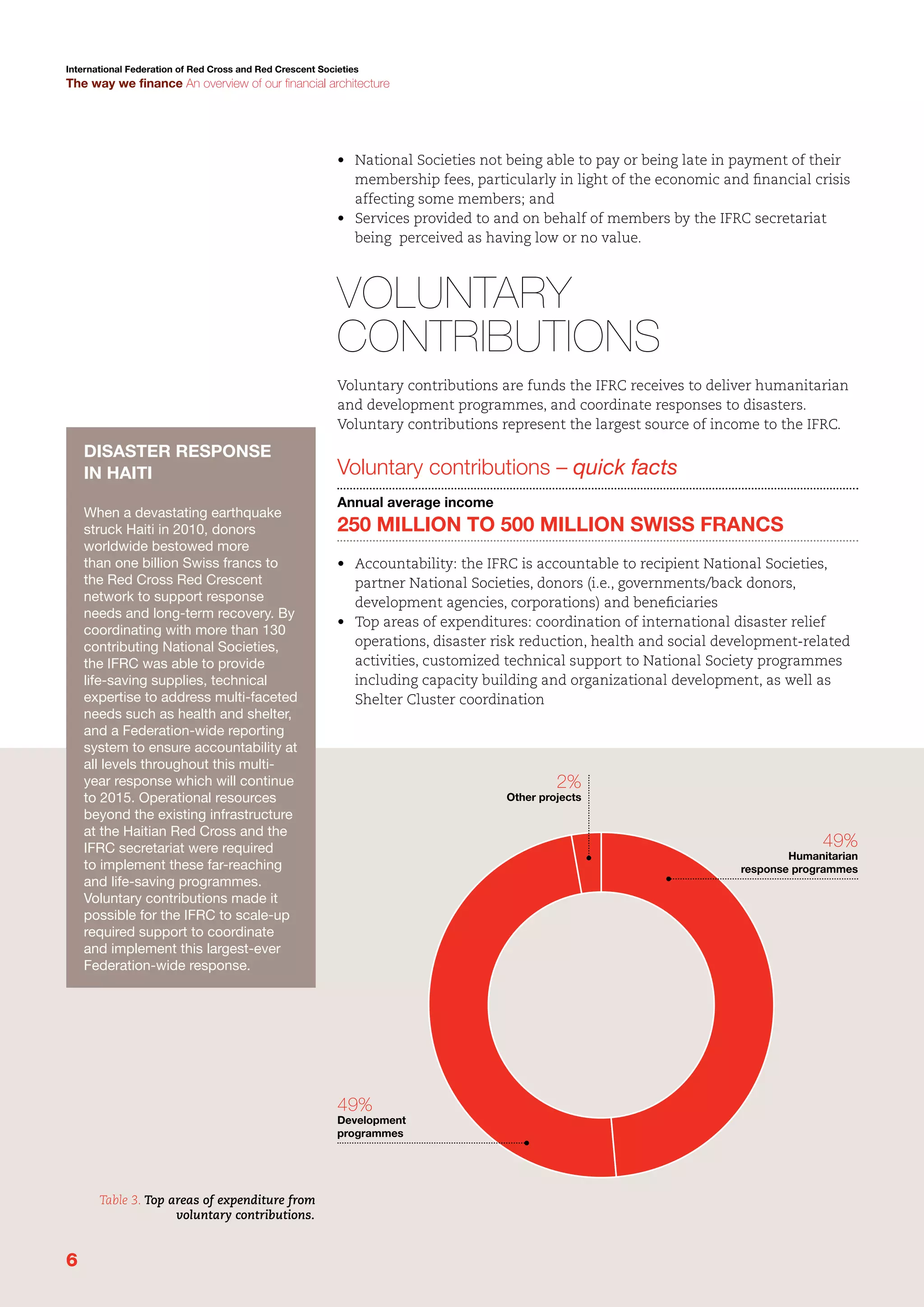
2%

Other projects

49%

Humanitarian
response programmes

49%

Development
programmes

Table 3. Top areas of expenditure from
voluntary contributions.

6
International Federation of Red Cross and Red Crescent Societies

The way we finance An overview of our financial architecture

Capacity building
programme in
Burundi
Ethnic violence, poor health
care, food insecurity: these
are all factors that contributed
to a fragmented society and
equally fragmented Red Cross
in Burundi. By 2002, nearly all
Red Cross staff positions were
lost and projects collapsed.
2004 was a turning point: new
governing members and a new
secretary general were elected.
In 2005, the first democratically
constituted General Assembly
took place. The Burundi Red
Cross (BRC) was rejuvenated
with four paid staff nationally
but no local staff or volunteers.
Through voluntary contributions,
the IFRC allocated 300,000 Swiss
francs to support the BRC in its
capacity building in grassroots
communities. Leadership training,
financial accountability and
quality assurance were just some
aspects of the change process.
A pilot project was launched
to create community volunteer
units in two branches. Today Red
Cross volunteer units – more than
300,000 volunteers across the
country – deliver local services
in 98 per cent of the country’s
communities.
In addition to voluntary
contributions earmarked
to programmes, the IFRC
receives approximately 4 million
Swiss francs of unearmarked
contributions annually which it
also uses to deliver humanitarian
and development programmes, as
well as coordinate responses to
disasters.

The amount of voluntary contributions the IFRC receives varies from year-toyear depending on the number of emergency appeals launched at the request
of National Societies, donor response rates and the scope of secretariat
support required for long-term programme delivery, particularly in the areas
of health and social services. Voluntary contributions are earmarked to
support specific National Society programmes and enable the secretariat to
deliver country level support.

Programme overhead
For each programme funded by voluntary contributions, indirect expenses
(i.e., overhead) are recovered by a programmes and services support recovery
(PSSR) cost comprising 6.5 per cent of the total programme budget. PSSR
covers administrative and programme support costs that the IFRC incurs
when supporting, monitoring and/or implementing a programme on
behalf of a funding partner. For example, programme quality control and
coordination, human resources, information technology, audit, finance,
communications and legal. It is worth noting that within the humanitarian
sector (United Nations, development agencies, etc.), PSSR costs are on
average 7 per cent. These services are essential to ensure efficient, effective
and accountable programme delivery. As a key accountability to donors and
beneficiaries, the secretariat caps PSSR to actual costs in the event of largescale operations to ensure it does not profit from major disasters.

Programmes – quick facts
•	
•	
•	
•	

Number of institutional donors: 150 (annual average)
Number of programmes: 1,000 programmes (annual average)
Indirect costs (PSSR): 18 million Swiss francs (annual average)
Number of staff supporting programmes recovered by PSSR: 160 staff

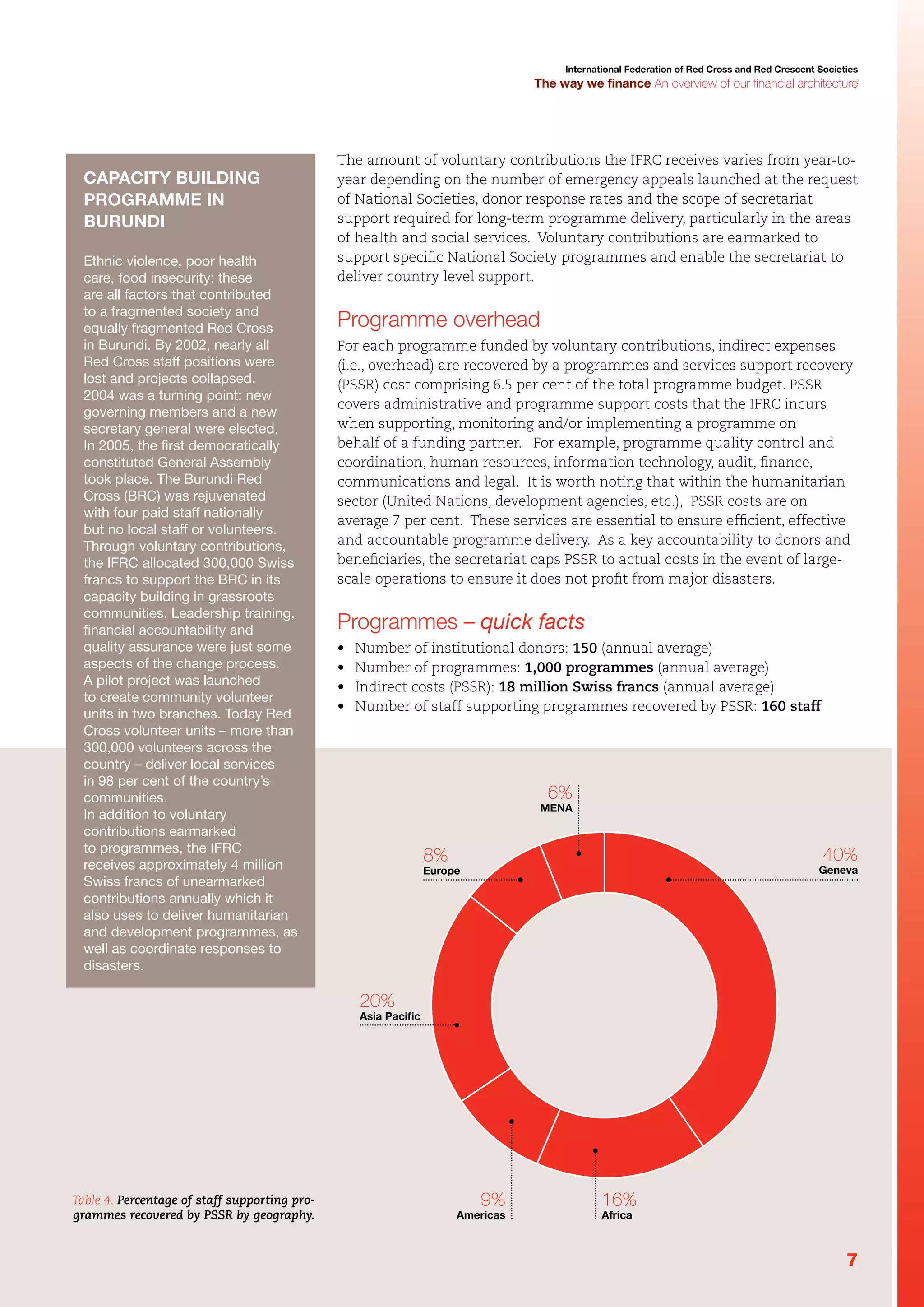
6%

MENA

40%

8%

Geneva

Europe

20%

Asia Pacific

Table 4. Percentage of staff supporting programmes recovered by PSSR by geography.

9%

Americas

16%
Africa

7
International Federation of Red Cross and Red Crescent Societies

The way we finance An overview of our financial architecture

Risks
A secure financial structure is critical to the IFRC’s sustainability and
continued capacity to deliver humanitarian and development programmes,
as well as coordinate responses to disasters. Potential risks related to the
voluntary contributions income stream include:

Competition
•	 Declining support due to increased competition from new humanitarian
actors

Donors
•	 Declining support due to economic and financial crisis
•	 Dissatisfaction due to poor implementation, reporting and/or evaluation
•	 Withdrawal due to risk of fraud

Beneficiaries
•	 Dissatisfaction with timeliness and/or appropriateness of service delivery

Members
•	 Conflicting interests resulting in resource mobilization challenges

Supplementary
service fees

Vehicle rental
programme
32 National Societies lease 420
vehicles from the IFRC’s vehicle
rental programme. Not only does
the IFRC deliver cost-savings to
National Societies because of
its lower than market rental fees,
it also provides added-value
services with every rental such
as full insurance coverage and
driver training. Recently, the IFRC
expanded its support services
to include the provision of
ambulatory vehicles. The Kenya
Red Cross leases 25 ambulatory
vehicles. The Dominican Red
Cross leases eight and plans to
expand its ambulatory fleet in
the near future. In places where
access to health is not equal,
access to ambulatory services is
vital to saving lives and enabling
personal recovery.

8

In implementing programmes or providing services, sometimes National
Societies and partners in country require supplementary services. For
example, the rental of a vehicle for National Society ambulance services or
access to shared office space so a National Society working internationally
can be immediately productive. The IFRC delivers these services and invoices
the National Society for services rendered on a full cost-recovery basis, which
include indirect costs. The IFRC does not make any profit on the service fees
charged. It is also important to note that supplementary service fees do not
affect all members of the IFRC, only National Societies who request these
additional, on-demand services.

Supplementary service fees – quick facts
Annual average income

25 to 50 million Swiss francs
•	 Accountability: the IFRC is accountable to National Societies and partners
requesting and paying for these additional, on-demand services
•	 Top areas of expenditures: vehicle fleet, procurement and warehousing,
local office and support service provision
National Societies and other partners in-country look to the IFRC to provide
these supplementary services as it is generally able to negotiate more
competitive prices with suppliers, and enjoys legal status as an International
Organization. The scope of services that partners require varies from year-toyear, depending on the scale and volume of programmes being implemented.
However, the IFRC is experiencing increased demand for supplementary
services, including from other humanitarian agencies.
International Federation of Red Cross and Red Crescent Societies

The way we finance An overview of our financial architecture

Risks
Potential risks related to the supplementary service fees income stream
include:
•	 Potential decrease in supplementary service demand due to economic and
financial crisis;
•	 Potential volatility in service costs due to changing economic
circumstances; and
•	 Insufficient capital to meet increased member demands for the vehicle
rental programme.

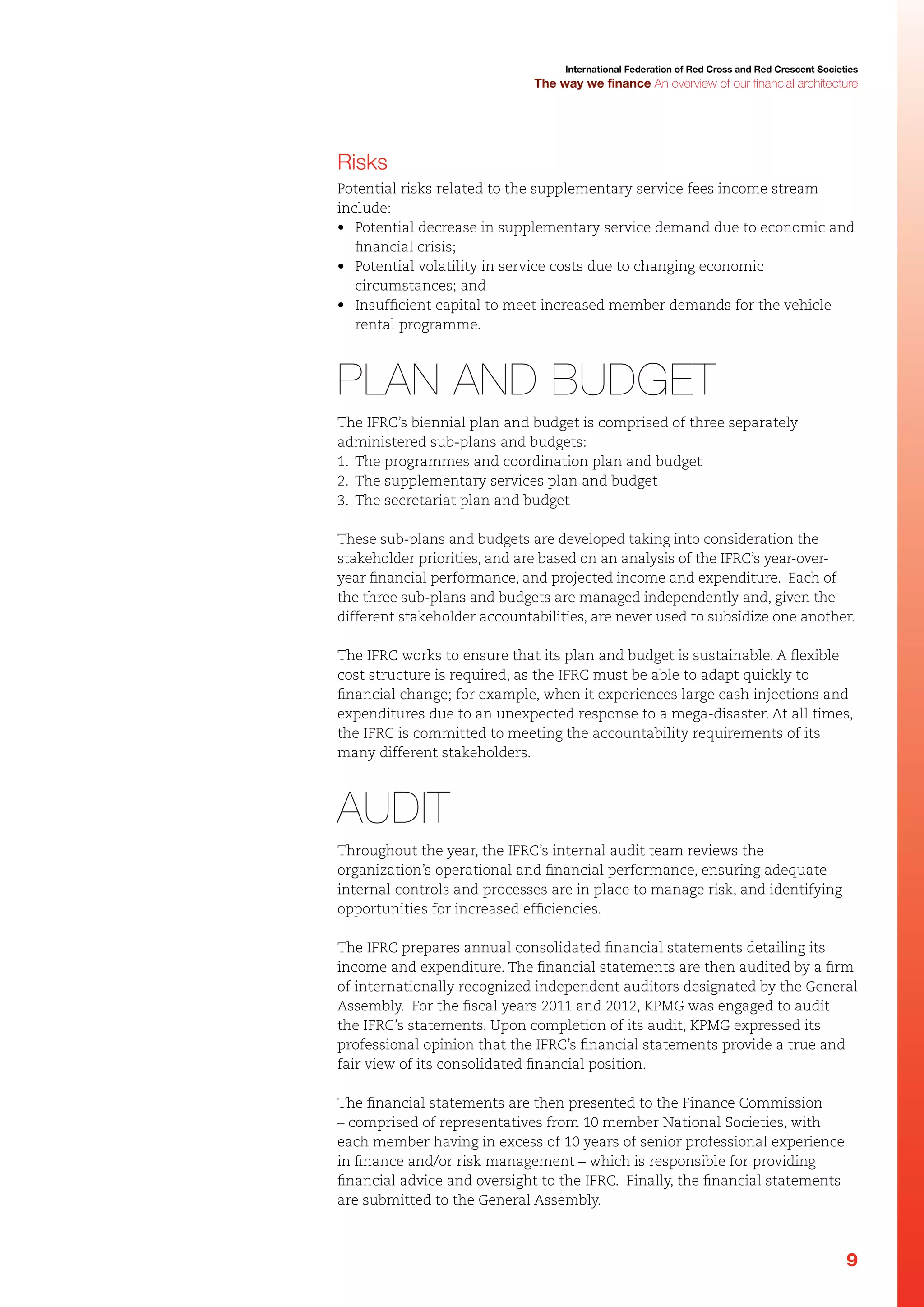
Plan and budget
The IFRC’s biennial plan and budget is comprised of three separately
administered sub-plans and budgets:
1.	 The programmes and coordination plan and budget
2.	 The supplementary services plan and budget
3.	 The secretariat plan and budget
These sub-plans and budgets are developed taking into consideration the
stakeholder priorities, and are based on an analysis of the IFRC’s year-overyear financial performance, and projected income and expenditure. Each of
the three sub-plans and budgets are managed independently and, given the
different stakeholder accountabilities, are never used to subsidize one another.
The IFRC works to ensure that its plan and budget is sustainable. A flexible
cost structure is required, as the IFRC must be able to adapt quickly to
financial change; for example, when it experiences large cash injections and
expenditures due to an unexpected response to a mega-disaster. At all times,
the IFRC is committed to meeting the accountability requirements of its
many different stakeholders.

Audit
Throughout the year, the IFRC’s internal audit team reviews the
organization’s operational and financial performance, ensuring adequate
internal controls and processes are in place to manage risk, and identifying
opportunities for increased efficiencies.
The IFRC prepares annual consolidated financial statements detailing its
income and expenditure. The financial statements are then audited by a firm
of internationally recognized independent auditors designated by the General
Assembly. For the fiscal years 2011 and 2012, KPMG was engaged to audit
the IFRC’s statements. Upon completion of its audit, KPMG expressed its
professional opinion that the IFRC’s financial statements provide a true and
fair view of its consolidated financial position.
The financial statements are then presented to the Finance Commission
– comprised of representatives from 10 member National Societies, with
each member having in excess of 10 years of senior professional experience
in finance and/or risk management – which is responsible for providing
financial advice and oversight to the IFRC. Finally, the financial statements
are submitted to the General Assembly.

9
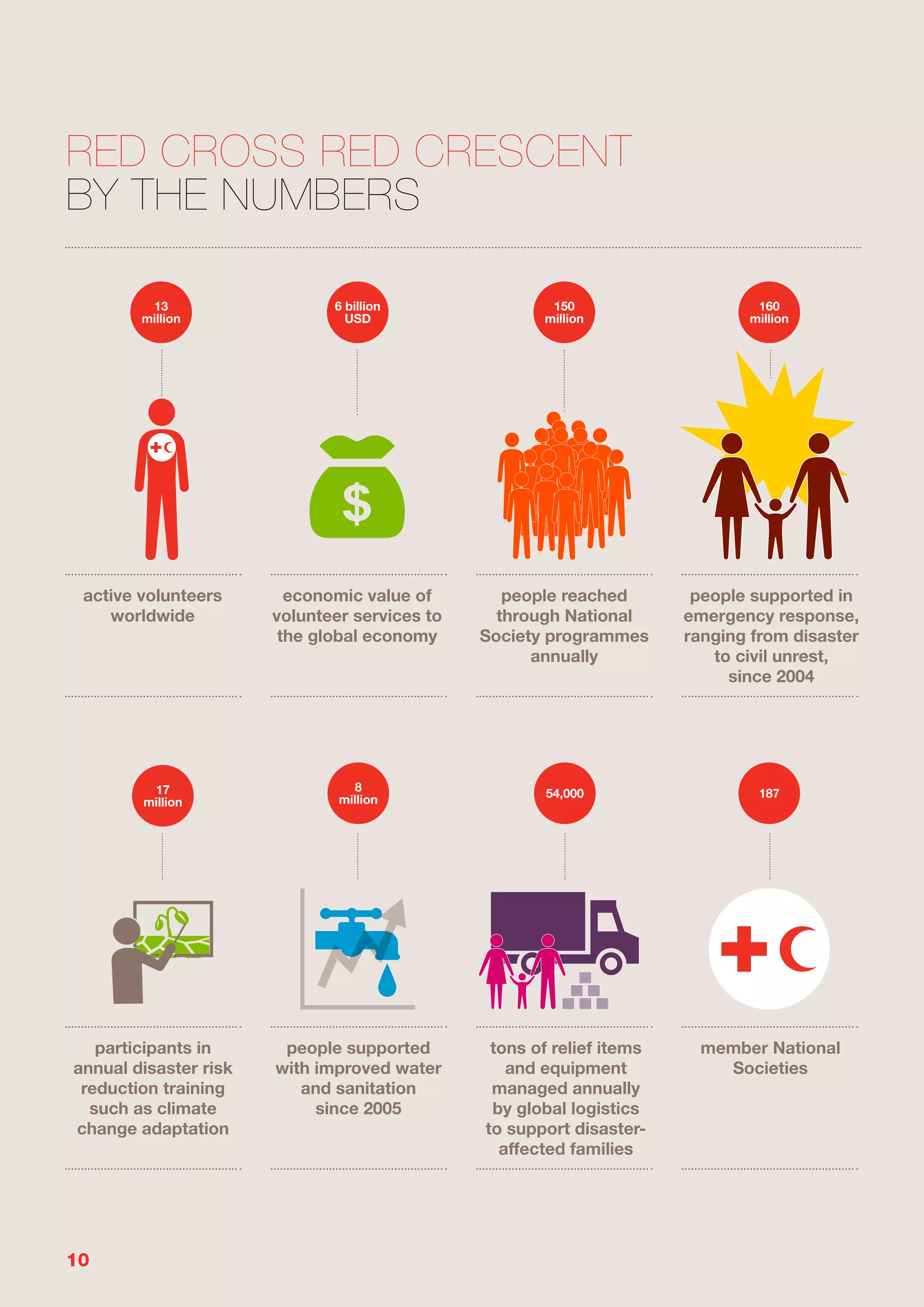
Red Cross Red Crescent
by the numbers
13
million

active volunteers
worldwide

17
million

participants in
annual disaster risk
reduction training
such as climate
change adaptation

10

6 billion
USD

150
million

160
million

economic value of
volunteer services to
the global economy

people reached
through National
Society programmes
annually

people supported in
emergency response,
ranging from disaster
to civil unrest,
since 2004

54,000

187

tons of relief items
and equipment
managed annually
by global logistics
to support disasteraffected families

member National
Societies

8
million

people supported
with improved water
and sanitation
since 2005
The Fundamental Principles of the International
Red Cross and Red Crescent Movement

Humanity The International Red Cross and Red Crescent Movement, born of a desire to bring assistance
without discrimination to the wounded on the battlefield, endeavours, in its international and national
capacity, to prevent and alleviate human suffering
wherever it may be found. Its purpose is to protect
life and health and to ensure respect for the human
being. It promotes mutual understanding, friendship,
cooperation and lasting peace amongst all peoples.

Independence The Movement is independent. The
National Societies, while auxiliaries in the humanitarian services of their governments and subject to
the laws of their respective countries, must always
maintain their autonomy so that they may be able at
all times to act in accordance with the principles of
the Movement.
Voluntary service It is a voluntary relief movement
not prompted in any manner by desire for gain.

Impartiality It makes no discrimination as to nationality, race, religious beliefs, class or political opinions.
It endeavours to relieve the suffering of individuals,
being guided solely by their needs, and to give priority to the most urgent cases of distress.

Unity There can be only one Red Cross or Red Crescent Society in any one country. It must be open to
all. It must carry on its humanitarian work throughout its territory.

Neutrality In order to enjoy the confidence of all, the
Movement may not take sides in hostilities or engage
at any time in controversies of a political, racial, religious or ideological nature.

Universality The International Red Cross and Red
Crescent Movement, in which all societies have equal
status and share equal responsibilities and duties in
helping each other, is worldwide.
For more information about the IFRC’s
financial architecture, please contact:
Andrew Rizk
Chief Financial Officer
International Federation of
Red Cross and Red Crescent Societies
Telephone: +41 22 730 4649
E-mail: andrew.rizk@ifrc.org

www.ifrc.org
Saving lives, changing minds.

Financial Model IRC

  • 1.
    International Federation ofRed Cross and Red Crescent Societies The way we finance An overview of our financial architecture International Federation of Red Cross and Red Crescent Societies The way we finance An overview of our financial architecture www.ifrc.org Saving lives, changing minds. 1
  • 2.
    The International Federationof Red Cross and Red Crescent Societies (IFRC) is the world’s largest volunteer-based humanitarian network, reaching 150 million people each year through our 187 member National Societies. Together, we act before, during and after disasters and health emergencies to meet the needs and improve the lives of vulnerable people. We do so with impartiality as to nationality, race, gender, religious beliefs, class and political opinions. Guided by Strategy 2020 – our collective plan of action to tackle the major humanitarian and development challenges of this decade – we are committed to ‘saving lives and changing minds’. Our strength lies in our volunteer network, our communitybased expertise and our independence and neutrality. We work to improve humanitarian standards, as partners in development and in response to disasters. We persuade decision-makers to act at all times in the interests of vulnerable people. The result: we enable healthy and safe communities, reduce vulnerabilities, strengthen resilience and foster a culture of peace around the world. © International Federation of Red Cross and Red Crescent Societies, Geneva, 2013 Any part of this publication may be cited, copied, translated into other languages or adapted to meet local needs without prior permission from the International Federation of Red Cross and Red Crescent Societies, provided that the source is clearly stated. Requests for commercial reproduction should be directed to the IFRC Secretariat at secretariat@ifrc.org P.O. Box 303 CH-1211 Geneva 19 Switzerland Telephone: +41 22 730 4222 Telefax: +41 22 733 0395 E-mail: secretariat@ifrc.org Web site: www.ifrc.org All photos used in this study are copyright of the IFRC unless otherwise indicated. 1264300 The Way We Finance 09/2013 E Follow us:
  • 3.
    International Federation ofRed Cross and Red Crescent Societies The way we finance An overview of our financial architecture The financial architecture of the secretariat of the International Federation of Red Cross and Red Crescent Societies (IFRC) supports a wide range of services delivered to IFRC members and other stakeholders. It also incorporates accountability requirements which vary for different stakeholders. As such, finances at the IFRC are in many ways complex. The purpose of this document is to provide a greater sense of clarity and transparency into the IFRC’s financial management. It aims to foster a common understanding of how the IFRC’s financial system is designed – to be flexible and sustainable in support of the IFRC’s essential services and commitments to stakeholders. It is worth noting that the IFRC’s financial architecture is informed by four key factors: 1. The Constitution 2. The Financial Regulations 3. International Financial Reporting Standards (the accounting and financial reporting rules the IFRC adheres to) 4. Market factors (for example donor requirements and the demand for supplementary services requested by members) IFRC finances at a glance The secretariat of the IFRC generates and spends an average annual budget of between 400 to 500 million Swiss francs. In the mobilization of resources and expenditures, the IFRC aims to be fully accountable to all stakeholders including beneficiaries. The IFRC also works to ensure annual income is as predictable as possible, so as not to compromise the present and future ability of the IFRC to serve members in a consistent and transparent manner. The IFRC generates most of its annual income from three sources: Statutory contributions – Voluntary contributions – Supplementary service fees – National Society membership fees (also known as bareme) funds received to deliver humanitarian and development programmes and coordinate responses to disasters charged on a cost-recovery basis, to deliver services requested by members and partners at country level 36 million Swiss francs 250 million to 500 million Swiss francs 25 million to 50 million Swiss francs The IFRC utilizes these funds to fulfil its statutory functions as mandated by the Constitution. In particular, “to act as the permanent body of liaison and coordination among National Societies,” as well as to represent globally its 187 member Red Cross and Red Crescent National Societies. In order to fulfil its mandate, the IFRC has some 2,300 national and international staff spread across global headquarters in Geneva, five zone offices, and more than 55 country and regional delegations. 3
  • 4.
    International Federation ofRed Cross and Red Crescent Societies The way we finance An overview of our financial architecture Statutory contributions Voluntary comtributions Supplementary services fees Finance and sundry income 600 CHF million 500 400 300 200 100 0 2006 2007 2008 2009 2010 2011 2012 Table 1. The secretariat of the IFRC generates and spends an average annual budget of between 400 to 500 million Swiss francs. Statutory contributions National Societies who are recognized members of the IFRC pay an annual statutory contribution. The total quota is fixed, but the contribution varies for each National Society and is determined by a formula, approved by the General Assembly, which considers factors such as the National Society’s income and the UN quota for the country. Statutory contributions – quick facts Annual income 36.5 million Swiss francs • Accountability: the IFRC is accountable to all member Red Cross and Red Crescent National Societies • Top areas of expenditures: governance and the secretariat’s support to governance, humanitarian values and diplomacy, National Society knowledge development, policy and programme development and related management support services and structures. Member services Statutory contributions fund the delivery of IFRC member services to National Societies which include: • Governance meetings as governed by the Constitution, such as the General Assembly, Governing Board, Commissions and Committees, and Advisory Bodies (these expenditures also include travel assistance for members to attend meetings) 4
  • 5.
    International Federation ofRed Cross and Red Crescent Societies The way we finance An overview of our financial architecture 4% Table 2. Top areas of expenditure from statutory contributions. Other 11% Governance and governance support 23% 17% Management services Senior Management 10% Humanitarian and development programmes 23% Humanitarian values and diplomacy Statutory meetings: where National Societies meet to agree on a common humanitarian agenda In 2011, the International Conference took place in Geneva bringing together the IFRC, ICRC, 187 National Societies and nearly 200 States party to the Geneva conventions. Resolutions were agreed on to advance Red Cross Red Crescent and government action worldwide in areas such as addressing regulatory barriers to disaster response, and ensuring access to and social inclusion for migrants. The conference provides an important forum for dialogue that strengthens relationships between Movement components and governments in service to the vulnerable. Statutory contributions make this quadrennial conference and other IFRC regional meetings possible (such as the 2012 InterAmerican conference in Haiti and the Pan-African conference in Ethiopia), as well as the neutral space in which to agree on a common humanitarian agenda and actions moving forward. Statutory contributions also make possible follow-up to resolutions from the International Conference with States and member National Societies alike. 12% National Societies and knowledge development • Governance of the Movement including the International Conference, Council of Delegates and Standing Commission • Policy and programme development • Global coordination tools and management frameworks • International representation and Federation-wide resource mobilization • Knowledge management and norms and standard setting • Multilingual communication materials to support National Society advocacy and fundraising • Online platforms such as the Learning Platform, IFRC public website and FedNet • Legal and risk management These services support the delivery of network-wide priorities, as derived from IFRC statutory decisions such as Strategy 2020. For instance, the IFRC’s National Society knowledge development division is currently focussed on operationalizing the Federation-wide databank and reporting system, as well as the provision of multilingual learning opportunities for the benefit of all member National Societies. Income from statutory contributions also supports IFRC zone and regional structures in the Middle East and North Africa, Europe, Asia Pacific, Africa and the Americas. These expenditures support regional IFRC service delivery of network-wide priorities, which are adapted to serve localized needs of National Societies. Risks While the IFRC remains financially healthy, it is aware of the importance of managing risk. Primary risks related to the statutory contributions income stream include: 5
  • 6.
    International Federation ofRed Cross and Red Crescent Societies The way we finance An overview of our financial architecture • National Societies not being able to pay or being late in payment of their membership fees, particularly in light of the economic and financial crisis affecting some members; and • Services provided to and on behalf of members by the IFRC secretariat being perceived as having low or no value. Voluntary contributions Voluntary contributions are funds the IFRC receives to deliver humanitarian and development programmes, and coordinate responses to disasters. Voluntary contributions represent the largest source of income to the IFRC. Disaster response in Haiti When a devastating earthquake struck Haiti in 2010, donors worldwide bestowed more than one billion Swiss francs to the Red Cross Red Crescent network to support response needs and long-term recovery. By coordinating with more than 130 contributing National Societies, the IFRC was able to provide life-saving supplies, technical expertise to address multi-faceted needs such as health and shelter, and a Federation-wide reporting system to ensure accountability at all levels throughout this multiyear response which will continue to 2015. Operational resources beyond the existing infrastructure at the Haitian Red Cross and the IFRC secretariat were required to implement these far-reaching and life-saving programmes. Voluntary contributions made it possible for the IFRC to scale-up required support to coordinate and implement this largest-ever Federation-wide response. Voluntary contributions – quick facts Annual average income 250 million to 500 million Swiss francs • Accountability: the IFRC is accountable to recipient National Societies, partner National Societies, donors (i.e., governments/back donors, development agencies, corporations) and beneficiaries • Top areas of expenditures: coordination of international disaster relief operations, disaster risk reduction, health and social development-related activities, customized technical support to National Society programmes including capacity building and organizational development, as well as Shelter Cluster coordination 2% Other projects 49% Humanitarian response programmes 49% Development programmes Table 3. Top areas of expenditure from voluntary contributions. 6
  • 7.
    International Federation ofRed Cross and Red Crescent Societies The way we finance An overview of our financial architecture Capacity building programme in Burundi Ethnic violence, poor health care, food insecurity: these are all factors that contributed to a fragmented society and equally fragmented Red Cross in Burundi. By 2002, nearly all Red Cross staff positions were lost and projects collapsed. 2004 was a turning point: new governing members and a new secretary general were elected. In 2005, the first democratically constituted General Assembly took place. The Burundi Red Cross (BRC) was rejuvenated with four paid staff nationally but no local staff or volunteers. Through voluntary contributions, the IFRC allocated 300,000 Swiss francs to support the BRC in its capacity building in grassroots communities. Leadership training, financial accountability and quality assurance were just some aspects of the change process. A pilot project was launched to create community volunteer units in two branches. Today Red Cross volunteer units – more than 300,000 volunteers across the country – deliver local services in 98 per cent of the country’s communities. In addition to voluntary contributions earmarked to programmes, the IFRC receives approximately 4 million Swiss francs of unearmarked contributions annually which it also uses to deliver humanitarian and development programmes, as well as coordinate responses to disasters. The amount of voluntary contributions the IFRC receives varies from year-toyear depending on the number of emergency appeals launched at the request of National Societies, donor response rates and the scope of secretariat support required for long-term programme delivery, particularly in the areas of health and social services. Voluntary contributions are earmarked to support specific National Society programmes and enable the secretariat to deliver country level support. Programme overhead For each programme funded by voluntary contributions, indirect expenses (i.e., overhead) are recovered by a programmes and services support recovery (PSSR) cost comprising 6.5 per cent of the total programme budget. PSSR covers administrative and programme support costs that the IFRC incurs when supporting, monitoring and/or implementing a programme on behalf of a funding partner. For example, programme quality control and coordination, human resources, information technology, audit, finance, communications and legal. It is worth noting that within the humanitarian sector (United Nations, development agencies, etc.), PSSR costs are on average 7 per cent. These services are essential to ensure efficient, effective and accountable programme delivery. As a key accountability to donors and beneficiaries, the secretariat caps PSSR to actual costs in the event of largescale operations to ensure it does not profit from major disasters. Programmes – quick facts • • • • Number of institutional donors: 150 (annual average) Number of programmes: 1,000 programmes (annual average) Indirect costs (PSSR): 18 million Swiss francs (annual average) Number of staff supporting programmes recovered by PSSR: 160 staff 6% MENA 40% 8% Geneva Europe 20% Asia Pacific Table 4. Percentage of staff supporting programmes recovered by PSSR by geography. 9% Americas 16% Africa 7
  • 8.
    International Federation ofRed Cross and Red Crescent Societies The way we finance An overview of our financial architecture Risks A secure financial structure is critical to the IFRC’s sustainability and continued capacity to deliver humanitarian and development programmes, as well as coordinate responses to disasters. Potential risks related to the voluntary contributions income stream include: Competition • Declining support due to increased competition from new humanitarian actors Donors • Declining support due to economic and financial crisis • Dissatisfaction due to poor implementation, reporting and/or evaluation • Withdrawal due to risk of fraud Beneficiaries • Dissatisfaction with timeliness and/or appropriateness of service delivery Members • Conflicting interests resulting in resource mobilization challenges Supplementary service fees Vehicle rental programme 32 National Societies lease 420 vehicles from the IFRC’s vehicle rental programme. Not only does the IFRC deliver cost-savings to National Societies because of its lower than market rental fees, it also provides added-value services with every rental such as full insurance coverage and driver training. Recently, the IFRC expanded its support services to include the provision of ambulatory vehicles. The Kenya Red Cross leases 25 ambulatory vehicles. The Dominican Red Cross leases eight and plans to expand its ambulatory fleet in the near future. In places where access to health is not equal, access to ambulatory services is vital to saving lives and enabling personal recovery. 8 In implementing programmes or providing services, sometimes National Societies and partners in country require supplementary services. For example, the rental of a vehicle for National Society ambulance services or access to shared office space so a National Society working internationally can be immediately productive. The IFRC delivers these services and invoices the National Society for services rendered on a full cost-recovery basis, which include indirect costs. The IFRC does not make any profit on the service fees charged. It is also important to note that supplementary service fees do not affect all members of the IFRC, only National Societies who request these additional, on-demand services. Supplementary service fees – quick facts Annual average income 25 to 50 million Swiss francs • Accountability: the IFRC is accountable to National Societies and partners requesting and paying for these additional, on-demand services • Top areas of expenditures: vehicle fleet, procurement and warehousing, local office and support service provision National Societies and other partners in-country look to the IFRC to provide these supplementary services as it is generally able to negotiate more competitive prices with suppliers, and enjoys legal status as an International Organization. The scope of services that partners require varies from year-toyear, depending on the scale and volume of programmes being implemented. However, the IFRC is experiencing increased demand for supplementary services, including from other humanitarian agencies.
  • 9.
    International Federation ofRed Cross and Red Crescent Societies The way we finance An overview of our financial architecture Risks Potential risks related to the supplementary service fees income stream include: • Potential decrease in supplementary service demand due to economic and financial crisis; • Potential volatility in service costs due to changing economic circumstances; and • Insufficient capital to meet increased member demands for the vehicle rental programme. Plan and budget The IFRC’s biennial plan and budget is comprised of three separately administered sub-plans and budgets: 1. The programmes and coordination plan and budget 2. The supplementary services plan and budget 3. The secretariat plan and budget These sub-plans and budgets are developed taking into consideration the stakeholder priorities, and are based on an analysis of the IFRC’s year-overyear financial performance, and projected income and expenditure. Each of the three sub-plans and budgets are managed independently and, given the different stakeholder accountabilities, are never used to subsidize one another. The IFRC works to ensure that its plan and budget is sustainable. A flexible cost structure is required, as the IFRC must be able to adapt quickly to financial change; for example, when it experiences large cash injections and expenditures due to an unexpected response to a mega-disaster. At all times, the IFRC is committed to meeting the accountability requirements of its many different stakeholders. Audit Throughout the year, the IFRC’s internal audit team reviews the organization’s operational and financial performance, ensuring adequate internal controls and processes are in place to manage risk, and identifying opportunities for increased efficiencies. The IFRC prepares annual consolidated financial statements detailing its income and expenditure. The financial statements are then audited by a firm of internationally recognized independent auditors designated by the General Assembly. For the fiscal years 2011 and 2012, KPMG was engaged to audit the IFRC’s statements. Upon completion of its audit, KPMG expressed its professional opinion that the IFRC’s financial statements provide a true and fair view of its consolidated financial position. The financial statements are then presented to the Finance Commission – comprised of representatives from 10 member National Societies, with each member having in excess of 10 years of senior professional experience in finance and/or risk management – which is responsible for providing financial advice and oversight to the IFRC. Finally, the financial statements are submitted to the General Assembly. 9
  • 10.
    Red Cross RedCrescent by the numbers 13 million active volunteers worldwide 17 million participants in annual disaster risk reduction training such as climate change adaptation 10 6 billion USD 150 million 160 million economic value of volunteer services to the global economy people reached through National Society programmes annually people supported in emergency response, ranging from disaster to civil unrest, since 2004 54,000 187 tons of relief items and equipment managed annually by global logistics to support disasteraffected families member National Societies 8 million people supported with improved water and sanitation since 2005
  • 11.
    The Fundamental Principlesof the International Red Cross and Red Crescent Movement Humanity The International Red Cross and Red Crescent Movement, born of a desire to bring assistance without discrimination to the wounded on the battlefield, endeavours, in its international and national capacity, to prevent and alleviate human suffering wherever it may be found. Its purpose is to protect life and health and to ensure respect for the human being. It promotes mutual understanding, friendship, cooperation and lasting peace amongst all peoples. Independence The Movement is independent. The National Societies, while auxiliaries in the humanitarian services of their governments and subject to the laws of their respective countries, must always maintain their autonomy so that they may be able at all times to act in accordance with the principles of the Movement. Voluntary service It is a voluntary relief movement not prompted in any manner by desire for gain. Impartiality It makes no discrimination as to nationality, race, religious beliefs, class or political opinions. It endeavours to relieve the suffering of individuals, being guided solely by their needs, and to give priority to the most urgent cases of distress. Unity There can be only one Red Cross or Red Crescent Society in any one country. It must be open to all. It must carry on its humanitarian work throughout its territory. Neutrality In order to enjoy the confidence of all, the Movement may not take sides in hostilities or engage at any time in controversies of a political, racial, religious or ideological nature. Universality The International Red Cross and Red Crescent Movement, in which all societies have equal status and share equal responsibilities and duties in helping each other, is worldwide.
  • 12.
    For more informationabout the IFRC’s financial architecture, please contact: Andrew Rizk Chief Financial Officer International Federation of Red Cross and Red Crescent Societies Telephone: +41 22 730 4649 E-mail: andrew.rizk@ifrc.org www.ifrc.org Saving lives, changing minds.