Financial Independence
A Brief Introduction to Financial Independence and Ways You
Can Achieve It!
Financial Independence
• Why Become Financially Independent?
• Financial Freedom: more choice on how to spend your money
• Employment Freedom and Job Freedom
• Reduction of Stress and Healthier Lifestyle
• More Time To Pursue What You Love
• Become a Humanitarian!
• Retire!
Employment Independence
• Financial Independence leads to Employment Independence
• You can choose the job that you want!
• You can choose a more fulfilling job!
• You can work more on solving humanity’s problems!
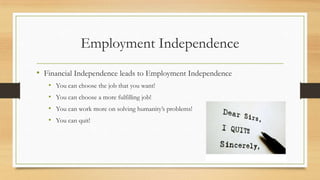
• You can quit!
Retirement
• Financial Independence contributes to your ability to pursue retirement how
and when you want it
• Retirement as state of mind; financial independence as state of being
• During retirement you can still work or choose whatever you wish to do.
• Financial independence grants you that ability to ease your mind to pursue what you
want
Two (Combinable) Ways For Financial
Independence
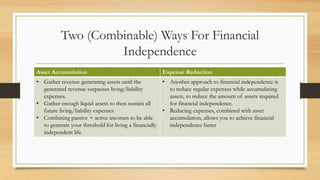
Asset Accumulation Expense Reduction
• Gather revenue generating assets until the
generated revenue surpasses living/liability
expenses.
• Gather enough liquid assets to then sustain all
future living/liability expenses
• Combining passive + active incomes to be able
to generate your threshold for living a financially
independent life
• Another approach to financial independence is
to reduce regular expenses while accumulating
assets, to reduce the amount of assets required
for financial independence.
• Reducing expenses, combined with asset
accumulation, allows you to achieve financial
independence faster
Difference between ‘active’ income and
‘passive’ income
• Active income/Earned Income
• Generated from active work/labor
• Eg Paycheck or Salary
• Active income is extremely useful if:
• You use it to purchase assets that
help generate passive income
• Using paychecks to help purchase a
rental property, for example.
• Passive income assets
• Is generated even when you are not
actively managing your assets
• EG collection of rent, stock
dividends, bonds, pensions, etc.
• Greater tax benefits
• Designed by govt to encourage
investing
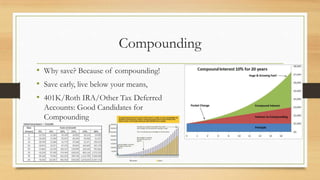
Compounding
• Why save? Because of compounding!
• Save early, live below your means,
• 401K/Roth IRA/Other Tax Deferred
Accounts: Good Candidates for
Compounding
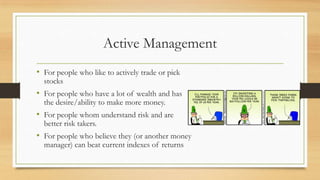
Active Management
• For people who like to actively trade or pick
stocks
• For people who have a lot of wealth and has
the desire/ability to make more money.
• For people whom understand risk and are
better risk takers.
• For people who believe they (or another money
manager) can beat current indexes of returns
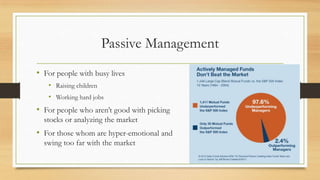
Passive Management
• For people with busy lives
• Raising children
• Working hard jobs
• For people who aren’t good with picking
stocks or analyzing the market
• For those whom are hyper-emotional and
swing too far with the market
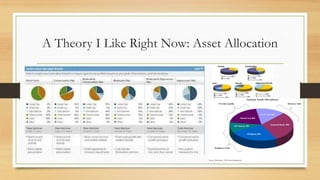
A Theory I Like Right Now: Asset Allocation
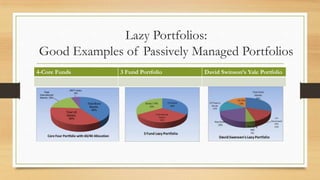
Lazy Portfolios:
Good Examples of Passively Managed Portfolios
4-Core Funds 3 Fund Portfolio David Swinson’s Yale Portfolio
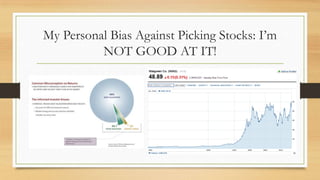
My Personal Bias Against Picking Stocks: I’m
NOT GOOD AT IT!
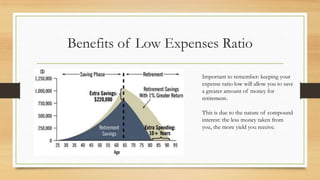
Benefits of Low Expenses Ratio
Important to remember: keeping your
expense ratio low will allow you to save
a greater amount of money for
retirement.
This is due to the nature of compound
interest: the less money taken from
you, the more yield you receive.

Financial independence

  • 1.
    Financial Independence A BriefIntroduction to Financial Independence and Ways You Can Achieve It!
  • 2.
    Financial Independence • WhyBecome Financially Independent? • Financial Freedom: more choice on how to spend your money • Employment Freedom and Job Freedom • Reduction of Stress and Healthier Lifestyle • More Time To Pursue What You Love • Become a Humanitarian! • Retire!
  • 3.
    Employment Independence • FinancialIndependence leads to Employment Independence • You can choose the job that you want! • You can choose a more fulfilling job! • You can work more on solving humanity’s problems! • You can quit!
  • 4.
    Retirement • Financial Independencecontributes to your ability to pursue retirement how and when you want it • Retirement as state of mind; financial independence as state of being • During retirement you can still work or choose whatever you wish to do. • Financial independence grants you that ability to ease your mind to pursue what you want
  • 5.
    Two (Combinable) WaysFor Financial Independence Asset Accumulation Expense Reduction • Gather revenue generating assets until the generated revenue surpasses living/liability expenses. • Gather enough liquid assets to then sustain all future living/liability expenses • Combining passive + active incomes to be able to generate your threshold for living a financially independent life • Another approach to financial independence is to reduce regular expenses while accumulating assets, to reduce the amount of assets required for financial independence. • Reducing expenses, combined with asset accumulation, allows you to achieve financial independence faster
  • 6.
    Difference between ‘active’income and ‘passive’ income • Active income/Earned Income • Generated from active work/labor • Eg Paycheck or Salary • Active income is extremely useful if: • You use it to purchase assets that help generate passive income • Using paychecks to help purchase a rental property, for example. • Passive income assets • Is generated even when you are not actively managing your assets • EG collection of rent, stock dividends, bonds, pensions, etc. • Greater tax benefits • Designed by govt to encourage investing
  • 7.
    Compounding • Why save?Because of compounding! • Save early, live below your means, • 401K/Roth IRA/Other Tax Deferred Accounts: Good Candidates for Compounding
  • 8.
    Active Management • Forpeople who like to actively trade or pick stocks • For people who have a lot of wealth and has the desire/ability to make more money. • For people whom understand risk and are better risk takers. • For people who believe they (or another money manager) can beat current indexes of returns
  • 9.
    Passive Management • Forpeople with busy lives • Raising children • Working hard jobs • For people who aren’t good with picking stocks or analyzing the market • For those whom are hyper-emotional and swing too far with the market
  • 10.
    A Theory ILike Right Now: Asset Allocation
  • 11.
    Lazy Portfolios: Good Examplesof Passively Managed Portfolios 4-Core Funds 3 Fund Portfolio David Swinson’s Yale Portfolio
  • 12.
    My Personal BiasAgainst Picking Stocks: I’m NOT GOOD AT IT!
  • 13.
    Benefits of LowExpenses Ratio Important to remember: keeping your expense ratio low will allow you to save a greater amount of money for retirement. This is due to the nature of compound interest: the less money taken from you, the more yield you receive.