A Distributed Control Law for Load
Balancing in Content Delivery Networks
Presented by:
C.Keerthi
11211F0012
MCA
Under the guidance of:
Mr.D.B.Jagannadha Rao
( Associate professor)
Abstract
Introduction
Existing & Proposed Systems
Software Requirement Specification
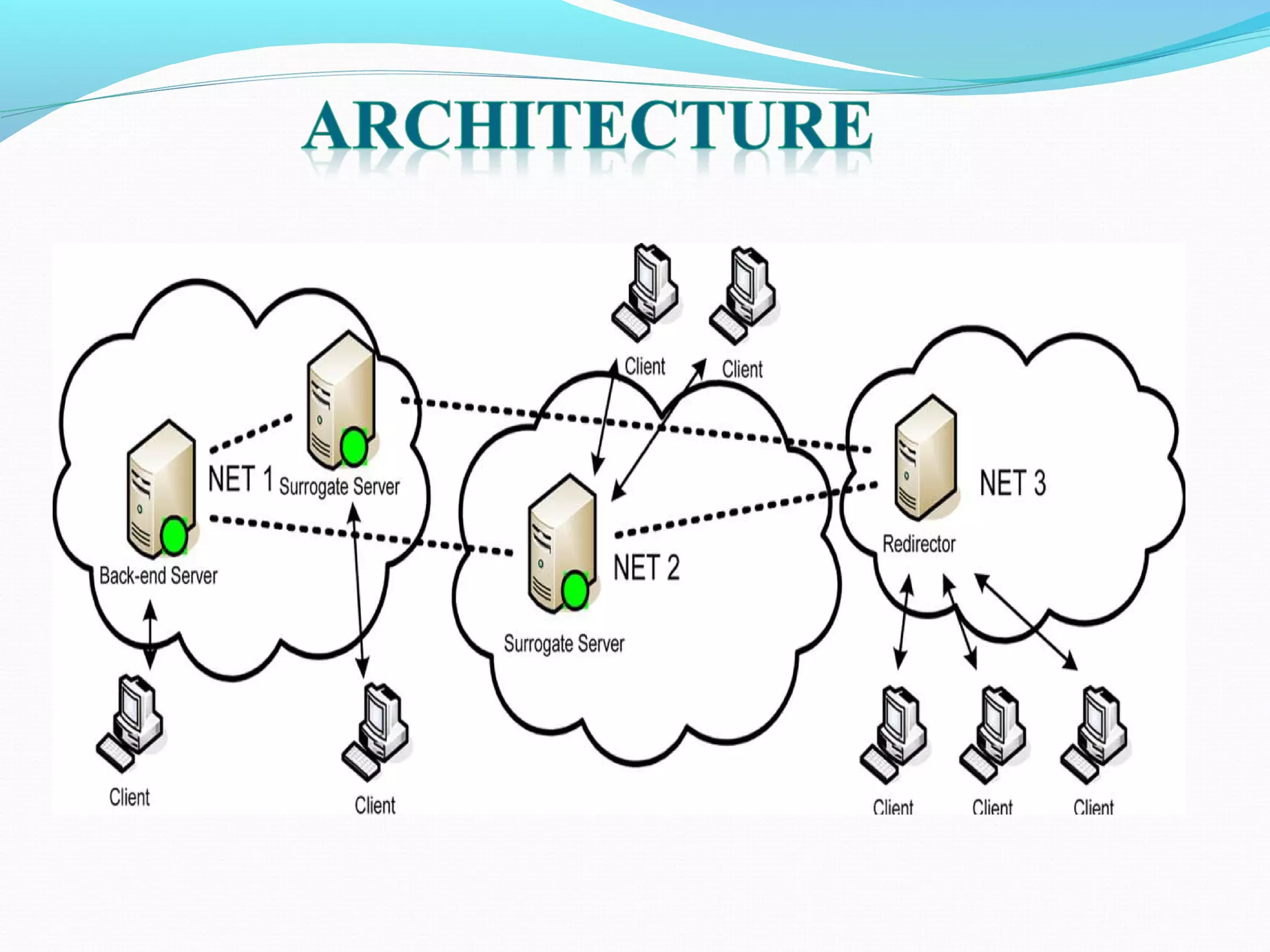
Modules & System Architecture
Design and System Models
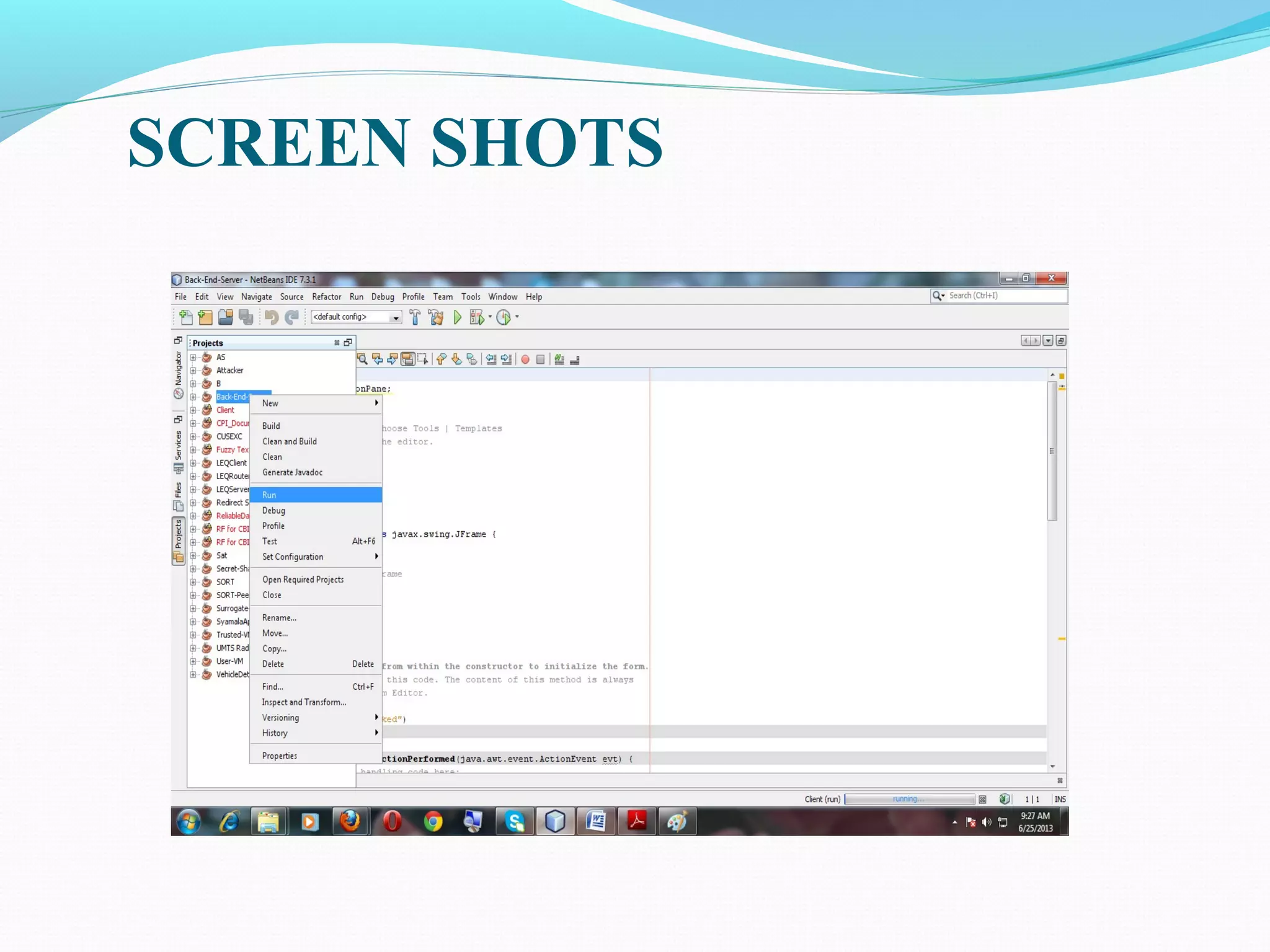
Screen Shots
Conclusion
Future Enhancements
ABSTRACT
In this project, I may face the challenging issue of
defining and implementing an effective law for load
balancing in Content Delivery Networks (CDNs).
I want to derive and prove a description about the
network queues equilibrium.
This result is then leveraged in order to devise a novel
distributed and time-continuous algorithm for load
balancing, which is also reformulated in a time-
discrete version
INTRODUCTION
 A Content Delivery Network (CDN) represents a
popular and useful solution to effectively support
emerging Web applications by adopting a distributed
overlay of servers.
By replicating content on several servers, a CDN is
capable to partially solve congestion issues due to
high client request rates , thus reducing latency while
at the same time increasing content availability.
1. We present a novel load balancing algorithm to
minimize both load imbalance factor and metric
movement cost as much as possible.
2. The unique feature of our proposal is that each
participating peer estimates and represents the “system
state” as the probability distributions for the capacities
of nodes and the loads of virtual servers.
3. The approximated probability distributions not only help
estimate the expected load a peer should perceive but
also provide hints for each peer in the system to
schedule the transfers of virtual servers.
4 The participating peers in our proposal operate
independently, and they need not rely on dedicated
nodes to pair virtual servers and participating peers,
eliminating the performance bottleneck and single
point of failure.
5. Each peer in our proposal independently and solely
manipulates partial information of the system and then
reassigns its virtual servers to other peers based on the
approximated system state.
System is not able to effectively face anomalous events
like flash crowds.
Latency is increases drastically with load balancing
Selection of two random servers is heavy load process
A novel load balancing algorithm to minimize both load
imbalance factor and metric movement cost is very high.
Provide hints for each peer in the system to schedule
the transfers of virtual servers.
Virtual servers establishment is mandatory, but not
optional
1. I present a new mechanism for redirecting incoming client
requests to the most appropriate server, thus balancing the
overall system requests load. Another well-known static
solution is the Round Robin algorithm (RR).
2. This algorithm selects a different server for each incoming
request in a cyclic mode. Each server is loaded with the
same number of requests without making any assumption on
the state, neither of the network nor of the servers.
3. A modified version of such an algorithm is the Next-
Neighbor Load Sharing. Instead of selecting two random
servers, this algorithm just randomly selects one server and
assigns the request to either that server or its neighbor
based on their respective loads
Replicating content on several servers
CDN is capable to solve congestion issues due to
high client request rates
 No need to establish virtual server
Without disturbing any client redirector take care
about the input requests
Latency is decreases drastically with load balancing
Modules:
oBack end server
oSurrogate server
oRedirector
oClient
Back end server
I. An original server called back-end server containing new
data to be diffused.
II. The basic network interface for all platforms at the syscalls
read() and write(). Every modern OS provides its own
syscall to help network servers transfer files as fast as
possible.
Surrogate server
Content Delivery Network (CDN) replicates contents over
several mirrored servers, named surrogate servers, which
strategically place contents at various locations in order to deal
with the flash crowds. CDN improves network performance by
maximizing bandwidth usage, improving content accessibility
and maintaining content updates through content replication
thus offering fast and reliable applications and services by
distributing contents to proxy servers often located closer to
users.
3. Redirector
The CDN architecture may consist of many surrogate
servers that could deliver copies of same content to one or
more users. The CDN include the request routing
infrastructure, the distribution infrastructure, and the
accounting infrastructures. The request-routing
infrastructure could consist of a mechanism to redirect
content requests from a client to a suitable surrogate, or a
group of surrogate, server(s).
4. Client
when a surrogate is not able to fulfill the client’s request, the
request will be directed to the nearest surrogate or origin to
fulfill that request. which dynamically redirects client requests
based on selected policies. Response time experienced by
clients after issuing a request. The decision process about these
two aspects could be in contraposition. As an example, a
“better response time” server is usually chosen based on
geographical distance from the client, i.e., network proximity;
on the other hand, the overall system throughput is typically
optimized through load balancing across a set of servers.
HARDWARE REQUIREMENTS:
 System : Any Processor above 500 MHz.
 Hard Disk : 40 GB.
 Ram : 512 MB.
SOFTWARE REQUIREMENTS
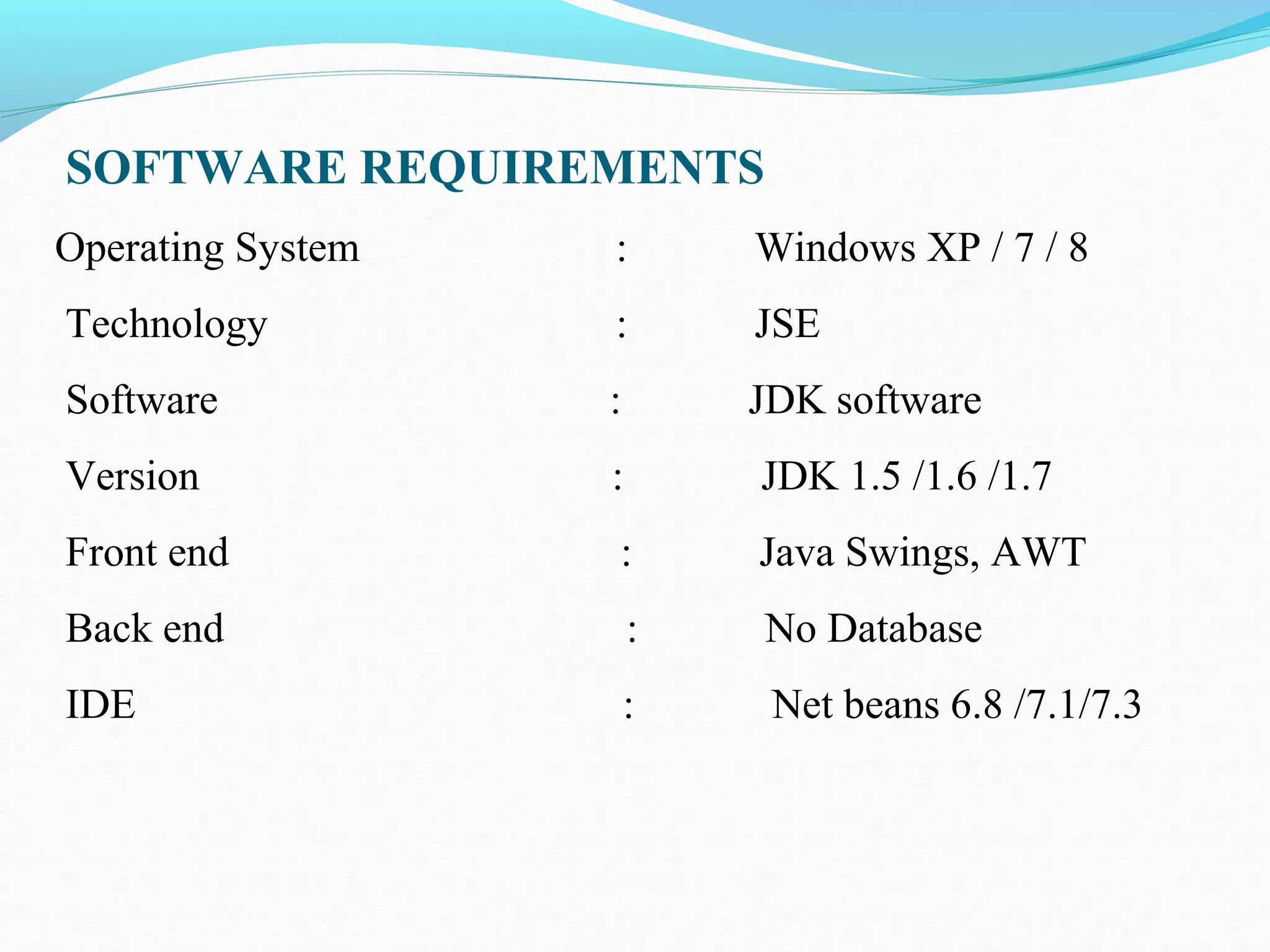
Operating System : Windows XP / 7 / 8
Technology : JSE
Software : JDK software
Version : JDK 1.5 /1.6 /1.7
Front end : Java Swings, AWT
Back end : No Database
IDE : Net beans 6.8 /7.1/7.3
DESIGN
• The purpose of the design phase is to plan a solution
of the problem specified by the requirement
document.
• In other words, starting with what is needed, design
takes us toward how to satisfy the needs.
SYSTEM MODEL
• The unified Modeling Language (UML) is a standard
language for writing software blueprints.
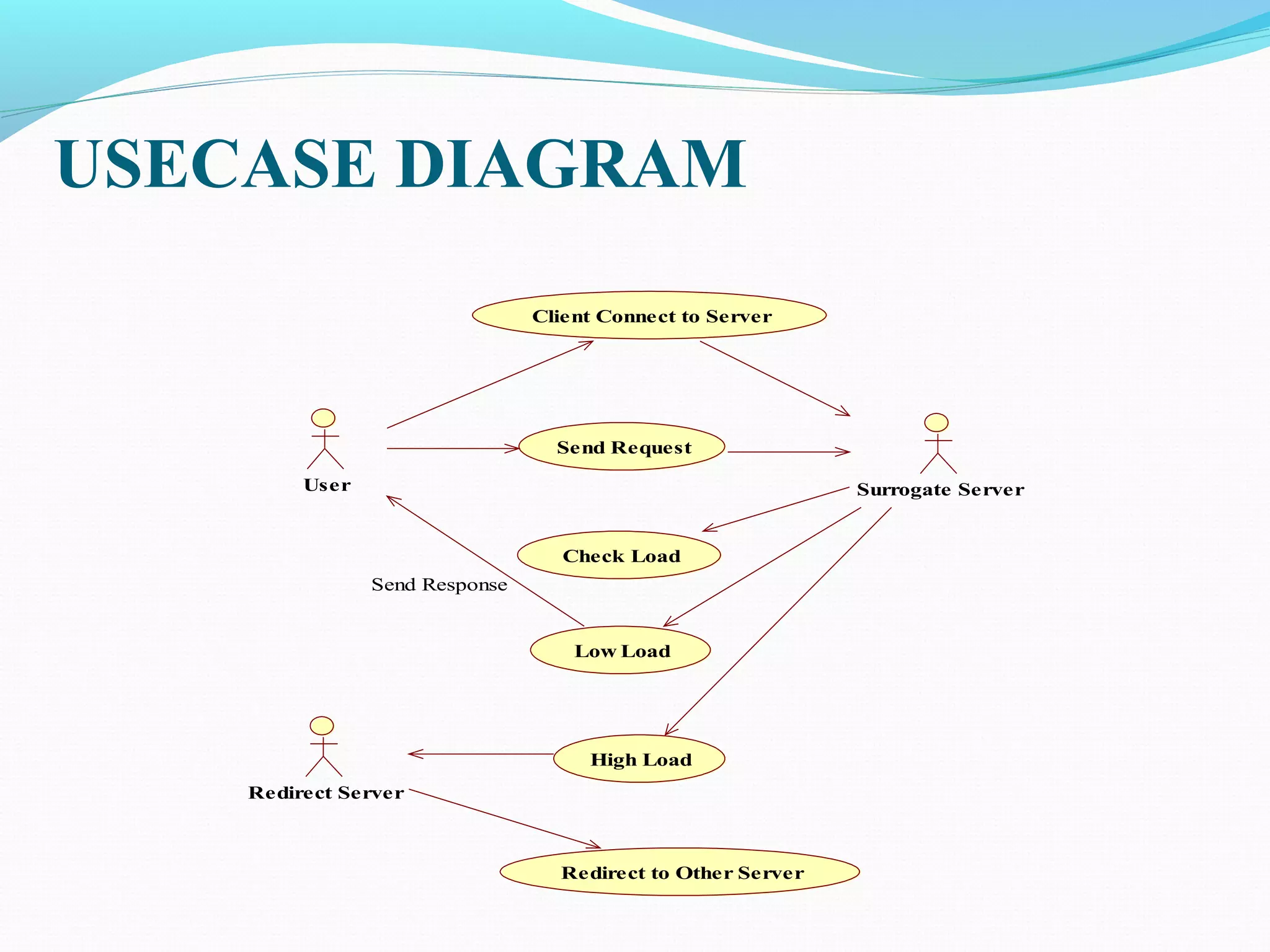
USECASE DIAGRAM
User Surrogate Server
Redirect Server
Client Connect to Server
Send Request
Check Load
Low Load
High Load
Send Response
Redirect to Other Server
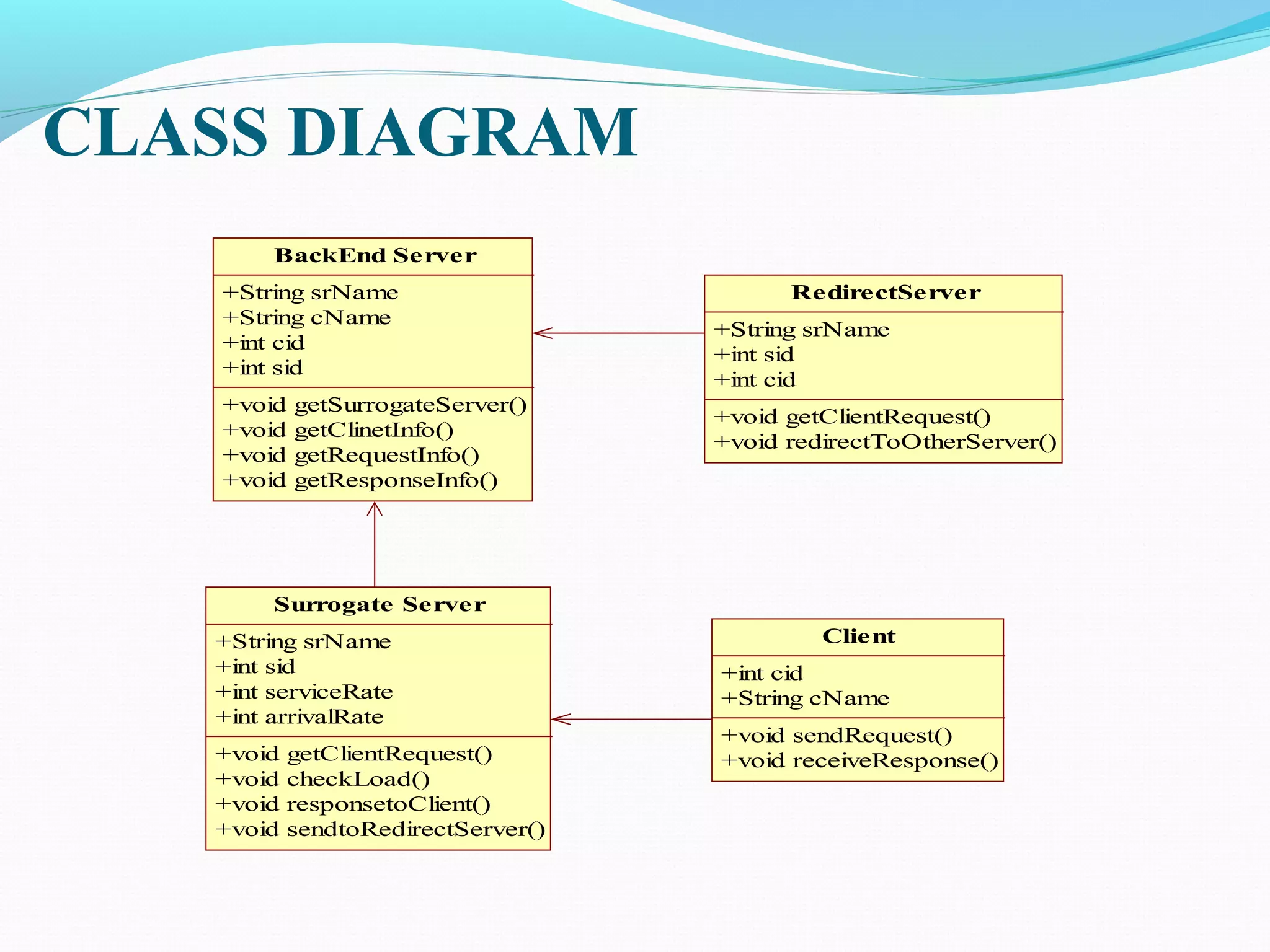
CLASS DIAGRAM
BackEnd Server
+String srName
+String cName
+int cid
+int sid
+void getSurrogateServer()
+void getClinetInfo()
+void getRequestInfo()
+void getResponseInfo()
Surrogate Server
+String srName
+int sid
+int serviceRate
+int arrivalRate
+void getClientRequest()
+void checkLoad()
+void responsetoClient()
+void sendtoRedirectServer()
RedirectServer
+String srName
+int sid
+int cid
+void getClientRequest()
+void redirectToOtherServer()
Client
+int cid
+String cName
+void sendRequest()
+void receiveResponse()
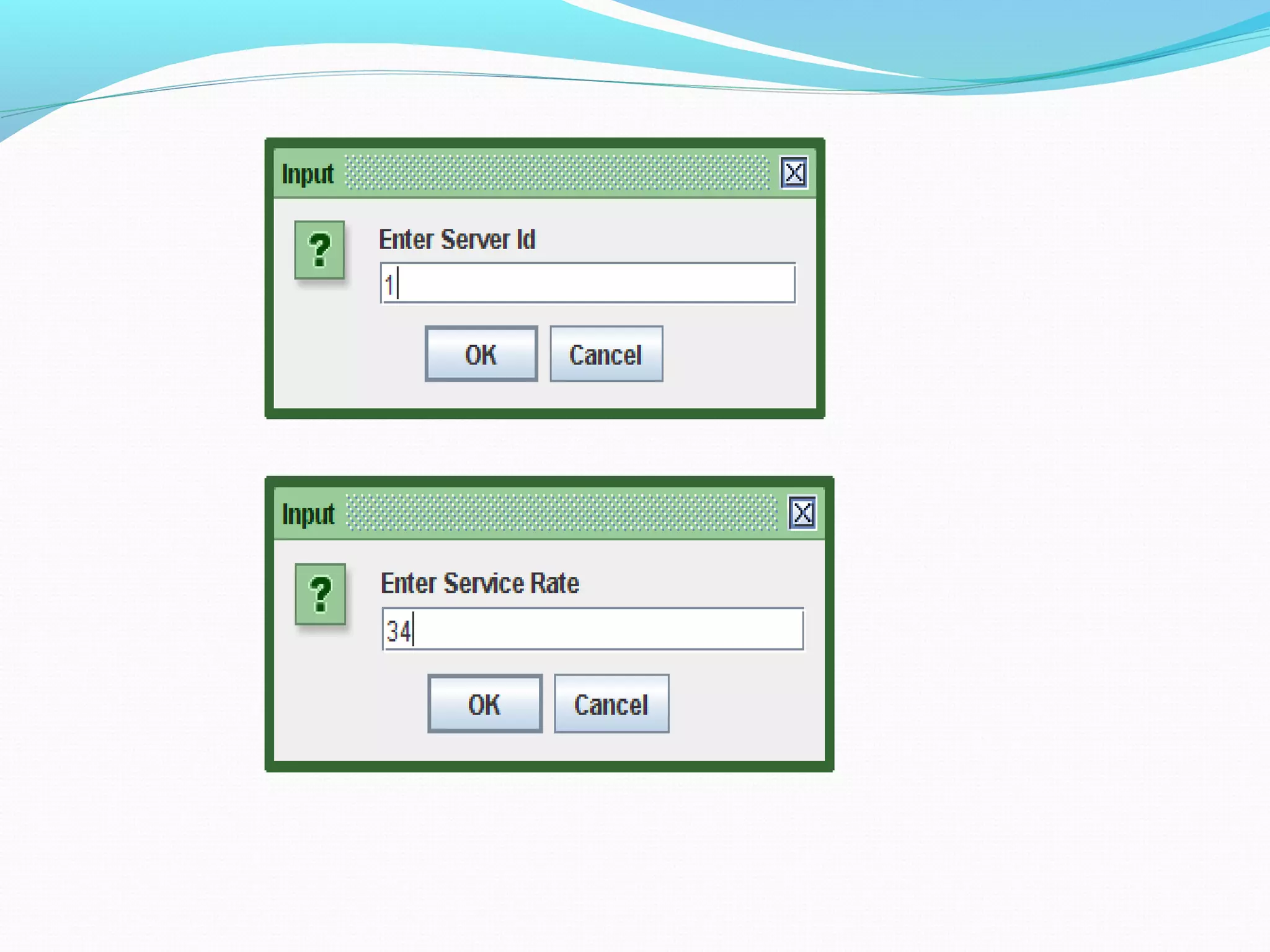
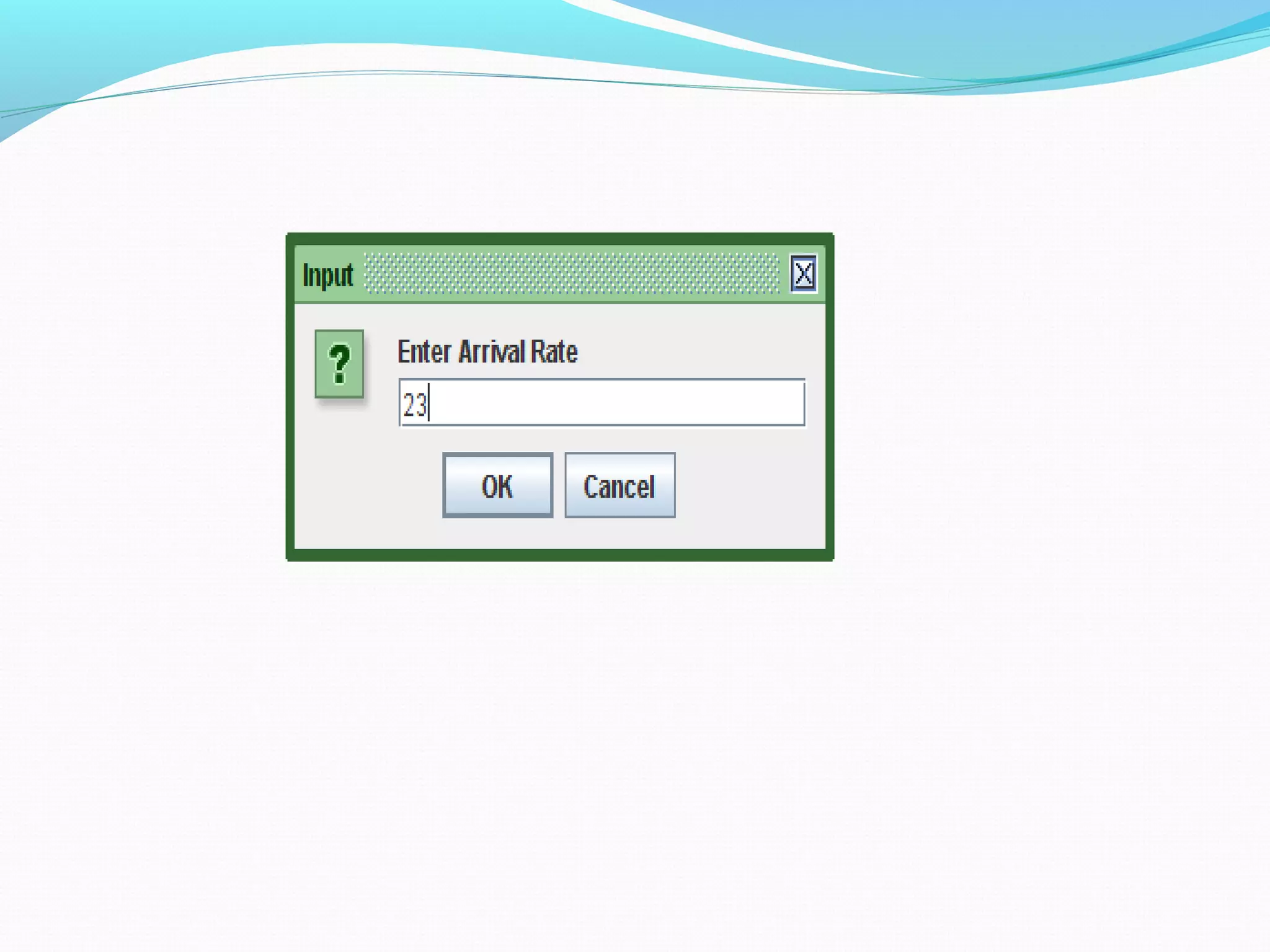
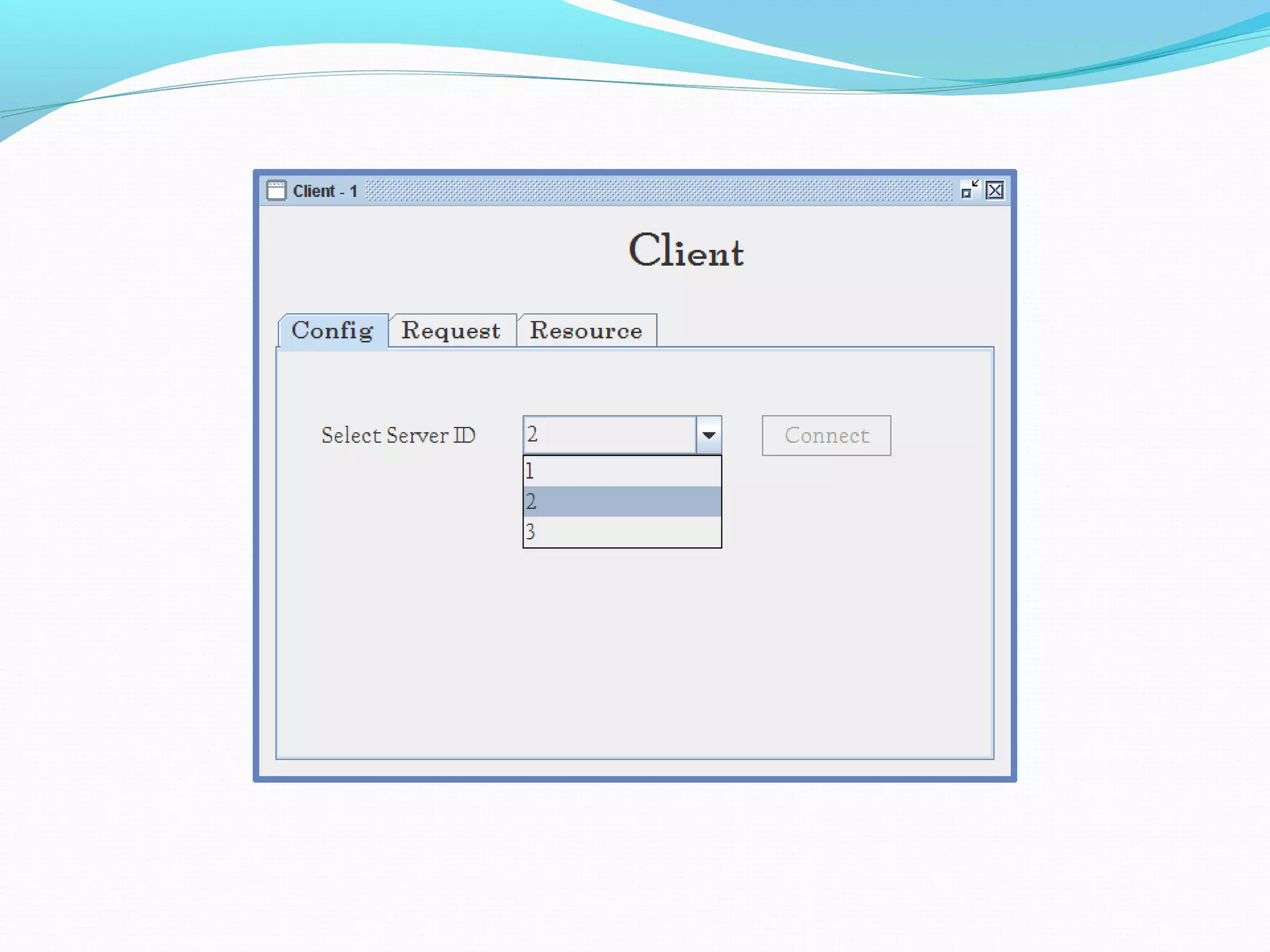
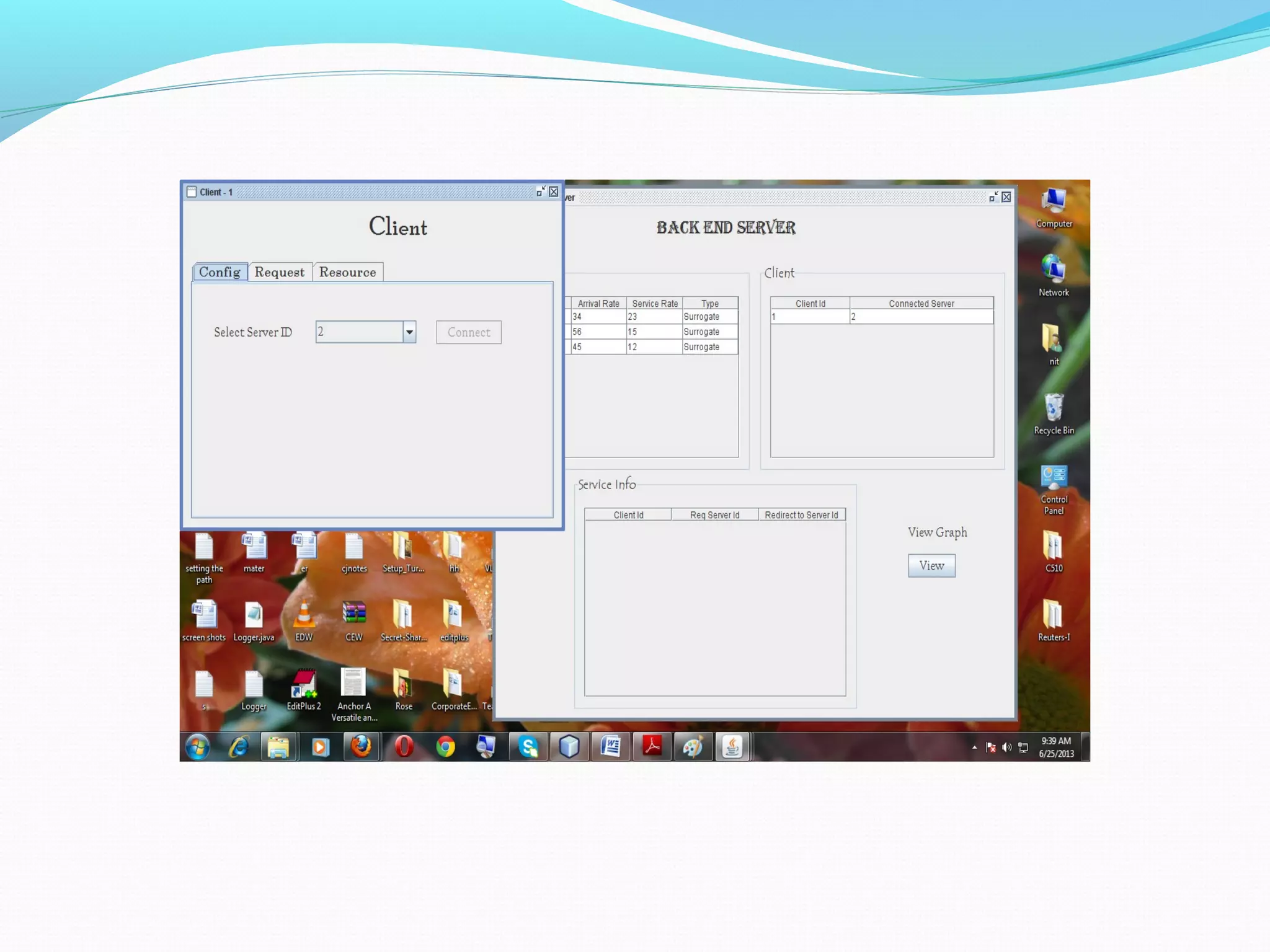
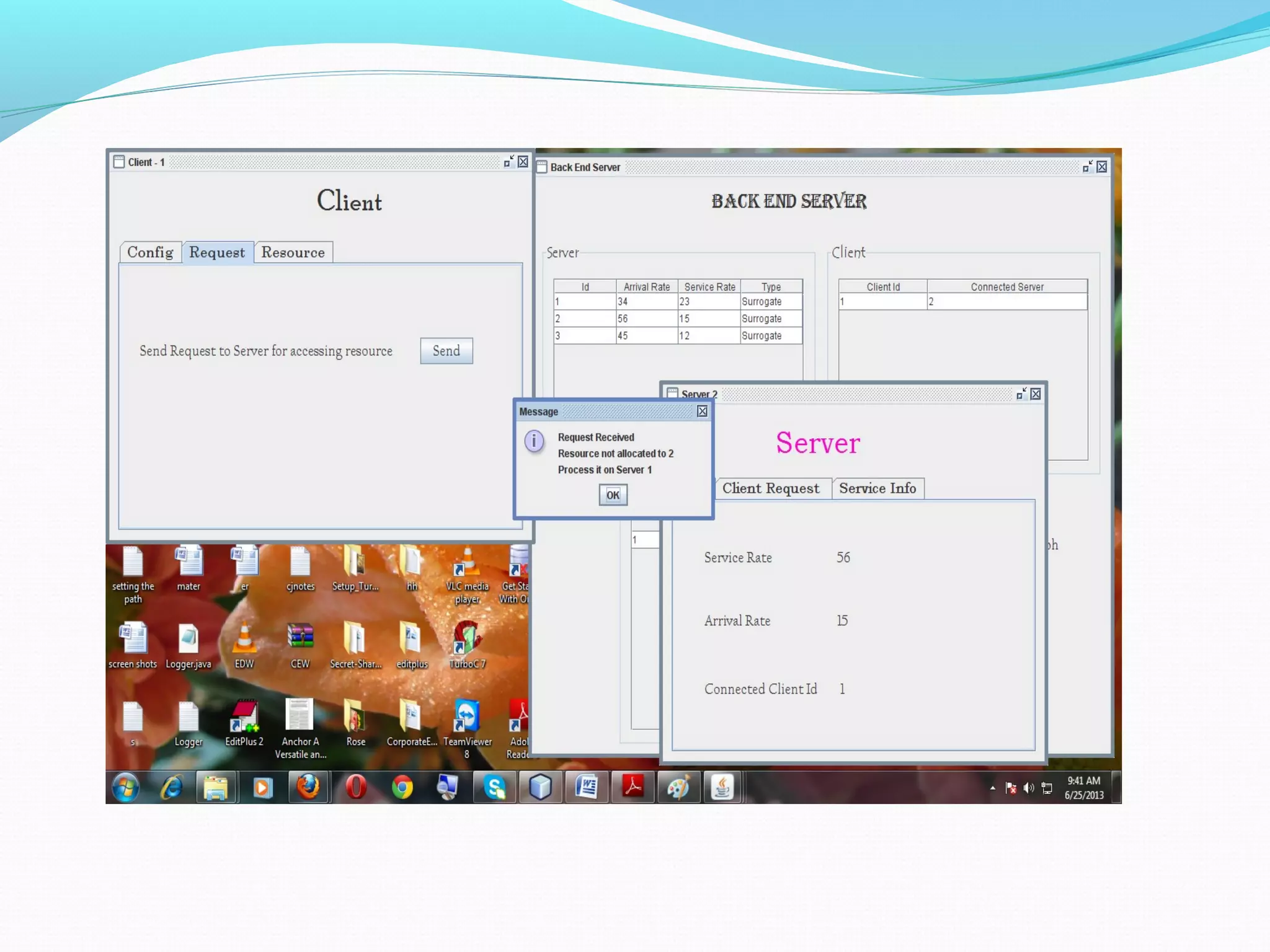
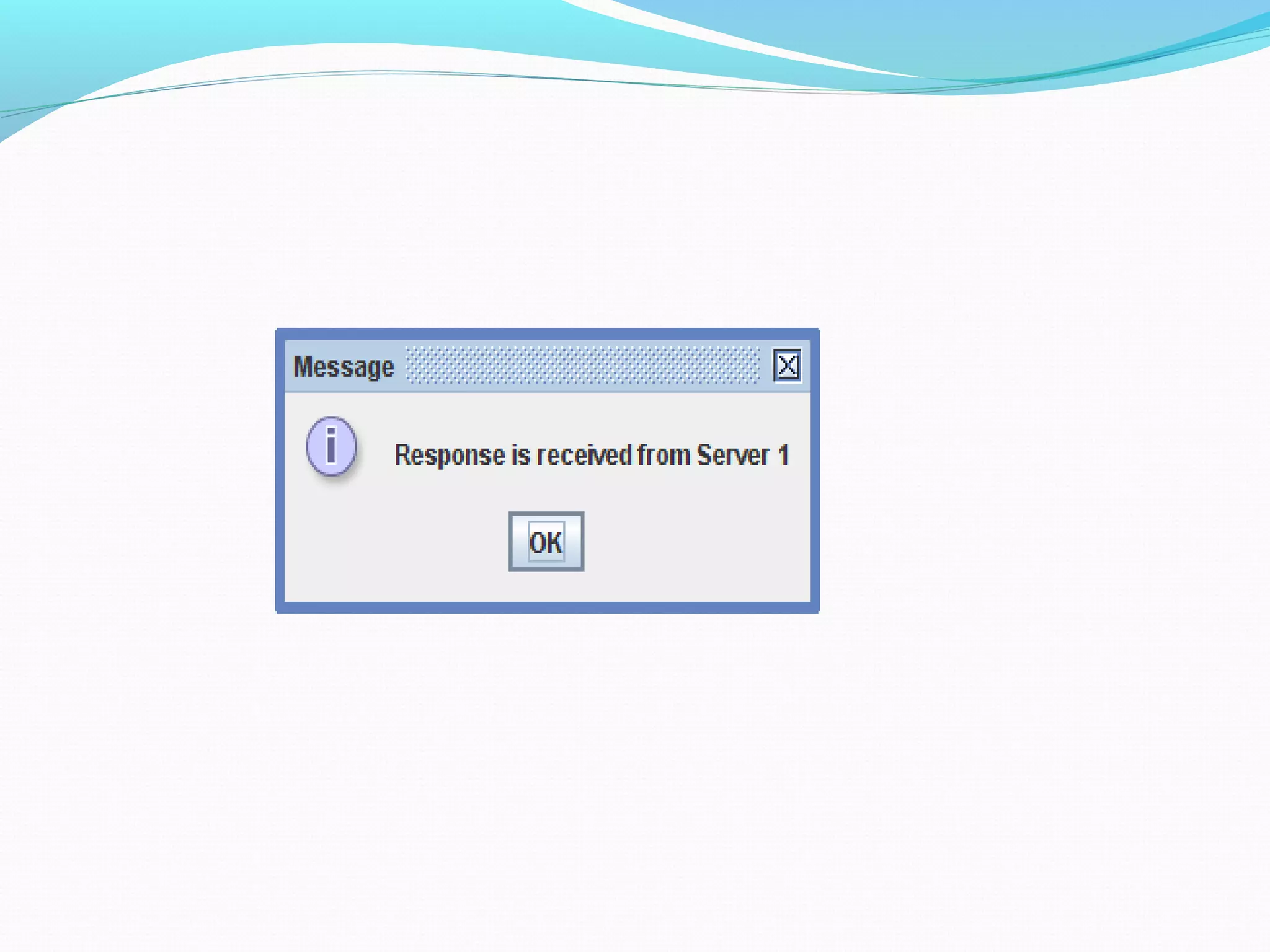
SCREEN SHOTS
CONCLUSION
Conclude by introduce a control theoretical analysis of the
closed-loop congestion control problem in packet
networks.
 The control theoretical approach is used in a proportional
rate controller, where packets are admitted into the
network in accordance with network buffer occupancy.
FUTURE ENHANCEMENT
. The second category (”the box is grey”) groups
approaches that use measurements to estimate
available bandwidth, level of contention or even the
temporary characteristics of congestion. Due to the
possibility of wrong estimations and measurements,
the network is considered a grey box.
The third category (”the box is green”) contains the
bimodal congestion control, which calculates
explicitly the fair-share, as well as the network-
assisted control, where the network communicates its
state to the transport layer; the box now is becoming
green.
A Distributed Control Law for Load Balancing in Content Delivery Networks

A Distributed Control Law for Load Balancing in Content Delivery Networks

  • 1.
    A Distributed ControlLaw for Load Balancing in Content Delivery Networks Presented by: C.Keerthi 11211F0012 MCA Under the guidance of: Mr.D.B.Jagannadha Rao ( Associate professor)
  • 2.
    Abstract Introduction Existing & ProposedSystems Software Requirement Specification Modules & System Architecture Design and System Models Screen Shots Conclusion Future Enhancements
  • 3.
    ABSTRACT In this project,I may face the challenging issue of defining and implementing an effective law for load balancing in Content Delivery Networks (CDNs). I want to derive and prove a description about the network queues equilibrium. This result is then leveraged in order to devise a novel distributed and time-continuous algorithm for load balancing, which is also reformulated in a time- discrete version
  • 4.
    INTRODUCTION  A ContentDelivery Network (CDN) represents a popular and useful solution to effectively support emerging Web applications by adopting a distributed overlay of servers. By replicating content on several servers, a CDN is capable to partially solve congestion issues due to high client request rates , thus reducing latency while at the same time increasing content availability.
  • 5.
    1. We presenta novel load balancing algorithm to minimize both load imbalance factor and metric movement cost as much as possible. 2. The unique feature of our proposal is that each participating peer estimates and represents the “system state” as the probability distributions for the capacities of nodes and the loads of virtual servers. 3. The approximated probability distributions not only help estimate the expected load a peer should perceive but also provide hints for each peer in the system to schedule the transfers of virtual servers.
  • 6.
    4 The participatingpeers in our proposal operate independently, and they need not rely on dedicated nodes to pair virtual servers and participating peers, eliminating the performance bottleneck and single point of failure. 5. Each peer in our proposal independently and solely manipulates partial information of the system and then reassigns its virtual servers to other peers based on the approximated system state.
  • 7.
    System is notable to effectively face anomalous events like flash crowds. Latency is increases drastically with load balancing Selection of two random servers is heavy load process A novel load balancing algorithm to minimize both load imbalance factor and metric movement cost is very high. Provide hints for each peer in the system to schedule the transfers of virtual servers. Virtual servers establishment is mandatory, but not optional
  • 8.
    1. I presenta new mechanism for redirecting incoming client requests to the most appropriate server, thus balancing the overall system requests load. Another well-known static solution is the Round Robin algorithm (RR). 2. This algorithm selects a different server for each incoming request in a cyclic mode. Each server is loaded with the same number of requests without making any assumption on the state, neither of the network nor of the servers. 3. A modified version of such an algorithm is the Next- Neighbor Load Sharing. Instead of selecting two random servers, this algorithm just randomly selects one server and assigns the request to either that server or its neighbor based on their respective loads
  • 9.
    Replicating content onseveral servers CDN is capable to solve congestion issues due to high client request rates  No need to establish virtual server Without disturbing any client redirector take care about the input requests Latency is decreases drastically with load balancing
  • 11.
    Modules: oBack end server oSurrogateserver oRedirector oClient
  • 12.
    Back end server I.An original server called back-end server containing new data to be diffused. II. The basic network interface for all platforms at the syscalls read() and write(). Every modern OS provides its own syscall to help network servers transfer files as fast as possible.
  • 13.
    Surrogate server Content DeliveryNetwork (CDN) replicates contents over several mirrored servers, named surrogate servers, which strategically place contents at various locations in order to deal with the flash crowds. CDN improves network performance by maximizing bandwidth usage, improving content accessibility and maintaining content updates through content replication thus offering fast and reliable applications and services by distributing contents to proxy servers often located closer to users.
  • 14.
    3. Redirector The CDNarchitecture may consist of many surrogate servers that could deliver copies of same content to one or more users. The CDN include the request routing infrastructure, the distribution infrastructure, and the accounting infrastructures. The request-routing infrastructure could consist of a mechanism to redirect content requests from a client to a suitable surrogate, or a group of surrogate, server(s).
  • 15.
    4. Client when asurrogate is not able to fulfill the client’s request, the request will be directed to the nearest surrogate or origin to fulfill that request. which dynamically redirects client requests based on selected policies. Response time experienced by clients after issuing a request. The decision process about these two aspects could be in contraposition. As an example, a “better response time” server is usually chosen based on geographical distance from the client, i.e., network proximity; on the other hand, the overall system throughput is typically optimized through load balancing across a set of servers.
  • 16.
    HARDWARE REQUIREMENTS:  System: Any Processor above 500 MHz.  Hard Disk : 40 GB.  Ram : 512 MB.
  • 17.
    SOFTWARE REQUIREMENTS Operating System: Windows XP / 7 / 8 Technology : JSE Software : JDK software Version : JDK 1.5 /1.6 /1.7 Front end : Java Swings, AWT Back end : No Database IDE : Net beans 6.8 /7.1/7.3
  • 18.
    DESIGN • The purposeof the design phase is to plan a solution of the problem specified by the requirement document. • In other words, starting with what is needed, design takes us toward how to satisfy the needs. SYSTEM MODEL • The unified Modeling Language (UML) is a standard language for writing software blueprints.
  • 19.
    USECASE DIAGRAM User SurrogateServer Redirect Server Client Connect to Server Send Request Check Load Low Load High Load Send Response Redirect to Other Server
  • 20.
    CLASS DIAGRAM BackEnd Server +StringsrName +String cName +int cid +int sid +void getSurrogateServer() +void getClinetInfo() +void getRequestInfo() +void getResponseInfo() Surrogate Server +String srName +int sid +int serviceRate +int arrivalRate +void getClientRequest() +void checkLoad() +void responsetoClient() +void sendtoRedirectServer() RedirectServer +String srName +int sid +int cid +void getClientRequest() +void redirectToOtherServer() Client +int cid +String cName +void sendRequest() +void receiveResponse()
  • 21.
  • 28.
    CONCLUSION Conclude by introducea control theoretical analysis of the closed-loop congestion control problem in packet networks.  The control theoretical approach is used in a proportional rate controller, where packets are admitted into the network in accordance with network buffer occupancy.
  • 29.
    FUTURE ENHANCEMENT . Thesecond category (”the box is grey”) groups approaches that use measurements to estimate available bandwidth, level of contention or even the temporary characteristics of congestion. Due to the possibility of wrong estimations and measurements, the network is considered a grey box. The third category (”the box is green”) contains the bimodal congestion control, which calculates explicitly the fair-share, as well as the network- assisted control, where the network communicates its state to the transport layer; the box now is becoming green.