Download to read offline



![CONFIRMATION AND TRUTHLIKENESS
Acceptable theories
Not Only High degree of confirmation
But Also Capacity of explaining or predicting the empirical
evidence
Epistemic value of a theory depends on two factors
Coherence or Similarity between H and E
How Informative our Empirical Evidence is ?
Vs (H, E) = [p (H&E) /p (HvE)] [1/p (E)] = p (H, E) /p (HvE)
25](https://image.slidesharecdn.com/finalpresentation-131215041956-phpapp02/85/Why-are-Good-Theorys-Good-Review-25-320.jpg)
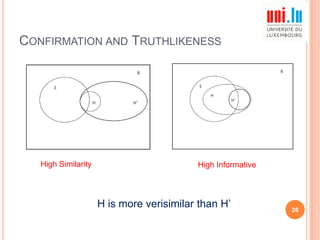
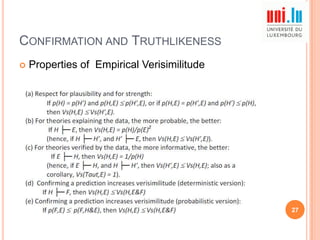
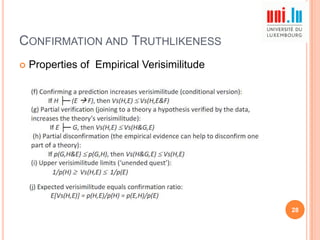
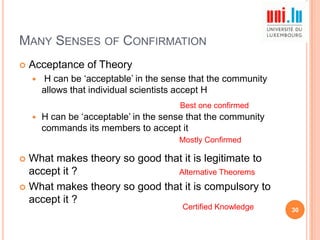
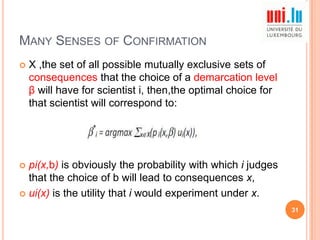
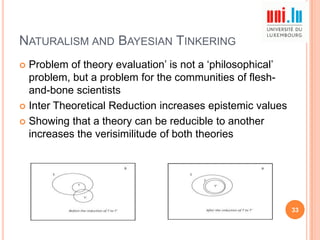





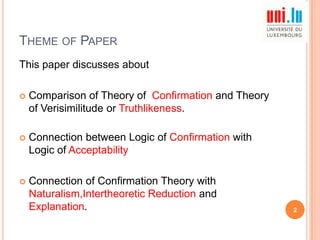
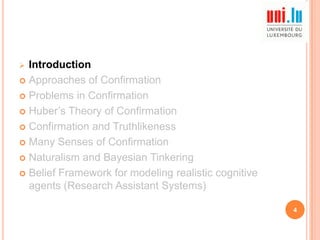
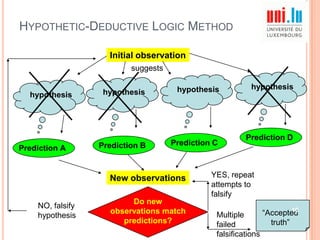
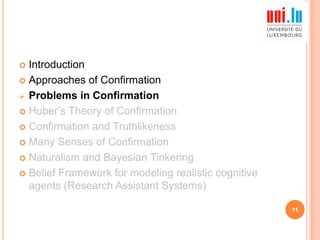
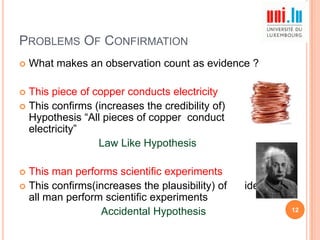
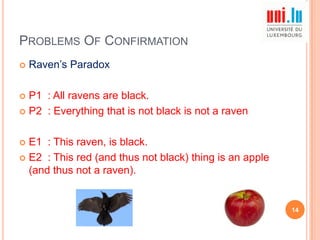
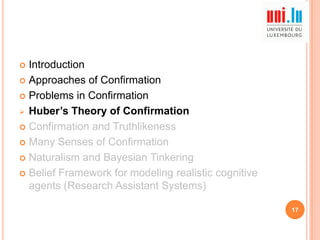
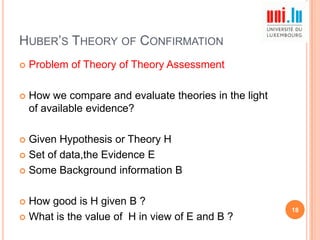
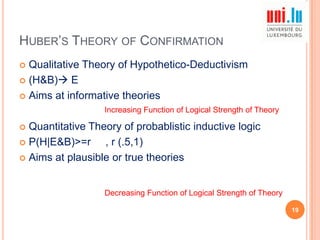
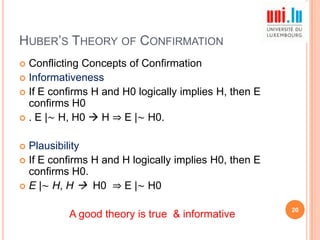
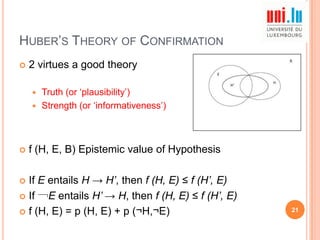
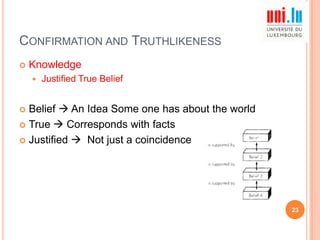
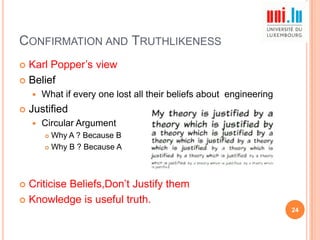
The paper explores various theories of confirmation, comparing the theory of confirmation with the theory of verisimilitude, and examines the connections between confirmation, naturalism, and the belief framework for cognitive agents. Key topics include different approaches to confirmation, problems related to evidential support for theories, and Huber's evaluation of theories based on their informativeness and plausibility. The discussion emphasizes the importance of coherent and predictive theories in the context of empirical evidence.


