Similarities & differences between
specific & non-specific immunity
Similarities:
1(Self non-self discrimination (self-tolerance(
2(self-limitation (Homeostasis(
Differences:
1(specificity & diversity
2(Memory
In the name of God
Immunology Course For Medical Students
Second Semester 1393-1394
Presented by:
Immunology department of Shiraz Medical School
Lecturers:
A. Ghaderi
Z. Amirghofran
E. Kamali
B. Gharesi-Fard
S. Farjadian
M. Droodchi
F. Nejatolahi
Some Important Notes
http://med.sums.ac.ir/departments/basic-sciences/immunology
Course coordinator: - Dr. Gharesi-Fard
Times of presentation: - Sundays 10-12 & Wednesdays 11-12
Start of Lab. Sections: - After 16.01.1394
Dates of practical sections:
-Saturdays 13.00-17.00 (2 sessions(
-Sundays 13.30-17.30 (2 session(
-Mondays 8.00-10.00 (1 session(
Midterm exam: - Between 29.1.94 & 10.2.94
(lectures:1-12, Innate immunity is included(
Final Exam: - Between 6.4.94 & 24.4.94
(lectures: 13-24 + Practical Exam(
Early Exposure: - Rheumatology Dept. (Dr. Nazarinia(
17.03.1394(group 1( & 24.03.1394 (group 2(
References: - Cellular and Molecular Immunology (Abul K. Abbas(
-Medical Immunology (Daniel P. Stites(
History of Immunology
Objectives:
1-To introduce the history of Immunology
*Babylonian Epic of Gilgamesh (2500 B.C.(
**Both Babylonians and ancient Egyptians had a god of disease
*Thucydides
**Author of the History of the Peloponnesian War (Greek & Sparta(
**Plague of Athena of 430 B.C.
*Christian times (immunitas in ancient Rome(
**God punish the sin of humans with disease.
**God employ diseases to clean humans of their sins.
→Cleaned individuals would not merit further punishment.
*Islamic physicians (Razes 10th
and Avicenna 11th
century(
**Explosive theory
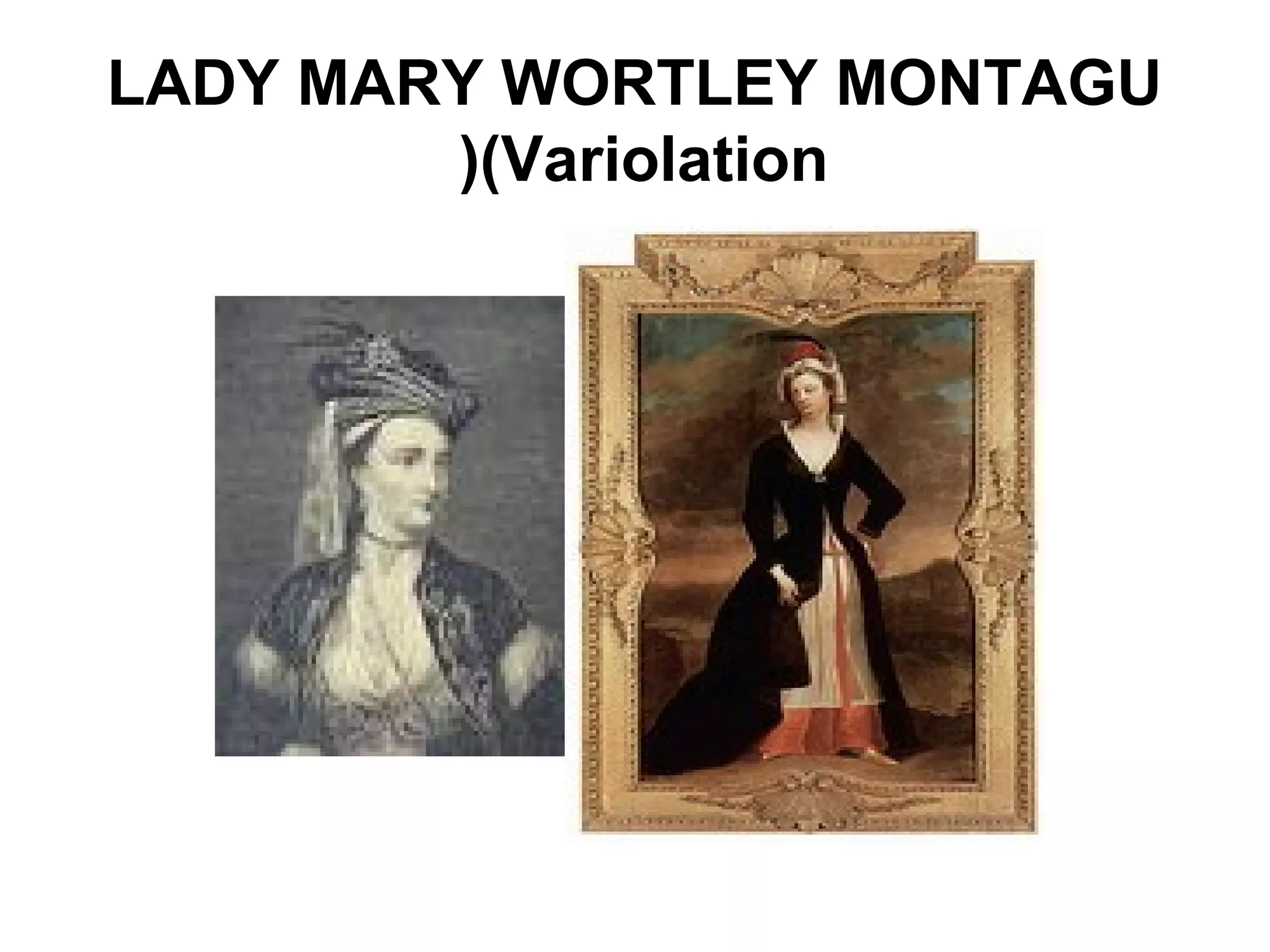
*Lady Mary Montague (1718(
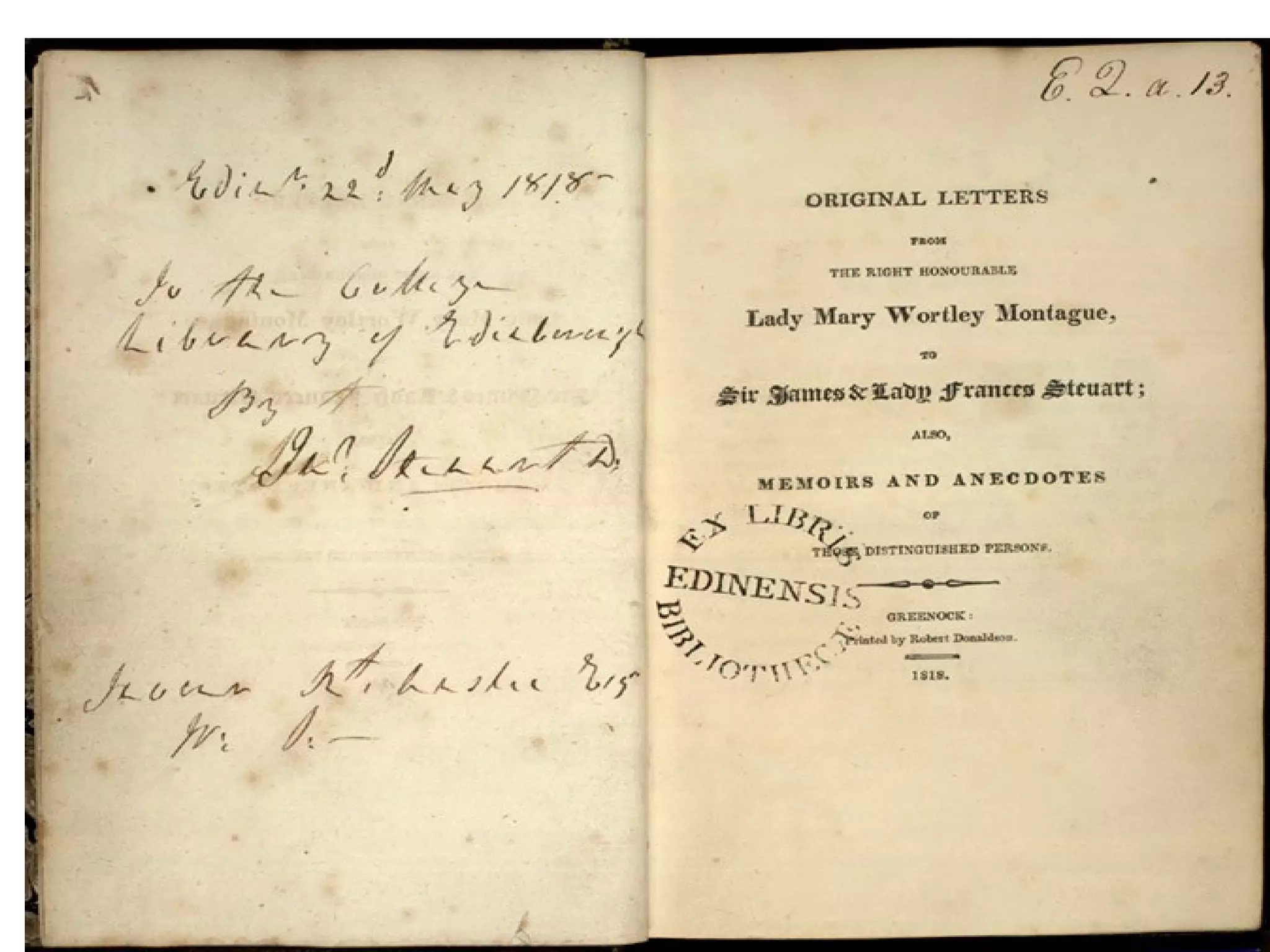
LADY MARY WORTLEY MONTAGU
(Variolation(
•Original Letter
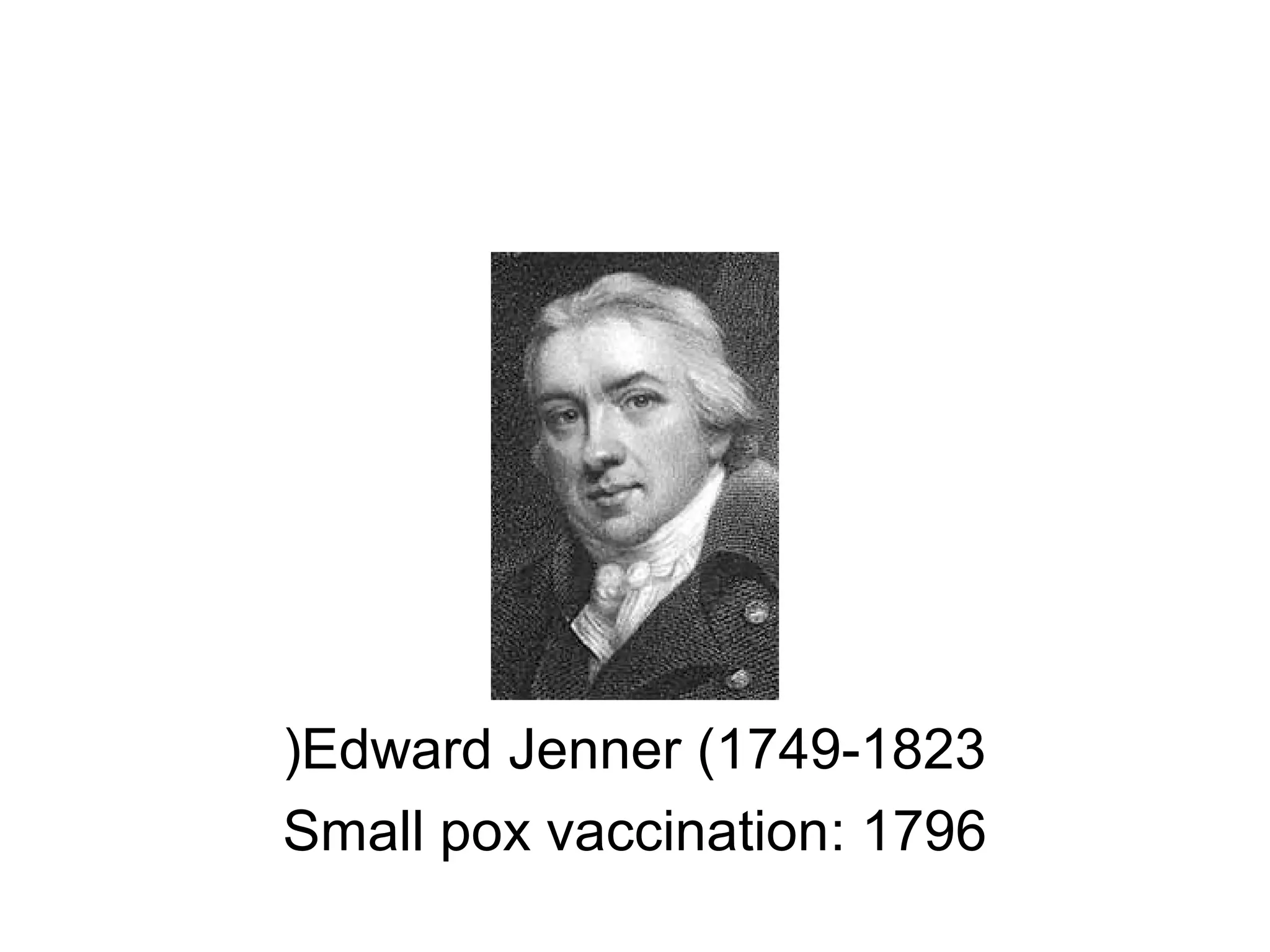
Edward Jenner (1749-1823(
1796:Small pox vaccination
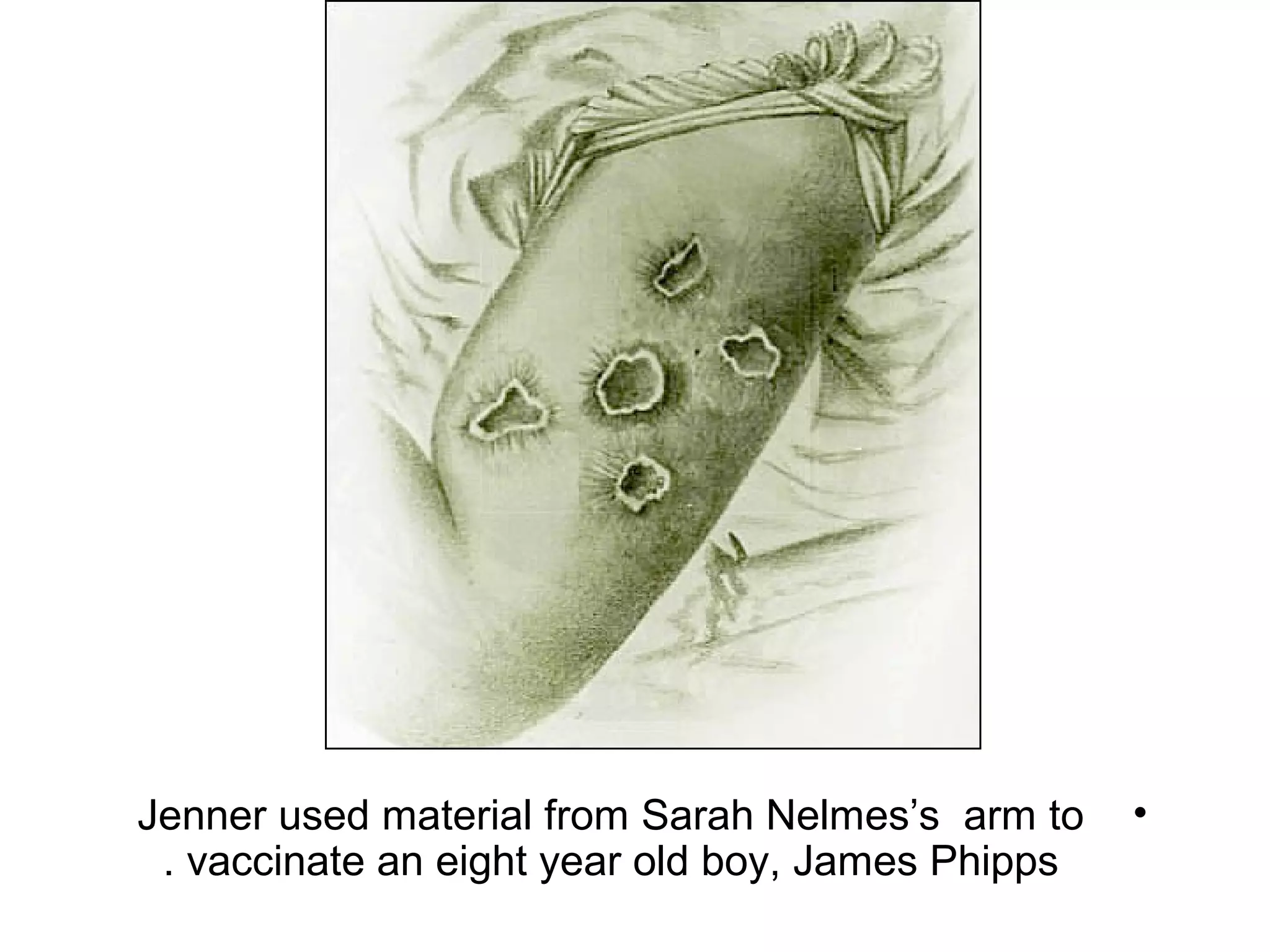
•Jenner used material from Sarah Nelmes’s arm to
vaccinate an eight year old boy, James Phipps.
•The first vaccination: Edward Jenner used
pus from the hand of a dairy maid in 1796
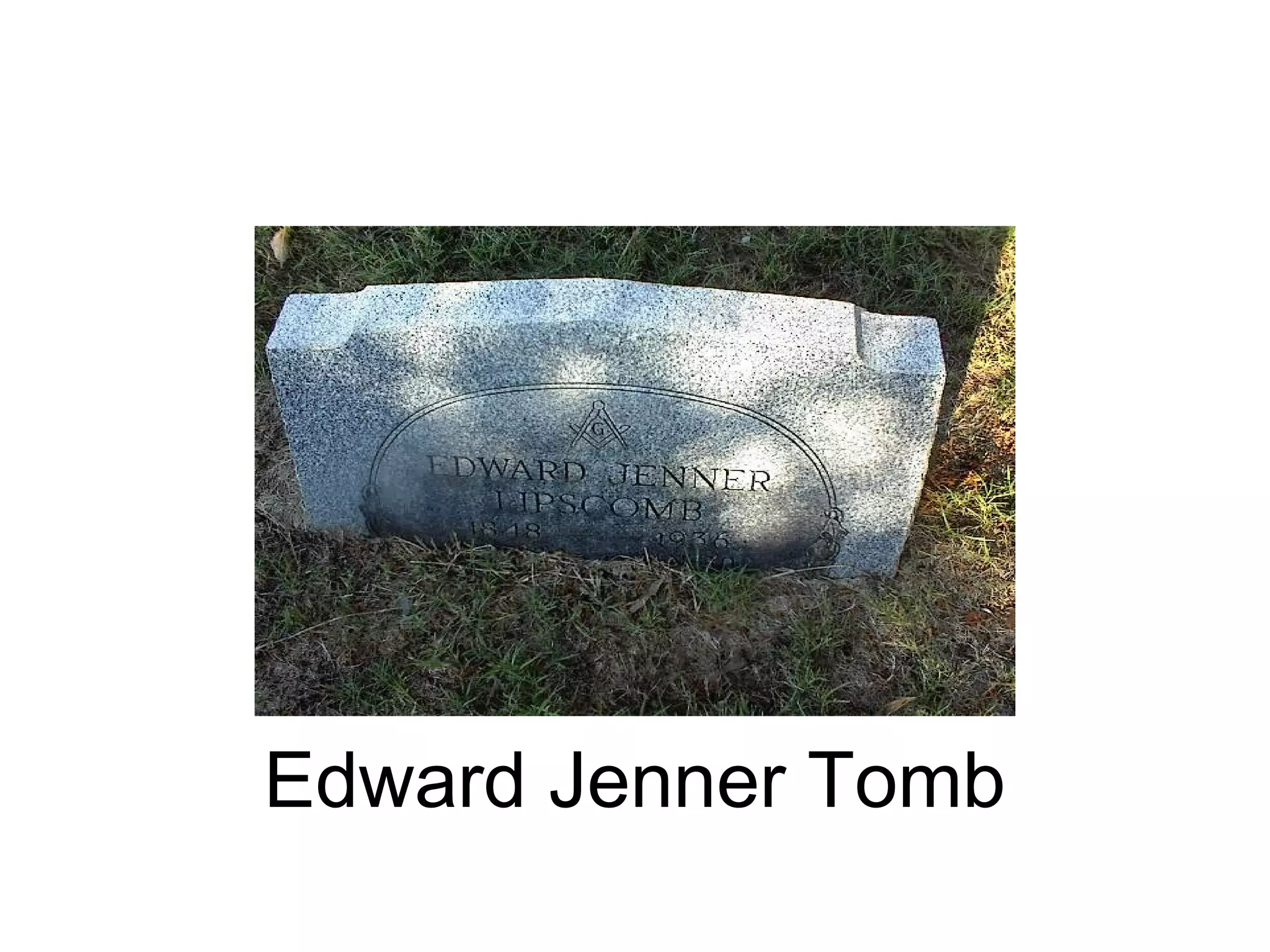
Edward Jenner Tomb
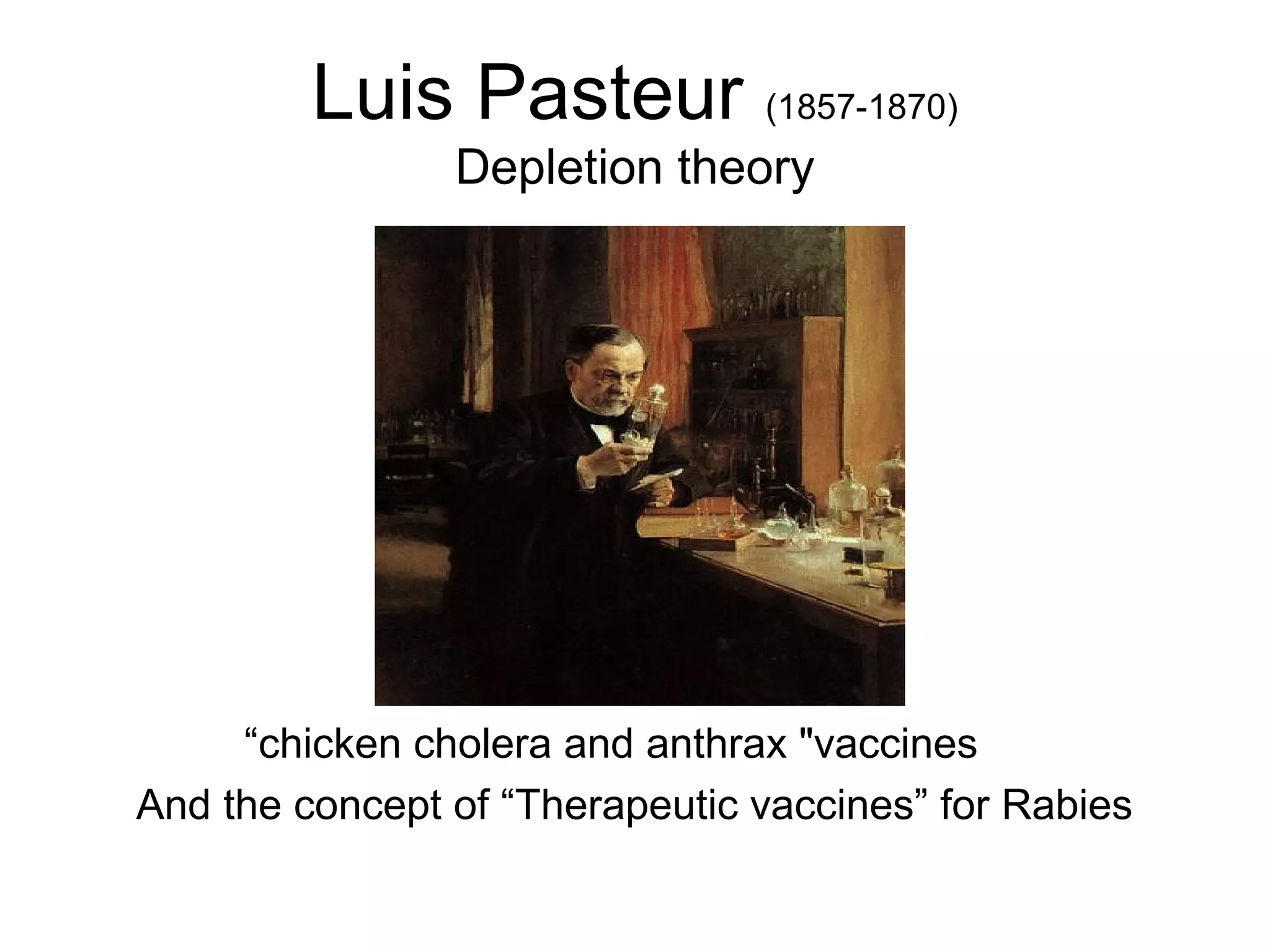
Luis Pasteur (1857-1870)
Depletion theory
chicken cholera and anthrax "vaccines“
And the concept of “Therapeutic vaccines” for Rabies
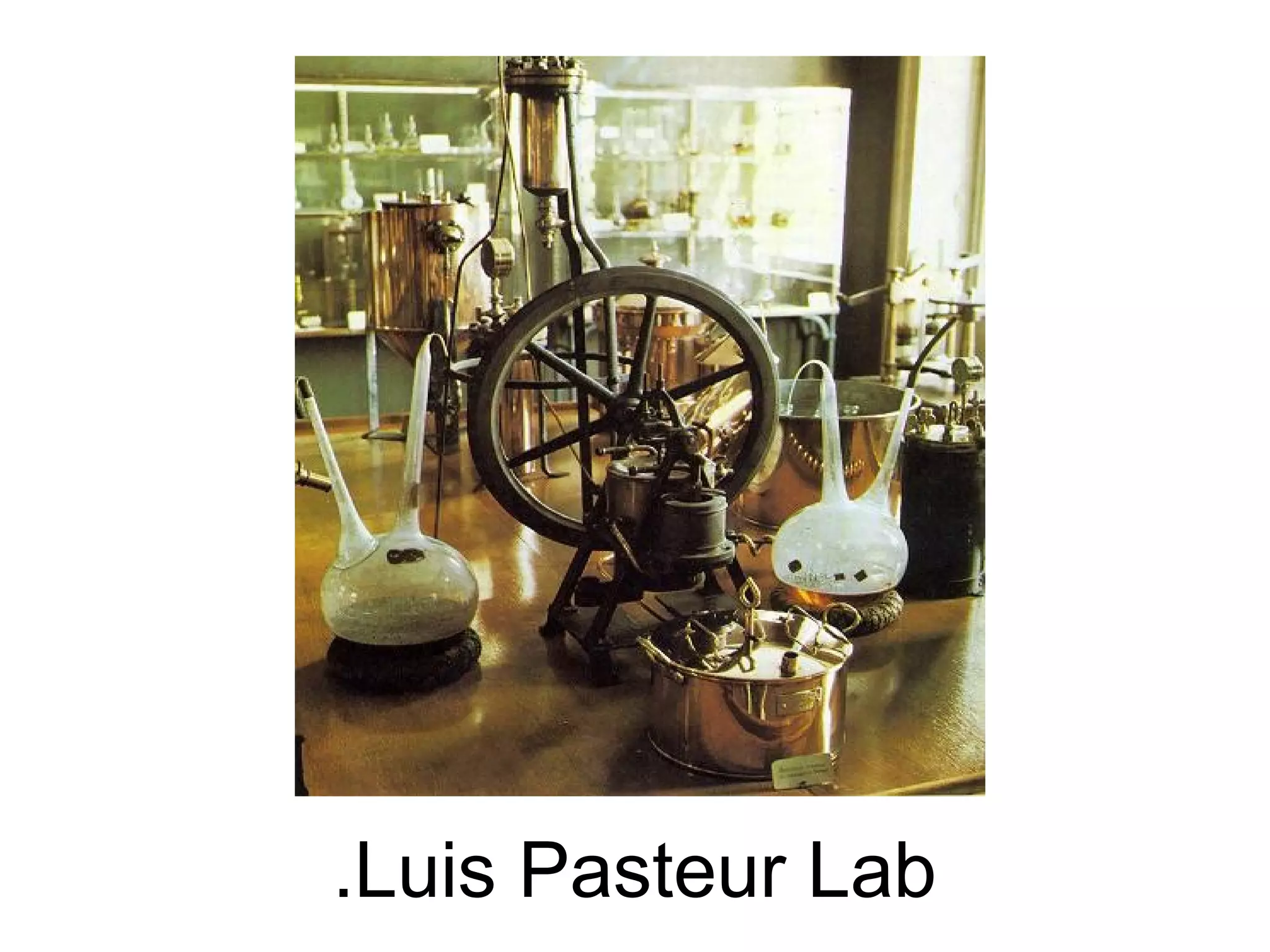
Luis Pasteur Lab.
History of Immunology
The major milestone in
Immunology
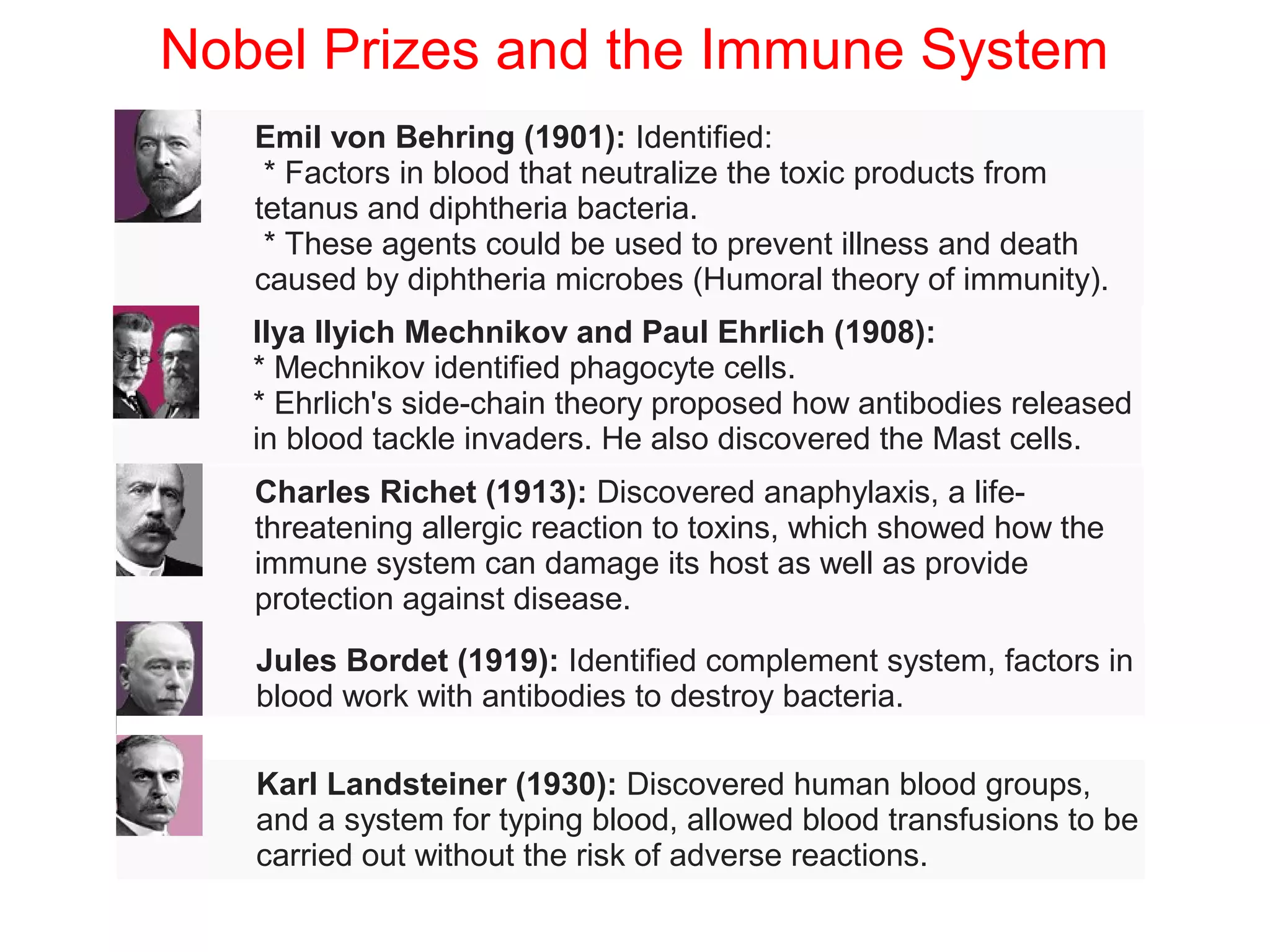
Nobel Prizes and the Immune System
Emil von Behring (1901): Identified:
* Factors in blood that neutralize the toxic products from
tetanus and diphtheria bacteria.
* These agents could be used to prevent illness and death
caused by diphtheria microbes (Humoral theory of immunity).
Ilya Ilyich Mechnikov and Paul Ehrlich (1908):
* Mechnikov identified phagocyte cells.
* Ehrlich's side-chain theory proposed how antibodies released
in blood tackle invaders. He also discovered the Mast cells.
Charles Richet (1913): Discovered anaphylaxis, a life-
threatening allergic reaction to toxins, which showed how the
immune system can damage its host as well as provide
protection against disease.
Jules Bordet (1919): Identified complement system, factors in
blood work with antibodies to destroy bacteria.
Karl Landsteiner (1930): Discovered human blood groups,
and a system for typing blood, allowed blood transfusions to be
carried out without the risk of adverse reactions.
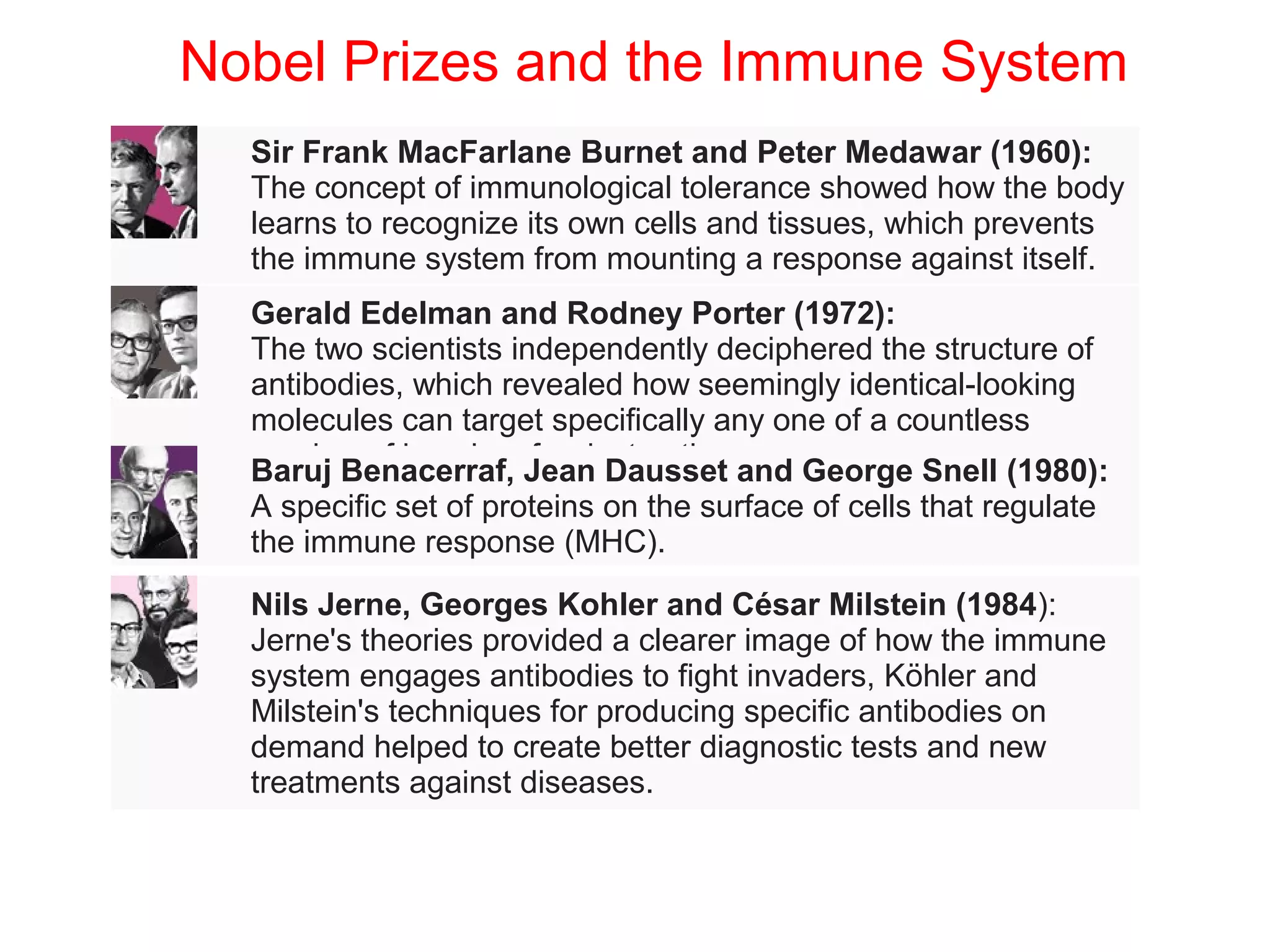
Nobel Prizes and the Immune System
Sir Frank MacFarlane Burnet and Peter Medawar (1960):
The concept of immunological tolerance showed how the body
learns to recognize its own cells and tissues, which prevents
the immune system from mounting a response against itself.
Gerald Edelman and Rodney Porter (1972):
The two scientists independently deciphered the structure of
antibodies, which revealed how seemingly identical-looking
molecules can target specifically any one of a countless
number of invaders for destruction.Baruj Benacerraf, Jean Dausset and George Snell (1980):
A specific set of proteins on the surface of cells that regulate
the immune response (MHC).
Nils Jerne, Georges Kohler and César Milstein (1984):
Jerne's theories provided a clearer image of how the immune
system engages antibodies to fight invaders, Köhler and
Milstein's techniques for producing specific antibodies on
demand helped to create better diagnostic tests and new
treatments against diseases.
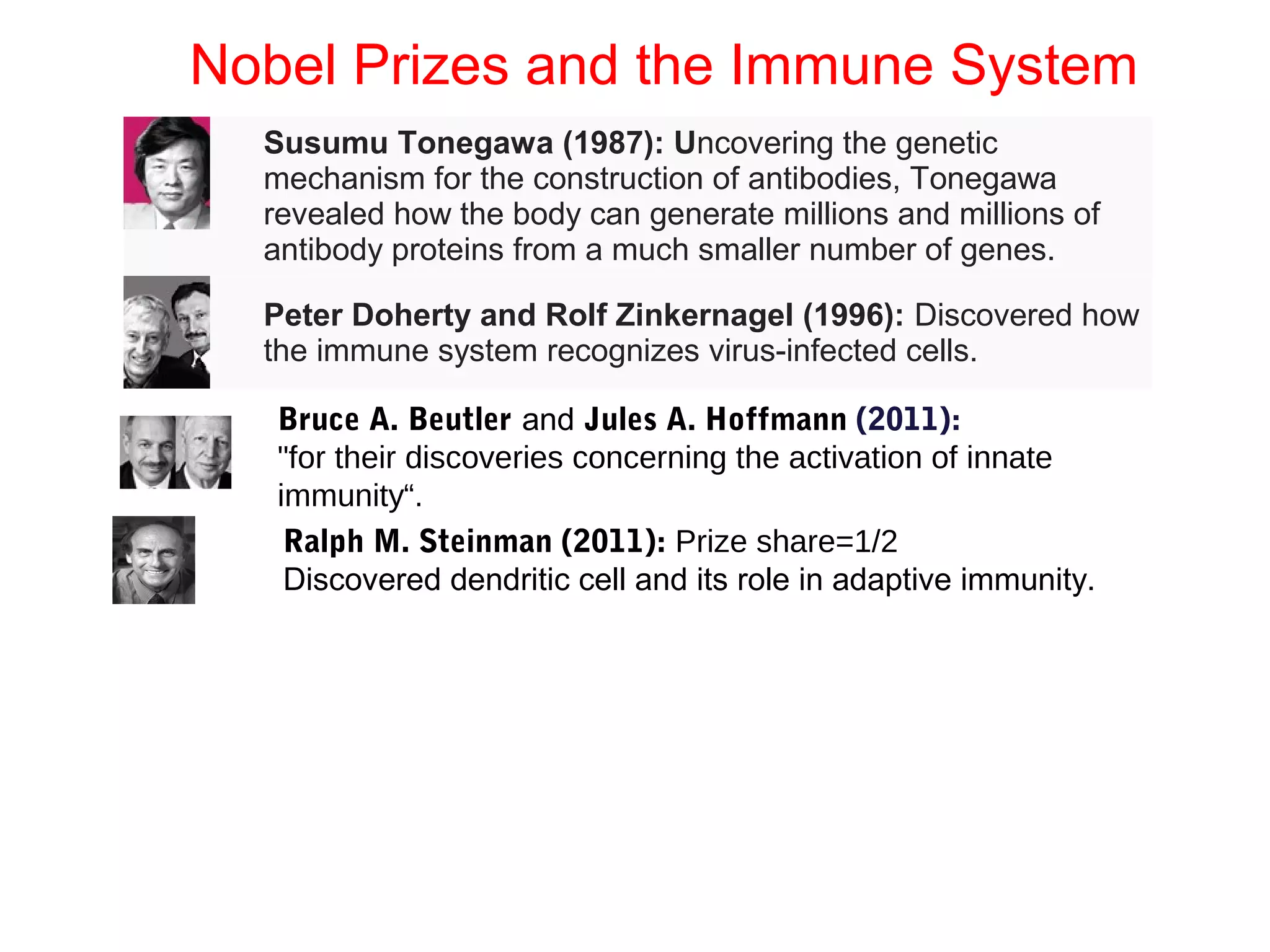
Nobel Prizes and the Immune System
Susumu Tonegawa (1987): Uncovering the genetic
mechanism for the construction of antibodies, Tonegawa
revealed how the body can generate millions and millions of
antibody proteins from a much smaller number of genes.
Peter Doherty and Rolf Zinkernagel (1996): Discovered how
the immune system recognizes virus-infected cells.
Bruce A. Beutler and Jules A. Hoffmann (2011):
"for their discoveries concerning the activation of innate
immunity“.
Ralph M. Steinman (2011): Prize share=1/2
Discovered dendritic cell and its role in adaptive immunity.
Definition and Branches
-Immunology:
The science of self non-self discrimination.
-Branches:
*Transplantation
*Cancer immunology
*Infection and immunity
*Allergic diseases
*Autoimmunity
The importance of immunology
-Prophylaxis
-Diagnosis
-Treatment
Functions (duties) of immune
system
-Defense
-Homeostasis
-Surveillance
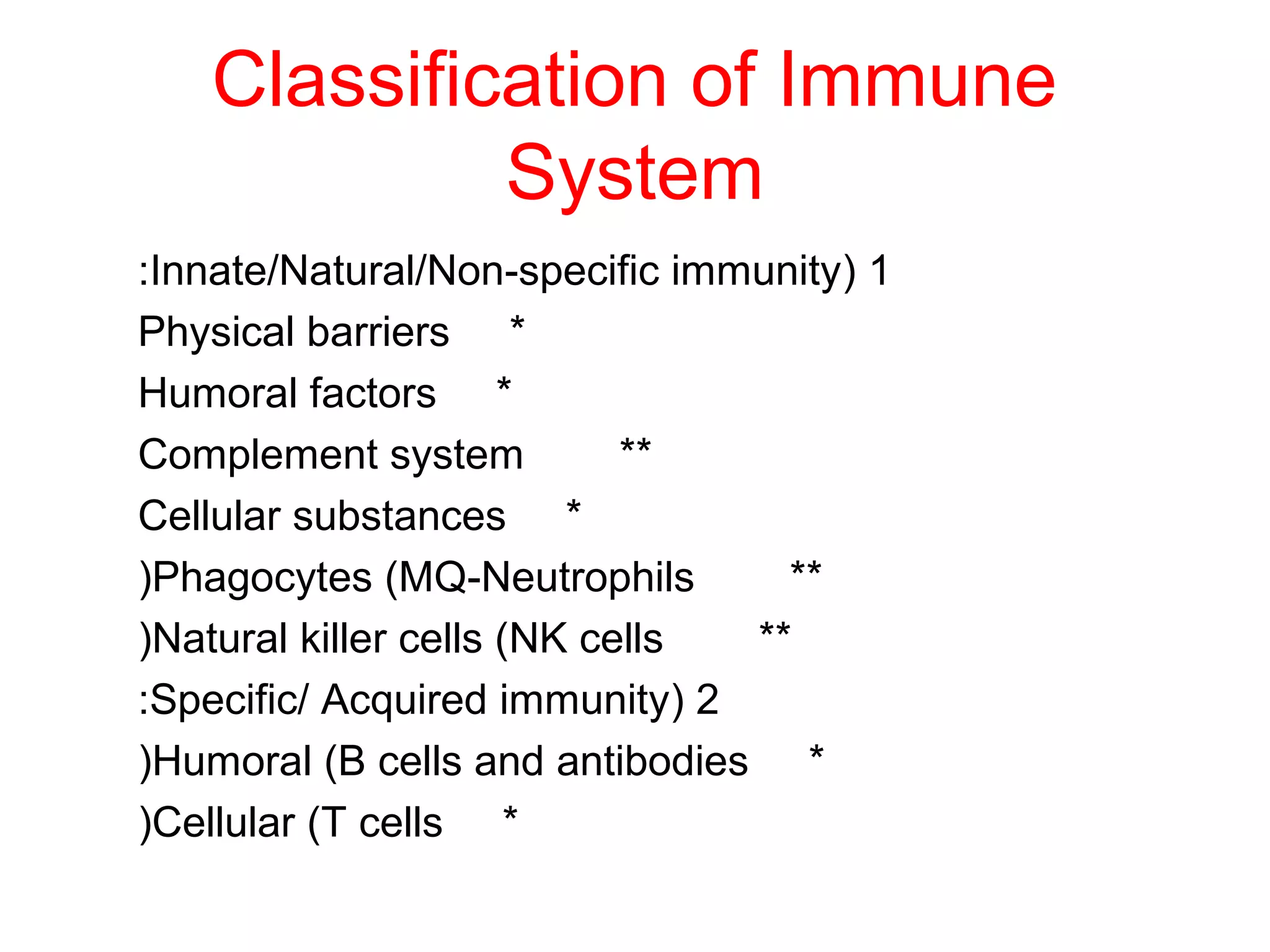
Classification of Immune
System
1)Innate/Natural/Non-specific immunity:
*Physical barriers
*Humoral factors
**Complement system
*Cellular substances
**Phagocytes (MQ-Neutrophils)
**Natural killer cells (NK cells)
2)Specific/ Acquired immunity:
*Humoral (B cells and antibodies)
*Cellular (T cells)
Thank you for your attention
Types of immune responses
1(Innate (natural or non-specific(
2(Acquired [adaptive (able to fit and
up-date( or specific immunity[
*Common feature of non-specific and specific immunity:
Self non-self discrimination
Similarities & differences between
specific & non-specific immunity
Similarities:
1(Self non-self discrimination (self-tolerance(
2(self-limitation (Homeostasis(
Differences:
1(specificity & diversity
2(Memory
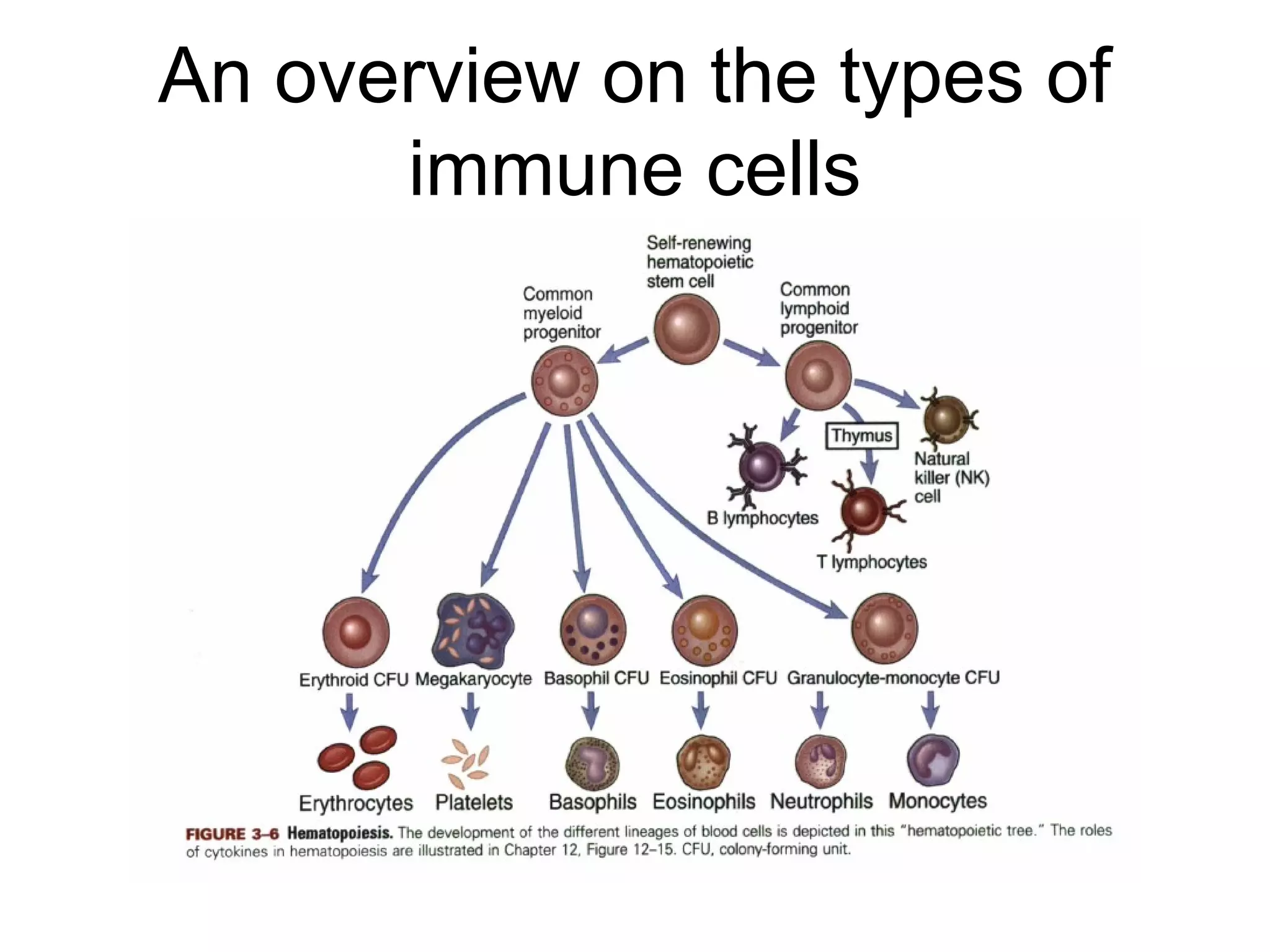
An overview on the types of
immune cells
Sites of production and function of
immune cells
-Usually are produced and do their
functions in
lymphoid organs (LO(.
-There are 2 major types of LOs:
1(Primary/Central/generative LOs:
1a( Bone marrow
1b( Thymus
2(Secondary/peripheral LOs:
2a( Lymph nodes
2b( Spleen
2c( G(Gut(ALT + B (Bronchial(ALT=
M(Mucosal(ALT

Final history lecture

  • 1.
    Similarities & differencesbetween specific & non-specific immunity Similarities: 1(Self non-self discrimination (self-tolerance( 2(self-limitation (Homeostasis( Differences: 1(specificity & diversity 2(Memory
  • 2.
    In the nameof God Immunology Course For Medical Students Second Semester 1393-1394 Presented by: Immunology department of Shiraz Medical School Lecturers: A. Ghaderi Z. Amirghofran E. Kamali B. Gharesi-Fard S. Farjadian M. Droodchi F. Nejatolahi
  • 3.
    Some Important Notes http://med.sums.ac.ir/departments/basic-sciences/immunology Coursecoordinator: - Dr. Gharesi-Fard Times of presentation: - Sundays 10-12 & Wednesdays 11-12 Start of Lab. Sections: - After 16.01.1394 Dates of practical sections: -Saturdays 13.00-17.00 (2 sessions( -Sundays 13.30-17.30 (2 session( -Mondays 8.00-10.00 (1 session( Midterm exam: - Between 29.1.94 & 10.2.94 (lectures:1-12, Innate immunity is included( Final Exam: - Between 6.4.94 & 24.4.94 (lectures: 13-24 + Practical Exam( Early Exposure: - Rheumatology Dept. (Dr. Nazarinia( 17.03.1394(group 1( & 24.03.1394 (group 2( References: - Cellular and Molecular Immunology (Abul K. Abbas( -Medical Immunology (Daniel P. Stites(
  • 4.
    History of Immunology Objectives: 1-Tointroduce the history of Immunology *Babylonian Epic of Gilgamesh (2500 B.C.( **Both Babylonians and ancient Egyptians had a god of disease *Thucydides **Author of the History of the Peloponnesian War (Greek & Sparta( **Plague of Athena of 430 B.C. *Christian times (immunitas in ancient Rome( **God punish the sin of humans with disease. **God employ diseases to clean humans of their sins. →Cleaned individuals would not merit further punishment. *Islamic physicians (Razes 10th and Avicenna 11th century( **Explosive theory *Lady Mary Montague (1718(
  • 5.
    LADY MARY WORTLEYMONTAGU (Variolation(
  • 6.
  • 7.
  • 8.
    •Jenner used materialfrom Sarah Nelmes’s arm to vaccinate an eight year old boy, James Phipps.
  • 9.
    •The first vaccination:Edward Jenner used pus from the hand of a dairy maid in 1796
  • 10.
  • 11.
    Luis Pasteur (1857-1870) Depletiontheory chicken cholera and anthrax "vaccines“ And the concept of “Therapeutic vaccines” for Rabies
  • 12.
  • 13.
    History of Immunology Themajor milestone in Immunology
  • 14.
    Nobel Prizes andthe Immune System Emil von Behring (1901): Identified: * Factors in blood that neutralize the toxic products from tetanus and diphtheria bacteria. * These agents could be used to prevent illness and death caused by diphtheria microbes (Humoral theory of immunity). Ilya Ilyich Mechnikov and Paul Ehrlich (1908): * Mechnikov identified phagocyte cells. * Ehrlich's side-chain theory proposed how antibodies released in blood tackle invaders. He also discovered the Mast cells. Charles Richet (1913): Discovered anaphylaxis, a life- threatening allergic reaction to toxins, which showed how the immune system can damage its host as well as provide protection against disease. Jules Bordet (1919): Identified complement system, factors in blood work with antibodies to destroy bacteria. Karl Landsteiner (1930): Discovered human blood groups, and a system for typing blood, allowed blood transfusions to be carried out without the risk of adverse reactions.
  • 15.
    Nobel Prizes andthe Immune System Sir Frank MacFarlane Burnet and Peter Medawar (1960): The concept of immunological tolerance showed how the body learns to recognize its own cells and tissues, which prevents the immune system from mounting a response against itself. Gerald Edelman and Rodney Porter (1972): The two scientists independently deciphered the structure of antibodies, which revealed how seemingly identical-looking molecules can target specifically any one of a countless number of invaders for destruction.Baruj Benacerraf, Jean Dausset and George Snell (1980): A specific set of proteins on the surface of cells that regulate the immune response (MHC). Nils Jerne, Georges Kohler and César Milstein (1984): Jerne's theories provided a clearer image of how the immune system engages antibodies to fight invaders, Köhler and Milstein's techniques for producing specific antibodies on demand helped to create better diagnostic tests and new treatments against diseases.
  • 16.
    Nobel Prizes andthe Immune System Susumu Tonegawa (1987): Uncovering the genetic mechanism for the construction of antibodies, Tonegawa revealed how the body can generate millions and millions of antibody proteins from a much smaller number of genes. Peter Doherty and Rolf Zinkernagel (1996): Discovered how the immune system recognizes virus-infected cells. Bruce A. Beutler and Jules A. Hoffmann (2011): "for their discoveries concerning the activation of innate immunity“. Ralph M. Steinman (2011): Prize share=1/2 Discovered dendritic cell and its role in adaptive immunity.
  • 17.
    Definition and Branches -Immunology: Thescience of self non-self discrimination. -Branches: *Transplantation *Cancer immunology *Infection and immunity *Allergic diseases *Autoimmunity
  • 18.
    The importance ofimmunology -Prophylaxis -Diagnosis -Treatment
  • 19.
    Functions (duties) ofimmune system -Defense -Homeostasis -Surveillance
  • 20.
    Classification of Immune System 1)Innate/Natural/Non-specificimmunity: *Physical barriers *Humoral factors **Complement system *Cellular substances **Phagocytes (MQ-Neutrophils) **Natural killer cells (NK cells) 2)Specific/ Acquired immunity: *Humoral (B cells and antibodies) *Cellular (T cells)
  • 21.
    Thank you foryour attention
  • 22.
    Types of immuneresponses 1(Innate (natural or non-specific( 2(Acquired [adaptive (able to fit and up-date( or specific immunity[ *Common feature of non-specific and specific immunity: Self non-self discrimination
  • 23.
    Similarities & differencesbetween specific & non-specific immunity Similarities: 1(Self non-self discrimination (self-tolerance( 2(self-limitation (Homeostasis( Differences: 1(specificity & diversity 2(Memory
  • 24.
    An overview onthe types of immune cells
  • 26.
    Sites of productionand function of immune cells -Usually are produced and do their functions in lymphoid organs (LO(. -There are 2 major types of LOs: 1(Primary/Central/generative LOs: 1a( Bone marrow 1b( Thymus 2(Secondary/peripheral LOs: 2a( Lymph nodes 2b( Spleen 2c( G(Gut(ALT + B (Bronchial(ALT= M(Mucosal(ALT