Group 3
E-Commerce and E-Business
E-Commerce                      E-Business
 Buying and selling of          Spin-off of E-commerce
  goods and services on-line     Involves more of the business
  (Transaction)
                                  processes (Exchange of
- Online shopping
                                  Information)
- Online purchasing
                                -Buying
                                -Selling
                                -Trading
Example: Buy a Shirt online     -Working with business
  and try to return it to the     partners
  retailer
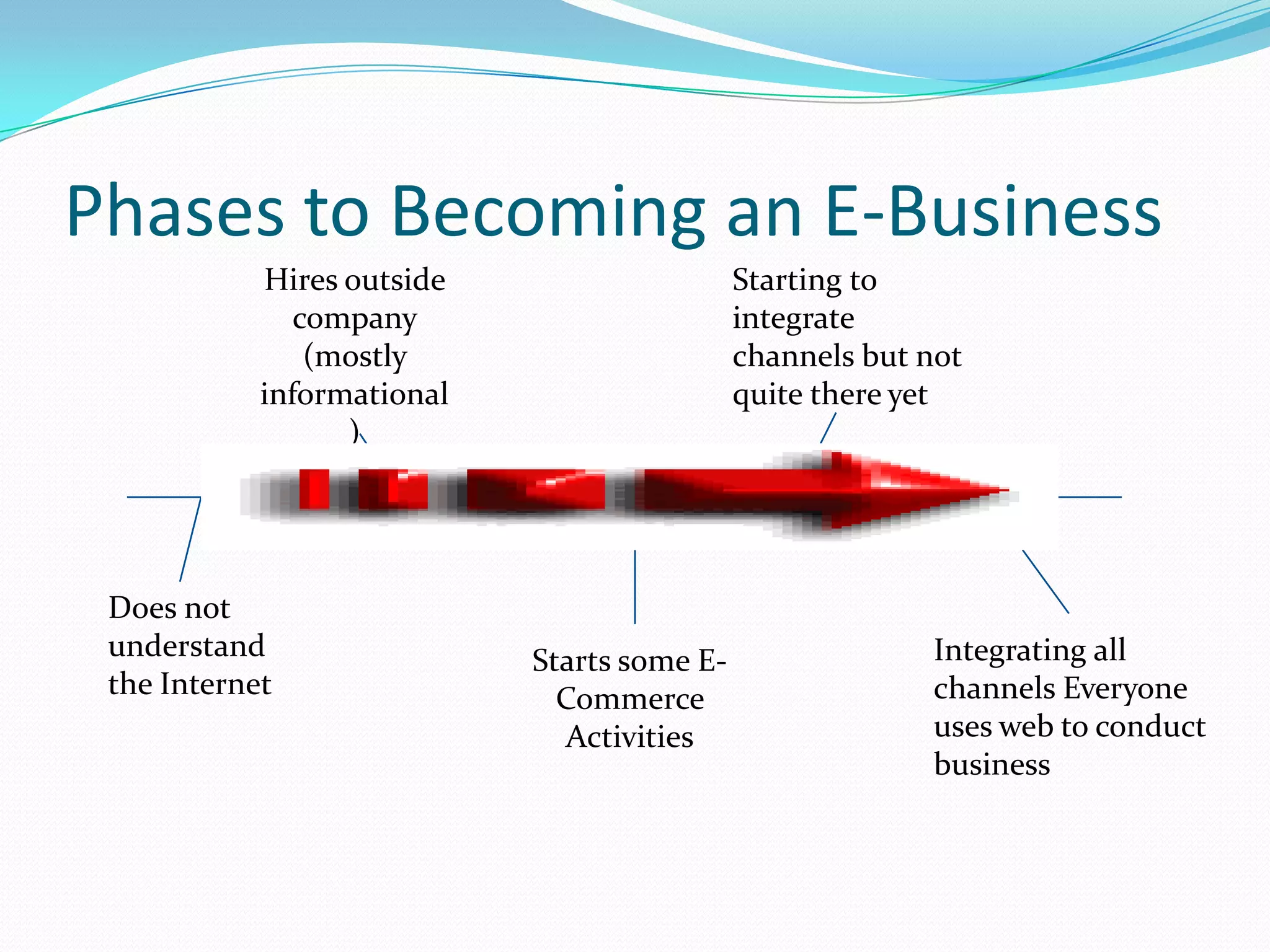
Phases to Becoming an E-Business
            Hires outside                    Starting to
               company                       integrate
                (mostly                      channels but not
            informational                    quite there yet
                  )


 Does not
 understand                 Starts some E-                Integrating all
 the Internet                 Commerce                    channels Everyone
                              Activities                  uses web to conduct
                                                          business
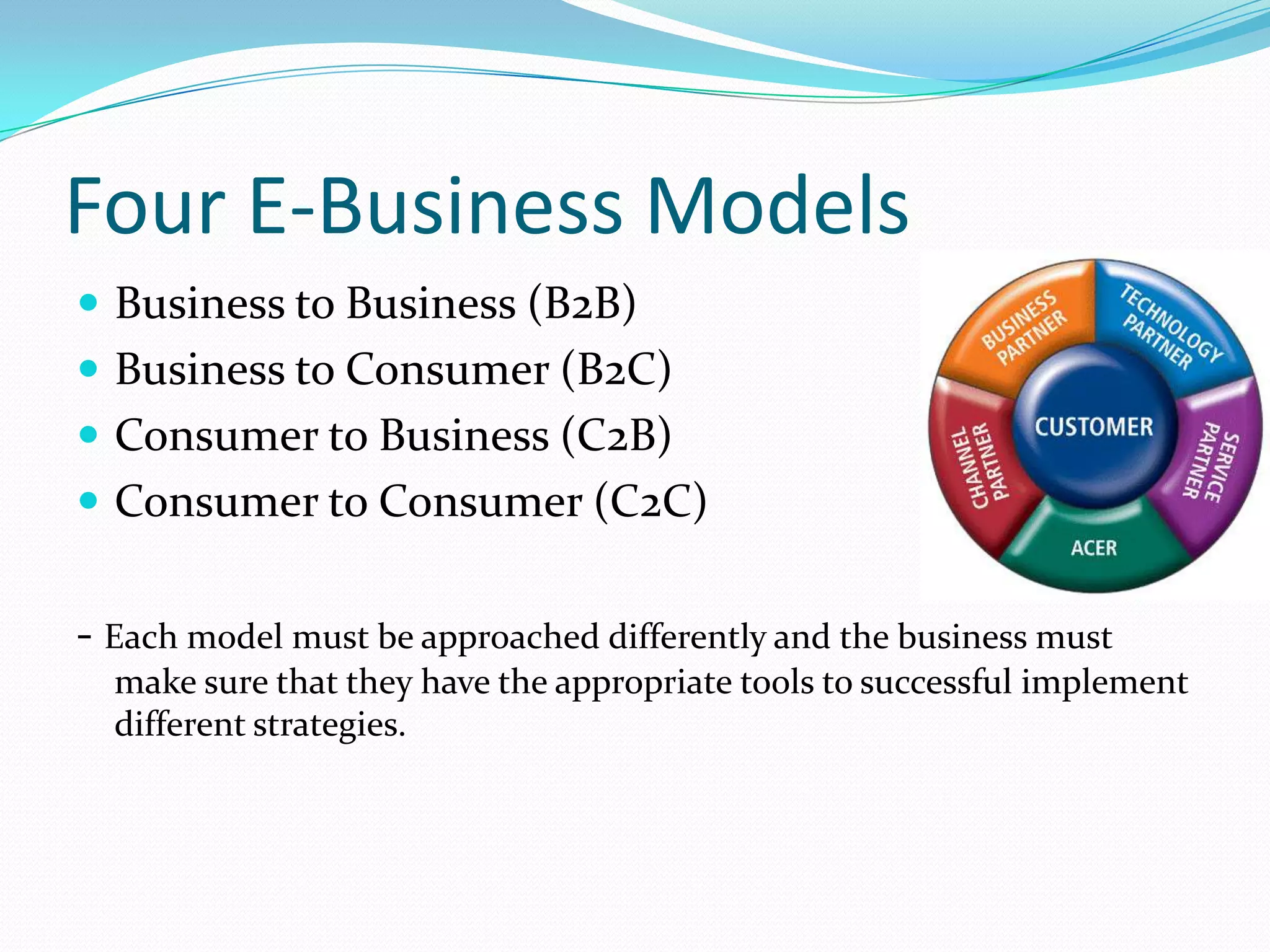
Four E-Business Models
 Business to Business (B2B)
 Business to Consumer (B2C)
 Consumer to Business (C2B)
 Consumer to Consumer (C2C)


- Each model must be approached differently and the business must
  make sure that they have the appropriate tools to successful implement
  different strategies.
Business to Business (B2B)
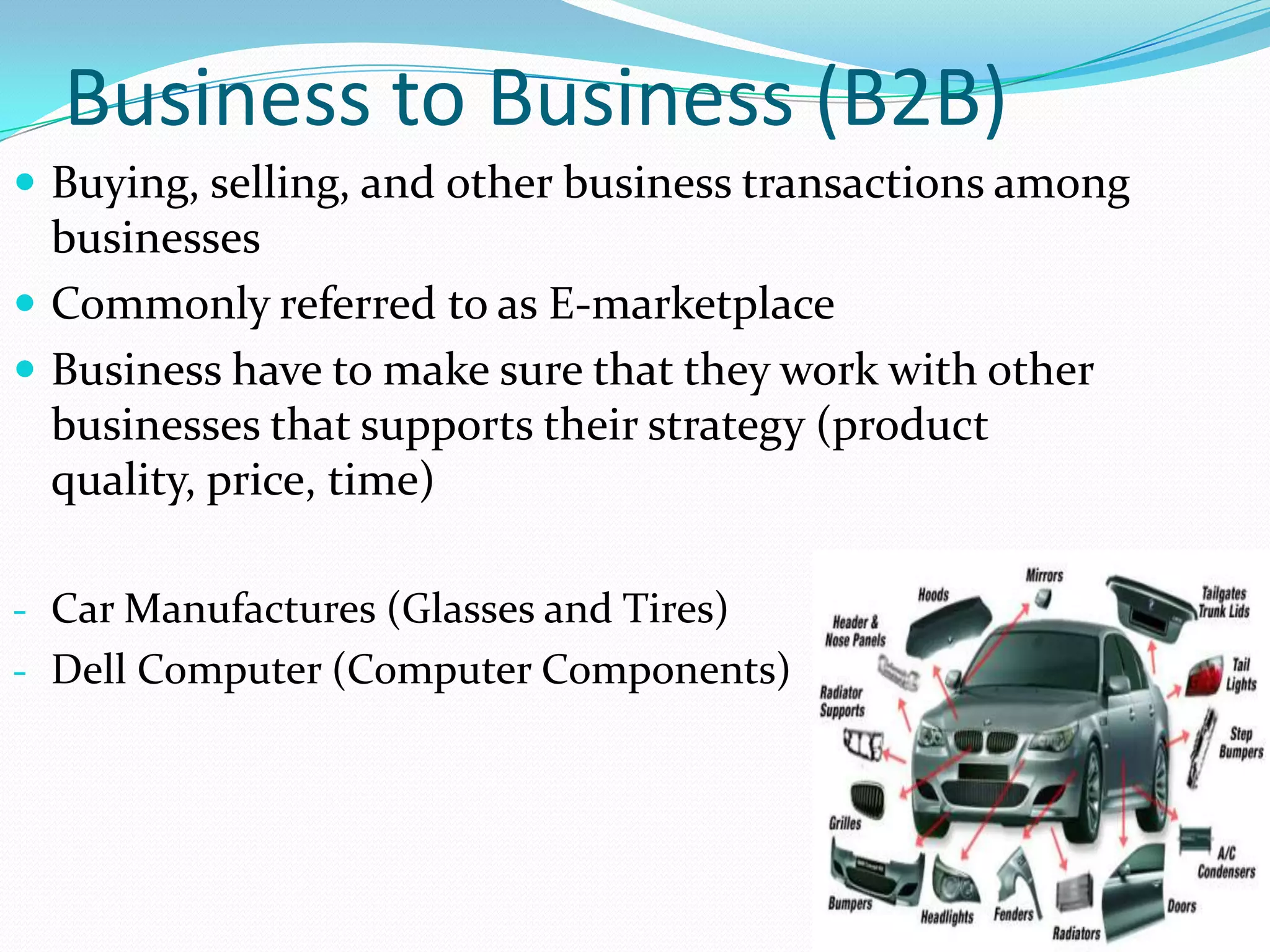
 Buying, selling, and other business transactions among
  businesses
 Commonly referred to as E-marketplace
 Business have to make sure that they work with other
  businesses that supports their strategy (product
  quality, price, time)

- Car Manufactures (Glasses and Tires)
- Dell Computer (Computer Components)
Business to Consumer (B2C)
 Selling of products/services to consumers
 E-shopping
 On-line stores represents the same brand image as physical
  stores if they exist.
 Pure Play (Internet only), Click and Mortar (Internet and
  Physical Store), and Brick and Mortar (Physical Store
  Only)


-
Consumer to Business (C2B)
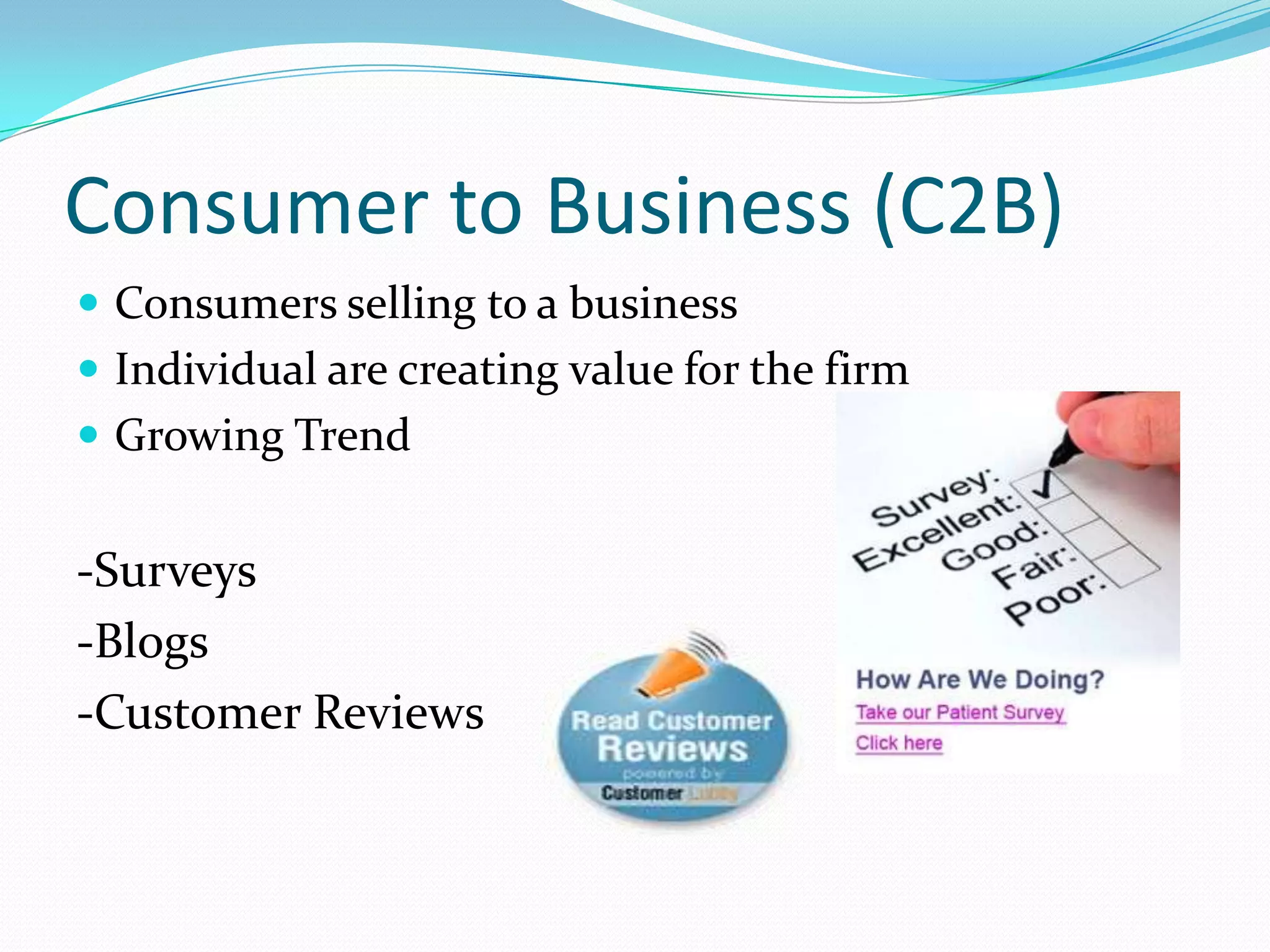
 Consumers selling to a business
 Individual are creating value for the firm
 Growing Trend


-Surveys
-Blogs
-Customer Reviews
Consumer to Consumer (C2C)
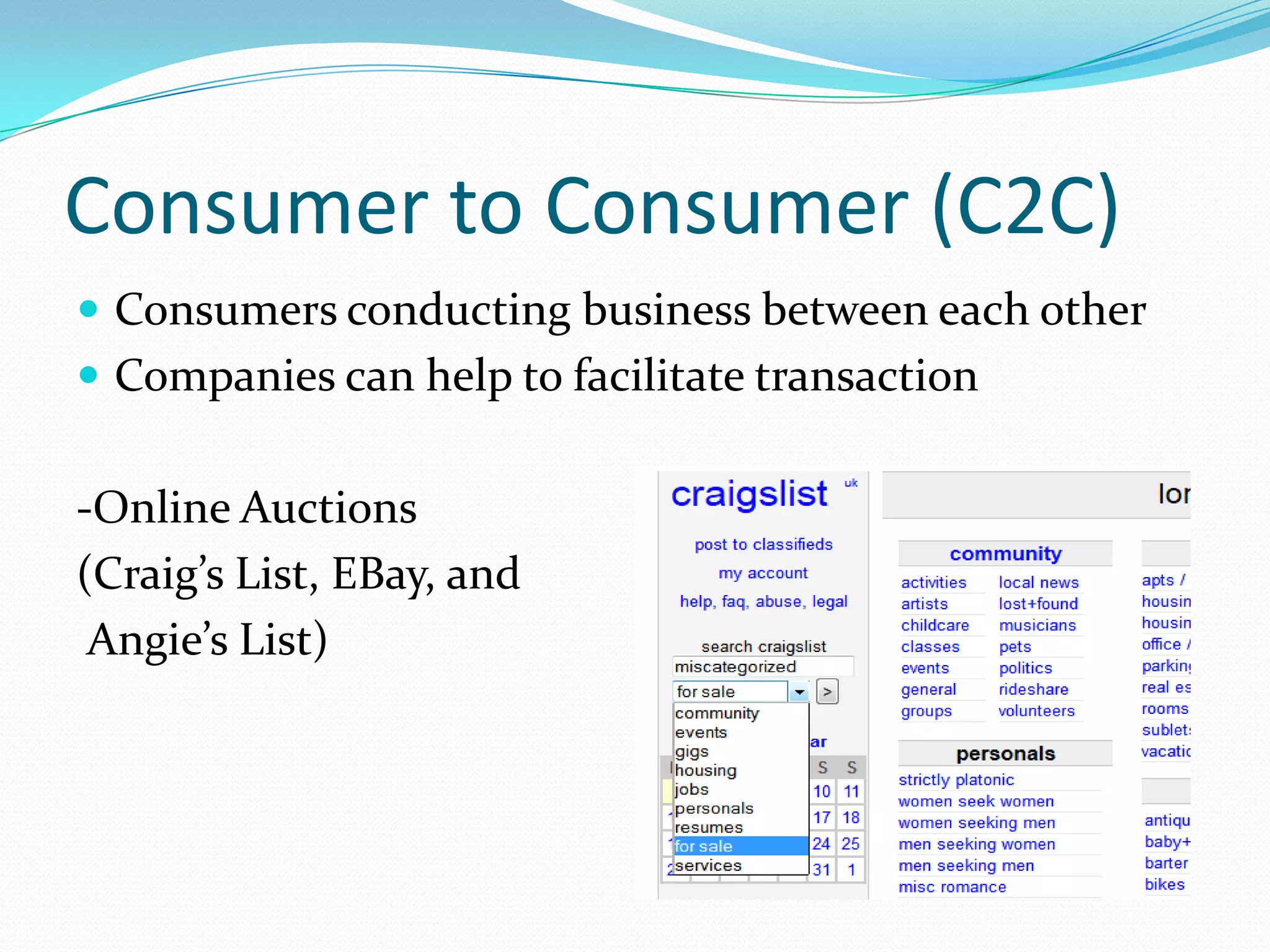
 Consumers conducting business between each other
 Companies can help to facilitate transaction


-Online Auctions
(Craig’s List, EBay, and
 Angie’s List)
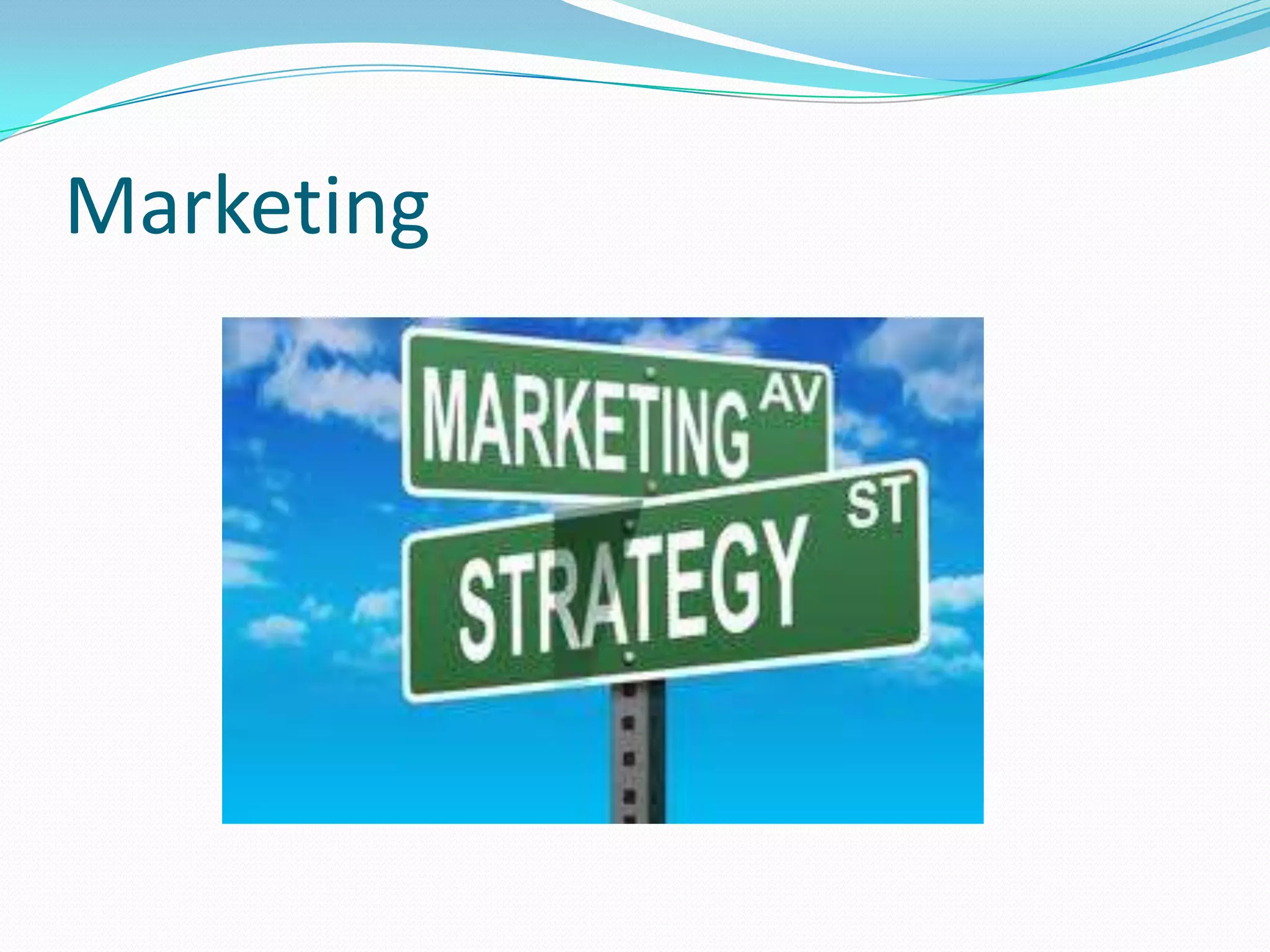
Marketing
Impacts on Marketing
 Individuals can stay at home and buy
 Less time consuming
 Less costly
 More research can be done
 Anytime access to information
    Click-through
    Viral content
    Mobile computing
Click-Through
 The process of clicking through an online
  advertisement to the advertiser’s destination
 Can track:
   Where the individual clicked from
   Which pages were visited
   Which links were interesting enough to click through
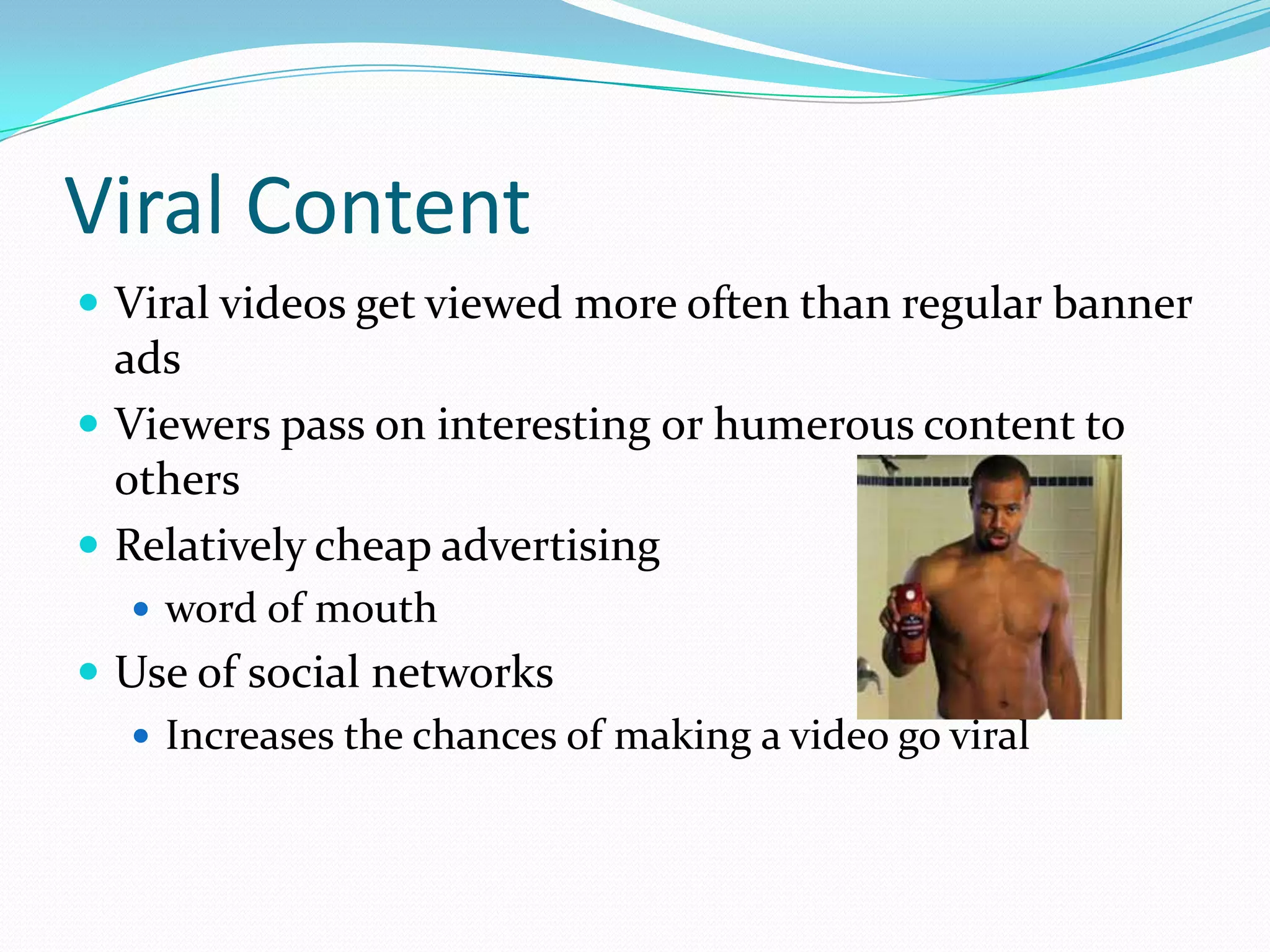
Viral Content
 Viral videos get viewed more often than regular banner
  ads
 Viewers pass on interesting or humerous content to
  others
 Relatively cheap advertising
   word of mouth
 Use of social networks
   Increases the chances of making a video go viral
Mobile Computing
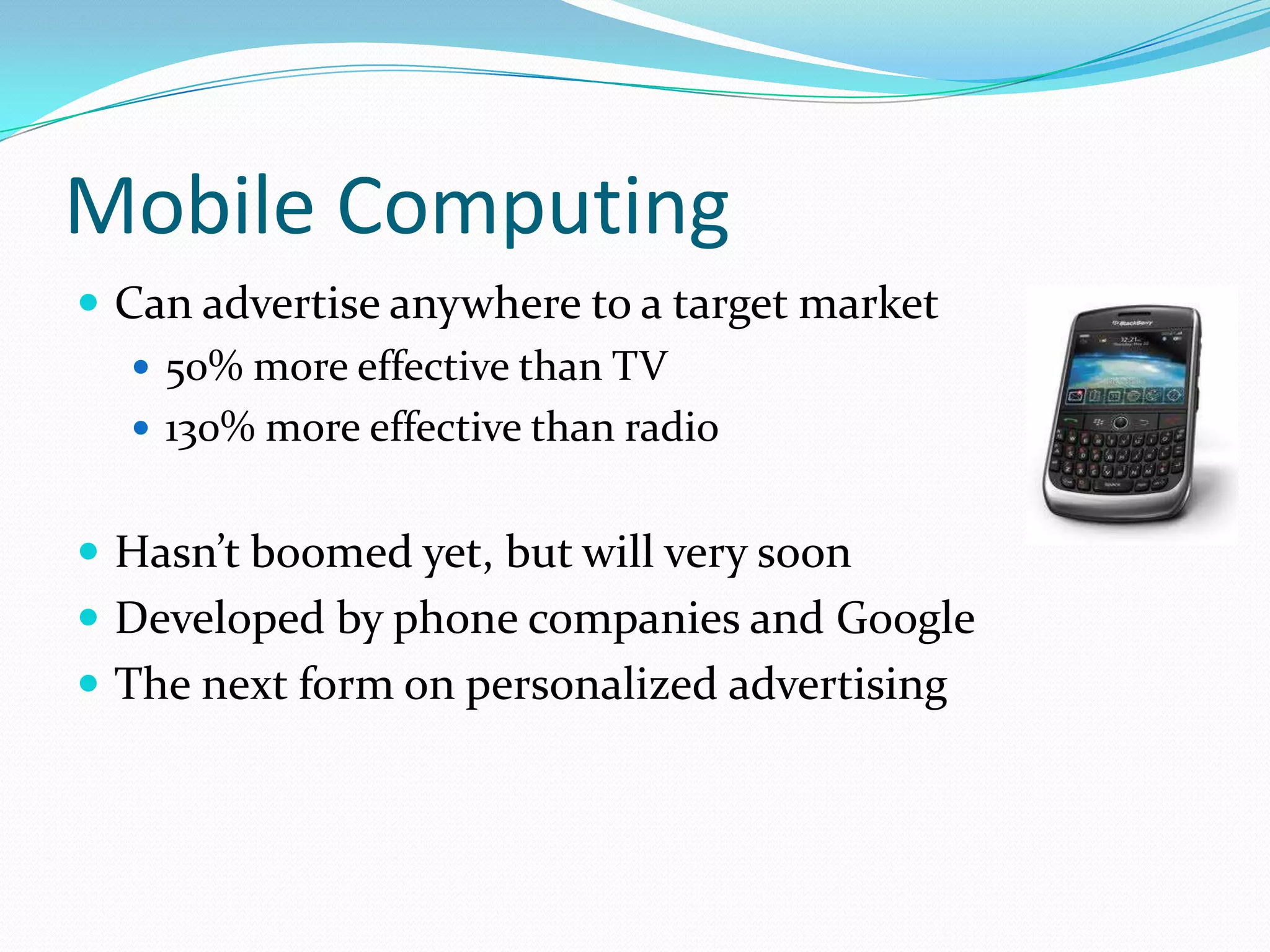
 Can advertise anywhere to a target market
    50% more effective than TV
    130% more effective than radio


 Hasn’t boomed yet, but will very soon
 Developed by phone companies and Google
 The next form on personalized advertising
Benefits to Marketing
 Bi-directional flow of information
 Decreased time lag for customer service
   Organization is reachable at any time
 Decreased cost of customer service
 Personalized advertisements
    More information on customers
Ford’s E-Business
 Virtual store and information center coupled with
    physical car dealerships
   Average of $24,000 on an initial purchase
   Average of $68,000 spent in total throughout the life of
    the car
   More time is spent on the life of the car than the initial
    pruchase
   E-business maintains customer intamacy for life
Finance
 E-business decreases transaction costs
 E-business can provide easy acces to international
 customers
   Organizations may not know how to deal with
    international currencies which may increase transaction
    costs a little
 Increased customer service and sales revenues
Finance
 24-hour online access requires 24-hour order
  processing
 Increases sales
 Online payment methods
   Pay pal, Credit cards, Electronic cash
 Funding for Data acquisition and security
Supply Chain Management
 Mass production to demand driven
 Increased supply chain performance
 Shorten the supply chain
 Cut costs
 Can eliminate the bullwhip effect
E-Commerce and E-Business
Advantages                        Disadvantages
 Shortens the supply chain        Increased transportation
 Reduced facility costs            costs
 Decreased processing time        Start-up costs
 Lower inventory levels
 More personalized buying
  experience
 More potential customers
 Increased financial data and
  sales
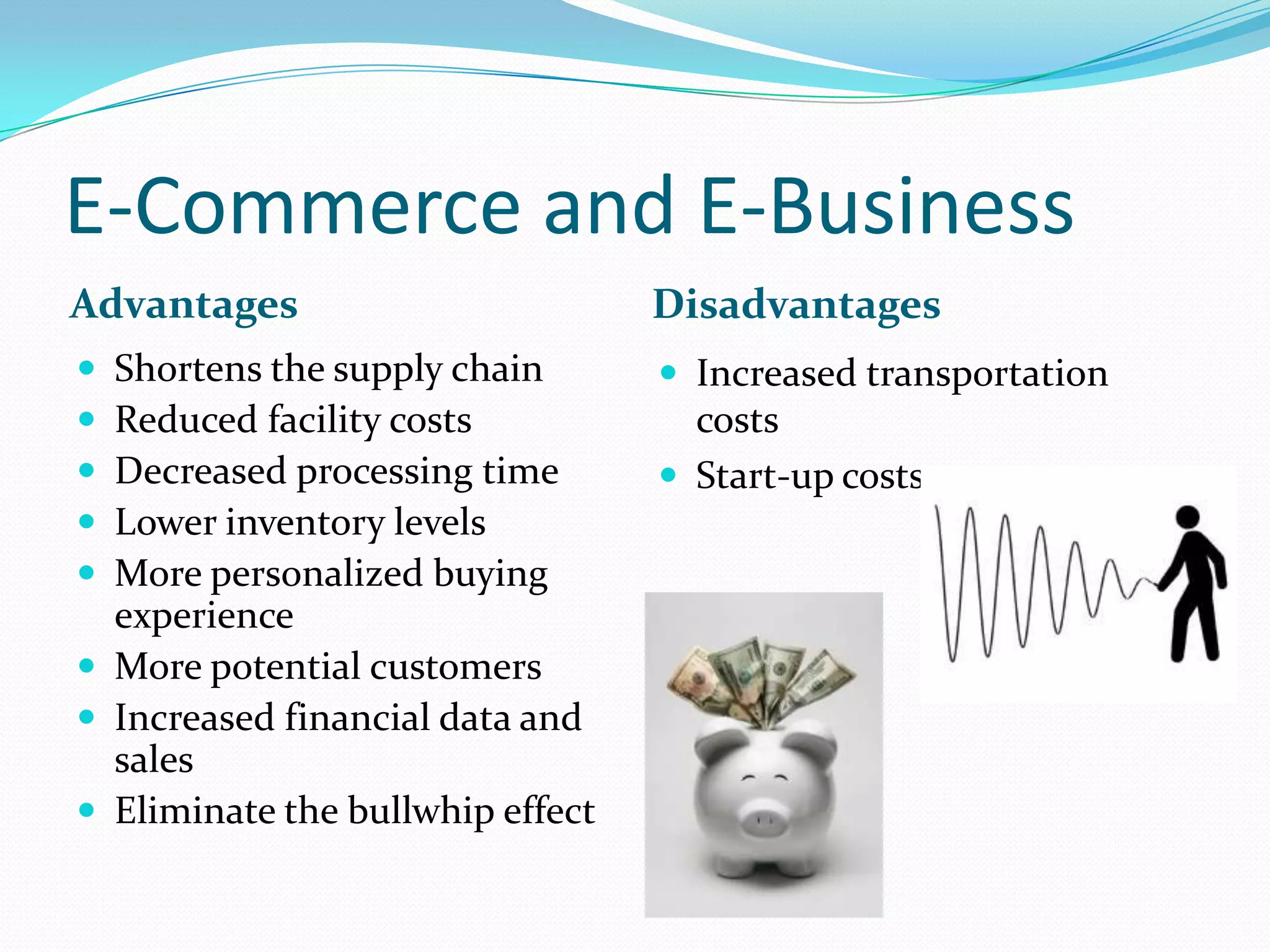
 Eliminate the bullwhip effect
Case Study: BHP and BHP Steel
 Broken Hill Proprietary manufacturing firm
 Industries: minerals, copper, petroleum, and
  engineering
 60,000 employees in 60 countries
   BHP Steel $7.6 billion revenues
   Complex structure
 BHP considered leader in E-commerce
E-commerce Implementation
and Benefits
 Stage 1: Early Implementation-Electronic Data
  Interchange
        Send/receive business documents/orders
 Stage 2: Electronic Trading Gateway
        Centralize all trading
 Stage 3: Internet Site
        Serve Small customers
Obstacles
 Stage 1: Management Commitment and Lack of
  technical knowledge. 1st EDI in Australia
 Stage 2: Technology issues (no standards) and lack of
  customers participation
 Stage 3: immaturity standards internet and readiness
  of third parties
Factors Affecting Implementation
 Commitment
 Trading partner participation
 Supplier vs. Customer
 Technology/Media Hype
 Business Value
 Training and Education
 Rapid technology change + Complexity/Compatibility
 (technology and processes)
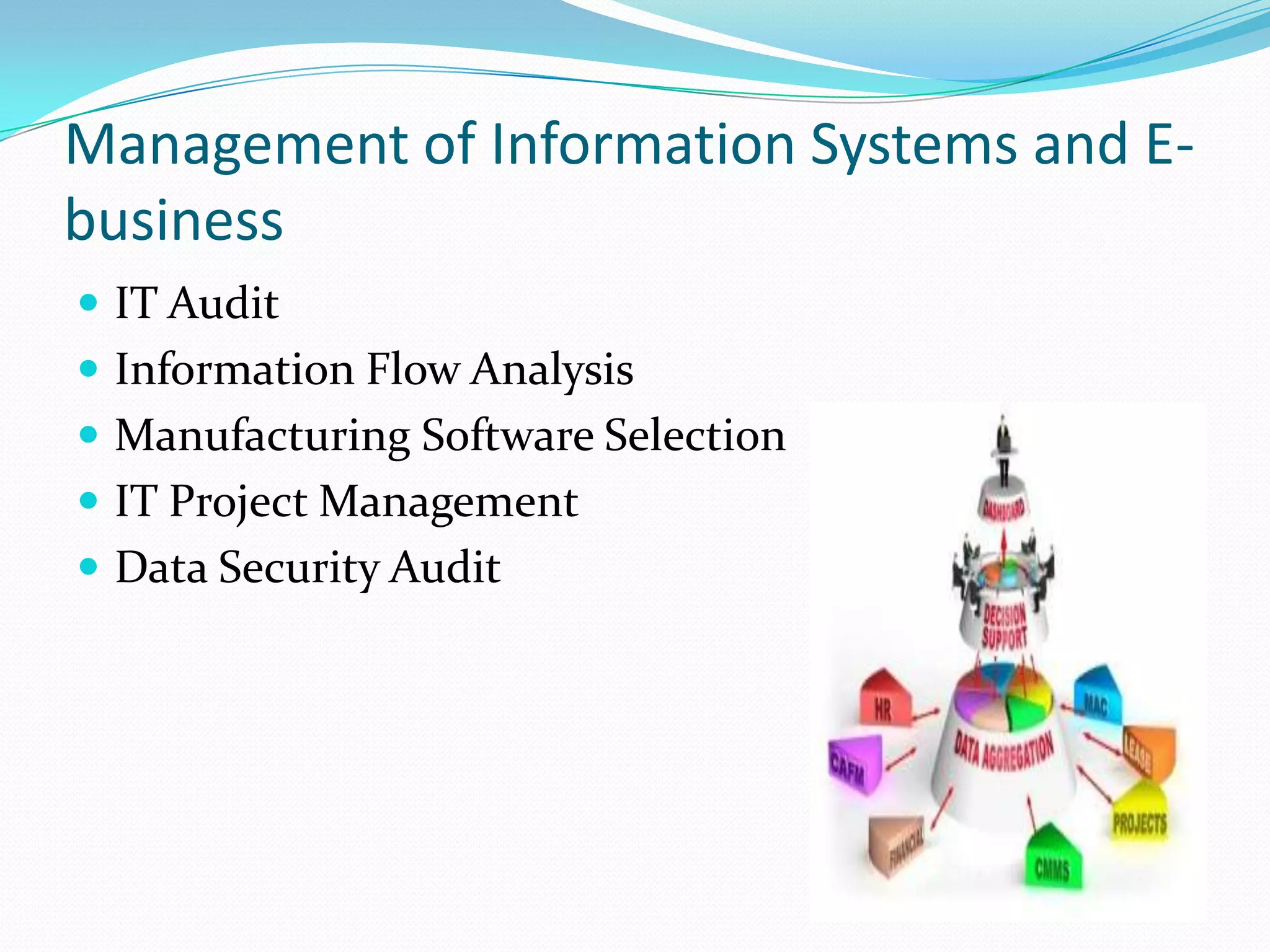
Management of Information Systems and E-
business
 IT Audit
 Information Flow Analysis
 Manufacturing Software Selection
 IT Project Management
 Data Security Audit
Global Implications
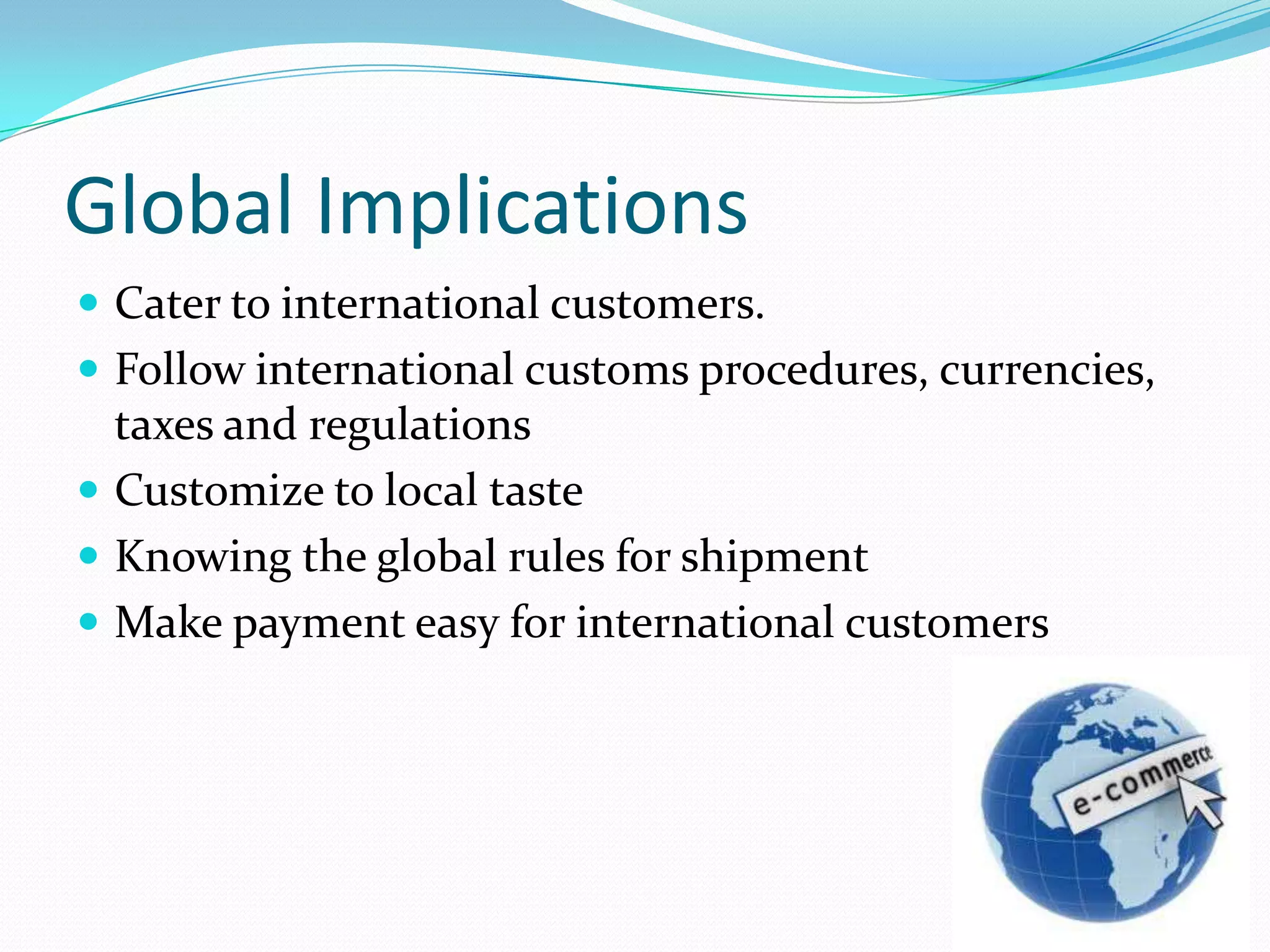
 Cater to international customers.
 Follow international customs procedures, currencies,
  taxes and regulations
 Customize to local taste
 Knowing the global rules for shipment
 Make payment easy for international customers
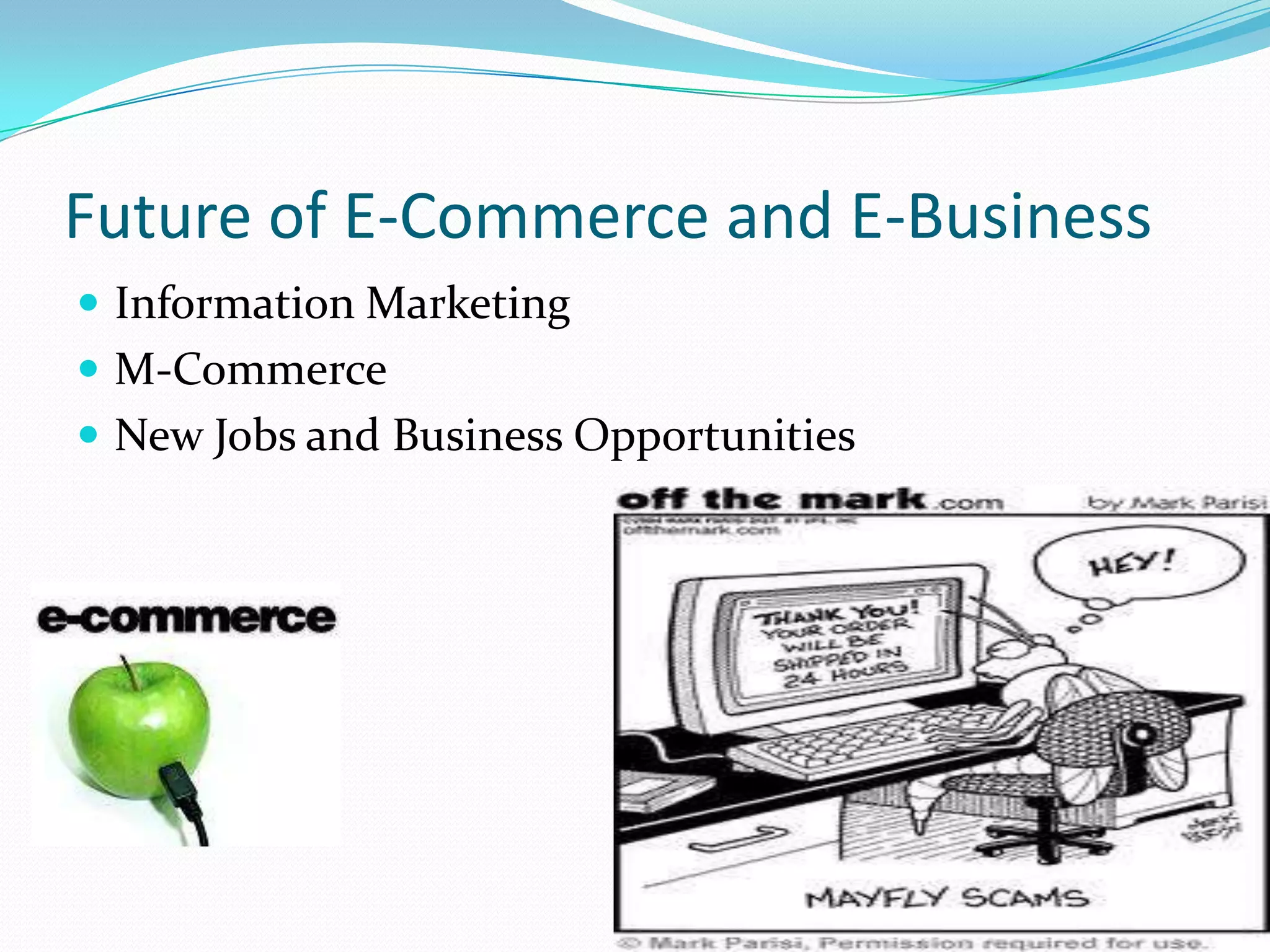
Future of E-Commerce and E-Business
 Information Marketing
 M-Commerce
 New Jobs and Business Opportunities
Ethical Issues
 Similar to ethical issues surrounding other facets of
  business life
 Relative anonymity, speed of information create
  special issues
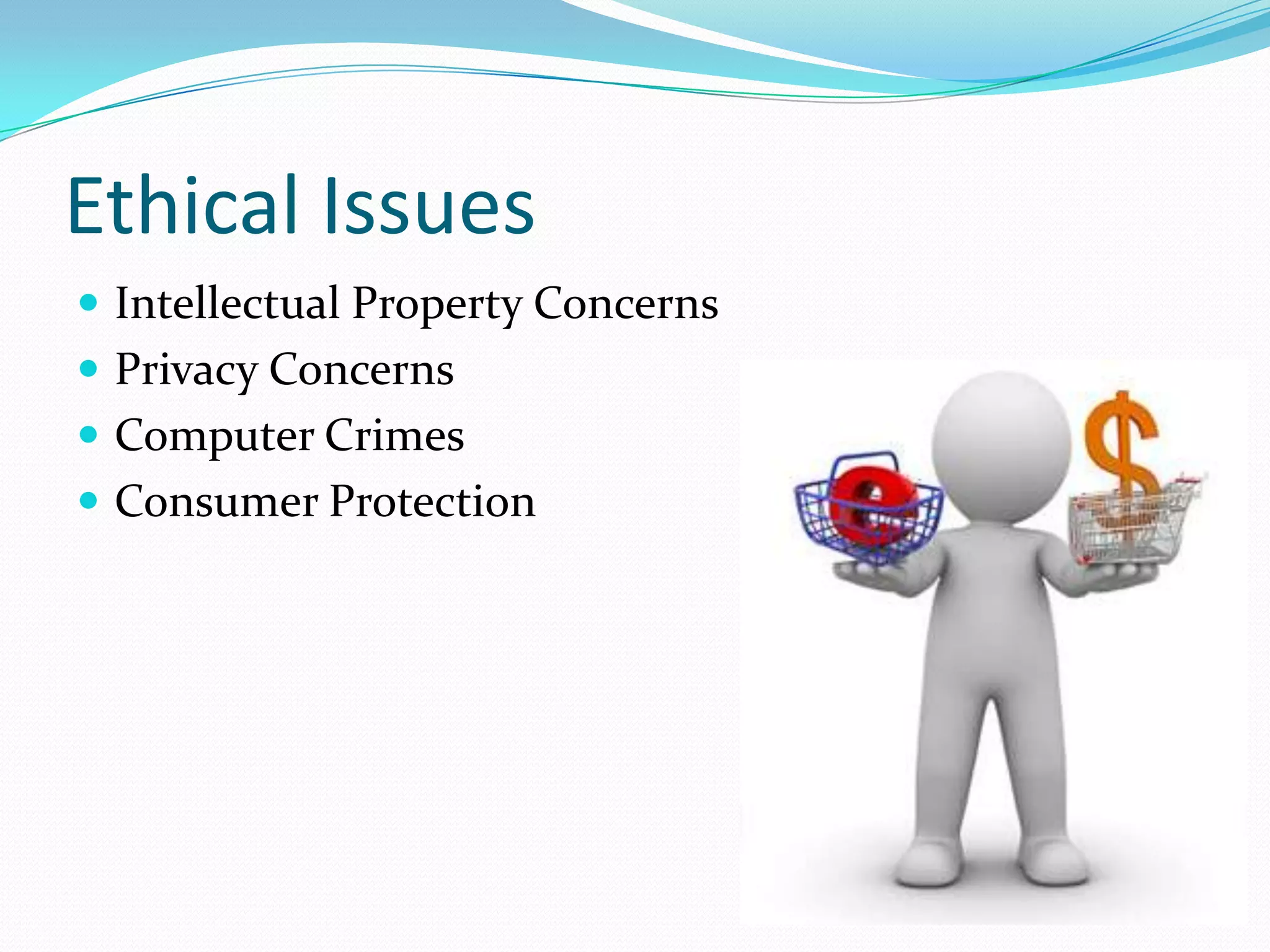
Ethical Issues
 Intellectual Property Concerns
 Privacy Concerns
 Computer Crimes
 Consumer Protection
Ethical Issues
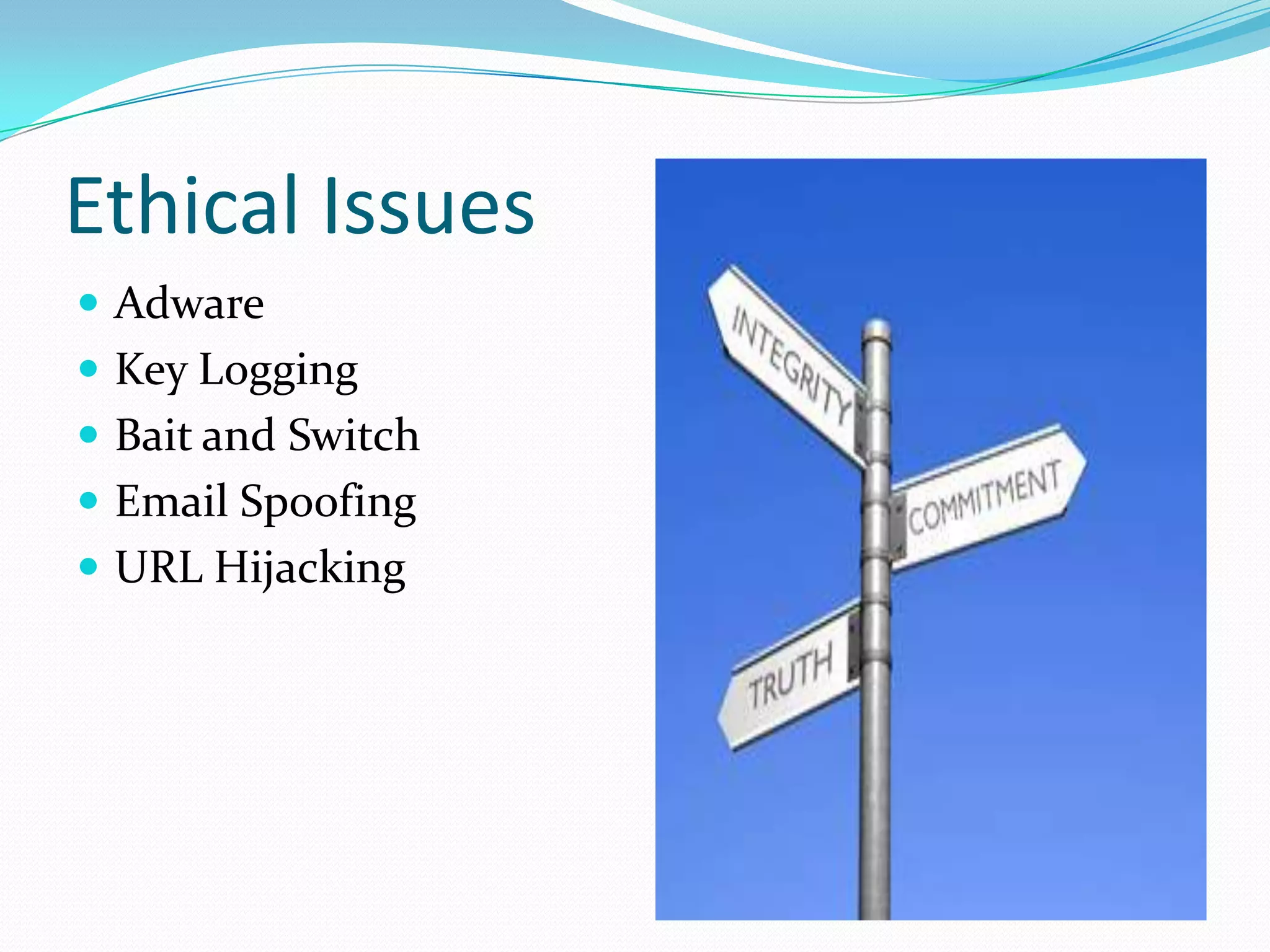
 Adware
 Key Logging
 Bait and Switch
 Email Spoofing
 URL Hijacking
Recommendation
 Implement E-Commerce and E-Business
 Advantages outweigh disadvantages
Questions?

Final Group Presentation

  • 1.
  • 2.
    E-Commerce and E-Business E-Commerce E-Business  Buying and selling of  Spin-off of E-commerce goods and services on-line  Involves more of the business (Transaction) processes (Exchange of - Online shopping Information) - Online purchasing -Buying -Selling -Trading Example: Buy a Shirt online -Working with business and try to return it to the partners retailer
  • 3.
    Phases to Becomingan E-Business Hires outside Starting to company integrate (mostly channels but not informational quite there yet ) Does not understand Starts some E- Integrating all the Internet Commerce channels Everyone Activities uses web to conduct business
  • 4.
    Four E-Business Models Business to Business (B2B)  Business to Consumer (B2C)  Consumer to Business (C2B)  Consumer to Consumer (C2C) - Each model must be approached differently and the business must make sure that they have the appropriate tools to successful implement different strategies.
  • 5.
    Business to Business(B2B)  Buying, selling, and other business transactions among businesses  Commonly referred to as E-marketplace  Business have to make sure that they work with other businesses that supports their strategy (product quality, price, time) - Car Manufactures (Glasses and Tires) - Dell Computer (Computer Components)
  • 6.
    Business to Consumer(B2C)  Selling of products/services to consumers  E-shopping  On-line stores represents the same brand image as physical stores if they exist.  Pure Play (Internet only), Click and Mortar (Internet and Physical Store), and Brick and Mortar (Physical Store Only) -
  • 7.
    Consumer to Business(C2B)  Consumers selling to a business  Individual are creating value for the firm  Growing Trend -Surveys -Blogs -Customer Reviews
  • 8.
    Consumer to Consumer(C2C)  Consumers conducting business between each other  Companies can help to facilitate transaction -Online Auctions (Craig’s List, EBay, and Angie’s List)
  • 9.
  • 10.
    Impacts on Marketing Individuals can stay at home and buy  Less time consuming  Less costly  More research can be done  Anytime access to information  Click-through  Viral content  Mobile computing
  • 11.
    Click-Through  The processof clicking through an online advertisement to the advertiser’s destination  Can track:  Where the individual clicked from  Which pages were visited  Which links were interesting enough to click through
  • 12.
    Viral Content  Viralvideos get viewed more often than regular banner ads  Viewers pass on interesting or humerous content to others  Relatively cheap advertising  word of mouth  Use of social networks  Increases the chances of making a video go viral
  • 13.
    Mobile Computing  Canadvertise anywhere to a target market  50% more effective than TV  130% more effective than radio  Hasn’t boomed yet, but will very soon  Developed by phone companies and Google  The next form on personalized advertising
  • 14.
    Benefits to Marketing Bi-directional flow of information  Decreased time lag for customer service  Organization is reachable at any time  Decreased cost of customer service  Personalized advertisements  More information on customers
  • 15.
    Ford’s E-Business  Virtualstore and information center coupled with physical car dealerships  Average of $24,000 on an initial purchase  Average of $68,000 spent in total throughout the life of the car  More time is spent on the life of the car than the initial pruchase  E-business maintains customer intamacy for life
  • 16.
    Finance  E-business decreasestransaction costs  E-business can provide easy acces to international customers  Organizations may not know how to deal with international currencies which may increase transaction costs a little  Increased customer service and sales revenues
  • 17.
    Finance  24-hour onlineaccess requires 24-hour order processing  Increases sales  Online payment methods  Pay pal, Credit cards, Electronic cash  Funding for Data acquisition and security
  • 18.
    Supply Chain Management Mass production to demand driven  Increased supply chain performance  Shorten the supply chain  Cut costs  Can eliminate the bullwhip effect
  • 19.
    E-Commerce and E-Business Advantages Disadvantages  Shortens the supply chain  Increased transportation  Reduced facility costs costs  Decreased processing time  Start-up costs  Lower inventory levels  More personalized buying experience  More potential customers  Increased financial data and sales  Eliminate the bullwhip effect
  • 20.
    Case Study: BHPand BHP Steel  Broken Hill Proprietary manufacturing firm  Industries: minerals, copper, petroleum, and engineering  60,000 employees in 60 countries  BHP Steel $7.6 billion revenues  Complex structure  BHP considered leader in E-commerce
  • 21.
    E-commerce Implementation and Benefits Stage 1: Early Implementation-Electronic Data Interchange  Send/receive business documents/orders  Stage 2: Electronic Trading Gateway  Centralize all trading  Stage 3: Internet Site  Serve Small customers
  • 22.
    Obstacles  Stage 1:Management Commitment and Lack of technical knowledge. 1st EDI in Australia  Stage 2: Technology issues (no standards) and lack of customers participation  Stage 3: immaturity standards internet and readiness of third parties
  • 23.
    Factors Affecting Implementation Commitment  Trading partner participation  Supplier vs. Customer  Technology/Media Hype  Business Value  Training and Education  Rapid technology change + Complexity/Compatibility (technology and processes)
  • 24.
    Management of InformationSystems and E- business  IT Audit  Information Flow Analysis  Manufacturing Software Selection  IT Project Management  Data Security Audit
  • 25.
    Global Implications  Caterto international customers.  Follow international customs procedures, currencies, taxes and regulations  Customize to local taste  Knowing the global rules for shipment  Make payment easy for international customers
  • 26.
    Future of E-Commerceand E-Business  Information Marketing  M-Commerce  New Jobs and Business Opportunities
  • 27.
    Ethical Issues  Similarto ethical issues surrounding other facets of business life  Relative anonymity, speed of information create special issues
  • 28.
    Ethical Issues  IntellectualProperty Concerns  Privacy Concerns  Computer Crimes  Consumer Protection
  • 29.
    Ethical Issues  Adware Key Logging  Bait and Switch  Email Spoofing  URL Hijacking
  • 30.
    Recommendation  Implement E-Commerceand E-Business  Advantages outweigh disadvantages
  • 31.

Editor's Notes

  • #3 Integration all channels Example: You visit a retailer's web site and buy a shirt. When the shirt arrives it is in the wrong size. You decide to return the shirt at the store's retail outlet instead of mailing it back to the vendor. However, when you go to the store you are told that they cannot take returns from their web site. Since the web site is not integrated with the rest of their business activities this company is not yet an eBusiness.