Pet Insurance and
 Your Veterinary
     Practice
Pet Insurance Facts
Less than 1% of Cats and Dogs are
 insured in the United States – about
 800,000 pets insured in 2008

Packaged Facts estimates North
 American Pet Insurance sales will more
 than triple in the next five years from
 $248 million in 2007 to $1.1 billion in
 2012
How Pet Insurance Works
1.   Get quote & buy policy
2.   Waiting period
3.   Get treatment
4.   Pay veterinary invoice
5.   File a claim
6.   Receive check
Pet Insurance Has Matured

 More companies selling pet insurance
 A wider variety of conditions covered
 The internet facilitates pet owner
  education and awareness

 “Not your grandfather’s pet insurance any more”
Not Managed Care


Client can go to any veterinarian in US
Veterinarian and client determine
 treatment protocol – not a third party
No pre-authorization required
What Is Covered?
Generally…
Illnesses and injuries
Prescription medications
Surgeries and hospitalization
Cancer treatments
After-hour emergency & specialist visits
Diagnostics, MRI, CAT scans and X-rays
Wellness/routine care (optional)
What Is Not Covered?
Generally…
Pre-existing conditions (unless cured)
Congenital conditions (present at birth)
Preventative, elective and cosmetic
 procedures
Boarding and grooming
Food, including prescription food
Supplements and vitamins
Major Differences Between
              Plans
Are hereditary conditions covered?
Are chronic conditions covered after 1st
 year?
What is the reimbursement based on?
   The vet bill; or
   Usual, Customary, and Reasonable
   charges; or
   A benefit schedule
Pet Insurance Plans
Why Consider Pet
          Insurance?
 Veterinary costs continue to rise
 Accidents and illnesses happen and are
  inevitable
 Economic realities of treatment can cause
  conflict with the pet bond
 Pet insurance gives pet owners the
  ability to afford needed veterinary care
  with a manageable monthly premium
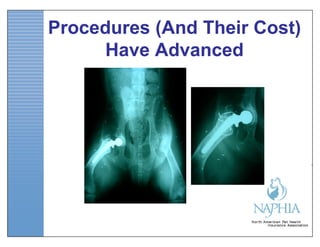
Procedures (And Their Cost)
      Have Advanced
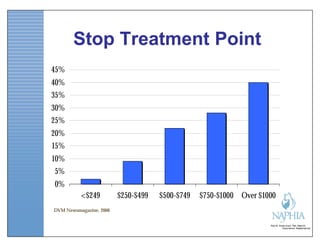
Stop Treatment Point
45%
40%
35%
30%
25%
20%
15%
10%
 5%
0%
          <$249          $250-$499   $500-$749   $750-$1000 Over $1000
DVM Newsmagazine, 2006
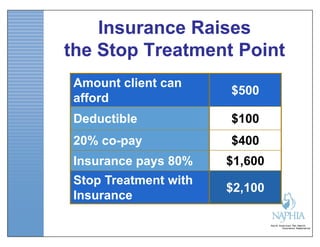
Insurance Raises
the Stop Treatment Point
 Amount client can
                       $500
 afford
 Deductible            $100
 20% co-pay            $400
 Insurance pays 80%    $1,600
 Stop Treatment with
                       $2,100
 Insurance
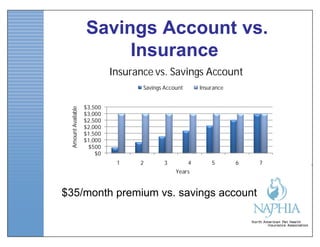
Savings Account vs.
                         Insurance
                             Insurance vs. Savings Account
                                    Savings Account       Insurance


                    $3,500
 Amount Available


                    $3,000
                    $2,500
                    $2,000
                    $1,500
                    $1,000
                     $500
                        $0
                              1    2       3          4       5       6   7
                                                Years


$35/month premium vs. savings account
Advantages of Pet
          Insurance
Allows pet owners to budget for veterinary
 care

Provides higher limits than most clients
 can afford

Can be used for their regular veterinarian,
 emergency clinics, referral centers or
 when traveling
Advantages of Pet Insurance
       (continued)
Reduces the need for available credit

Offsets the rising cost of veterinary care
 due to better technologies and treatment
 options
Advantages for Pet
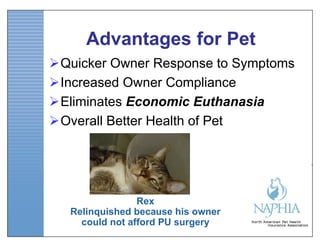
Quicker Owner Response to Symptoms
Increased Owner Compliance
Eliminates Economic Euthanasia
Overall Better Health of Pet


                 Rex
   Relinquished because his owner
     could not afford PU surgery
With Pet Insurance…
The best possible treatment options are
 affordable
Pets receive needed diagnostics and in-
 depth care
Better pet health results from greater care
Euthanasia for economic reasons less
 likely
Reduced need for veterinary financing
Should I Recommend
     Pet Insurance?
Pet insurance is the one thing you cannot
      buy when you need it the most.

   Pet insurance can help your clients
          in their time of need.
Advantages To Your
           Practice
 Increases client compliance with your
  recommendations
 Provides clients a ready means of affording
  health treatments
 Reduces your accounts receivable
 Eliminates conflict between clients’ financial
  limitations and providing the best of care
 Improves pet health and client satisfaction
Making Insurance Work
 Pick a limited number of companies to
  support
 Train the hospital staff
 Actively educate clients
   Mention pet insurance to every client
   Exam room / lobby materials
   News letters / client communication
   Telephone recordings
 Promote to your clients
   Staple brochures to invoices
   Include brochures in puppy/kitten kits
Summary
More companies offering comprehensive
 care
Insurance removes the unpredictable
 financial strain caused by a large health
 expense
Insurance provides opportunity for the
 best care
Insurance allows you and your client to
 focus on care, not cost
NAPHIA

 For more information call
      Loran Hickton,
Executive Director, NAPHIA
      (412) 319-7730
Glossary
Coinsurance
 The percentage of the costs of services
 shared by the carrier & policy owner.

Deductible
 A fixed amount of dollars that the policy
 owner must pay before the health
 benefits begin.
Glossary (continued)
Benefit schedule
 An itemized list of available
 reimbursement amounts for specific
 medical diagnoses.
Usual, Customary, & Reasonable
 Charges
 The charge for health care that is
 consistent with the average rate or
 charge for identical or similar services in
 a certain geographical area.

Final Educational Pp Pet Insurance &amp; Your Veterinary Practice

  • 1.
    Pet Insurance and Your Veterinary Practice
  • 2.
    Pet Insurance Facts Lessthan 1% of Cats and Dogs are insured in the United States – about 800,000 pets insured in 2008 Packaged Facts estimates North American Pet Insurance sales will more than triple in the next five years from $248 million in 2007 to $1.1 billion in 2012
  • 3.
    How Pet InsuranceWorks 1. Get quote & buy policy 2. Waiting period 3. Get treatment 4. Pay veterinary invoice 5. File a claim 6. Receive check
  • 4.
    Pet Insurance HasMatured  More companies selling pet insurance  A wider variety of conditions covered  The internet facilitates pet owner education and awareness “Not your grandfather’s pet insurance any more”
  • 5.
    Not Managed Care Clientcan go to any veterinarian in US Veterinarian and client determine treatment protocol – not a third party No pre-authorization required
  • 6.
    What Is Covered? Generally… Illnessesand injuries Prescription medications Surgeries and hospitalization Cancer treatments After-hour emergency & specialist visits Diagnostics, MRI, CAT scans and X-rays Wellness/routine care (optional)
  • 7.
    What Is NotCovered? Generally… Pre-existing conditions (unless cured) Congenital conditions (present at birth) Preventative, elective and cosmetic procedures Boarding and grooming Food, including prescription food Supplements and vitamins
  • 8.
    Major Differences Between Plans Are hereditary conditions covered? Are chronic conditions covered after 1st year? What is the reimbursement based on?  The vet bill; or  Usual, Customary, and Reasonable charges; or  A benefit schedule
  • 9.
  • 10.
    Why Consider Pet Insurance?  Veterinary costs continue to rise  Accidents and illnesses happen and are inevitable  Economic realities of treatment can cause conflict with the pet bond  Pet insurance gives pet owners the ability to afford needed veterinary care with a manageable monthly premium
  • 11.
    Procedures (And TheirCost) Have Advanced
  • 12.
    Stop Treatment Point 45% 40% 35% 30% 25% 20% 15% 10% 5% 0% <$249 $250-$499 $500-$749 $750-$1000 Over $1000 DVM Newsmagazine, 2006
  • 13.
    Insurance Raises the StopTreatment Point Amount client can $500 afford Deductible $100 20% co-pay $400 Insurance pays 80% $1,600 Stop Treatment with $2,100 Insurance
  • 14.
    Savings Account vs. Insurance Insurance vs. Savings Account Savings Account Insurance $3,500 Amount Available $3,000 $2,500 $2,000 $1,500 $1,000 $500 $0 1 2 3 4 5 6 7 Years $35/month premium vs. savings account
  • 15.
    Advantages of Pet Insurance Allows pet owners to budget for veterinary care Provides higher limits than most clients can afford Can be used for their regular veterinarian, emergency clinics, referral centers or when traveling
  • 16.
    Advantages of PetInsurance (continued) Reduces the need for available credit Offsets the rising cost of veterinary care due to better technologies and treatment options
  • 17.
    Advantages for Pet QuickerOwner Response to Symptoms Increased Owner Compliance Eliminates Economic Euthanasia Overall Better Health of Pet Rex Relinquished because his owner could not afford PU surgery
  • 18.
    With Pet Insurance… Thebest possible treatment options are affordable Pets receive needed diagnostics and in- depth care Better pet health results from greater care Euthanasia for economic reasons less likely Reduced need for veterinary financing
  • 19.
    Should I Recommend Pet Insurance? Pet insurance is the one thing you cannot buy when you need it the most. Pet insurance can help your clients in their time of need.
  • 20.
    Advantages To Your Practice  Increases client compliance with your recommendations  Provides clients a ready means of affording health treatments  Reduces your accounts receivable  Eliminates conflict between clients’ financial limitations and providing the best of care  Improves pet health and client satisfaction
  • 21.
    Making Insurance Work Pick a limited number of companies to support  Train the hospital staff  Actively educate clients  Mention pet insurance to every client  Exam room / lobby materials  News letters / client communication  Telephone recordings  Promote to your clients  Staple brochures to invoices  Include brochures in puppy/kitten kits
  • 22.
    Summary More companies offeringcomprehensive care Insurance removes the unpredictable financial strain caused by a large health expense Insurance provides opportunity for the best care Insurance allows you and your client to focus on care, not cost
  • 23.
    NAPHIA For moreinformation call Loran Hickton, Executive Director, NAPHIA (412) 319-7730
  • 24.
    Glossary Coinsurance The percentageof the costs of services shared by the carrier & policy owner. Deductible A fixed amount of dollars that the policy owner must pay before the health benefits begin.
  • 25.
    Glossary (continued) Benefit schedule An itemized list of available reimbursement amounts for specific medical diagnoses. Usual, Customary, & Reasonable Charges The charge for health care that is consistent with the average rate or charge for identical or similar services in a certain geographical area.