Flickr.com/SeanMacEntee
Flickr.com/ChuongLe[LeSy]
The use of the social media in today’s
society such as, Facebook, Instagram and
twitter is among the most popular
activities for children and young
adolescents (2)
Flickr.com/S&S Online Marketing
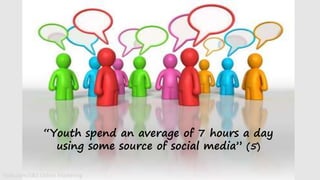
“Youth spend an average of 7 hours a day
using some source of social media” (5)
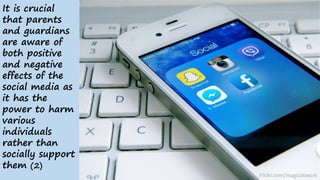
It is crucial
that parents
and guardians
are aware of
both positive
and negative
effects of the
social media as
it has the
power to harm
various
individuals
rather than
socially support
them (2)
Flickr.com/magicatwork
Zero tolerance policies for
bullying and cyberbullying
are constantly advertised
in schools. However, such
policies have not shown
improvements in school
environments (8)
Flickr.com/SyahmiAzhar
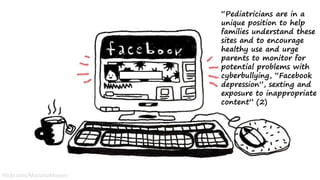
“Pediatricians are in a
unique position to help
families understand these
sites and to encourage
healthy use and urge
parents to monitor for
potential problems with
cyberbullying, “Facebook
depression”, sexting and
exposure to inappropriate
content” (2)
Flickr.com/MarianaMoyses
Panorexia and
Probulimia sites as well
as online communities
are exposed to young
adolescents. They
negatively promote
“thinspiration” photos
which highlight the
social issue of having
very thin bodies (1)
Flickr.com/Aloha):
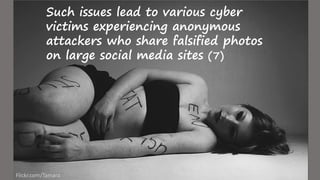
Such issues lead to various cyber
victims experiencing anonymous
attackers who share falsified photos
on large social media sites (7)
Flickr.com/Tamara
Flickr.com
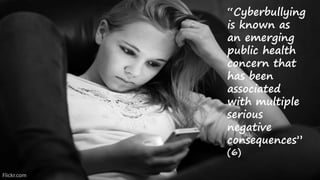
“Cyberbullying
is known as
an emerging
public health
concern that
has been
associated
with multiple
serious
negative
consequences”
(6)
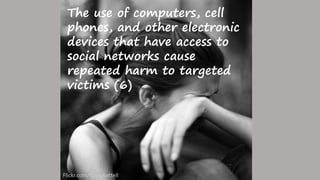
The use of computers, cell
phones, and other electronic
devices that have access to
social networks cause
repeated harm to targeted
victims (6)
Flickr.com/KateyKettell
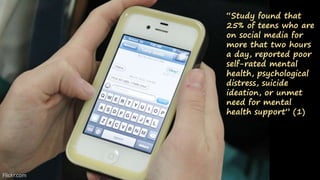
“Study found that
25% of teens who are
on social media for
more that two hours
a day, reported poor
self-rated mental
health, psychological
distress, suicide
ideation, or unmet
need for mental
health support” (1)
Flickr.com
Flickr.com
Studies on the common
use of social networks by
adolescents suggest that
2% to 8% of young
individuals experience
their first episode of
depression by the age of
16 (4)
It is highlighted that
adolescents who experience
early depression are at risk
of facing more negative
psychosocial illnesses in their
future (4)
Flickr.com/Amandalyndorner
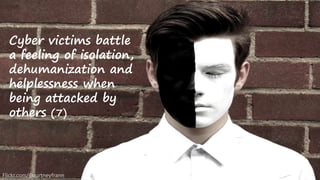
Cyber victims battle
a feeling of isolation,
dehumanization and
helplessness when
being attacked by
others (7)
Flickr.com/Courtneyfrann
“An aggressive
intentional act carries
out by a group or
individual, using
electronic forms of
contact, repeatedly
and over time against
a victim who cannot
easily defend him or
herself” (6)
Flickr.comFlickr.com/kid-josh
“Sense of belonging is defined as the experience of
personal involvement in a system or environment so
that persons feel themselves to be an integral part of
that system or environment” (3)
Flickr.com
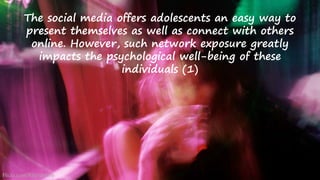
The social media offers adolescents an easy way to
present themselves as well as connect with others
online. However, such network exposure greatly
impacts the psychological well-being of these
individuals (1)
Flickr.com/FlorianDre
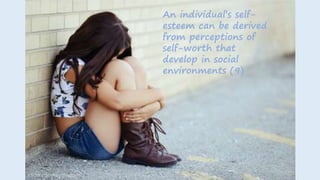
An individual’s self-
esteem can be derived
from perceptions of
self-worth that
develop in social
environments (9)
Flickr.com/IvyShelden
Flickr.com/MaxenceRohr-Defaix
Children and young
adolescents use of the social
media can significantly
impact their self-esteem
levels. It is important to
detect negative emotional
responses and provide help
to those who face negative
outcomes as a result of
social media (9)
References
1. Bauman, Sheri, Russell B. Toomey, and Jenny L. Walker. "Associations among bullying, cyberbullying, and suicide in high
school students." Journal of Adolescence 36.2 (2013): 341-50. Web.
2. Fergusson, David M. and Lianne J. Woodward. "Mental Health, Educational, And Social Role Outcomes Of Adolescents
With Depression". N.p., 2017. Print.
3. Hagerty, Bonnie M.k., Judith Lynch-Sauer, Kathleen L. Patusky, Maria Bouwsema, and Peggy Collier. "Sense of belonging:
A vital mental health concept." Archives of Psychiatric Nursing 6.3 (1992): 172-77. Web.
4. Matrix, Sidneyeve. “Advertising Strategies.” Ellis Hall Auditorium, Kingston. 10, Jan. 2017
5. Matrix, Sidneyeve. “Media Convergence.” Ellis Hall Auditorium, Kingston. 24, Jan. 2017
6. O'Keeffe, G. S. and K. Clarke-Pearson. "The Impact Of Social Media On Children, Adolescents, And Families". N.p., 2017.
Print.
7. Payne, Elizabeth. “Teens’ Poor Mental Health Linked to Social Media Use.” The Ottawat Citizen (2015): n. pag. Web.
8. Selkie, Ellen M., Rajitha Kota, Ya-Fen Chan, and Megan Moreno. "Cyberbullying, Depression, and Problem Alcohol Use in
Female College Students: A Multisite Study." Cyberpsychology, Behavior, and Social Networking 18.2 (2015): 79-86. Web.
9. Strasburger, Victor C., Amy B. Jordan, and Ed Donnerstein. “Health Effects of Media Use.” American Academy of
Pediatrciains 125.4 (2010): n. pag. Web.
10. Wang, Jing, Tonja R. Nansel, and Ronald J. Iannotti. "Cyber and Traditional Bullying: Differential Association With
Depression." Journal of Adolescent Health 48.4 (2011): 415-17. Web.

Film240

  • 1.
  • 2.
    Flickr.com/ChuongLe[LeSy] The use ofthe social media in today’s society such as, Facebook, Instagram and twitter is among the most popular activities for children and young adolescents (2)
  • 3.
    Flickr.com/S&S Online Marketing “Youthspend an average of 7 hours a day using some source of social media” (5)
  • 4.
    It is crucial thatparents and guardians are aware of both positive and negative effects of the social media as it has the power to harm various individuals rather than socially support them (2) Flickr.com/magicatwork
  • 5.
    Zero tolerance policiesfor bullying and cyberbullying are constantly advertised in schools. However, such policies have not shown improvements in school environments (8) Flickr.com/SyahmiAzhar
  • 6.
    “Pediatricians are ina unique position to help families understand these sites and to encourage healthy use and urge parents to monitor for potential problems with cyberbullying, “Facebook depression”, sexting and exposure to inappropriate content” (2) Flickr.com/MarianaMoyses
  • 7.
    Panorexia and Probulimia sitesas well as online communities are exposed to young adolescents. They negatively promote “thinspiration” photos which highlight the social issue of having very thin bodies (1) Flickr.com/Aloha):
  • 8.
    Such issues leadto various cyber victims experiencing anonymous attackers who share falsified photos on large social media sites (7) Flickr.com/Tamara
  • 9.
    Flickr.com “Cyberbullying is known as anemerging public health concern that has been associated with multiple serious negative consequences” (6)
  • 10.
    The use ofcomputers, cell phones, and other electronic devices that have access to social networks cause repeated harm to targeted victims (6) Flickr.com/KateyKettell
  • 11.
    “Study found that 25%of teens who are on social media for more that two hours a day, reported poor self-rated mental health, psychological distress, suicide ideation, or unmet need for mental health support” (1) Flickr.com
  • 12.
    Flickr.com Studies on thecommon use of social networks by adolescents suggest that 2% to 8% of young individuals experience their first episode of depression by the age of 16 (4)
  • 13.
    It is highlightedthat adolescents who experience early depression are at risk of facing more negative psychosocial illnesses in their future (4) Flickr.com/Amandalyndorner
  • 14.
    Cyber victims battle afeeling of isolation, dehumanization and helplessness when being attacked by others (7) Flickr.com/Courtneyfrann
  • 15.
    “An aggressive intentional actcarries out by a group or individual, using electronic forms of contact, repeatedly and over time against a victim who cannot easily defend him or herself” (6) Flickr.comFlickr.com/kid-josh
  • 16.
    “Sense of belongingis defined as the experience of personal involvement in a system or environment so that persons feel themselves to be an integral part of that system or environment” (3) Flickr.com
  • 17.
    The social mediaoffers adolescents an easy way to present themselves as well as connect with others online. However, such network exposure greatly impacts the psychological well-being of these individuals (1) Flickr.com/FlorianDre
  • 18.
    An individual’s self- esteemcan be derived from perceptions of self-worth that develop in social environments (9) Flickr.com/IvyShelden
  • 19.
    Flickr.com/MaxenceRohr-Defaix Children and young adolescentsuse of the social media can significantly impact their self-esteem levels. It is important to detect negative emotional responses and provide help to those who face negative outcomes as a result of social media (9)
  • 20.
    References 1. Bauman, Sheri,Russell B. Toomey, and Jenny L. Walker. "Associations among bullying, cyberbullying, and suicide in high school students." Journal of Adolescence 36.2 (2013): 341-50. Web. 2. Fergusson, David M. and Lianne J. Woodward. "Mental Health, Educational, And Social Role Outcomes Of Adolescents With Depression". N.p., 2017. Print. 3. Hagerty, Bonnie M.k., Judith Lynch-Sauer, Kathleen L. Patusky, Maria Bouwsema, and Peggy Collier. "Sense of belonging: A vital mental health concept." Archives of Psychiatric Nursing 6.3 (1992): 172-77. Web. 4. Matrix, Sidneyeve. “Advertising Strategies.” Ellis Hall Auditorium, Kingston. 10, Jan. 2017 5. Matrix, Sidneyeve. “Media Convergence.” Ellis Hall Auditorium, Kingston. 24, Jan. 2017 6. O'Keeffe, G. S. and K. Clarke-Pearson. "The Impact Of Social Media On Children, Adolescents, And Families". N.p., 2017. Print. 7. Payne, Elizabeth. “Teens’ Poor Mental Health Linked to Social Media Use.” The Ottawat Citizen (2015): n. pag. Web. 8. Selkie, Ellen M., Rajitha Kota, Ya-Fen Chan, and Megan Moreno. "Cyberbullying, Depression, and Problem Alcohol Use in Female College Students: A Multisite Study." Cyberpsychology, Behavior, and Social Networking 18.2 (2015): 79-86. Web. 9. Strasburger, Victor C., Amy B. Jordan, and Ed Donnerstein. “Health Effects of Media Use.” American Academy of Pediatrciains 125.4 (2010): n. pag. Web. 10. Wang, Jing, Tonja R. Nansel, and Ronald J. Iannotti. "Cyber and Traditional Bullying: Differential Association With Depression." Journal of Adolescent Health 48.4 (2011): 415-17. Web.