The Hollywood Film Industry Traditional Distribution Key Companies Profit making
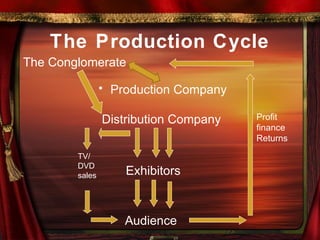
The Production Cycle Production Company Distribution Company Exhibitors Audience Profit finance Returns TV/ DVD sales  The Conglomerate
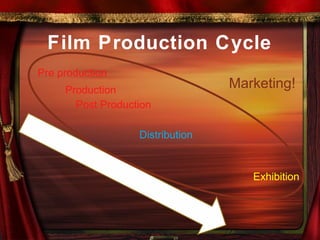
Film Production Cycle Pre production Production Post Production Distribution Exhibition Marketing!
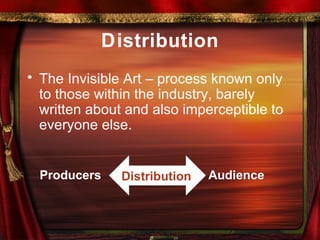
Distribution The Invisible Art – process known only to those within the industry, barely written about and also imperceptible to everyone else. Producers   Audience Distribution
What is it? Releasing and Sustaining a film in the market place Worked best when the three key stages (Production, Distribution, Exhibition) are linked or controlled by the same company – Vertical Integration  UK system has more focus on marketing and sustaining a film in the local market Independent Studios don’t ‘do’ vertical integration
Independent Films Independent Studios don’t ‘do’ vertical integration No formal connection between Producers, distributors and exhibitors Collaboration – need to get a major company on side £££££££££££££$$$$$$$$$$$$$$
Distribution Companies  Determine how many copies (prints) of a film to make Why might this be important? What might be some issues surrounding this?
Who are the big distribution companies? Viacom - $12.86 billion Paramount – one of the oldest (1912) United International Pictures (UIP) – covers 60 ‘territories’ Time Warner – have over 5700 films New Line Cinema – ‘independent’ and foreign films, home distribution Fox Entertainment Group – worth over $17.2 billion, 83% is owned by News Corp
Who are the big distribution companies The Walt Disney Company – another very old company Miramax – one of Americas largest internal distribution companies Buena Vista International – distributes all Disney films outside America Universal Studios Group – owned by the European version of Time Warner (who made their money from privatised water) The Sony Corporation – massive interests in electronics
Seems like a lot but….. Viacom owns Paramount and 33% of UIP Time Warner owns New Line Cinema Walt Disney owns Miramax and BVI Fox Universal/Vivendi Sony Horizontal Intergration
Distribution = Power Films can not be financed without the help of distributors They have clout with theatre owners (or are often the owners) Brand name recognition Own copyright Access to capital
It’s all about Money! Distribution Company and their conglomerate owners are profit driven so they must feel confident that they can make sufficient return on investment Films are expense to make
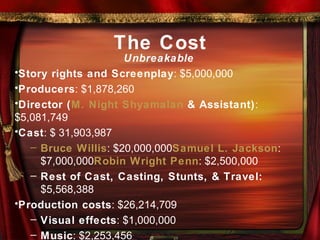
The Cost Unbreakable Story rights and Screenplay : $5,000,000 Producers : $1,878,260 Director ( M. Night Shyamalan  & Assistant) : $5,081,749 Cast : $ 31,903,987  Bruce Willis : $20,000,000 Samuel  L. Jackson : $7,000,000 Robin  Wright Penn : $2,500,000 Rest of Cast, Casting, Stunts, & Travel:  $5,568,388 Production costs : $26,214,709  Visual effects : $1,000,000 Music : $2,253,456 Total: $73,243,106
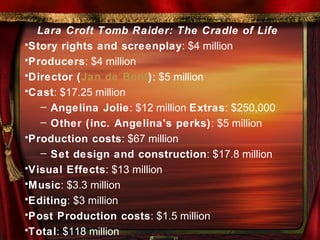
Lara Croft Tomb Raider: The Cradle of Life Story rights and screenplay : $4 million Producers : $4 million Director ( Jan de Bont ) : $5 million Cast : $17.25 million  Angelina Jolie : $12 million  Extras : $250,000 Other (inc. Angelina's perks) : $5 million Production costs : $67 million  Set design and construction : $17.8 million Visual Effects : $13 million Music : $3.3 million Editing : $3 million Post Production costs : $1.5 million Total : $118 million
Terminator 3: Rise of the Machines Story rights ( Carolco  and  Gale Anne Hurd ) : $19.5 million Screenplay : $5.2 million  John D. Brancato & Michael Ferris : $1 million Director ( Jonathan Mostow ) : $5 million Producers : $10 million Cast : $35 million  Arnold Schwarzenegger : $29.25 million + 20% gross profits Arnold's perks : $1.5 million Rest of principal cast : $3.85 million Extras : $450,000 Production costs : $58 million Post-production costs : $4 million Visual effects : $20 million Music : $2 million Other costs : $33.6 million Total : $187.3 million [3]
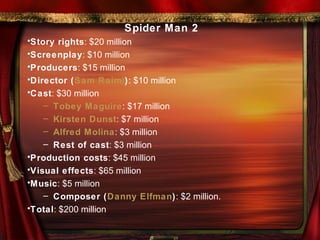
Spider Man 2 Story rights : $20 million Screenplay : $10 million Producers : $15 million Director ( Sam Raimi ) : $10 million Cast : $30 million  Tobey Maguire : $17 million Kirsten Dunst : $7 million Alfred Molina : $3 million Rest of cast : $3 million Production costs : $45 million Visual effects : $65 million Music : $5 million  Composer ( Danny Elfman ) : $2 million. Total : $200 million
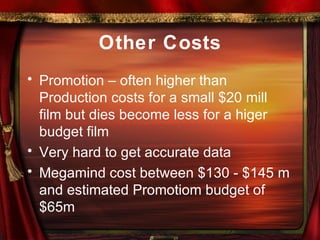
Other Costs Promotion – often higher than Production costs for a small $20 mill film but dies become less for a higer budget film Very hard to get accurate data Megamind cost between $130 - $145 m and estimated Promotiom budget of $65m
How do they make money?
% of revenue from tickets Front Loaded Deals – on the decline (bankruptcy and new revenue sources) ‘ Standard Cut’ – but what that cut is depends on the muscle of the distributor Around 50 – 55%
Other sources of money DVD’s – can add up to $100m and a higher % goes back to the company TV Rights Merchandising But in 2009 theatrical box office revenue was bigger than home video revenue – piracy, Netflix, cost of 3D tickets.

Film distribution

  • 1.
    The Hollywood FilmIndustry Traditional Distribution Key Companies Profit making
  • 2.
    The Production CycleProduction Company Distribution Company Exhibitors Audience Profit finance Returns TV/ DVD sales The Conglomerate
  • 3.
    Film Production CyclePre production Production Post Production Distribution Exhibition Marketing!
  • 4.
    Distribution The InvisibleArt – process known only to those within the industry, barely written about and also imperceptible to everyone else. Producers Audience Distribution
  • 5.
    What is it?Releasing and Sustaining a film in the market place Worked best when the three key stages (Production, Distribution, Exhibition) are linked or controlled by the same company – Vertical Integration UK system has more focus on marketing and sustaining a film in the local market Independent Studios don’t ‘do’ vertical integration
  • 6.
    Independent Films IndependentStudios don’t ‘do’ vertical integration No formal connection between Producers, distributors and exhibitors Collaboration – need to get a major company on side £££££££££££££$$$$$$$$$$$$$$
  • 7.
    Distribution Companies Determine how many copies (prints) of a film to make Why might this be important? What might be some issues surrounding this?
  • 8.
    Who are thebig distribution companies? Viacom - $12.86 billion Paramount – one of the oldest (1912) United International Pictures (UIP) – covers 60 ‘territories’ Time Warner – have over 5700 films New Line Cinema – ‘independent’ and foreign films, home distribution Fox Entertainment Group – worth over $17.2 billion, 83% is owned by News Corp
  • 9.
    Who are thebig distribution companies The Walt Disney Company – another very old company Miramax – one of Americas largest internal distribution companies Buena Vista International – distributes all Disney films outside America Universal Studios Group – owned by the European version of Time Warner (who made their money from privatised water) The Sony Corporation – massive interests in electronics
  • 10.
    Seems like alot but….. Viacom owns Paramount and 33% of UIP Time Warner owns New Line Cinema Walt Disney owns Miramax and BVI Fox Universal/Vivendi Sony Horizontal Intergration
  • 11.
    Distribution = PowerFilms can not be financed without the help of distributors They have clout with theatre owners (or are often the owners) Brand name recognition Own copyright Access to capital
  • 12.
    It’s all aboutMoney! Distribution Company and their conglomerate owners are profit driven so they must feel confident that they can make sufficient return on investment Films are expense to make
  • 13.
    The Cost UnbreakableStory rights and Screenplay : $5,000,000 Producers : $1,878,260 Director ( M. Night Shyamalan & Assistant) : $5,081,749 Cast : $ 31,903,987 Bruce Willis : $20,000,000 Samuel L. Jackson : $7,000,000 Robin Wright Penn : $2,500,000 Rest of Cast, Casting, Stunts, & Travel: $5,568,388 Production costs : $26,214,709 Visual effects : $1,000,000 Music : $2,253,456 Total: $73,243,106
  • 14.
    Lara Croft TombRaider: The Cradle of Life Story rights and screenplay : $4 million Producers : $4 million Director ( Jan de Bont ) : $5 million Cast : $17.25 million Angelina Jolie : $12 million Extras : $250,000 Other (inc. Angelina's perks) : $5 million Production costs : $67 million Set design and construction : $17.8 million Visual Effects : $13 million Music : $3.3 million Editing : $3 million Post Production costs : $1.5 million Total : $118 million
  • 15.
    Terminator 3: Riseof the Machines Story rights ( Carolco and Gale Anne Hurd ) : $19.5 million Screenplay : $5.2 million John D. Brancato & Michael Ferris : $1 million Director ( Jonathan Mostow ) : $5 million Producers : $10 million Cast : $35 million Arnold Schwarzenegger : $29.25 million + 20% gross profits Arnold's perks : $1.5 million Rest of principal cast : $3.85 million Extras : $450,000 Production costs : $58 million Post-production costs : $4 million Visual effects : $20 million Music : $2 million Other costs : $33.6 million Total : $187.3 million [3]
  • 16.
    Spider Man 2Story rights : $20 million Screenplay : $10 million Producers : $15 million Director ( Sam Raimi ) : $10 million Cast : $30 million Tobey Maguire : $17 million Kirsten Dunst : $7 million Alfred Molina : $3 million Rest of cast : $3 million Production costs : $45 million Visual effects : $65 million Music : $5 million Composer ( Danny Elfman ) : $2 million. Total : $200 million
  • 17.
    Other Costs Promotion– often higher than Production costs for a small $20 mill film but dies become less for a higer budget film Very hard to get accurate data Megamind cost between $130 - $145 m and estimated Promotiom budget of $65m
  • 18.
    How do theymake money?
  • 19.
    % of revenuefrom tickets Front Loaded Deals – on the decline (bankruptcy and new revenue sources) ‘ Standard Cut’ – but what that cut is depends on the muscle of the distributor Around 50 – 55%
  • 20.
    Other sources ofmoney DVD’s – can add up to $100m and a higher % goes back to the company TV Rights Merchandising But in 2009 theatrical box office revenue was bigger than home video revenue – piracy, Netflix, cost of 3D tickets.

Editor's Notes

  • #5 Most important part of the film industry. It is the connection between Producers and Audience
  • #8 Each print costs at least $2000 – 3000 screens $6mill 4000 is average now – was in the 100’s in the 1980s. 37000 screens in US
  • #20 Majority of the opening weekend ticket sales goes to the PC 90%, by the four the week more like 50%
  • #21 First time in a decade