Files and Correspondence Management


COURSE DESCRIPTION

Course Title:       Files and Correspondence Management

Course              Emerson O. Bryan
Instructor:         CARICOM Office of Trade Negotiations, Bridgetown, Barbados

Introduction

                    Records and information management is the task of ensuring that
                    recorded information, both textual (paper-based), and electronic, is
                    managed effectively, efficiently and economically. Records management
                    controls the creation, maintenance, use, and disposal of records so that
                    the right records are provided to the right person at the right time.

                    Files and correspondence management is a critical component of records
                    and information management, and ensures that records created by the
                    organization are authentic, reliable, trustworthy and useable throughout
                    the records lifecycle.

                    Files and correspondence management ensures the use of information
                    when needed.

                    This seminar provides the necessary guidelines to implement and
                    maintain the architecture necessary to manage an effective Files and
                    Correspondence Programme.

Course Objectives


                    Upon completion, participants will:
                     1. Understand the basic concepts of Records Management.
                     2. Understand the Operational Environment of the Records Unit.
                     3. Identify and Manage business critical correspondence, including email
                        outside of a formal Records Management Application.
                     4. Understand the mechanics of managing physical records from creation to
                        final disposition.
                     5. Understand the process of automation for Recordkeeping.
                     6. Understand the Industry Standards and Best Practices for Records
                        Management.


                                                                                       1
Files and Correspondence Management
Course Format

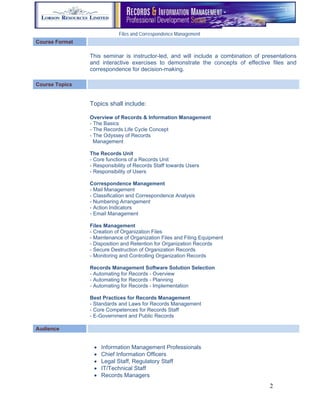
                This seminar is instructor-led, and will include a combination of presentations
                and interactive exercises to demonstrate the concepts of effective files and
                correspondence for decision-making.

Course Topics


                Topics shall include:

                Overview of Records & Information Management
                - The Basics
                - The Records Life Cycle Concept
                - The Odyssey of Records
                  Management

                The Records Unit
                - Core functions of a Records Unit
                - Responsibility of Records Staff towards Users
                - Responsibility of Users

                Correspondence Management
                - Mail Management
                - Classification and Correspondence Analysis
                - Numbering Arrangement
                - Action Indicators
                - Email Management

                Files Management
                - Creation of Organization Files
                - Maintenance of Organization Files and Filing Equipment
                - Disposition and Retention for Organization Records
                - Secure Destruction of Organization Records
                - Monitoring and Controlling Organization Records

                Records Management Software Solution Selection
                - Automating for Records - Overview
                - Automating for Records - Planning
                - Automating for Records - Implementation

                Best Practices for Records Management
                - Standards and Laws for Records Management
                - Core Competences for Records Staff
                - E-Government and Public Records

Audience         

                       Information Management Professionals
                       Chief Information Officers
                       Legal Staff, Regulatory Staff
                       IT/Technical Staff
                       Records Managers
                                                                                    2
Files and Correspondence Management
   Business Managers
   IT Service Providers
   Consultants & Legal Advisors
   Information Lawyers
   Corporate Legal Secretaries
   Data Protection Officers
   Implementation Teams
   Information Architects, Archivists
   Administrative Staff
   Library Staff
   Document Control Staff


                                                 3

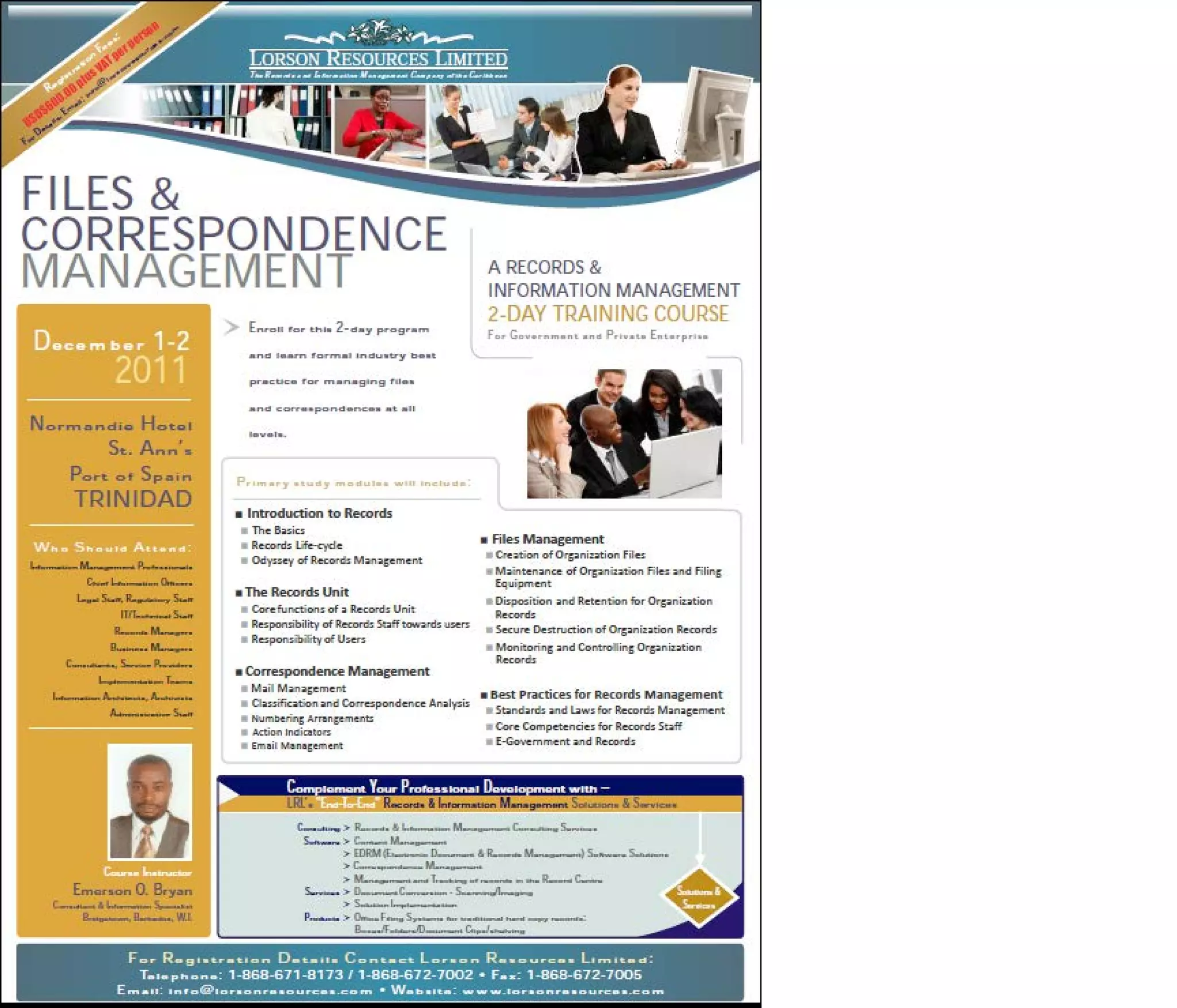
Files & Correspondence Management - 2-Day Training Program [Dec 1-2, 2011]

  • 2.
    Files and CorrespondenceManagement COURSE DESCRIPTION Course Title: Files and Correspondence Management Course Emerson O. Bryan Instructor: CARICOM Office of Trade Negotiations, Bridgetown, Barbados Introduction Records and information management is the task of ensuring that recorded information, both textual (paper-based), and electronic, is managed effectively, efficiently and economically. Records management controls the creation, maintenance, use, and disposal of records so that the right records are provided to the right person at the right time. Files and correspondence management is a critical component of records and information management, and ensures that records created by the organization are authentic, reliable, trustworthy and useable throughout the records lifecycle. Files and correspondence management ensures the use of information when needed. This seminar provides the necessary guidelines to implement and maintain the architecture necessary to manage an effective Files and Correspondence Programme. Course Objectives Upon completion, participants will: 1. Understand the basic concepts of Records Management. 2. Understand the Operational Environment of the Records Unit. 3. Identify and Manage business critical correspondence, including email outside of a formal Records Management Application. 4. Understand the mechanics of managing physical records from creation to final disposition. 5. Understand the process of automation for Recordkeeping. 6. Understand the Industry Standards and Best Practices for Records Management. 1
  • 3.
    Files and CorrespondenceManagement Course Format This seminar is instructor-led, and will include a combination of presentations and interactive exercises to demonstrate the concepts of effective files and correspondence for decision-making. Course Topics Topics shall include: Overview of Records & Information Management - The Basics - The Records Life Cycle Concept - The Odyssey of Records Management The Records Unit - Core functions of a Records Unit - Responsibility of Records Staff towards Users - Responsibility of Users Correspondence Management - Mail Management - Classification and Correspondence Analysis - Numbering Arrangement - Action Indicators - Email Management Files Management - Creation of Organization Files - Maintenance of Organization Files and Filing Equipment - Disposition and Retention for Organization Records - Secure Destruction of Organization Records - Monitoring and Controlling Organization Records Records Management Software Solution Selection - Automating for Records - Overview - Automating for Records - Planning - Automating for Records - Implementation Best Practices for Records Management - Standards and Laws for Records Management - Core Competences for Records Staff - E-Government and Public Records Audience    Information Management Professionals  Chief Information Officers  Legal Staff, Regulatory Staff  IT/Technical Staff  Records Managers 2
  • 4.
    Files and CorrespondenceManagement  Business Managers  IT Service Providers  Consultants & Legal Advisors  Information Lawyers  Corporate Legal Secretaries  Data Protection Officers  Implementation Teams  Information Architects, Archivists  Administrative Staff  Library Staff  Document Control Staff   3