+
Caffeine & Fertility
Amanda Clark, ( Adv APD) Senior Dietitian,
Great Ideas in Nutrition, www.greatideas.net.au
+
Safety for Preconception
Research shows inconsistent results in
relation to caffeine and fertility.
A recent Danish study found that various
caffeine containing drinks may affect fertility
differently.
+
Coffee had no effect
Tea shortened the time to conception
Softdrinks lengthened the time to
conception.
This could be due to other lifestyle factors of
tea drinkers vs soft drinkers.
+
Cause for concern?
 There is no Acceptable Daily Limit for caffeine in Australia
 Doses above 200mg/day may contribute to
 Elevated Blood pressure
 Anxiety
 Insomnia
 Headaches
 Reduced iron absorption
 Low birth weight
 Miscarriage
 Less than 200mg per day is recommended for pregnancy, greater than
600mg per day is likely to produce symptoms in most people.
+
Cause for concern?
Many people tolerate doses up
to 600mg per day without
problems – individual tolerance
is affected by regularity of intake,
usual dose, body size, health
and genetic factors.
+
Coffee and weight gain
As coffee consumption has increased and we have turned to milk based
varieties in ever increasing cup sizes, our energy intake has increased along
with our caffeine. Today’s Grande has over 4 times the calories of the instant
versions of the 1990s.
+
Sources - Coffee
Drink Caffeine
1 mug instant coffee 100mg
1 cup brewed coffee 100-350mg
espresso 50-250mg
A recent study of commercially available
Australian coffees showed variation in the
caffeine content of an espresso from 50mg
up to 214mg per serve.
+
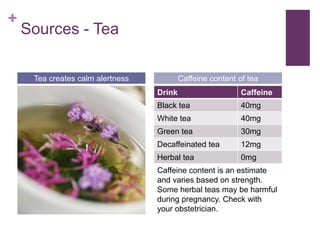
Sources - Tea
Drink Caffeine
Black tea 40mg
White tea 40mg
Green tea 30mg
Decaffeinated tea 12mg
Herbal tea 0mg
Tea creates calm alertness Caffeine content of tea
Caffeine content is an estimate
and varies based on strength.
Some herbal teas may be harmful
during pregnancy. Check with
your obstetrician.
+
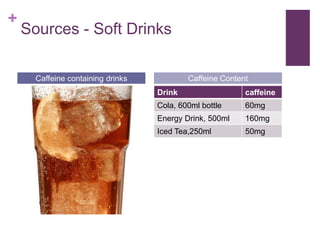
Sources - Soft Drinks
Drink caffeine
Cola, 600ml bottle 60mg
Energy Drink, 500ml 160mg
Iced Tea,250ml 50mg
Caffeine containing drinks Caffeine Content
+
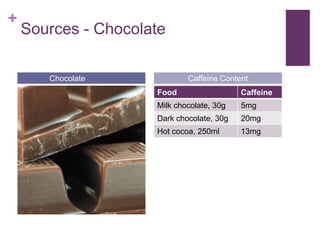
Sources - Chocolate
Food Caffeine
Milk chocolate, 30g 5mg
Dark chocolate, 30g 20mg
Hot cocoa, 250ml 13mg
Chocolate Caffeine Content
+
Tolerance & Dependence
 Anyone can build up tolerance
to caffeine. This means it takes
a larger dose to give you the
same effects you used to get on
a smaller dose
 Dependence means that it
takes up a lot of your thoughts,
emotions and activities.
 People who are dependent may
experience withdrawal including
headaches, tiredness and
mood swings.
How does it feel? What are they?
+
Summary
There is no firm evidence that caffeine influences fertility
It is wise to limit caffeine intake during preconception in readiness for pregnancy.
To stay within the limits, limit to 2 cups coffee or 4 cups tea of average strength
per day and avoid energy drinks.
For further assistance on Fertility and Food, contact Amanda Clark
Email Amanda Clark
Visit: www.greatideas.net.au or phone 07 5536 6400
Great Ideas in Nutrition, Coolangatta, QLD. Available in person or via Skype.

Fertility caffeine slideshare

  • 1.
    + Caffeine & Fertility AmandaClark, ( Adv APD) Senior Dietitian, Great Ideas in Nutrition, www.greatideas.net.au
  • 2.
    + Safety for Preconception Researchshows inconsistent results in relation to caffeine and fertility. A recent Danish study found that various caffeine containing drinks may affect fertility differently.
  • 3.
    + Coffee had noeffect Tea shortened the time to conception Softdrinks lengthened the time to conception. This could be due to other lifestyle factors of tea drinkers vs soft drinkers.
  • 4.
    + Cause for concern? There is no Acceptable Daily Limit for caffeine in Australia  Doses above 200mg/day may contribute to  Elevated Blood pressure  Anxiety  Insomnia  Headaches  Reduced iron absorption  Low birth weight  Miscarriage  Less than 200mg per day is recommended for pregnancy, greater than 600mg per day is likely to produce symptoms in most people.
  • 5.
    + Cause for concern? Manypeople tolerate doses up to 600mg per day without problems – individual tolerance is affected by regularity of intake, usual dose, body size, health and genetic factors.
  • 6.
    + Coffee and weightgain As coffee consumption has increased and we have turned to milk based varieties in ever increasing cup sizes, our energy intake has increased along with our caffeine. Today’s Grande has over 4 times the calories of the instant versions of the 1990s.
  • 7.
    + Sources - Coffee DrinkCaffeine 1 mug instant coffee 100mg 1 cup brewed coffee 100-350mg espresso 50-250mg A recent study of commercially available Australian coffees showed variation in the caffeine content of an espresso from 50mg up to 214mg per serve.
  • 8.
    + Sources - Tea DrinkCaffeine Black tea 40mg White tea 40mg Green tea 30mg Decaffeinated tea 12mg Herbal tea 0mg Tea creates calm alertness Caffeine content of tea Caffeine content is an estimate and varies based on strength. Some herbal teas may be harmful during pregnancy. Check with your obstetrician.
  • 9.
    + Sources - SoftDrinks Drink caffeine Cola, 600ml bottle 60mg Energy Drink, 500ml 160mg Iced Tea,250ml 50mg Caffeine containing drinks Caffeine Content
  • 10.
    + Sources - Chocolate FoodCaffeine Milk chocolate, 30g 5mg Dark chocolate, 30g 20mg Hot cocoa, 250ml 13mg Chocolate Caffeine Content
  • 11.
    + Tolerance & Dependence Anyone can build up tolerance to caffeine. This means it takes a larger dose to give you the same effects you used to get on a smaller dose  Dependence means that it takes up a lot of your thoughts, emotions and activities.  People who are dependent may experience withdrawal including headaches, tiredness and mood swings. How does it feel? What are they?
  • 12.
    + Summary There is nofirm evidence that caffeine influences fertility It is wise to limit caffeine intake during preconception in readiness for pregnancy. To stay within the limits, limit to 2 cups coffee or 4 cups tea of average strength per day and avoid energy drinks. For further assistance on Fertility and Food, contact Amanda Clark Email Amanda Clark Visit: www.greatideas.net.au or phone 07 5536 6400 Great Ideas in Nutrition, Coolangatta, QLD. Available in person or via Skype.