CAFFEINE
By: Alyssa Martucci
HE-285-OL
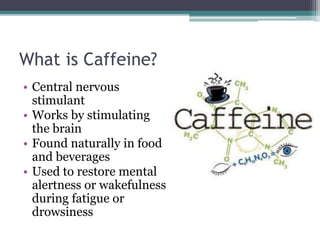
What is Caffeine?
• Central nervous
stimulant
• Works by stimulating
the brain
• Found naturally in food
and beverages
• Used to restore mental
alertness or wakefulness
during fatigue or
drowsiness
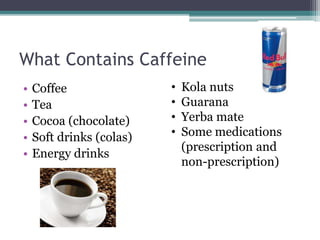
What Contains Caffeine
• Coffee
• Tea
• Cocoa (chocolate)
• Soft drinks (colas)
• Energy drinks
• Kola nuts
• Guarana
• Yerba mate
• Some medications
(prescription and
non-prescription)
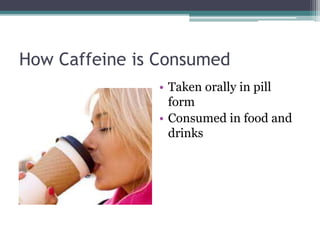
How Caffeine is Consumed
• Taken orally in pill
form
• Consumed in food and
drinks
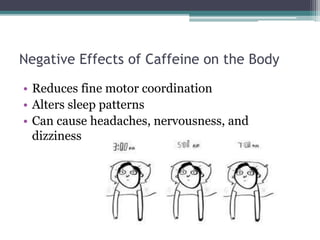
Negative Effects of Caffeine on the Body
• Reduces fine motor coordination
• Alters sleep patterns
• Can cause headaches, nervousness, and
dizziness
How Caffeine Works
• Stimulates the central nervous system by
increasing the metabolism inside neurons
• Increases wakefulness by blocking the
neurotransmitter, adenosine
Problems Caused by Too Much Caffeine
• Make you jittery and shaky
• Make it hard to fall asleep or stay asleep
• Cause headaches or dizziness
• Make your heart beat faster
• Cause abnormal heart rhythms
• Cause dehydration
• Raise your blood pressure
• Make you dependent on it so you need to take more
of it
• If you stop using caffeine, you could have
withdrawal symptoms
Facts About Caffeine
• Most widely used stimulant in the world
• Use by adolescents has more than doubled since
1980
• Chronic caffeine use produces greater tolerance
in adolescents compared with adults
• Consumption is correlated with increased risk
for illicit drug use and substance use disorders
Facts About Caffeine (cont’d)
• 90% of people in the world use caffeine in one
form or another
• In the U.S., 80% of adults consume caffeine
every day – avg. of 200 mg/day (Two 5-oz cups
of coffee or 4 sodas)
• Caffeine is a diuretic – makes your body lose
water – not a good thirst-quenching drink
• Large amounts of caffeine can be harmful during
pregnancy
Did You Know?
• In a study of 7th, 8th, and 9th graders in Ohio,
students consumed an avg of 53 mg of caffeine
per day, and almost 1 in 5 students took more
than 100 mg of caffeine each day
• Caffeine does not make a drunk person sober or
fit to drive – it does not get rid of the effects of
alcohol
• 4-7 cups of coffee or more each day is too much
Caffeine is a Drug and Food Additive
• Used in prescription and OTC medicines to treat
tiredness or drowsiness and to improve the
effect of some pain relievers
• Do not use caffeine if you have heart problems
or anxiety/panic attacks
• After drinking caffeine, it peaks in your blood
within one hour and stays there for 4-6 hours
• Increases the release of acid in your stomach –
can lead to heartburn or upset stomach
Tolerance to Caffeine
• When people use caffeine every day, their body
gets used to it and they don’t feel the same
effects unless they use more of it
• Can cause a physical dependence or addiction –
withdrawal symptoms are a sign
• Examples of withdrawal symptoms:
▫ Severe headaches
▫ Muscle aches
▫ Temporary feelings of depression
▫ Irritability
How Much Caffeine is Okay?
• Moderate amounts are not harmful
▫ 100-200 mg (one to two 5-oz cups of coffee) each
day is the limit
• Every person is different
▫ Effects vary based on size, sex, and sensitivity to
caffeine’s effects
CAFFEINE OVERDOSE IS
DANGEROUS AND CAN KILL YOU
• FDA is aware of a 19 year old college student
who died after taking an overdose of caffeine
tablets to stay awake
• A caffeine tablet contains as much caffeine as on
to three 5-oz cups of coffee
• BE INFORMED!
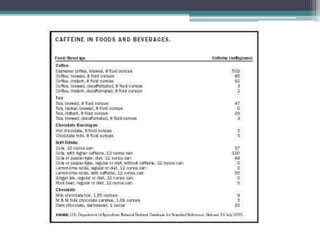
• Know how much caffeine is in your food and
drinks
Question
• How much caffeine do you consume each day?
• Do you think many college students depend on
caffeine?
• Why?
References
• Drugs.com. Caffeine. (2012). Retrieved from
http://www.drugs.com/caffeine.html
• FDA. Medicine in my home: caffeine and your body.
(2007). Retrieved from
http://www.fda.gov/downloads/Drugs/ResourcesF
orYou/Consumers/BuyingUsingMedicineSafely/Un
derstandingOver-the-
CounterMedicines/UCM205286.pdf
• NIH. Adolescent caffeine use and cocaine
sensitivity. (2014). Retrieved from
http://www.drugabuse.gov/news-events/latest-
science/adolescent-caffeine-use-cocaine-sensitivity

20150202 he 285-ol caffeine teachback

  • 1.
  • 2.
    What is Caffeine? •Central nervous stimulant • Works by stimulating the brain • Found naturally in food and beverages • Used to restore mental alertness or wakefulness during fatigue or drowsiness
  • 3.
    What Contains Caffeine •Coffee • Tea • Cocoa (chocolate) • Soft drinks (colas) • Energy drinks • Kola nuts • Guarana • Yerba mate • Some medications (prescription and non-prescription)
  • 4.
    How Caffeine isConsumed • Taken orally in pill form • Consumed in food and drinks
  • 5.
    Negative Effects ofCaffeine on the Body • Reduces fine motor coordination • Alters sleep patterns • Can cause headaches, nervousness, and dizziness
  • 6.
    How Caffeine Works •Stimulates the central nervous system by increasing the metabolism inside neurons • Increases wakefulness by blocking the neurotransmitter, adenosine
  • 7.
    Problems Caused byToo Much Caffeine • Make you jittery and shaky • Make it hard to fall asleep or stay asleep • Cause headaches or dizziness • Make your heart beat faster • Cause abnormal heart rhythms • Cause dehydration • Raise your blood pressure • Make you dependent on it so you need to take more of it • If you stop using caffeine, you could have withdrawal symptoms
  • 8.
    Facts About Caffeine •Most widely used stimulant in the world • Use by adolescents has more than doubled since 1980 • Chronic caffeine use produces greater tolerance in adolescents compared with adults • Consumption is correlated with increased risk for illicit drug use and substance use disorders
  • 9.
    Facts About Caffeine(cont’d) • 90% of people in the world use caffeine in one form or another • In the U.S., 80% of adults consume caffeine every day – avg. of 200 mg/day (Two 5-oz cups of coffee or 4 sodas) • Caffeine is a diuretic – makes your body lose water – not a good thirst-quenching drink • Large amounts of caffeine can be harmful during pregnancy
  • 10.
    Did You Know? •In a study of 7th, 8th, and 9th graders in Ohio, students consumed an avg of 53 mg of caffeine per day, and almost 1 in 5 students took more than 100 mg of caffeine each day • Caffeine does not make a drunk person sober or fit to drive – it does not get rid of the effects of alcohol • 4-7 cups of coffee or more each day is too much
  • 11.
    Caffeine is aDrug and Food Additive • Used in prescription and OTC medicines to treat tiredness or drowsiness and to improve the effect of some pain relievers • Do not use caffeine if you have heart problems or anxiety/panic attacks • After drinking caffeine, it peaks in your blood within one hour and stays there for 4-6 hours • Increases the release of acid in your stomach – can lead to heartburn or upset stomach
  • 12.
    Tolerance to Caffeine •When people use caffeine every day, their body gets used to it and they don’t feel the same effects unless they use more of it • Can cause a physical dependence or addiction – withdrawal symptoms are a sign • Examples of withdrawal symptoms: ▫ Severe headaches ▫ Muscle aches ▫ Temporary feelings of depression ▫ Irritability
  • 13.
    How Much Caffeineis Okay? • Moderate amounts are not harmful ▫ 100-200 mg (one to two 5-oz cups of coffee) each day is the limit • Every person is different ▫ Effects vary based on size, sex, and sensitivity to caffeine’s effects
  • 14.
    CAFFEINE OVERDOSE IS DANGEROUSAND CAN KILL YOU • FDA is aware of a 19 year old college student who died after taking an overdose of caffeine tablets to stay awake • A caffeine tablet contains as much caffeine as on to three 5-oz cups of coffee • BE INFORMED! • Know how much caffeine is in your food and drinks
  • 16.
    Question • How muchcaffeine do you consume each day? • Do you think many college students depend on caffeine? • Why?
  • 17.
    References • Drugs.com. Caffeine.(2012). Retrieved from http://www.drugs.com/caffeine.html • FDA. Medicine in my home: caffeine and your body. (2007). Retrieved from http://www.fda.gov/downloads/Drugs/ResourcesF orYou/Consumers/BuyingUsingMedicineSafely/Un derstandingOver-the- CounterMedicines/UCM205286.pdf • NIH. Adolescent caffeine use and cocaine sensitivity. (2014). Retrieved from http://www.drugabuse.gov/news-events/latest- science/adolescent-caffeine-use-cocaine-sensitivity