Fermentation types
Fermentation types
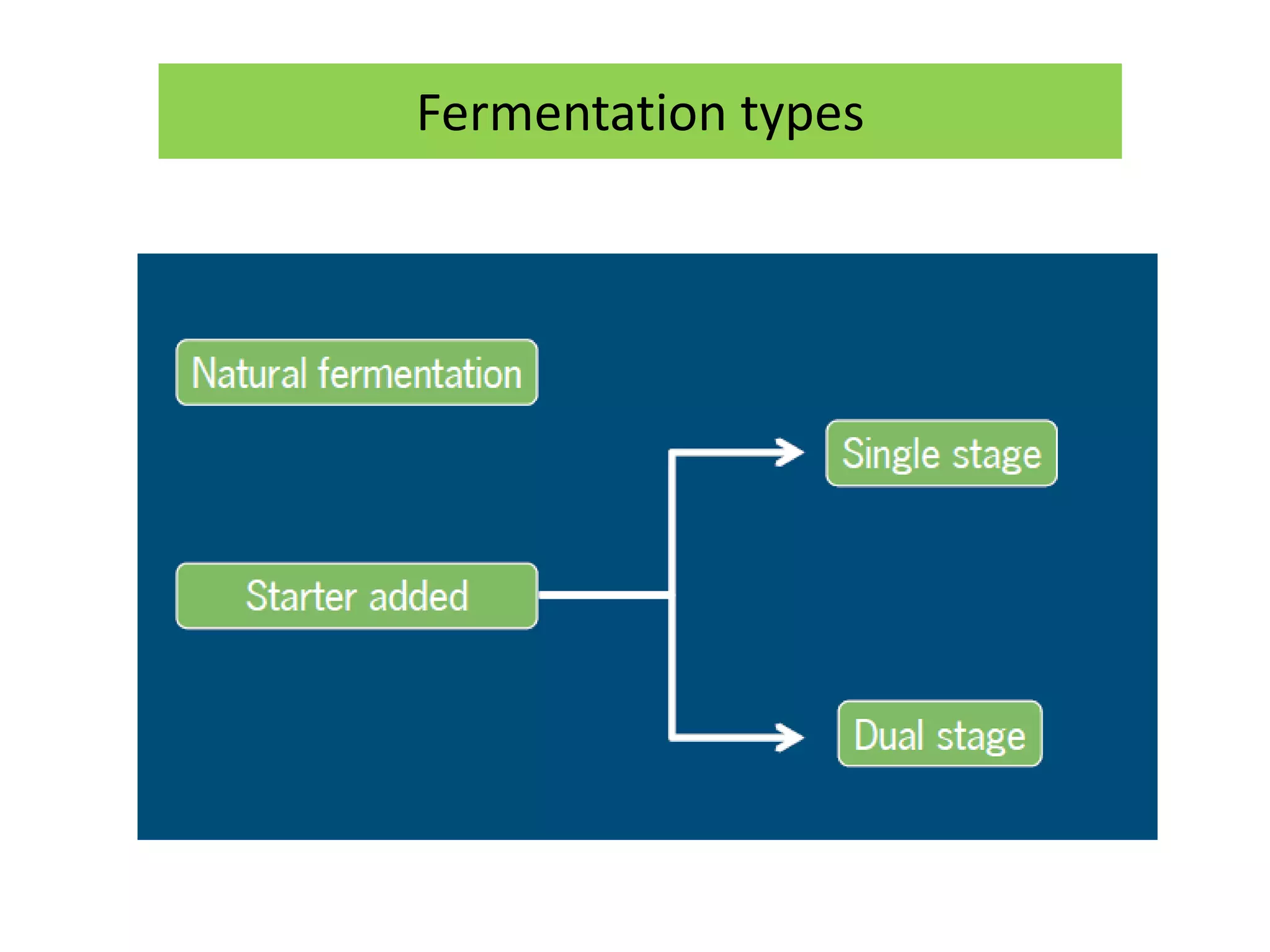
1. Natural fermentation:
• Uncooked ingredients
• Spontaneous fermentation (no added starter)
• M.Os present in the substrate/ environment
• Examples: Idli & nan
2. Single stage fermentation:
• Cooked ingredients
• Addition of viable spores/ mycelium
• M.Os multiplies and modifies the food
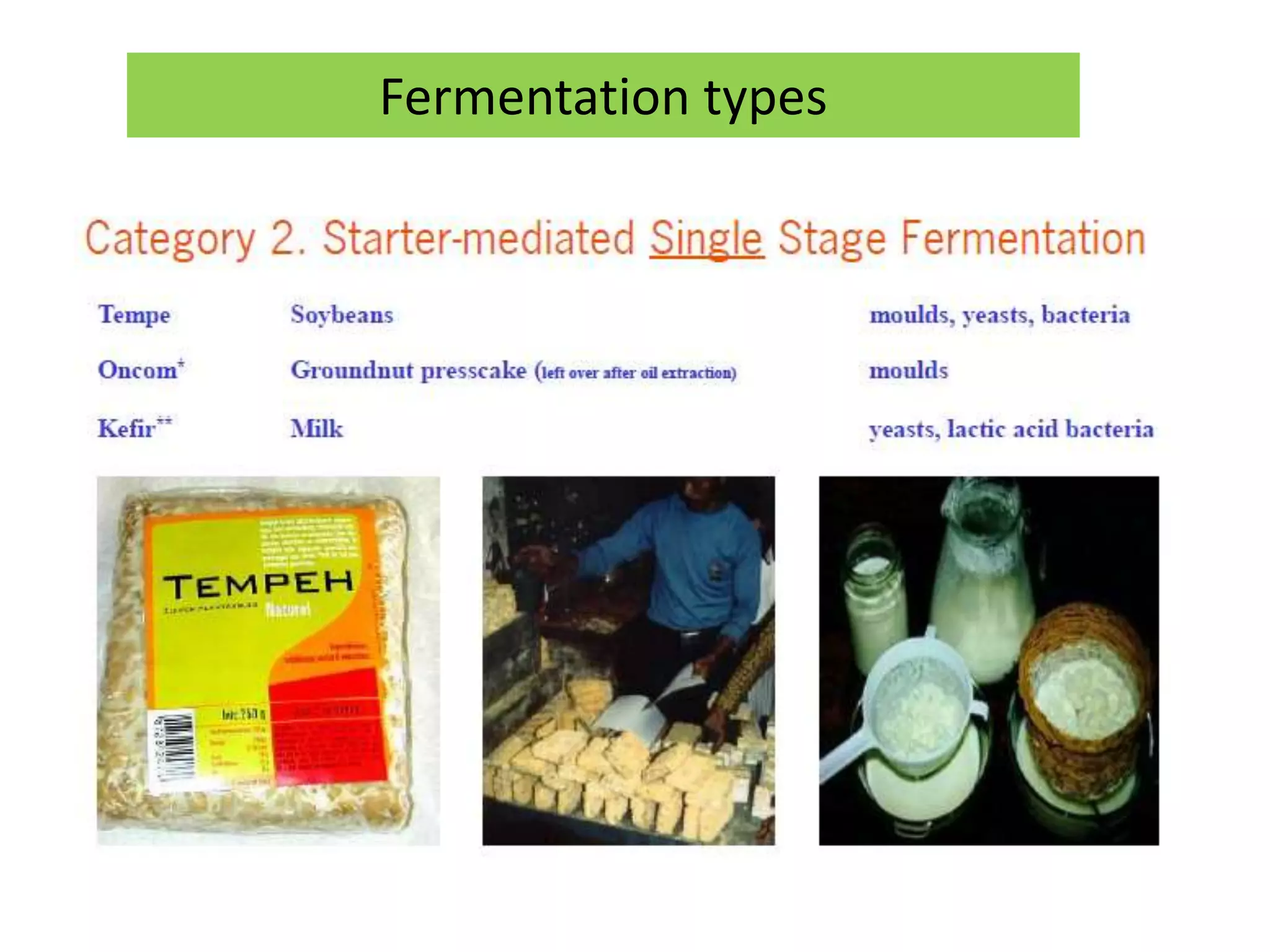
• Example: Tempeh
Fermentation types
3. Multiple stage fermentation:
• First stage: solid -substrate fermentation, produce polymer
degrading enzymes
• Second-stage: liquid fermentation, enzyme degrades
polymers
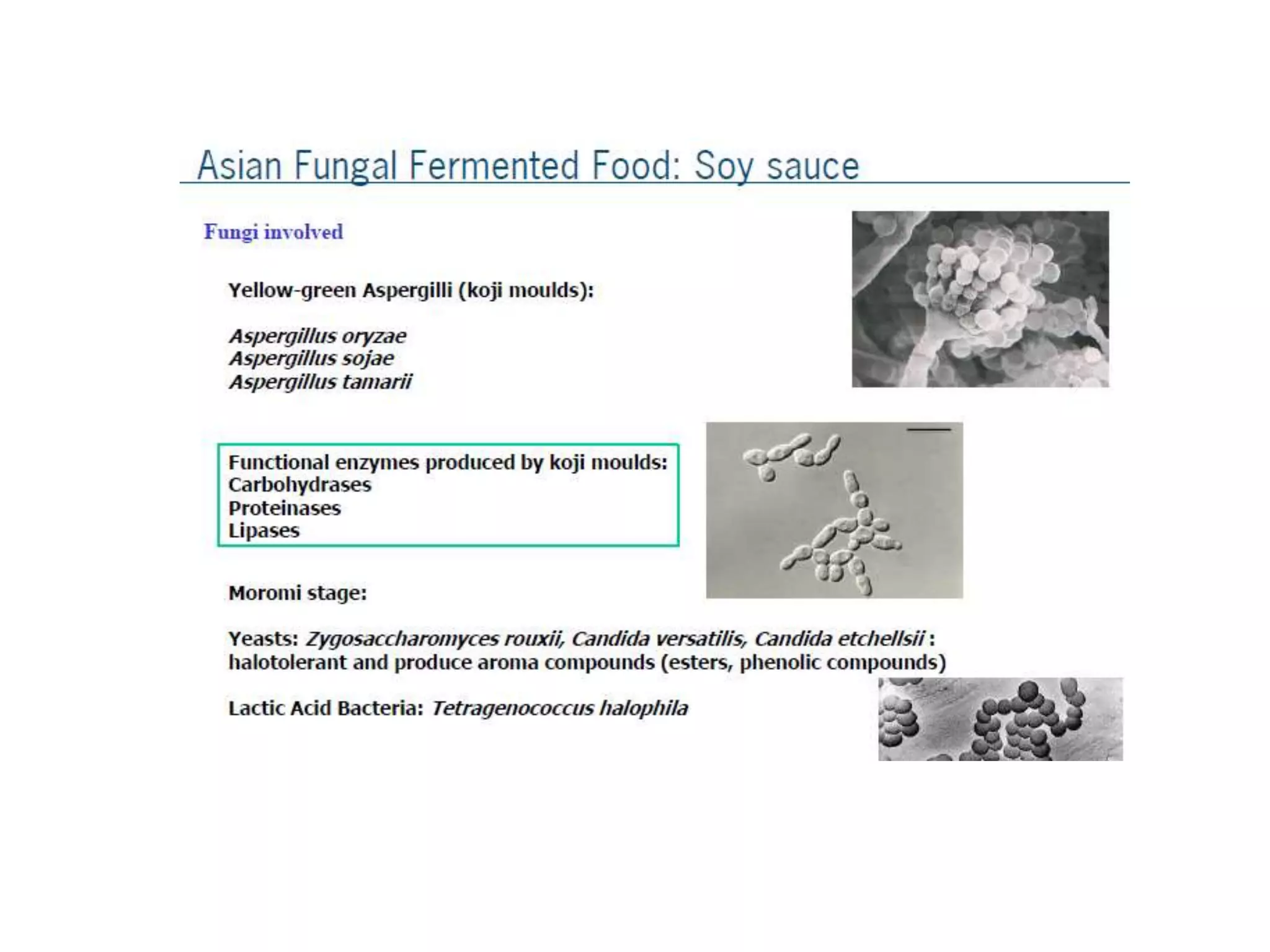
• Examples: rice wines, soy sauces, vinegar etc.
Fermentation types
Fermentation types
Fermentation types
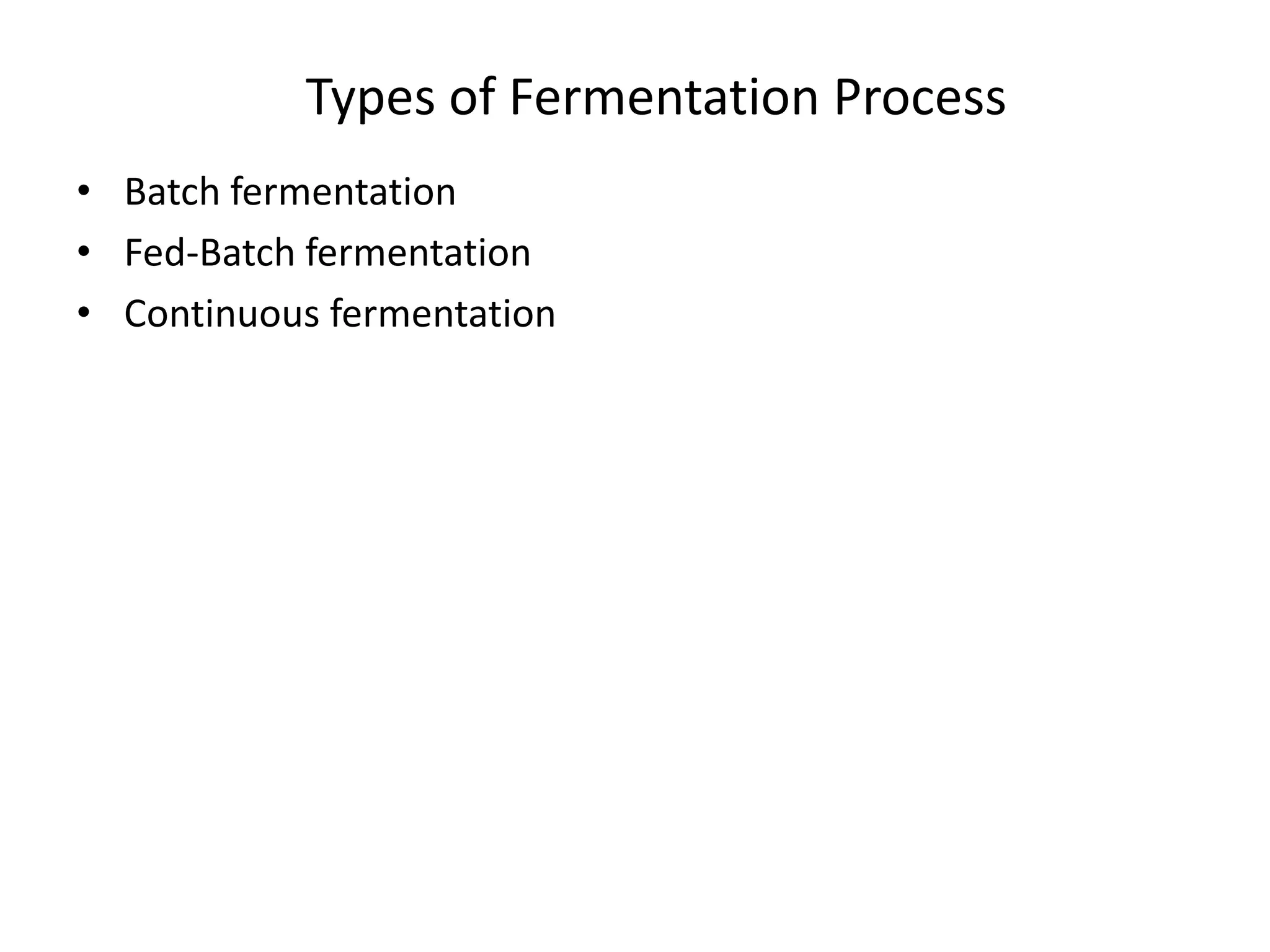
Types of Fermentation Process
• Batch fermentation
• Fed-Batch fermentation
• Continuous fermentation

Fermentation types for Food Products

  • 1.
  • 2.
    Fermentation types 1. Naturalfermentation: • Uncooked ingredients • Spontaneous fermentation (no added starter) • M.Os present in the substrate/ environment • Examples: Idli & nan 2. Single stage fermentation: • Cooked ingredients • Addition of viable spores/ mycelium • M.Os multiplies and modifies the food • Example: Tempeh
  • 3.
    Fermentation types 3. Multiplestage fermentation: • First stage: solid -substrate fermentation, produce polymer degrading enzymes • Second-stage: liquid fermentation, enzyme degrades polymers • Examples: rice wines, soy sauces, vinegar etc.
  • 4.
  • 5.
  • 6.
  • 16.
    Types of FermentationProcess • Batch fermentation • Fed-Batch fermentation • Continuous fermentation

Editor's Notes

  • #7 Sake: Japan, wine Sufu (Furu): soybean curd
  • #8 By- products: from food processing
  • #9 Hydrated/ soaking: 30 degree C, 3-20 hr Cooled: sprayed on trays, steaming off of the beans Dried: evaporative cooling
  • #10 Packing: perforated bed or bags 3-5 cm thick Incubation: 24-48 h at 25-37 degree C
  • #12 Vitamins: riboflavin, nicotinic acid, folates, pyridoxin, biotin etc. ANF: removed by leaching or thermal inactivation