Federated Learning:
Empowering Decentralized
AI
Welcome to this presentation exploring the exciting world of Federated
Learning, a cutting-edge approach to building smarter and more secure
artificial intelligence models.
What is Federated Learning?
Decentralized Learning
A collaborative approach to training AI models where data
remains on individual devices, eliminating the need to
share raw data.
Privacy-Preserving
This approach protects user privacy by minimizing the
amount of sensitive data transmitted and processed.
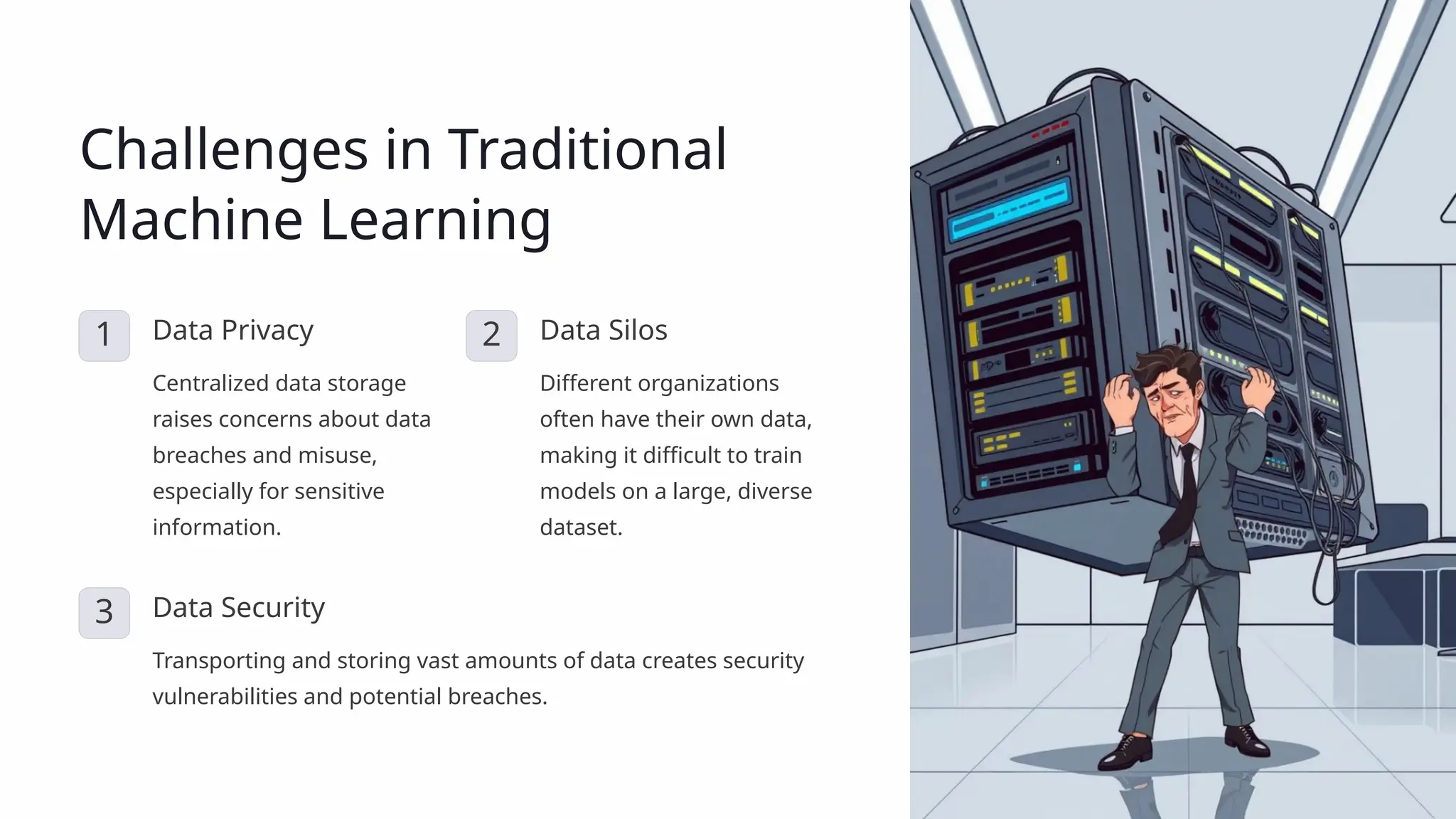
Challenges in Traditional
Machine Learning
1 Data Privacy
Centralized data storage
raises concerns about data
breaches and misuse,
especially for sensitive
information.
2 Data Silos
Different organizations
often have their own data,
making it difficult to train
models on a large, diverse
dataset.
3 Data Security
Transporting and storing vast amounts of data creates security
vulnerabilities and potential breaches.
Key Principles of Federated
Learning
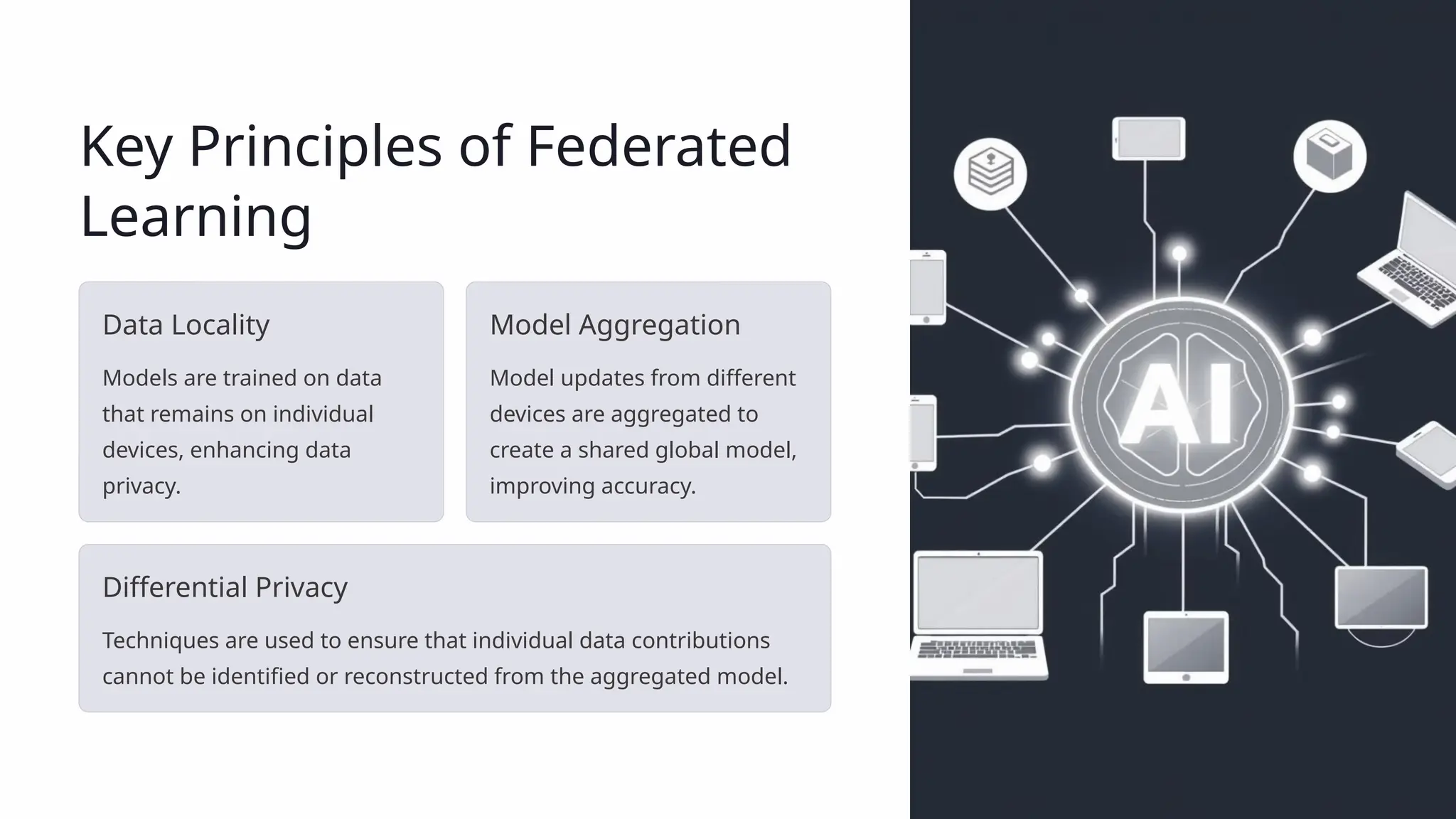
Data Locality
Models are trained on data
that remains on individual
devices, enhancing data
privacy.
Model Aggregation
Model updates from different
devices are aggregated to
create a shared global model,
improving accuracy.
Differential Privacy
Techniques are used to ensure that individual data contributions
cannot be identified or reconstructed from the aggregated model.
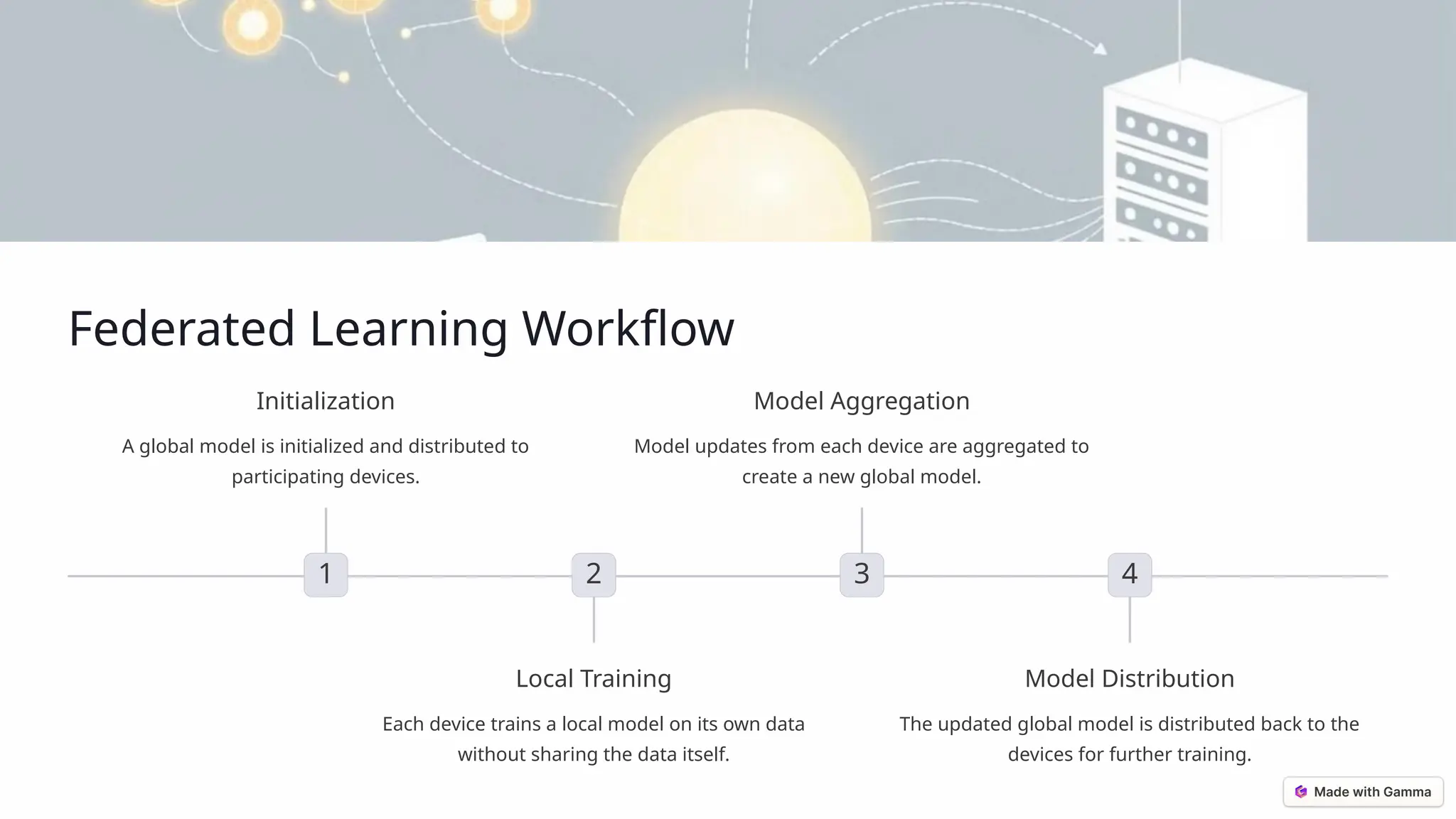
Federated Learning Workflow
1
Initialization
A global model is initialized and distributed to
participating devices.
2
Local Training
Each device trains a local model on its own data
without sharing the data itself.
3
Model Aggregation
Model updates from each device are aggregated to
create a new global model.
4
Model Distribution
The updated global model is distributed back to the
devices for further training.
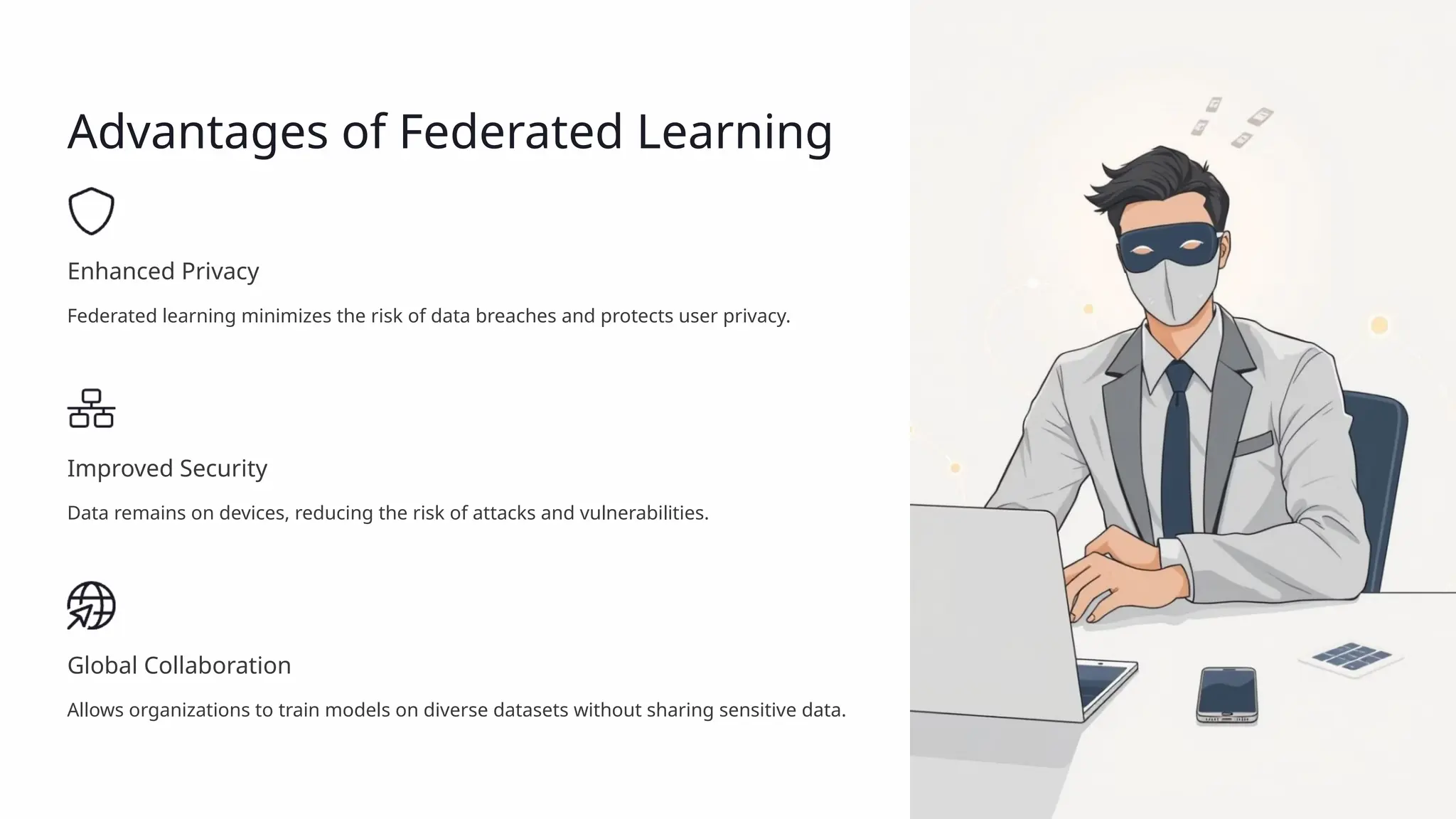
Advantages of Federated Learning
Enhanced Privacy
Federated learning minimizes the risk of data breaches and protects user privacy.
Improved Security
Data remains on devices, reducing the risk of attacks and vulnerabilities.
Global Collaboration
Allows organizations to train models on diverse datasets without sharing sensitive data.
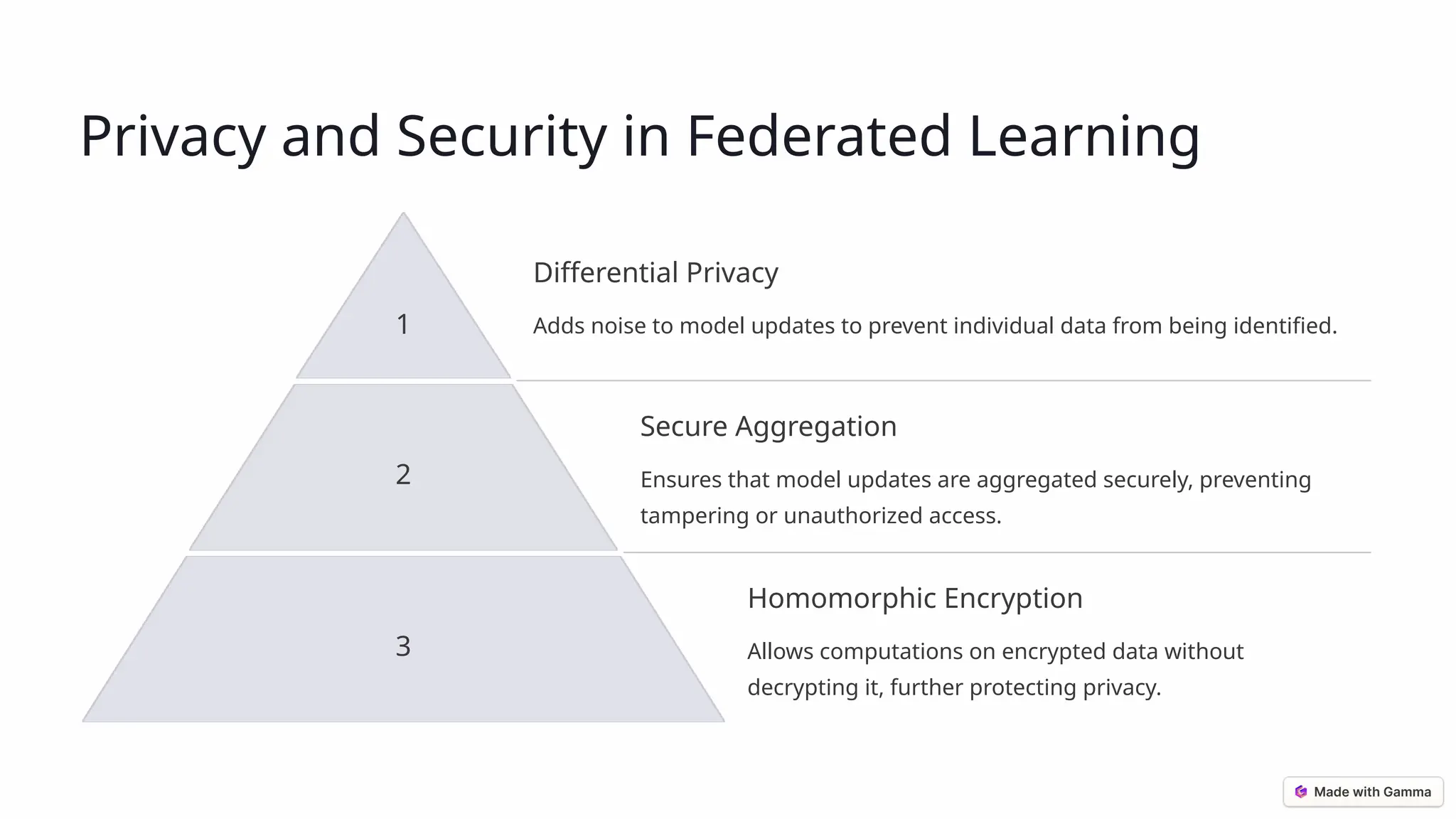
Privacy and Security in Federated Learning
1
Differential Privacy
Adds noise to model updates to prevent individual data from being identified.
2
Secure Aggregation
Ensures that model updates are aggregated securely, preventing
tampering or unauthorized access.
3
Homomorphic Encryption
Allows computations on encrypted data without
decrypting it, further protecting privacy.
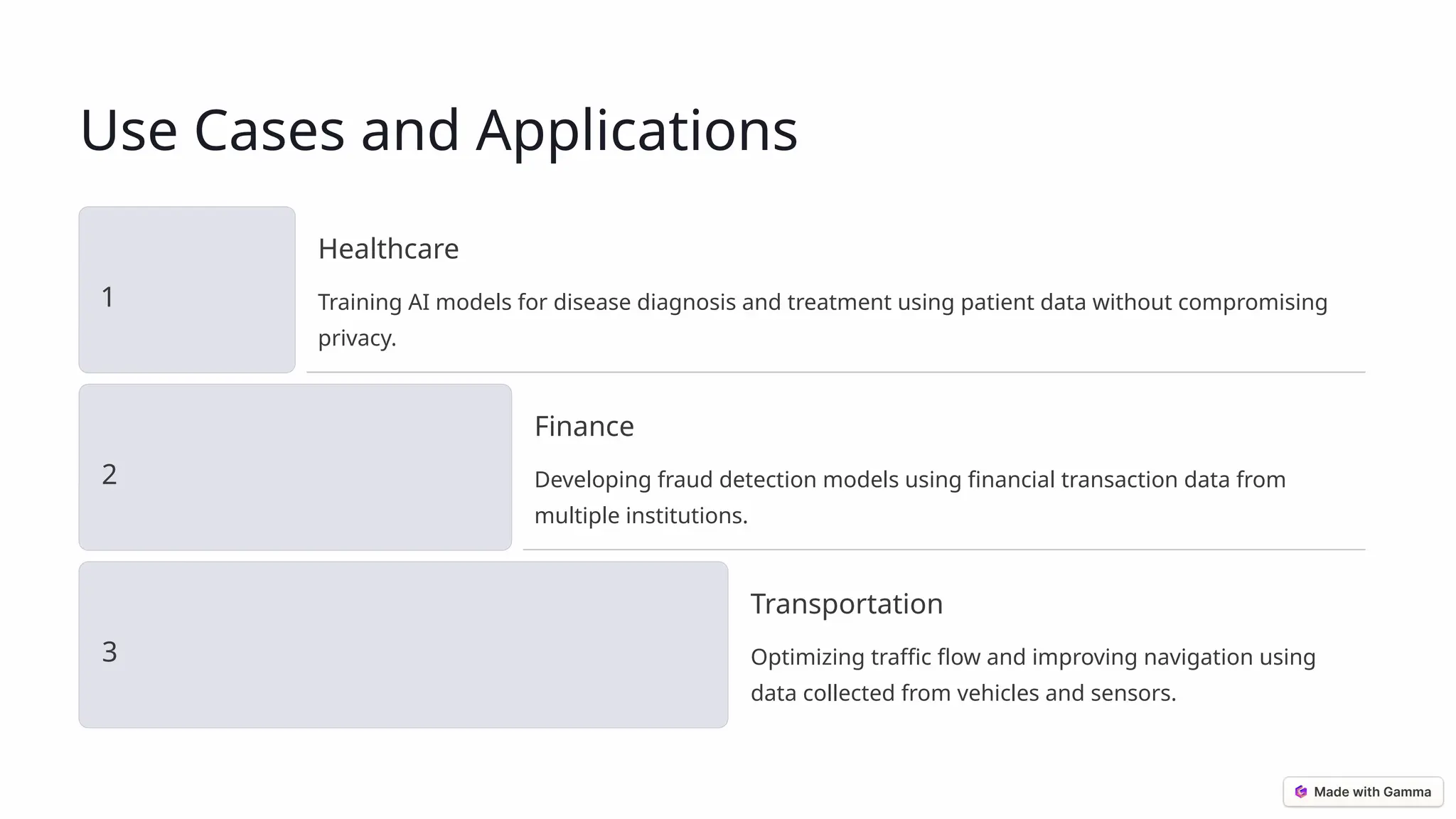
Use Cases and Applications
1
Healthcare
Training AI models for disease diagnosis and treatment using patient data without compromising
privacy.
2
Finance
Developing fraud detection models using financial transaction data from
multiple institutions.
3
Transportation
Optimizing traffic flow and improving navigation using
data collected from vehicles and sensors.
Federated Learning Algorithms and Techniques
1
Model Averaging
Simple averaging of model updates
from different devices.
2
Federated Averaging
A widely used technique for training
deep learning models.
3
Secure Aggregation
Ensures that model updates are
aggregated securely.
The Future of Federated
Learning
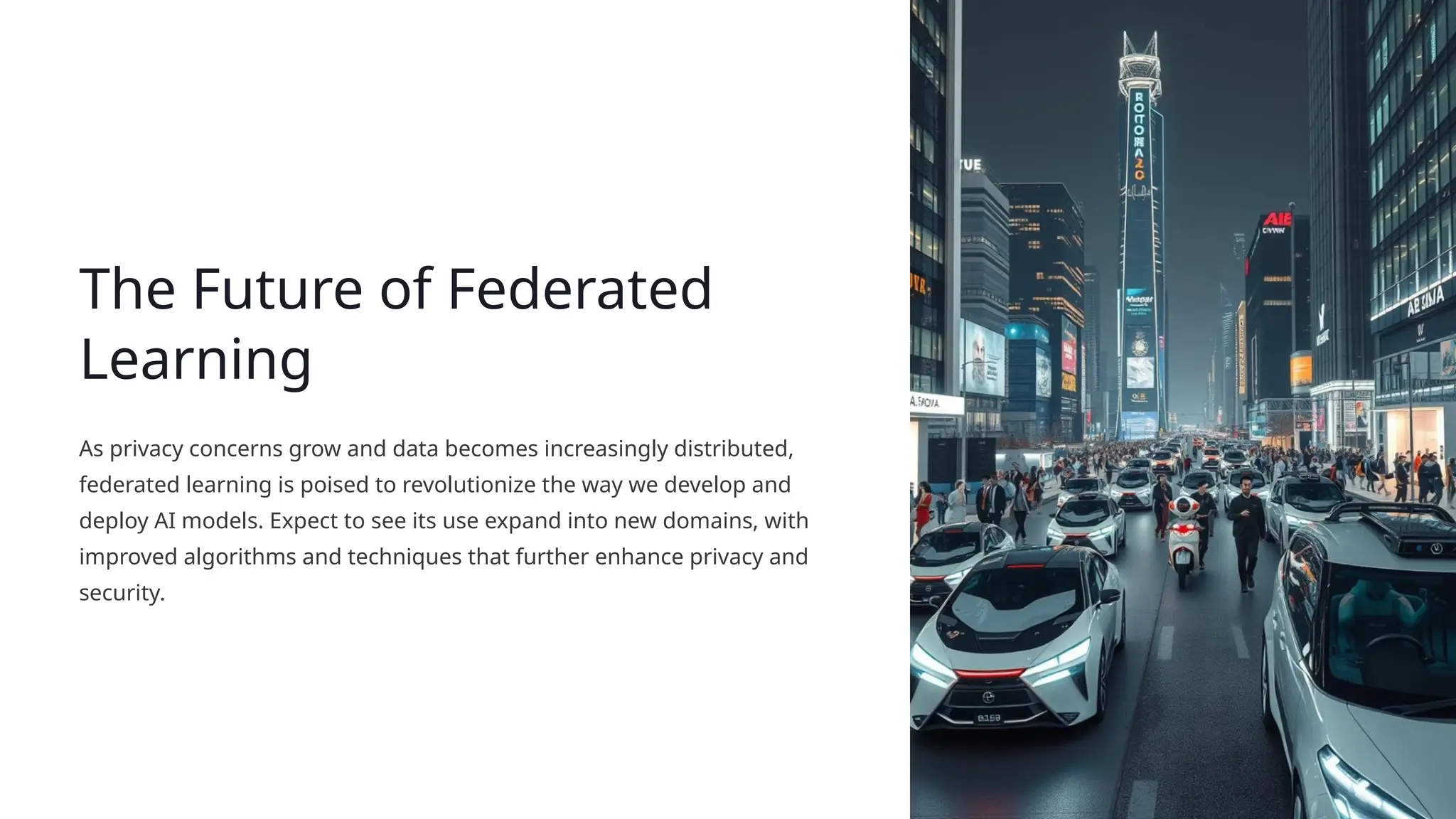
As privacy concerns grow and data becomes increasingly distributed,
federated learning is poised to revolutionize the way we develop and
deploy AI models. Expect to see its use expand into new domains, with
improved algorithms and techniques that further enhance privacy and
security.

Federated-Learning-Empowering-Decentralized-AI.pptx

  • 1.
    Federated Learning: Empowering Decentralized AI Welcometo this presentation exploring the exciting world of Federated Learning, a cutting-edge approach to building smarter and more secure artificial intelligence models.
  • 2.
    What is FederatedLearning? Decentralized Learning A collaborative approach to training AI models where data remains on individual devices, eliminating the need to share raw data. Privacy-Preserving This approach protects user privacy by minimizing the amount of sensitive data transmitted and processed.
  • 3.
    Challenges in Traditional MachineLearning 1 Data Privacy Centralized data storage raises concerns about data breaches and misuse, especially for sensitive information. 2 Data Silos Different organizations often have their own data, making it difficult to train models on a large, diverse dataset. 3 Data Security Transporting and storing vast amounts of data creates security vulnerabilities and potential breaches.
  • 4.
    Key Principles ofFederated Learning Data Locality Models are trained on data that remains on individual devices, enhancing data privacy. Model Aggregation Model updates from different devices are aggregated to create a shared global model, improving accuracy. Differential Privacy Techniques are used to ensure that individual data contributions cannot be identified or reconstructed from the aggregated model.
  • 5.
    Federated Learning Workflow 1 Initialization Aglobal model is initialized and distributed to participating devices. 2 Local Training Each device trains a local model on its own data without sharing the data itself. 3 Model Aggregation Model updates from each device are aggregated to create a new global model. 4 Model Distribution The updated global model is distributed back to the devices for further training.
  • 6.
    Advantages of FederatedLearning Enhanced Privacy Federated learning minimizes the risk of data breaches and protects user privacy. Improved Security Data remains on devices, reducing the risk of attacks and vulnerabilities. Global Collaboration Allows organizations to train models on diverse datasets without sharing sensitive data.
  • 7.
    Privacy and Securityin Federated Learning 1 Differential Privacy Adds noise to model updates to prevent individual data from being identified. 2 Secure Aggregation Ensures that model updates are aggregated securely, preventing tampering or unauthorized access. 3 Homomorphic Encryption Allows computations on encrypted data without decrypting it, further protecting privacy.
  • 8.
    Use Cases andApplications 1 Healthcare Training AI models for disease diagnosis and treatment using patient data without compromising privacy. 2 Finance Developing fraud detection models using financial transaction data from multiple institutions. 3 Transportation Optimizing traffic flow and improving navigation using data collected from vehicles and sensors.
  • 9.
    Federated Learning Algorithmsand Techniques 1 Model Averaging Simple averaging of model updates from different devices. 2 Federated Averaging A widely used technique for training deep learning models. 3 Secure Aggregation Ensures that model updates are aggregated securely.
  • 10.
    The Future ofFederated Learning As privacy concerns grow and data becomes increasingly distributed, federated learning is poised to revolutionize the way we develop and deploy AI models. Expect to see its use expand into new domains, with improved algorithms and techniques that further enhance privacy and security.