Feature Stories 
CO - 107
“If you just have a microphone, you 
can get a quality of intimacy that you 
don't get if you have a camera.” 
-Russell Finch
Feature Stories 
A feature story is like a piece of short fiction. 
You must combine the rigors of factual 
reporting with the creative freedom of short-story 
telling 
You describe people, settings, and feelings - the 
elements of storytelling.
Feature Stories 
Features put people in the story; they make the 
listener think and care 
You can make a feature story about anyone if 
you find an unusual angle that captures the 
interest of your listeners
Feature Stories 
There are no restrictions on subject matter - 
you can do anything that your imagination can 
think of. 
Often a feature story is a simple story about a 
common person in an uncommon 
circumstance; the features job is to find a fresh 
angle and to find the story behind the person
Tips: Be Conversational 
Narration should sound as natural as possible, like 
you’re telling a story to a friend. This is not the 
same as trying to imitate spontaneous speech. 
Instead, this means writing in a style that sounds as 
relaxed as possible. Use phrases and words you 
normally use. When you read your narration aloud, 
do you sound like yourself?
Tip: Be Visual 
Give your listeners a chance to imagine the 
people, places and things in your story. Create a 
sense of scene; describe people; include 
interesting sounds. Avoid a story that’s just a 
series of talking heads or facts.
Tip: Be Concise 
Long sentences loaded with ten-cent words 
and relative clauses usually don’t work too well 
in radio (but there are exceptions). Mix up your 
sentence structure. It’s surprisingly easy to fill 3 
or 4 minutes of airtime- so don’t overwrite.
Tip: Be Energetic 
Use the active voice. Use punchy verbs and 
contractions. Mind your tenses – don’t switch 
back and forth between past and present. Most 
radio stories are done in present tense. Some 
exceptions include commentaries, and news 
stories about past events.
Tip: Be Thoughtful 
Try to go beyond just presenting the facts. Let 
your listeners know why your story matters. Is 
there a lesson to be learned, something to be 
taken away? You don’t have to get too heavy or 
cerebral- just take it a step or two beyond pure 
description.
Tip: Write for the Ear 
The way you listen to speech is different than 
the way you read. 
For example, don’t break up subjects and verbs.
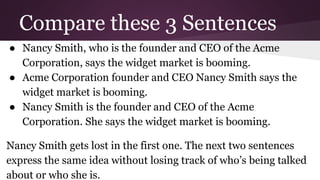
Compare these 3 Sentences 
● Nancy Smith, who is the founder and CEO of the Acme 
Corporation, says the widget market is booming. 
● Acme Corporation founder and CEO Nancy Smith says the 
widget market is booming. 
● Nancy Smith is the founder and CEO of the Acme 
Corporation. She says the widget market is booming. 
Nancy Smith gets lost in the first one. The next two sentences 
express the same idea without losing track of who’s being talked 
about or who she is.

Audio Feature Stories

  • 1.
  • 2.
    “If you justhave a microphone, you can get a quality of intimacy that you don't get if you have a camera.” -Russell Finch
  • 3.
    Feature Stories Afeature story is like a piece of short fiction. You must combine the rigors of factual reporting with the creative freedom of short-story telling You describe people, settings, and feelings - the elements of storytelling.
  • 4.
    Feature Stories Featuresput people in the story; they make the listener think and care You can make a feature story about anyone if you find an unusual angle that captures the interest of your listeners
  • 5.
    Feature Stories Thereare no restrictions on subject matter - you can do anything that your imagination can think of. Often a feature story is a simple story about a common person in an uncommon circumstance; the features job is to find a fresh angle and to find the story behind the person
  • 6.
    Tips: Be Conversational Narration should sound as natural as possible, like you’re telling a story to a friend. This is not the same as trying to imitate spontaneous speech. Instead, this means writing in a style that sounds as relaxed as possible. Use phrases and words you normally use. When you read your narration aloud, do you sound like yourself?
  • 7.
    Tip: Be Visual Give your listeners a chance to imagine the people, places and things in your story. Create a sense of scene; describe people; include interesting sounds. Avoid a story that’s just a series of talking heads or facts.
  • 8.
    Tip: Be Concise Long sentences loaded with ten-cent words and relative clauses usually don’t work too well in radio (but there are exceptions). Mix up your sentence structure. It’s surprisingly easy to fill 3 or 4 minutes of airtime- so don’t overwrite.
  • 9.
    Tip: Be Energetic Use the active voice. Use punchy verbs and contractions. Mind your tenses – don’t switch back and forth between past and present. Most radio stories are done in present tense. Some exceptions include commentaries, and news stories about past events.
  • 10.
    Tip: Be Thoughtful Try to go beyond just presenting the facts. Let your listeners know why your story matters. Is there a lesson to be learned, something to be taken away? You don’t have to get too heavy or cerebral- just take it a step or two beyond pure description.
  • 11.
    Tip: Write forthe Ear The way you listen to speech is different than the way you read. For example, don’t break up subjects and verbs.
  • 12.
    Compare these 3Sentences ● Nancy Smith, who is the founder and CEO of the Acme Corporation, says the widget market is booming. ● Acme Corporation founder and CEO Nancy Smith says the widget market is booming. ● Nancy Smith is the founder and CEO of the Acme Corporation. She says the widget market is booming. Nancy Smith gets lost in the first one. The next two sentences express the same idea without losing track of who’s being talked about or who she is.