Fetal Alcohol
Spectrum
Disorder (FASD):
A Call to Action
in Ontario
Presented by: Fetal Alcohol Spectrum Disorder
Ontario Network of Expertise (FASD ONE)
Driving Progress on FASD
March 2014
Vision
A province where FASD is
prevented and individuals
living with FASD have the
opportunity to lead full and
productive lives as valued
and contributing members
of their community.
Mission
FASD ONE will be a leader in
promoting and encouraging
collaboration on FASD to develop
a provincial evidence-informed
integrated system including
prevention, diagnosis, specialized
intervention and support.
Contents
3	 Executive Summary
4	Introduction
5	Background
•	 About Fetal Alcohol
Spectrum Disorder (FASD)
•	 Michele’s Journey
8	 Why a Provincial Strategy
8	 A Call to Action
9	Recommendations
1.	 Awareness and Prevention
2.	 Assessment and Diagnosis
3.	 Intervention and Support
4. 	 Knowledge Transfer and
Capacity Enhancement
5.	 Research and Evaluation
12	References
13	 FASD ONE Members
14	Disclaimers
Presented by: Fetal Alcohol Spectrum Disorder Ontario Network of Expertise (FASD-ONE) Driving Progress on FASD—March 2014 3
Fetal Alcohol Spectrum Disorder
(FASD) must be included in Ontario’s
evolving cross-ministerial response to
developmental disabilities.
FASD is an umbrella term describing the range of
lifelong brain-based disabilities that can occur in
an individual whose mother drank alcohol during
pregnancy. In Canada, prenatal exposure to alcohol is
the leading cause of developmental disability (Public
Health Agency of Canada, 2005), and costs the Canadian
economy $6.2 billion annually (Thanh, et al. 2011).
This submission, prepared by Fetal Alcohol Spectrum
Disorder—Ontario Network of Expertise (FASD ONE),
calls for a provincial strategy on FASD. A provincial
strategy provides an opportunity for the Government
of Ontario to take the lead in implementing an action
plan that prevents FASD, while ensuring effective
services for those affected, resulting in reduced
incidence, improved outcomes, and decreased costs.
This document makes recommendations in five areas
which are explored in more detail in the full document.
They are as follows:
Executive Summary
1. AWARENESS and PREVENTION: Ontarians will
receive accurate information regarding the risks of
alcohol use during pregnancy, together with timely
access to the services they require to abstain from or
limit alcohol use in pregnancy.
2. ASSESSMENT and DIAGNOSIS: Individuals with
prenatal alcohol exposure, regardless of their age, will
have access to timely assessment and diagnostic services
and a coordinated, informed response that is appropriate,
effective, and linguistically and culturally sensitive.
3. INTERVENTION and SUPPORT: Children, youth, adults
and their caregivers will have ready access to culturally
sensitive resources and services designed to address and
accommodate their individual lifelong needs.
4. KNOWLEDGE TRANSFER and CAPACITY
ENHANCEMENT: FASD education and training will be
made readily available to both current and future families/
caregivers and service providers in all service sectors.
5. RESEARCH and EDUCATION: Services and resources
will be evidence based, effective, culturally appropriate
and inclusive of those affected by FASD.
4 Fetal Alcohol Spectrum Disorder (FASD): A Call to Action in Ontario
Ontario is in a time of transformation. The government
is developing and implementing strategies to address
the needs of children, youth and adults across all sectors.
These strategies come together around the common aim
of enhancing outcomes for Ontario’s children, youth and
adults by
i.	 optimizing health and preventing poor
birth outcomes;
ii.	 ensuring equitable and accessible services;
iii.	 developing evidence-based services that are
transparent and accountable.
Fetal Alcohol Spectrum Disorder (FASD) must be included in Ontario’s evolving
response to developmental disabilities, and to the transformation of the
children’s mental health, mental health and addictions, early years, child care
and child welfare systems. The needs of those with FASD must be addressed in
health, social, educational, legal and correctional services.
This submission, prepared by Fetal Alcohol Spectrum Disorder—Ontario
Network of Expertise (FASD ONE), proposes recommendations for a strategy to:
1.	 Prevent FASD by providing evidence-based information
and accessible, comprehensive services to pregnant
women and all women of childbearing age;
2. 	 Ensure timely access to assessment and diagnostic services to
children, youth and adults who may be affected by FASD;
3. 	 Support children, youth and adults who are affected
with the disability through evidence-based interventions
that stabilize home life and maximize potential.
FASD ONE is ideally situated to partner with the government to achieve our
shared vision of a province in which FASD is prevented, and those individuals
living with FASD will have the opportunity to lead full and productive lives
as valued and contributing members of their community. FASD ONE is ready,
willing and able to inform policy leading to a coordinated, comprehensive,
cross-sectoral system of support for Ontarians.
Introduction
Presented by: Fetal Alcohol Spectrum Disorder Ontario Network of Expertise (FASD-ONE) Driving Progress on FASD—March 2014 5
FASD is an umbrella term describing the range of effects
that can occur in an individual whose mother drank
alcohol during pregnancy. Prenatal alcohol exposure
has its primary impact on brain development and
functioning. The effects of prenatal alcohol exposure
vary, and are affected by individual maternal and fetal
factors, including differences in the amount of alcohol
consumed, the pattern and timing of the consumption,
and maternal and genetic factors (Canadian Pediatric
Society, 2002). Since FAS was first described in 1973
(Jones KL & Smith DW, 1973) it has become apparent
that this disorder is actually a spectrum of conditions
we now call Fetal Alcohol Spectrum Disorder (FASD).
It is complex, with a wide range of expression in those
affected—from severe growth restriction, intellectual
disability, birth defects and characteristic dysmorphic
facial features to normal growth, facial features and
intellectual abilities, but with lifelong deficits in several
domains of brain function. The neurodevelopmental
impacts of FASD are on physical, behavioural,
emotional, social and cognitive functioning.
FASD is an invisible disability for the majority of
those affected. Most individuals with FASD do not
display the physical features associated with the
disability, but are affected primarily by brain damage
resulting from their prenatal exposure to alcohol. In
the absence of identification and diagnosis, it may be
assumed that the affected individual “won’t” comply
with expectations, whereas the reality is that he/she
“can’t”. Expectations of the affected individual may not
be congruent with his/her abilities, setting up a cycle
of misapplied interventions and supports, frustration
and failures for those affected, and risk for secondary
disabilities and other adverse outcomes due to
inadequate understanding and accommodation.
In Canada, prenatal exposure to alcohol is the leading
cause of developmental disability (Public Health
Agency of Canada, 2005). FASD is believed to affect
1% of the population (Public Health Agency of Canada,
2005) or 130,000 children, youth and adults in the
province. The cost of supporting those affected by
FASD in Canada is estimated at $6.2 billion annually
(Thanh, NX, Johnsson, E, Dennett, L, & Jacobs, P, 2011).
Background
The estimated return on investment in prevention of
FASD is significant: “For every $150,000 dollars spent
on prevention we will see $1.5 million dollars in return”
(Thanh NX., & Jonsson E., 2009).
While preventable, FASD is a complex, multi-faceted
public health and social issue that affects Ontarians in
all walks of life, in every community of the province.
While even low to moderate consumption of alcohol
can interfere with the normal development of the
fetus, heavy or frequent alcohol use increases the risk
of delivering a baby with FASD (Chudley, AE, Conry,
C, Cooke, JL, Loock, C, Rosales, T, LeBlanc N, 2005).
The data indicate that risk factors for prenatal alcohol
exposure include higher maternal age, lower education
level, maternal use of cocaine and tobacco, custody
changes, lower socioeconomic status and paternal
drinking and drug use at the time of pregnancy
(Sood, B, Delancey-Black, V, Covington, C et al., 2001).
Additional conditions of risk include reduced access to
prenatal and postnatal care and services, inadequate
nutrition and poor developmental environment (e.g.
stress, abuse, neglect) (Bingol N, Schuster, D, Fuchs,
Iosoub S, et al, 1987). Prevention of FASD includes
attending to the complex biological and social
determinants of health, including genetics, poverty,
malnutrition, lack of social support networks and
personal autonomy, as well as gender-based violence,
trauma, stress and social isolation.
The Canadian Guidelines for Diagnosis of FASD clarify
and quantify alcohol’s impact on fetal development,
and define the criteria for diagnoses that fall under
the Spectrum: Fetal Alcohol Syndrome (FAS),
partial Fetal Alcohol Syndrome (pFAS) and Alcohol
Related Neurodevelopmental Disorder (ARND). The
diagnoses under FASD must be given by a physician
(paediatrician, family physician, psychiatrist, geneticist)
in the context of a multidisciplinary assessment. FASD
diagnostic teams often include a psychologist, speech
and language therapist, occupational therapist, social
worker and case manager. Diagnoses of pFAS and
ARND require the confirmation of maternal alcohol use
during pregnancy.
About Fetal Alcohol Spectrum Disorder (FASD)
6 Fetal Alcohol Spectrum Disorder (FASD): A Call to Action in Ontario
The primary disability of FASD is diffuse
permanent brain damage and includes impacts in
the following areas:
•	 executive functioning (planning/
organization/consideration/moderation);
•	 adaptive functioning (daily living and self-care);
•	 social communication (interpretation of
meaning; implicit/explicit and verbal/non-
verbal within multiple contexts, social rules)
•	 processing speed/efficiency/accuracy
•	 areas of memory
The challenges presented by the primary disability
of FASD are often compounded by secondary
disorders or adverse outcomes that are not intrinsic
to the disability.
Secondary disabilities and adverse outcomes
arise when the primary disability is not identified or
diagnosed, or when appropriate interventions have
not been applied. It is in these areas that screening,
diagnosis, and effective interventions are most
needed to prevent adverse outcomes. In their large
seminal study, Streissguth et al (1996) found the
following outcomes for individuals (between ages 12
and 51) affected by FASD who did not receive the
services they required:
•	 95% had mental health issues;
•	 82% were unable to live independently
(between ages 21- 51);
•	 80% were raised by someone other
than a biological parent;
•	 70% had problems with employment
(between ages 21-51);
•	 68% had “disrupted school experience”;
•	 68% experienced trouble with the law;
•	 52% exhibited inappropriate sexual behaviour;
•	 30% had substance use problems (Streissguth
et al.,1996; Streissguth et al., 2004)
It is well-established that individuals with FASD
who are not identified and do not receive the
services they require face additional challenges
as a consequence of their disorder, including
breakdown in family relations, disruption of schooling,
unemployment, homelessness, alcohol and drug abuse
and mental health disorders. Adolescents
and adults with FASD are also at high risk for coming
into conflict with the criminal justice system, either
as offenders or as victims. The legal implications of
FASD are complicated.
Streissguth et al, (1996) found that the following
factors protected individuals with FASD from
developing secondary disabilities or adverse outcomes:
•	 Living in a stable and nurturant home.
•	 Being diagnosed before the age of 6 years.
•	 Never having experienced violence
against oneself.
Secondary disabilities and adverse outcomes can be
reduced or prevented through early diagnosis and
interventions that accommodate the disability and
result in realistic expectations.
Sadly, a recent study of youth with FASD living
in Ontario found that 86% of youth had never
been referred to or received any FASD-informed
interventions or services, despite high levels of
functional impairment across brain domains. Moreover,
the majority of youth who had received specialized
interventions or services had done so only when
participating in research studies (Todorow, M, Moore,
TE, Fantus, E, Sorbara, D, & Nulman, I 2011a, b).
Improved outcomes will result in reduced need for
expensive, publically funded intervention and supports.
Presented by: Fetal Alcohol Spectrum Disorder Ontario Network of Expertise (FASD-ONE) Driving Progress on FASD—March 2014 7
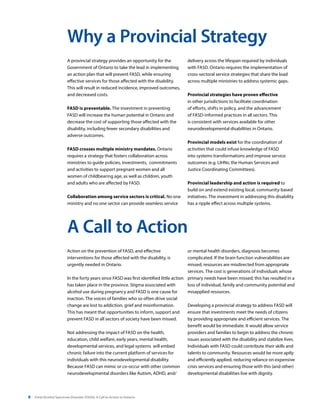
Addictions
Services
Canada Prenatal
Nutrition
Program
Correctional
Services
Food Banks
Healthy Babies
Healthy Children
Program
Hostel/Shelter
Services
Methadone
Physicians
Midwives
Obstetricians
Ontario Works
Program
Public Health
Units
Violence
Against Women
Programs
Addiction
Services
Child Welfare
(group home)
Children’s
Mental Health
Agency
Community
Drop-In Centre
Correctional
Services
Hospitals
Police
Psychiatrist
Psychologist
Public Health
Youth Hostel/
Shelter Services
Youth Justice
Addictions
Services
Canada Prenatal
Nutrition
Program
Child Welfare
Dietician
Family Physician
Food Banks
Healthy Babies
Healthy Children
Program
Hostel/Shelter
Services
Midwife
Nurse
Obstetrician
Ontario Works
Public Health
Addictions
Services
Canada Prenatal
Nutrition
Program
Child Welfare
Dietician
Family Physician
Food Banks
Healthy Babies
Healthy Children
Program
Hostel/Shelter
Services
Midwife
Nurse
Obstetrician
Ontario Works
Public Health
Addictions
Services
Canada Prenatal
Nutrition
Program
Child Welfare
Community
Action Program
for Children
Family Physician
Healthy Babies
Healthy Children
Program
Infant and Child
Development
Programs
Midwife
Ontario Early
Years Centres
Paediatrian
Public Health
Violence
Against Women
Program
Children’s
Mental Health
Agency
Child Welfare
(foster care)
Education
System
(teachers,
educational
assistants,
social workers,
child and youth
workers)
Family Physician
Psychiatrist
Psychologist
Public Health
Unit
Michele’s Journey
Pregnant women at risk for delivering a child with FASD, as well as those individuals affected with the
disability, typically have contact with a range of service providers across multiple sectors throughout the
lifespan. These contacts offer opportunities for the delivery of interventions that can prevent or reduce the
harms associated with prenatal alcohol exposure, and to support children, youth and adults affected with
the disability and their caregivers. Michele’s Journey identifies the service providers and systems that are
typically encountered by those with FASD across various life stages.
Michele’s
Pregnancy 2
Pregnant Woman Newborn Youth Michele’s
Pregnancy 1
School-aged
8 Fetal Alcohol Spectrum Disorder (FASD): A Call to Action in Ontario
A provincial strategy provides an opportunity for the
Government of Ontario to take the lead in implementing
an action plan that will prevent FASD, while ensuring
effective services for those affected with the disability.
This will result in reduced incidence, improved outcomes,
and decreased costs.
FASD is preventable. The investment in preventing
FASD will increase the human potential in Ontario and
decrease the cost of supporting those affected with the
disability, including fewer secondary disabilities and
adverse outcomes.
FASD crosses multiple ministry mandates. Ontario
requires a strategy that fosters collaboration across
ministries to guide policies, investments, commitments
and activities to support pregnant women and all
women of childbearing age, as well as children, youth
and adults who are affected by FASD.
Collaboration among service sectors is critical. No one
ministry and no one sector can provide seamless service
Action on the prevention of FASD, and effective
interventions for those affected with the disability, is
urgently needed in Ontario.
In the forty years since FASD was first identified little action
has taken place in the province. Stigma associated with
alcohol use during pregnancy and FASD is one cause for
inaction. The voices of families who so often drive social
change are lost to addiction, grief and misinformation.
This has meant that opportunities to inform, support and
prevent FASD in all sectors of society have been missed.
Not addressing the impact of FASD on the health,
education, child welfare, early years, mental health,
developmental services, and legal systems will embed
chronic failure into the current platform of services for
individuals with this neurodevelopmental disability.
Because FASD can mimic or co-occur with other common
neurodevelopmental disorders like Autism, ADHD, and/
Why a Provincial Strategy
A Call to Action
delivery across the lifespan required by individuals
with FASD. Ontario requires the implementation of
cross-sectoral service strategies that share the load
across multiple ministries to address systemic gaps.
Provincial strategies have proven effective
in other jurisdictions to facilitate coordination
of efforts, shifts in policy, and the advancement
of FASD-informed practices in all sectors. This
is consistent with services available for other
neurodevelopmental disabilities in Ontario.
Provincial models exist for the coordination of
activities that could infuse knowledge of FASD
into systems transformations and improve service
outcomes (e.g. LIHNs; the Human Services and
Justice Coordinating Committees).
Provincial leadership and action is required to
build on and extend existing local, community-based
initiatives. The investment in addressing this disability
has a ripple effect across multiple systems.
or mental health disorders, diagnosis becomes
complicated. If the brain function vulnerabilities are
missed, resources are misdirected from appropriate
services. The cost is generations of individuals whose
primary needs have been missed; this has resulted in a
loss of individual, family and community potential and
misapplied resources.
Developing a provincial strategy to address FASD will
ensure that investments meet the needs of citizens
by providing appropriate and efficient services. The
benefit would be immediate. It would allow service
providers and families to begin to address the chronic
issues associated with the disability and stabilize lives.
Individuals with FASD could contribute their skills and
talents to community. Resources would be more aptly
and efficiently applied, reducing reliance on expensive
crisis services and ensuring those with this (and other)
developmental disabilities live with dignity.
Presented by: Fetal Alcohol Spectrum Disorder Ontario Network of Expertise (FASD-ONE) Driving Progress on FASD—March 2014 9
Ontarians will receive accurate information regarding
the risks of alcohol use during pregnancy together
with timely access to the services they require to
abstain from or limit alcohol use in pregnancy.
1.1	 Ensure that all Ontarians receive ongoing
evidence-informed knowledge about the
effects of alcohol use during pregnancy using
broad-based, community driven, linguistically
and culturally appropriate communication
channels, resources and materials.
1.2	 Ensure that all pregnant women and women of
childbearing age have the opportunity to discuss
their alcohol use, the risk of alcohol exposed
pregnancy, and pregnancy planning, in a safe
environment with well-informed practitioners.
Individuals with prenatal alcohol exposure, regardless
of their age, will have access to timely assessment
and diagnostic services and a coordinated informed
response that is appropriate, effective, and
linguistically and culturally sensitive.
2.1	 Build capacity to assess for and diagnose
FASD as part of the assessment of
neurodevelopmental disabilities.
2.2 	 Ensure access to equitable and timely
assessment that considers all brain domains
affected by prenatal alcohol exposure; ensure
diagnosis at the earliest age possible, following
up across the lifespan when needed.
2.3	 Encourage the integration of FASD identification,
assessment and diagnosis into all support
services for children, youth and adults.
2.4	 Provide a discrete FASD OHIP code so
that the prevalence of FASD diagnoses
in Ontario can be tracked.
Recommendations
1.3	 Ensure that pregnant women who are using
alcohol or are at higher risk of alcohol use in
pregnancy have priority access to holistic,
culturally appropriate, women-centred
services that reflect the social determinants
of health—addiction treatment, mental
health services, health care, prenatal care, safe
housing, income stability, food security.
1.4	 Ensure that new mothers receive postpartum
support to assist them to maintain healthy
changes made during pregnancy, to prevent
future alcohol exposed pregnancies, to
support the development of their children
and to prevent secondary disabilities
related to prenatal alcohol exposure.
2.5	 Provide comprehensive case management
support to facilitate referrals.
2.6	 Develop a protocol to ensure the transfer
of a child’s medical history from the
prenatal to the postnatal period to facilitate
assessment, diagnosis and referral.
1. Awareness and Prevention
2. Assessment and Diagnosis
10 Fetal Alcohol Spectrum Disorder (FASD): A Call to Action in Ontario
Children, youth, adults and their caregivers will have
ready access to culturally sensitive resources and
services designed to address and accommodate
their individual lifelong needs. Elements of effective
practice inform service provision across a range of
sectors—child welfare, education, justice, housing,
income security, employment, health, mental health,
and addictions—in ways that stabilize lives and
maximize potential.
3.1	 Define service pathways to ensure those
affected by FASD have access to the services
they need across multiple sectors.
3.2	 Expand service interventions to include
effective practices so that individuals living
with FASD have access to the services
that contribute to optimal outcomes.
3.3 	 Integrate the expansion of collaborative
family-centred service coordination to
include respite, case management, education,
parenting support, supportive housing
and employment, and income security.
3.4	 Facilitate the addition of Fetal Alcohol Spectrum
Disorder (FASD) as a neurodevelopmental
exceptionality in the special education system of
Ontario and provide effective programming to
support students with this brain-based disorder.
3.5	 Support cross-sector, lifelong FASD services
that are seamless, personalized and feature
ongoing and transitional support.
3.6	 Ensure that all families have access to timely,
affordable, tailored, strengths-based supports
and resources.
3.7	 Ensure access to FASD-informed custodial
and non-custodial programs and services
for victims, accused and offenders with this
brain-based developmental disability.
3.8	 Establish protocols to ensure the protection of
the rights of witness, the accused, offenders
and victims with FASD in the legal system
3. Intervention and Support
Presented by: Fetal Alcohol Spectrum Disorder Ontario Network of Expertise (FASD-ONE) Driving Progress on FASD—March 2014 11
FASD education and training will be made readily
available to both current and future families/caregivers
and service providers in all service sectors.
4.1	 Facilitate awareness of and access to FASD
education and training for families and
caregivers, as well as those in all sectors serving
individuals affected by FASD and their families.
4.2	 Ensure the inclusion of FASD-specific content
in the curriculum of College and University
programs including medicine, nursing, midwifery,
early childhood education, education, child
and youth, occupational therapy, speech and
language pathology, physiotherapy, social work,
psychology, police, corrections and law.
4.3 	 Knowledge transfer should include cross-sector
collaboration to explore potential opportunities
in programming and coordinate and align
policies to enhance effectiveness of service
delivery and mitigate adverse outcomes.
4.4	 Facilitate knowledge transfer and
communication among Ontario’s local
community FASD networks.
4. Knowledge Transfer and Capacity Enhancement
Services and resources will be evidence-based, effective,
culturally appropriate, and inclusive of the voice of those
affected by FASD.
5.1	 Encourage the expansion and support of systemic
evaluation processes to measure the effectiveness
of FASD services and programs in Ontario.
5.2	 Encourage the expansion and support of a
systematic data collection process to measure
prevalence of FASD in Ontario.
5. Research and Evaluation
12 Fetal Alcohol Spectrum Disorder (FASD): A Call to Action in Ontario
References
Bingol N, Schuster C, Fuchs M, Iosub S, Turner G, Stone
RK, et al. The influence of socioeconomic factors on
the occurrence of fetal alcohol syndrome. Adv Alcohol
Subst Abuse 1987;6(4):105-18.
Canadian Paediatric Society. (2002). Fetal
alcohol syndrome. Paediatrics and Child
Health, 7(3), 161–195. Retrieved from http://
www.pulsus.com/journals/ journalHome.
jsp?sCurrPg=journal&jnlKy=5&fold=Home
Chudley A., Conry, J., Cook, J C. Loock C., Rosales T.
N. LeBlanc N 2005 Fetal alcohol spectrum disorder:
Canadian guidelines for diagnosis CMAJ March 1, 2005
vol. 172 no. 5 suppl doi: 10.1503/cmaj.1040302
International Charter on the Prevention of FASD,
First International Conference on Prevention of FASD,
Edmonton, ALTA, September 23 – 25, 2013.
Jones KL, Smith DW. Recognition of the fetal
alcohol syndrome in early infancy. Lancet 1973;2
(7836): 999-1001
Public Health Agency of Canada (2005). Fetal Alcohol
Spectrum Disorder: A Framework for Action. Ottawa:
Her Majesty the Queen in Right of Canada.
Sampson, P. D., Streissguth, A. P., Bookstein, F. L.,
Little, R. E., Clarren, S. K., Dehaene, P., Hanson, J. W.,
& Graham, J. M. (1997). Incidence of fetal alcohol
syndrome and prevalence of alcohol-related
neurodevelopmental disorder. Teratology, 56(5),
317–326.
Sood B, Delaney-Black V, Covington C, Nordstrom-Klee
B, Ager J, Templin T, et al. Prenatal alcohol exposure
and childhood behavior at age 6 to 7 years: I.
dose-response effect. Pediatrics 2001;108(2):E34.
Streissguth, A. P., Barr, H. M, Kogan, J., & Bookstein, F.
L. (1996). Understanding the occurrence of secondary
disabilities in clients with fetal alcohol syndrome and
fetal alcohol effects: Final report to the Centers for
Disease Control and Prevention (CDC) (Tech. Report
#96-06). Seattle, WA: University of Washington
Publication Services.
Streissguth, A. P., Bookstein, F. L., Barr, H. M., Sampson,
P. D., O’Malley, K., & Young, J. K. (2004). Risk factors
for adverse life outcomes in fetal alcohol syndrome
and fetal alcohol effects. Journal of Developmental
Behavioural Pediatrics, 25(4), 228–238. doi:0196-
206X/00/2504-0228
Thanh NX., & Jonsson E. (Winter 2009). Costs of
fetal alcohol spectrum disorder in Alberta, Canada.
Canadian Journal Clinical Pharmacology. 16(1): e80-90.
Epub 2009 Jan 16.
Thanh, N.X., Jonsson, E., Dennett, L., & Jacobs, P. (2011).
Fetal Alcohol Spectrum Disorder: Management and
Policy Perspectives of FASD, edited by Edward P. Riley,
Sterling Clarren, Joanne Weinberg, Egon Jonsson pg
45-125. Wiley, John & Sons, Incorporated.
Todorow, M., Moore, T. E., Fantus, E., Sorbara, D., &
Nulman, I. (2011a). Following adolescents with fetal
alcohol spectrum disorder: A need for further services
(preliminary results). Alcoholism Clinical & Experimental
Research, Supplement 35(6), 113A.
Todorow, M., Moore, T. E., Fantus, E., Sorbara, D., &
Nulman, I. (2011b). Available interventions and services
used by Canadian adolescents with FASD and their
families. Journal of Population Therapeutics and Clinical
Pharmacology, Supplement 18(3), e421–e422.
Presented by: Fetal Alcohol Spectrum Disorder Ontario Network of Expertise (FASD-ONE) Driving Progress on FASD—March 2014 13
FASD ONE Members
•	 Action on Women’s Addictions – Research
and Education (AWARE), Kingston, ON
•	 Associated Youth Services of Peel, Mississauga, ON
•	 Best Start Resource Centre at
Health Nexus, Toronto, ON
•	 Sheila Burns, FASD Consultant,
M.S. & Associates, Ajax, ON
•	 Canadian Mental Health Association,
Sault Ste. Marie, ON
•	 Children’s Aid Society of Toronto, Toronto, ON
•	 Elaine Cousineau, FASD Independent
Educator/Consultant, North Bay, ON
•	 Lynn Cunningham, Ryerson University, Toronto, ON
•	 Mary Cunningham, FASD Consultant, Kitchener, ON
•	 Durham District School Board, Whitby, ON
•	 FASD Durham
•	 FASD Coalition of Ottawa, Ottawa, ON
•	 FASD E.L.M.O. Network, London, ON
•	 Judith Ferguson, FASD Consultant, Georgian Bluffs
•	 Georgian College, Orillia Campus, Orillia, ON
•	 Girls Incorporated of Durham, Ajax, ON
•	 Hotel Dieu Hospital, Child Development
Centre, Kingston, ON
•	 Jane Hoy, Huron County, ON
•	 Keystone Child, Youth and Family
Services, Owen Sound, ON
•	 KidsLINK, Waterloo Region, Kitchener, ON
•	 Kathy Layte, Parent, Kitchener, ON
•	 Middlesex-London Health Unit, London, ON
•	 Mothercraft/Breaking the Cycle
•	 Motherisk Program, Hospital for
Sick Children, Toronto, ON
•	 Cheryl Neave, FASD Consultant, Vice-
Chair FASD ONE, Unionville, ON
•	 Niagara District School Board, St. Catharines, ON
•	 North Bay Indian Friendship Centre, North Bay, ON
•	 Norwest Community Health
Centre, Thunder Bay, ON
•	 Peel Infant and Child Development
Services, Mississauga, ON
•	 Peel Region FASD Diagnostic
Team, Mississauga, ON
•	 Peterborough FASD Committee & Caregiver
Support Group, Peterborough, ON
•	 Ramsey Lake Health Centre, Sudbury, ON
•	 Region of Waterloo Public Health, Waterloo, ON
•	 Regional Support Associates, Walkerton, ON
•	 Sharron Richards, Community Volunteer,
Chair FASD ONE, Toronto, ON
•	 Rideauwood Addiction Services, Ottawa, ON
•	 Dr. Scott and Associates, Paris, ON
•	 St. Michael’s Hospital, FASD Clinic, Toronto, ON
•	 Southern Ontario Network of
Specialized Care, Thorold, ON, ON
•	 Southwest Ontario Aboriginal Health
Access Centre, London, ON
•	 Surrey Place Centre. Toronto, ON
•	 Thames Valley District School Board, London ON
•	 Michelle Todorow, Toronto, ON
•	 Union of Ontario Indians, North Bay, ON
•	 Roxana Vernescu, Ph.D., Nipissing
University - Muskoka Campus
14 Fetal Alcohol Spectrum Disorder (FASD): A Call to Action in Ontario
Disclaimers
Funding for this publication was provided by the Public Health Agency of Canada. The
opinions expressed in this publication are those of FASD ONE and do not necessarily reflect
the official views of the Public Health Agency of Canada.
Presented by: Fetal Alcohol Spectrum Disorder Ontario Network of Expertise (FASD-ONE) Driving Progress on FASD—March 2014 15
About FASD ONE
(Fetal Alcohol Spectrum Disorder
Ontario Network of Expertise)
FASD ONE is a volunteer collaborative comprised of Ontario practitioners, parents/caregivers, community
volunteers and specialists committed to the prevention of Fetal Alcohol Spectrum Disorder and the development
and dissemination of evidence-based information that will support practitioners, as well as individuals affected
by FASD, and their families. FASD ONE members represent communities across Ontario, as well as the health, child
welfare, justice, early intervention, addiction and mental health, education, and corrections sectors.
FASD ONE has sought province-wide input to inform recommendations for action on FASD. The 2013 Blueprint
for Action symposium, which was attended by 180 stakeholders representing community, regional and provincial
organizations, identified priority issues. Priorities focused on prevention, education, early intervention, child
welfare, assessment and diagnosis, and legal issues. These priorities reflect the sectors and ministries touched
by FASD, the need for coordination of a response, and the value of that effort to communities, stakeholders, and
families across the province.
For more information, see www.fasdontario.ca

FASD ONE Call to Action

  • 1.
    Fetal Alcohol Spectrum Disorder (FASD): ACall to Action in Ontario Presented by: Fetal Alcohol Spectrum Disorder Ontario Network of Expertise (FASD ONE) Driving Progress on FASD March 2014
  • 2.
    Vision A province whereFASD is prevented and individuals living with FASD have the opportunity to lead full and productive lives as valued and contributing members of their community. Mission FASD ONE will be a leader in promoting and encouraging collaboration on FASD to develop a provincial evidence-informed integrated system including prevention, diagnosis, specialized intervention and support. Contents 3 Executive Summary 4 Introduction 5 Background • About Fetal Alcohol Spectrum Disorder (FASD) • Michele’s Journey 8 Why a Provincial Strategy 8 A Call to Action 9 Recommendations 1. Awareness and Prevention 2. Assessment and Diagnosis 3. Intervention and Support 4. Knowledge Transfer and Capacity Enhancement 5. Research and Evaluation 12 References 13 FASD ONE Members 14 Disclaimers
  • 3.
    Presented by: FetalAlcohol Spectrum Disorder Ontario Network of Expertise (FASD-ONE) Driving Progress on FASD—March 2014 3 Fetal Alcohol Spectrum Disorder (FASD) must be included in Ontario’s evolving cross-ministerial response to developmental disabilities. FASD is an umbrella term describing the range of lifelong brain-based disabilities that can occur in an individual whose mother drank alcohol during pregnancy. In Canada, prenatal exposure to alcohol is the leading cause of developmental disability (Public Health Agency of Canada, 2005), and costs the Canadian economy $6.2 billion annually (Thanh, et al. 2011). This submission, prepared by Fetal Alcohol Spectrum Disorder—Ontario Network of Expertise (FASD ONE), calls for a provincial strategy on FASD. A provincial strategy provides an opportunity for the Government of Ontario to take the lead in implementing an action plan that prevents FASD, while ensuring effective services for those affected, resulting in reduced incidence, improved outcomes, and decreased costs. This document makes recommendations in five areas which are explored in more detail in the full document. They are as follows: Executive Summary 1. AWARENESS and PREVENTION: Ontarians will receive accurate information regarding the risks of alcohol use during pregnancy, together with timely access to the services they require to abstain from or limit alcohol use in pregnancy. 2. ASSESSMENT and DIAGNOSIS: Individuals with prenatal alcohol exposure, regardless of their age, will have access to timely assessment and diagnostic services and a coordinated, informed response that is appropriate, effective, and linguistically and culturally sensitive. 3. INTERVENTION and SUPPORT: Children, youth, adults and their caregivers will have ready access to culturally sensitive resources and services designed to address and accommodate their individual lifelong needs. 4. KNOWLEDGE TRANSFER and CAPACITY ENHANCEMENT: FASD education and training will be made readily available to both current and future families/ caregivers and service providers in all service sectors. 5. RESEARCH and EDUCATION: Services and resources will be evidence based, effective, culturally appropriate and inclusive of those affected by FASD.
  • 4.
    4 Fetal AlcoholSpectrum Disorder (FASD): A Call to Action in Ontario Ontario is in a time of transformation. The government is developing and implementing strategies to address the needs of children, youth and adults across all sectors. These strategies come together around the common aim of enhancing outcomes for Ontario’s children, youth and adults by i. optimizing health and preventing poor birth outcomes; ii. ensuring equitable and accessible services; iii. developing evidence-based services that are transparent and accountable. Fetal Alcohol Spectrum Disorder (FASD) must be included in Ontario’s evolving response to developmental disabilities, and to the transformation of the children’s mental health, mental health and addictions, early years, child care and child welfare systems. The needs of those with FASD must be addressed in health, social, educational, legal and correctional services. This submission, prepared by Fetal Alcohol Spectrum Disorder—Ontario Network of Expertise (FASD ONE), proposes recommendations for a strategy to: 1. Prevent FASD by providing evidence-based information and accessible, comprehensive services to pregnant women and all women of childbearing age; 2. Ensure timely access to assessment and diagnostic services to children, youth and adults who may be affected by FASD; 3. Support children, youth and adults who are affected with the disability through evidence-based interventions that stabilize home life and maximize potential. FASD ONE is ideally situated to partner with the government to achieve our shared vision of a province in which FASD is prevented, and those individuals living with FASD will have the opportunity to lead full and productive lives as valued and contributing members of their community. FASD ONE is ready, willing and able to inform policy leading to a coordinated, comprehensive, cross-sectoral system of support for Ontarians. Introduction
  • 5.
    Presented by: FetalAlcohol Spectrum Disorder Ontario Network of Expertise (FASD-ONE) Driving Progress on FASD—March 2014 5 FASD is an umbrella term describing the range of effects that can occur in an individual whose mother drank alcohol during pregnancy. Prenatal alcohol exposure has its primary impact on brain development and functioning. The effects of prenatal alcohol exposure vary, and are affected by individual maternal and fetal factors, including differences in the amount of alcohol consumed, the pattern and timing of the consumption, and maternal and genetic factors (Canadian Pediatric Society, 2002). Since FAS was first described in 1973 (Jones KL & Smith DW, 1973) it has become apparent that this disorder is actually a spectrum of conditions we now call Fetal Alcohol Spectrum Disorder (FASD). It is complex, with a wide range of expression in those affected—from severe growth restriction, intellectual disability, birth defects and characteristic dysmorphic facial features to normal growth, facial features and intellectual abilities, but with lifelong deficits in several domains of brain function. The neurodevelopmental impacts of FASD are on physical, behavioural, emotional, social and cognitive functioning. FASD is an invisible disability for the majority of those affected. Most individuals with FASD do not display the physical features associated with the disability, but are affected primarily by brain damage resulting from their prenatal exposure to alcohol. In the absence of identification and diagnosis, it may be assumed that the affected individual “won’t” comply with expectations, whereas the reality is that he/she “can’t”. Expectations of the affected individual may not be congruent with his/her abilities, setting up a cycle of misapplied interventions and supports, frustration and failures for those affected, and risk for secondary disabilities and other adverse outcomes due to inadequate understanding and accommodation. In Canada, prenatal exposure to alcohol is the leading cause of developmental disability (Public Health Agency of Canada, 2005). FASD is believed to affect 1% of the population (Public Health Agency of Canada, 2005) or 130,000 children, youth and adults in the province. The cost of supporting those affected by FASD in Canada is estimated at $6.2 billion annually (Thanh, NX, Johnsson, E, Dennett, L, & Jacobs, P, 2011). Background The estimated return on investment in prevention of FASD is significant: “For every $150,000 dollars spent on prevention we will see $1.5 million dollars in return” (Thanh NX., & Jonsson E., 2009). While preventable, FASD is a complex, multi-faceted public health and social issue that affects Ontarians in all walks of life, in every community of the province. While even low to moderate consumption of alcohol can interfere with the normal development of the fetus, heavy or frequent alcohol use increases the risk of delivering a baby with FASD (Chudley, AE, Conry, C, Cooke, JL, Loock, C, Rosales, T, LeBlanc N, 2005). The data indicate that risk factors for prenatal alcohol exposure include higher maternal age, lower education level, maternal use of cocaine and tobacco, custody changes, lower socioeconomic status and paternal drinking and drug use at the time of pregnancy (Sood, B, Delancey-Black, V, Covington, C et al., 2001). Additional conditions of risk include reduced access to prenatal and postnatal care and services, inadequate nutrition and poor developmental environment (e.g. stress, abuse, neglect) (Bingol N, Schuster, D, Fuchs, Iosoub S, et al, 1987). Prevention of FASD includes attending to the complex biological and social determinants of health, including genetics, poverty, malnutrition, lack of social support networks and personal autonomy, as well as gender-based violence, trauma, stress and social isolation. The Canadian Guidelines for Diagnosis of FASD clarify and quantify alcohol’s impact on fetal development, and define the criteria for diagnoses that fall under the Spectrum: Fetal Alcohol Syndrome (FAS), partial Fetal Alcohol Syndrome (pFAS) and Alcohol Related Neurodevelopmental Disorder (ARND). The diagnoses under FASD must be given by a physician (paediatrician, family physician, psychiatrist, geneticist) in the context of a multidisciplinary assessment. FASD diagnostic teams often include a psychologist, speech and language therapist, occupational therapist, social worker and case manager. Diagnoses of pFAS and ARND require the confirmation of maternal alcohol use during pregnancy. About Fetal Alcohol Spectrum Disorder (FASD)
  • 6.
    6 Fetal AlcoholSpectrum Disorder (FASD): A Call to Action in Ontario The primary disability of FASD is diffuse permanent brain damage and includes impacts in the following areas: • executive functioning (planning/ organization/consideration/moderation); • adaptive functioning (daily living and self-care); • social communication (interpretation of meaning; implicit/explicit and verbal/non- verbal within multiple contexts, social rules) • processing speed/efficiency/accuracy • areas of memory The challenges presented by the primary disability of FASD are often compounded by secondary disorders or adverse outcomes that are not intrinsic to the disability. Secondary disabilities and adverse outcomes arise when the primary disability is not identified or diagnosed, or when appropriate interventions have not been applied. It is in these areas that screening, diagnosis, and effective interventions are most needed to prevent adverse outcomes. In their large seminal study, Streissguth et al (1996) found the following outcomes for individuals (between ages 12 and 51) affected by FASD who did not receive the services they required: • 95% had mental health issues; • 82% were unable to live independently (between ages 21- 51); • 80% were raised by someone other than a biological parent; • 70% had problems with employment (between ages 21-51); • 68% had “disrupted school experience”; • 68% experienced trouble with the law; • 52% exhibited inappropriate sexual behaviour; • 30% had substance use problems (Streissguth et al.,1996; Streissguth et al., 2004) It is well-established that individuals with FASD who are not identified and do not receive the services they require face additional challenges as a consequence of their disorder, including breakdown in family relations, disruption of schooling, unemployment, homelessness, alcohol and drug abuse and mental health disorders. Adolescents and adults with FASD are also at high risk for coming into conflict with the criminal justice system, either as offenders or as victims. The legal implications of FASD are complicated. Streissguth et al, (1996) found that the following factors protected individuals with FASD from developing secondary disabilities or adverse outcomes: • Living in a stable and nurturant home. • Being diagnosed before the age of 6 years. • Never having experienced violence against oneself. Secondary disabilities and adverse outcomes can be reduced or prevented through early diagnosis and interventions that accommodate the disability and result in realistic expectations. Sadly, a recent study of youth with FASD living in Ontario found that 86% of youth had never been referred to or received any FASD-informed interventions or services, despite high levels of functional impairment across brain domains. Moreover, the majority of youth who had received specialized interventions or services had done so only when participating in research studies (Todorow, M, Moore, TE, Fantus, E, Sorbara, D, & Nulman, I 2011a, b). Improved outcomes will result in reduced need for expensive, publically funded intervention and supports.
  • 7.
    Presented by: FetalAlcohol Spectrum Disorder Ontario Network of Expertise (FASD-ONE) Driving Progress on FASD—March 2014 7 Addictions Services Canada Prenatal Nutrition Program Correctional Services Food Banks Healthy Babies Healthy Children Program Hostel/Shelter Services Methadone Physicians Midwives Obstetricians Ontario Works Program Public Health Units Violence Against Women Programs Addiction Services Child Welfare (group home) Children’s Mental Health Agency Community Drop-In Centre Correctional Services Hospitals Police Psychiatrist Psychologist Public Health Youth Hostel/ Shelter Services Youth Justice Addictions Services Canada Prenatal Nutrition Program Child Welfare Dietician Family Physician Food Banks Healthy Babies Healthy Children Program Hostel/Shelter Services Midwife Nurse Obstetrician Ontario Works Public Health Addictions Services Canada Prenatal Nutrition Program Child Welfare Dietician Family Physician Food Banks Healthy Babies Healthy Children Program Hostel/Shelter Services Midwife Nurse Obstetrician Ontario Works Public Health Addictions Services Canada Prenatal Nutrition Program Child Welfare Community Action Program for Children Family Physician Healthy Babies Healthy Children Program Infant and Child Development Programs Midwife Ontario Early Years Centres Paediatrian Public Health Violence Against Women Program Children’s Mental Health Agency Child Welfare (foster care) Education System (teachers, educational assistants, social workers, child and youth workers) Family Physician Psychiatrist Psychologist Public Health Unit Michele’s Journey Pregnant women at risk for delivering a child with FASD, as well as those individuals affected with the disability, typically have contact with a range of service providers across multiple sectors throughout the lifespan. These contacts offer opportunities for the delivery of interventions that can prevent or reduce the harms associated with prenatal alcohol exposure, and to support children, youth and adults affected with the disability and their caregivers. Michele’s Journey identifies the service providers and systems that are typically encountered by those with FASD across various life stages. Michele’s Pregnancy 2 Pregnant Woman Newborn Youth Michele’s Pregnancy 1 School-aged
  • 8.
    8 Fetal AlcoholSpectrum Disorder (FASD): A Call to Action in Ontario A provincial strategy provides an opportunity for the Government of Ontario to take the lead in implementing an action plan that will prevent FASD, while ensuring effective services for those affected with the disability. This will result in reduced incidence, improved outcomes, and decreased costs. FASD is preventable. The investment in preventing FASD will increase the human potential in Ontario and decrease the cost of supporting those affected with the disability, including fewer secondary disabilities and adverse outcomes. FASD crosses multiple ministry mandates. Ontario requires a strategy that fosters collaboration across ministries to guide policies, investments, commitments and activities to support pregnant women and all women of childbearing age, as well as children, youth and adults who are affected by FASD. Collaboration among service sectors is critical. No one ministry and no one sector can provide seamless service Action on the prevention of FASD, and effective interventions for those affected with the disability, is urgently needed in Ontario. In the forty years since FASD was first identified little action has taken place in the province. Stigma associated with alcohol use during pregnancy and FASD is one cause for inaction. The voices of families who so often drive social change are lost to addiction, grief and misinformation. This has meant that opportunities to inform, support and prevent FASD in all sectors of society have been missed. Not addressing the impact of FASD on the health, education, child welfare, early years, mental health, developmental services, and legal systems will embed chronic failure into the current platform of services for individuals with this neurodevelopmental disability. Because FASD can mimic or co-occur with other common neurodevelopmental disorders like Autism, ADHD, and/ Why a Provincial Strategy A Call to Action delivery across the lifespan required by individuals with FASD. Ontario requires the implementation of cross-sectoral service strategies that share the load across multiple ministries to address systemic gaps. Provincial strategies have proven effective in other jurisdictions to facilitate coordination of efforts, shifts in policy, and the advancement of FASD-informed practices in all sectors. This is consistent with services available for other neurodevelopmental disabilities in Ontario. Provincial models exist for the coordination of activities that could infuse knowledge of FASD into systems transformations and improve service outcomes (e.g. LIHNs; the Human Services and Justice Coordinating Committees). Provincial leadership and action is required to build on and extend existing local, community-based initiatives. The investment in addressing this disability has a ripple effect across multiple systems. or mental health disorders, diagnosis becomes complicated. If the brain function vulnerabilities are missed, resources are misdirected from appropriate services. The cost is generations of individuals whose primary needs have been missed; this has resulted in a loss of individual, family and community potential and misapplied resources. Developing a provincial strategy to address FASD will ensure that investments meet the needs of citizens by providing appropriate and efficient services. The benefit would be immediate. It would allow service providers and families to begin to address the chronic issues associated with the disability and stabilize lives. Individuals with FASD could contribute their skills and talents to community. Resources would be more aptly and efficiently applied, reducing reliance on expensive crisis services and ensuring those with this (and other) developmental disabilities live with dignity.
  • 9.
    Presented by: FetalAlcohol Spectrum Disorder Ontario Network of Expertise (FASD-ONE) Driving Progress on FASD—March 2014 9 Ontarians will receive accurate information regarding the risks of alcohol use during pregnancy together with timely access to the services they require to abstain from or limit alcohol use in pregnancy. 1.1 Ensure that all Ontarians receive ongoing evidence-informed knowledge about the effects of alcohol use during pregnancy using broad-based, community driven, linguistically and culturally appropriate communication channels, resources and materials. 1.2 Ensure that all pregnant women and women of childbearing age have the opportunity to discuss their alcohol use, the risk of alcohol exposed pregnancy, and pregnancy planning, in a safe environment with well-informed practitioners. Individuals with prenatal alcohol exposure, regardless of their age, will have access to timely assessment and diagnostic services and a coordinated informed response that is appropriate, effective, and linguistically and culturally sensitive. 2.1 Build capacity to assess for and diagnose FASD as part of the assessment of neurodevelopmental disabilities. 2.2 Ensure access to equitable and timely assessment that considers all brain domains affected by prenatal alcohol exposure; ensure diagnosis at the earliest age possible, following up across the lifespan when needed. 2.3 Encourage the integration of FASD identification, assessment and diagnosis into all support services for children, youth and adults. 2.4 Provide a discrete FASD OHIP code so that the prevalence of FASD diagnoses in Ontario can be tracked. Recommendations 1.3 Ensure that pregnant women who are using alcohol or are at higher risk of alcohol use in pregnancy have priority access to holistic, culturally appropriate, women-centred services that reflect the social determinants of health—addiction treatment, mental health services, health care, prenatal care, safe housing, income stability, food security. 1.4 Ensure that new mothers receive postpartum support to assist them to maintain healthy changes made during pregnancy, to prevent future alcohol exposed pregnancies, to support the development of their children and to prevent secondary disabilities related to prenatal alcohol exposure. 2.5 Provide comprehensive case management support to facilitate referrals. 2.6 Develop a protocol to ensure the transfer of a child’s medical history from the prenatal to the postnatal period to facilitate assessment, diagnosis and referral. 1. Awareness and Prevention 2. Assessment and Diagnosis
  • 10.
    10 Fetal AlcoholSpectrum Disorder (FASD): A Call to Action in Ontario Children, youth, adults and their caregivers will have ready access to culturally sensitive resources and services designed to address and accommodate their individual lifelong needs. Elements of effective practice inform service provision across a range of sectors—child welfare, education, justice, housing, income security, employment, health, mental health, and addictions—in ways that stabilize lives and maximize potential. 3.1 Define service pathways to ensure those affected by FASD have access to the services they need across multiple sectors. 3.2 Expand service interventions to include effective practices so that individuals living with FASD have access to the services that contribute to optimal outcomes. 3.3 Integrate the expansion of collaborative family-centred service coordination to include respite, case management, education, parenting support, supportive housing and employment, and income security. 3.4 Facilitate the addition of Fetal Alcohol Spectrum Disorder (FASD) as a neurodevelopmental exceptionality in the special education system of Ontario and provide effective programming to support students with this brain-based disorder. 3.5 Support cross-sector, lifelong FASD services that are seamless, personalized and feature ongoing and transitional support. 3.6 Ensure that all families have access to timely, affordable, tailored, strengths-based supports and resources. 3.7 Ensure access to FASD-informed custodial and non-custodial programs and services for victims, accused and offenders with this brain-based developmental disability. 3.8 Establish protocols to ensure the protection of the rights of witness, the accused, offenders and victims with FASD in the legal system 3. Intervention and Support
  • 11.
    Presented by: FetalAlcohol Spectrum Disorder Ontario Network of Expertise (FASD-ONE) Driving Progress on FASD—March 2014 11 FASD education and training will be made readily available to both current and future families/caregivers and service providers in all service sectors. 4.1 Facilitate awareness of and access to FASD education and training for families and caregivers, as well as those in all sectors serving individuals affected by FASD and their families. 4.2 Ensure the inclusion of FASD-specific content in the curriculum of College and University programs including medicine, nursing, midwifery, early childhood education, education, child and youth, occupational therapy, speech and language pathology, physiotherapy, social work, psychology, police, corrections and law. 4.3 Knowledge transfer should include cross-sector collaboration to explore potential opportunities in programming and coordinate and align policies to enhance effectiveness of service delivery and mitigate adverse outcomes. 4.4 Facilitate knowledge transfer and communication among Ontario’s local community FASD networks. 4. Knowledge Transfer and Capacity Enhancement Services and resources will be evidence-based, effective, culturally appropriate, and inclusive of the voice of those affected by FASD. 5.1 Encourage the expansion and support of systemic evaluation processes to measure the effectiveness of FASD services and programs in Ontario. 5.2 Encourage the expansion and support of a systematic data collection process to measure prevalence of FASD in Ontario. 5. Research and Evaluation
  • 12.
    12 Fetal AlcoholSpectrum Disorder (FASD): A Call to Action in Ontario References Bingol N, Schuster C, Fuchs M, Iosub S, Turner G, Stone RK, et al. The influence of socioeconomic factors on the occurrence of fetal alcohol syndrome. Adv Alcohol Subst Abuse 1987;6(4):105-18. Canadian Paediatric Society. (2002). Fetal alcohol syndrome. Paediatrics and Child Health, 7(3), 161–195. Retrieved from http:// www.pulsus.com/journals/ journalHome. jsp?sCurrPg=journal&jnlKy=5&fold=Home Chudley A., Conry, J., Cook, J C. Loock C., Rosales T. N. LeBlanc N 2005 Fetal alcohol spectrum disorder: Canadian guidelines for diagnosis CMAJ March 1, 2005 vol. 172 no. 5 suppl doi: 10.1503/cmaj.1040302 International Charter on the Prevention of FASD, First International Conference on Prevention of FASD, Edmonton, ALTA, September 23 – 25, 2013. Jones KL, Smith DW. Recognition of the fetal alcohol syndrome in early infancy. Lancet 1973;2 (7836): 999-1001 Public Health Agency of Canada (2005). Fetal Alcohol Spectrum Disorder: A Framework for Action. Ottawa: Her Majesty the Queen in Right of Canada. Sampson, P. D., Streissguth, A. P., Bookstein, F. L., Little, R. E., Clarren, S. K., Dehaene, P., Hanson, J. W., & Graham, J. M. (1997). Incidence of fetal alcohol syndrome and prevalence of alcohol-related neurodevelopmental disorder. Teratology, 56(5), 317–326. Sood B, Delaney-Black V, Covington C, Nordstrom-Klee B, Ager J, Templin T, et al. Prenatal alcohol exposure and childhood behavior at age 6 to 7 years: I. dose-response effect. Pediatrics 2001;108(2):E34. Streissguth, A. P., Barr, H. M, Kogan, J., & Bookstein, F. L. (1996). Understanding the occurrence of secondary disabilities in clients with fetal alcohol syndrome and fetal alcohol effects: Final report to the Centers for Disease Control and Prevention (CDC) (Tech. Report #96-06). Seattle, WA: University of Washington Publication Services. Streissguth, A. P., Bookstein, F. L., Barr, H. M., Sampson, P. D., O’Malley, K., & Young, J. K. (2004). Risk factors for adverse life outcomes in fetal alcohol syndrome and fetal alcohol effects. Journal of Developmental Behavioural Pediatrics, 25(4), 228–238. doi:0196- 206X/00/2504-0228 Thanh NX., & Jonsson E. (Winter 2009). Costs of fetal alcohol spectrum disorder in Alberta, Canada. Canadian Journal Clinical Pharmacology. 16(1): e80-90. Epub 2009 Jan 16. Thanh, N.X., Jonsson, E., Dennett, L., & Jacobs, P. (2011). Fetal Alcohol Spectrum Disorder: Management and Policy Perspectives of FASD, edited by Edward P. Riley, Sterling Clarren, Joanne Weinberg, Egon Jonsson pg 45-125. Wiley, John & Sons, Incorporated. Todorow, M., Moore, T. E., Fantus, E., Sorbara, D., & Nulman, I. (2011a). Following adolescents with fetal alcohol spectrum disorder: A need for further services (preliminary results). Alcoholism Clinical & Experimental Research, Supplement 35(6), 113A. Todorow, M., Moore, T. E., Fantus, E., Sorbara, D., & Nulman, I. (2011b). Available interventions and services used by Canadian adolescents with FASD and their families. Journal of Population Therapeutics and Clinical Pharmacology, Supplement 18(3), e421–e422.
  • 13.
    Presented by: FetalAlcohol Spectrum Disorder Ontario Network of Expertise (FASD-ONE) Driving Progress on FASD—March 2014 13 FASD ONE Members • Action on Women’s Addictions – Research and Education (AWARE), Kingston, ON • Associated Youth Services of Peel, Mississauga, ON • Best Start Resource Centre at Health Nexus, Toronto, ON • Sheila Burns, FASD Consultant, M.S. & Associates, Ajax, ON • Canadian Mental Health Association, Sault Ste. Marie, ON • Children’s Aid Society of Toronto, Toronto, ON • Elaine Cousineau, FASD Independent Educator/Consultant, North Bay, ON • Lynn Cunningham, Ryerson University, Toronto, ON • Mary Cunningham, FASD Consultant, Kitchener, ON • Durham District School Board, Whitby, ON • FASD Durham • FASD Coalition of Ottawa, Ottawa, ON • FASD E.L.M.O. Network, London, ON • Judith Ferguson, FASD Consultant, Georgian Bluffs • Georgian College, Orillia Campus, Orillia, ON • Girls Incorporated of Durham, Ajax, ON • Hotel Dieu Hospital, Child Development Centre, Kingston, ON • Jane Hoy, Huron County, ON • Keystone Child, Youth and Family Services, Owen Sound, ON • KidsLINK, Waterloo Region, Kitchener, ON • Kathy Layte, Parent, Kitchener, ON • Middlesex-London Health Unit, London, ON • Mothercraft/Breaking the Cycle • Motherisk Program, Hospital for Sick Children, Toronto, ON • Cheryl Neave, FASD Consultant, Vice- Chair FASD ONE, Unionville, ON • Niagara District School Board, St. Catharines, ON • North Bay Indian Friendship Centre, North Bay, ON • Norwest Community Health Centre, Thunder Bay, ON • Peel Infant and Child Development Services, Mississauga, ON • Peel Region FASD Diagnostic Team, Mississauga, ON • Peterborough FASD Committee & Caregiver Support Group, Peterborough, ON • Ramsey Lake Health Centre, Sudbury, ON • Region of Waterloo Public Health, Waterloo, ON • Regional Support Associates, Walkerton, ON • Sharron Richards, Community Volunteer, Chair FASD ONE, Toronto, ON • Rideauwood Addiction Services, Ottawa, ON • Dr. Scott and Associates, Paris, ON • St. Michael’s Hospital, FASD Clinic, Toronto, ON • Southern Ontario Network of Specialized Care, Thorold, ON, ON • Southwest Ontario Aboriginal Health Access Centre, London, ON • Surrey Place Centre. Toronto, ON • Thames Valley District School Board, London ON • Michelle Todorow, Toronto, ON • Union of Ontario Indians, North Bay, ON • Roxana Vernescu, Ph.D., Nipissing University - Muskoka Campus
  • 14.
    14 Fetal AlcoholSpectrum Disorder (FASD): A Call to Action in Ontario Disclaimers Funding for this publication was provided by the Public Health Agency of Canada. The opinions expressed in this publication are those of FASD ONE and do not necessarily reflect the official views of the Public Health Agency of Canada.
  • 15.
    Presented by: FetalAlcohol Spectrum Disorder Ontario Network of Expertise (FASD-ONE) Driving Progress on FASD—March 2014 15
  • 16.
    About FASD ONE (FetalAlcohol Spectrum Disorder Ontario Network of Expertise) FASD ONE is a volunteer collaborative comprised of Ontario practitioners, parents/caregivers, community volunteers and specialists committed to the prevention of Fetal Alcohol Spectrum Disorder and the development and dissemination of evidence-based information that will support practitioners, as well as individuals affected by FASD, and their families. FASD ONE members represent communities across Ontario, as well as the health, child welfare, justice, early intervention, addiction and mental health, education, and corrections sectors. FASD ONE has sought province-wide input to inform recommendations for action on FASD. The 2013 Blueprint for Action symposium, which was attended by 180 stakeholders representing community, regional and provincial organizations, identified priority issues. Priorities focused on prevention, education, early intervention, child welfare, assessment and diagnosis, and legal issues. These priorities reflect the sectors and ministries touched by FASD, the need for coordination of a response, and the value of that effort to communities, stakeholders, and families across the province. For more information, see www.fasdontario.ca