



Welcome
 Faculty Technology Fellows
    2012-2013
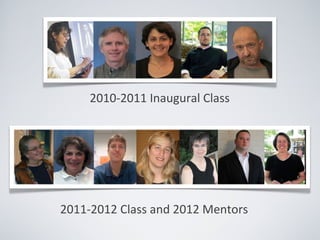
2010-2011 Inaugural Class


2011-2012 Class and 2012 Mentors
Goal
• To empower faculty and students in
their effective use of technology to
enhance teaching, increase student
engagement, and advance
scholarship.
Year 1 Participation
‣   Attend week-long summer kickoff workshop

‣   Develop and implement a plan for incorporating technology into
    two classes (one per semester)

‣   Attend monthly meetings

‣   Attend one technology-related conference (over 2 years)

‣   Present at Faculty Lecture Series in April

‣   Provide University Committee and Board updates

‣   Be an advocate, actively share both inside and outside
    departments
Year 1 Incentives

‣ Stipend for attending summer workshop

‣ Money to attend technology conference

‣ iPad 3 and $50 for apps

‣ Additional support for projects and pilot ideas
Year II Participation
‣ Be a mentor and advocate to others

‣ Optional:

 • Attend week-long summer workshop

 • Attend monthly meetings

‣ Offer workshops and Lunch & Learns
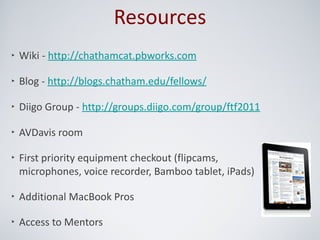
Resources
‣   Wiki - http://chathamcat.pbworks.com

‣   Blog - http://blogs.chatham.edu/fellows/

‣   Diigo Group - http://groups.diigo.com/group/ftf2011

‣   AVDavis room

‣   First priority equipment checkout (flipcams,
    microphones, voice recorder, Bamboo tablet, iPads)

‣   Additional MacBook Pros

‣   Access to Mentors
What are you
    currently Doing?
Teaching | Learning | Scholarship

       Think > Pair > Share
Continuum
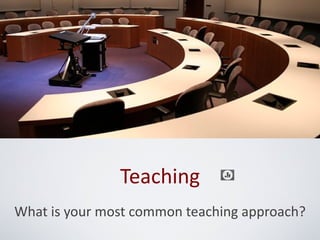
Teaching
What is your most common teaching approach?
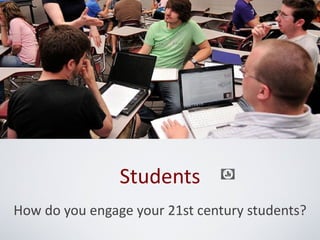
Students
How do you engage your 21st century students?
Barriers
 What are your technological,
pedagogical, physical, barriers?
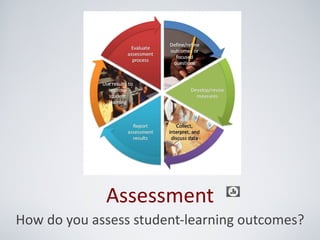
Assessment
How do you assess student-learning outcomes?
Technology
 Integration
Research and Models
Research

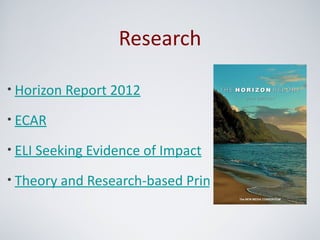
• Horizon Report 2012

• ECAR

• ELI Seeking Evidence of Impact

• Theory and Research-based Principles of Learning
Bloom’s Digital Taxonomy
• Revised 1956 and 2001

• Higher Order Thinking Skills graphic

• Wiki (Andrew Churches)

• Pyramid

• Web 2.0 Tools

• Apps and Cognitive Processes (Kathy Schrock)
So now what?
  Ideas to begin
1. Goals
•What are the main learning goals for the course redesign?
•What is your main teaching goals?
•Do you have a scholarship goal, what is it?
•What are your own learning goals during the redesign
process?
II. Activities
•Which activities support higher-order thinking?
•Does course address differing levels of Bloom’s
Taxonomy?
•How well does this assignment engage students? (critical
thinking, brainstorming, negotiation, synthesizing, writing)
•How are your activities addressing learning diversity?
III. Technologies
•Which support course objectives the best?
•Which support your teaching style?
•Are you meeting a variety of learning styles with
selections?
•What is the plan B (and C) when the technology fails?
•To consider the best Moodle tool, visit Moodle Tool Guide
IV. Assessment
• What types of assessments will be used in the course?
    (summative, formative, authentic, etc.)
•   Do course assessments directly reflect student learning/
    outcomes?
•   What is your plan to measure effectiveness of course
    redesign? How will you measure, to what degree?
Support
What are your training and support needs?

Faculty Technology Fellows Workshop 2012-2013

  • 1.
    Welcome Faculty TechnologyFellows 2012-2013
  • 2.
  • 3.
    Goal • To empowerfaculty and students in their effective use of technology to enhance teaching, increase student engagement, and advance scholarship.
  • 4.
    Year 1 Participation ‣ Attend week-long summer kickoff workshop ‣ Develop and implement a plan for incorporating technology into two classes (one per semester) ‣ Attend monthly meetings ‣ Attend one technology-related conference (over 2 years) ‣ Present at Faculty Lecture Series in April ‣ Provide University Committee and Board updates ‣ Be an advocate, actively share both inside and outside departments
  • 5.
    Year 1 Incentives ‣Stipend for attending summer workshop ‣ Money to attend technology conference ‣ iPad 3 and $50 for apps ‣ Additional support for projects and pilot ideas
  • 6.
    Year II Participation ‣Be a mentor and advocate to others ‣ Optional: • Attend week-long summer workshop • Attend monthly meetings ‣ Offer workshops and Lunch & Learns
  • 7.
    Resources ‣ Wiki - http://chathamcat.pbworks.com ‣ Blog - http://blogs.chatham.edu/fellows/ ‣ Diigo Group - http://groups.diigo.com/group/ftf2011 ‣ AVDavis room ‣ First priority equipment checkout (flipcams, microphones, voice recorder, Bamboo tablet, iPads) ‣ Additional MacBook Pros ‣ Access to Mentors
  • 8.
    What are you currently Doing? Teaching | Learning | Scholarship Think > Pair > Share
  • 9.
  • 10.
    Teaching What is yourmost common teaching approach?
  • 11.
    Students How do youengage your 21st century students?
  • 12.
    Barriers What areyour technological, pedagogical, physical, barriers?
  • 13.
    Assessment How do youassess student-learning outcomes?
  • 14.
  • 16.
    Research • Horizon Report2012 • ECAR • ELI Seeking Evidence of Impact • Theory and Research-based Principles of Learning
  • 17.
    Bloom’s Digital Taxonomy •Revised 1956 and 2001 • Higher Order Thinking Skills graphic • Wiki (Andrew Churches) • Pyramid • Web 2.0 Tools • Apps and Cognitive Processes (Kathy Schrock)
  • 18.
    So now what? Ideas to begin
  • 19.
    1. Goals •What arethe main learning goals for the course redesign? •What is your main teaching goals? •Do you have a scholarship goal, what is it? •What are your own learning goals during the redesign process?
  • 20.
    II. Activities •Which activitiessupport higher-order thinking? •Does course address differing levels of Bloom’s Taxonomy? •How well does this assignment engage students? (critical thinking, brainstorming, negotiation, synthesizing, writing) •How are your activities addressing learning diversity?
  • 21.
    III. Technologies •Which supportcourse objectives the best? •Which support your teaching style? •Are you meeting a variety of learning styles with selections? •What is the plan B (and C) when the technology fails? •To consider the best Moodle tool, visit Moodle Tool Guide
  • 22.
    IV. Assessment • Whattypes of assessments will be used in the course? (summative, formative, authentic, etc.) • Do course assessments directly reflect student learning/ outcomes? • What is your plan to measure effectiveness of course redesign? How will you measure, to what degree?
  • 23.
    Support What are yourtraining and support needs?