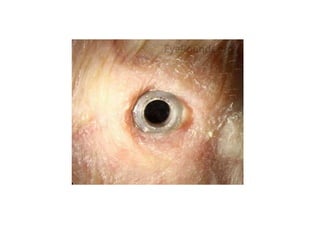
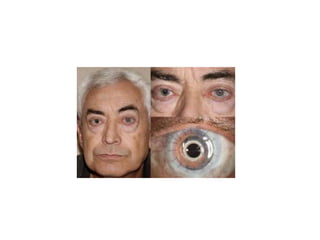
EYE BANKING AND
KERATOPLASTY
Dr Sarah Khan
Aishwarya Rai , EYE BANKING ambassador
• Prevalence of blindness in India 1.4%
• Corneal blindness is the third major cause
after cataract and refractive errors
• "Presenting distance visual acuity less then
3/60(20/400) in the better eye and limitation
of field of vision to be less than 10 degrees
from centre of fixation."
EYE BANK
• EYE BANK is a non profit organisation that
procures, processes and distributes corneas
for transplantations and research
• EYE DONATION FORTNIGHT 25th August to 8th
September
• 1945 First eye bank established at RIO, Madras
• 1960 First successful corneal transplant 1960
by Dr. R. P. Dhanda and Dr. Kalevar
• 1989 Eye Bank Association of India (EBAI)
• 1999 Medical Standards of Eye Banking in
India
• 1.3 million corneal blind in India
• Mostly children and young adults
• Current Collection - 22000
• Current Requirement - 100,000 corneas
• Vast gap between demand and supply.
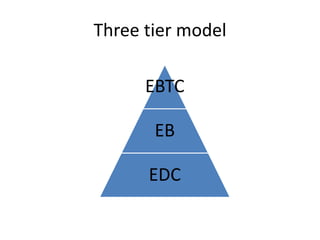
Three tier model
EBTC
EB
EDC
EYE DONATION CENTRE
• It is affiliated to a registered Eye Bank
• Public awareness about eye donation
• Coordinates with donor families and hospitals
for corneal harvesting, blood collection and
safe transportation of the tissue
EYE BANK
• Round the clock public response system and
conducts awareness programmes
• Harvesting, processing, evaluation,
preservation and transportation and
distribution of corneal tissue
• Coordinates between families, donations and
transplantation centres
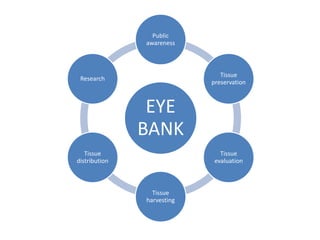
EYE
BANK
Public
awareness
Tissue
preservation
Tissue
evaluation
Tissue
harvesting
Tissue
distribution
Research
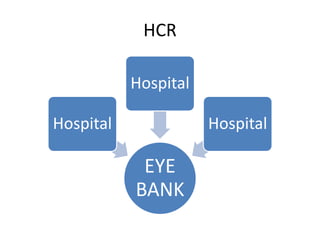
HCR
EYE
BANK
Hospital
Hospital
Hospital
• When a call from a family comes:
• Confirm the location, time of death, cause of
death and age of the patient
• Instruct relatives to elevate the head end,
switch off the fan, close the eyes or cover
them with a moist clean gauze
• These documents are carried along with two
sets of sterile instruments :
• Donor call : Initial information sheet
• Consent form
• Donor information sheet
• Eye donor medical particular sheet
• Permission is requested from legal next of kin
• Spouse
• Adult son or daughter
• Parent
• Adult brother or sister
• Grand parents
• Grand children
Gross inspection
• Entire body for evidence of any infectious
disease
• Needle tracts, disseminated
lymphadenopathy, oral thrush
• Unexplained jaundice
• Simple pen light examination
• Any erosion, sloughing, edema and haze
• Abnormal cornea shape, scar, infiltrate
• Conjunctivitis or purulent discharge
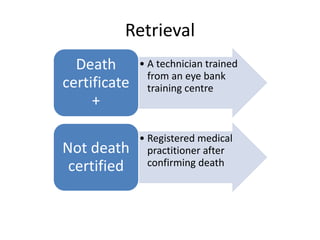
Retrieval
• A technician trained
from an eye bank
training centre
Death
certificate
+
• Registered medical
practitioner after
confirming death
Not death
certified
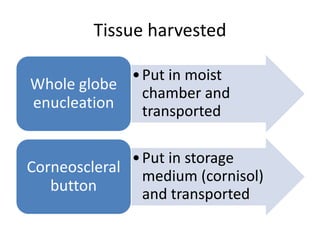
Tissue harvested
•Put in moist
chamber and
transported
Whole globe
enucleation
•Put in storage
medium (cornisol)
and transported
Corneoscleral
button
Steps
• Peritomy
• Blunt dissection
• 15 scalpel blade used to make an incision through the sclera
4mm from the limbus
• Complete the incision circumferentially with a corneoscleral
scissors
• Release attachment of ciliary body gently
• Stress striae and snail tracking occurs due to
poor tissue handling while harvesting
• Rather than pulling the corneoscleral button
from the uveal tissue, the uvea is pushed away
from the button.
Examination
• Tissue is allowed to reach room temperature
and examined, not allowing it to remain at this
temperature for more than an hour, with no
more than 3 warming and cooling cycles
• Slit lamp examination
• Specular microscopy
• Serological testing
• Swabs taken for bacterial and fungal culture
before and after decontamination of eye ball
Epithelium
• Intact?
• Haze
• Exposure keratitis
• Sloughing
• Debris
Stroma
• Clarity
• Edema
• Arcus and diameter of clear zone
• Any opacity or scar
• Striae
Descemet’s membrane
• Folds?
• Any DM defect
Endothelium
• Stress lines
• Their location and number
• Defects
• Cell drop out
• Polymegathism
• Pleomorphism
• Cell density
Cell density
• Excellent : Density of > 3000 cells/mm2
• Very good : 2500-3000
• Good : 2000-2500
• Fair : 1500-2000
• Poor :1200-1500
Coefficient of variation
• Normal 0.20-0.30
• Higher CV ___ Higher polymegathism
• Lower the CV , more stable is the cornea
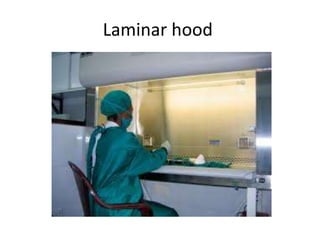
Laminar hood
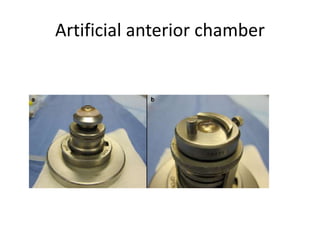
Artificial anterior chamber
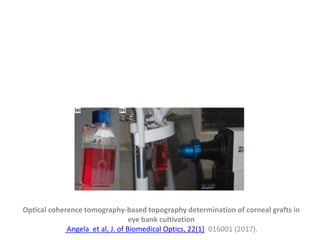
Optical coherence tomography-based topography determination of corneal grafts in
eye bank cultivation
Angela et al, J. of Biomedical Optics, 22(1), 016001 (2017).
Priority of registered patients in Dr
R.P.centre AIIMS
• Emergency : Less than 6years
• Top priority :
• All children between 6-12yearsof age
• >12 years with BCVA < 3/60 in better eye
• Regrafting if BCVA is <6/60 in better eye
• Corneal decompensation after cataract surgery in R.P.Centre
• Priority :
• >12 years with BCVA 3/60 – 6/60 in better eye
• Regrafting if BCVA >6/60 in better eye
• General:
• >12 years with BCVA >6/60 in better eye
• Failed therapeutic keratoplasty with normal vision in other eye
• Therapeutic and tectonic keratoplasties are dealt as an emergency
IDEAL corneal preservation media
• Maintains endothelial viability
• Maintains a clear cornea during preservation
• Provides cost effectiveness
• Ensures sterility
• Allows transportation of donor tissue
• Offers technical simplicity
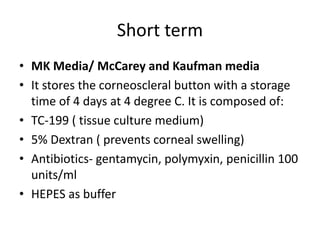
Short term
• MK Media/ McCarey and Kaufman media
• It stores the corneoscleral button with a storage
time of 4 days at 4 degree C. It is composed of:
• TC-199 ( tissue culture medium)
• 5% Dextran ( prevents corneal swelling)
• Antibiotics- gentamycin, polymyxin, penicillin 100
units/ml
• HEPES as buffer
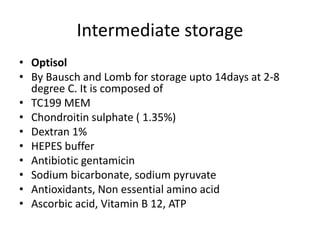
Intermediate storage
• Optisol
• By Bausch and Lomb for storage upto 14days at 2-8
degree C. It is composed of
• TC199 MEM
• Chondroitin sulphate ( 1.35%)
• Dextran 1%
• HEPES buffer
• Antibiotic gentamicin
• Sodium bicarbonate, sodium pyruvate
• Antioxidants, Non essential amino acid
• Ascorbic acid, Vitamin B 12, ATP
• Cornisol
• Produced by Aurolab. It provides a storage time
of 14 days at 2-8 degree C
• Chondroitin sulphate(2.5%)
• Recombinant human insulin
• Dextran
• Stabilised L glutamine, ATP precursors, Vitamins
• Gentamicin, streptomycin and a pH indicator
Long term storage
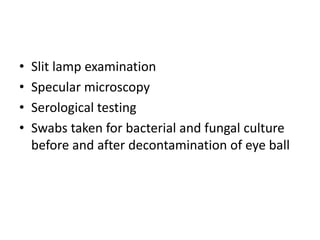
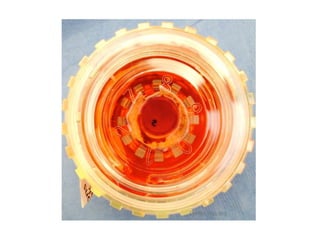
• Cryopreservation
• Corneoscleral rim is pretreated with glycerol
and passed through varying concentrations of
dimethyl sulfoxide 7.5%. It is frozen at -80
degree C and stored at -160 degree C
• The storage time is indefinite.
• It is expensive and requires careful
temperature monitoring
Organ culture Method
• Cornea is incubated in the tissue culture medium at 30-37 degree C
and placed on Dextran 5% . It stores the cornea for 30 days. It is
composed of
• Eagle’s media, MEM
• Earle’s salt without Glutamine
• L glutamine
• Decomplemented calf serum
• Chondroitin sulphate 1.5%
• Penicillin 100 units/ml, Gentamicin 100 microg/ml, Amphotericin B
0.25mcg/ml
• The endothelial cell morphology, density and viability is well
maintained. It has an inbuilt microbiological surveillance, but
requires technical expertise
• Glycerine preservation
• The Corneoscleral button is stored in 100%
glycerine and used for patch graft and lamellar
keratoplasty with storage time of 1year at
room temperature. The disadvantage being
that the endothelium is not viable
Contraindications
• HIV
• Rabies
• Active viral hepatitis
• Creutzfeldt Jacob disease
• SSPE
• PMLE
• Reye’s syndrome
• Death from unknown cause
• Congenital rubella
• Active sepsis
• Intrinsic eye disease : retinobastoma,
keratoconus, keratoglobus, Central opacities
• Prior refractive procedures
• Anterior segment surgical procedures –
Glaucoma, cataract
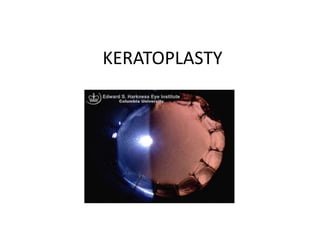
KERATOPLASTY
Immunology
• Graft rejection :
• Immunological mediated damage to a corneal
graft that has remained clear for atleast 2
weeks resulting in corneal edema along with
anterior segment inflammatory signs
IMMUNOLOGY
• MHC I
• MHC II
• MHC III
• On Chromosome 6p
MHC I
• Protects host from intracellular pathogens and
cellular pathologies
• Detected by cytotoxic T cells
• MHC I is found on all nucleated cells
• Antigens HLA A, B, C are encoded within this
region
MHC II
• Presents antigenic peptides to CD 4 T cells
• Three isotypes HLA DR, DP, DQ
• Class II antigens are found on B cells,
monocytes, macrophages, DC
• Cells that don’t express Class II Antigens are
stimulated to express them by cytokines like
IFN gamma
Immune privilege of the cornea
• Lack of lymphatics and blood vessels
• Presence of latent DCs that are MHC II
negative
• ACAID : Anterior Chamber associated immune
deviation
• Corneal tissue produces endostatin which is
inhibits hemangiogenesis and
lymphangiogenesis
Endostatin overexpression inhibits lymphangiogenesis and lymph node metastasis in mice.Brideau G,
Mäkinen MJ, Elamaa H, Tu H, Nilsson G, Alitalo K, Pihlajaniemi T, Heljasvaara R
Cancer Res. 2007 Dec 15; 67(24):11528-35.
• The anterior chamber acts as an immune
privilege site where the donor antigens are
first detects as they shed off the graft
• Following this the anti inflammatory
immunosuppressive cytokines inhibit cell
mediated immunity but produce non
compliment fixing antibodies which suppress
DTH
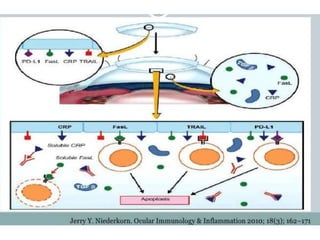
• FasL ( CD95L) is expressed on the corneal
endothelium
• Programmed death ligand PDL 1
• TRAIL ( TNF related apoptosis inducing ligand)
• These interact with the T cells causing their
apoptosis
• Alpha MSH, TGF beta 2 in the aqueous supress
the action of immunocompetent cells
Causes of risk of rejection
• Cornea has resident Dendritic cells that are
universally MHC II negative
• After transplantation or inflammation they are
capable of expressing class II antigens
• Vascularisation of the cornea
Induction phase
• Afferent arm
• Host gets sensitized to the donor Ag via APCs
interaction with T cells
• Direct pathway involving donor APCs
• Indirect pathway via host APCs
•
Expression phase
• Efferent arm
• Alloreactive T cell prolifertion and their
delivery to the corneal graft
• Memory cells develop that enhance
alloimmune response in cases of repeated
grafts
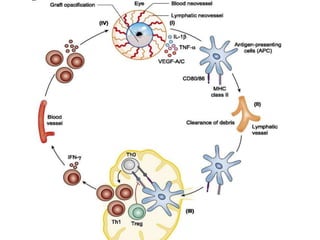
• CD4 Th 1 cells secrete IL 2, IFN gamma
• Th1 cells directly act as effectors in graft
rejection
• Via IL 2, B cells are activated
• IFN gamma activates macrophages which
induce expression of class II Ag in the donor
tissue
Risk factors for rejection
• Pre and post op corneal stromal
vascularisation
• Previous graft rejection
• Young patient
• Concomitant vitrectomy
• Herpes simplex infection
• Larger grafts ( upto the limbus)
Tham and Abott, Interational Ophthalmology Clinic 2002:42(1):105-113
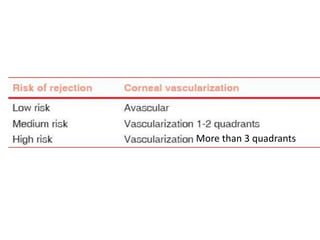
More than 3 quadrants
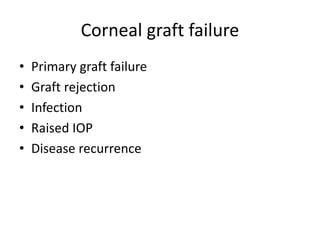
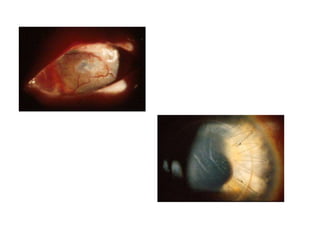
Corneal graft failure
• Primary graft failure
• Graft rejection
• Infection
• Raised IOP
• Disease recurrence
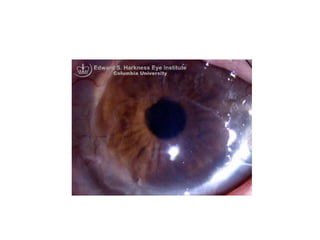
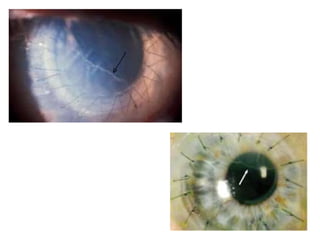
Epithelial rejection
• Irregular elevated epithelial rejection line or
ring
• Normally the destroyed donor epithelium gets
resurfaced by inward migration of the host
cells
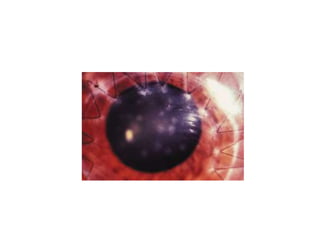
Sub epithelial rejection
• Subepithelial infiltrates 0.5mm in size beneath
the Bowman’s membrane
• change their shape and location with time
• Onset of rejection is usually after 3 months.
• Self limiting
• Both conditions may have mild symptoms and
respond well to topical steroids
Stromal rejection
• Usually associated with endothelial rejection
• Full thickness stromal haze with limbal
injection in a previously clear graft
Endothelial rejection
• Begins classically with a Khodadoust line at a
vascularised portion of the graft host junction
• Comprises monocytes that destroy the
endothelium as the line sweeps across it
• Mild AC reaction is present
• Stroma differentially hazy on either side of the
line
• Another variant of endothelial rejection
• Diffuse with KPs
• Anterior chamber reaction with diffuse
stromal edema
Survival rates of corneal grafts
• 74% at 5years and 62% at 10 years
• Donor age doesn’t have any association with
graft failure rates (CDS)
• Chances of graft rejection are higher in infants
Corneal transplantation: how successful are we? Waldock A, Cook SD
Br J Ophthalmol. 2000 Aug; 84(8):813-5.
Incidence
• In good prognosis keratoplasty : 12%
• In complicated keratoplasty : 40%
• Topical steroids are the mainstay
• Rejection without endothelial involvement
doesn’t usually progress to graft failure
• Topical corticosteroids (eg, dexamethasone
0.1%, prednisolone acetate 1%) are prescribed
4-6 times/d
• Hrly steroids in endothelial rejection
• Steroids are tapered gradually over several
weeks to a few months
• Continued for atleast 4 weeks in the absence
of response before labelling it a graft failure
• Subconj route
• Systemic steroids maybe considered in severe
endothelial rejection
• IOP monitoring
• Oral steroids 60-80 mg for atleast 2 weeks
followed by gradual tapering
• Or a pulsed dose of IV MP 500mg single dose
combined with topical steroids
Costa DC et al,[Corneal allograft rejection: topical treatment vs. pulsed intravenous
methylprednisolone - ten years' result, Arq Bras Oftalmol. 2008 Jan-Feb;71(1):57-61
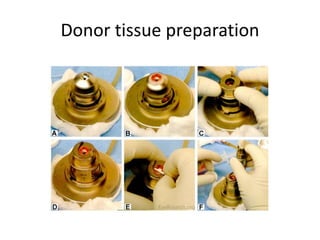
Donor tissue preparation
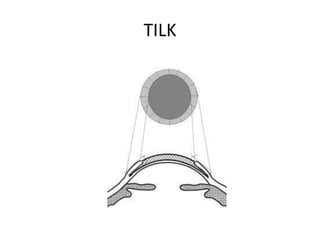
TILK
Indications
• For tectonic support- Corneal thinning,
perforation
• Descemetocele
• Optical –replacement of a scarred cornea with an
optically clear cornea
• Pseudophakic bullous keratopathy
• Keratoconus, keratoglobus
• Regraft secondary to rejection
• Degenerations, dystrophies
• Therapeutic – In Infections
• Cosmetic – It could also be cosmetic with no
visual outcome
Preop
• Treat any ocular surface disease if present
prior to taking up the patient for keratoplasty
• Control of IOP
• Ocular inflammation if present, identified and
treated
• History of recurrent inflammations, herpes
• History of collagen vascular diseases
• IOP reduction
• Miotics given to keep the lens protected
• Scleral supporting rings may be used
• Usual graft size taken is 8.5mm
• Smaller sizes < 6.5mm may cause astigmatism
• Larger sizes have a higher risk of rejection
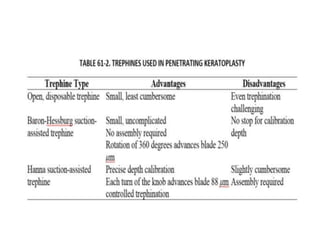
• The donor cornea is trephined before the
recipient trephination, avoiding any aborted
or incomplete donor cornea
• Ac is maintained through BSS infusion
throughout the procedure
• Donor tissue is sized 0.25mm larger than the
recipient tissue
• In keratoconus a same sized graft may be
opted for to avoid postop myopia
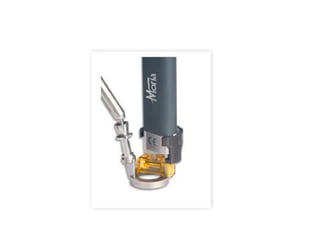
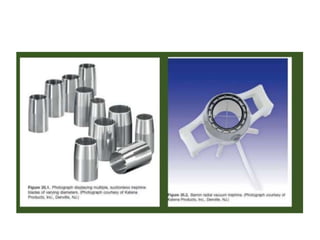
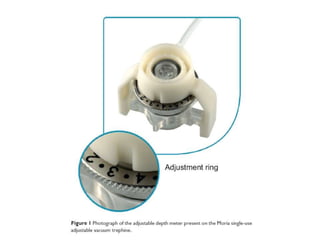
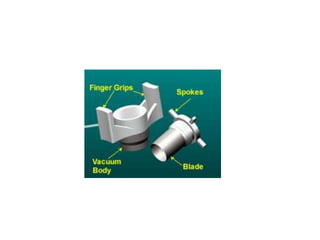
• Donor corneal button is punched using a
Barron donor corneal punch
• And cut from endo to epithelium
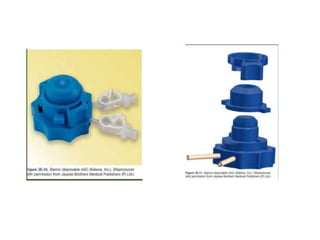
• Or epi to endothelium if mounted on an AAC
or if using femto second laser
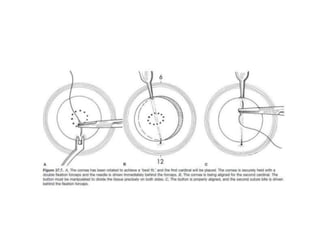
• Donor tissue is placed in position and cardinal
sutures are carefully applied
• These pass through 90% of the depth of the
tissue
• They can be interrupted, running or a
combination
• Interrupted are better for vascularised corneas
or thin as selective suture removal maybe
needed to prevent vessel advancement or
astigmatism
• Running sutures take less time, better tension
distribution and healing
• Intraop adjustment can be done using a
keratoscope
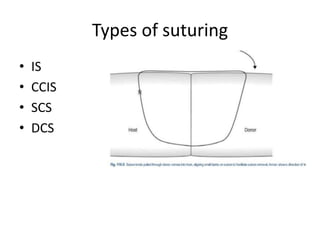
Types of suturing
• IS
• CCIS
• SCS
• DCS
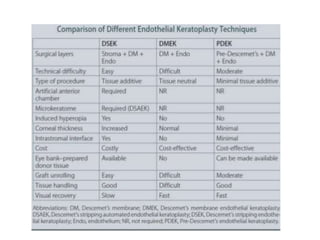
PDEK
• Addition of a 10 micron pre Descemet’s layer
to the endothelial graft can generate tissue for
endothelial transplant making it easier to
handle as it does not tend to scroll as the
Descemet’s membrane
• Early
• Wound leak
• Choroidal effusion
• Pupillary block
• Raised IOP
• Endophthalmitis
• Epithelial defect
• Loose or broken sutures
• Late
• Astigmatism
• Recurrence of initial disease
• Glaucoma
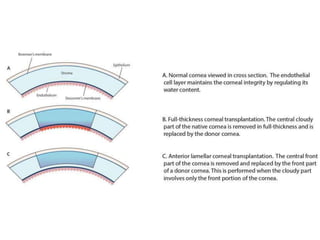
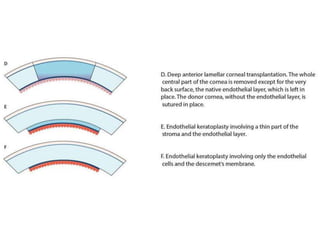
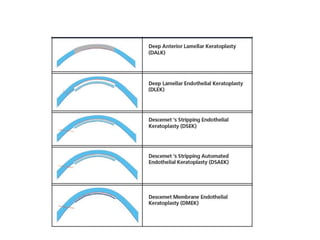
Deep anterior lamellar keratoplasty
• Only donor stroma is transplanted
• The host endothelium and Descemet’s is
preserved
• Determine the size and centration of the graft
• Lamellar bed diam 8-8.25mm
• Trephine recipient cornea 60-80% stromal depth
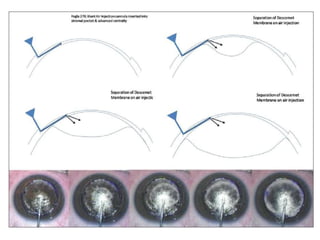
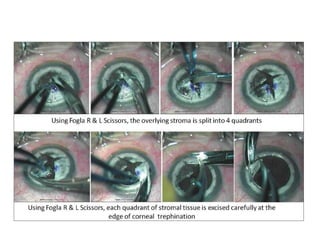
• Anwar Big bubble technique used
• Posterior corneal stroma dissected off the Descmets membrane
and removed
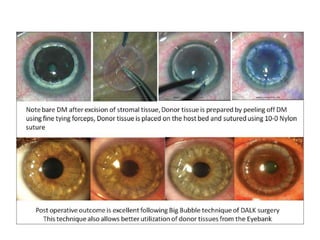
• Donor endothelium removed. And donor tissue sutured to the
lamellar bed
• Donor diam is 0.25m larger than lamellar bed
diam, but in keratoconus , it is matched.
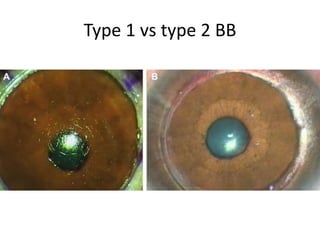
Type 1 vs type 2 BB
Keratoprosthesis
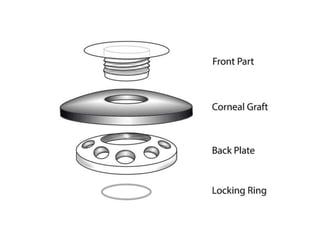
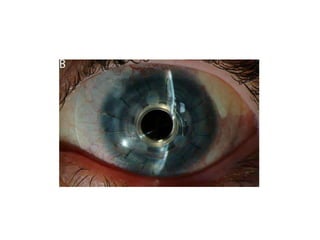
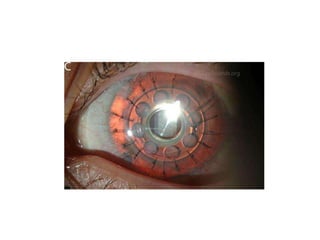
• In advanced cases where there is recurrent
failure of PK corneal grafts
• Boston type 1and 2 keratoprosthesis can be
used
Eye banking and keratoplasty

Eye banking and keratoplasty

  • 1.
    EYE BANKING AND KERATOPLASTY DrSarah Khan Aishwarya Rai , EYE BANKING ambassador
  • 2.
    • Prevalence ofblindness in India 1.4% • Corneal blindness is the third major cause after cataract and refractive errors
  • 3.
    • "Presenting distancevisual acuity less then 3/60(20/400) in the better eye and limitation of field of vision to be less than 10 degrees from centre of fixation."
  • 4.
    EYE BANK • EYEBANK is a non profit organisation that procures, processes and distributes corneas for transplantations and research • EYE DONATION FORTNIGHT 25th August to 8th September
  • 5.
    • 1945 Firsteye bank established at RIO, Madras • 1960 First successful corneal transplant 1960 by Dr. R. P. Dhanda and Dr. Kalevar
  • 6.
    • 1989 EyeBank Association of India (EBAI) • 1999 Medical Standards of Eye Banking in India
  • 7.
    • 1.3 millioncorneal blind in India • Mostly children and young adults • Current Collection - 22000 • Current Requirement - 100,000 corneas • Vast gap between demand and supply.
  • 8.
  • 9.
    EYE DONATION CENTRE •It is affiliated to a registered Eye Bank • Public awareness about eye donation • Coordinates with donor families and hospitals for corneal harvesting, blood collection and safe transportation of the tissue
  • 10.
    EYE BANK • Roundthe clock public response system and conducts awareness programmes • Harvesting, processing, evaluation, preservation and transportation and distribution of corneal tissue • Coordinates between families, donations and transplantation centres
  • 11.
  • 12.
  • 13.
    • When acall from a family comes: • Confirm the location, time of death, cause of death and age of the patient • Instruct relatives to elevate the head end, switch off the fan, close the eyes or cover them with a moist clean gauze
  • 14.
    • These documentsare carried along with two sets of sterile instruments : • Donor call : Initial information sheet • Consent form • Donor information sheet • Eye donor medical particular sheet
  • 15.
    • Permission isrequested from legal next of kin • Spouse • Adult son or daughter • Parent • Adult brother or sister • Grand parents • Grand children
  • 16.
    Gross inspection • Entirebody for evidence of any infectious disease • Needle tracts, disseminated lymphadenopathy, oral thrush • Unexplained jaundice
  • 17.
    • Simple penlight examination • Any erosion, sloughing, edema and haze • Abnormal cornea shape, scar, infiltrate • Conjunctivitis or purulent discharge
  • 18.
    Retrieval • A techniciantrained from an eye bank training centre Death certificate + • Registered medical practitioner after confirming death Not death certified
  • 19.
    Tissue harvested •Put inmoist chamber and transported Whole globe enucleation •Put in storage medium (cornisol) and transported Corneoscleral button
  • 21.
    Steps • Peritomy • Bluntdissection • 15 scalpel blade used to make an incision through the sclera 4mm from the limbus • Complete the incision circumferentially with a corneoscleral scissors • Release attachment of ciliary body gently
  • 22.
    • Stress striaeand snail tracking occurs due to poor tissue handling while harvesting • Rather than pulling the corneoscleral button from the uveal tissue, the uvea is pushed away from the button.
  • 23.
    Examination • Tissue isallowed to reach room temperature and examined, not allowing it to remain at this temperature for more than an hour, with no more than 3 warming and cooling cycles
  • 24.
    • Slit lampexamination • Specular microscopy • Serological testing • Swabs taken for bacterial and fungal culture before and after decontamination of eye ball
  • 25.
    Epithelium • Intact? • Haze •Exposure keratitis • Sloughing • Debris
  • 26.
    Stroma • Clarity • Edema •Arcus and diameter of clear zone • Any opacity or scar • Striae
  • 27.
  • 28.
    Endothelium • Stress lines •Their location and number • Defects • Cell drop out • Polymegathism • Pleomorphism • Cell density
  • 29.
    Cell density • Excellent: Density of > 3000 cells/mm2 • Very good : 2500-3000 • Good : 2000-2500 • Fair : 1500-2000 • Poor :1200-1500
  • 30.
    Coefficient of variation •Normal 0.20-0.30 • Higher CV ___ Higher polymegathism • Lower the CV , more stable is the cornea
  • 31.
  • 33.
  • 34.
    Optical coherence tomography-basedtopography determination of corneal grafts in eye bank cultivation Angela et al, J. of Biomedical Optics, 22(1), 016001 (2017).
  • 35.
    Priority of registeredpatients in Dr R.P.centre AIIMS • Emergency : Less than 6years • Top priority : • All children between 6-12yearsof age • >12 years with BCVA < 3/60 in better eye • Regrafting if BCVA is <6/60 in better eye • Corneal decompensation after cataract surgery in R.P.Centre • Priority : • >12 years with BCVA 3/60 – 6/60 in better eye • Regrafting if BCVA >6/60 in better eye • General: • >12 years with BCVA >6/60 in better eye • Failed therapeutic keratoplasty with normal vision in other eye • Therapeutic and tectonic keratoplasties are dealt as an emergency
  • 36.
    IDEAL corneal preservationmedia • Maintains endothelial viability • Maintains a clear cornea during preservation • Provides cost effectiveness • Ensures sterility • Allows transportation of donor tissue • Offers technical simplicity
  • 37.
    Short term • MKMedia/ McCarey and Kaufman media • It stores the corneoscleral button with a storage time of 4 days at 4 degree C. It is composed of: • TC-199 ( tissue culture medium) • 5% Dextran ( prevents corneal swelling) • Antibiotics- gentamycin, polymyxin, penicillin 100 units/ml • HEPES as buffer
  • 38.
    Intermediate storage • Optisol •By Bausch and Lomb for storage upto 14days at 2-8 degree C. It is composed of • TC199 MEM • Chondroitin sulphate ( 1.35%) • Dextran 1% • HEPES buffer • Antibiotic gentamicin • Sodium bicarbonate, sodium pyruvate • Antioxidants, Non essential amino acid • Ascorbic acid, Vitamin B 12, ATP
  • 39.
    • Cornisol • Producedby Aurolab. It provides a storage time of 14 days at 2-8 degree C • Chondroitin sulphate(2.5%) • Recombinant human insulin • Dextran • Stabilised L glutamine, ATP precursors, Vitamins • Gentamicin, streptomycin and a pH indicator
  • 40.
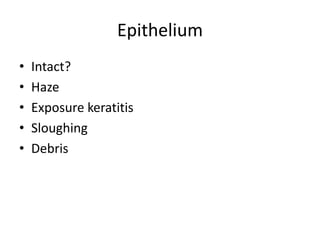
    Long term storage •Cryopreservation • Corneoscleral rim is pretreated with glycerol and passed through varying concentrations of dimethyl sulfoxide 7.5%. It is frozen at -80 degree C and stored at -160 degree C • The storage time is indefinite. • It is expensive and requires careful temperature monitoring
  • 41.
    Organ culture Method •Cornea is incubated in the tissue culture medium at 30-37 degree C and placed on Dextran 5% . It stores the cornea for 30 days. It is composed of • Eagle’s media, MEM • Earle’s salt without Glutamine • L glutamine • Decomplemented calf serum • Chondroitin sulphate 1.5% • Penicillin 100 units/ml, Gentamicin 100 microg/ml, Amphotericin B 0.25mcg/ml • The endothelial cell morphology, density and viability is well maintained. It has an inbuilt microbiological surveillance, but requires technical expertise
  • 42.
    • Glycerine preservation •The Corneoscleral button is stored in 100% glycerine and used for patch graft and lamellar keratoplasty with storage time of 1year at room temperature. The disadvantage being that the endothelium is not viable
  • 43.
    Contraindications • HIV • Rabies •Active viral hepatitis • Creutzfeldt Jacob disease • SSPE • PMLE • Reye’s syndrome • Death from unknown cause • Congenital rubella • Active sepsis
  • 44.
    • Intrinsic eyedisease : retinobastoma, keratoconus, keratoglobus, Central opacities • Prior refractive procedures • Anterior segment surgical procedures – Glaucoma, cataract
  • 47.
  • 48.
    Immunology • Graft rejection: • Immunological mediated damage to a corneal graft that has remained clear for atleast 2 weeks resulting in corneal edema along with anterior segment inflammatory signs
  • 49.
  • 50.
    • MHC I •MHC II • MHC III • On Chromosome 6p
  • 51.
    MHC I • Protectshost from intracellular pathogens and cellular pathologies • Detected by cytotoxic T cells • MHC I is found on all nucleated cells • Antigens HLA A, B, C are encoded within this region
  • 52.
    MHC II • Presentsantigenic peptides to CD 4 T cells • Three isotypes HLA DR, DP, DQ • Class II antigens are found on B cells, monocytes, macrophages, DC • Cells that don’t express Class II Antigens are stimulated to express them by cytokines like IFN gamma
  • 53.
    Immune privilege ofthe cornea • Lack of lymphatics and blood vessels • Presence of latent DCs that are MHC II negative • ACAID : Anterior Chamber associated immune deviation • Corneal tissue produces endostatin which is inhibits hemangiogenesis and lymphangiogenesis Endostatin overexpression inhibits lymphangiogenesis and lymph node metastasis in mice.Brideau G, Mäkinen MJ, Elamaa H, Tu H, Nilsson G, Alitalo K, Pihlajaniemi T, Heljasvaara R Cancer Res. 2007 Dec 15; 67(24):11528-35.
  • 54.
    • The anteriorchamber acts as an immune privilege site where the donor antigens are first detects as they shed off the graft • Following this the anti inflammatory immunosuppressive cytokines inhibit cell mediated immunity but produce non compliment fixing antibodies which suppress DTH
  • 55.
    • FasL (CD95L) is expressed on the corneal endothelium • Programmed death ligand PDL 1 • TRAIL ( TNF related apoptosis inducing ligand) • These interact with the T cells causing their apoptosis • Alpha MSH, TGF beta 2 in the aqueous supress the action of immunocompetent cells
  • 57.
    Causes of riskof rejection • Cornea has resident Dendritic cells that are universally MHC II negative • After transplantation or inflammation they are capable of expressing class II antigens • Vascularisation of the cornea
  • 58.
    Induction phase • Afferentarm • Host gets sensitized to the donor Ag via APCs interaction with T cells • Direct pathway involving donor APCs • Indirect pathway via host APCs •
  • 59.
    Expression phase • Efferentarm • Alloreactive T cell prolifertion and their delivery to the corneal graft • Memory cells develop that enhance alloimmune response in cases of repeated grafts • CD4 Th 1 cells secrete IL 2, IFN gamma • Th1 cells directly act as effectors in graft rejection
  • 60.
    • Via IL2, B cells are activated • IFN gamma activates macrophages which induce expression of class II Ag in the donor tissue
  • 62.
    Risk factors forrejection • Pre and post op corneal stromal vascularisation • Previous graft rejection • Young patient • Concomitant vitrectomy • Herpes simplex infection • Larger grafts ( upto the limbus) Tham and Abott, Interational Ophthalmology Clinic 2002:42(1):105-113
  • 63.
    More than 3quadrants
  • 64.
    Corneal graft failure •Primary graft failure • Graft rejection • Infection • Raised IOP • Disease recurrence
  • 66.
    Epithelial rejection • Irregularelevated epithelial rejection line or ring • Normally the destroyed donor epithelium gets resurfaced by inward migration of the host cells
  • 68.
    Sub epithelial rejection •Subepithelial infiltrates 0.5mm in size beneath the Bowman’s membrane • change their shape and location with time • Onset of rejection is usually after 3 months. • Self limiting • Both conditions may have mild symptoms and respond well to topical steroids
  • 70.
    Stromal rejection • Usuallyassociated with endothelial rejection • Full thickness stromal haze with limbal injection in a previously clear graft
  • 71.
    Endothelial rejection • Beginsclassically with a Khodadoust line at a vascularised portion of the graft host junction • Comprises monocytes that destroy the endothelium as the line sweeps across it • Mild AC reaction is present • Stroma differentially hazy on either side of the line
  • 73.
    • Another variantof endothelial rejection • Diffuse with KPs • Anterior chamber reaction with diffuse stromal edema
  • 74.
    Survival rates ofcorneal grafts • 74% at 5years and 62% at 10 years • Donor age doesn’t have any association with graft failure rates (CDS) • Chances of graft rejection are higher in infants Corneal transplantation: how successful are we? Waldock A, Cook SD Br J Ophthalmol. 2000 Aug; 84(8):813-5.
  • 75.
    Incidence • In goodprognosis keratoplasty : 12% • In complicated keratoplasty : 40%
  • 76.
    • Topical steroidsare the mainstay • Rejection without endothelial involvement doesn’t usually progress to graft failure • Topical corticosteroids (eg, dexamethasone 0.1%, prednisolone acetate 1%) are prescribed 4-6 times/d • Hrly steroids in endothelial rejection
  • 77.
    • Steroids aretapered gradually over several weeks to a few months • Continued for atleast 4 weeks in the absence of response before labelling it a graft failure • Subconj route • Systemic steroids maybe considered in severe endothelial rejection • IOP monitoring
  • 78.
    • Oral steroids60-80 mg for atleast 2 weeks followed by gradual tapering • Or a pulsed dose of IV MP 500mg single dose combined with topical steroids Costa DC et al,[Corneal allograft rejection: topical treatment vs. pulsed intravenous methylprednisolone - ten years' result, Arq Bras Oftalmol. 2008 Jan-Feb;71(1):57-61
  • 79.
  • 84.
  • 86.
    Indications • For tectonicsupport- Corneal thinning, perforation • Descemetocele • Optical –replacement of a scarred cornea with an optically clear cornea • Pseudophakic bullous keratopathy • Keratoconus, keratoglobus • Regraft secondary to rejection • Degenerations, dystrophies • Therapeutic – In Infections
  • 87.
    • Cosmetic –It could also be cosmetic with no visual outcome
  • 88.
    Preop • Treat anyocular surface disease if present prior to taking up the patient for keratoplasty • Control of IOP • Ocular inflammation if present, identified and treated • History of recurrent inflammations, herpes • History of collagen vascular diseases
  • 89.
    • IOP reduction •Miotics given to keep the lens protected • Scleral supporting rings may be used
  • 90.
    • Usual graftsize taken is 8.5mm • Smaller sizes < 6.5mm may cause astigmatism • Larger sizes have a higher risk of rejection
  • 95.
    • The donorcornea is trephined before the recipient trephination, avoiding any aborted or incomplete donor cornea • Ac is maintained through BSS infusion throughout the procedure
  • 96.
    • Donor tissueis sized 0.25mm larger than the recipient tissue • In keratoconus a same sized graft may be opted for to avoid postop myopia • Donor corneal button is punched using a Barron donor corneal punch • And cut from endo to epithelium
  • 97.
    • Or epito endothelium if mounted on an AAC or if using femto second laser
  • 98.
    • Donor tissueis placed in position and cardinal sutures are carefully applied • These pass through 90% of the depth of the tissue • They can be interrupted, running or a combination
  • 99.
    • Interrupted arebetter for vascularised corneas or thin as selective suture removal maybe needed to prevent vessel advancement or astigmatism • Running sutures take less time, better tension distribution and healing • Intraop adjustment can be done using a keratoscope
  • 101.
    Types of suturing •IS • CCIS • SCS • DCS
  • 102.
    PDEK • Addition ofa 10 micron pre Descemet’s layer to the endothelial graft can generate tissue for endothelial transplant making it easier to handle as it does not tend to scroll as the Descemet’s membrane
  • 105.
    • Early • Woundleak • Choroidal effusion • Pupillary block • Raised IOP • Endophthalmitis • Epithelial defect • Loose or broken sutures
  • 106.
    • Late • Astigmatism •Recurrence of initial disease • Glaucoma
  • 107.
    Deep anterior lamellarkeratoplasty • Only donor stroma is transplanted • The host endothelium and Descemet’s is preserved
  • 108.
    • Determine thesize and centration of the graft • Lamellar bed diam 8-8.25mm • Trephine recipient cornea 60-80% stromal depth • Anwar Big bubble technique used • Posterior corneal stroma dissected off the Descmets membrane and removed • Donor endothelium removed. And donor tissue sutured to the lamellar bed
  • 109.
    • Donor diamis 0.25m larger than lamellar bed diam, but in keratoconus , it is matched.
  • 111.
    Type 1 vstype 2 BB
  • 114.
    Keratoprosthesis • In advancedcases where there is recurrent failure of PK corneal grafts • Boston type 1and 2 keratoprosthesis can be used

Editor's Notes

  • #3 NPCB to reduce blindnes to 0.3% by 2020
  • #4 As per NPCB
  • #9 8/473/227
  • #35 Placidobased devices reflect from the vial Usg is a contact procedure
  • #109 Epihelial ingrpwth Stromal haze Stromal rejectin
  • #112 BB 1 is between deep stroma and duas layer, duas layer gives strenghth to the recipient 2 is btw DM and Duas layer. 2 breaks easily Smooth and featureless DM and rough duas layer with attached collagen fibres
  • #115 I aphakia or pseudophakia