Download to read offline
![Faisal M. Nafie. Int. Journal of Engineering Research and Application www.ijera.com
ISSN : 2248-9622, Vol. 6, Issue 10, ( Part -5) October 2016, pp.12-16
www.ijera.com 12 | P a g e
Extract Business Process Performance using Data Mining
Faisal M. Nafie *, Mergani.A.Eltahir **
*(Department of Computer Science, Majmaah University, Saudi Arabia
** (Department of Information Technology, Nile Valley University, Sudan
ABSTRACT
This paper aimed to analyze the performance of the business process using process mining. The performance is
very important especially in large systems .the process of repairing devices was used as case study and the
Fuzzy Miner Algorithm used to analyze the process model performance
Keywords: Data mining, Workflow Mining, Process Mining, Business Process.
I. INTRODUCTION
Nowadays there are a lot of Information
Systems in companies, organizations, educational
institutes, and etc. This means the data already found
but this data not used in the ideal way to be more
useful, because the normal way that used to get data
not highly enough to give amore and intelligent
information. Business Process may contain a lot data
because its use a process covers many business steps
to achieve the goal. Data mining is one of the useful
ways to extract and data and obtains more valuable
information.
Data Mining:
Data mining is an essential step in the
knowledge discovery in databases (KDD) process
that produces useful patterns or models from data
[1].Data Mining becomes more considerable
nowadays especially in the industry[2] .
KDD process consists of iterative sequence methods
as follows[x]:
1. Selection: Selecting data relevant to the analysis
task from the database.
2. Pre-processing: make the data more consist by
Removing noise and inconsistent data; and then
combining multiple data sources.
3. Transformation: Transforming data into
appropriate forms to perform data mining.
4. Data mining: Choosing a data mining algorithm
which is suitable to pattern in the data and
perform the extraction to the data patterns.
5. Interpretation/Evaluation: Interpreting the
patterns into knowledge by removing
Redundant or irrelevant patterns; translating the
useful patterns into terms that human-
understandable. Data Mining can be used many
fields to achieve the many purposes as follows:
1- Business: Data Mining can be applied in retail,
banking, and insurance to fraud detection, and
marketing analysis.
2- Education: Data Mining can be applied in
predicting student’s performance, understand
student behaviour, and course scheduling.
3- Science and Engineering: Data Mining can be
applied in bioinformatics, medicines, and
genetics.
4- Telecommunications: Data Mining can be
applied to facilitate many other beneficial
communication services including fax, pager,
cellular phone, Internet messenger, images, e-
mail, computer and Web data transmission, and
other data traffic [3][4].
Business Process:
A business process is the combination of a
set of activities within an enterprise with a structure
describing their logical order and dependence whose
objective is to produce a desired result. The
activities that together create a customer value,
Business process modeling enables a common
understanding and analysis of a business process [5]
[6].
Process Mining:
The goal of process mining is to extract
information about processes from transaaction logs
.Process mining aims at the automatic construction
of models explaining the behavior observed in the
event log [7]. Process mining encompasses
“techniques, tools and methods to discover, monitor
and improve real processes by extracting knowledge
from event logs. It is an innovative approach and
builds a bridge between data mining and business
process management [8]. Process Mining helps in
view the interaction between the parts of the whole
organization and also helps in [8]:
1. Find problems: Locate anomalies even before
they become problems.
2. Understand root causes: Identify the
underlying problems instead of immediately
visible symptoms.
RESEARCH ARTICLE OPEN ACCESS](https://image.slidesharecdn.com/c0610051216-161115050054/85/Extract-Business-Process-Performance-using-Data-Mining-1-320.jpg)
![Faisal M. Nafie. Int. Journal of Engineering Research and Application www.ijera.com
ISSN : 2248-9622, Vol. 6, Issue 10, ( Part -5) October 2016, pp.12-16
www.ijera.com 12 | P a g e
Extract Business Process Performance using Data Mining
Faisal M. Nafie *, Mergani.A.Eltahir **
*(Department of Computer Science, Majmaah University, Saudi Arabia
** (Department of Information Technology, Nile Valley University, Sudan
ABSTRACT
This paper aimed to analyze the performance of the business process using process mining. The performance is
very important especially in large systems .the process of repairing devices was used as case study and the
Fuzzy Miner Algorithm used to analyze the process model performance
Keywords: Data mining, Workflow Mining, Process Mining, Business Process.
I. INTRODUCTION
Nowadays there are a lot of Information
Systems in companies, organizations, educational
institutes, and etc. This means the data already found
but this data not used in the ideal way to be more
useful, because the normal way that used to get data
not highly enough to give amore and intelligent
information. Business Process may contain a lot data
because its use a process covers many business steps
to achieve the goal. Data mining is one of the useful
ways to extract and data and obtains more valuable
information.
Data Mining:
Data mining is an essential step in the
knowledge discovery in databases (KDD) process
that produces useful patterns or models from data
[1].Data Mining becomes more considerable
nowadays especially in the industry[2] .
KDD process consists of iterative sequence methods
as follows[x]:
1. Selection: Selecting data relevant to the analysis
task from the database.
2. Pre-processing: make the data more consist by
Removing noise and inconsistent data; and then
combining multiple data sources.
3. Transformation: Transforming data into
appropriate forms to perform data mining.
4. Data mining: Choosing a data mining algorithm
which is suitable to pattern in the data and
perform the extraction to the data patterns.
5. Interpretation/Evaluation: Interpreting the
patterns into knowledge by removing
Redundant or irrelevant patterns; translating the
useful patterns into terms that human-
understandable. Data Mining can be used many
fields to achieve the many purposes as follows:
1- Business: Data Mining can be applied in retail,
banking, and insurance to fraud detection, and
marketing analysis.
2- Education: Data Mining can be applied in
predicting student’s performance, understand
student behaviour, and course scheduling.
3- Science and Engineering: Data Mining can be
applied in bioinformatics, medicines, and
genetics.
4- Telecommunications: Data Mining can be
applied to facilitate many other beneficial
communication services including fax, pager,
cellular phone, Internet messenger, images, e-
mail, computer and Web data transmission, and
other data traffic [3][4].
Business Process:
A business process is the combination of a
set of activities within an enterprise with a structure
describing their logical order and dependence whose
objective is to produce a desired result. The
activities that together create a customer value,
Business process modeling enables a common
understanding and analysis of a business process [5]
[6].
Process Mining:
The goal of process mining is to extract
information about processes from transaaction logs
.Process mining aims at the automatic construction
of models explaining the behavior observed in the
event log [7]. Process mining encompasses
“techniques, tools and methods to discover, monitor
and improve real processes by extracting knowledge
from event logs. It is an innovative approach and
builds a bridge between data mining and business
process management [8]. Process Mining helps in
view the interaction between the parts of the whole
organization and also helps in [8]:
1. Find problems: Locate anomalies even before
they become problems.
2. Understand root causes: Identify the
underlying problems instead of immediately
visible symptoms.
RESEARCH ARTICLE OPEN ACCESS](https://image.slidesharecdn.com/c0610051216-161115050054/75/Extract-Business-Process-Performance-using-Data-Mining-1-2048.jpg)
![Faisal M. Nafie. Int. Journal of Engineering Research and Application www.ijera.com
ISSN : 2248-9622, Vol. 6, Issue 10, ( Part -5) October 2016, pp.12-16
www.ijera.com 13 | P a g e
3. Achieve compliance: Uncover non-compliant
situations and uncover incidental non-
compliance that would otherwise be impossible
to locate.
4. Compare performance: Compare
departments or similar organizations based on
verifiable data, not hunches.
5. Validate process changes: Establish
baselines for the current situation and use them
to determine whether specific changes are
effective or not.
6. Understand the entire process:
Departments often focus on completing their
own subtask, unaware of the complete chain of
actions that bring a product or service to the
customer.
Gain transparency: Since causes of problems can
be identified and seen in the context of the
organization’s overall workflow, employees
understand where and why change is needed
Process Models and Event Logs
The aim of process mining is the
construction of process models based on available
logging data. In the context of information system
science a model is an immaterial representation of its
real world counterpart used for a specific purpose.
Models can be used to reduce complexity by
representing characteristics of interest and by
omitting other characteristics [11]. A process model
is a graphical representation of a business process
that describes the dependencies between activities
that need to be executed collectively for realizing a
specific business objective. It consists of a set of
activity models and constraints between them [12].
Process models can be represented in different
process modelling language for example using the
Business Process Model and Notation (BPMN.
BPMN provides more intuitive semantics that are
easier to understand for recipients that do not
possess a theoretical background in informatics. We
therefore rely on BPMN models for illustration in
this paper.
Mining Procedure
Fig 1 provides an overview of the different
process mining activities. Before being able to apply
any process mining technique it is necessary to have
access to the data. It needs to be extracted from the
relevant information systems. This step is far from
trivial. Depending on the type of source system the
relevant data can be distributed over different
database tables. Data entries might need to be
composed in a meaningful manner for the extraction.
Another obstacle is the amount of data.Depending
on the objective of the process mining up to millions
of data entries might need to be extracted which
requires efficient extraction methods. A further
important aspect is confidentiality. Extracted data
might include personalized information and
depending on legal requirements anonymization or
pseudonymization might be necessary.
Fig 1 Illustration of Mining Procedure
Before the extracted event log can be used
it needs to be filtered and loaded into the process
mining software. There are different reasons why
filtering is necessary. Information systems are not
free of errors. Data may be recorded that does not
reflect real activities. Errors can result from
malfunctioning programs but also from user
disruption or hardware failures that leads to
erroneous records in the event log. Other errors can
occur without incorrect processing. A specific
process is normally analyzed for a certain time
frame. When the data is extracted from the source
system process instances can get truncated that were
executed over the boundaries of the selected time
frame. They need to be deleted from the event log or
extracted completely. Otherwise they lead to
erroneous results in the reconstructed process
models. Event logs commonly do not exclusively
contain data for a single process. Filtering is
necessary to curtail the event log so that it only
contains events that belong to the scrutinized
process. Such a filtering needs to be conducted
carefully because it can lead to truncated process
instances as well. A common criterion is the
selection of activities that are known to belong to the
same process. Data filtering and loading is
commonly supported by software tools and
performed in a single step. But it can also be done
separately. Once the data is loaded into the process
mining software the actual mining and Mining
Algorithms.
Mining Algorithms
The main component in process mining is
the mining algorithm. It determines how the process
models are created. A broad variety of mining
algorithms does exist. The following three categories
will be discussed in more detail. Various advanced
mining algorithms do exist that can be used for
different purposes. Fig 2 illustrates the mined model
using the heuristic Fuzzy Miner algorithm. The
model does not follow the BPMN notation but
instead uses a dependency graph representation. It
does not contain any gateway operators but shows](https://image.slidesharecdn.com/c0610051216-161115050054/85/Extract-Business-Process-Performance-using-Data-Mining-2-320.jpg)
![Faisal M. Nafie. Int. Journal of Engineering Research and Application www.ijera.com
ISSN : 2248-9622, Vol. 6, Issue 10, ( Part -5) October 2016, pp.12-16
www.ijera.com 14 | P a g e
the dependencies between different activities. The
dependency graph illustrates for example that A was
followed three times by B and two times by C [9]
[10].
Figure 2 Mined Process Model Using the Fuzzy
Miner Algorithm3
It is important to identify which
requirements need to be considered for achieving the
intended objectives for each individual process
mining project. The appropriateness of an algorithm
should be evaluated depending on the area of
application
Fig 3 Show Process Mining Performances
II. CASE STUDY - REPAIR SERVICE
PROCESS
To optimize a process, one has to first
understand the as-Is process. And this is usually far
from simple, because business processes are
performed by a number of people, often across
different organizational units or even companies.
Everybody only sees a part of the process. The
manual discovery through classical workshops and
interviews is costly and time-consuming, remains
incomplete and subjective. With Process Mining
tools it is possible to leverage existing IT data from
operational systems to quickly and Objectively
visualize the as-Is processes as they are really taking
place.
In workshops with process stakeholders one
can then focus on the root cause analysis and the
value-adding process improvement activities. In one
of our projects we have analyzed a Repair Service
Process of a big electronics manufacturer. The
following process description has been slightly
changed to protect the identity of the manufacturer.
The starting point for the project was the feeling of
the project manager that the process had severe
problems. Customer complaints and the inspection
of individual cases indicated that there were
inefficiencies and too long throughput times in the
process. The project was performed in the following
phases: First, the concrete questions and problems
were collected, and the IT logs of all cases from the
running business year were extracted from the
corresponding service platform. The log data were
then analyzed together with the process managers in
an interactive workshop.
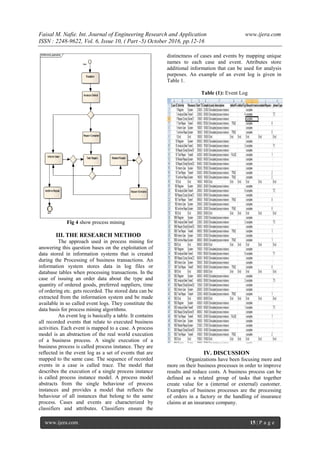
Fig 4 shows a business process model of a
simple Repair Service Process. It starts with the
registration of the device defect information then the
defect analyzed, there are three situations, first one is
defect may be complex then repair and test repair
after that inform user or restart the repair, if user
informed and need more repair then test repair, or
restart repair loop between inform user, test repair,
restart repair and repair and at the end inform user
and archive repair. In the second situation after
analyzed defect info user then archive defect or test
repair if test repair then, either inform user or test
repair simple till end the case by archiving or test
repair. In the third situation if simple then repair and
test the repair then either test repair or inform user
the case ended by archiving repair or optionally by
test repair.](https://image.slidesharecdn.com/c0610051216-161115050054/85/Extract-Business-Process-Performance-using-Data-Mining-3-320.jpg)
![Faisal M. Nafie. Int. Journal of Engineering Research and Application www.ijera.com
ISSN : 2248-9622, Vol. 6, Issue 10, ( Part -5) October 2016, pp.12-16
www.ijera.com 16 | P a g e
Throughout this paper, the emphasis of our research
has been on the analysis of the performance of
business processes.The Performance Analysis
process of repairing devices was used as case study
and the Fuzzy Miner Algorithm used to analyze the
process model performance. The success of process
mining will depend on whether it is able to achieve
balance between these conflicting goals sensibly.
Fuzzy Mining is a first step in that direction.
V. CONCLUSION
Process mining builds the bridge between
data mining and business process management. The
increasing integration of information systems for
supporting and automating the execution of business
transactions provides the basis for novel types of
data analysis. The data that is stored in the
information systems can be used to mine and
reconstruct business process models. These models
are the foundation for a variety of application areas
including process analysis and optimization or
conformance and compliance checking. The basic
constructs for process mining are event logs, process
models and mining algorithms. We have
summarized essential concepts of process mining in
this article, illustrating the main application areas
and available tool support Process mining is still a
young research discipline and limitations concerning
noise, adequate representation and competing quality
criteria should be taken into account when using
process mining. Although some areas like the
labelling of events, complexity reduction in mined
models and phenomena like concept drift need to be
addressed by further research the available set of
methods and tools provide a rich and innovative
resource for effective and efficient business process
management.
REFERENCES
[1]. Boehm B., A spiral model of software
development and enhancement, IEEE
Computers, vol. 21, no. 5, pp. 61-72, 1988.
[2]. Booch G., Rumbaugh J., and Jacobson I.,
the Unified Modeling Language,) Addison-
Wesley, 1999(.
[3]. Cutts Q., Fostering engagement, covering
content: reflecting on large, mixed ability,
first year computer programming module,
in Walker M. (Ed), Reconstructing
Professionalism in University Teaching,)
Open University Press, pp. 168-189, 2001(.
[4]. Favela J. and Pena-Mora F., An Experience
in Collaborative Software Engineering
Education, IEEE Software, pp. 47-52,
March/April 2001.
[5]. Griffiths M., Educational Research for
Social Justice, Open University Press, pp.
38-39, 1998.
[6]. Kermmis S., Action Research, in
Hammersley M. (Ed), Educational
Research – Current Issues, vol. 1, Open
University Press, 1993.
[7]. Krutchen P., The Rational Unified Process
Model: an Introduction, 2nd ed,) Addison-
Wesley, 2000(.
[8]. Krutchen P., The 4+1 View Model of
Architecture, IEEE Software, vol. 12, no. 6,
1995.
[9]. Günther, C., and Van der Aalst, W. 2007.
Fuzzy mining–adaptive process
simplification based on multi-perspective
metrics, Business Process Management, pp.
328–343.
[10]. Van der Aalst, W. M. P., Weijters, A. J. M.
M., and Maruster, L. 2002. Workflow
Mining: Which Processes can be
Rediscovered, Vol. 2480, Presented at the
Proc. Int’l Conf. Eng. and Deployment of
Cooperative Information Systems (EDCIS
2002), pp. 45–63.
[11]. Becker, J., Delfmann, P., Eggert, M., and
Schwittay, S. 2012a. Generalizability and
Applicability of Model-Based Business
Process Compliance-Checking Approaches
– A State-of-the-Art Analysis and Research
Roadmap, BuR -Business Research (5:2),
pp. 221–247.
[12]. Weske, M. 2012. Business process
management concepts, languages,
architectures,) Berlin, New York: Springer .
(](https://image.slidesharecdn.com/c0610051216-161115050054/85/Extract-Business-Process-Performance-using-Data-Mining-5-320.jpg)

This paper analyzes business process performance through process mining, particularly using the fuzzy miner algorithm to evaluate a case study of device repairs. It discusses the importance of effectively utilizing existing data from information systems and outlines the steps of process mining, including data extraction, filtering, and modeling. The findings emphasize the potential of process mining in improving business processes and decision-making while addressing challenges such as noise and model complexity.


![[IJET-V1I4P3] Authors :Mekhala](https://cdn.slidesharecdn.com/ss_thumbnails/ijet-v1i4p3-150728160211-lva1-app6891-thumbnail.jpg?width=640&height=640&fit=bounds)


