‘How a Great QA Team can make
a Disproportionate Contribution to Project
Success’
Paper Presented by Mark Ryland
Presentation Contents
  1. Introduction

  2. Project Lifecycle & Team Constituents

  3. Team Dynamics

  4. Typical QA

  5. Great QA
Mark Ryland’s Credentials
•   Close on 20 years large project delivery experience in Wholesale Financial Services

•   Banks, exchanges and brokers

•   Variety of systems types

•   Projects from $10M to $150M

•   All of these projects required QA testing

•   Involved in building 2 offshore testing centres

•   Schooled in QA testing best practise
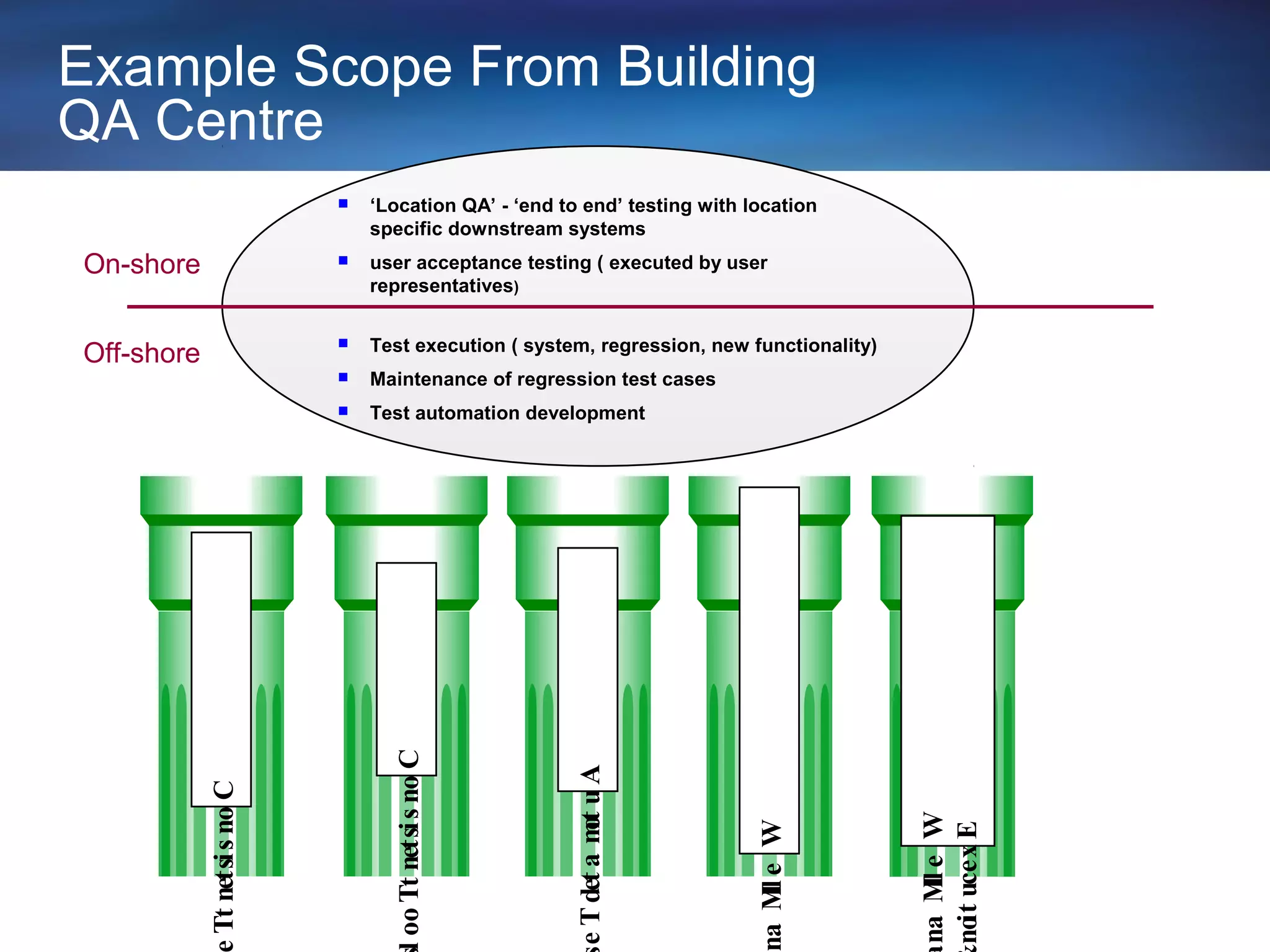
Example Scope From Building
QA Centre
                                  ‘Location QA’ - ‘end to end’ testing with location
                                   specific downstream systems
On-shore                          user acceptance testing ( executed by user
                                   representatives)

                                  Test execution ( system, regression, new functionality)
Off-shore
                                  Maintenance of regression test cases
                                  Test automation development
                                     l oo Tt net si s no C


                                                             e T det a mt u A
            Tt net si s no C


                                                                                             na Ml e W
                                                                        o


                                                                                na Ml e W


                                                                                             no t uce x E
                                                                                                   l
                                                                                    l


                                                                                               i
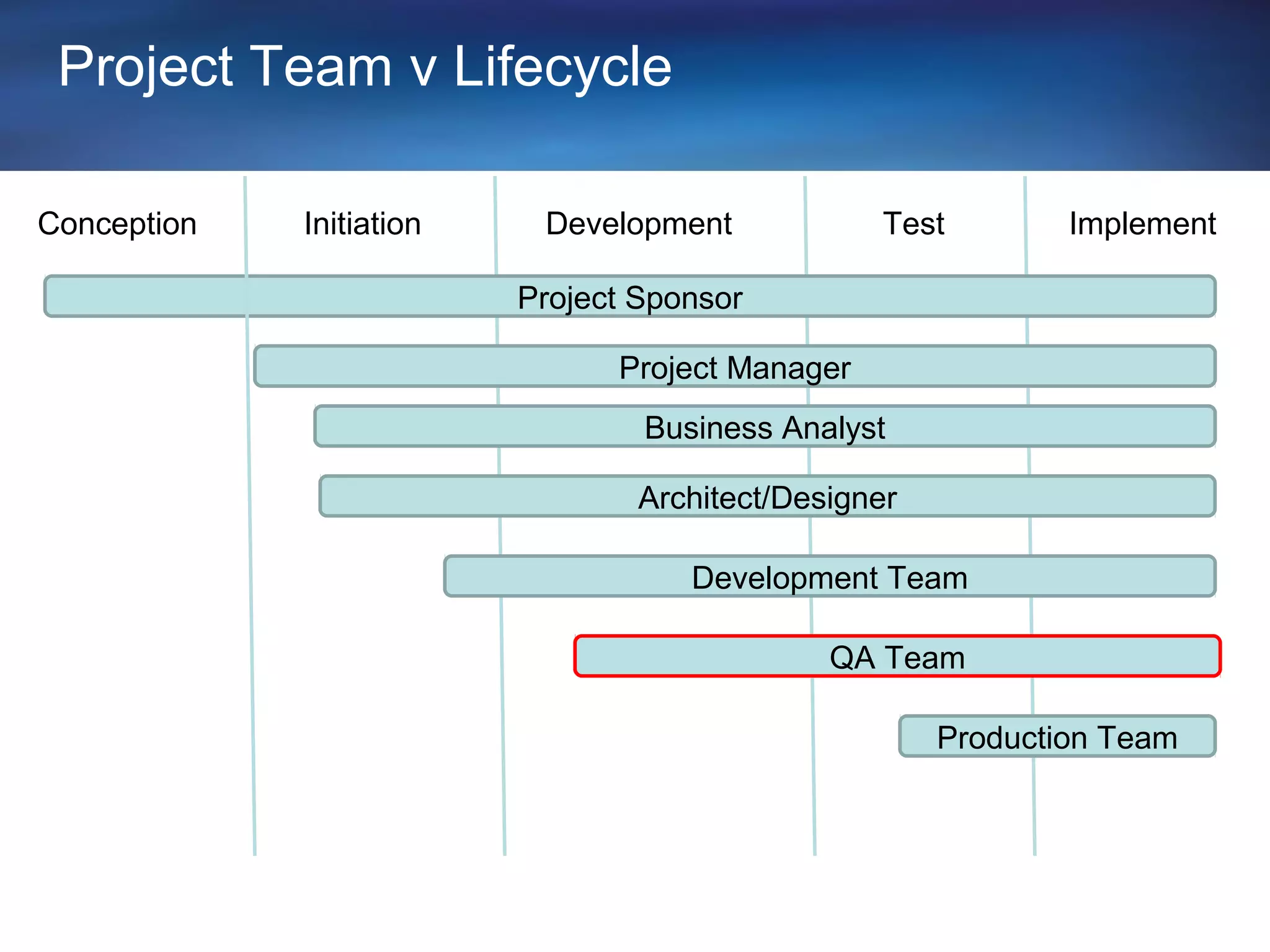
Project Team v Lifecycle

Conception   Initiation    Development             Test        Implement

                          Project Sponsor

                                Project Manager
                                  Business Analyst

                                  Architect/Designer

                                     Development Team

                                               QA Team

                                                       Production Team
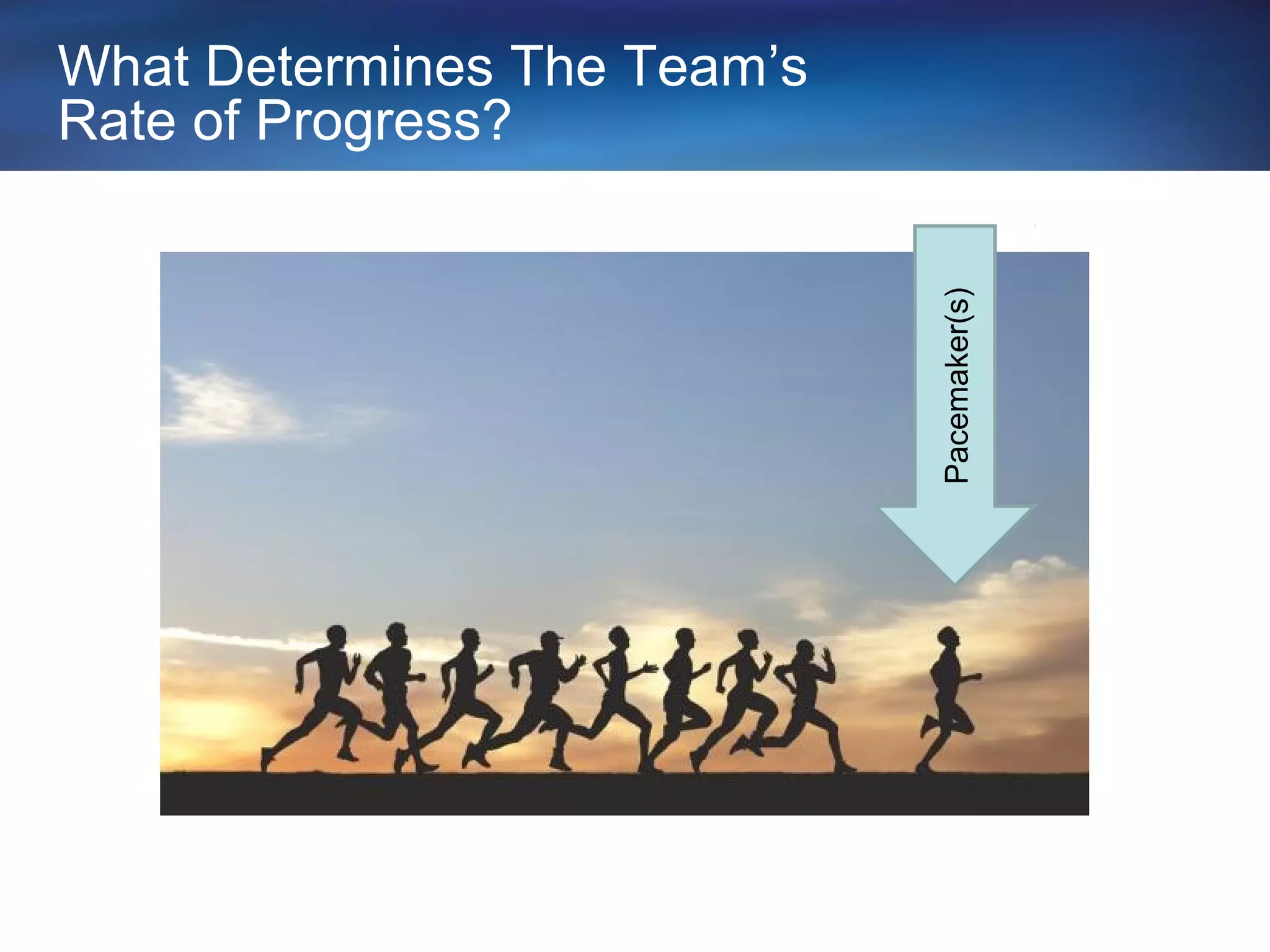
Team Dynamics
What Determines The Team’s
Rate of Progress?


                             Pacemaker(s)
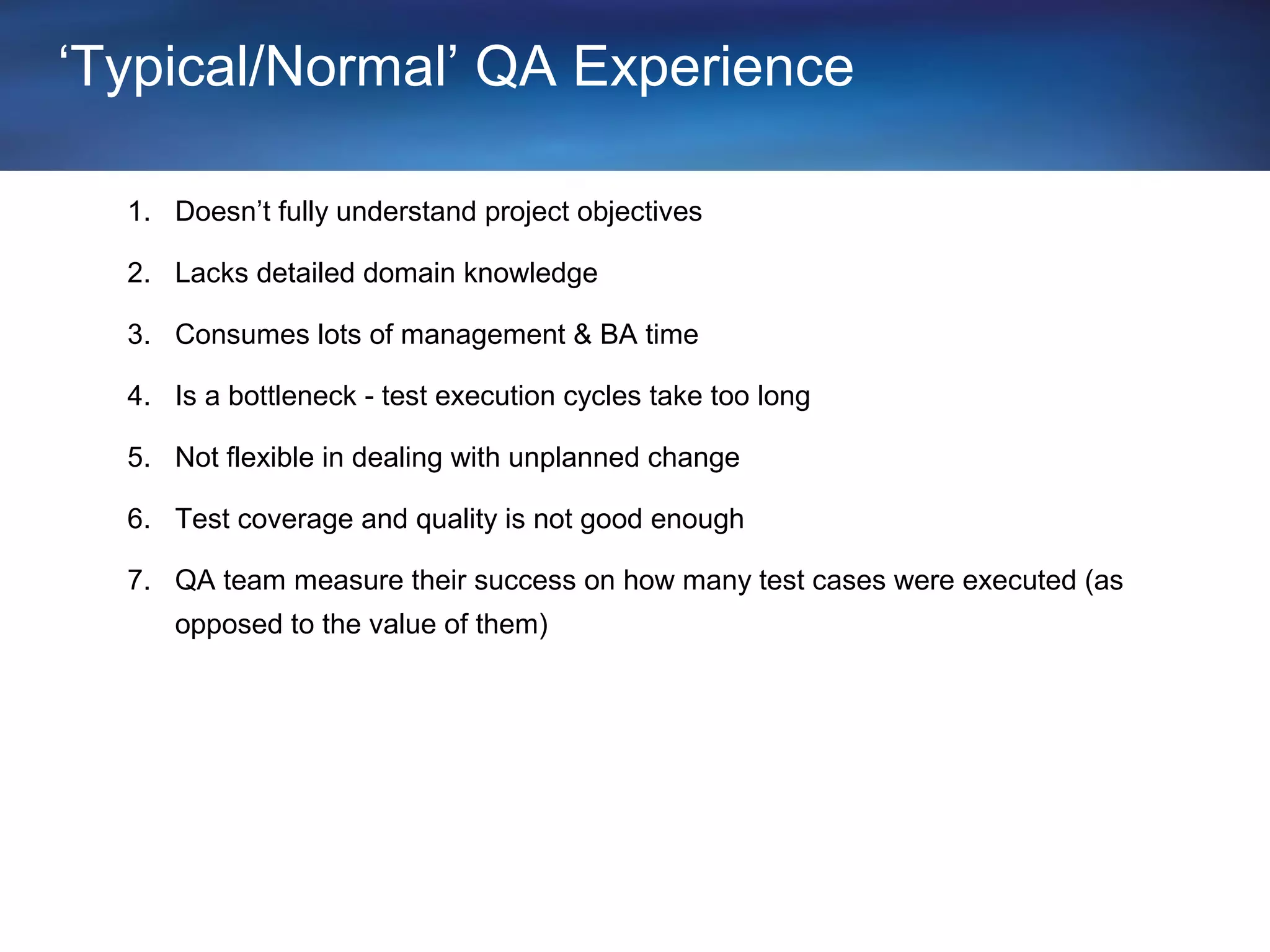
‘Typical/Normal’ QA Experience

  1. Doesn’t fully understand project objectives

  2. Lacks detailed domain knowledge

  3. Consumes lots of management & BA time

  4. Is a bottleneck - test execution cycles take too long

  5. Not flexible in dealing with unplanned change

  6. Test coverage and quality is not good enough

  7. QA team measure their success on how many test cases were executed (as
     opposed to the value of them)
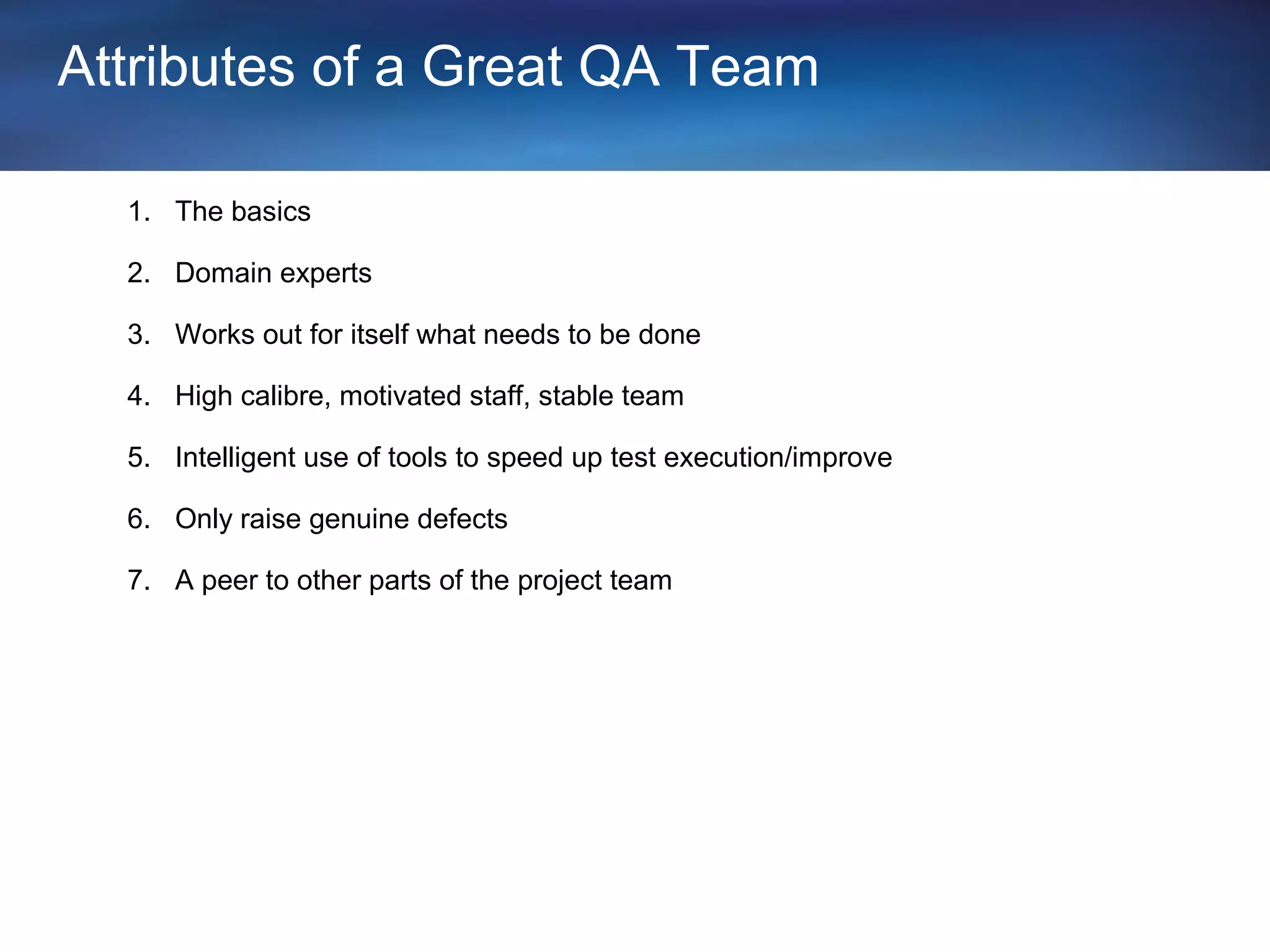
Attributes of a Great QA Team

  1. The basics

  2. Domain experts

  3. Works out for itself what needs to be done

  4. High calibre, motivated staff, stable team

  5. Intelligent use of tools to speed up test execution/improve

  6. Only raise genuine defects

  7. A peer to other parts of the project team
Attributes of a Great QA Team
Cont….
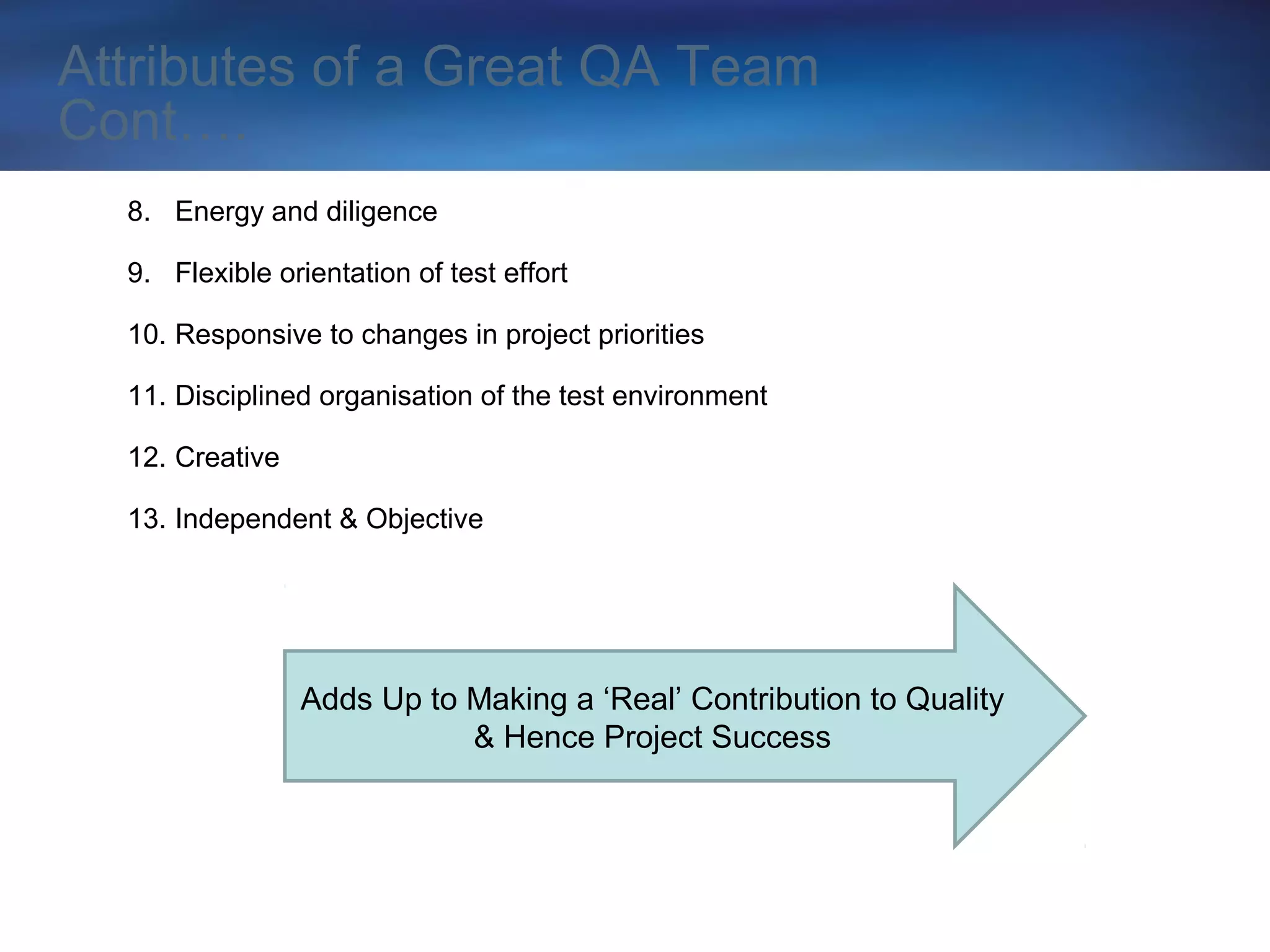
  8. Energy and diligence

  9. Flexible orientation of test effort

  10. Responsive to changes in project priorities

  11. Disciplined organisation of the test environment

  12. Creative

  13. Independent & Objective


                 Adds Up to Making a ‘Real’ Contribution to Quality
                            & Hence Project Success
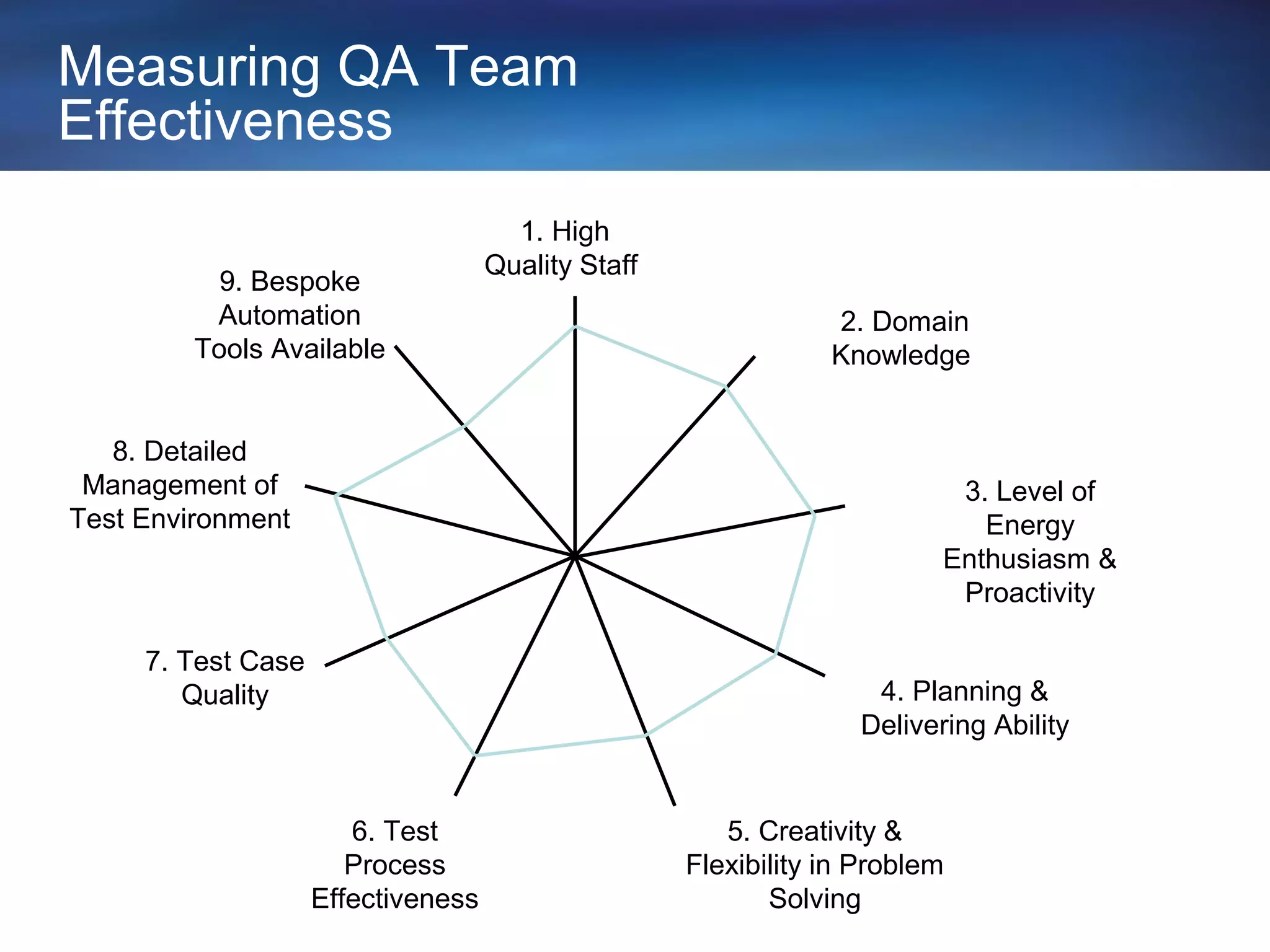
Measuring QA Team
Effectiveness
                                      1. High
                                    Quality Staff
           9. Bespoke
          Automation                                            2. Domain
         Tools Available                                        Knowledge


   8. Detailed
 Management of                                                            3. Level of
Test Environment                                                            Energy
                                                                         Enthusiasm &
                                                                          Proactivity

     7. Test Case
        Quality                                                    4. Planning &
                                                                  Delivering Ability


                       6. Test                         5. Creativity &
                       Process                      Flexibility in Problem
                    Effectiveness                          Solving
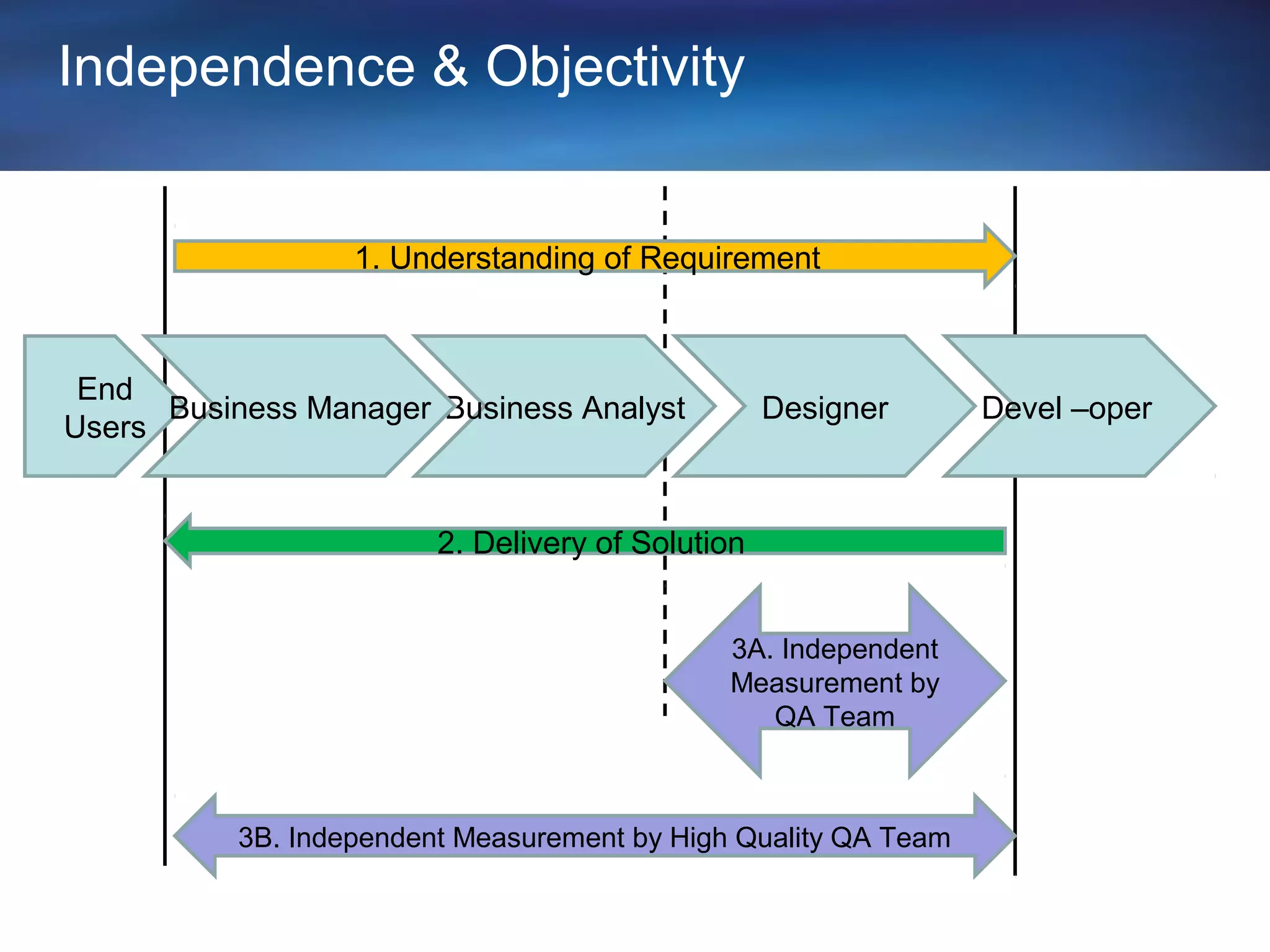
Independence & Objectivity


                  1. Understanding of Requirement


 End
      Business Manager Business Analyst           Designer      Devel –oper
Users


                        2. Delivery of Solution


                                             3A. Independent
                                             Measurement by
                                                QA Team


          3B. Independent Measurement by High Quality QA Team
Team Dynamics When the QA
 Team is Excellent

1. Developers try harder to get it right in the first place

2. Developers get rapid/timely feedback on what’s wrong

3. Developers are work harder to solve defects to keep the project on track

4. Project sponsors get clear visibility on quality level and progress

5. Project designers and analysts are have clear problem statements to work from

6. Have (justified) confidence in the system – that will feed through to the users

7. Fewer problems are going to found in live & hence the project will cost less
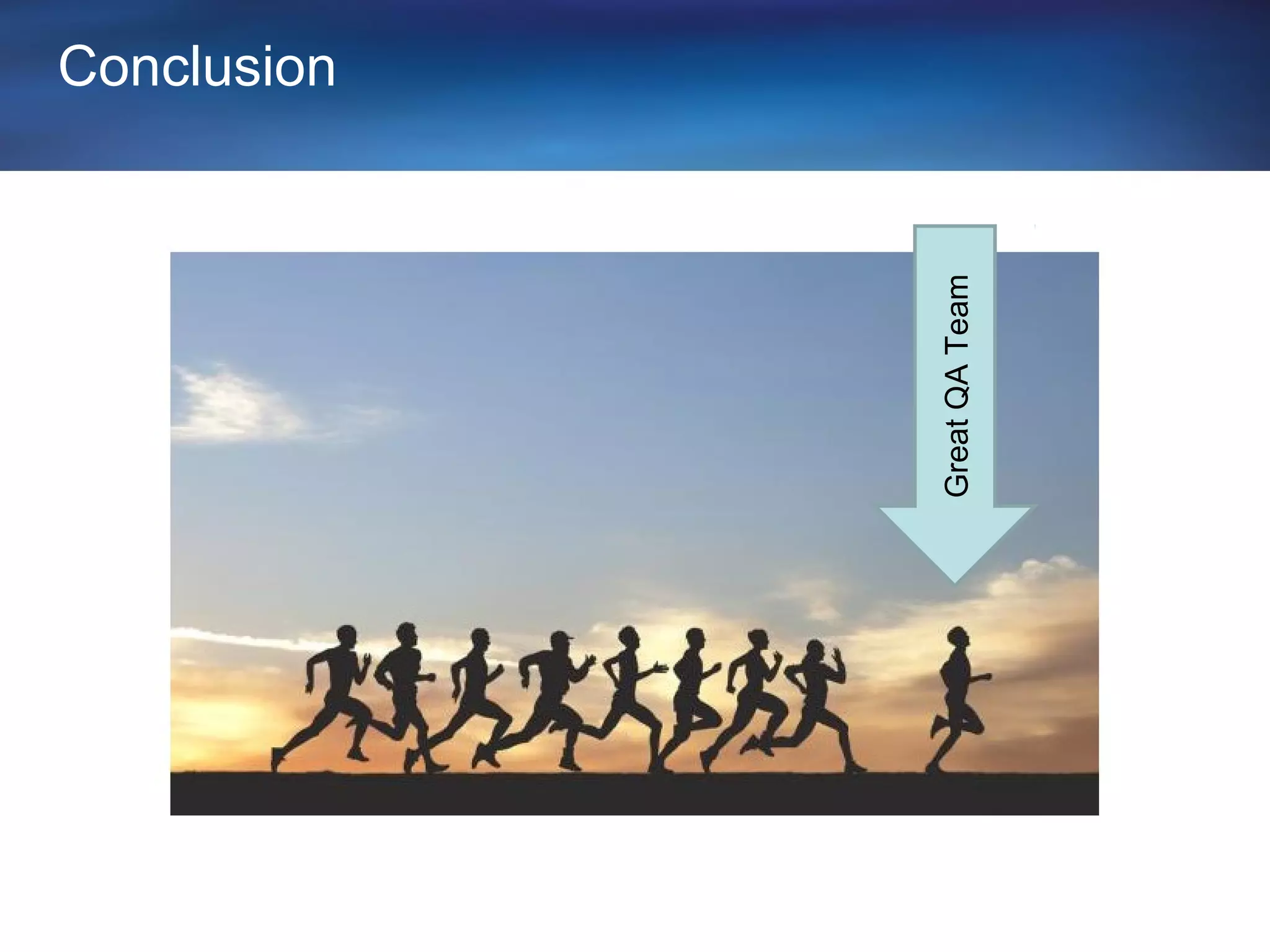
Conclusion


Great QA Team
Questions & Answers


             Thank You

Extent 2013 Obninsk How a Great QA Team Can Make a Disproportionate Contribution to Project Success

  • 1.
    ‘How a GreatQA Team can make a Disproportionate Contribution to Project Success’ Paper Presented by Mark Ryland
  • 2.
    Presentation Contents 1. Introduction 2. Project Lifecycle & Team Constituents 3. Team Dynamics 4. Typical QA 5. Great QA
  • 3.
    Mark Ryland’s Credentials • Close on 20 years large project delivery experience in Wholesale Financial Services • Banks, exchanges and brokers • Variety of systems types • Projects from $10M to $150M • All of these projects required QA testing • Involved in building 2 offshore testing centres • Schooled in QA testing best practise
  • 4.
    Example Scope FromBuilding QA Centre  ‘Location QA’ - ‘end to end’ testing with location specific downstream systems On-shore  user acceptance testing ( executed by user representatives)  Test execution ( system, regression, new functionality) Off-shore  Maintenance of regression test cases  Test automation development l oo Tt net si s no C e T det a mt u A Tt net si s no C na Ml e W o na Ml e W no t uce x E l l i
  • 5.
    Project Team vLifecycle Conception Initiation Development Test Implement Project Sponsor Project Manager Business Analyst Architect/Designer Development Team QA Team Production Team
  • 6.
  • 7.
    What Determines TheTeam’s Rate of Progress? Pacemaker(s)
  • 8.
    ‘Typical/Normal’ QA Experience 1. Doesn’t fully understand project objectives 2. Lacks detailed domain knowledge 3. Consumes lots of management & BA time 4. Is a bottleneck - test execution cycles take too long 5. Not flexible in dealing with unplanned change 6. Test coverage and quality is not good enough 7. QA team measure their success on how many test cases were executed (as opposed to the value of them)
  • 9.
    Attributes of aGreat QA Team 1. The basics 2. Domain experts 3. Works out for itself what needs to be done 4. High calibre, motivated staff, stable team 5. Intelligent use of tools to speed up test execution/improve 6. Only raise genuine defects 7. A peer to other parts of the project team
  • 10.
    Attributes of aGreat QA Team Cont…. 8. Energy and diligence 9. Flexible orientation of test effort 10. Responsive to changes in project priorities 11. Disciplined organisation of the test environment 12. Creative 13. Independent & Objective Adds Up to Making a ‘Real’ Contribution to Quality & Hence Project Success
  • 11.
    Measuring QA Team Effectiveness 1. High Quality Staff 9. Bespoke Automation 2. Domain Tools Available Knowledge 8. Detailed Management of 3. Level of Test Environment Energy Enthusiasm & Proactivity 7. Test Case Quality 4. Planning & Delivering Ability 6. Test 5. Creativity & Process Flexibility in Problem Effectiveness Solving
  • 12.
    Independence & Objectivity 1. Understanding of Requirement End Business Manager Business Analyst Designer Devel –oper Users 2. Delivery of Solution 3A. Independent Measurement by QA Team 3B. Independent Measurement by High Quality QA Team
  • 13.
    Team Dynamics Whenthe QA Team is Excellent 1. Developers try harder to get it right in the first place 2. Developers get rapid/timely feedback on what’s wrong 3. Developers are work harder to solve defects to keep the project on track 4. Project sponsors get clear visibility on quality level and progress 5. Project designers and analysts are have clear problem statements to work from 6. Have (justified) confidence in the system – that will feed through to the users 7. Fewer problems are going to found in live & hence the project will cost less
  • 14.
  • 15.