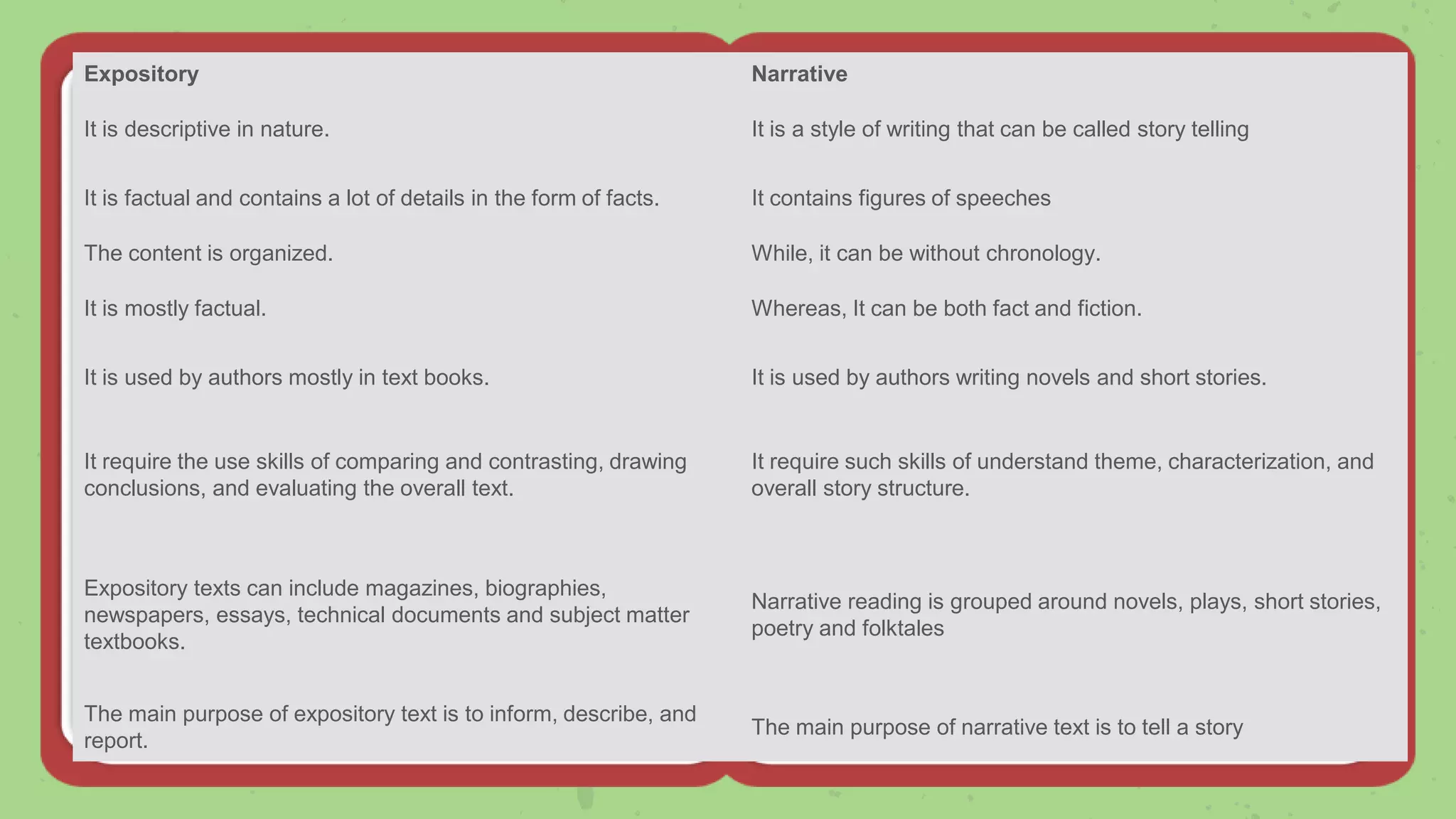
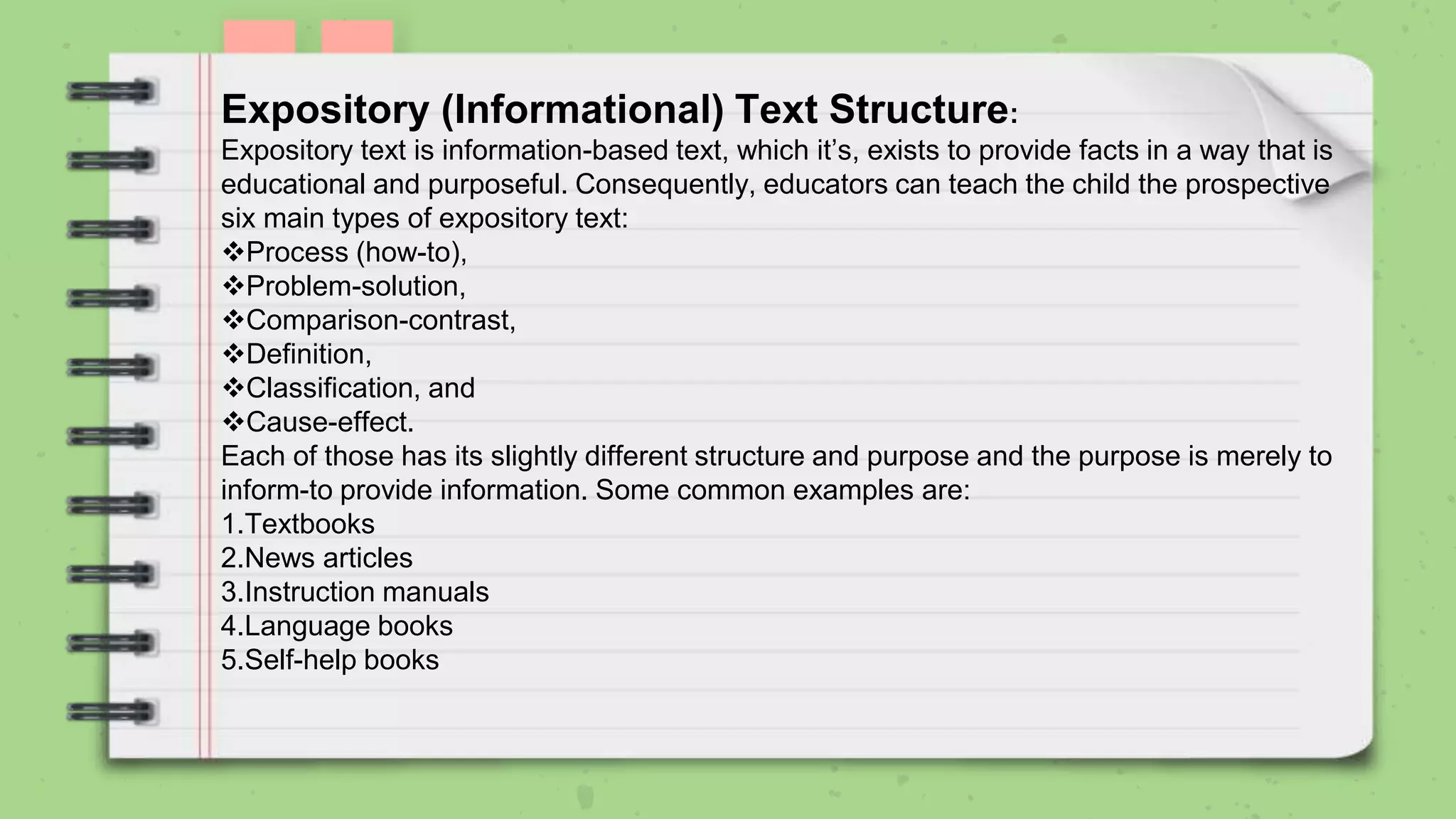
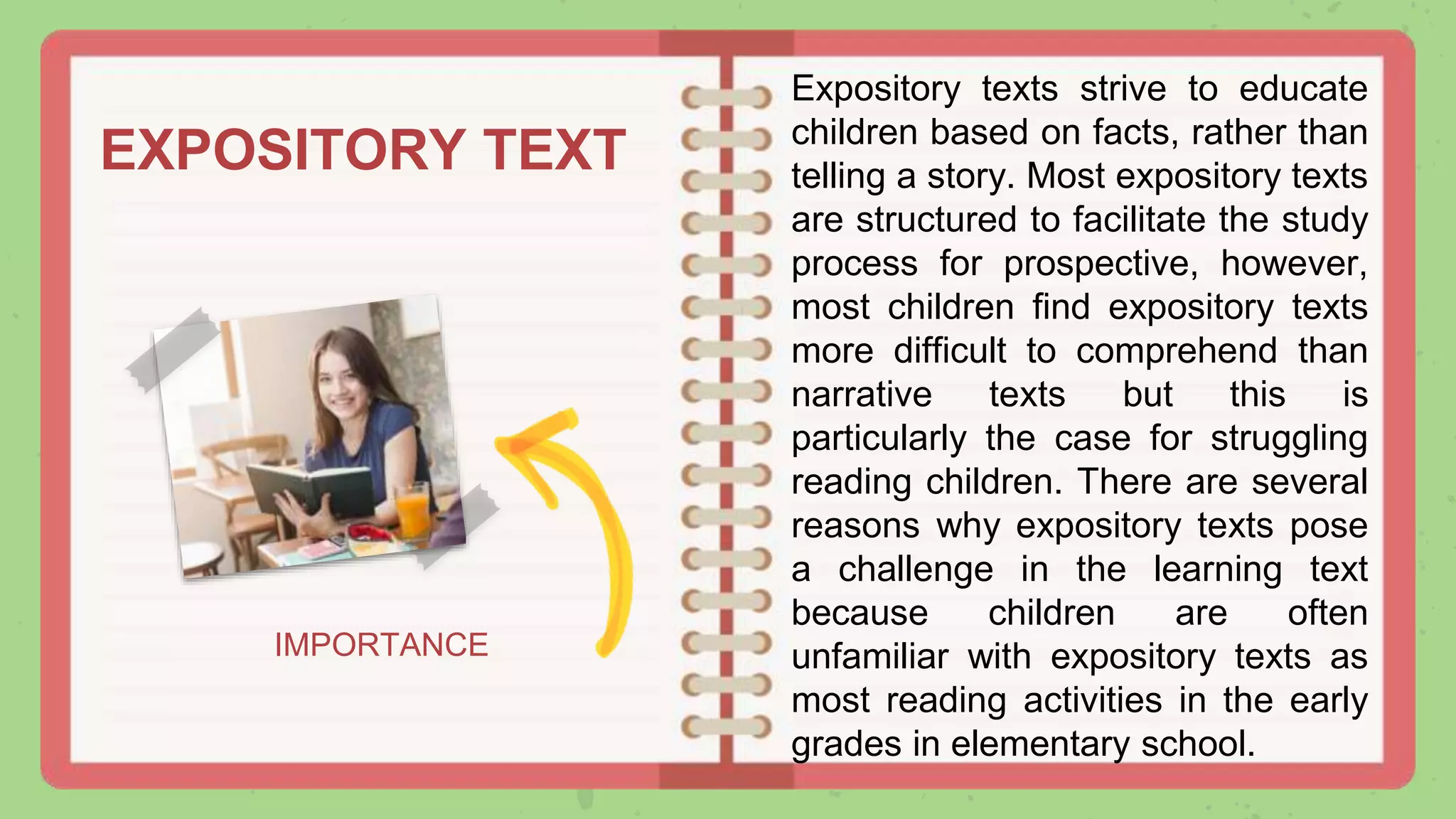
This document discusses expository and narrative texts. It begins by introducing the importance of reading comprehension and literacy instruction. It then defines expository and narrative texts, highlighting their different purposes and structures. Expository texts aim to inform by using facts, while narrative texts tell stories. The document outlines six common expository text structures and provides examples of how teachers can teach students to recognize these structures. It also notes some challenges of expository texts and strategies to address them. For narrative texts, the document discusses how they promote learning through emotion and imagination, and challenges some students face with narrative writing.