Exploitation of natural variation –
attempts to increase variation
Sri Subalakhshmi V K I
2019608015
I Ph.D (GPB)
Introduction
• Natural variation – genome encoded differences for
phenotypic variation
• Enrolls for adaptation and species formation
• More valuable and acts as reservoir of genes for
plant improvement
Exploitation of natural variation – early
attempts
• Domestication
• Selection
• Hybridization
Landraces
• Earliest form of cultivar
• Closely related to wild ancestor
• Highly heterogeneous and have broad
genetic base
• Represents first step in domestication
process
Characteristics of landraces
• High level of genetic diversity within populations
• Adaptation to soil and climatic conditions
• pest and disease resistance
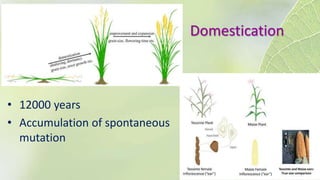
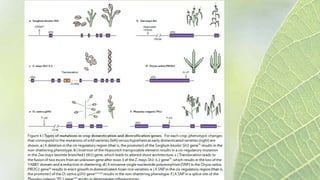
Maize
• 12000 years
• Accumulation of spontaneous
mutation
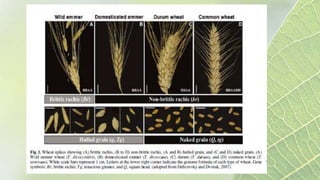
Domestication
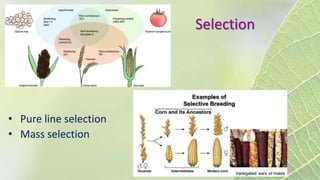
Selection
• Pure line selection
• Mass selection
Hybridization
• Crossing parents and generating segregating
populations
• Pedigree breeding – qualitative traits (disease
resistance, color, shape of plant parts, plant
architecture)
• Ideotype breeding – for improvement of
quantitative traits
Cont.
• Population breeding – improves phenotypic
performance of intermating population by
increasing the frequency of favourable alleles.
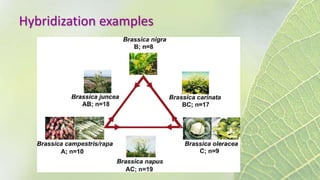
• Inter-species / inter generic hybridization
plays a crucial role in exploiting natural
variation.
Hybridization examples
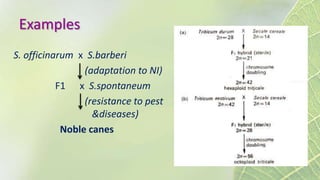
Examples
S. officinarum x S.barberi
(adaptation to NI)
F1 x S.spontaneum
(resistance to pest
&diseases)
Noble canes
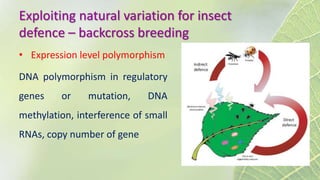
Exploiting natural variation for insect
defence – backcross breeding
• Expression level polymorphism
DNA polymorphism in regulatory
genes or mutation, DNA
methylation, interference of small
RNAs, copy number of gene
Example
• Maize – expression of herbivore induced TPS23
(terpene synthase 23) – produce volatile
compounds (E)-β-caryophyllene – attracts
natural enemies
• Glucosinolates in Brassicaceae plants confers
resistance against insects.
Cont.
• Backcross breeding helps in transfer of R-gene for resistance
• WKS1 gene confers partial and temperature-dependent
resistance - stripe rust, Puccinia striiformis – produce lipid
signals/autoflourscent cells are formed around infecion sites-
but is absent in commercial wheat varieties and introgressed
from the ancestral wheat accession Triticum turgidum L. ssp.
Dicoccoides
QTL
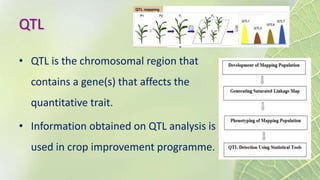
• QTL is the chromosomal region that
contains a gene(s) that affects the
quantitative trait.
• Information obtained on QTL analysis is
used in crop improvement programme.
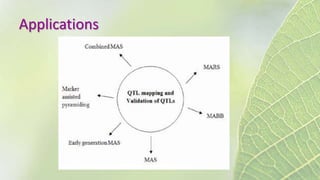
Applications
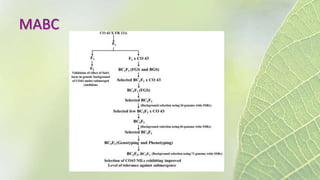
MABC
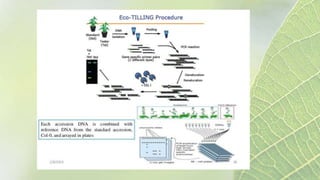
Allele mining – Eco-TILLING
• Involves detection of naturally occuring
allelic variation from landraces, cultivars,
germplasms
• Presence of point mutation or SNPs will be
detected
Case study
Findings
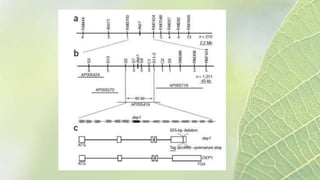
• DEP 1 (Dense and Erect Panicle 1) is pleotropically
responsible for dense panicle, high grain number per panicle,
erect panicle.
• Mapped on chromosome 9
• DEP1 encodes unknown PEBP (phosphatidylethanolamine-
binding protein) like domain protein
• The dominant allele at the DEP1 locus cause truncating
mutation in phosphatidylethanolamine-binding protein-
like domain protein.
• enhance meristematic activity, resulting in a reduced
length of the inflorescence internode, an increased
number of grains per panicle thereby increase in grain
yield.

Exploitation of natural variation

Exploitation of natural variation

  • 1.
    Exploitation of naturalvariation – attempts to increase variation Sri Subalakhshmi V K I 2019608015 I Ph.D (GPB)
  • 2.
    Introduction • Natural variation– genome encoded differences for phenotypic variation • Enrolls for adaptation and species formation • More valuable and acts as reservoir of genes for plant improvement
  • 3.
    Exploitation of naturalvariation – early attempts • Domestication • Selection • Hybridization
  • 4.
    Landraces • Earliest formof cultivar • Closely related to wild ancestor • Highly heterogeneous and have broad genetic base • Represents first step in domestication process
  • 5.
    Characteristics of landraces •High level of genetic diversity within populations • Adaptation to soil and climatic conditions • pest and disease resistance
  • 6.
    Maize • 12000 years •Accumulation of spontaneous mutation Domestication
  • 9.
    Selection • Pure lineselection • Mass selection
  • 10.
    Hybridization • Crossing parentsand generating segregating populations • Pedigree breeding – qualitative traits (disease resistance, color, shape of plant parts, plant architecture) • Ideotype breeding – for improvement of quantitative traits
  • 11.
    Cont. • Population breeding– improves phenotypic performance of intermating population by increasing the frequency of favourable alleles. • Inter-species / inter generic hybridization plays a crucial role in exploiting natural variation.
  • 12.
  • 13.
    Examples S. officinarum xS.barberi (adaptation to NI) F1 x S.spontaneum (resistance to pest &diseases) Noble canes
  • 14.
    Exploiting natural variationfor insect defence – backcross breeding • Expression level polymorphism DNA polymorphism in regulatory genes or mutation, DNA methylation, interference of small RNAs, copy number of gene
  • 15.
    Example • Maize –expression of herbivore induced TPS23 (terpene synthase 23) – produce volatile compounds (E)-β-caryophyllene – attracts natural enemies • Glucosinolates in Brassicaceae plants confers resistance against insects.
  • 16.
    Cont. • Backcross breedinghelps in transfer of R-gene for resistance • WKS1 gene confers partial and temperature-dependent resistance - stripe rust, Puccinia striiformis – produce lipid signals/autoflourscent cells are formed around infecion sites- but is absent in commercial wheat varieties and introgressed from the ancestral wheat accession Triticum turgidum L. ssp. Dicoccoides
  • 17.
    QTL • QTL isthe chromosomal region that contains a gene(s) that affects the quantitative trait. • Information obtained on QTL analysis is used in crop improvement programme.
  • 18.
  • 19.
  • 20.
    Allele mining –Eco-TILLING • Involves detection of naturally occuring allelic variation from landraces, cultivars, germplasms • Presence of point mutation or SNPs will be detected
  • 22.
  • 23.
    Findings • DEP 1(Dense and Erect Panicle 1) is pleotropically responsible for dense panicle, high grain number per panicle, erect panicle. • Mapped on chromosome 9 • DEP1 encodes unknown PEBP (phosphatidylethanolamine- binding protein) like domain protein
  • 25.
    • The dominantallele at the DEP1 locus cause truncating mutation in phosphatidylethanolamine-binding protein- like domain protein. • enhance meristematic activity, resulting in a reduced length of the inflorescence internode, an increased number of grains per panicle thereby increase in grain yield.