


 ExplanationDSLR Camera
 How To Use DSLR Camera
 Type Lens Of SLR Camera
 Most digital single-lens reflex cameras
 (digital SLR or DSLR) are digital cameras that
 use a mechanical mirror system and
 pentaprism to direct light from the lens to an
 optical viewfinder on the back of the
 camera.
   Match camera lenses to your            longer focal length to allow you to
    camera. Camera bodies come with        focus in on a subject that is at a
    a lens mount that tells you what       distance from you. Telephotos start
    SLR lenses work with your camera.      at 85 mm and continue up. The
    For example, Canon EF lens             focal length of a camera 600mm or
    mounts accept EF lenses. If you        larger makes such a large lens that
    want to try a different lens, you      it's difficult to hold steady, so it's
    must buy the appropriate lens          best to use a tripod.
    mount adapter.                        5Find the best in both worlds with
   2Learn about aperture, which is        a zoom lens. A zoom lens lets you
    the opening in your lens where         adjust your focal length. Although
    light passes through. Many cameras     some zooms include wide-angle
    come with a variable aperture that     shots in a 24-70 lens, most work
    allows you to adjust the depth of      for zooming in on distant shots,
    field. Other lenses remain at the      like with a 70-200mm lens.
    same aperture.                        6Sacrifice image quality with a
   3Choose wide-angle lenses for          zoom lens or purchase a prime or
    shooting landscapes and interior       fixed focal length SLR lens for the
    shots that benefit from a great        best quality images.
    depth of field. Wide-angles use a
    focal length of 35mm or less. A
    standard lens is 50mm.
   4Select telephoto lenses with a
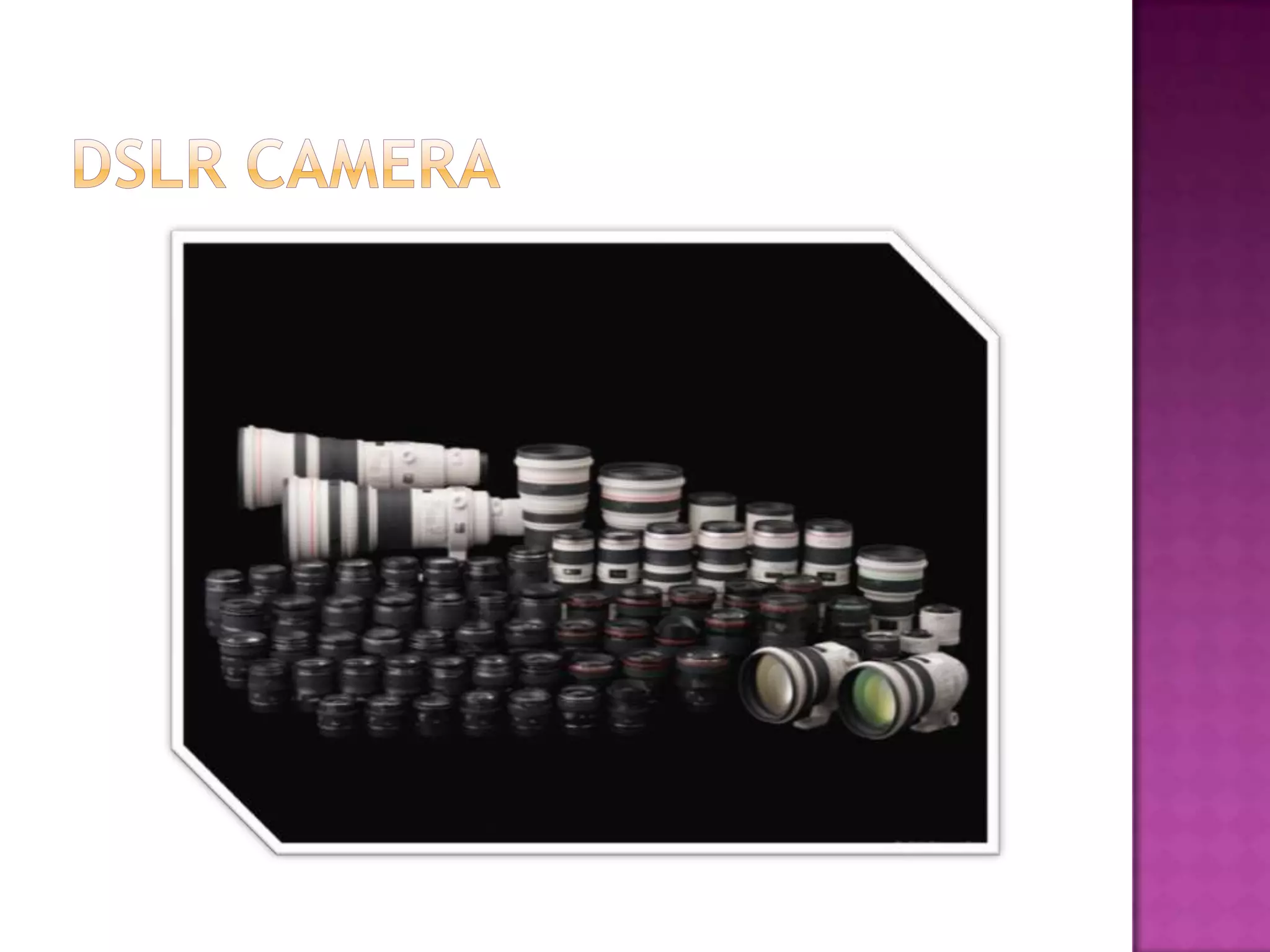
 TYPE      LENS OF D-SLR                       includes 14mm, 20mm, 24mm, 28mm
                                                and 35mm lenses. For an almost
    L-Series Lenses                             fishbowl look, Canon offers the
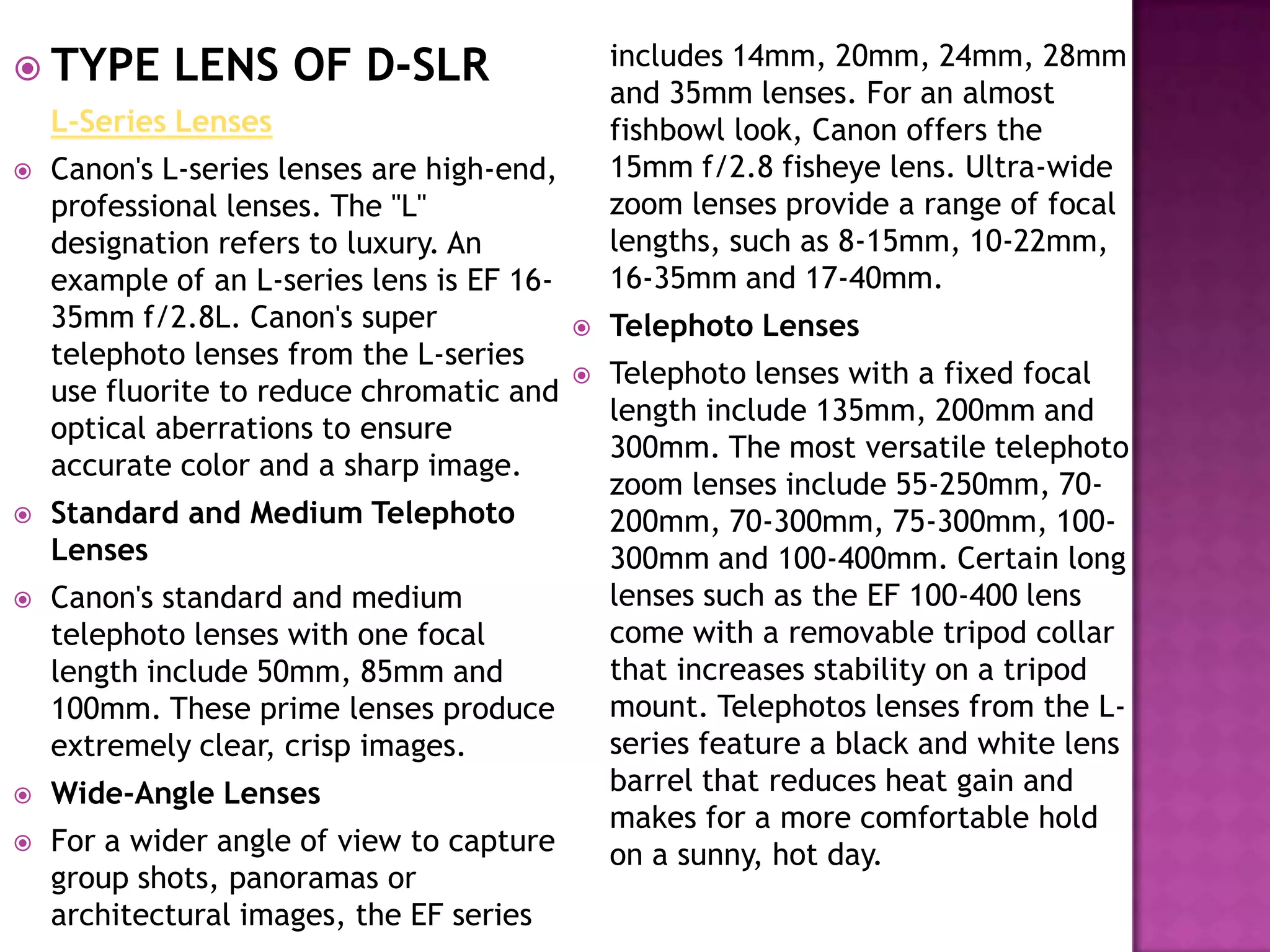
   Canon's L-series lenses are high-end,       15mm f/2.8 fisheye lens. Ultra-wide
    professional lenses. The "L"                zoom lenses provide a range of focal
    designation refers to luxury. An            lengths, such as 8-15mm, 10-22mm,
    example of an L-series lens is EF 16-       16-35mm and 17-40mm.
    35mm f/2.8L. Canon's super                 Telephoto Lenses
    telephoto lenses from the L-series
                                               Telephoto lenses with a fixed focal
    use fluorite to reduce chromatic and
                                                length include 135mm, 200mm and
    optical aberrations to ensure
                                                300mm. The most versatile telephoto
    accurate color and a sharp image.
                                                zoom lenses include 55-250mm, 70-
   Standard and Medium Telephoto               200mm, 70-300mm, 75-300mm, 100-
    Lenses                                      300mm and 100-400mm. Certain long
   Canon's standard and medium                 lenses such as the EF 100-400 lens
    telephoto lenses with one focal             come with a removable tripod collar
    length include 50mm, 85mm and               that increases stability on a tripod
    100mm. These prime lenses produce           mount. Telephotos lenses from the L-
    extremely clear, crisp images.              series feature a black and white lens
   Wide-Angle Lenses                           barrel that reduces heat gain and
                                                makes for a more comfortable hold
   For a wider angle of view to capture        on a sunny, hot day.
    group shots, panoramas or
    architectural images, the EF series
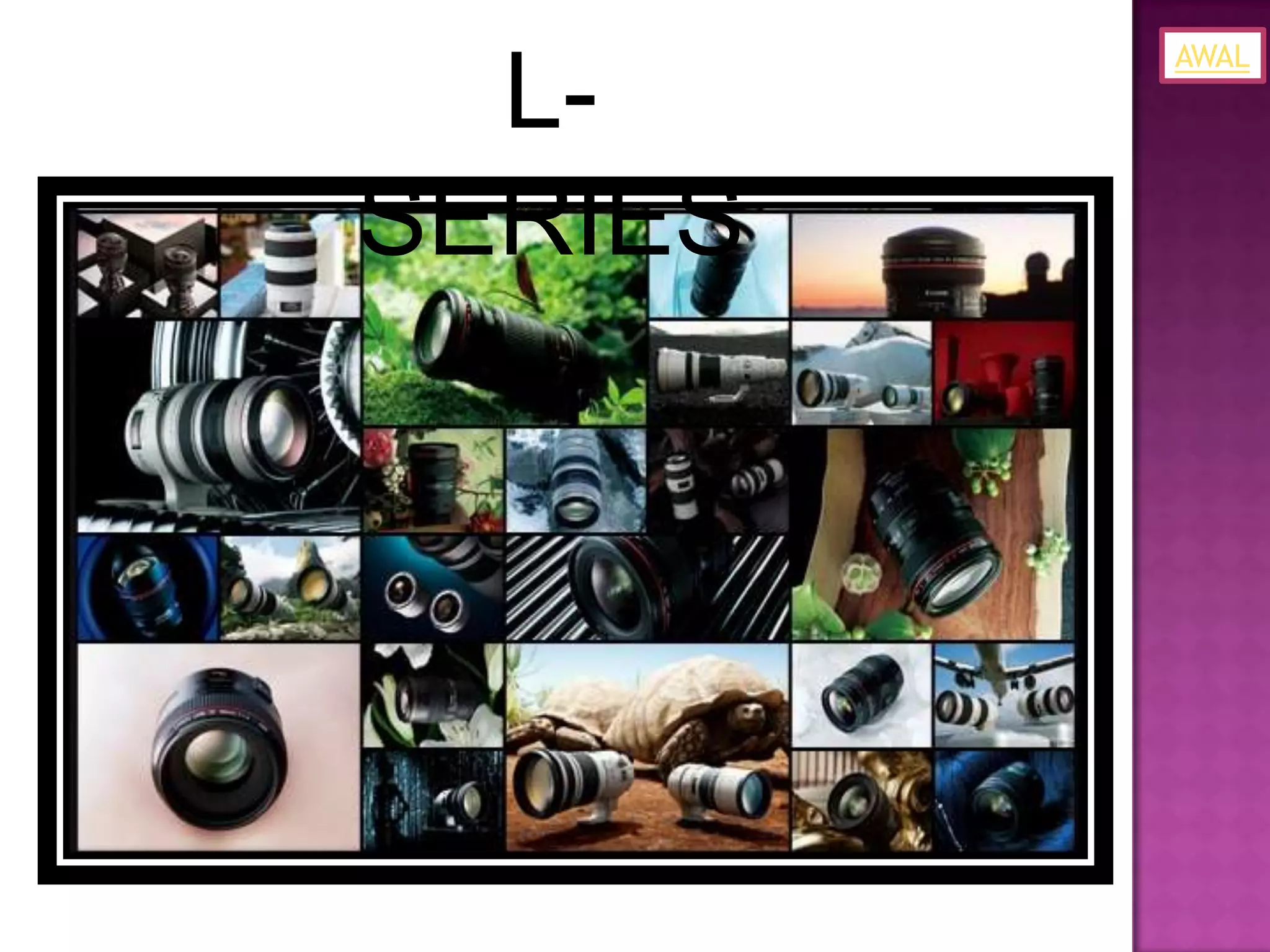
L-
         AWAL


SERIES
BY ::

Explanation about dslr camera by tio

  • 2.
     ExplanationDSLR Camera How To Use DSLR Camera  Type Lens Of SLR Camera
  • 3.
     Most digitalsingle-lens reflex cameras (digital SLR or DSLR) are digital cameras that use a mechanical mirror system and pentaprism to direct light from the lens to an optical viewfinder on the back of the camera.
  • 4.
    Match camera lenses to your longer focal length to allow you to camera. Camera bodies come with focus in on a subject that is at a a lens mount that tells you what distance from you. Telephotos start SLR lenses work with your camera. at 85 mm and continue up. The For example, Canon EF lens focal length of a camera 600mm or mounts accept EF lenses. If you larger makes such a large lens that want to try a different lens, you it's difficult to hold steady, so it's must buy the appropriate lens best to use a tripod. mount adapter.  5Find the best in both worlds with  2Learn about aperture, which is a zoom lens. A zoom lens lets you the opening in your lens where adjust your focal length. Although light passes through. Many cameras some zooms include wide-angle come with a variable aperture that shots in a 24-70 lens, most work allows you to adjust the depth of for zooming in on distant shots, field. Other lenses remain at the like with a 70-200mm lens. same aperture.  6Sacrifice image quality with a  3Choose wide-angle lenses for zoom lens or purchase a prime or shooting landscapes and interior fixed focal length SLR lens for the shots that benefit from a great best quality images. depth of field. Wide-angles use a focal length of 35mm or less. A standard lens is 50mm.  4Select telephoto lenses with a
  • 5.
     TYPE LENS OF D-SLR includes 14mm, 20mm, 24mm, 28mm and 35mm lenses. For an almost L-Series Lenses fishbowl look, Canon offers the  Canon's L-series lenses are high-end, 15mm f/2.8 fisheye lens. Ultra-wide professional lenses. The "L" zoom lenses provide a range of focal designation refers to luxury. An lengths, such as 8-15mm, 10-22mm, example of an L-series lens is EF 16- 16-35mm and 17-40mm. 35mm f/2.8L. Canon's super  Telephoto Lenses telephoto lenses from the L-series  Telephoto lenses with a fixed focal use fluorite to reduce chromatic and length include 135mm, 200mm and optical aberrations to ensure 300mm. The most versatile telephoto accurate color and a sharp image. zoom lenses include 55-250mm, 70-  Standard and Medium Telephoto 200mm, 70-300mm, 75-300mm, 100- Lenses 300mm and 100-400mm. Certain long  Canon's standard and medium lenses such as the EF 100-400 lens telephoto lenses with one focal come with a removable tripod collar length include 50mm, 85mm and that increases stability on a tripod 100mm. These prime lenses produce mount. Telephotos lenses from the L- extremely clear, crisp images. series feature a black and white lens  Wide-Angle Lenses barrel that reduces heat gain and makes for a more comfortable hold  For a wider angle of view to capture on a sunny, hot day. group shots, panoramas or architectural images, the EF series
  • 6.
    L- AWAL SERIES
  • 9.