http://www.iaeme.com/IJMET/index.asp 113 editor@iaeme.com
International Journal of Mechanical Engineering and Technology (IJMET)
Volume 8, Issue 2, February 2017, pp. 113–122 Article ID: IJMET_08_02_014
Available online at http://www.iaeme.com/IJMET/issues.asp?JType=IJMET&VType=8&IType=2
ISSN Print: 0976-6340 and ISSN Online: 0976-6359
© IAEME Publication
EXPERIMENTAL INVESTIGATION AND DESIGN
OPTIMIZATION OF END MILLING PROCESS
PARAMETERS ON MONEL 400 BY TAGUCHI
METHOD
R. Giridharan
PG Scholar, Department of Mechanical Engineering,
PRIST University, Thanjavur, TN, India
Pankaj Kumar
Assistant Professor, Department of Mechanical Engineering,
PRIST University, Thanjavur, TN, India
P. Vijayakumar
Assistant Professor, Department of Mechanical Engineering,
PRIST University, Thanjavur, TN, India
R. Tamilselvan
Assistant Professor, Department of Mechanical Engineering,
PRIST University, Thanjavur, TN, India
ABSTRACT
Monel 400 is a precipitation hard enable, Nickel copper alloy with corrosion resistance.
Typical applications for Monel 400 include fasteners, springs, chain, pump, impeller and Valve
components due their excellent Mechanical properties. The continuous development of carbide
milling cutter and its coating technology are great concern with manufacturing Environment.
CBN coating play an important role in milling cutter to produce better surface finish and tool
life with minimum cost. In this paper deals investigation of End Milling operation of Monel
400 plates with different process parameters like spindle speed, feed rate and depth of cut and
to find optimal machining conditions of minimum surface roughness(Ra), Material removal
designed and conducted based on design of Experiments using L9 orthogonal array and
Optimized by Taguchi Method.
Key words: End milling, Monel 400, process parameters, Taguchi Method.
Cite this Article: R. Giridharan, Pankaj Kumar, P. Vijayakumar and R. Tamilselvan.
Experimental Investigation and Design Optimization of End Milling Process Parameters on
Monel 400 by Taguchi Method. International Journal of Mechanical Engineering and
Technology, 8(2), 2017, pp. 113–122.
http://www.iaeme.com/ijmet/issues.asp?JType=IJMET&VType=8&IType=2
Experimental Investigation and Design Optimization of End Milling Process Parameters on Monel 400 by
Taguchi Method
http://www.iaeme.com/IJMET/index.asp 114 editor@iaeme.com
1. INTRODUCTION
Milling is a machining operation in which a work piece is fed past a rotating cylindrical tool with
multiple cutting edges. The axis of rotation of the tool is perpendicular to the feed direction. The tool
is called the milling cutter and the cutting edges are called teeth. Mostly plane surfaces are created
through milling. It’s an interrupted cutting operation; the teeth of milling cutter enter and exit work
piece during each revolution. So, the tool material and cutter geometry must be chosen carefully to
withstand cycles of impact forces and thermal shock. Milling is the most common form of machining,
a material removal process, which can create a variety of features on a part by cutting away the
unwanted material. The milling process requires a milling machine, work piece, fixture, and cutter.
The work piece is a piece of pre-shaped material that is secured to the fixture, which itself is attached
to a platform inside the milling machine. The cutter is a cutting tool with sharp teeth that is also
secured in the milling machine and rotates at high speeds. By feeding the work piece into the rotating
cutter, material is cut away from this work piece in the form of small chips to create the desired shape.
Milling is typically used to produce parts that are not axially symmetric and have many features, such
as holes, slots, pockets, and even three dimensional surface contours. Parts that are fabricated
completely through milling often include components that are used in limited quantities, perhaps for
prototypes, such as custom designed fasteners or brackets. Another application of milling is the
fabrication of tooling for other processes. For example, three-dimensional molds are typically milled.
Milling is also commonly used as a secondary process to add or refine features on parts that were
manufactured using a different process. Due to the high tolerances and surface finishes that milling
can offer, it is ideal for adding precision features to a part whose basic shape has already been formed
Ease of Use
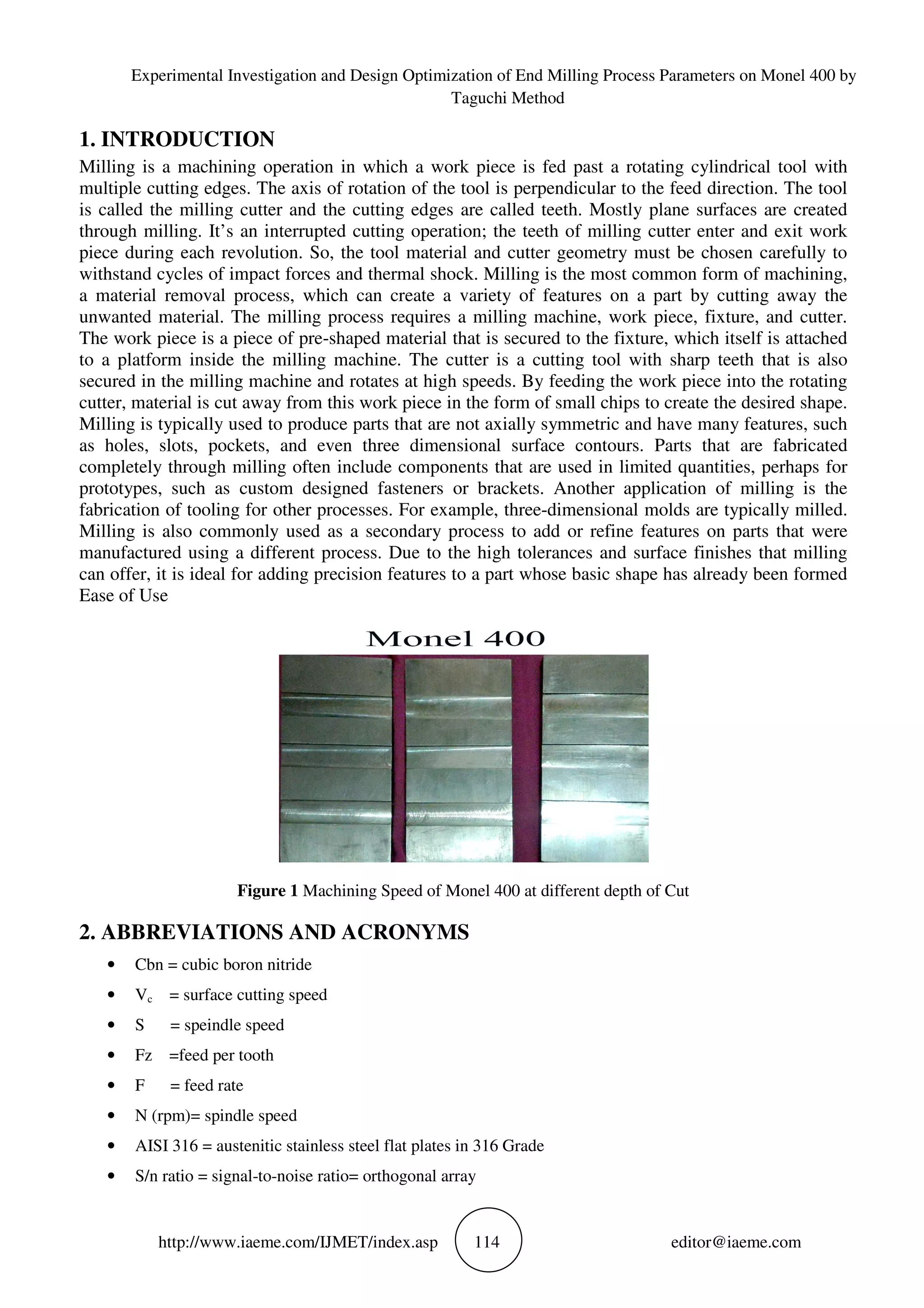
Figure 1 Machining Speed of Monel 400 at different depth of Cut
2. ABBREVIATIONS AND ACRONYMS
• Cbn = cubic boron nitride
• Vc = surface cutting speed
• S = speindle speed
• Fz =feed per tooth
• F = feed rate
• N (rpm)= spindle speed
• AISI 316 = austenitic stainless steel flat plates in 316 Grade
• S/n ratio = signal-to-noise ratio= orthogonal array
R. Giridharan, Pankaj Kumar, P. Vijayakumar and R. Tamilselvan
http://www.iaeme.com/IJMET/index.asp 115 editor@iaeme.com
• I = number of treatments
• N
t = total number of cases
3. UNITS
• mm/s = millimeter/Second
• rpm =Revolution per meter
• mm = millimeter
• mm/rev = millimeter/revolution
• mm3
/s = millimeter Cubic/Second
4. EQUATIONS
L9 = [(l-1) x p] +1
= [(3-1) x 3] +1 = 7 ≈ l9
Vc = Dcap x π x n
1000
fz = vf
n x Zc
SSTotal = SSError + SSTreatments
F= Variance between treatments
Variance within treatments
F= MSTreatments = SSTreatments/ (I-1)
MSError SSError/ (nT-I)
5. THE MILLING PROCESS PARAMETERS
Although there are many different types of milling cutter, understanding chip formation is
fundamental to the use of any of them. As the milling cutter rotates, the material to be cut is fed into it,
and each tooth of the cutter cuts away a small chip of material. Achieving the correct size of chip is of
critical importance. The size of this chip depends on several variables.
• Surface cutting speed (Vc): This is the speed at which each tooth cuts through the material as the tool
spins. This is measured either in meters per minute in metric countries, or surface feet per minute
(SFM) in America. Typical values for cutting speed are 166.666667mm/sec to 1000mm/sec for some
steels, and 100m/min and 10000mm/sec for aluminum. This should not be confused with the feed rate.
This value is also known as "tangential velocity."
• Spindle speed (S): This is the rotation speed of the tool, and is measured in revolutions per minute
(rpm). Typical values are from hundreds of rpm, up to tens of thousands of rpm.
• Feed per tooth (Fz): This is the distance the material is fed into the cutter as each tooth rotates. This
value is the size of the deepest cut the tooth will make.
• Feed rate (F): This is the speed at which the material is fed into the cutter. Typical values are from
20mm/min to 5000mm/min.
Experimental Investigation and Design Optimization of End Milling Process Parameters on Monel 400 by
Taguchi Method
http://www.iaeme.com/IJMET/index.asp 116 editor@iaeme.com
• Depth of cut: This is how deep the tool is under the surface of the material being cut (not shown on the
diagram). This will be the height of the chip produced. Typically, the depth of cut will be less than or
equal to the diameter of the cutting tool.
• Cutting speed – vc (m/min): This indicates the surface speed at diameter and forms a basic value for
calculating cutting data. Recommended cutting speeds for all materials and for different hex values are
available in the Main catalogue. Effective or true cutting speed. Indicates the surface speed at the
effective diameter (Dcap).This value is necessary for determining the true cutting data at the actual
depth of cut (ap). This is a particularly important value when using round insert cutters, ball nose end
mills and all cutters with larger corner radii, as well as cutters with an entering angle smaller than 90
degrees.
• Spindle speed – n (rpm): The number of revolutions the milling tool makes per minute on the spindle.
This is a machine oriented value, which is calculated from the recommended cutting speed value for an
operation.
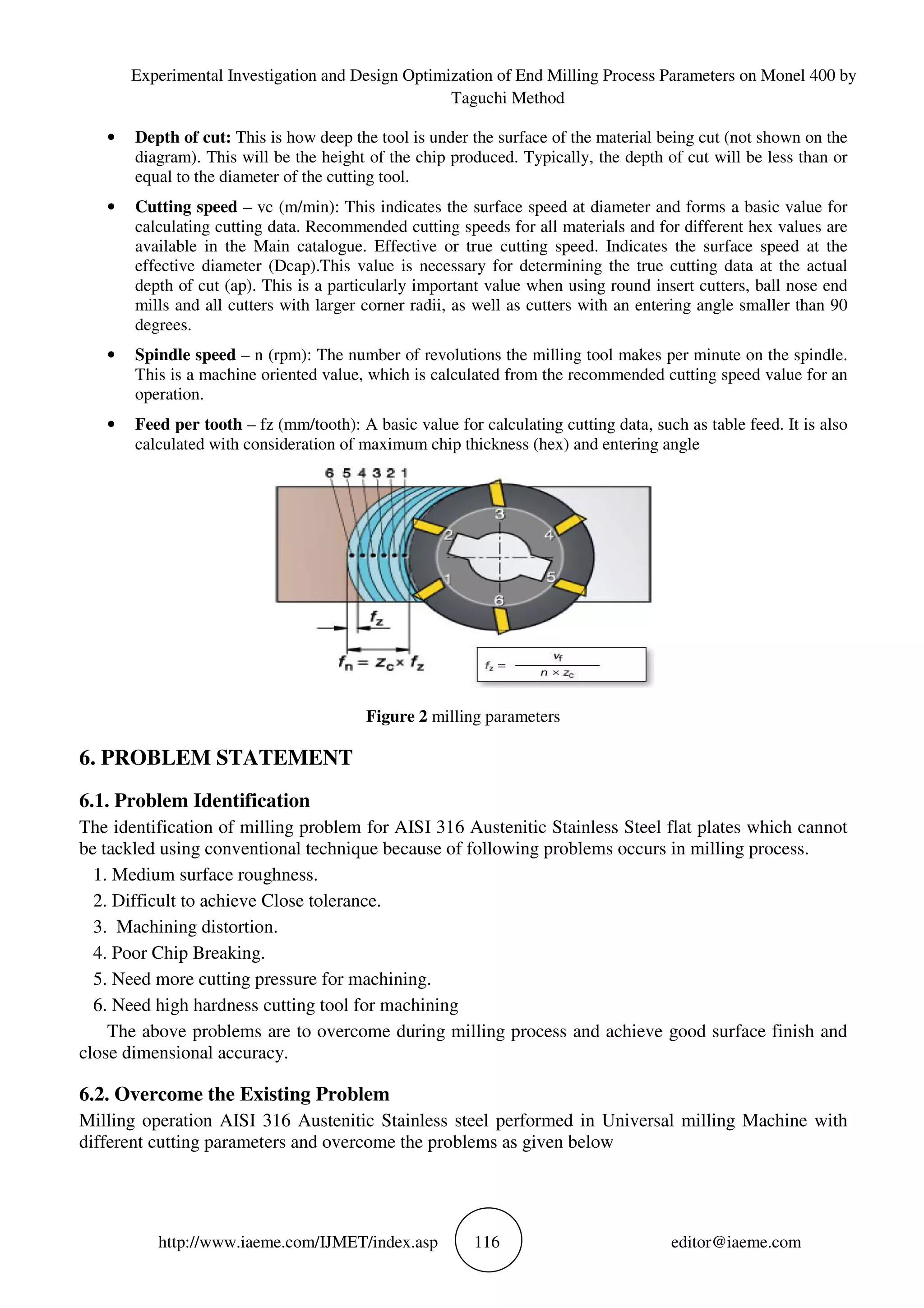
• Feed per tooth – fz (mm/tooth): A basic value for calculating cutting data, such as table feed. It is also
calculated with consideration of maximum chip thickness (hex) and entering angle
Figure 2 milling parameters
6. PROBLEM STATEMENT
6.1. Problem Identification
The identification of milling problem for AISI 316 Austenitic Stainless Steel flat plates which cannot
be tackled using conventional technique because of following problems occurs in milling process.
1. Medium surface roughness.
2. Difficult to achieve Close tolerance.
3. Machining distortion.
4. Poor Chip Breaking.
5. Need more cutting pressure for machining.
6. Need high hardness cutting tool for machining
The above problems are to overcome during milling process and achieve good surface finish and
close dimensional accuracy.
6.2. Overcome the Existing Problem
Milling operation AISI 316 Austenitic Stainless steel performed in Universal milling Machine with
different cutting parameters and overcome the problems as given below
R. Giridharan, Pankaj Kumar, P. Vijayakumar and R. Tamilselvan
http://www.iaeme.com/IJMET/index.asp 117 editor@iaeme.com
• In milling operation lower surface roughness is achieved through high spindle speed.
• High rate of metal removal is possible with optimum milling parameters.
• During milling operation can improves integrity and quality defects are reduced.
• Can improve machinability property in optimum milling parameters
• Optimum Feed rate can produce good surface finish.
• Close tolerance can achieve with optimum cutting parameters
7. METHODOLOGY
• State the problem
• State the objectives of experiments
• Select the factors that may influence the selected quality characteristics
• Identify quality and noise factors
• Select levels for the factors
• Select appropriate orthogonal array
• Select interactions that may influence the selected quality characteristics
• Conduct the tests described by trails in orthogonal array
• Analyze and interpret results of the experimental trails Conduct confirmation experiment
8. ACKNOWLEDGEMENT
I express my deep sense of gratitude to Chancellor of PRIST University, for his encouragement give to
us to complete the Master of technology in Mechanical Engineering.
My heartfelt thanks to the Dean, Faculty of Engineering & Technology, PRIST University, for his
constant encouragement.
I wish to express my sincere thanks to MR. P. VIJAYA KUMAR, HOD, and Department of
Mechanical Engineering, who has always been a source of inspiration for me.
I place on record, my sincere gratitude to my project guide Mr. PANKAJ KUMAR, Assistant
Professor, Department of Mechanical Engineering, for his valuable guidance and encouragement
extended to me.
I take this opportunity to record my sincere thanks to MY PARENTS for their unceasing
encouragement and support.
I also place my sense of gratitude to one and all who directly or indirectly have lent their helping
had in this venture.
Experimental Investigation and Design Optimization of End Milling Process Parameters on Monel 400 by
Taguchi Method
http://www.iaeme.com/IJMET/index.asp 118 editor@iaeme.com
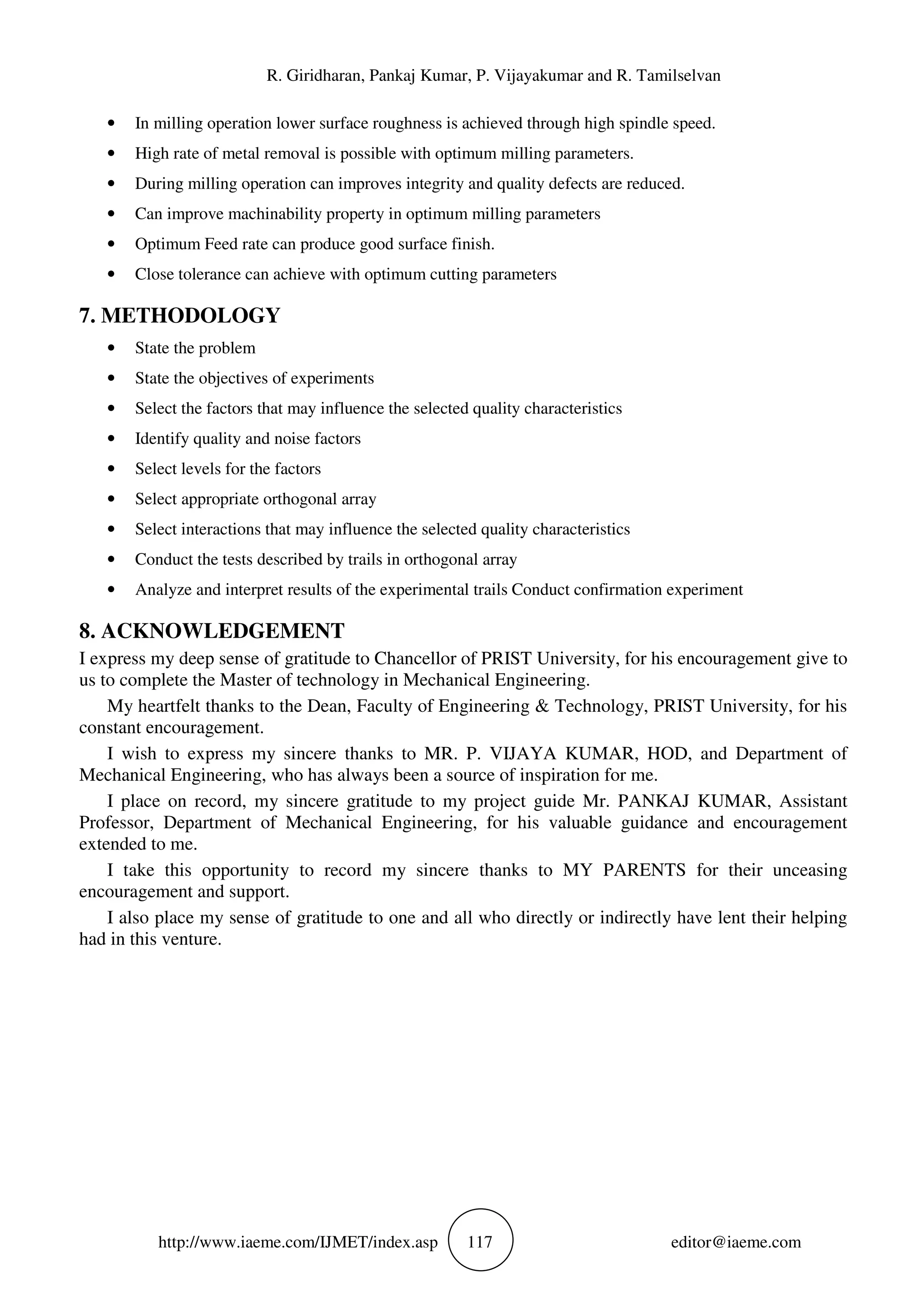
Table 1 Describe the Spindle Speed, Feed Rate and Depth of Cut
9. SURFACE ROUGHNESS
After conducting the experiments of milling operation on Monel 400 Plates (110x50x6mm) of surface
roughness values and metal removal rate are given.
Surface roughness
• Spindle speed is a dominating parameter of milling process.
• The optimum parameter of milling operation of Monel 400 plates were 600, 900, 1200 RPM of spindle
speed 0.001, 0.002,0.003mm of Feed and 0.2, 0.4, 0.6 mm Depth of cut
• However Monel 400 Steel plate having good machinability characteristic and Produce reasonable
surface finish.
• Obtained Good surface integrity and minimum wear occur during milling operation of Monel 400 steel
plates.
• During milling processes all parameters are interact and dependent able the milling operation.
Table 2 Describe the Spindle Speed, Feed Rate and Depth of Cut
Test No. Spindle speed(Rpm) Feed rate(mm/rev) Depth of cut (mm)
1 600 0.001 0.2
2 900 0.002 0.4
3 1200 0.003 0.6
4 600 0.001 0.2
5 900 0.002 0.4
6 1200 0.003 0.6
7 600 0.001 0.2
8 900 0.002 0.4
9 1200 0.003 0.6
Level Spindle speed Feed rate Depth of cut
1 2.272 2.579 3.111
2 3.036 2.743 2.769
3 3.030 3.016 2.458
Delta 0.764 0.436 0.653
Rank 1 3 2
R. Giridharan, Pankaj Kumar, P. Vijayakumar and R. Tamilselvan
http://www.iaeme.com/IJMET/index.asp 119 editor@iaeme.com
MeanofSNratios
321
3.0
2.8
2.6
2.4
2.2
321
321
3.0
2.8
2.6
2.4
2.2
spindle speed feed rate
depth of cut
Main Effects Plot (data means) for SN ratios
Signal-to-noise: S maller is better
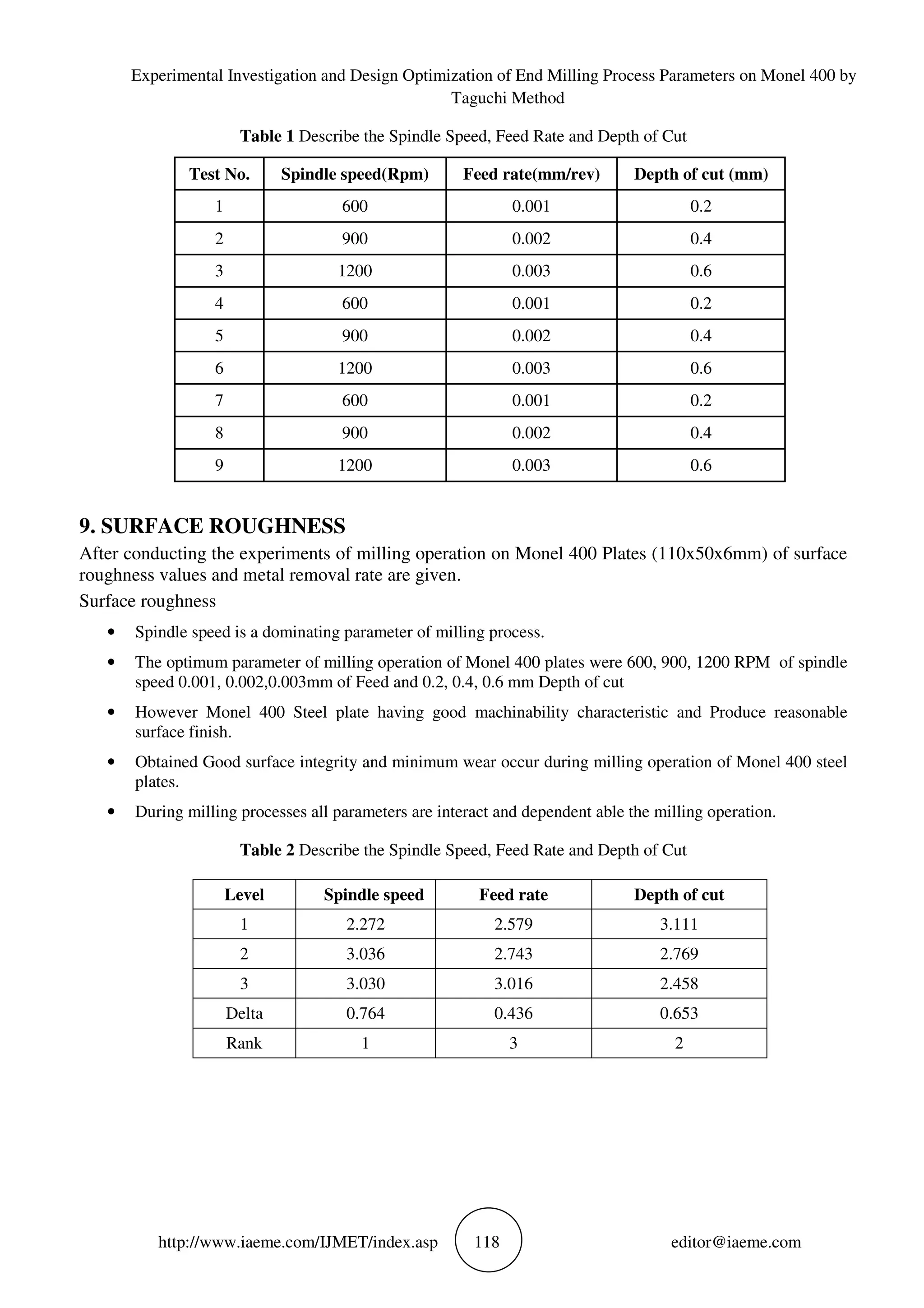
Figure 3 Main effect plot for Surface roughness
Table 3 Analysis of Variance for Surface roughness
Table 3 shows that (from F test bigger value) spindle speed is a dominating parameter in milling
process of Monel 400 plates
spindle spe e d
fe e d r a te
de pth of cut
321 321
0.75
0.70
0.65
0.75
0.70
0.65
spindle
3
speed
1
2
feed
3
rate
1
2
Interaction Plot (data means) for Ra
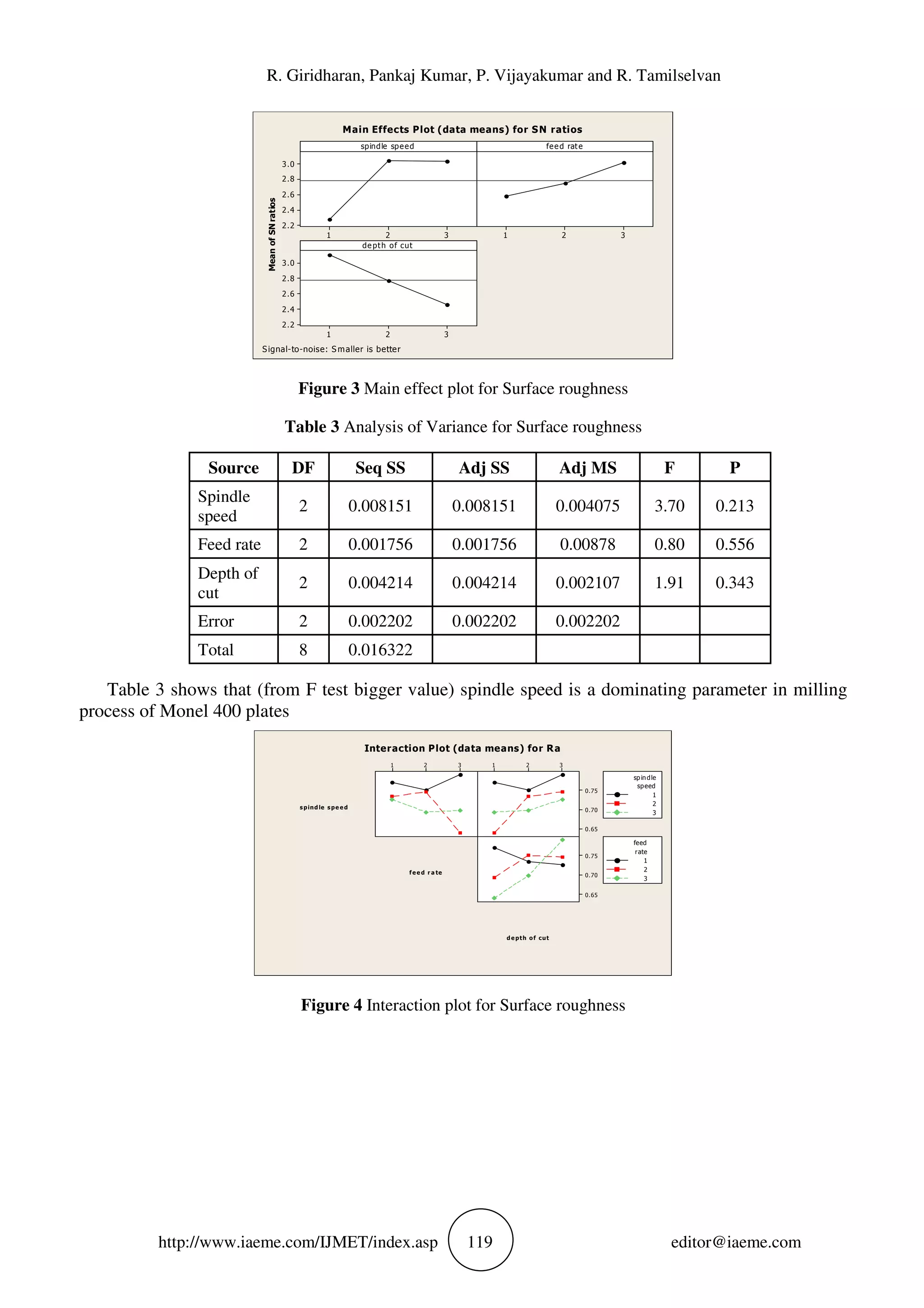
Figure 4 Interaction plot for Surface roughness
Source DF Seq SS Adj SS Adj MS F P
Spindle
speed
2 0.008151 0.008151 0.004075 3.70 0.213
Feed rate 2 0.001756 0.001756 0.00878 0.80 0.556
Depth of
cut
2 0.004214 0.004214 0.002107 1.91 0.343
Error 2 0.002202 0.002202 0.002202
Total 8 0.016322
Experimental Investigation and Design Optimization of End Milling Process Parameters on Monel 400 by
Taguchi Method
http://www.iaeme.com/IJMET/index.asp 120 editor@iaeme.com
depth of cut
spindlespeed
3.02.52.01.51.0
3.0
2.5
2.0
1.5
1.0
Ra
0.675 - 0.700
0.700 - 0.725
0.725 - 0.750
0.750 - 0.775
> 0.775
< 0.650
0.650 - 0.675
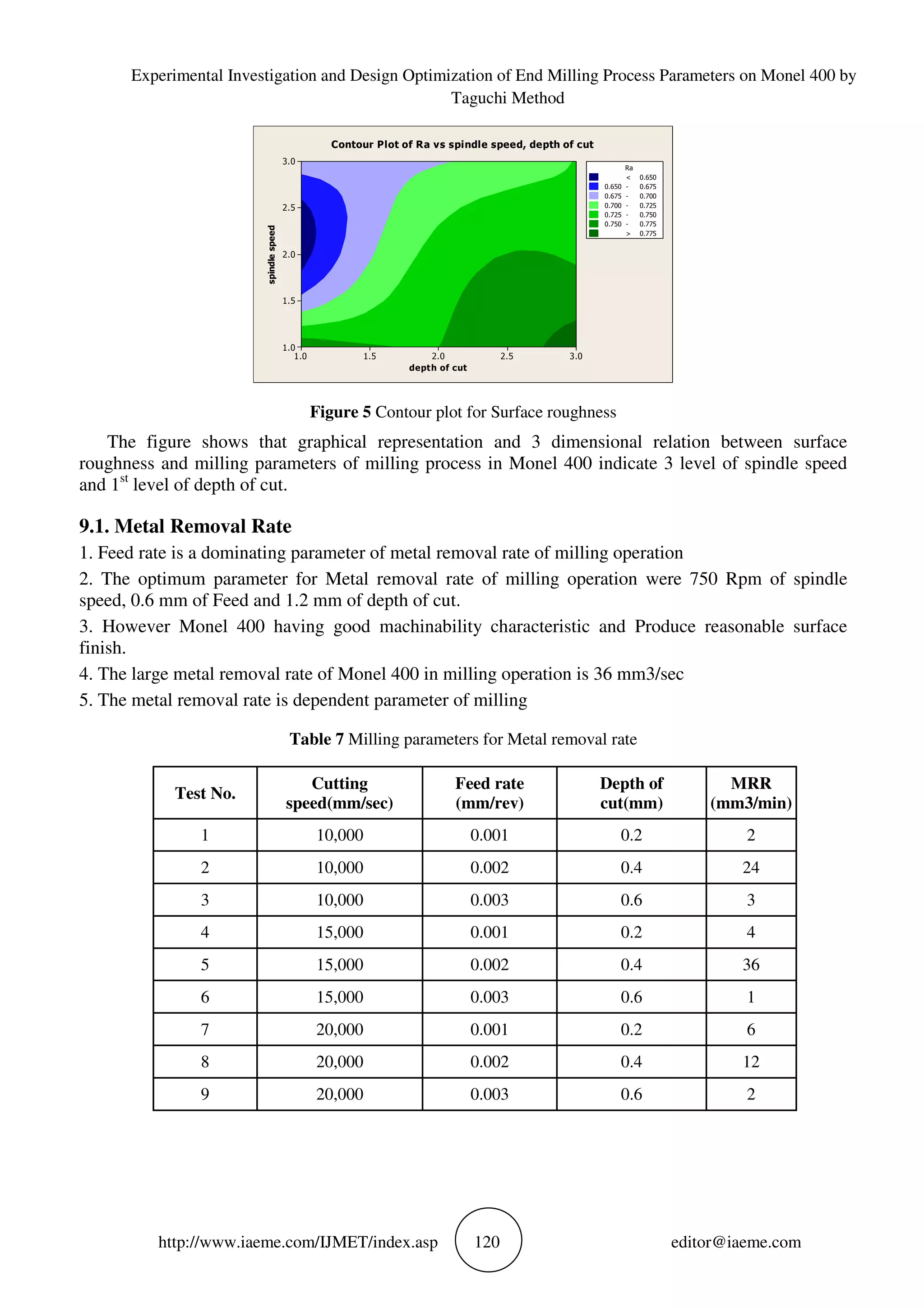
Contour Plot of Ra vs spindle speed, depth of cut
Figure 5 Contour plot for Surface roughness
The figure shows that graphical representation and 3 dimensional relation between surface
roughness and milling parameters of milling process in Monel 400 indicate 3 level of spindle speed
and 1st
level of depth of cut.
9.1. Metal Removal Rate
1. Feed rate is a dominating parameter of metal removal rate of milling operation
2. The optimum parameter for Metal removal rate of milling operation were 750 Rpm of spindle
speed, 0.6 mm of Feed and 1.2 mm of depth of cut.
3. However Monel 400 having good machinability characteristic and Produce reasonable surface
finish.
4. The large metal removal rate of Monel 400 in milling operation is 36 mm3/sec
5. The metal removal rate is dependent parameter of milling
Table 7 Milling parameters for Metal removal rate
Test No.
Cutting
speed(mm/sec)
Feed rate
(mm/rev)
Depth of
cut(mm)
MRR
(mm3/min)
1 10,000 0.001 0.2 2
2 10,000 0.002 0.4 24
3 10,000 0.003 0.6 3
4 15,000 0.001 0.2 4
5 15,000 0.002 0.4 36
6 15,000 0.003 0.6 1
7 20,000 0.001 0.2 6
8 20,000 0.002 0.4 12
9 20,000 0.003 0.6 2
R. Giridharan, Pankaj Kumar, P. Vijayakumar and R. Tamilselvan
http://www.iaeme.com/IJMET/index.asp 121 editor@iaeme.com
Table 8 S/N ratio for Metal removal rate
Table 8 shows that feed rate is a dominating parameter of metal removal rate of milling process on
Monel 400
depth of cut
feedrate
3.02.52.01.51.0
3.0
2.5
2.0
1.5
1.0
MRR
10 - 15
15 - 20
20 - 25
25 - 30
30 - 35
<
> 35
5
5 - 10
Contour Plot of MRR vs feed rate, depth of cut
Figure 6 Contour plot for MRR
The figure shows that graphical and 3 dimensional representation of metal removal rate of milling
process in 3 rd level of depth of cut and 2 nd level of feed rate .this is optimum parameter of metal
removal rate.
10. CONCLUSION
Optimization of process is done for Monel 400 (by response surface methodology and taguchi method
to get better surface roughness).The regression provides very good fit and can be used to predict
roughness throughout the reason of Experimentation’s. The Coefficient of determination of so
obtained is high (0.965 or 0.952) which is very good.
REFERENCES
[1] G.Akhyar and C.H.Che Haron, 2008,”Application of Taguchi method in the Optimization of
Turning Parameters for surface roughness”, International journal of science engineering and
technology Vol.1, No.3. 1.
[2] Taguchi methods in the optimization of cutting parameters for surface finish and whole diameter
accuracy in dry drilling process”, international journal of advanced manufacturing technology.
International journal of Advanced manufacturing Technology, Vol.29, pp.867-878.
[3] Ching-kao Chang and Lu.H.S, 2006,”study on the prediction model of surface roughness for side
milling operations”, International journal of Advanced manufacturing Technology, Vol.29, pp.867-
878.
Level Spindle speed Feed rate Depth of cut
1 14.389 11.208 9.201
2 14.389 26,771 15.222
3 14.389 5.188 18.744
Delta 0.000 21.584 9.542
Rank 3 1 2
Experimental Investigation and Design Optimization of End Milling Process Parameters on Monel 400 by
Taguchi Method
http://www.iaeme.com/IJMET/index.asp 122 editor@iaeme.com
[4] Alam.S, Nurul Amin.A.K.M and Patwari.A.U, 2008, “Surface roughness prediction model in high
speed end-milling of Ti-6Al-4V”, Competitive Manufacturing, Proc of the 2ndIntl & 23rd
AIMTDR conf.
[5] Pravin Kumar.S, Venkatakrishnan.R And Vignesh Babu.S, Process Failure Mode and Effect
Analysis on End Milling Process- A Critical Study, International Journal of Mechanical
Engineering and Technology, 4(5), 2013, pp. 191–199.
[6] Cemal Cakir.M, Cihat Ensarioglu and llker demirayak, 2009,”Mathematical modeling of surface
roughness for evaluating the effects of cutting parameters and coating material”, Journal of
materials processing technology, Vol.209, pp.102-109.
[7] Suresh.P.V.S, Venkateswara Rao.P and Deshmukh.S.G, 2002,”A genetic algorithm approach for
optimization of surface roughness prediction model”, International journal of machine tools and
manufacture, Vol.42, pp.675-680.
[8] Yung-Kuang Yang,Ming-Tsam Chuang and Show-Shyan Lin,2009,”Optimization of dry machining
parameters for high-purity graphite in end milling process via design of experiments methods”,
Journal of Materials Processing Technology,Vol 209,PP.4395-4400.
[9] Kareem Idan Fadheel and Dr. Mohammad Tariq, Optimization of End Milling Parameters of AISI
1055 by Taguchi Method, International Journal of Advanced Research in Engineering and
Technology (IJARET), 5(3), 2014, pp. 09–20
[10] Babur Ozcelik and Mahmut Bayramogulu, 2006,”The statistical modeling of surface roughness for
side milling operations”, International Journal of Advanced manufacturing Technology, Vol.29,
pp.867-878.
[11] Zhang JZ,Chen JC,Kirby ED (2007),Surface Roughness Optimization in an End-Milling Operation
Using the Taguchi Design Method,J.Mat.Processing Technol.,187(4):233-239.
[12] El-Sonbaty.I.A, Khashaba.U.A, Selmy.A.l and Ali.I.A, 2008,”Prediction of surface roughness
profiles for milled surfaces using an artificial neural network and fractal geometry approach”,
Journal of Materials Processing Technology, Vol.200, pp.271-278.

EXPERIMENTAL INVESTIGATION AND DESIGN OPTIMIZATION OF END MILLING PROCESS PARAMETERS ON MONEL 400 BY TAGUCHI METHOD

  • 1.
    http://www.iaeme.com/IJMET/index.asp 113 editor@iaeme.com InternationalJournal of Mechanical Engineering and Technology (IJMET) Volume 8, Issue 2, February 2017, pp. 113–122 Article ID: IJMET_08_02_014 Available online at http://www.iaeme.com/IJMET/issues.asp?JType=IJMET&VType=8&IType=2 ISSN Print: 0976-6340 and ISSN Online: 0976-6359 © IAEME Publication EXPERIMENTAL INVESTIGATION AND DESIGN OPTIMIZATION OF END MILLING PROCESS PARAMETERS ON MONEL 400 BY TAGUCHI METHOD R. Giridharan PG Scholar, Department of Mechanical Engineering, PRIST University, Thanjavur, TN, India Pankaj Kumar Assistant Professor, Department of Mechanical Engineering, PRIST University, Thanjavur, TN, India P. Vijayakumar Assistant Professor, Department of Mechanical Engineering, PRIST University, Thanjavur, TN, India R. Tamilselvan Assistant Professor, Department of Mechanical Engineering, PRIST University, Thanjavur, TN, India ABSTRACT Monel 400 is a precipitation hard enable, Nickel copper alloy with corrosion resistance. Typical applications for Monel 400 include fasteners, springs, chain, pump, impeller and Valve components due their excellent Mechanical properties. The continuous development of carbide milling cutter and its coating technology are great concern with manufacturing Environment. CBN coating play an important role in milling cutter to produce better surface finish and tool life with minimum cost. In this paper deals investigation of End Milling operation of Monel 400 plates with different process parameters like spindle speed, feed rate and depth of cut and to find optimal machining conditions of minimum surface roughness(Ra), Material removal designed and conducted based on design of Experiments using L9 orthogonal array and Optimized by Taguchi Method. Key words: End milling, Monel 400, process parameters, Taguchi Method. Cite this Article: R. Giridharan, Pankaj Kumar, P. Vijayakumar and R. Tamilselvan. Experimental Investigation and Design Optimization of End Milling Process Parameters on Monel 400 by Taguchi Method. International Journal of Mechanical Engineering and Technology, 8(2), 2017, pp. 113–122. http://www.iaeme.com/ijmet/issues.asp?JType=IJMET&VType=8&IType=2
  • 2.
    Experimental Investigation andDesign Optimization of End Milling Process Parameters on Monel 400 by Taguchi Method http://www.iaeme.com/IJMET/index.asp 114 editor@iaeme.com 1. INTRODUCTION Milling is a machining operation in which a work piece is fed past a rotating cylindrical tool with multiple cutting edges. The axis of rotation of the tool is perpendicular to the feed direction. The tool is called the milling cutter and the cutting edges are called teeth. Mostly plane surfaces are created through milling. It’s an interrupted cutting operation; the teeth of milling cutter enter and exit work piece during each revolution. So, the tool material and cutter geometry must be chosen carefully to withstand cycles of impact forces and thermal shock. Milling is the most common form of machining, a material removal process, which can create a variety of features on a part by cutting away the unwanted material. The milling process requires a milling machine, work piece, fixture, and cutter. The work piece is a piece of pre-shaped material that is secured to the fixture, which itself is attached to a platform inside the milling machine. The cutter is a cutting tool with sharp teeth that is also secured in the milling machine and rotates at high speeds. By feeding the work piece into the rotating cutter, material is cut away from this work piece in the form of small chips to create the desired shape. Milling is typically used to produce parts that are not axially symmetric and have many features, such as holes, slots, pockets, and even three dimensional surface contours. Parts that are fabricated completely through milling often include components that are used in limited quantities, perhaps for prototypes, such as custom designed fasteners or brackets. Another application of milling is the fabrication of tooling for other processes. For example, three-dimensional molds are typically milled. Milling is also commonly used as a secondary process to add or refine features on parts that were manufactured using a different process. Due to the high tolerances and surface finishes that milling can offer, it is ideal for adding precision features to a part whose basic shape has already been formed Ease of Use Figure 1 Machining Speed of Monel 400 at different depth of Cut 2. ABBREVIATIONS AND ACRONYMS • Cbn = cubic boron nitride • Vc = surface cutting speed • S = speindle speed • Fz =feed per tooth • F = feed rate • N (rpm)= spindle speed • AISI 316 = austenitic stainless steel flat plates in 316 Grade • S/n ratio = signal-to-noise ratio= orthogonal array
  • 3.
    R. Giridharan, PankajKumar, P. Vijayakumar and R. Tamilselvan http://www.iaeme.com/IJMET/index.asp 115 editor@iaeme.com • I = number of treatments • N t = total number of cases 3. UNITS • mm/s = millimeter/Second • rpm =Revolution per meter • mm = millimeter • mm/rev = millimeter/revolution • mm3 /s = millimeter Cubic/Second 4. EQUATIONS L9 = [(l-1) x p] +1 = [(3-1) x 3] +1 = 7 ≈ l9 Vc = Dcap x π x n 1000 fz = vf n x Zc SSTotal = SSError + SSTreatments F= Variance between treatments Variance within treatments F= MSTreatments = SSTreatments/ (I-1) MSError SSError/ (nT-I) 5. THE MILLING PROCESS PARAMETERS Although there are many different types of milling cutter, understanding chip formation is fundamental to the use of any of them. As the milling cutter rotates, the material to be cut is fed into it, and each tooth of the cutter cuts away a small chip of material. Achieving the correct size of chip is of critical importance. The size of this chip depends on several variables. • Surface cutting speed (Vc): This is the speed at which each tooth cuts through the material as the tool spins. This is measured either in meters per minute in metric countries, or surface feet per minute (SFM) in America. Typical values for cutting speed are 166.666667mm/sec to 1000mm/sec for some steels, and 100m/min and 10000mm/sec for aluminum. This should not be confused with the feed rate. This value is also known as "tangential velocity." • Spindle speed (S): This is the rotation speed of the tool, and is measured in revolutions per minute (rpm). Typical values are from hundreds of rpm, up to tens of thousands of rpm. • Feed per tooth (Fz): This is the distance the material is fed into the cutter as each tooth rotates. This value is the size of the deepest cut the tooth will make. • Feed rate (F): This is the speed at which the material is fed into the cutter. Typical values are from 20mm/min to 5000mm/min.
  • 4.
    Experimental Investigation andDesign Optimization of End Milling Process Parameters on Monel 400 by Taguchi Method http://www.iaeme.com/IJMET/index.asp 116 editor@iaeme.com • Depth of cut: This is how deep the tool is under the surface of the material being cut (not shown on the diagram). This will be the height of the chip produced. Typically, the depth of cut will be less than or equal to the diameter of the cutting tool. • Cutting speed – vc (m/min): This indicates the surface speed at diameter and forms a basic value for calculating cutting data. Recommended cutting speeds for all materials and for different hex values are available in the Main catalogue. Effective or true cutting speed. Indicates the surface speed at the effective diameter (Dcap).This value is necessary for determining the true cutting data at the actual depth of cut (ap). This is a particularly important value when using round insert cutters, ball nose end mills and all cutters with larger corner radii, as well as cutters with an entering angle smaller than 90 degrees. • Spindle speed – n (rpm): The number of revolutions the milling tool makes per minute on the spindle. This is a machine oriented value, which is calculated from the recommended cutting speed value for an operation. • Feed per tooth – fz (mm/tooth): A basic value for calculating cutting data, such as table feed. It is also calculated with consideration of maximum chip thickness (hex) and entering angle Figure 2 milling parameters 6. PROBLEM STATEMENT 6.1. Problem Identification The identification of milling problem for AISI 316 Austenitic Stainless Steel flat plates which cannot be tackled using conventional technique because of following problems occurs in milling process. 1. Medium surface roughness. 2. Difficult to achieve Close tolerance. 3. Machining distortion. 4. Poor Chip Breaking. 5. Need more cutting pressure for machining. 6. Need high hardness cutting tool for machining The above problems are to overcome during milling process and achieve good surface finish and close dimensional accuracy. 6.2. Overcome the Existing Problem Milling operation AISI 316 Austenitic Stainless steel performed in Universal milling Machine with different cutting parameters and overcome the problems as given below
  • 5.
    R. Giridharan, PankajKumar, P. Vijayakumar and R. Tamilselvan http://www.iaeme.com/IJMET/index.asp 117 editor@iaeme.com • In milling operation lower surface roughness is achieved through high spindle speed. • High rate of metal removal is possible with optimum milling parameters. • During milling operation can improves integrity and quality defects are reduced. • Can improve machinability property in optimum milling parameters • Optimum Feed rate can produce good surface finish. • Close tolerance can achieve with optimum cutting parameters 7. METHODOLOGY • State the problem • State the objectives of experiments • Select the factors that may influence the selected quality characteristics • Identify quality and noise factors • Select levels for the factors • Select appropriate orthogonal array • Select interactions that may influence the selected quality characteristics • Conduct the tests described by trails in orthogonal array • Analyze and interpret results of the experimental trails Conduct confirmation experiment 8. ACKNOWLEDGEMENT I express my deep sense of gratitude to Chancellor of PRIST University, for his encouragement give to us to complete the Master of technology in Mechanical Engineering. My heartfelt thanks to the Dean, Faculty of Engineering & Technology, PRIST University, for his constant encouragement. I wish to express my sincere thanks to MR. P. VIJAYA KUMAR, HOD, and Department of Mechanical Engineering, who has always been a source of inspiration for me. I place on record, my sincere gratitude to my project guide Mr. PANKAJ KUMAR, Assistant Professor, Department of Mechanical Engineering, for his valuable guidance and encouragement extended to me. I take this opportunity to record my sincere thanks to MY PARENTS for their unceasing encouragement and support. I also place my sense of gratitude to one and all who directly or indirectly have lent their helping had in this venture.
  • 6.
    Experimental Investigation andDesign Optimization of End Milling Process Parameters on Monel 400 by Taguchi Method http://www.iaeme.com/IJMET/index.asp 118 editor@iaeme.com Table 1 Describe the Spindle Speed, Feed Rate and Depth of Cut 9. SURFACE ROUGHNESS After conducting the experiments of milling operation on Monel 400 Plates (110x50x6mm) of surface roughness values and metal removal rate are given. Surface roughness • Spindle speed is a dominating parameter of milling process. • The optimum parameter of milling operation of Monel 400 plates were 600, 900, 1200 RPM of spindle speed 0.001, 0.002,0.003mm of Feed and 0.2, 0.4, 0.6 mm Depth of cut • However Monel 400 Steel plate having good machinability characteristic and Produce reasonable surface finish. • Obtained Good surface integrity and minimum wear occur during milling operation of Monel 400 steel plates. • During milling processes all parameters are interact and dependent able the milling operation. Table 2 Describe the Spindle Speed, Feed Rate and Depth of Cut Test No. Spindle speed(Rpm) Feed rate(mm/rev) Depth of cut (mm) 1 600 0.001 0.2 2 900 0.002 0.4 3 1200 0.003 0.6 4 600 0.001 0.2 5 900 0.002 0.4 6 1200 0.003 0.6 7 600 0.001 0.2 8 900 0.002 0.4 9 1200 0.003 0.6 Level Spindle speed Feed rate Depth of cut 1 2.272 2.579 3.111 2 3.036 2.743 2.769 3 3.030 3.016 2.458 Delta 0.764 0.436 0.653 Rank 1 3 2
  • 7.
    R. Giridharan, PankajKumar, P. Vijayakumar and R. Tamilselvan http://www.iaeme.com/IJMET/index.asp 119 editor@iaeme.com MeanofSNratios 321 3.0 2.8 2.6 2.4 2.2 321 321 3.0 2.8 2.6 2.4 2.2 spindle speed feed rate depth of cut Main Effects Plot (data means) for SN ratios Signal-to-noise: S maller is better Figure 3 Main effect plot for Surface roughness Table 3 Analysis of Variance for Surface roughness Table 3 shows that (from F test bigger value) spindle speed is a dominating parameter in milling process of Monel 400 plates spindle spe e d fe e d r a te de pth of cut 321 321 0.75 0.70 0.65 0.75 0.70 0.65 spindle 3 speed 1 2 feed 3 rate 1 2 Interaction Plot (data means) for Ra Figure 4 Interaction plot for Surface roughness Source DF Seq SS Adj SS Adj MS F P Spindle speed 2 0.008151 0.008151 0.004075 3.70 0.213 Feed rate 2 0.001756 0.001756 0.00878 0.80 0.556 Depth of cut 2 0.004214 0.004214 0.002107 1.91 0.343 Error 2 0.002202 0.002202 0.002202 Total 8 0.016322
  • 8.
    Experimental Investigation andDesign Optimization of End Milling Process Parameters on Monel 400 by Taguchi Method http://www.iaeme.com/IJMET/index.asp 120 editor@iaeme.com depth of cut spindlespeed 3.02.52.01.51.0 3.0 2.5 2.0 1.5 1.0 Ra 0.675 - 0.700 0.700 - 0.725 0.725 - 0.750 0.750 - 0.775 > 0.775 < 0.650 0.650 - 0.675 Contour Plot of Ra vs spindle speed, depth of cut Figure 5 Contour plot for Surface roughness The figure shows that graphical representation and 3 dimensional relation between surface roughness and milling parameters of milling process in Monel 400 indicate 3 level of spindle speed and 1st level of depth of cut. 9.1. Metal Removal Rate 1. Feed rate is a dominating parameter of metal removal rate of milling operation 2. The optimum parameter for Metal removal rate of milling operation were 750 Rpm of spindle speed, 0.6 mm of Feed and 1.2 mm of depth of cut. 3. However Monel 400 having good machinability characteristic and Produce reasonable surface finish. 4. The large metal removal rate of Monel 400 in milling operation is 36 mm3/sec 5. The metal removal rate is dependent parameter of milling Table 7 Milling parameters for Metal removal rate Test No. Cutting speed(mm/sec) Feed rate (mm/rev) Depth of cut(mm) MRR (mm3/min) 1 10,000 0.001 0.2 2 2 10,000 0.002 0.4 24 3 10,000 0.003 0.6 3 4 15,000 0.001 0.2 4 5 15,000 0.002 0.4 36 6 15,000 0.003 0.6 1 7 20,000 0.001 0.2 6 8 20,000 0.002 0.4 12 9 20,000 0.003 0.6 2
  • 9.
    R. Giridharan, PankajKumar, P. Vijayakumar and R. Tamilselvan http://www.iaeme.com/IJMET/index.asp 121 editor@iaeme.com Table 8 S/N ratio for Metal removal rate Table 8 shows that feed rate is a dominating parameter of metal removal rate of milling process on Monel 400 depth of cut feedrate 3.02.52.01.51.0 3.0 2.5 2.0 1.5 1.0 MRR 10 - 15 15 - 20 20 - 25 25 - 30 30 - 35 < > 35 5 5 - 10 Contour Plot of MRR vs feed rate, depth of cut Figure 6 Contour plot for MRR The figure shows that graphical and 3 dimensional representation of metal removal rate of milling process in 3 rd level of depth of cut and 2 nd level of feed rate .this is optimum parameter of metal removal rate. 10. CONCLUSION Optimization of process is done for Monel 400 (by response surface methodology and taguchi method to get better surface roughness).The regression provides very good fit and can be used to predict roughness throughout the reason of Experimentation’s. The Coefficient of determination of so obtained is high (0.965 or 0.952) which is very good. REFERENCES [1] G.Akhyar and C.H.Che Haron, 2008,”Application of Taguchi method in the Optimization of Turning Parameters for surface roughness”, International journal of science engineering and technology Vol.1, No.3. 1. [2] Taguchi methods in the optimization of cutting parameters for surface finish and whole diameter accuracy in dry drilling process”, international journal of advanced manufacturing technology. International journal of Advanced manufacturing Technology, Vol.29, pp.867-878. [3] Ching-kao Chang and Lu.H.S, 2006,”study on the prediction model of surface roughness for side milling operations”, International journal of Advanced manufacturing Technology, Vol.29, pp.867- 878. Level Spindle speed Feed rate Depth of cut 1 14.389 11.208 9.201 2 14.389 26,771 15.222 3 14.389 5.188 18.744 Delta 0.000 21.584 9.542 Rank 3 1 2
  • 10.
    Experimental Investigation andDesign Optimization of End Milling Process Parameters on Monel 400 by Taguchi Method http://www.iaeme.com/IJMET/index.asp 122 editor@iaeme.com [4] Alam.S, Nurul Amin.A.K.M and Patwari.A.U, 2008, “Surface roughness prediction model in high speed end-milling of Ti-6Al-4V”, Competitive Manufacturing, Proc of the 2ndIntl & 23rd AIMTDR conf. [5] Pravin Kumar.S, Venkatakrishnan.R And Vignesh Babu.S, Process Failure Mode and Effect Analysis on End Milling Process- A Critical Study, International Journal of Mechanical Engineering and Technology, 4(5), 2013, pp. 191–199. [6] Cemal Cakir.M, Cihat Ensarioglu and llker demirayak, 2009,”Mathematical modeling of surface roughness for evaluating the effects of cutting parameters and coating material”, Journal of materials processing technology, Vol.209, pp.102-109. [7] Suresh.P.V.S, Venkateswara Rao.P and Deshmukh.S.G, 2002,”A genetic algorithm approach for optimization of surface roughness prediction model”, International journal of machine tools and manufacture, Vol.42, pp.675-680. [8] Yung-Kuang Yang,Ming-Tsam Chuang and Show-Shyan Lin,2009,”Optimization of dry machining parameters for high-purity graphite in end milling process via design of experiments methods”, Journal of Materials Processing Technology,Vol 209,PP.4395-4400. [9] Kareem Idan Fadheel and Dr. Mohammad Tariq, Optimization of End Milling Parameters of AISI 1055 by Taguchi Method, International Journal of Advanced Research in Engineering and Technology (IJARET), 5(3), 2014, pp. 09–20 [10] Babur Ozcelik and Mahmut Bayramogulu, 2006,”The statistical modeling of surface roughness for side milling operations”, International Journal of Advanced manufacturing Technology, Vol.29, pp.867-878. [11] Zhang JZ,Chen JC,Kirby ED (2007),Surface Roughness Optimization in an End-Milling Operation Using the Taguchi Design Method,J.Mat.Processing Technol.,187(4):233-239. [12] El-Sonbaty.I.A, Khashaba.U.A, Selmy.A.l and Ali.I.A, 2008,”Prediction of surface roughness profiles for milled surfaces using an artificial neural network and fractal geometry approach”, Journal of Materials Processing Technology, Vol.200, pp.271-278.