EXPERIENCE:
BREAKING DOWN
THE BUZZWORD
R E V O L U N C H E O N
2019-03-19 1
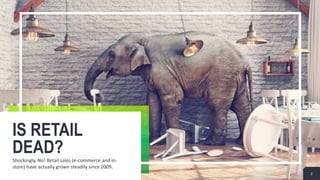
IS RETAIL
DEAD?Shockingly, No! Retail sales (e-commerce and in-
store) have actually grown steadily since 2009.
2
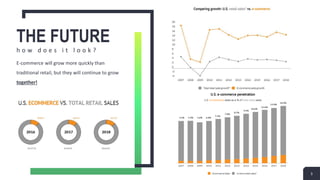
THE FUTURE
h o w d o e s i t l o o k ?
E-commerce will grow more quickly than
traditional retail, but they will continue to grow
together!
3
WHY NOW?c h a n g i n g c o n s u m e r b e h a v i o r s
• E-commerce revolution and rise of digital technology changing
consumer expectations, shifting function of stores toward useful and
entertaining customer experiences
• Growing demand for mixed use environments, rather than dedicated
shopping malls – desire to be within walking distance
• Changing demographics such as aging population and increased
urbanization.
• Growing desire for leisure and entertainment that cannot be satisfied
online.
4Independent study by McKinsey & Co.
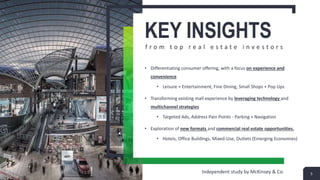
KEY INSIGHTS
f r o m t o p r e a l e s t a t e i n v e s t o r s
• Differentiating consumer offering, with a focus on experience and
convenience
• Leisure + Entertainment, Fine Dining, Small Shops + Pop Ups
• Transforming existing mall experience by leveraging technology and
multichannel strategies
• Targeted Ads, Address Pain Points - Parking + Navigation
• Exploration of new formats and commercial real estate opportunities.
• Hotels, Office Buildings, Mixed-Use, Outlets (Emerging Economies)
5Independent study by McKinsey & Co.
EXPERIENCE +
CONVENIENCE
6
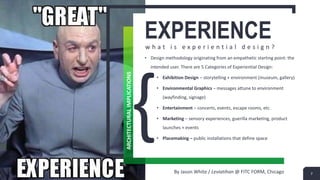
EXPERIENCEw h a t i s e x p e r i e n t i a l d e s i g n ?
• Design methodology originating from an empathetic starting point: the
intended user. There are 5 Categories of Experiential Design:
• Exhibition Design – storytelling + environment (museum, gallery)
• Environmental Graphics – messages attune to environment
(wayfinding, signage)
• Entertainment – concerts, events, escape rooms, etc.
• Marketing – sensory experiences, guerilla marketing, product
launches + events
• Placemaking – public installations that define space
7By Jason White / Leviatihan @ FITC FORM, Chicago
ARCHITECTURALIMPLICATIONS
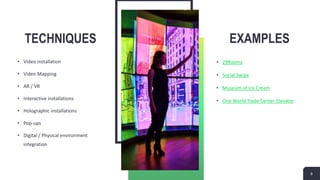
TECHNIQUES
• Video installation
• Video Mapping
• AR / VR
• Interactive installations
• Holographic installations
• Pop-ups
• Digital / Physical environment
integration
EXAMPLES
• 29Rooms
• Social Swipe
• Museum of Ice Cream
• One World Trade Center Elevator
8
NIKE LIVE
m e l r o s e , w e s t h o l l y w o o d
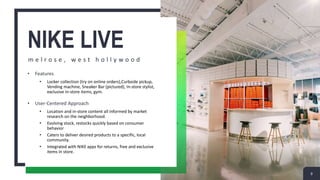
• Features
• Locker collection (try on online orders),Curbside pickup,
Vending machine, Sneaker Bar (pictured), In-store stylist,
exclusive in-store items, gym.
• User-Centered Approach
• Location and in-store content all informed by market
research on the neighborhood.
• Evolving stock, restocks quickly based on consumer
behavior
• Caters to deliver desired products to a specific, local
community.
• Integrated with NIKE apps for returns, free and exclusive
items in store.
9
NIKE NYC
f i f t h a v e n u e , n e w y o r k
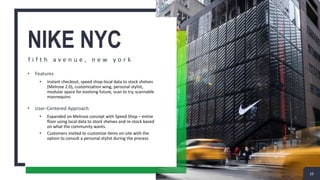
• Features
• Instant checkout, speed shop-local data to stock shelves
(Melrose 2.0), customization wing, personal stylist,
modular space for evolving future, scan to try, scannable
mannequins
• User-Centered Approach
• Expanded on Melrose concept with Speed Shop – entire
floor using local data to stock shelves and re-stock based
on what the community wants.
• Customers invited to customize items on-site with the
option to consult a personal stylist during the process
10
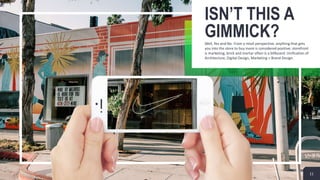
ISN’T THIS A
GIMMICK?Well, Yes and No. From a retail perspective, anything that gets
you into the store to buy more is considered positive; storefront
is marketing, brick and mortar often is a billboard. Unification of
Architecture, Digital Design, Marketing + Brand Design.
11
TECHNOLOGY +
MULTI-CHANNEL
STRATEGY
12
UX + ARCH
p h y s i c a l & d i g i t a l s p a c e s
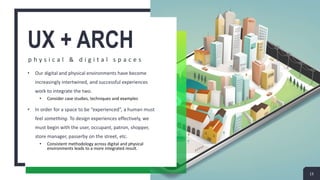
• Our digital and physical environments have become
increasingly intertwined, and successful experiences
work to integrate the two.
• Consider case studies, techniques and examples
• In order for a space to be “experienced”, a human must
feel something. To design experiences effectively, we
must begin with the user, occupant, patron, shopper,
store manager, passerby on the street, etc.
• Consistent methodology across digital and physical
environments leads to a more integrated result.
13
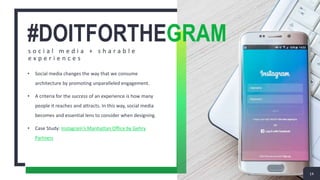
#DOITFORTHEGRAMs o c i a l m e d i a + s h a r a b l e
e x p e r i e n c e s
• Social media changes the way that we consume
architecture by promoting unparalleled engagement.
• A criteria for the success of an experience is how many
people it reaches and attracts. In this way, social media
becomes and essential lens to consider when designing.
• Case Study: Instagram’s Manhattan Office by Gehry
Partners
14
THANK YOU
for joining the revoluncheon!
15

Experience: Breaking Down the Buzzword

  • 1.
    EXPERIENCE: BREAKING DOWN THE BUZZWORD RE V O L U N C H E O N 2019-03-19 1
  • 2.
    IS RETAIL DEAD?Shockingly, No!Retail sales (e-commerce and in- store) have actually grown steadily since 2009. 2
  • 3.
    THE FUTURE h ow d o e s i t l o o k ? E-commerce will grow more quickly than traditional retail, but they will continue to grow together! 3
  • 4.
    WHY NOW?c ha n g i n g c o n s u m e r b e h a v i o r s • E-commerce revolution and rise of digital technology changing consumer expectations, shifting function of stores toward useful and entertaining customer experiences • Growing demand for mixed use environments, rather than dedicated shopping malls – desire to be within walking distance • Changing demographics such as aging population and increased urbanization. • Growing desire for leisure and entertainment that cannot be satisfied online. 4Independent study by McKinsey & Co.
  • 5.
    KEY INSIGHTS f ro m t o p r e a l e s t a t e i n v e s t o r s • Differentiating consumer offering, with a focus on experience and convenience • Leisure + Entertainment, Fine Dining, Small Shops + Pop Ups • Transforming existing mall experience by leveraging technology and multichannel strategies • Targeted Ads, Address Pain Points - Parking + Navigation • Exploration of new formats and commercial real estate opportunities. • Hotels, Office Buildings, Mixed-Use, Outlets (Emerging Economies) 5Independent study by McKinsey & Co.
  • 6.
  • 7.
    EXPERIENCEw h at i s e x p e r i e n t i a l d e s i g n ? • Design methodology originating from an empathetic starting point: the intended user. There are 5 Categories of Experiential Design: • Exhibition Design – storytelling + environment (museum, gallery) • Environmental Graphics – messages attune to environment (wayfinding, signage) • Entertainment – concerts, events, escape rooms, etc. • Marketing – sensory experiences, guerilla marketing, product launches + events • Placemaking – public installations that define space 7By Jason White / Leviatihan @ FITC FORM, Chicago ARCHITECTURALIMPLICATIONS
  • 8.
    TECHNIQUES • Video installation •Video Mapping • AR / VR • Interactive installations • Holographic installations • Pop-ups • Digital / Physical environment integration EXAMPLES • 29Rooms • Social Swipe • Museum of Ice Cream • One World Trade Center Elevator 8
  • 9.
    NIKE LIVE m el r o s e , w e s t h o l l y w o o d • Features • Locker collection (try on online orders),Curbside pickup, Vending machine, Sneaker Bar (pictured), In-store stylist, exclusive in-store items, gym. • User-Centered Approach • Location and in-store content all informed by market research on the neighborhood. • Evolving stock, restocks quickly based on consumer behavior • Caters to deliver desired products to a specific, local community. • Integrated with NIKE apps for returns, free and exclusive items in store. 9
  • 10.
    NIKE NYC f if t h a v e n u e , n e w y o r k • Features • Instant checkout, speed shop-local data to stock shelves (Melrose 2.0), customization wing, personal stylist, modular space for evolving future, scan to try, scannable mannequins • User-Centered Approach • Expanded on Melrose concept with Speed Shop – entire floor using local data to stock shelves and re-stock based on what the community wants. • Customers invited to customize items on-site with the option to consult a personal stylist during the process 10
  • 11.
    ISN’T THIS A GIMMICK?Well,Yes and No. From a retail perspective, anything that gets you into the store to buy more is considered positive; storefront is marketing, brick and mortar often is a billboard. Unification of Architecture, Digital Design, Marketing + Brand Design. 11
  • 12.
  • 13.
    UX + ARCH ph y s i c a l & d i g i t a l s p a c e s • Our digital and physical environments have become increasingly intertwined, and successful experiences work to integrate the two. • Consider case studies, techniques and examples • In order for a space to be “experienced”, a human must feel something. To design experiences effectively, we must begin with the user, occupant, patron, shopper, store manager, passerby on the street, etc. • Consistent methodology across digital and physical environments leads to a more integrated result. 13
  • 14.
    #DOITFORTHEGRAMs o ci a l m e d i a + s h a r a b l e e x p e r i e n c e s • Social media changes the way that we consume architecture by promoting unparalleled engagement. • A criteria for the success of an experience is how many people it reaches and attracts. In this way, social media becomes and essential lens to consider when designing. • Case Study: Instagram’s Manhattan Office by Gehry Partners 14
  • 15.
    THANK YOU for joiningthe revoluncheon! 15

Editor's Notes

  • #6 Experience + Convenience Convenience must complement e-commerce experience rather than trying to compete. Hit pitfalls-allow people to try it on, customize, etc. Experience relates to the multi-sensory feeling of the physical world Technology + Multichannel Strategy Multichannel strategy is implementing a single strategy across multiple platforms, thus maximizing opportunities to interact with prospective customers. (Digital + Physical Environments) Technology is central to the appeal, structure and success of an experience New Formats + Commercial Real Estate Opportunities We will not focus too much on this, but it largely relates to 2 major trends for shopping: focusing on the inclusion of high end dining & the rise of mixed-use.
  • #15 Storefront vs. Social Media Presence