NICHOLAS M. BIANCO, FRANZ T. LITZ,
KRISTIN IGUSKY MEEK & REBECCA GASPER
KEY FINDINGS
 Not yet on track
 Have the tools
  to get there
 Near term opportunities:
   – Existing power plants
   – Hydrofluorocarbons
     (HFCs)
   – Natural gas systems
   – Energy efficiency
 States can play a
  significant role
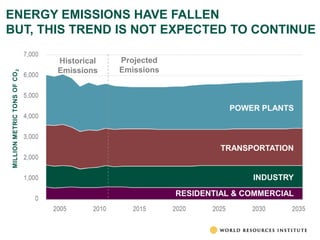
ENERGY EMISSIONS HAVE FALLEN
BUT, THIS TREND IS NOT EXPECTED TO CONTINUE

                              Historical   Projected
                              Emissions    Emissions
MILLION METRIC TONS OF CO 2


                                                                 POWER PLANTS


                                                                TRANSPORTATION


                                                                      INDUSTRY

                                                       RESIDENTIAL & COMMERCIAL
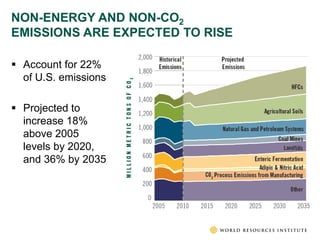
NON-ENERGY AND NON-CO2
EMISSIONS ARE EXPECTED TO RISE

 Account for 22%
  of U.S. emissions

 Projected to
  increase 18%
  above 2005
  levels by
  2020, and 36%
  by 2035
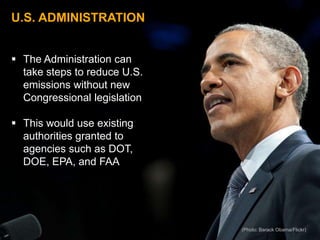
U.S. ADMINISTRATION


 The Administration can
  take steps to reduce U.S.
  emissions without new
  Congressional legislation

 This would use existing
  authorities granted to
  agencies such as
  DOT, DOE, EPA, and FAA


                              (Photo: Barack Obama/Flickr)
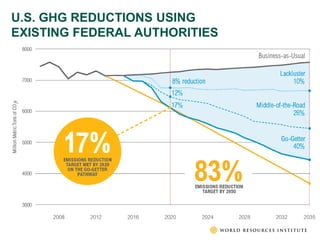
U.S. GHG REDUCTIONS USING
EXISTING FEDERAL AUTHORITIES
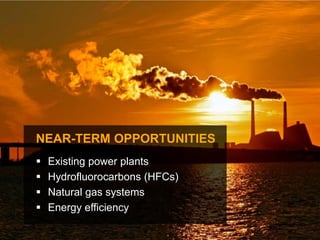
NEAR-TERM OPPORTUNITIES
   Existing power plants
   Hydrofluorocarbons (HFCs)
   Natural gas systems
   Energy efficiency
Photo haglundc


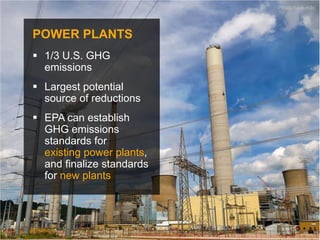
POWER PLANTS
 1/3 U.S. GHG
  emissions
 Largest potential
  source of reductions
 EPA can establish
  GHG emissions
  standards for
  existing power plants,
  and finalize standards
  for new plants
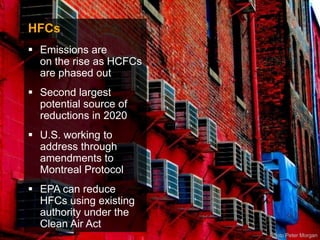
HFCs
 Emissions are
  on the rise as HCFCs
  are phased out
 Second largest
  potential source of
  reductions in 2020
 U.S. working to
  address through
  amendments to
  Montreal Protocol
 EPA can reduce
  HFCs using existing
  authority under the
  Clean Air Act
                         Photo Peter Morgan
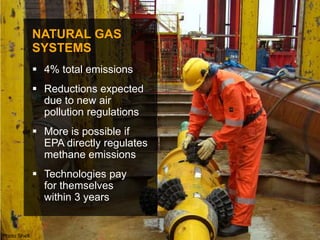
NATURAL GAS
              SYSTEMS
               4% total emissions
               Reductions expected
                due to new air pollution
                standards
               More is possible if EPA
                sets standards for
                methane emissions
               Technologies pay
                for themselves
                within 3 years


Photo Shell
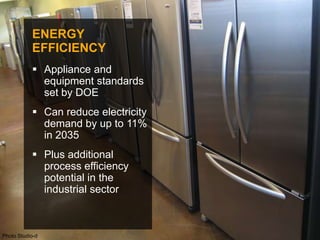
ENERGY
           EFFICIENCY
            Appliance and
             equipment standards
             set by DOE
            Can reduce electricity
             demand by 11% in
             2035
            Additional potential in
             the industrial sector


Photo Studio-d
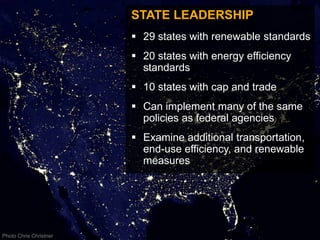
STATE LEADERSHIP
                         29 states with renewable standards
                         20 states with energy efficiency
                          standards
                         10 states with cap and trade
                         Can implement many of the same
                          policies as federal agencies
                         Examine additional transportation,
                          end-use efficiency, and renewable
                          measures


Photo Chris Christner
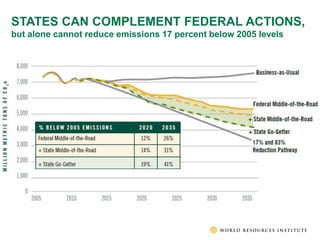
STATES CAN COMPLEMENT FEDERAL ACTIONS,
but alone cannot reduce emissions 17 percent below 2005 levels
THANK YOU


NICHOLAS BIANCO
Senior Associate
World Resources Institute
nbianco@wri.org

Can The U.S. Get There From Here?

  • 1.
    NICHOLAS M. BIANCO,FRANZ T. LITZ, KRISTIN IGUSKY MEEK & REBECCA GASPER
  • 2.
    KEY FINDINGS  Notyet on track  Have the tools to get there  Near term opportunities: – Existing power plants – Hydrofluorocarbons (HFCs) – Natural gas systems – Energy efficiency  States can play a significant role
  • 3.
    ENERGY EMISSIONS HAVEFALLEN BUT, THIS TREND IS NOT EXPECTED TO CONTINUE Historical Projected Emissions Emissions MILLION METRIC TONS OF CO 2 POWER PLANTS TRANSPORTATION INDUSTRY RESIDENTIAL & COMMERCIAL
  • 4.
    NON-ENERGY AND NON-CO2 EMISSIONSARE EXPECTED TO RISE  Account for 22% of U.S. emissions  Projected to increase 18% above 2005 levels by 2020, and 36% by 2035
  • 5.
    U.S. ADMINISTRATION  TheAdministration can take steps to reduce U.S. emissions without new Congressional legislation  This would use existing authorities granted to agencies such as DOT, DOE, EPA, and FAA (Photo: Barack Obama/Flickr)
  • 6.
    U.S. GHG REDUCTIONSUSING EXISTING FEDERAL AUTHORITIES
  • 7.
    NEAR-TERM OPPORTUNITIES  Existing power plants  Hydrofluorocarbons (HFCs)  Natural gas systems  Energy efficiency
  • 8.
    Photo haglundc POWER PLANTS 1/3 U.S. GHG emissions  Largest potential source of reductions  EPA can establish GHG emissions standards for existing power plants, and finalize standards for new plants
  • 9.
    HFCs  Emissions are on the rise as HCFCs are phased out  Second largest potential source of reductions in 2020  U.S. working to address through amendments to Montreal Protocol  EPA can reduce HFCs using existing authority under the Clean Air Act Photo Peter Morgan
  • 10.
    NATURAL GAS SYSTEMS  4% total emissions  Reductions expected due to new air pollution standards  More is possible if EPA sets standards for methane emissions  Technologies pay for themselves within 3 years Photo Shell
  • 11.
    ENERGY EFFICIENCY  Appliance and equipment standards set by DOE  Can reduce electricity demand by 11% in 2035  Additional potential in the industrial sector Photo Studio-d
  • 12.
    STATE LEADERSHIP  29 states with renewable standards  20 states with energy efficiency standards  10 states with cap and trade  Can implement many of the same policies as federal agencies  Examine additional transportation, end-use efficiency, and renewable measures Photo Chris Christner
  • 13.
    STATES CAN COMPLEMENTFEDERAL ACTIONS, but alone cannot reduce emissions 17 percent below 2005 levels
  • 14.
    THANK YOU NICHOLAS BIANCO SeniorAssociate World Resources Institute nbianco@wri.org

Editor's Notes

  • #9 Photo Credit: <a href="http://www.flickr.com/photos/86676407@N00/3946685535/">haglundc</a> via <a href="http://compfight.com">Compfight</a> <a href="http://creativecommons.org/licenses/by-nc/2.0/">cc</a>
  • #10 Photo Credit: http://www.flickr.com/photos/90933305@N00/4173993215/Peter Morgan
  • #11 Photo Credit: <a href="http://www.flickr.com/photos/28953088@N08/5621042113/">. Shell</a> via <a href="http://compfight.com">Compfight</a> <a href="http://creativecommons.org/licenses/by-nc-nd/2.0/">cc</a>
  • #12 Photo Credit: <a href="http://www.flickr.com/photos/72822802@N00/4046932108/">studio-d</a> via <a href="http://compfight.com">Compfight</a> <a href="http://creativecommons.org/licenses/by-nc/2.0/">cc</a>
  • #13 http://www.flickr.com/photos/toptechwriter/3386944315/ ADD NUMBERS ON STATES DOING BIG THINGS (E.G., EE, RE)