Existentialism
& Friedrich Nietzsche
Lecture 4
What does it mean to exist?
• To be physically and mentally
aware of your surroundings and
choices
• To participate in life through
interaction with others
• To understand your personal
nature
• Existentialism is a tradition of philosophical
enquiry that explores the nature of existence
by emphasizing experience of the human
subject—not merely the thinking subject, but
the acting, feeling, living human individual.
• Existentialism is a philosophy that
emphasizes individual existence, freedom
and choice. It is the view that humans define
their own meaning in life, and try to make
rational decisions despite existing in an
irrational universe.
• It is subjective
• Humans possess free will
and stand in an absurd and
meaningless world or
universe.
• Every individual is unique
Existentialist Themes
To be an existing human being means to be free. In
contrast with most everything else in the world, a
human being is not determined by 'laws of nature. '
The human being has a unique freedom to determine
his or her own behavior.
Existence precedes EssenceExistence precedes Essence
Essence is defined as the core
nature or most important
qualities of a person or thing.
This philosophy begins from
man, but from man as existent
rather than man as a thinking
subject, having a definite nature
or essence. A man first exists,
encounters himself, and defines
himself afterwards. Existence
comes before man is set with
value or essence
Existentialists ask:
• What is life?
• What is my place in it?
• What choices does this obligate me to
make?
What existentialism does claim
• Mankind has free will.
• Life is a series of choices, which creates stress.
• Few decisions are without any negative consequences.
• Some things are irrational and absurd, without explanation.
• If one makes a decision, he or she must follow through.
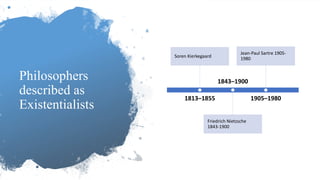
Philosophers
described as
Existentialists
1813–1855
Soren Kierkegaard
1843–1900
Friedrich Nietzsche
1843-1900
1905–1980
Jean-Paul Sartre 1905-
1980
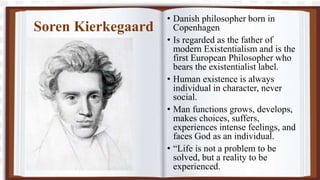
Soren Kierkegaard
• Danish philosopher born in
Copenhagen
• Is regarded as the father of
modern Existentialism and is the
first European Philosopher who
bears the existentialist label.
• Human existence is always
individual in character, never
social.
• Man functions grows, develops,
makes choices, suffers,
experiences intense feelings, and
faces God as an individual.
• “Life is not a problem to be
solved, but a reality to be
experienced.
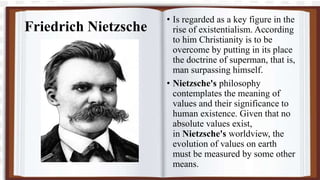
Friedrich Nietzsche
• Is regarded as a key figure in the
rise of existentialism. According
to him Christianity is to be
overcome by putting in its place
the doctrine of superman, that is,
man surpassing himself.
• Nietzsche's philosophy
contemplates the meaning of
values and their significance to
human existence. Given that no
absolute values exist,
in Nietzsche's worldview, the
evolution of values on earth
must be measured by some other
means.
Friedrich Nietzsche
• Nietzsche's contribution
to existentialism was the idea
that men must accept that they
are part of a material world,
regardless of what else might
exist. As part of this world, men
must live as if there is nothing
else beyond life.
• A failure to live, to take risks, is
a failure to realize human
potential.
NIHILISM
• The belief in the ultimate meaninglessness of life,
the rejection of all religious and moral
principles, in the belief that life is
meaningless.
• Among philosophers, Friedrich Nietzsche is most
often associated with nihilism. For Nietzsche,
there is no objective order or structure in the
world except what we give it. Penetrating the
façades buttressing convictions,
the nihilist discovers that all values are baseless
and that reason is impotent
NIHILISM
• Nihilism, in which life is believed to be without
objective meaning, purpose, or intrinsic value.
• the entire purpose of Existential philosophy
is to overcome absurdity, or, more accurately,
for man to triumph over the absurdity of
existence. So Existentialism is the opposite
of nihilism: the nihilist says "There is no
god, no heaven or hell, so screw it: there can
be no right or wrong.
• Nietzsche did not claim himself as
a nihilist nor an existentialist.
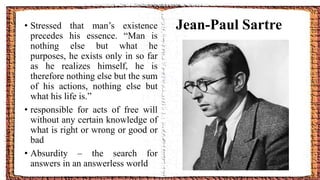
Jean-Paul Sartre• Stressed that man’s existence
precedes his essence. “Man is
nothing else but what he
purposes, he exists only in so far
as he realizes himself, he is
therefore nothing else but the sum
of his actions, nothing else but
what his life is.”
• responsible for acts of free will
without any certain knowledge of
what is right or wrong or good or
bad
• Absurdity – the search for
answers in an answerless world
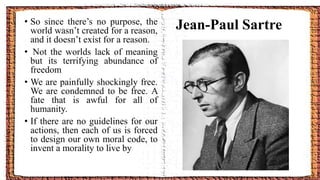
• So since there’s no purpose, the
world wasn’t created for a reason,
and it doesn’t exist for a reason.
• Not the worlds lack of meaning
but its terrifying abundance of
freedom
• We are painfully shockingly free.
We are condemned to be free. A
fate that is awful for all of
humanity.
• If there are no guidelines for our
actions, then each of us is forced
to design our own moral code, to
invent a morality to live by
Jean-Paul Sartre
Existentialism and education
• Existentialism in education focuses on the individual, seeking out a
personal understanding of the world. Thus each individual
characterizes for himself or herself the concepts of reality, truth and
goodness and as a result, schools exist to aid children in knowing
themselves and their place in society.
THE LITERAL MEANING OF LIFE IS WHATEVER
YOU’RE DOING THAT PREVENTS YOU FROM
KILLING YOURSELF.
- ALBERT CAMUS

Existentialism and Friedrich Nietzsche

  • 1.
  • 2.
    What does itmean to exist? • To be physically and mentally aware of your surroundings and choices • To participate in life through interaction with others • To understand your personal nature
  • 3.
    • Existentialism isa tradition of philosophical enquiry that explores the nature of existence by emphasizing experience of the human subject—not merely the thinking subject, but the acting, feeling, living human individual. • Existentialism is a philosophy that emphasizes individual existence, freedom and choice. It is the view that humans define their own meaning in life, and try to make rational decisions despite existing in an irrational universe.
  • 4.
    • It issubjective • Humans possess free will and stand in an absurd and meaningless world or universe. • Every individual is unique
  • 5.
    Existentialist Themes To bean existing human being means to be free. In contrast with most everything else in the world, a human being is not determined by 'laws of nature. ' The human being has a unique freedom to determine his or her own behavior.
  • 6.
    Existence precedes EssenceExistenceprecedes Essence Essence is defined as the core nature or most important qualities of a person or thing. This philosophy begins from man, but from man as existent rather than man as a thinking subject, having a definite nature or essence. A man first exists, encounters himself, and defines himself afterwards. Existence comes before man is set with value or essence
  • 7.
    Existentialists ask: • Whatis life? • What is my place in it? • What choices does this obligate me to make?
  • 8.
    What existentialism doesclaim • Mankind has free will. • Life is a series of choices, which creates stress. • Few decisions are without any negative consequences. • Some things are irrational and absurd, without explanation. • If one makes a decision, he or she must follow through.
  • 9.
  • 10.
    Soren Kierkegaard • Danishphilosopher born in Copenhagen • Is regarded as the father of modern Existentialism and is the first European Philosopher who bears the existentialist label. • Human existence is always individual in character, never social. • Man functions grows, develops, makes choices, suffers, experiences intense feelings, and faces God as an individual. • “Life is not a problem to be solved, but a reality to be experienced.
  • 11.
    Friedrich Nietzsche • Isregarded as a key figure in the rise of existentialism. According to him Christianity is to be overcome by putting in its place the doctrine of superman, that is, man surpassing himself. • Nietzsche's philosophy contemplates the meaning of values and their significance to human existence. Given that no absolute values exist, in Nietzsche's worldview, the evolution of values on earth must be measured by some other means.
  • 12.
    Friedrich Nietzsche • Nietzsche'scontribution to existentialism was the idea that men must accept that they are part of a material world, regardless of what else might exist. As part of this world, men must live as if there is nothing else beyond life. • A failure to live, to take risks, is a failure to realize human potential.
  • 13.
    NIHILISM • The beliefin the ultimate meaninglessness of life, the rejection of all religious and moral principles, in the belief that life is meaningless. • Among philosophers, Friedrich Nietzsche is most often associated with nihilism. For Nietzsche, there is no objective order or structure in the world except what we give it. Penetrating the façades buttressing convictions, the nihilist discovers that all values are baseless and that reason is impotent
  • 14.
    NIHILISM • Nihilism, inwhich life is believed to be without objective meaning, purpose, or intrinsic value. • the entire purpose of Existential philosophy is to overcome absurdity, or, more accurately, for man to triumph over the absurdity of existence. So Existentialism is the opposite of nihilism: the nihilist says "There is no god, no heaven or hell, so screw it: there can be no right or wrong. • Nietzsche did not claim himself as a nihilist nor an existentialist.
  • 15.
    Jean-Paul Sartre• Stressedthat man’s existence precedes his essence. “Man is nothing else but what he purposes, he exists only in so far as he realizes himself, he is therefore nothing else but the sum of his actions, nothing else but what his life is.” • responsible for acts of free will without any certain knowledge of what is right or wrong or good or bad • Absurdity – the search for answers in an answerless world
  • 16.
    • So sincethere’s no purpose, the world wasn’t created for a reason, and it doesn’t exist for a reason. • Not the worlds lack of meaning but its terrifying abundance of freedom • We are painfully shockingly free. We are condemned to be free. A fate that is awful for all of humanity. • If there are no guidelines for our actions, then each of us is forced to design our own moral code, to invent a morality to live by Jean-Paul Sartre
  • 17.
    Existentialism and education •Existentialism in education focuses on the individual, seeking out a personal understanding of the world. Thus each individual characterizes for himself or herself the concepts of reality, truth and goodness and as a result, schools exist to aid children in knowing themselves and their place in society.
  • 18.
    THE LITERAL MEANINGOF LIFE IS WHATEVER YOU’RE DOING THAT PREVENTS YOU FROM KILLING YOURSELF. - ALBERT CAMUS