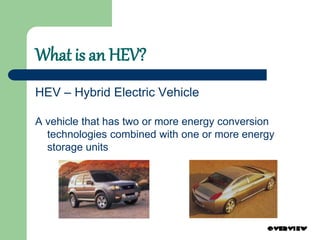
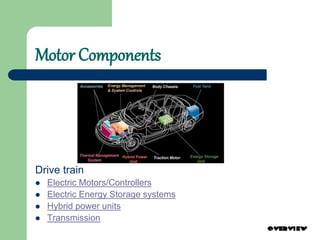
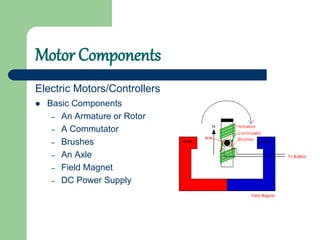
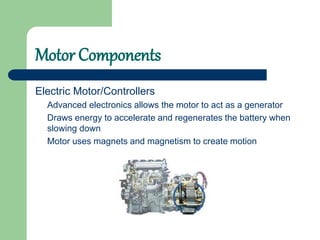
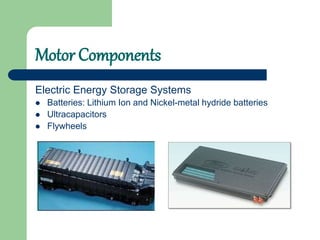
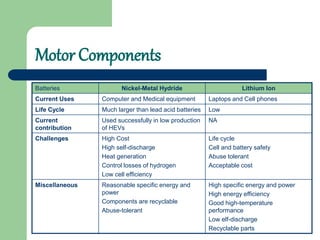
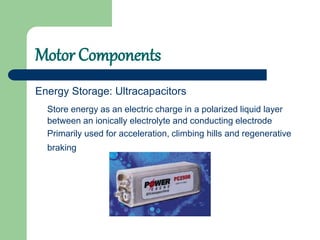
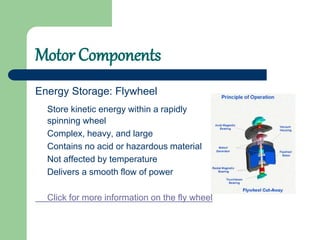
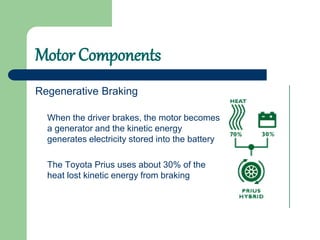
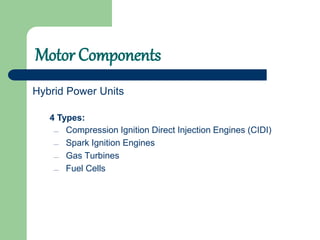
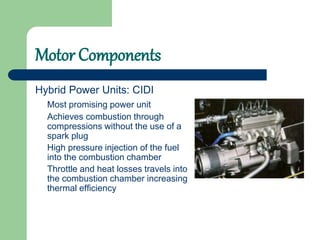
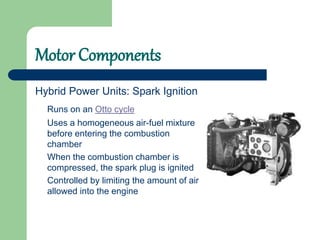
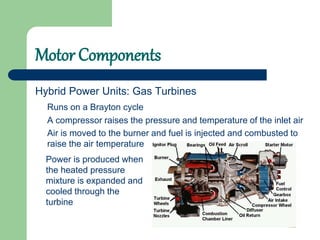
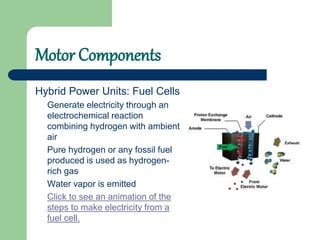
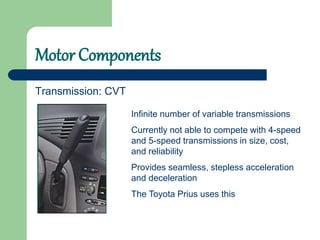
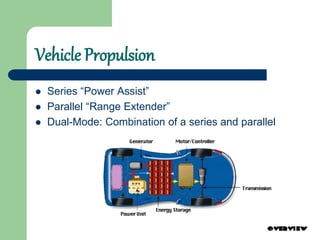
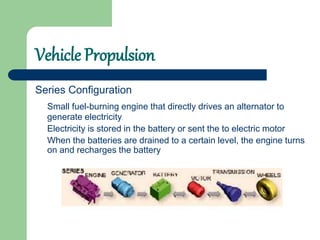
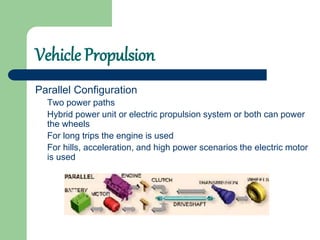
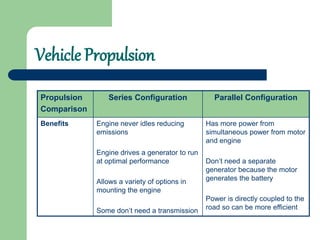
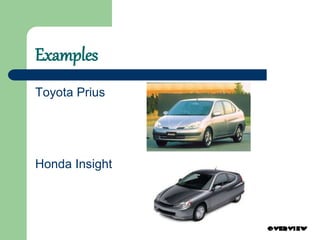
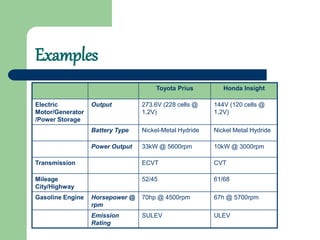
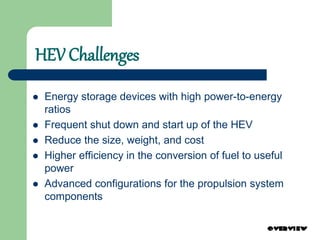
Hybrid electric vehicles combine a conventional internal combustion engine system with an electric propulsion system. This allows the vehicle to be powered by both sources, maximizing fuel efficiency and reducing emissions. The key components of a hybrid system include electric motors and controllers, energy storage such as batteries, and a transmission. Hybrids use a parallel or series configuration where the electric motor can assist the engine or act as the primary propulsion source. Examples of successful hybrid models are the Toyota Prius and Honda Insight, which achieve over 50 mpg due to regenerative braking and optimal engine performance. Ongoing challenges include improving energy storage and efficiency of power conversion from fuel to useful energy.