Everyday Life in Middle Ages Present by Korean Major.
Vocabulary Presented  ก่อให้เกิด Exchange   แลกเปลี่ยน Tended  เฝ้าดูแล Starved  อดอาหารตาย Slaughtered  การฆ่าสัตว์เป็นอาหาร Consisted  ประกอบด้วย Accompanied  มากับ ,  ไปกับ Middle Age  วัยกลางคน (   อายุ  40-65  ปี ) Manor  คฤหาสน์และที่ดินที่โอบล้อมคฤหาสน์ Castle  ปราสาท ,  คฤหาสน์ Farmland  ที่ดินเพาะปลูก Peasant  ชาวไร่ชาวนา Tax  ภาษี
Vocabulary   (cont.) Thieves  ขโมย  , ลักทรัพย์ Feudalism  ระบบศักดินา Serf  ทาส Livestock  ปศุสัตว์ Tallow  ไขมันสัตว์ Thatch  สิ่งที่ใช้มุงหลังคา Hearth  ส่วนล่างของเตาเผา ,   พื้นเตา
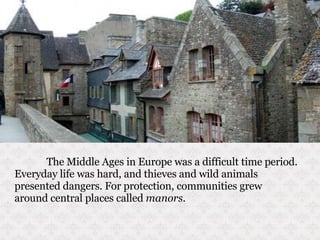
The Middle Ages in Europe was a difficult time period.  Everyday life was hard, and thieves and wild animals  presented dangers. For protection, communities grew  around central places called  manors.
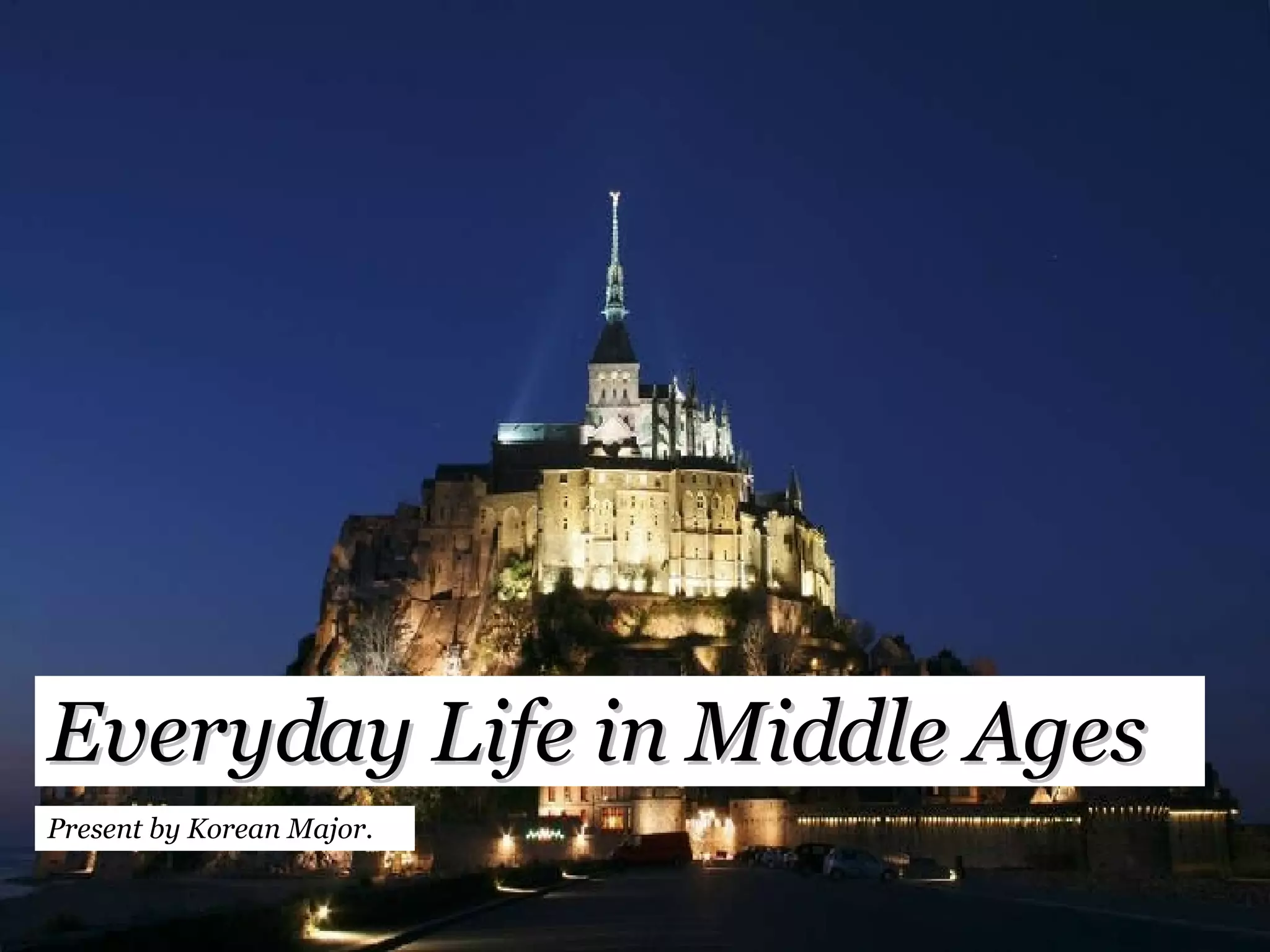
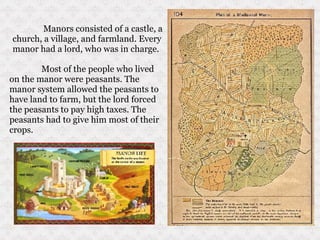
Manors consisted of a castle, a church, a village, and farmland. Every manor had a lord, who was in charge.  Most of the people who lived on the manor were peasants. The manor system allowed the peasants to have land to farm, but the lord forced the peasants to pay high taxes. The peasants had to give him most of their crops.
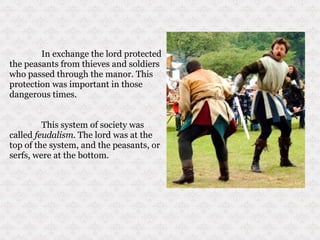
In exchange the lord protected the peasants from thieves and soldiers who passed through the manor. This protection was important in those dangerous times.  This system of society was called  feudalism.  The lord was at the top of the system, and the peasants, or serfs, were at the bottom.
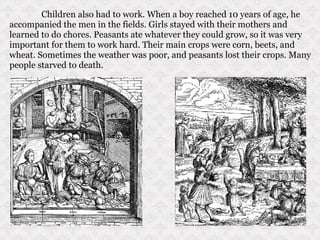
Children also had to work. When a boy reached 10 years of age, he accompanied the men in the fields. Girls stayed with their mothers and learned to do chores. Peasants ate whatever they could grow, so it was very important for them to work hard. Their main crops were corn, beets, and wheat. Sometimes the weather was poor, and peasants lost their crops. Many people starved to death.
Most peasant homes were cold and dark. They had dirt floors and thatched roofs made from plants. Peasants built walls from wood, stone, or mud-covered branches. If a home had windows, the windows were very small. This was because only wealthy people could afford to buy window glass.  In the winter, peasants moved their livestock inside for warmth. Homes usually had only two rooms. The main room had a kitchen hearth, or fireplace. People used the hearth both to cook food and to heat the room. Peasants commonly ate breads, as well as vegetables from their gardens. They slept on stacks of straw. In the fall, they slaughtered their animals, and they used the meat for the whole year.
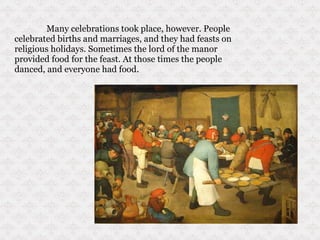
Many celebrations took place, however. People celebrated births and marriages, and they had feasts on religious holidays. Sometimes the lord of the manor provided food for the feast. At those times the people danced, and everyone had food.
Thank you for your attention.

Everyday Life in Middle Ages

  • 1.
    Everyday Life inMiddle Ages Present by Korean Major.
  • 2.
    Vocabulary Presented ก่อให้เกิด Exchange แลกเปลี่ยน Tended เฝ้าดูแล Starved อดอาหารตาย Slaughtered การฆ่าสัตว์เป็นอาหาร Consisted ประกอบด้วย Accompanied มากับ , ไปกับ Middle Age วัยกลางคน ( อายุ 40-65 ปี ) Manor คฤหาสน์และที่ดินที่โอบล้อมคฤหาสน์ Castle ปราสาท , คฤหาสน์ Farmland ที่ดินเพาะปลูก Peasant ชาวไร่ชาวนา Tax ภาษี
  • 3.
    Vocabulary (cont.) Thieves ขโมย , ลักทรัพย์ Feudalism ระบบศักดินา Serf ทาส Livestock ปศุสัตว์ Tallow ไขมันสัตว์ Thatch สิ่งที่ใช้มุงหลังคา Hearth ส่วนล่างของเตาเผา , พื้นเตา
  • 4.
    The Middle Agesin Europe was a difficult time period. Everyday life was hard, and thieves and wild animals presented dangers. For protection, communities grew around central places called manors.
  • 5.
    Manors consisted ofa castle, a church, a village, and farmland. Every manor had a lord, who was in charge. Most of the people who lived on the manor were peasants. The manor system allowed the peasants to have land to farm, but the lord forced the peasants to pay high taxes. The peasants had to give him most of their crops.
  • 6.
    In exchange thelord protected the peasants from thieves and soldiers who passed through the manor. This protection was important in those dangerous times. This system of society was called feudalism. The lord was at the top of the system, and the peasants, or serfs, were at the bottom.
  • 7.
    Children also hadto work. When a boy reached 10 years of age, he accompanied the men in the fields. Girls stayed with their mothers and learned to do chores. Peasants ate whatever they could grow, so it was very important for them to work hard. Their main crops were corn, beets, and wheat. Sometimes the weather was poor, and peasants lost their crops. Many people starved to death.
  • 8.
    Most peasant homeswere cold and dark. They had dirt floors and thatched roofs made from plants. Peasants built walls from wood, stone, or mud-covered branches. If a home had windows, the windows were very small. This was because only wealthy people could afford to buy window glass. In the winter, peasants moved their livestock inside for warmth. Homes usually had only two rooms. The main room had a kitchen hearth, or fireplace. People used the hearth both to cook food and to heat the room. Peasants commonly ate breads, as well as vegetables from their gardens. They slept on stacks of straw. In the fall, they slaughtered their animals, and they used the meat for the whole year.
  • 9.
    Many celebrations tookplace, however. People celebrated births and marriages, and they had feasts on religious holidays. Sometimes the lord of the manor provided food for the feast. At those times the people danced, and everyone had food.
  • 10.
    Thank you foryour attention.