Unit 2 Feudal Society
Vocabulary 
Serf 
Vassal 
Fief 
Demesne 
Tenure 
Knight 
Tournament 
Page 
Squire 
Nun 
Bishop 
Priest 
Abbot 
Shell 
Sword 
Helm 
Tithe 
Culture 
Harvest
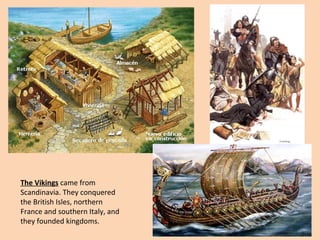
The Vikings came from 
Scandinavia. They conquered 
the British Isles, northern 
France and southern Italy, and 
they founded kingdoms.
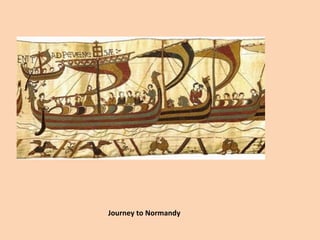
Journey to Normandy
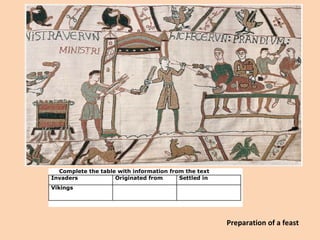
Preparation of a feast
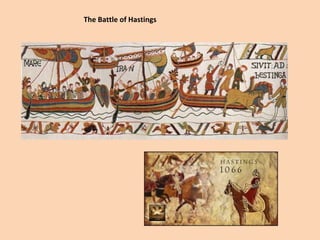
The Battle of Hastings
2 The feudal society and its origins 
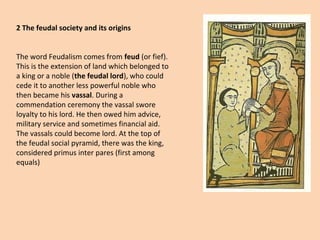
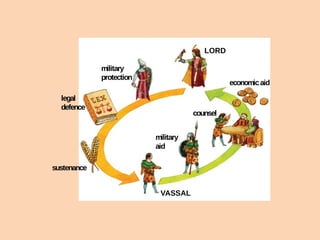
The word Feudalism comes from feud (or fief). 
This is the extension of land which belonged to 
a king or a noble (the feudal lord), who could 
cede it to another less powerful noble who 
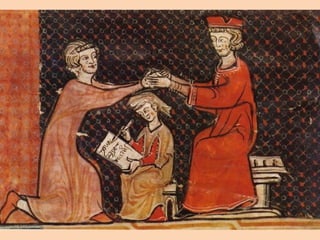
then became his vassal. During a 
commendation ceremony the vassal swore 
loyalty to his lord. He then owed him advice, 
military service and sometimes financial aid. 
The vassals could become lord. At the top of 
the feudal social pyramid, there was the king, 
considered primus inter pares (first among 
equals)
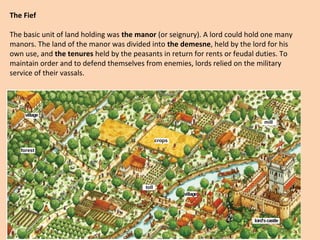
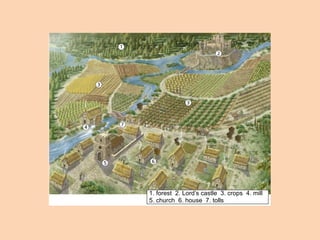
The basic unit of land holding was the manor (or seignury). A lord could hold one many 
manors. The land of the manor was divided into the demesne, held by the lord for his 
own use, and the tenures held by the peasants in return for rents or feudal duties. To 
maintain order and to defend themselves from enemies, lords relied on the military 
service of their vassals. 
toll 
village 
The Fief 
forest 
crops 
mill 
lord’s castle 
village
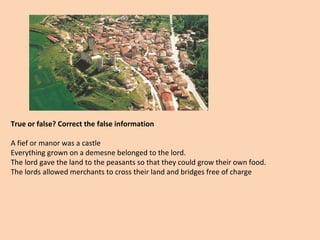
True or false? Correct the false information 
A fief or manor was a castle 
Everything grown on a demesne belonged to the lord. 
The lord gave the land to the peasants so that they could grow their own food. 
The lords allowed merchants to cross their land and bridges free of charge
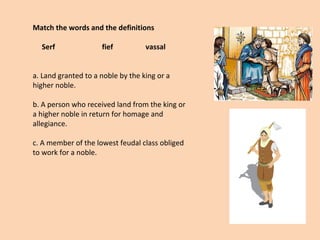
Match the words and the definitions 
Serf fief vassal 
a. Land granted to a noble by the king or a 
higher noble. 
b. A person who received land from the king or 
a higher noble in return for homage and 
allegiance. 
c. A member of the lowest feudal class obliged 
to work for a noble.
LORD 
VASSAL 
economic aid 
counsel 
military 
protection 
legal 
defence 
sustenance 
military 
aid
crown 
royal orb 
royal sceptre 
Royal symbols
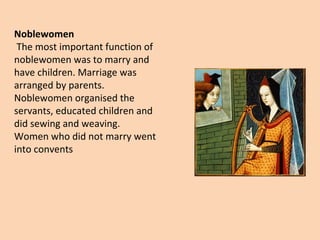
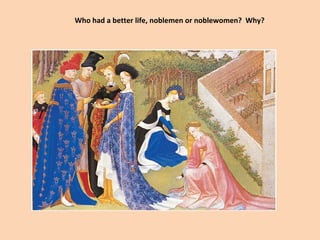
Noblewomen 
The most important function of 
noblewomen was to marry and 
have children. Marriage was 
arranged by parents. 
Noblewomen organised the 
servants, educated children and 
did sewing and weaving. 
Women who did not marry went 
into convents
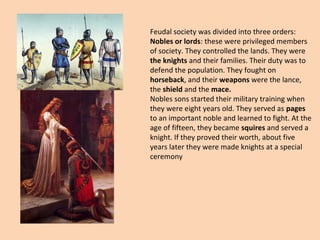
Feudal society was divided into three orders: 
Nobles or lords: these were privileged members 
of society. They controlled the lands. They were 
the knights and their families. Their duty was to 
defend the population. They fought on 
horseback, and their weapons were the lance, 
the shield and the mace. 
Nobles sons started their military training when 
they were eight years old. They served as pages 
to an important noble and learned to fight. At the 
age of fifteen, they became squires and served a 
knight. If they proved their worth, about five 
years later they were made knights at a special 
ceremony
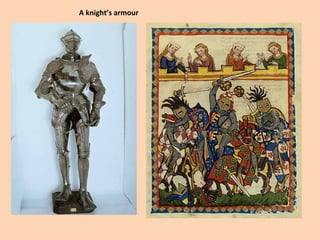
A knight’s armour
Who had a better life, noblemen or noblewomen? Why?
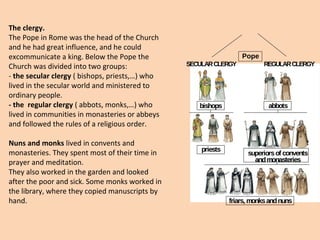
The clergy. 
The Pope in Rome was the head of the Church 
and he had great influence, and he could 
excommunicate a king. Below the Pope the 
Church was divided into two groups: 
- the secular clergy ( bishops, priests,…) who 
lived in the secular world and ministered to 
ordinary people. 
- the regular clergy ( abbots, monks,…) who 
lived in communities in monasteries or abbeys 
and followed the rules of a religious order. 
Nuns and monks lived in convents and 
monasteries. They spent most of their time in 
prayer and meditation. 
They also worked in the garden and looked 
after the poor and sick. Some monks worked in 
the library, where they copied manuscripts by 
hand. 
Pope 
SECULAR CLERGY 
REGULAR CLERGY 
bishops abbots 
priests superiors of convents 
and monasteries 
friars, monks and nuns
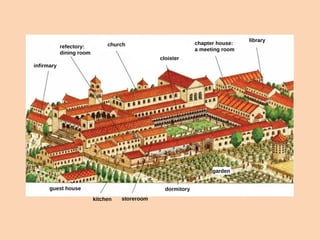
refectory: 
dining room 
church 
cloister 
chapter house: 
a meeting room 
library 
guest house 
kitchen storeroom 
dormitory 
garden 
infirmary
Monks copied 
manuscripts 
by hand. A monk might copy two 
or three books a year.
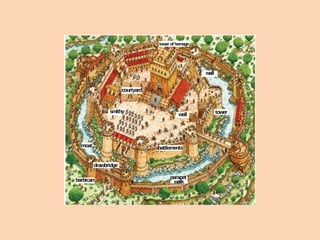
smithy well tower 
parapet 
moat 
barbican 
courtyard 
battlements 
wall 
drawbridge 
tower of homage 
walk
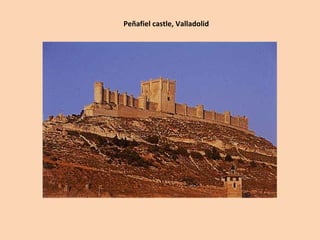
Peñafiel castle, Valladolid
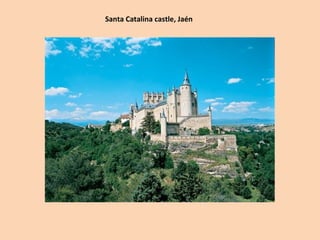
Santa Catalina castle, Jaén
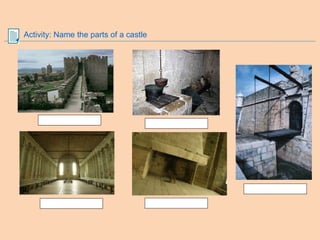
Activity: Name the parts of a castle
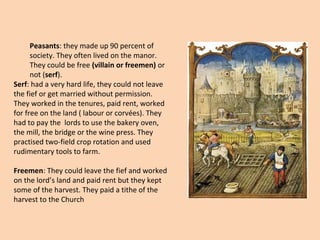
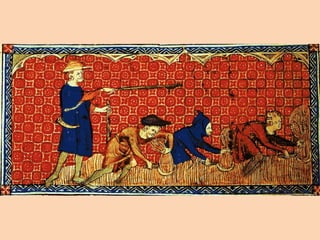
Peasants: they made up 90 percent of 
society. They often lived on the manor. 
They could be free (villain or freemen) or 
not (serf). 
Serf: had a very hard life, they could not leave 
the fief or get married without permission. 
They worked in the tenures, paid rent, worked 
for free on the land ( labour or corvées). They 
had to pay the lords to use the bakery oven, 
the mill, the bridge or the wine press. They 
practised two-field crop rotation and used 
rudimentary tools to farm. 
Freemen: They could leave the fief and worked 
on the lord’s land and paid rent but they kept 
some of the harvest. They paid a tithe of the 
harvest to the Church
1. forest 2. Lord’s castle 3. crops 4. mill 
5. church 6. house 7. tolls
vegetable 
plot 
haystack 
They fished 
and sometimes 
ate fish. 
People and animals 
lived in the house.
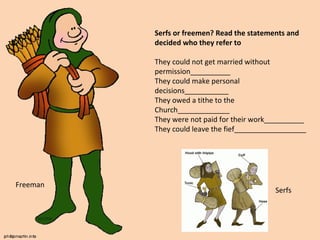
Serfs or freemen? Read the statements and 
decided who they refer to 
They could not get married without 
permission__________ 
They could make personal 
decisions___________ 
They owed a tithe to the 
Church_____________ 
They were not paid for their work__________ 
They could leave the fief__________________ 
Freeman 
Serfs
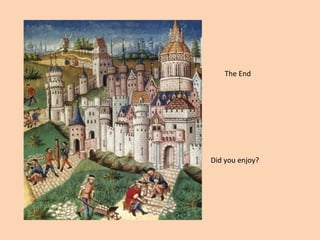
The End 
Did you enjoy?

Unit 2 Feudal Society (II)

  • 1.
  • 2.
    Vocabulary Serf Vassal Fief Demesne Tenure Knight Tournament Page Squire Nun Bishop Priest Abbot Shell Sword Helm Tithe Culture Harvest
  • 3.
    The Vikings camefrom Scandinavia. They conquered the British Isles, northern France and southern Italy, and they founded kingdoms.
  • 4.
  • 5.
  • 6.
    The Battle ofHastings
  • 8.
    2 The feudalsociety and its origins The word Feudalism comes from feud (or fief). This is the extension of land which belonged to a king or a noble (the feudal lord), who could cede it to another less powerful noble who then became his vassal. During a commendation ceremony the vassal swore loyalty to his lord. He then owed him advice, military service and sometimes financial aid. The vassals could become lord. At the top of the feudal social pyramid, there was the king, considered primus inter pares (first among equals)
  • 9.
    The basic unitof land holding was the manor (or seignury). A lord could hold one many manors. The land of the manor was divided into the demesne, held by the lord for his own use, and the tenures held by the peasants in return for rents or feudal duties. To maintain order and to defend themselves from enemies, lords relied on the military service of their vassals. toll village The Fief forest crops mill lord’s castle village
  • 10.
    True or false?Correct the false information A fief or manor was a castle Everything grown on a demesne belonged to the lord. The lord gave the land to the peasants so that they could grow their own food. The lords allowed merchants to cross their land and bridges free of charge
  • 11.
    Match the wordsand the definitions Serf fief vassal a. Land granted to a noble by the king or a higher noble. b. A person who received land from the king or a higher noble in return for homage and allegiance. c. A member of the lowest feudal class obliged to work for a noble.
  • 12.
    LORD VASSAL economicaid counsel military protection legal defence sustenance military aid
  • 13.
    crown royal orb royal sceptre Royal symbols
  • 14.
    Noblewomen The mostimportant function of noblewomen was to marry and have children. Marriage was arranged by parents. Noblewomen organised the servants, educated children and did sewing and weaving. Women who did not marry went into convents
  • 15.
    Feudal society wasdivided into three orders: Nobles or lords: these were privileged members of society. They controlled the lands. They were the knights and their families. Their duty was to defend the population. They fought on horseback, and their weapons were the lance, the shield and the mace. Nobles sons started their military training when they were eight years old. They served as pages to an important noble and learned to fight. At the age of fifteen, they became squires and served a knight. If they proved their worth, about five years later they were made knights at a special ceremony
  • 16.
  • 17.
    Who had abetter life, noblemen or noblewomen? Why?
  • 18.
    The clergy. ThePope in Rome was the head of the Church and he had great influence, and he could excommunicate a king. Below the Pope the Church was divided into two groups: - the secular clergy ( bishops, priests,…) who lived in the secular world and ministered to ordinary people. - the regular clergy ( abbots, monks,…) who lived in communities in monasteries or abbeys and followed the rules of a religious order. Nuns and monks lived in convents and monasteries. They spent most of their time in prayer and meditation. They also worked in the garden and looked after the poor and sick. Some monks worked in the library, where they copied manuscripts by hand. Pope SECULAR CLERGY REGULAR CLERGY bishops abbots priests superiors of convents and monasteries friars, monks and nuns
  • 19.
    refectory: dining room church cloister chapter house: a meeting room library guest house kitchen storeroom dormitory garden infirmary
  • 21.
    Monks copied manuscripts by hand. A monk might copy two or three books a year.
  • 22.
    smithy well tower parapet moat barbican courtyard battlements wall drawbridge tower of homage walk
  • 23.
  • 24.
  • 25.
    Activity: Name theparts of a castle
  • 26.
    Peasants: they madeup 90 percent of society. They often lived on the manor. They could be free (villain or freemen) or not (serf). Serf: had a very hard life, they could not leave the fief or get married without permission. They worked in the tenures, paid rent, worked for free on the land ( labour or corvées). They had to pay the lords to use the bakery oven, the mill, the bridge or the wine press. They practised two-field crop rotation and used rudimentary tools to farm. Freemen: They could leave the fief and worked on the lord’s land and paid rent but they kept some of the harvest. They paid a tithe of the harvest to the Church
  • 28.
    1. forest 2.Lord’s castle 3. crops 4. mill 5. church 6. house 7. tolls
  • 29.
    vegetable plot haystack They fished and sometimes ate fish. People and animals lived in the house.
  • 30.
    Serfs or freemen?Read the statements and decided who they refer to They could not get married without permission__________ They could make personal decisions___________ They owed a tithe to the Church_____________ They were not paid for their work__________ They could leave the fief__________________ Freeman Serfs
  • 31.
    The End Didyou enjoy?