Downloaded 21 times
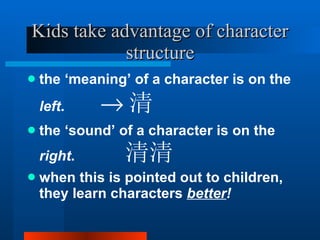
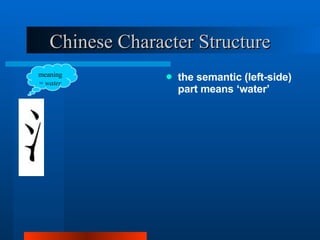
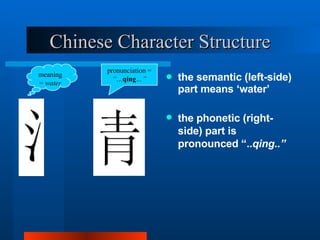
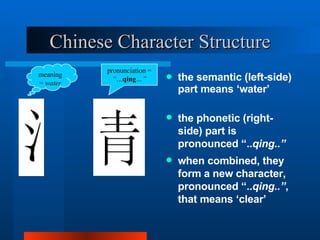
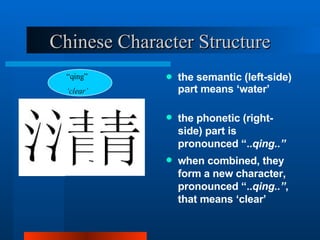
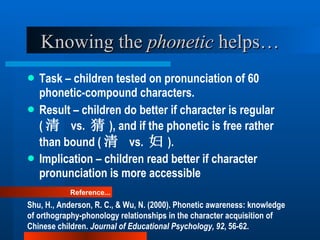
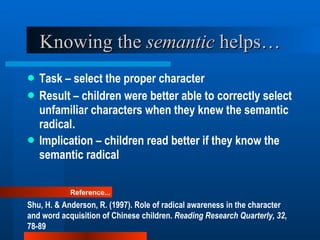
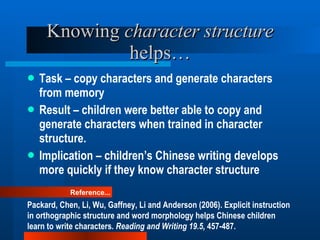
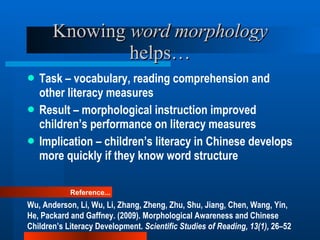
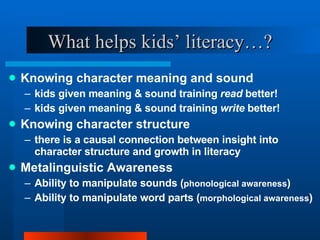
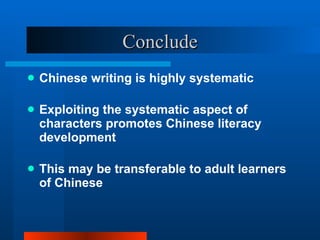
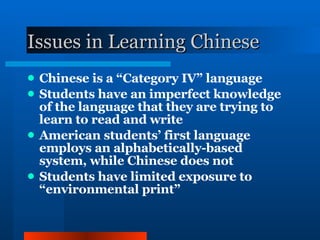
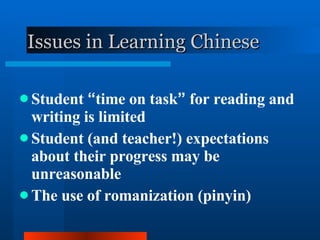
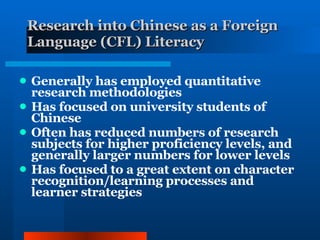
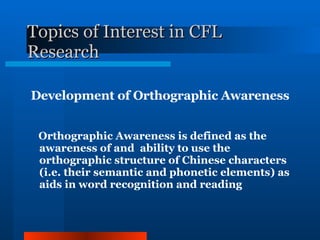
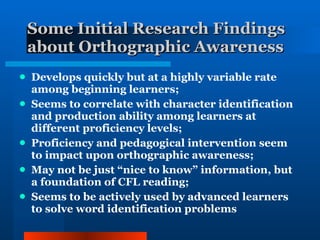
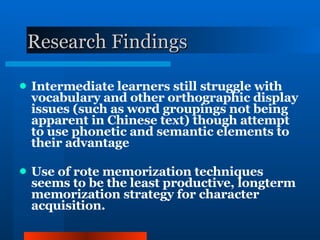
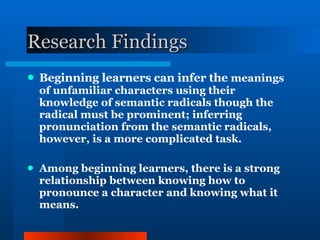

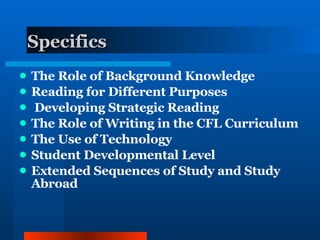


The document discusses literacy development in Chinese, both as a first and second language. It notes that Chinese characters have meaningful structures that children are able to exploit to better learn characters. Studies show that knowing a character's meaning, sound, and structure helps children's literacy development in Chinese as their first language. The same principles may be applicable to helping adult second-language learners of Chinese literacy. Challenges in second language acquisition include differences from the first language and limited exposure/practice time. More research is still needed on Chinese literacy development as a second language.


