1
Presented at ISPI 2017
Arindom Chakraborty
Hindusthan National Glass & Ind. Ltd.
New Delhi
Oct 27, 2017
Evergreen
Glass PackagingI care for nature
2
Glass packaging – Since the beginning
 Egyptians were making their own glass as far back as 3,250 years ago.
 Wealthy people exchanged sculpted glass pieces as a way to make political bonds with each other.
3
Brief History of Glass
1875 AD
1271 AD
25 BC
1500 BC
3500 BC
Start
Egypt
Made hollow
glass forms
Venice
Became a
major hub of
glass making
Egypt
Glass beads
were made
from Glass
Syria
Process of
glass blowing
started
Michael Owens
Invented an
automatic bottle
blowing machines
Stone Age
Naturally formed
glass used in
everyday activities
5000 years of history in your hand
4
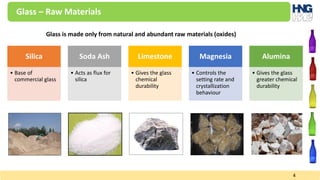
Glass – Raw Materials
Silica
• Base of
commercial glass
Soda Ash
• Acts as flux for
silica
Limestone
• Gives the glass
chemical
durability
Magnesia
• Controls the
setting rate and
crystallization
behaviour
Alumina
• Gives the glass
greater chemical
durability
Glass is made only from natural and abundant raw materials (oxides)
5
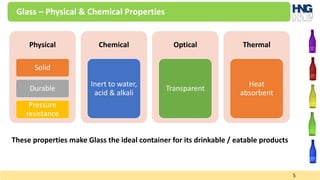
Glass – Physical & Chemical Properties
Physical
Solid
Durable
Pressure
resistance
Chemical
Inert to water,
acid & alkali
Optical
Transparent
Thermal
Heat
absorbent
These properties make Glass the ideal container for its drinkable / eatable products
6
Role of Packaging
Environmental
protection
Temperature
Moisture &
Humidity
Light
Gases
Volatile
materials
Mechanical
protection
Compression
Impact
Vibration
Biological
protection
Microbiological
Other infestations
Humans
Our Options
What to choose ??
7
Your choice …..
What you will look for while choosing a packaging ?
Cost ?
Convenience ?
Availability ?
OR
Healthy ?
Recyclable ?
Reusable ?
Bio degradable ?Non destructible ?
… Depends who you are thinking for….
You Or Your next generation ??
8
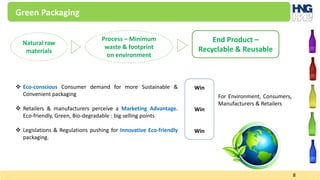
Green Packaging
End Product –
Recyclable & Reusable
Natural raw
materials
Process – Minimum
waste & footprint
on environment
 Eco-conscious Consumer demand for more Sustainable &
Convenient packaging
 Retailers & manufacturers perceive a Marketing Advantage.
Eco-friendly, Green, Bio-degradable : big selling points
 Legislations & Regulations pushing for Innovative Eco-friendly
packaging.
Win
Win
Win
For Environment, Consumers,
Manufacturers & Retailers
9
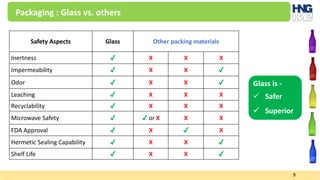
Packaging : Glass vs. others
Glass is -
 Safer
 Superior
Safety Aspects Glass Other packing materials
Inertness ✔ X X X
Impermeability ✔ X X ✔
Odor ✔ X X ✔
Leaching ✔ X X X
Recyclability ✔ X X X
Microwave Safety ✔ ✔ or X X X
FDA Approval ✔ X ✔ X
Hermetic Sealing Capability ✔ X X ✔
Shelf Life ✔ X X ✔
10
Glass - Why
100% Recyclable
Reusable 40 times
Reduces waste
Suitable for high speed filling
Premium Quality
Every ton of glass recycled saves
322 KwH of energy, 246 kg of CO2 & 1200 kg of virgin raw material
Glass recycling – more the better
11
 Europe uses almost 70% recycled
glass on the average
 Only 40% glass is recycled in
India & rest goes into landfill
Recycling rate ~90%
Source: European container glass federation (FEVE)
 Recycling glass decreases amount of raw
materials used, lessens demand for energy, cuts
CO2 emissions, extends furnace life.
 At 50% recycled glass in manufacturing,
Removes 2.2 million MT of CO2 emissions
= 400,000 cars off the road each year.
Is Recycling enough ??
12
Not just Recycling…..
Reduce
Reuse Recover
Repair
Rethink
Rotate Replenish
Recover
Return Restore
Responsibility
Reinvent
Rethink
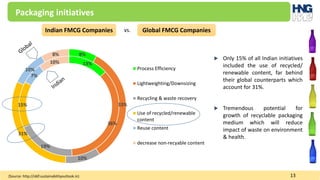
Packaging initiatives
13
Indian FMCG Companies Global FMCG Companies
 Only 15% of all Indian initiatives
included the use of recycled/
renewable content, far behind
their global counterparts which
account for 31%.
 Tremendous potential for
growth of recyclable packaging
medium which will reduce
impact of waste on environment
& health.
(Source: http://sblf.sustainabilityoutlook.in)
13%
36%
19%
15%
7%
10%
8%
33%
10%
31%
10%
8%
Process Efficiency
Lightweighting/Downsizing
Recycling & waste recovery
Use of recycled/renewable
content
Reuse content
decrease non-recyable content
vs.
14
Voice of Customer
73% Glass keeps the highest Quality of any container
Source : Newton Marketing research SAINT GOBAIN VERELLIA
78% Glass is best at maintaining that Purity
75% Glass keeps the truest Taste and Flavor of the product inside
Preferred Packaging choice
for
Food and Beverages
15
Voice of Customer
7% Glass least likely to Leach chemicals into foods
Source : Newton Marketing research SAINT GOBAIN VERELLIA
Glass is least Polluting containers
98% Appearance of glass to be most Appealing
Choosing Glass means
Sustainability and the Preservation
of our natural resources
7%
16
Glass Bottle – What next
New Jersey-based Kayco introduced its first line of functional beet
beverages called Beetology.
“Clean” foods with added health benefits are a top priority for
consumers. Beetology is sold in 8-oz bottles to communicate the
carefully crafted layers of natural fruit and vegetable flavor in every
bottle. When asked why glass instead of others, the company states
that the glass keeps the blend tasting crisp and fresh.
A range of bottled teas designed to be a mixer for
whiskies and other spirits has been launched in the UK
by Benjamin & Blum. On the bottle design, Benjamin
says: "Just as with prestige spirits, if you have a special
drink, you need to put it in a special bottle. When it
comes to packaging, we focus on the experience. ”
17
Glass Bottle – What next
Bulk sea salt supplier SaltWorks launched glass jars which are
thoughtfully redesigned to be short and wide, making it easy to grab
salt with your fingers or use a spoon. SaltWorks focused on
sustainability and each packaging style is meant to be refilled and
reused by consumers.
Starbucks Coffee Co, began shipping ready-to-drink
(RTD) Teavana Craft Iced Teas in glass bottles.
18
Glass Packaging – What next
Source : feve
Stronger Lighter Better
 NNPB Technology
 Better coatings application
 Differential mould cooling
 Advanced Gob Conditioning
 Furnace stabilization
 Single mould process
25% lighter and thinner with same strength
Improving resistance to surface damage
Active control on glass forming
Thinner bottle
Increased ability to lightweight
Significantly stronger glass
19
Thank you
Glass

Evergreen glass packaging

  • 1.
    1 Presented at ISPI2017 Arindom Chakraborty Hindusthan National Glass & Ind. Ltd. New Delhi Oct 27, 2017 Evergreen Glass PackagingI care for nature
  • 2.
    2 Glass packaging –Since the beginning  Egyptians were making their own glass as far back as 3,250 years ago.  Wealthy people exchanged sculpted glass pieces as a way to make political bonds with each other.
  • 3.
    3 Brief History ofGlass 1875 AD 1271 AD 25 BC 1500 BC 3500 BC Start Egypt Made hollow glass forms Venice Became a major hub of glass making Egypt Glass beads were made from Glass Syria Process of glass blowing started Michael Owens Invented an automatic bottle blowing machines Stone Age Naturally formed glass used in everyday activities 5000 years of history in your hand
  • 4.
    4 Glass – RawMaterials Silica • Base of commercial glass Soda Ash • Acts as flux for silica Limestone • Gives the glass chemical durability Magnesia • Controls the setting rate and crystallization behaviour Alumina • Gives the glass greater chemical durability Glass is made only from natural and abundant raw materials (oxides)
  • 5.
    5 Glass – Physical& Chemical Properties Physical Solid Durable Pressure resistance Chemical Inert to water, acid & alkali Optical Transparent Thermal Heat absorbent These properties make Glass the ideal container for its drinkable / eatable products
  • 6.
    6 Role of Packaging Environmental protection Temperature Moisture& Humidity Light Gases Volatile materials Mechanical protection Compression Impact Vibration Biological protection Microbiological Other infestations Humans Our Options What to choose ??
  • 7.
    7 Your choice ….. Whatyou will look for while choosing a packaging ? Cost ? Convenience ? Availability ? OR Healthy ? Recyclable ? Reusable ? Bio degradable ?Non destructible ? … Depends who you are thinking for…. You Or Your next generation ??
  • 8.
    8 Green Packaging End Product– Recyclable & Reusable Natural raw materials Process – Minimum waste & footprint on environment  Eco-conscious Consumer demand for more Sustainable & Convenient packaging  Retailers & manufacturers perceive a Marketing Advantage. Eco-friendly, Green, Bio-degradable : big selling points  Legislations & Regulations pushing for Innovative Eco-friendly packaging. Win Win Win For Environment, Consumers, Manufacturers & Retailers
  • 9.
    9 Packaging : Glassvs. others Glass is -  Safer  Superior Safety Aspects Glass Other packing materials Inertness ✔ X X X Impermeability ✔ X X ✔ Odor ✔ X X ✔ Leaching ✔ X X X Recyclability ✔ X X X Microwave Safety ✔ ✔ or X X X FDA Approval ✔ X ✔ X Hermetic Sealing Capability ✔ X X ✔ Shelf Life ✔ X X ✔
  • 10.
    10 Glass - Why 100%Recyclable Reusable 40 times Reduces waste Suitable for high speed filling Premium Quality Every ton of glass recycled saves 322 KwH of energy, 246 kg of CO2 & 1200 kg of virgin raw material
  • 11.
    Glass recycling –more the better 11  Europe uses almost 70% recycled glass on the average  Only 40% glass is recycled in India & rest goes into landfill Recycling rate ~90% Source: European container glass federation (FEVE)  Recycling glass decreases amount of raw materials used, lessens demand for energy, cuts CO2 emissions, extends furnace life.  At 50% recycled glass in manufacturing, Removes 2.2 million MT of CO2 emissions = 400,000 cars off the road each year.
  • 12.
    Is Recycling enough?? 12 Not just Recycling….. Reduce Reuse Recover Repair Rethink Rotate Replenish Recover Return Restore Responsibility Reinvent Rethink
  • 13.
    Packaging initiatives 13 Indian FMCGCompanies Global FMCG Companies  Only 15% of all Indian initiatives included the use of recycled/ renewable content, far behind their global counterparts which account for 31%.  Tremendous potential for growth of recyclable packaging medium which will reduce impact of waste on environment & health. (Source: http://sblf.sustainabilityoutlook.in) 13% 36% 19% 15% 7% 10% 8% 33% 10% 31% 10% 8% Process Efficiency Lightweighting/Downsizing Recycling & waste recovery Use of recycled/renewable content Reuse content decrease non-recyable content vs.
  • 14.
    14 Voice of Customer 73%Glass keeps the highest Quality of any container Source : Newton Marketing research SAINT GOBAIN VERELLIA 78% Glass is best at maintaining that Purity 75% Glass keeps the truest Taste and Flavor of the product inside Preferred Packaging choice for Food and Beverages
  • 15.
    15 Voice of Customer 7%Glass least likely to Leach chemicals into foods Source : Newton Marketing research SAINT GOBAIN VERELLIA Glass is least Polluting containers 98% Appearance of glass to be most Appealing Choosing Glass means Sustainability and the Preservation of our natural resources 7%
  • 16.
    16 Glass Bottle –What next New Jersey-based Kayco introduced its first line of functional beet beverages called Beetology. “Clean” foods with added health benefits are a top priority for consumers. Beetology is sold in 8-oz bottles to communicate the carefully crafted layers of natural fruit and vegetable flavor in every bottle. When asked why glass instead of others, the company states that the glass keeps the blend tasting crisp and fresh. A range of bottled teas designed to be a mixer for whiskies and other spirits has been launched in the UK by Benjamin & Blum. On the bottle design, Benjamin says: "Just as with prestige spirits, if you have a special drink, you need to put it in a special bottle. When it comes to packaging, we focus on the experience. ”
  • 17.
    17 Glass Bottle –What next Bulk sea salt supplier SaltWorks launched glass jars which are thoughtfully redesigned to be short and wide, making it easy to grab salt with your fingers or use a spoon. SaltWorks focused on sustainability and each packaging style is meant to be refilled and reused by consumers. Starbucks Coffee Co, began shipping ready-to-drink (RTD) Teavana Craft Iced Teas in glass bottles.
  • 18.
    18 Glass Packaging –What next Source : feve Stronger Lighter Better  NNPB Technology  Better coatings application  Differential mould cooling  Advanced Gob Conditioning  Furnace stabilization  Single mould process 25% lighter and thinner with same strength Improving resistance to surface damage Active control on glass forming Thinner bottle Increased ability to lightweight Significantly stronger glass
  • 19.