© 2010 by McGraw-Hill Education (Asia)
Event Sustainability
Chapter 4
© 2010 by McGraw-Hill Education (Asia)
Warning beach signage,
Manley Beach, Australia
 This signage warns
not to collect sea
creatures or be
subject to a fine.
Apart from the
protection of the
ecosystem, what
other factors help to
provide event
sustainability?
© 2010 by McGraw-Hill Education (Asia)
Chapter objectives
 Understand the concept of sustainable tourism
within events
 Consider the ways to maximise the benefits of
an event strategy
 Know the importance of generating revenues
and event economic assessment
 Understand the event’s life cycle and influences
 Examine the carrying capacity concept of an
event
© 2010 by McGraw-Hill Education (Asia)
Sustainable event tourism
 The paradox is that while events and
festivals have helped in regeneration, they
have brought with them change
 With many of Asia’s events based on
environmental conditions, any decline can
have negative consequences on these
events
© 2010 by McGraw-Hill Education (Asia)
Principles and guidelines to
sustainable event tourism
 These should be practical to implement and
monitor
 Agreement, consensus and trade-offs maybe
needed in the negotiation process
 Realistically, events will inevitably impact the
environment. The event manager should
strive to consciously negate as much as
possible
© 2010 by McGraw-Hill Education (Asia)
Scope of Sustainable Tourism*
Sustainable Event
tourism
Pollution:
Air, water, noise,
visual
Conservation policies and
practices:
Landscapes, townscapes,
waterscapes,
wildlife, indigenous
communities
Resource use:
Water, land, food, power,
materials
Wildlife and
ecosystems:
Hunting, habitats
Operational practices:
Recycling, waste management,
energy conservation, eco-friendly
construction
Public sector policy:
Funding, legislation, planning
Host community:
Distribution of benefits,
involvement
Tourist:
Behaviour, concerns
Industry:
Codes of practice, self-regulation, level
of stakeholder collaboration,
sustainable tourism-related initiatives
* From Swarbrooke, 1999:16
© 2010 by McGraw-Hill Education (Asia)
Managing and maximising
benefits
 Both the event and community can benefit
from event revenues:
 Event fees
 Sponsorships and partnerships
 Grants
 Venue rental
 Accommodation providers
 Human resources
 Travel visas
© 2010 by McGraw-Hill Education (Asia)
Managing and maximising
benefits
 Airport taxes
 Transportation providers
 Restaurant and bars
 Entertainment
 Utilities
 Museums, monuments and sites
 Post-event revenues
© 2010 by McGraw-Hill Education (Asia)
Monitoring economic impacts and
revenues
 Should the events objective be the
generation of extra revenue, this can
be done by:
 Extending visitor catchment area
 Increasing ticket price and delegate fees
 Greater spending on event souvenirs and
merchandise
 Encouraging longer visitor stay
© 2010 by McGraw-Hill Education (Asia)
Multiplier effect
 This looks at the economy by industry sector
and conducting an input-output analysis based
on the event occurring
 The multiplier used depends on its degree of
influence on the local economy
 Earned income at an event by a local resident
can have a ripple effect throughout the economy
 Leakage could occur with local goods substituted
for more expensive foreign brands
© 2010 by McGraw-Hill Education (Asia)
Event Life Cycle
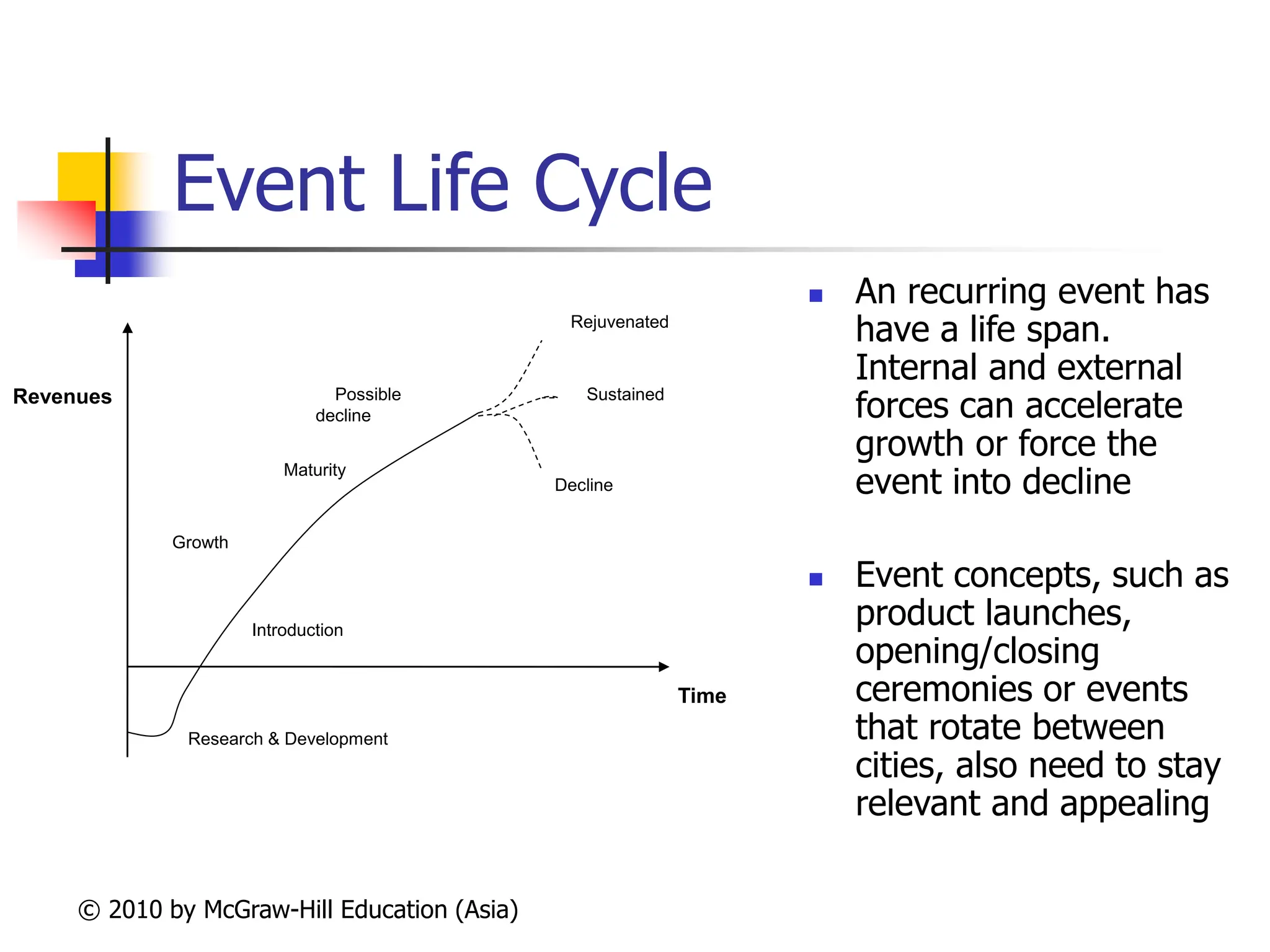
 An recurring event has
have a life span.
Internal and external
forces can accelerate
growth or force the
event into decline
 Event concepts, such as
product launches,
opening/closing
ceremonies or events
that rotate between
cities, also need to stay
relevant and appealing
Revenues
Research & Development
Introduction
Growth
Maturity
Possible
decline
Rejuvenated
Sustained
Decline
Time
© 2010 by McGraw-Hill Education (Asia)
Research and development
 A feasibility study should be conducted to
see how realistically the event could be
staged successfully. The negative revenue
reflects the costs involved in this research
 Need to examine changing participant
tastes and trends, spectator appeal,
resources needed and competitive analysis
© 2010 by McGraw-Hill Education (Asia)
Introduction
 Opening ceremonies normally signal the
beginning of the event
 Marketing programmes need to occur some
time before the opening to ensure targeted
number of participants turn up
 A recurring event will have had time to
create a database, repeat visitors and
appeal. A new event may need to grow
these
© 2010 by McGraw-Hill Education (Asia)
Growth
 Based on the success of the introduction,
the event can continue to attract more
participation
 Reliant on issues such as relevant
programme, marketing and promotion
strategy, retention (for recurring events)
and infrastructure investment
 Popular events can be copied so there is
always a need to keep a competitive edge
© 2010 by McGraw-Hill Education (Asia)
Maturity
 Venues can reach capacities, yet the event must
continue to keep participant numbers
 Various strategies must be in place to continually
add value and additional features to the event
 The event could encourage greater international
team participation, becoming more professional,
more strategic marketing, infrastructure
investment, location packaging, and linking to
popular trends
© 2010 by McGraw-Hill Education (Asia)
Decline
 Events can go into decline for a number of
reasons. The warning signs are often there
 Internal factors: Poor or lack of strategic
management, environmental destruction, event
becoming obsolete and unattractive
 External factors: Political changes, more
appealing competitor events, lack of community
support, demographic shifts, capacity thresholds
being exceeded
© 2010 by McGraw-Hill Education (Asia)
Event’s Carrying Capacity
 Events have physical and social carrying capacity
thresholds. A visitor management system is
needed
 Exceeding numbers can put a strain on the
event, its resources and environment
 Lack of monitoring thresholds can effect
participant event experience and community
support
 Participant arrival and departure sequence must
be carefully considered in event logistics

Event Sustainability in event management

  • 1.
    © 2010 byMcGraw-Hill Education (Asia) Event Sustainability Chapter 4
  • 2.
    © 2010 byMcGraw-Hill Education (Asia) Warning beach signage, Manley Beach, Australia  This signage warns not to collect sea creatures or be subject to a fine. Apart from the protection of the ecosystem, what other factors help to provide event sustainability?
  • 3.
    © 2010 byMcGraw-Hill Education (Asia) Chapter objectives  Understand the concept of sustainable tourism within events  Consider the ways to maximise the benefits of an event strategy  Know the importance of generating revenues and event economic assessment  Understand the event’s life cycle and influences  Examine the carrying capacity concept of an event
  • 4.
    © 2010 byMcGraw-Hill Education (Asia) Sustainable event tourism  The paradox is that while events and festivals have helped in regeneration, they have brought with them change  With many of Asia’s events based on environmental conditions, any decline can have negative consequences on these events
  • 5.
    © 2010 byMcGraw-Hill Education (Asia) Principles and guidelines to sustainable event tourism  These should be practical to implement and monitor  Agreement, consensus and trade-offs maybe needed in the negotiation process  Realistically, events will inevitably impact the environment. The event manager should strive to consciously negate as much as possible
  • 6.
    © 2010 byMcGraw-Hill Education (Asia) Scope of Sustainable Tourism* Sustainable Event tourism Pollution: Air, water, noise, visual Conservation policies and practices: Landscapes, townscapes, waterscapes, wildlife, indigenous communities Resource use: Water, land, food, power, materials Wildlife and ecosystems: Hunting, habitats Operational practices: Recycling, waste management, energy conservation, eco-friendly construction Public sector policy: Funding, legislation, planning Host community: Distribution of benefits, involvement Tourist: Behaviour, concerns Industry: Codes of practice, self-regulation, level of stakeholder collaboration, sustainable tourism-related initiatives * From Swarbrooke, 1999:16
  • 7.
    © 2010 byMcGraw-Hill Education (Asia) Managing and maximising benefits  Both the event and community can benefit from event revenues:  Event fees  Sponsorships and partnerships  Grants  Venue rental  Accommodation providers  Human resources  Travel visas
  • 8.
    © 2010 byMcGraw-Hill Education (Asia) Managing and maximising benefits  Airport taxes  Transportation providers  Restaurant and bars  Entertainment  Utilities  Museums, monuments and sites  Post-event revenues
  • 9.
    © 2010 byMcGraw-Hill Education (Asia) Monitoring economic impacts and revenues  Should the events objective be the generation of extra revenue, this can be done by:  Extending visitor catchment area  Increasing ticket price and delegate fees  Greater spending on event souvenirs and merchandise  Encouraging longer visitor stay
  • 10.
    © 2010 byMcGraw-Hill Education (Asia) Multiplier effect  This looks at the economy by industry sector and conducting an input-output analysis based on the event occurring  The multiplier used depends on its degree of influence on the local economy  Earned income at an event by a local resident can have a ripple effect throughout the economy  Leakage could occur with local goods substituted for more expensive foreign brands
  • 11.
    © 2010 byMcGraw-Hill Education (Asia) Event Life Cycle  An recurring event has have a life span. Internal and external forces can accelerate growth or force the event into decline  Event concepts, such as product launches, opening/closing ceremonies or events that rotate between cities, also need to stay relevant and appealing Revenues Research & Development Introduction Growth Maturity Possible decline Rejuvenated Sustained Decline Time
  • 12.
    © 2010 byMcGraw-Hill Education (Asia) Research and development  A feasibility study should be conducted to see how realistically the event could be staged successfully. The negative revenue reflects the costs involved in this research  Need to examine changing participant tastes and trends, spectator appeal, resources needed and competitive analysis
  • 13.
    © 2010 byMcGraw-Hill Education (Asia) Introduction  Opening ceremonies normally signal the beginning of the event  Marketing programmes need to occur some time before the opening to ensure targeted number of participants turn up  A recurring event will have had time to create a database, repeat visitors and appeal. A new event may need to grow these
  • 14.
    © 2010 byMcGraw-Hill Education (Asia) Growth  Based on the success of the introduction, the event can continue to attract more participation  Reliant on issues such as relevant programme, marketing and promotion strategy, retention (for recurring events) and infrastructure investment  Popular events can be copied so there is always a need to keep a competitive edge
  • 15.
    © 2010 byMcGraw-Hill Education (Asia) Maturity  Venues can reach capacities, yet the event must continue to keep participant numbers  Various strategies must be in place to continually add value and additional features to the event  The event could encourage greater international team participation, becoming more professional, more strategic marketing, infrastructure investment, location packaging, and linking to popular trends
  • 16.
    © 2010 byMcGraw-Hill Education (Asia) Decline  Events can go into decline for a number of reasons. The warning signs are often there  Internal factors: Poor or lack of strategic management, environmental destruction, event becoming obsolete and unattractive  External factors: Political changes, more appealing competitor events, lack of community support, demographic shifts, capacity thresholds being exceeded
  • 17.
    © 2010 byMcGraw-Hill Education (Asia) Event’s Carrying Capacity  Events have physical and social carrying capacity thresholds. A visitor management system is needed  Exceeding numbers can put a strain on the event, its resources and environment  Lack of monitoring thresholds can effect participant event experience and community support  Participant arrival and departure sequence must be carefully considered in event logistics