© 2010 by McGraw-Hill Education (Asia)
Event Concept
Chapter 5
© 2010 by McGraw-Hill Education (Asia)
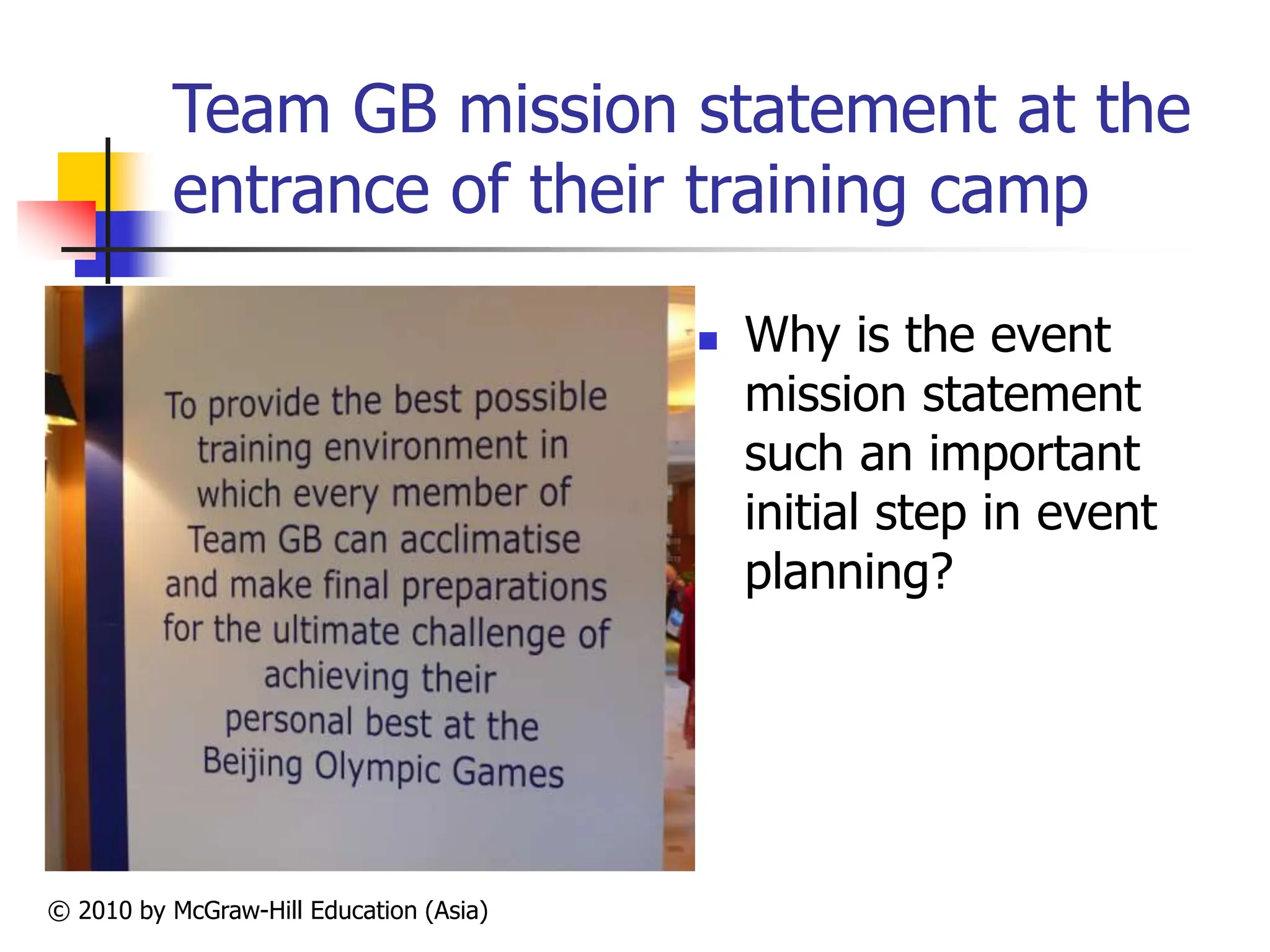
Team GB mission statement at the
entrance of their training camp
 Why is the event
mission statement
such an important
initial step in event
planning?
© 2010 by McGraw-Hill Education (Asia)
Chapter objectives
 Conduct and environmental scan and SWOT
analysis to determine event strategy
 Understand the steps of the event concept
planning from mission statement to setting
objectives
 Establishing an optimal event product portfolio
 Examine the event product in terms of core,
supporting and augmented product, and how to
develop the event product
© 2010 by McGraw-Hill Education (Asia)
Environmental scanning
 Often referred to as PEST – Political, Economic,
Social and Technological forces (or macro-
environmental scanning). Shifts in these can
have a sudden and dramatic effect on the event
 Given the dynamic nature of event planning, the
event manager should be conscious of the
external forces that can occur and how to react
to them to keep the event online
© 2010 by McGraw-Hill Education (Asia)
Political forces
 Perceptions of an unstable political
environment or political unrest can
suddenly put an event into jeopardy
 Incidents and images of political unrest
(which could be isolated) will receive media
attention, further portraying negative
imagery to potential event visitors
© 2010 by McGraw-Hill Education (Asia)
Economic forces
 Events should benefit the wider community.
However, perhaps only facilities within close
proximity of the event receive benefits from
participant visits
 Fluctuating exchange rates can effect
overseas celebrity or services fees (paid in
USD, GBP or EURO)
 Exchange rates can also effect the
affordability of the event, such as ticket,
travel, accommodation, food and other costs
© 2010 by McGraw-Hill Education (Asia)
Social forces
 Events will have degrees of community
inclusion or exclusion. This can create
negative impressions and attitudes towards
the event
 Depending on participant profile,
perceptions of social issues such as crime,
safety, spectator behaviour, crowds and
policing will rank at differ levels of
importance
© 2010 by McGraw-Hill Education (Asia)
Technological forces
 Technology has greatly enhanced how the
potential participant gets information such as
programme, marketing, tickets and transportation
to and from and destination features
 Technology at the event enhances the experience
such as lighting and sound effects, Wi-Fi, access,
safety and participant interaction
 The Internet and mobile technology are major
influencing factors behind the growth of the
interest in events
© 2010 by McGraw-Hill Education (Asia)
Micro-environmental scanning
 Factors and cultures at a local level can
influence and disrupt the event such as
timekeeping, holidays, attention to detail,
legislation and government bureaucracy
 There is a need to be aware of the various
local ‘publics’ who can influence the event,
such as government, media, community,
investors (sponsors) and participants
© 2010 by McGraw-Hill Education (Asia)
SWOT Analysis
 The SWOT analysis (Strengths, Weaknesses,
Opportunities, Threats) highlights points
requiring future strategic action to make the
event(s) a success
 Planning for the future of the event in
particular considers how it can stay appealing
admidst intensifying competition
© 2010 by McGraw-Hill Education (Asia)
Staying competitive
 Several tactics can be employed but will depend
on participant profile and motives to attend on
the importance of the tactic:
 Celebrity endorsement
 Cultural attributes
 Adding value to the programme
 Theme
 Partnership
 One-off
 Exclusivity
 Creating loyalty
© 2010 by McGraw-Hill Education (Asia)
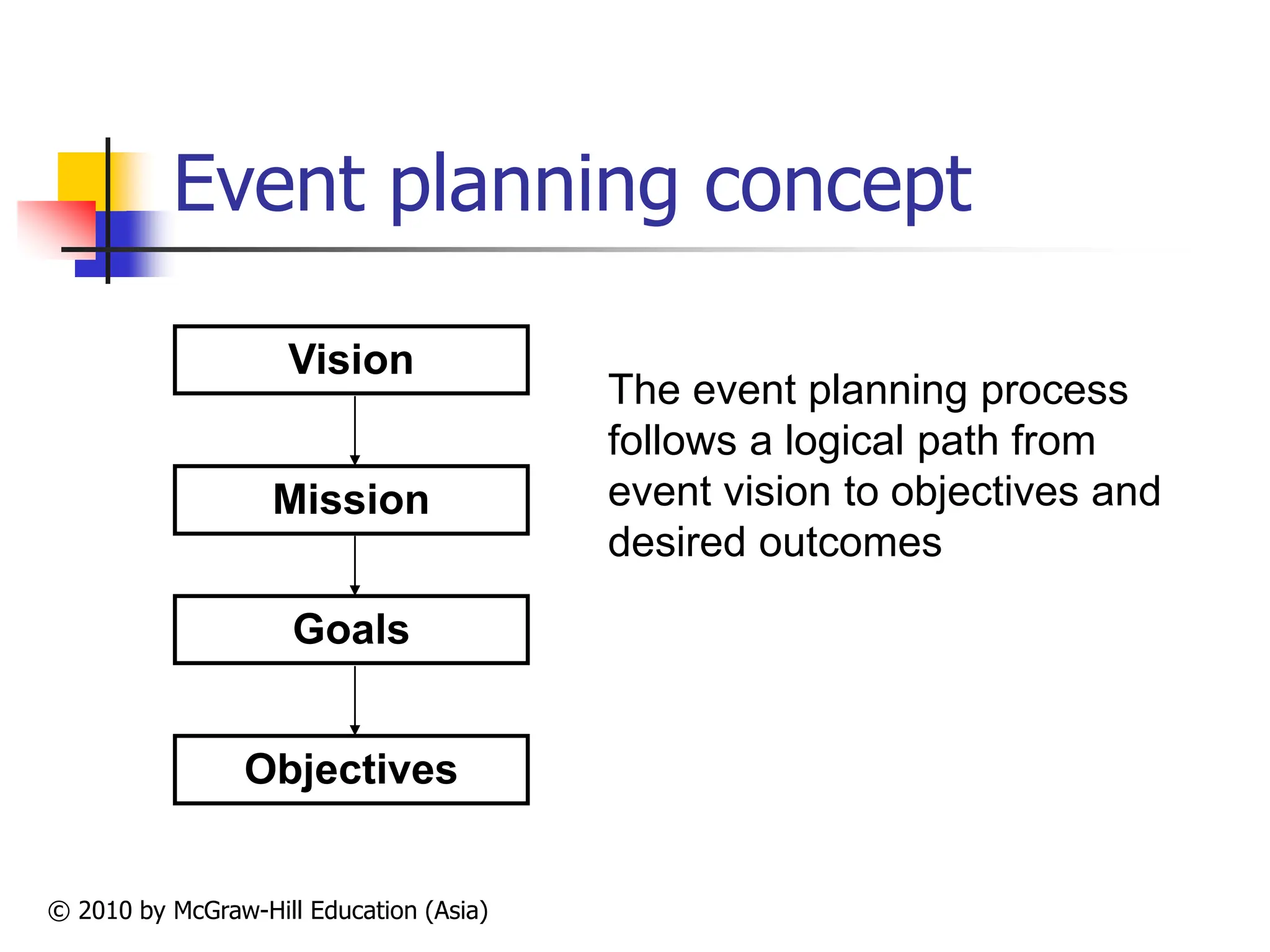
Event planning concept
Vision
Mission
Goals
Objectives
The event planning process
follows a logical path from
event vision to objectives and
desired outcomes
© 2010 by McGraw-Hill Education (Asia)
Setting goals and objectives
 The event objectives are linked to the desired
outcomes
 Objectives will vary among the event
stakeholders, such as making profit, launching a
product successful, social cohesion, enhancing
image, and increasing tourism or consumer
numbers
 Objectives must be SMART: Specific, Measurable,
Achievable, Relevant and Time-specific
© 2010 by McGraw-Hill Education (Asia)
Event Concept Development
Process
 To identify whether the event is needed, is
the right one and where it fits into the
event calendar are important. This should
be constantly reviewed
 The ‘Event Concept Development Process’
will start with a brainstorming or generation
of ideas to a review and evaluation
procedure at the end of the event
© 2010 by McGraw-Hill Education (Asia)
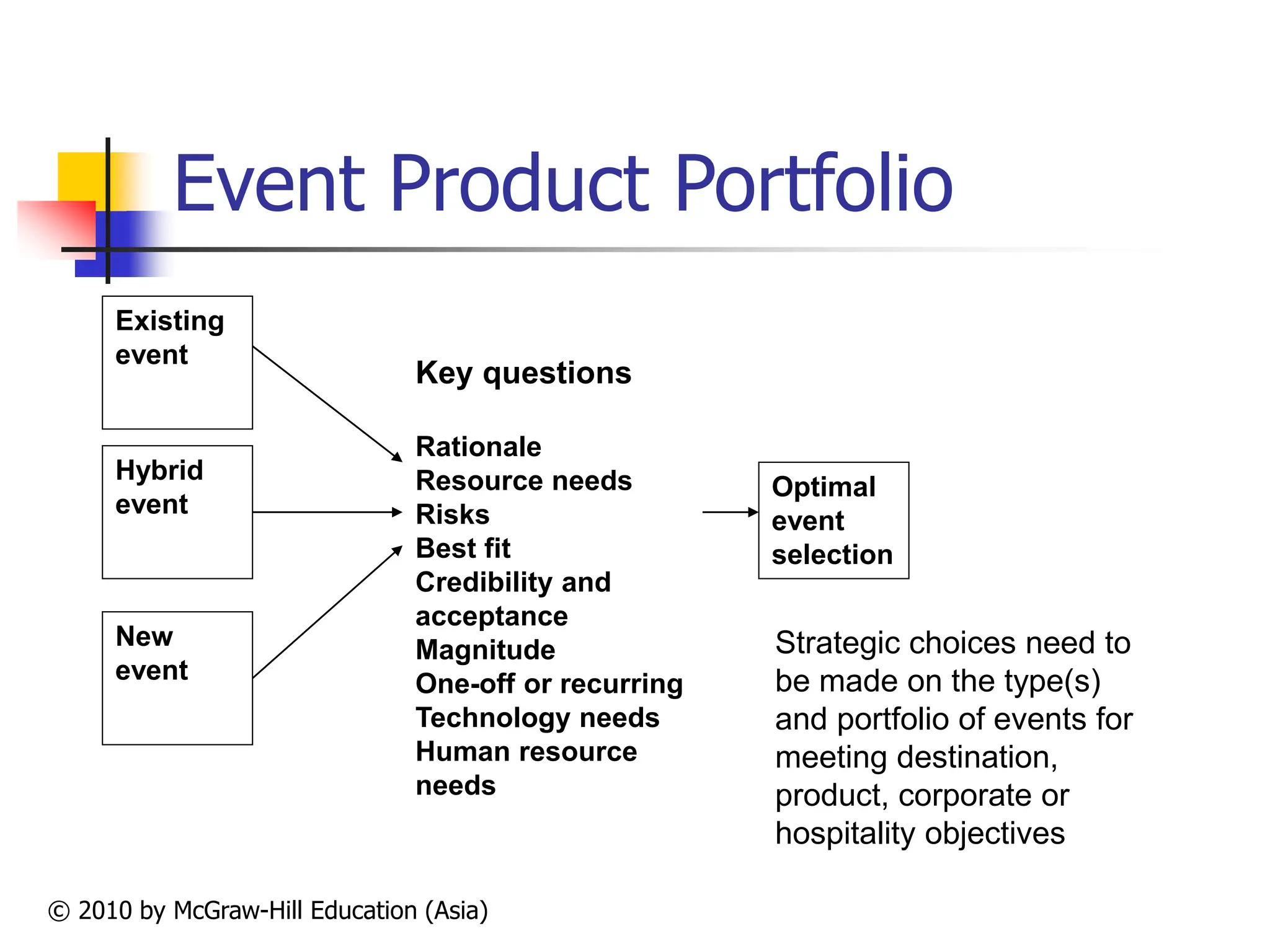
Event Product Portfolio
Existing
event
Hybrid
event
New
event
Key questions
Rationale
Resource needs
Risks
Best fit
Credibility and
acceptance
Magnitude
One-off or recurring
Technology needs
Human resource
needs
Optimal
event
selection
Strategic choices need to
be made on the type(s)
and portfolio of events for
meeting destination,
product, corporate or
hospitality objectives
© 2010 by McGraw-Hill Education (Asia)
Types of events
 Consideration must be given to the event’s attractiveness,
relevance, creative edge and potential
 The Event Product Portfolio Matrix outlines the event
development journey from question mark to star, and from
cash cow and then to dog. This should be a balanced
selection
 Three types of event concepts can be considered:
 New events: Completely new event concept format
 Hybrid events: A creative adaptation to an existing
event
 Existing events: Enhancing a current event by adding
value
© 2010 by McGraw-Hill Education (Asia)
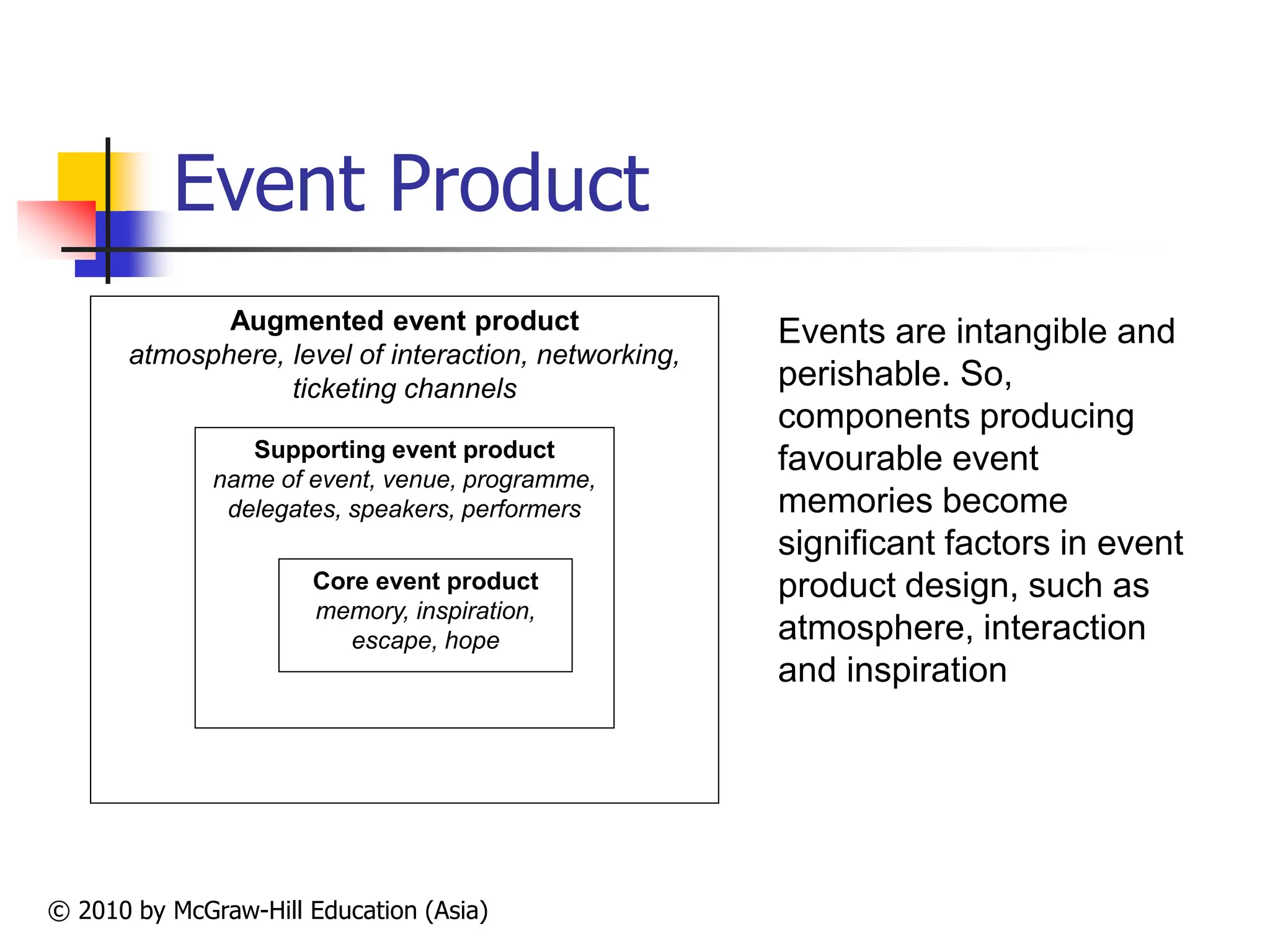
Event Product
Augmented event product
atmosphere, level of interaction, networking,
ticketing channels
Supporting event product
name of event, venue, programme,
delegates, speakers, performers
Core event product
memory, inspiration,
escape, hope
Events are intangible and
perishable. So,
components producing
favourable event
memories become
significant factors in event
product design, such as
atmosphere, interaction
and inspiration
© 2010 by McGraw-Hill Education (Asia)
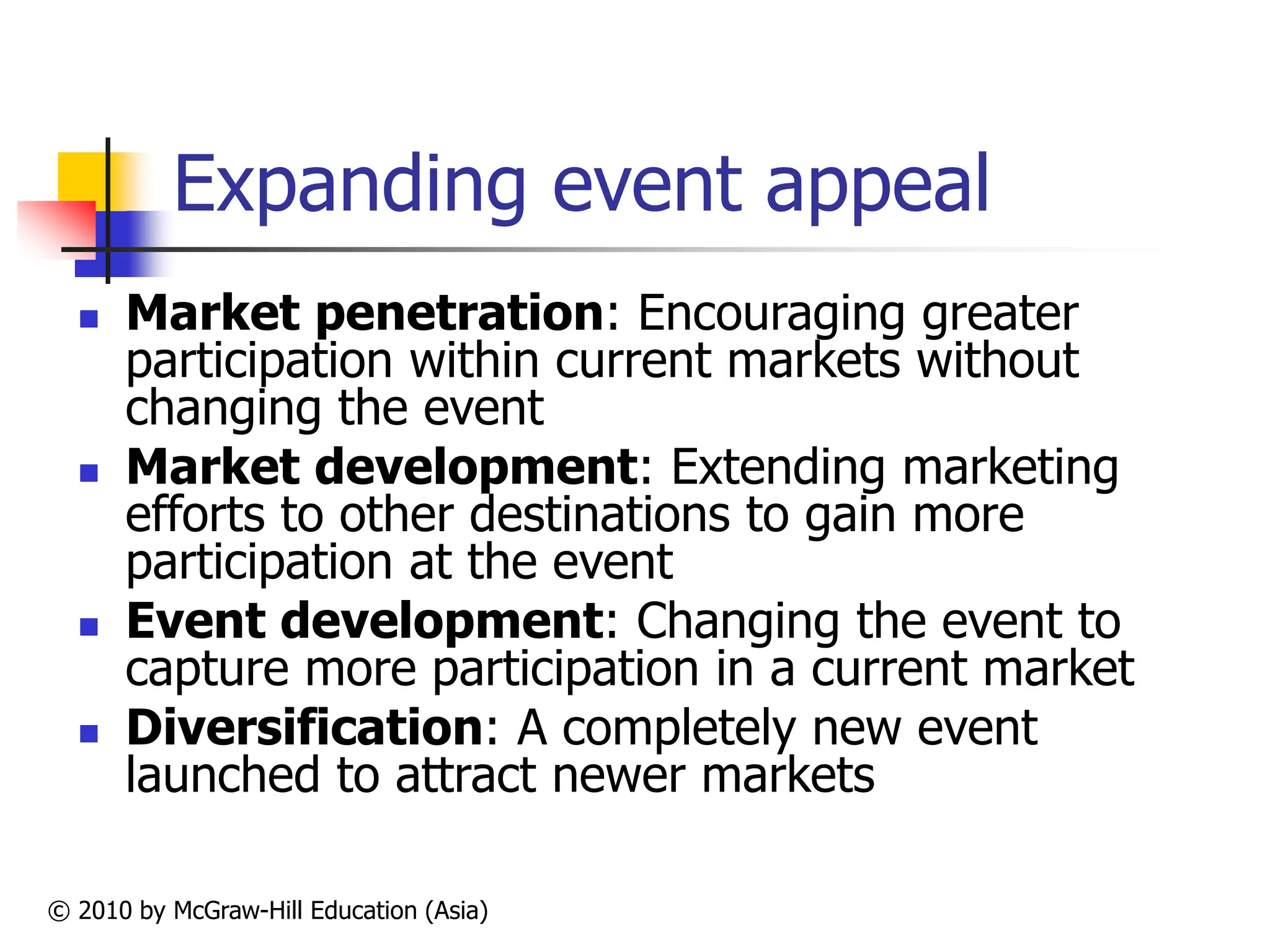
Expanding event appeal
 Market penetration: Encouraging greater
participation within current markets without
changing the event
 Market development: Extending marketing
efforts to other destinations to gain more
participation at the event
 Event development: Changing the event to
capture more participation in a current market
 Diversification: A completely new event
launched to attract newer markets

Event Concept in event management for marketing

  • 1.
    © 2010 byMcGraw-Hill Education (Asia) Event Concept Chapter 5
  • 2.
    © 2010 byMcGraw-Hill Education (Asia) Team GB mission statement at the entrance of their training camp  Why is the event mission statement such an important initial step in event planning?
  • 3.
    © 2010 byMcGraw-Hill Education (Asia) Chapter objectives  Conduct and environmental scan and SWOT analysis to determine event strategy  Understand the steps of the event concept planning from mission statement to setting objectives  Establishing an optimal event product portfolio  Examine the event product in terms of core, supporting and augmented product, and how to develop the event product
  • 4.
    © 2010 byMcGraw-Hill Education (Asia) Environmental scanning  Often referred to as PEST – Political, Economic, Social and Technological forces (or macro- environmental scanning). Shifts in these can have a sudden and dramatic effect on the event  Given the dynamic nature of event planning, the event manager should be conscious of the external forces that can occur and how to react to them to keep the event online
  • 5.
    © 2010 byMcGraw-Hill Education (Asia) Political forces  Perceptions of an unstable political environment or political unrest can suddenly put an event into jeopardy  Incidents and images of political unrest (which could be isolated) will receive media attention, further portraying negative imagery to potential event visitors
  • 6.
    © 2010 byMcGraw-Hill Education (Asia) Economic forces  Events should benefit the wider community. However, perhaps only facilities within close proximity of the event receive benefits from participant visits  Fluctuating exchange rates can effect overseas celebrity or services fees (paid in USD, GBP or EURO)  Exchange rates can also effect the affordability of the event, such as ticket, travel, accommodation, food and other costs
  • 7.
    © 2010 byMcGraw-Hill Education (Asia) Social forces  Events will have degrees of community inclusion or exclusion. This can create negative impressions and attitudes towards the event  Depending on participant profile, perceptions of social issues such as crime, safety, spectator behaviour, crowds and policing will rank at differ levels of importance
  • 8.
    © 2010 byMcGraw-Hill Education (Asia) Technological forces  Technology has greatly enhanced how the potential participant gets information such as programme, marketing, tickets and transportation to and from and destination features  Technology at the event enhances the experience such as lighting and sound effects, Wi-Fi, access, safety and participant interaction  The Internet and mobile technology are major influencing factors behind the growth of the interest in events
  • 9.
    © 2010 byMcGraw-Hill Education (Asia) Micro-environmental scanning  Factors and cultures at a local level can influence and disrupt the event such as timekeeping, holidays, attention to detail, legislation and government bureaucracy  There is a need to be aware of the various local ‘publics’ who can influence the event, such as government, media, community, investors (sponsors) and participants
  • 10.
    © 2010 byMcGraw-Hill Education (Asia) SWOT Analysis  The SWOT analysis (Strengths, Weaknesses, Opportunities, Threats) highlights points requiring future strategic action to make the event(s) a success  Planning for the future of the event in particular considers how it can stay appealing admidst intensifying competition
  • 11.
    © 2010 byMcGraw-Hill Education (Asia) Staying competitive  Several tactics can be employed but will depend on participant profile and motives to attend on the importance of the tactic:  Celebrity endorsement  Cultural attributes  Adding value to the programme  Theme  Partnership  One-off  Exclusivity  Creating loyalty
  • 12.
    © 2010 byMcGraw-Hill Education (Asia) Event planning concept Vision Mission Goals Objectives The event planning process follows a logical path from event vision to objectives and desired outcomes
  • 13.
    © 2010 byMcGraw-Hill Education (Asia) Setting goals and objectives  The event objectives are linked to the desired outcomes  Objectives will vary among the event stakeholders, such as making profit, launching a product successful, social cohesion, enhancing image, and increasing tourism or consumer numbers  Objectives must be SMART: Specific, Measurable, Achievable, Relevant and Time-specific
  • 14.
    © 2010 byMcGraw-Hill Education (Asia) Event Concept Development Process  To identify whether the event is needed, is the right one and where it fits into the event calendar are important. This should be constantly reviewed  The ‘Event Concept Development Process’ will start with a brainstorming or generation of ideas to a review and evaluation procedure at the end of the event
  • 15.
    © 2010 byMcGraw-Hill Education (Asia) Event Product Portfolio Existing event Hybrid event New event Key questions Rationale Resource needs Risks Best fit Credibility and acceptance Magnitude One-off or recurring Technology needs Human resource needs Optimal event selection Strategic choices need to be made on the type(s) and portfolio of events for meeting destination, product, corporate or hospitality objectives
  • 16.
    © 2010 byMcGraw-Hill Education (Asia) Types of events  Consideration must be given to the event’s attractiveness, relevance, creative edge and potential  The Event Product Portfolio Matrix outlines the event development journey from question mark to star, and from cash cow and then to dog. This should be a balanced selection  Three types of event concepts can be considered:  New events: Completely new event concept format  Hybrid events: A creative adaptation to an existing event  Existing events: Enhancing a current event by adding value
  • 17.
    © 2010 byMcGraw-Hill Education (Asia) Event Product Augmented event product atmosphere, level of interaction, networking, ticketing channels Supporting event product name of event, venue, programme, delegates, speakers, performers Core event product memory, inspiration, escape, hope Events are intangible and perishable. So, components producing favourable event memories become significant factors in event product design, such as atmosphere, interaction and inspiration
  • 18.
    © 2010 byMcGraw-Hill Education (Asia) Expanding event appeal  Market penetration: Encouraging greater participation within current markets without changing the event  Market development: Extending marketing efforts to other destinations to gain more participation at the event  Event development: Changing the event to capture more participation in a current market  Diversification: A completely new event launched to attract newer markets