Evaluation 1
In what way does my product use, develop or challenge forms
          and conventions of real media products?
Front Cover: Comparison
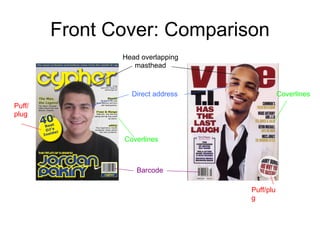
               Head overlapping
                  masthead


                 Direct address              Coverlines
Puff/
plug


               Coverlines


                   Barcode

                                  Puff/plu
                                  g
Front Cover: Similarities
I have compared my front cover to the cover of an issue of Vibe magazine; one I researched. The
genre of music in both magazines are the same so I feel it would be the best comparison as they both
attract similar audiences.

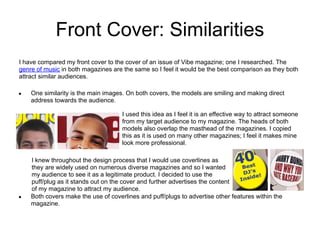
●   One similarity is the main images. On both covers, the models are smiling and making direct
    address towards the audience.

                                     I used this idea as I feel it is an effective way to attract someone
                                     from my target audience to my magazine. The heads of both
                                     models also overlap the masthead of the magazines. I copied
                                     this as it is used on many other magazines; I feel it makes mine
                                     look more professional.

    I knew throughout the design process that I would use coverlines as
    they are widely used on numerous diverse magazines and so I wanted
    my audience to see it as a legitimate product. I decided to use the
    puff/plug as it stands out on the cover and further advertises the content
    of my magazine to attract my audience.
●   Both covers make the use of coverlines and puff/plugs to advertise other features within the
    magazine.
Front Cover: Differences
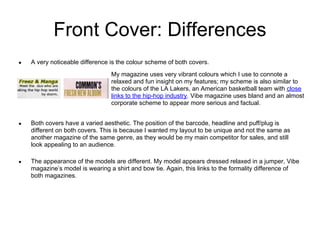
●   A very noticeable difference is the colour scheme of both covers.
                                 My magazine uses very vibrant colours which I use to connote a
                                 relaxed and fun insight on my features; my scheme is also similar to
                                 the colours of the LA Lakers, an American basketball team with close
                                 links to the hip-hop industry. Vibe magazine uses bland and an almost
                                 corporate scheme to appear more serious and factual.


●   Both covers have a varied aesthetic. The position of the barcode, headline and puff/plug is
    different on both covers. This is because I wanted my layout to be unique and not the same as
    another magazine of the same genre, as they would be my main competitor for sales, and still
    look appealing to an audience.

●   The appearance of the models are different. My model appears dressed relaxed in a jumper, Vibe
    magazine’s model is wearing a shirt and bow tie. Again, this links to the formality difference of
    both magazines.
Contents Page: Comparison
Magazine logo


                     Lists of
                     articles


                       Magazine logo


                Image in background of
                        model
Contents Page: Similarities
●   The comparison of contents page is between my magazine and The Source magazine. Similar to
    Vibe, The Source shares the same target audience as my magazine and so would use similar
    features; as well as some different ones.

●   The aesthetic of both are very similar. They both use an image as the background for the page
    with a strip, varying in either colour or transparency, to add the content. I used this layout as I
    thought it was unique and attractive to read for my target audience.

●   Both contents pages include the name/logo of the magazine.

                       Both my magazine and The Source include their logo somewhere on the
                       contents page; mine is in the top banner, The Source’s is in the bottom left
                       corner. This is to be used on numerous pages, in the case of my magazine, to
                       continuously promote it and allow it to become a theme for the layout of my
                       pages; making it something my audience expect to see in every issue.
Contents Page: Differences
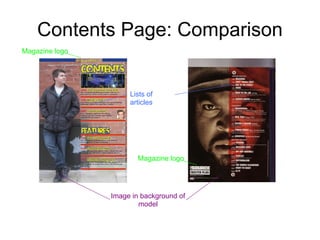
●   The background images. Both magazines use images as backgrounds however the positioning of
    the models differ. In my contents page, my model is in wide shot on the left of the page with my
    articles listed on the right of him. In The Source, the entire image is a close up of their model’s
    face.

                              The Source’s model is also making direct address to their audience
                              whereas mine is facing the list of articles. I wanted my model to appear
                              as if he genuinely was reading the list just as my audience are to build a
                              connection between them; allowing my audience to be more involved
                              with my articles

●   Use of other images. My contents page uses other images to advertise other articles. I wanted my
    audience to understand more of the other articles as well as my main one; advertised by the main
    image. The Source have not used any other images apart from the background, this may be
    because they want to focus on the main story.


●   Colour scheme. As before, the colour scheme of both the pages are different. As previously
    stated, my bright colours are used to connote fun and enjoyment. The Source’s contents page is
    similar to Vibe as the dark colours such as black and red depicts a more serious and somewhat
    sinister feel. This is possibly related to their main article.
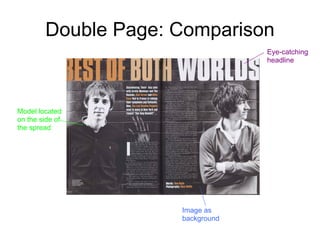
Double Page: Comparison
                              Eye-catching
                              headline


Model located
on the side of
the spread


                 Image as
                 background
Double Page: Comparison
                                  Eye-catching
                                  headline


Model located
on the side of
the spread


                     Image as
                     background
Double Page: Similarities
●   I have compared the double page spread of my magazine to that of an issue of NME; one of my
    case studies. NME aims at a different target audience to me as the genre of music is more indie
    and punk. I wanted to see how my magazine style compared to that of a different genre and target
    readers.

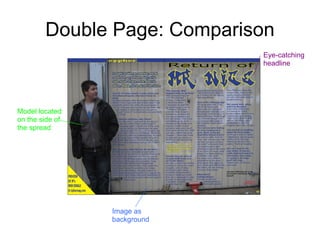
●   Aesthetic is similar (apart from headline). Both double pages include a model(s) on the side of one
    of the pages with the body text of the article on the other side of them. I had seen this layout of the
    main model on several double pages on real magazines. I felt the layout was attractive which is
    why I used it in my double page spread.

●   Introductory paragraph. Both pages have an initial paragraph which stands out from the body text,
    using bold style, to introduce the articles. I used this simply to tell my readers what the article is
    about.


●   Urban environment denoted in main images. The main images used as the background for both
    the double pages connotes an urban vibe; my model is leaning on a garage, NME’s are leaning
    on a brick wall. This relates to my magazine as my genre of music is very urban and street; there
    is possibly some urban relevance in the article on the NME double page.
Double Page: Differences
●   Colour scheme. Similar to previous pages, my colour scheme differs to that of my
    comparison.

                 The double page of my comparison is a black and white effect with the only
                 colour being the orange in the headline.


●   Links to further media. Within my article I use numerous references to online sources such
    as my "magazine website" and I also incorporate Twitter tags. This was to introduce my
    audience to other forms of media relating to my product to widen my audience. NME has a
    large online base however it is not referred to within it's article on its double page spread.


●   Different number of image models. My double page spread uses one model in the main
    image. Although the general layout of my main image is similar to that on the NME double
    page (model on side of article), my double page only has one model instead of two. This is
    purely due to the fact that my article is only about one person, the main model, and the
    NME double page is about two.

Evaluation 1

  • 1.
    Evaluation 1 In whatway does my product use, develop or challenge forms and conventions of real media products?
  • 2.
    Front Cover: Comparison Head overlapping masthead Direct address Coverlines Puff/ plug Coverlines Barcode Puff/plu g
  • 3.
    Front Cover: Similarities Ihave compared my front cover to the cover of an issue of Vibe magazine; one I researched. The genre of music in both magazines are the same so I feel it would be the best comparison as they both attract similar audiences. ● One similarity is the main images. On both covers, the models are smiling and making direct address towards the audience. I used this idea as I feel it is an effective way to attract someone from my target audience to my magazine. The heads of both models also overlap the masthead of the magazines. I copied this as it is used on many other magazines; I feel it makes mine look more professional. I knew throughout the design process that I would use coverlines as they are widely used on numerous diverse magazines and so I wanted my audience to see it as a legitimate product. I decided to use the puff/plug as it stands out on the cover and further advertises the content of my magazine to attract my audience. ● Both covers make the use of coverlines and puff/plugs to advertise other features within the magazine.
  • 4.
    Front Cover: Differences ● A very noticeable difference is the colour scheme of both covers. My magazine uses very vibrant colours which I use to connote a relaxed and fun insight on my features; my scheme is also similar to the colours of the LA Lakers, an American basketball team with close links to the hip-hop industry. Vibe magazine uses bland and an almost corporate scheme to appear more serious and factual. ● Both covers have a varied aesthetic. The position of the barcode, headline and puff/plug is different on both covers. This is because I wanted my layout to be unique and not the same as another magazine of the same genre, as they would be my main competitor for sales, and still look appealing to an audience. ● The appearance of the models are different. My model appears dressed relaxed in a jumper, Vibe magazine’s model is wearing a shirt and bow tie. Again, this links to the formality difference of both magazines.
  • 5.
    Contents Page: Comparison Magazinelogo Lists of articles Magazine logo Image in background of model
  • 6.
    Contents Page: Similarities ● The comparison of contents page is between my magazine and The Source magazine. Similar to Vibe, The Source shares the same target audience as my magazine and so would use similar features; as well as some different ones. ● The aesthetic of both are very similar. They both use an image as the background for the page with a strip, varying in either colour or transparency, to add the content. I used this layout as I thought it was unique and attractive to read for my target audience. ● Both contents pages include the name/logo of the magazine. Both my magazine and The Source include their logo somewhere on the contents page; mine is in the top banner, The Source’s is in the bottom left corner. This is to be used on numerous pages, in the case of my magazine, to continuously promote it and allow it to become a theme for the layout of my pages; making it something my audience expect to see in every issue.
  • 7.
    Contents Page: Differences ● The background images. Both magazines use images as backgrounds however the positioning of the models differ. In my contents page, my model is in wide shot on the left of the page with my articles listed on the right of him. In The Source, the entire image is a close up of their model’s face. The Source’s model is also making direct address to their audience whereas mine is facing the list of articles. I wanted my model to appear as if he genuinely was reading the list just as my audience are to build a connection between them; allowing my audience to be more involved with my articles ● Use of other images. My contents page uses other images to advertise other articles. I wanted my audience to understand more of the other articles as well as my main one; advertised by the main image. The Source have not used any other images apart from the background, this may be because they want to focus on the main story. ● Colour scheme. As before, the colour scheme of both the pages are different. As previously stated, my bright colours are used to connote fun and enjoyment. The Source’s contents page is similar to Vibe as the dark colours such as black and red depicts a more serious and somewhat sinister feel. This is possibly related to their main article.
  • 8.
    Double Page: Comparison Eye-catching headline Model located on the side of the spread Image as background
  • 9.
    Double Page: Comparison Eye-catching headline Model located on the side of the spread Image as background
  • 10.
    Double Page: Similarities ● I have compared the double page spread of my magazine to that of an issue of NME; one of my case studies. NME aims at a different target audience to me as the genre of music is more indie and punk. I wanted to see how my magazine style compared to that of a different genre and target readers. ● Aesthetic is similar (apart from headline). Both double pages include a model(s) on the side of one of the pages with the body text of the article on the other side of them. I had seen this layout of the main model on several double pages on real magazines. I felt the layout was attractive which is why I used it in my double page spread. ● Introductory paragraph. Both pages have an initial paragraph which stands out from the body text, using bold style, to introduce the articles. I used this simply to tell my readers what the article is about. ● Urban environment denoted in main images. The main images used as the background for both the double pages connotes an urban vibe; my model is leaning on a garage, NME’s are leaning on a brick wall. This relates to my magazine as my genre of music is very urban and street; there is possibly some urban relevance in the article on the NME double page.
  • 11.
    Double Page: Differences ● Colour scheme. Similar to previous pages, my colour scheme differs to that of my comparison. The double page of my comparison is a black and white effect with the only colour being the orange in the headline. ● Links to further media. Within my article I use numerous references to online sources such as my "magazine website" and I also incorporate Twitter tags. This was to introduce my audience to other forms of media relating to my product to widen my audience. NME has a large online base however it is not referred to within it's article on its double page spread. ● Different number of image models. My double page spread uses one model in the main image. Although the general layout of my main image is similar to that on the NME double page (model on side of article), my double page only has one model instead of two. This is purely due to the fact that my article is only about one person, the main model, and the NME double page is about two.