Learning how to
evaluate learning
together while
learning together,
evaluating the
Innovative Farmers
programme
Matt Reed, Julie Ingram, Jane Mills + Jasmine Black
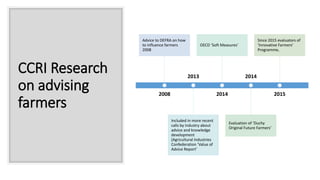
CCRI Research
on advising
farmers
2008
Advice to DEFRA on how
to influence farmers
2008
2013
Included in more recent
calls by industry about
advice and knowledge
development
(Agricultural Industries
Confederation ‘Value of
Advice Report’
2014
OECD ‘Soft Measures’
2014
Evaluation of ‘Duchy
Original Future Farmers’
2015
Since 2015 evaluators of
‘Innovative Farmers’
Programme,
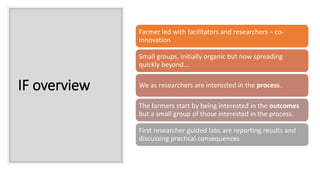
IF overview
Farmer led with facilitators and researchers – co-
innovation
Small groups, initially organic but now spreading
quickly beyond…
We as researchers are interested in the process..
The farmers start by being interested in the outcomes
but a small group of those interested in the process.
First researcher guided labs are reporting results and
discussing practical consequences
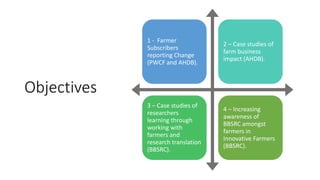
Objectives
1 - Farmer
Subscribers
reporting Change
(PWCF and AHDB).
2 – Case studies of
farm business
impact (AHDB).
3 – Case studies of
researchers
learning through
working with
farmers and
research translation
(BBSRC).
4 – Increasing
awareness of
BBSRC amongst
farmers in
Innovative Farmers
(BBSRC).
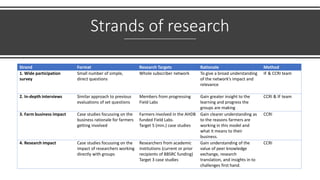
Strands of research
Strand Format Research Targets Rationale Method
1. Wide participation
survey
Small number of simple,
direct questions
Whole subscriber network To give a broad understanding
of the network’s impact and
relevance
IF & CCRI team
2. In-depth interviews Similar approach to previous
evaluations of set questions
Members from progressing
Field Labs
Gain greater insight to the
learning and progress the
groups are making
CCRI & IF team
3. Farm business impact Case studies focussing on the
business rationale for farmers
getting involved
Farmers involved in the AHDB
funded Field Labs.
Target 5 (min.) case studies
Gain clearer understanding as
to the reasons farmers are
working in this model and
what it means to their
business.
CCRI
4. Research impact Case studies focussing on the
impact of researchers working
directly with groups
Researchers from academic
institutions (current or prior
recipients of BBSRC funding)
Target 3 case studies
Gain understanding of the
value of peer knowledge
exchange, research
translation, and insights in to
challenges first hand.
CCRI
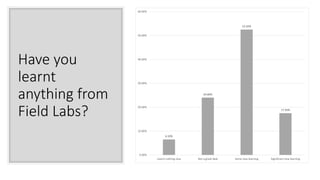
Have you
learnt
anything from
Field Labs?
6.50%
24.00%
52.50%
17.50%
0.00%
10.00%
20.00%
30.00%
40.00%
50.00%
60.00%
Learnt nothing new Not a great deal Some new learning Significant new learning
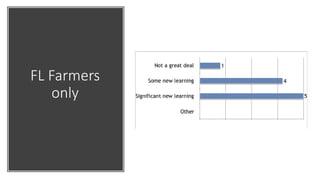
FL Farmers
only
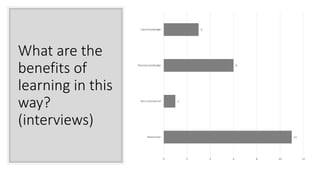
What are the
benefits of
learning in this
way?
(interviews)
11
1
6
3
0 2 4 6 8 10 12
Researcher
Non-commercial
Sharing knowledge
Local knowledge
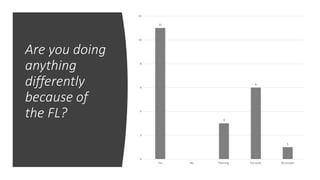
Are you doing
anything
differently
because of
the FL?
11
3
6
1
0
2
4
6
8
10
12
Yes No Planning Too early No answer
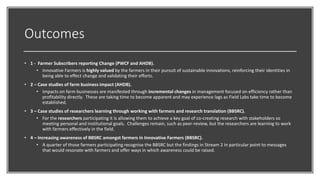
Outcomes
• 1 - Farmer Subscribers reporting Change (PWCF and AHDB).
• Innovative Farmers is highly valued by the farmers in their pursuit of sustainable innovations, reinforcing their identities in
being able to effect change and validating their efforts.
• 2 – Case studies of farm business impact (AHDB).
• Impacts on farm businesses are manifested through incremental changes in management focused on efficiency rather than
profitability directly. These are taking time to become apparent and may experience lags as Field Labs take time to become
established.
• 3 – Case studies of researchers learning through working with farmers and research translation (BBSRC).
• For the researchers participating it is allowing them to achieve a key goal of co-creating research with stakeholders so
meeting personal and institutional goals. Challenges remain, such as peer-review, but the researchers are learning to work
with farmers effectively in the field.
• 4 – Increasing awareness of BBSRC amongst farmers in Innovative Farmers (BBSRC).
• A quarter of those farmers participating recognise the BBSRC but the findings in Stream 2 in particular point to messages
that would resonate with farmers and offer ways in which awareness could be raised.
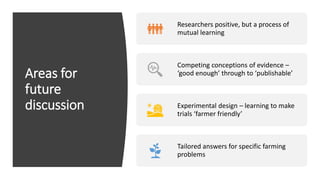
Areas for
future
discussion
Researchers positive, but a process of
mutual learning
Competing conceptions of evidence –
‘good enough’ through to ‘publishable’
Experimental design – learning to make
trials ‘farmer friendly’
Tailored answers for specific farming
problems

Evaluating the Innovative Farmers Programmes

  • 1.
    Learning how to evaluatelearning together while learning together, evaluating the Innovative Farmers programme Matt Reed, Julie Ingram, Jane Mills + Jasmine Black
  • 2.
    CCRI Research on advising farmers 2008 Adviceto DEFRA on how to influence farmers 2008 2013 Included in more recent calls by industry about advice and knowledge development (Agricultural Industries Confederation ‘Value of Advice Report’ 2014 OECD ‘Soft Measures’ 2014 Evaluation of ‘Duchy Original Future Farmers’ 2015 Since 2015 evaluators of ‘Innovative Farmers’ Programme,
  • 3.
    IF overview Farmer ledwith facilitators and researchers – co- innovation Small groups, initially organic but now spreading quickly beyond… We as researchers are interested in the process.. The farmers start by being interested in the outcomes but a small group of those interested in the process. First researcher guided labs are reporting results and discussing practical consequences
  • 4.
    Objectives 1 - Farmer Subscribers reportingChange (PWCF and AHDB). 2 – Case studies of farm business impact (AHDB). 3 – Case studies of researchers learning through working with farmers and research translation (BBSRC). 4 – Increasing awareness of BBSRC amongst farmers in Innovative Farmers (BBSRC).
  • 5.
    Strands of research StrandFormat Research Targets Rationale Method 1. Wide participation survey Small number of simple, direct questions Whole subscriber network To give a broad understanding of the network’s impact and relevance IF & CCRI team 2. In-depth interviews Similar approach to previous evaluations of set questions Members from progressing Field Labs Gain greater insight to the learning and progress the groups are making CCRI & IF team 3. Farm business impact Case studies focussing on the business rationale for farmers getting involved Farmers involved in the AHDB funded Field Labs. Target 5 (min.) case studies Gain clearer understanding as to the reasons farmers are working in this model and what it means to their business. CCRI 4. Research impact Case studies focussing on the impact of researchers working directly with groups Researchers from academic institutions (current or prior recipients of BBSRC funding) Target 3 case studies Gain understanding of the value of peer knowledge exchange, research translation, and insights in to challenges first hand. CCRI
  • 6.
    Have you learnt anything from FieldLabs? 6.50% 24.00% 52.50% 17.50% 0.00% 10.00% 20.00% 30.00% 40.00% 50.00% 60.00% Learnt nothing new Not a great deal Some new learning Significant new learning
  • 7.
  • 8.
    What are the benefitsof learning in this way? (interviews) 11 1 6 3 0 2 4 6 8 10 12 Researcher Non-commercial Sharing knowledge Local knowledge
  • 9.
    Are you doing anything differently becauseof the FL? 11 3 6 1 0 2 4 6 8 10 12 Yes No Planning Too early No answer
  • 10.
    Outcomes • 1 -Farmer Subscribers reporting Change (PWCF and AHDB). • Innovative Farmers is highly valued by the farmers in their pursuit of sustainable innovations, reinforcing their identities in being able to effect change and validating their efforts. • 2 – Case studies of farm business impact (AHDB). • Impacts on farm businesses are manifested through incremental changes in management focused on efficiency rather than profitability directly. These are taking time to become apparent and may experience lags as Field Labs take time to become established. • 3 – Case studies of researchers learning through working with farmers and research translation (BBSRC). • For the researchers participating it is allowing them to achieve a key goal of co-creating research with stakeholders so meeting personal and institutional goals. Challenges remain, such as peer-review, but the researchers are learning to work with farmers effectively in the field. • 4 – Increasing awareness of BBSRC amongst farmers in Innovative Farmers (BBSRC). • A quarter of those farmers participating recognise the BBSRC but the findings in Stream 2 in particular point to messages that would resonate with farmers and offer ways in which awareness could be raised.
  • 11.
    Areas for future discussion Researchers positive,but a process of mutual learning Competing conceptions of evidence – ‘good enough’ through to ‘publishable’ Experimental design – learning to make trials ‘farmer friendly’ Tailored answers for specific farming problems