Evaluating Sources
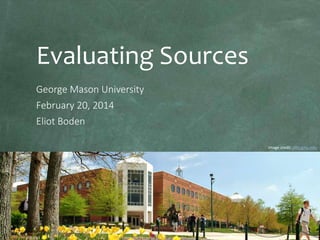
George Mason University
February 20, 2014
Eliot Boden
Image credit ulife.gmu.edu
What is Information Literacy?
“Information literacy is a set of abilities requiring individuals to

recognize when information is needed and have the ability to
locate, evaluate, and effectively use the needed information.”*
• Determine the extent of information needed
• Access the needed information effectively and efficiently
• Evaluate information and its sources critically
• Incorporate selected information into one’s knowledge base
• Use information effectively to accomplish a specific purpose

• Understand the economic, legal, and social issues surrounding the use
of information, and access and use information ethically and legally
* Association of College and Research Libraries. “Information Literacy Competency Standards.” Chicago: American Library
Association, 2000. http://www.ala.org/acrl/standards/informationliteracycompetency. Web. 16 Feb 2013.
Today’s Objective
Standard 3: The information literate student evaluates information
and its sources critically by applying relevant criteria.
Be an Information Detective
For college research papers, you
must use credible sources.

Internet research is acceptable,
but not all websites are reliable.
How can you be sure information
on a website is trustworthy?
Think like a detective!
Ask questions and confirm your
findings with multiple sources.
Image credit Flickr user brickdisplaycase
Follow the Clues
When you are searching for information on the Internet, keep
a few basic questions in mind:
Who is the author? Is there a sponsoring organization?
What is the purpose of this website? Is it informational,
entertaining, or commercial?
Where did the information come from? Do they provide a
list of sources or citations?

When was this page created and last updated?
Why is this a reliable source for a paper or presentation?

Image credit divinasementekids
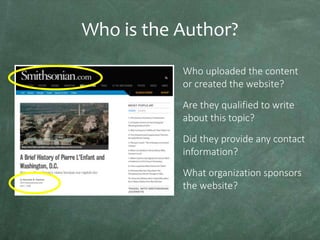
Who is the Author?
Who uploaded the content
or created the website?

Are they qualified to write
about this topic?
Did they provide any contact
information?
What organization sponsors
the website?
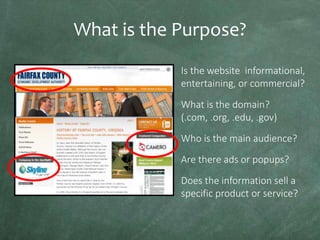
What is the Purpose?
Is the website informational,
entertaining, or commercial?
What is the domain?
(.com, .org, .edu, .gov)
Who is the main audience?
Are there ads or popups?
Does the information sell a
specific product or service?
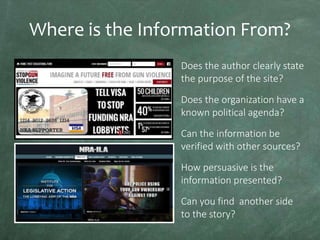
Where is the Information From?
Does the author clearly state
the purpose of the site?
Does the organization have a
known political agenda?
Can the information be
verified with other sources?

How persuasive is the
information presented?
Can you find another side
to the story?
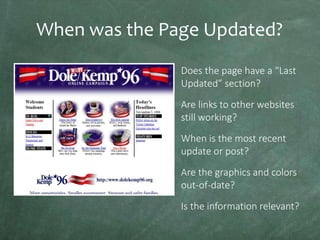
When was the Page Updated?
Does the page have a “Last
Updated” section?
Are links to other websites
still working?
When is the most recent
update or post?
Are the graphics and colors
out-of-date?

Is the information relevant?
Why is This a Reliable Source?
You may not be able to answer to each of these questions for
every website. Consider the importance of each before
deciding to cite a website. If in doubt, ask a librarian.
The best websites for conducting research:

Have known, reputable authors with contact information.
Are sponsored by legitimate, trustworthy organizations.
Support clearly-stated educational, not commercial, purposes.

Do not endorse a political agenda or sell products.
Maintain current information and are updated regularly.
Have More Questions? Just Ask!
library.gmu.edu/ask
Call:
Fenwick Library / (703) 993-2210
Arlington Campus Library / (703) 993-8230
Johnson Center Library / (703) 993-9070
Mercer Library / (703) 993-8342
Text: (703) 291-1GMU [703-291-1468]
Schedule a personal research appointment with an
expert Liaison Librarian.
E-Mail research questions to your Liaison Librarian
Browse frequently asked questions.
View InfoGuides - resources carefully selected by
your Liaison Librarian for research at Mason.
Image credit mrlibrarydude

Evaluating Sources

  • 1.
    Evaluating Sources George MasonUniversity February 20, 2014 Eliot Boden Image credit ulife.gmu.edu
  • 2.
    What is InformationLiteracy? “Information literacy is a set of abilities requiring individuals to recognize when information is needed and have the ability to locate, evaluate, and effectively use the needed information.”* • Determine the extent of information needed • Access the needed information effectively and efficiently • Evaluate information and its sources critically • Incorporate selected information into one’s knowledge base • Use information effectively to accomplish a specific purpose • Understand the economic, legal, and social issues surrounding the use of information, and access and use information ethically and legally * Association of College and Research Libraries. “Information Literacy Competency Standards.” Chicago: American Library Association, 2000. http://www.ala.org/acrl/standards/informationliteracycompetency. Web. 16 Feb 2013.
  • 3.
    Today’s Objective Standard 3:The information literate student evaluates information and its sources critically by applying relevant criteria.
  • 4.
    Be an InformationDetective For college research papers, you must use credible sources. Internet research is acceptable, but not all websites are reliable. How can you be sure information on a website is trustworthy? Think like a detective! Ask questions and confirm your findings with multiple sources. Image credit Flickr user brickdisplaycase
  • 5.
    Follow the Clues Whenyou are searching for information on the Internet, keep a few basic questions in mind: Who is the author? Is there a sponsoring organization? What is the purpose of this website? Is it informational, entertaining, or commercial? Where did the information come from? Do they provide a list of sources or citations? When was this page created and last updated? Why is this a reliable source for a paper or presentation? Image credit divinasementekids
  • 6.
    Who is theAuthor? Who uploaded the content or created the website? Are they qualified to write about this topic? Did they provide any contact information? What organization sponsors the website?
  • 7.
    What is thePurpose? Is the website informational, entertaining, or commercial? What is the domain? (.com, .org, .edu, .gov) Who is the main audience? Are there ads or popups? Does the information sell a specific product or service?
  • 8.
    Where is theInformation From? Does the author clearly state the purpose of the site? Does the organization have a known political agenda? Can the information be verified with other sources? How persuasive is the information presented? Can you find another side to the story?
  • 9.
    When was thePage Updated? Does the page have a “Last Updated” section? Are links to other websites still working? When is the most recent update or post? Are the graphics and colors out-of-date? Is the information relevant?
  • 10.
    Why is Thisa Reliable Source? You may not be able to answer to each of these questions for every website. Consider the importance of each before deciding to cite a website. If in doubt, ask a librarian. The best websites for conducting research: Have known, reputable authors with contact information. Are sponsored by legitimate, trustworthy organizations. Support clearly-stated educational, not commercial, purposes. Do not endorse a political agenda or sell products. Maintain current information and are updated regularly.
  • 11.
    Have More Questions?Just Ask! library.gmu.edu/ask Call: Fenwick Library / (703) 993-2210 Arlington Campus Library / (703) 993-8230 Johnson Center Library / (703) 993-9070 Mercer Library / (703) 993-8342 Text: (703) 291-1GMU [703-291-1468] Schedule a personal research appointment with an expert Liaison Librarian. E-Mail research questions to your Liaison Librarian Browse frequently asked questions. View InfoGuides - resources carefully selected by your Liaison Librarian for research at Mason. Image credit mrlibrarydude