Unethical Practices in Companies
Presenting by Palas Jena
Priya Bhut
Harapriya Debata
Susobhana Barik
Priyabrata Das
Overview…..
• The Indian government forced Coca-Cola out of the country in 1977.
• The company returned in 1993
• Each bottling plants extracts up to 1.5m litres of water everyday from the
ground.
• It takes nine litres of clean water to manufacture a litre of Coke.
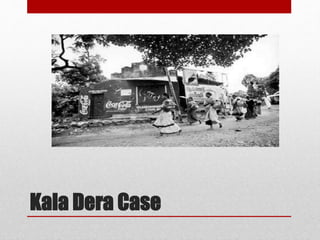
Kala Dera Case
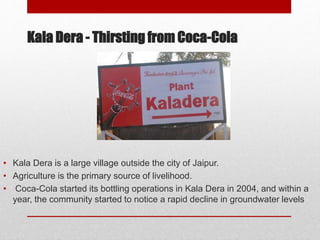
Kala Dera - Thirsting from Coca-Cola
• Kala Dera is a large village outside the city of Jaipur.
• Agriculture is the primary source of livelihood.
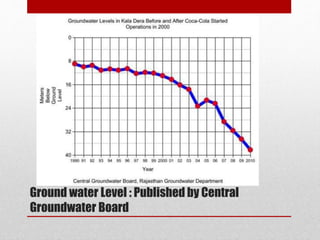
• Coca-Cola started its bottling operations in Kala Dera in 2004, and within a
year, the community started to notice a rapid decline in groundwater levels
Kala Dera lies in an overexploited groundwater area and access
to water has been difficult.
Summers are particularly intense in the area, when water
shortages are most acute.
Moreover summer months are also when Coca-Cola reaches its
peak production.
Coca-Cola bottling plant in Kala Dera continues extracts the most
water, making already existing water shortages even worse.
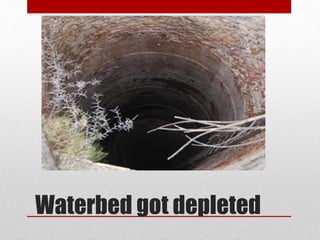
Waterbed got depleted
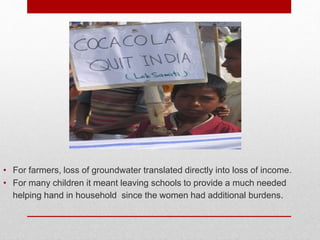
• For farmers, loss of groundwater translated directly into loss of income.
• For many children it meant leaving schools to provide a much needed
helping hand in household since the women had additional burdens.
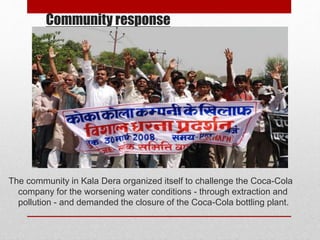
Community response
The community in Kala Dera organized itself to challenge the Coca-Cola
company for the worsening water conditions - through extraction and
pollution - and demanded the closure of the Coca-Cola bottling plant.
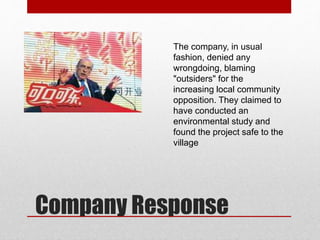
The company, in usual
fashion, denied any
wrongdoing, blaming
"outsiders" for the
increasing local community
opposition. They claimed to
have conducted an
environmental study and
found the project safe to the
village
Company Response
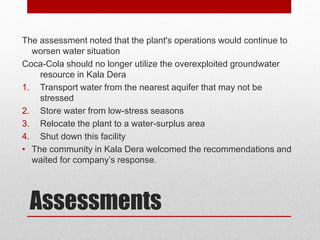
Assessments
The assessment noted that the plant's operations would continue to
worsen water situation
Coca-Cola should no longer utilize the overexploited groundwater
resource in Kala Dera
1. Transport water from the nearest aquifer that may not be
stressed
2. Store water from low-stress seasons
3. Relocate the plant to a water-surplus area
4. Shut down this facility
• The community in Kala Dera welcomed the recommendations and
waited for company’s response.
Ground water Level : Published by Central
Groundwater Board
Coca-Cola's Response -
Unethical and Dishonest
• Coca-cola took seven month to respond
• Coca-cola not respond to the concern raised
• Unethical and dishonest campaign
• Chosen to continue the operation
• Continued in misery of thousand people
Criminal Negligence
• Coca-Cola is supposed to have conducted an Environmental
Impact assessment.
• Company started its operations even though it found to be
"overexploited 1998.
• Describes itself as a "hydration" company.
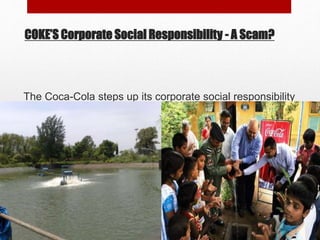
COKE’S Corporate Social Responsibility - A Scam?
The Coca-Cola steps up its corporate social responsibility
announcing to the world that it is a “green and socially
responsible company.” --- but was not the case at kala dera
Rainwater harvesting --- Dilapidated and a Bluff
Some serious concerns about Coca-Cola's
claims on rainwater harvesting
• The company announced that it has recharged five times the amount of
water it has used.
• When asked to back it up with numbers, Coca-Cola does not provide any.
• Coca-Cola states that they "will install measuring devices that will verify the
amount of water recharged.”
• If they do not have measuring devices installed to verify the amount of water
recharged, how can they make a claim of recharging five times the water that
they have extracted?
• Coca-Cola started rainwater harvesting to overcome response to the
growing campaigns against its water mismanagement.
• Coca-Cola was bluffing people with its rainwater harvesting.
• The rainfall in the area is too low, and the amount of rainfalls fluctuates a
lot contributing to 30 days of rains every year
• 80% of those rains come in just two or three days and hence rainwater
harvesting is simply not efficient
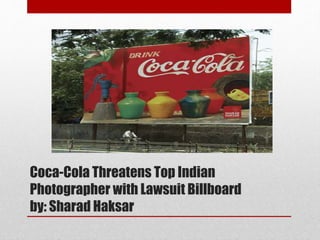
Coca-Cola Threatens Top Indian
Photographer with Lawsuit Billboard
by: Sharad Haksar
• In 2005, Coca-Cola's Indian subsidiary, sent a letter to Mr. Haksar
threatening him with serious legal actions unless the billboard was replaced
'unconditionally and immediately'.
• Coca-Cola would seek Indian Rupees 2 million (US$ 45,000) for “the
damage to the goodwill and reputation" of Coca-Cola, and also demanded an
'unconditional apology in writing'.
• Mr. Haksar said that he had no intentions of issuing any apology because he
has not committed anything wrong.
Reference
http://www.indiaresource.org/news/2011/1008.html
http://www.polarisinstitute.org/farmers_vs_cocacola_in_water_wars
Executive summary of the study on independent third party
assessment of Coca-Cola facilities in India, by TERI - The Energy and
Resources Institute

Etics presentation

  • 1.
    Unethical Practices inCompanies Presenting by Palas Jena Priya Bhut Harapriya Debata Susobhana Barik Priyabrata Das
  • 2.
    Overview….. • The Indiangovernment forced Coca-Cola out of the country in 1977. • The company returned in 1993 • Each bottling plants extracts up to 1.5m litres of water everyday from the ground. • It takes nine litres of clean water to manufacture a litre of Coke.
  • 3.
  • 4.
    Kala Dera -Thirsting from Coca-Cola • Kala Dera is a large village outside the city of Jaipur. • Agriculture is the primary source of livelihood. • Coca-Cola started its bottling operations in Kala Dera in 2004, and within a year, the community started to notice a rapid decline in groundwater levels
  • 5.
    Kala Dera liesin an overexploited groundwater area and access to water has been difficult. Summers are particularly intense in the area, when water shortages are most acute. Moreover summer months are also when Coca-Cola reaches its peak production. Coca-Cola bottling plant in Kala Dera continues extracts the most water, making already existing water shortages even worse.
  • 6.
  • 7.
    • For farmers,loss of groundwater translated directly into loss of income. • For many children it meant leaving schools to provide a much needed helping hand in household since the women had additional burdens.
  • 8.
    Community response The communityin Kala Dera organized itself to challenge the Coca-Cola company for the worsening water conditions - through extraction and pollution - and demanded the closure of the Coca-Cola bottling plant.
  • 9.
    The company, inusual fashion, denied any wrongdoing, blaming "outsiders" for the increasing local community opposition. They claimed to have conducted an environmental study and found the project safe to the village Company Response
  • 10.
    Assessments The assessment notedthat the plant's operations would continue to worsen water situation Coca-Cola should no longer utilize the overexploited groundwater resource in Kala Dera 1. Transport water from the nearest aquifer that may not be stressed 2. Store water from low-stress seasons 3. Relocate the plant to a water-surplus area 4. Shut down this facility • The community in Kala Dera welcomed the recommendations and waited for company’s response.
  • 11.
    Ground water Level: Published by Central Groundwater Board
  • 12.
    Coca-Cola's Response - Unethicaland Dishonest • Coca-cola took seven month to respond • Coca-cola not respond to the concern raised • Unethical and dishonest campaign • Chosen to continue the operation • Continued in misery of thousand people
  • 13.
    Criminal Negligence • Coca-Colais supposed to have conducted an Environmental Impact assessment. • Company started its operations even though it found to be "overexploited 1998. • Describes itself as a "hydration" company.
  • 14.
    COKE’S Corporate SocialResponsibility - A Scam? The Coca-Cola steps up its corporate social responsibility announcing to the world that it is a “green and socially responsible company.” --- but was not the case at kala dera Rainwater harvesting --- Dilapidated and a Bluff
  • 15.
    Some serious concernsabout Coca-Cola's claims on rainwater harvesting • The company announced that it has recharged five times the amount of water it has used. • When asked to back it up with numbers, Coca-Cola does not provide any. • Coca-Cola states that they "will install measuring devices that will verify the amount of water recharged.” • If they do not have measuring devices installed to verify the amount of water recharged, how can they make a claim of recharging five times the water that they have extracted?
  • 16.
    • Coca-Cola startedrainwater harvesting to overcome response to the growing campaigns against its water mismanagement. • Coca-Cola was bluffing people with its rainwater harvesting. • The rainfall in the area is too low, and the amount of rainfalls fluctuates a lot contributing to 30 days of rains every year • 80% of those rains come in just two or three days and hence rainwater harvesting is simply not efficient
  • 17.
    Coca-Cola Threatens TopIndian Photographer with Lawsuit Billboard by: Sharad Haksar
  • 18.
    • In 2005,Coca-Cola's Indian subsidiary, sent a letter to Mr. Haksar threatening him with serious legal actions unless the billboard was replaced 'unconditionally and immediately'. • Coca-Cola would seek Indian Rupees 2 million (US$ 45,000) for “the damage to the goodwill and reputation" of Coca-Cola, and also demanded an 'unconditional apology in writing'. • Mr. Haksar said that he had no intentions of issuing any apology because he has not committed anything wrong.
  • 19.
    Reference http://www.indiaresource.org/news/2011/1008.html http://www.polarisinstitute.org/farmers_vs_cocacola_in_water_wars Executive summary ofthe study on independent third party assessment of Coca-Cola facilities in India, by TERI - The Energy and Resources Institute

Editor's Notes

  • #6 The conditional licence granted by the local panchayat authorised the use of motorised pumps. But the company drilled more than six wells & illegally installed high-powered electric pumps to extract millions of litres of pure water. The level of the water table fell from 45 to 150 metres below the surface.