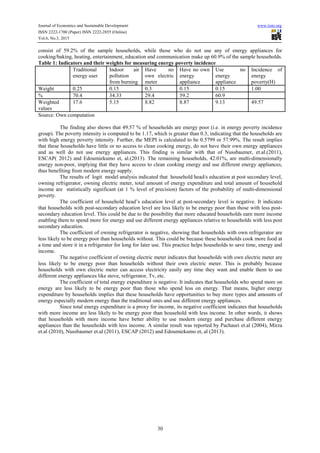
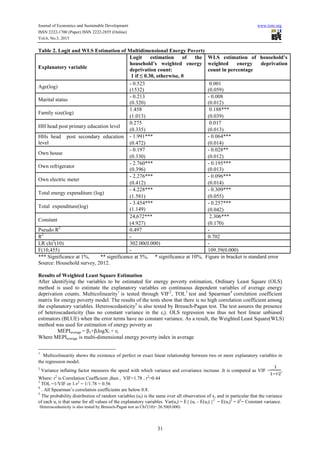
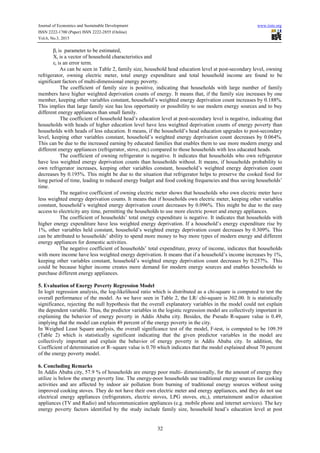
This document summarizes a study analyzing energy poverty in Addis Ababa, Ethiopia. The study uses a multi-dimensional energy poverty index to estimate energy poverty levels using data from 466 households. The results indicate that 57.9% of households in Addis Ababa suffer from multi-dimensional energy poverty, meaning they have little access to clean cooking energy, own few energy appliances, and make limited use of modern energy sources. The study also found that households with higher education, ownership of appliances like refrigerators, private electric meters, and higher incomes were less likely to experience energy poverty. Improving households' access to these resources could help enhance access to energy.



![RENEWABLE ENERGY TECHNOLOGIES AND ENERGY EFFICICIENCY MANAGEMENT IN NIGERIA]](https://cdn.slidesharecdn.com/ss_thumbnails/mrolawolepresentation-121118235245-phpapp02-thumbnail.jpg?width=640&height=640&fit=bounds)


