ICT in the Context of Global Communication
EMPOWERMENT TECHNOLOGY
Created by: Norwin C. Adriatico, GARSHS Teacher I
- Identify diverse online platforms and sites;
Objectives:
- compare and contrast the differences between diverse online
platform sites and content to best achieve specific class
objectives or address situational challenges;
- evaluate existing online creation tools, platforms and applications
in developing ICT content.
The Internet
- Is a global system of interconnected computer
networks that uses the internet protocol suite (TCP/IP)
to communicate between networks and devices.
The Internet
The World Wide Web
- Is an information system on the Internet that allows
documents to be connected to other documents by
hypertext links, enabling the user to search for
information by moving from one document to another.
The World Wide Web
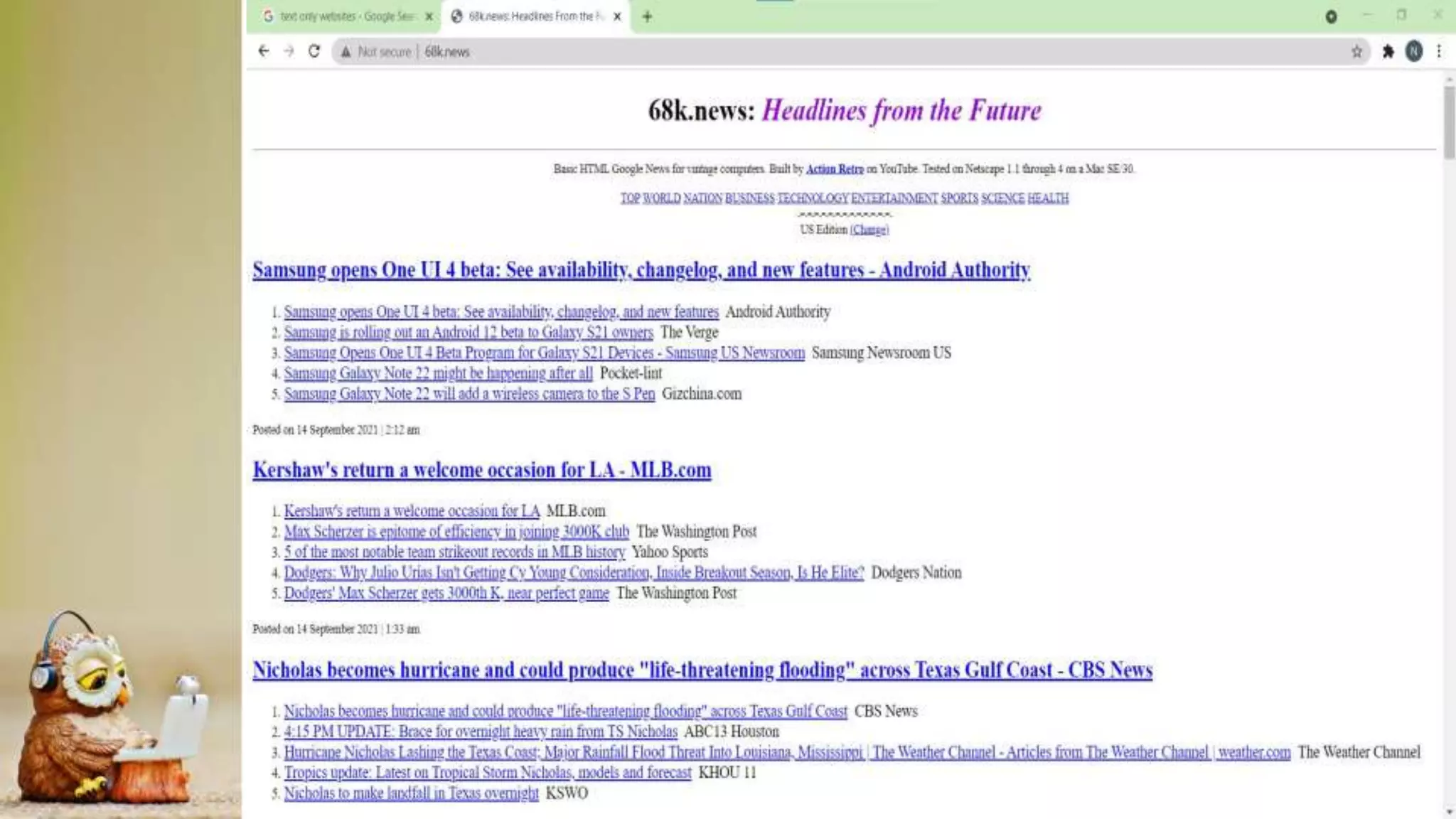
Web 1.0 or The Web
Types of Web Pages
- It is the first stage of the World Wide Web evolution. It is a flat or stationary page since it
cannot be manipulated by the user.
Characteristics:
- Can be used for broadcast;
- information are static or read only;
- focuses on the organization of information;
- ownership of the content;
- Interaction is limited to web forms;
- searching is just for directories / folders;
- limited to web banners for advertising;
- only uses html or ftp;
Types of Web Pages
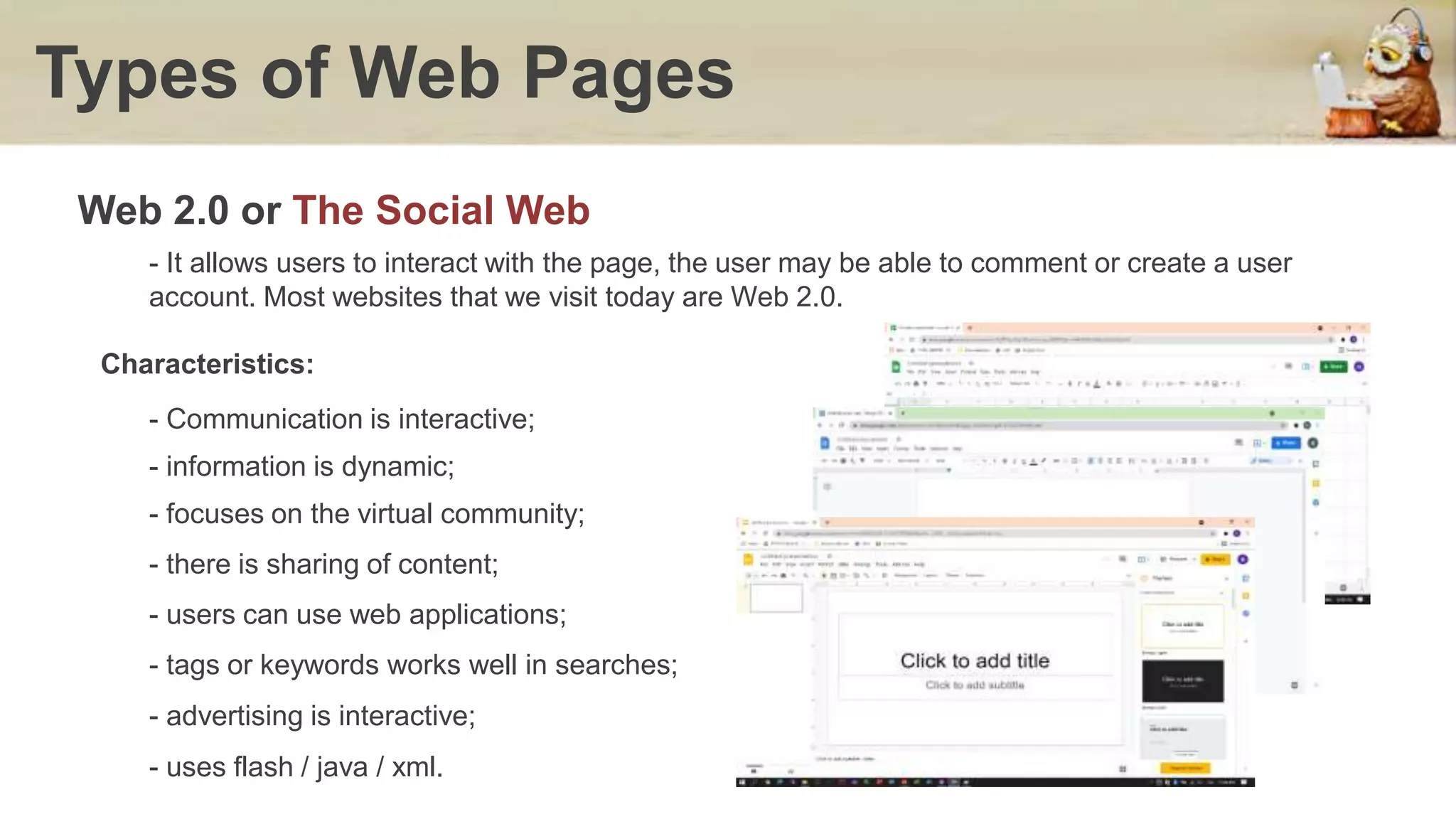
- It allows users to interact with the page, the user may be able to comment or create a user
account. Most websites that we visit today are Web 2.0.
Web 2.0 or The Social Web
Characteristics:
- Communication is interactive;
- information is dynamic;
- focuses on the virtual community;
- there is sharing of content;
- users can use web applications;
- tags or keywords works well in searches;
- advertising is interactive;
- uses flash / java / xml.
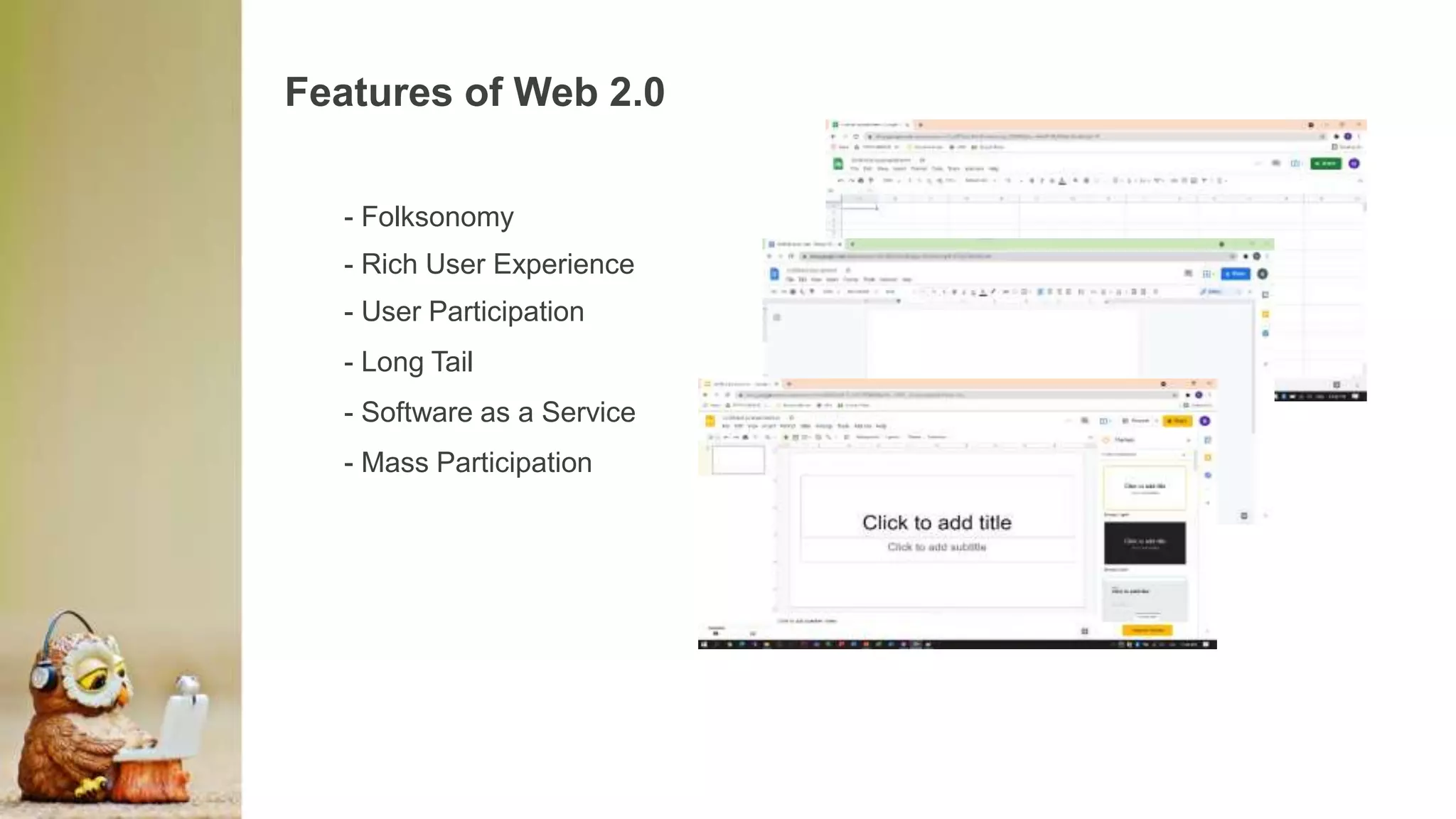
Features of Web 2.0
- Folksonomy
- Rich User Experience
- User Participation
- Long Tail
- Software as a Service
- Mass Participation
Types of Web Pages
- Is the evolution of third-generation internet services that is a blend of Semantic web,
Microformats, Artificial Intelligence, Data Mining, Natural Language Search and Machine
Learning Technologies.
Web 3.0 or Semantic Web
Characteristics:
- Communication is engaging;
- information can be both portable and personal;
- focuses on the individual;
- has immersive content;
- uses smart applications;
- searches are based on context or relevance;
- advertising is based on user’s behavior;
- uses RDF (Resource Description Framework) / RDFS / OWL (Web Ontology Language).
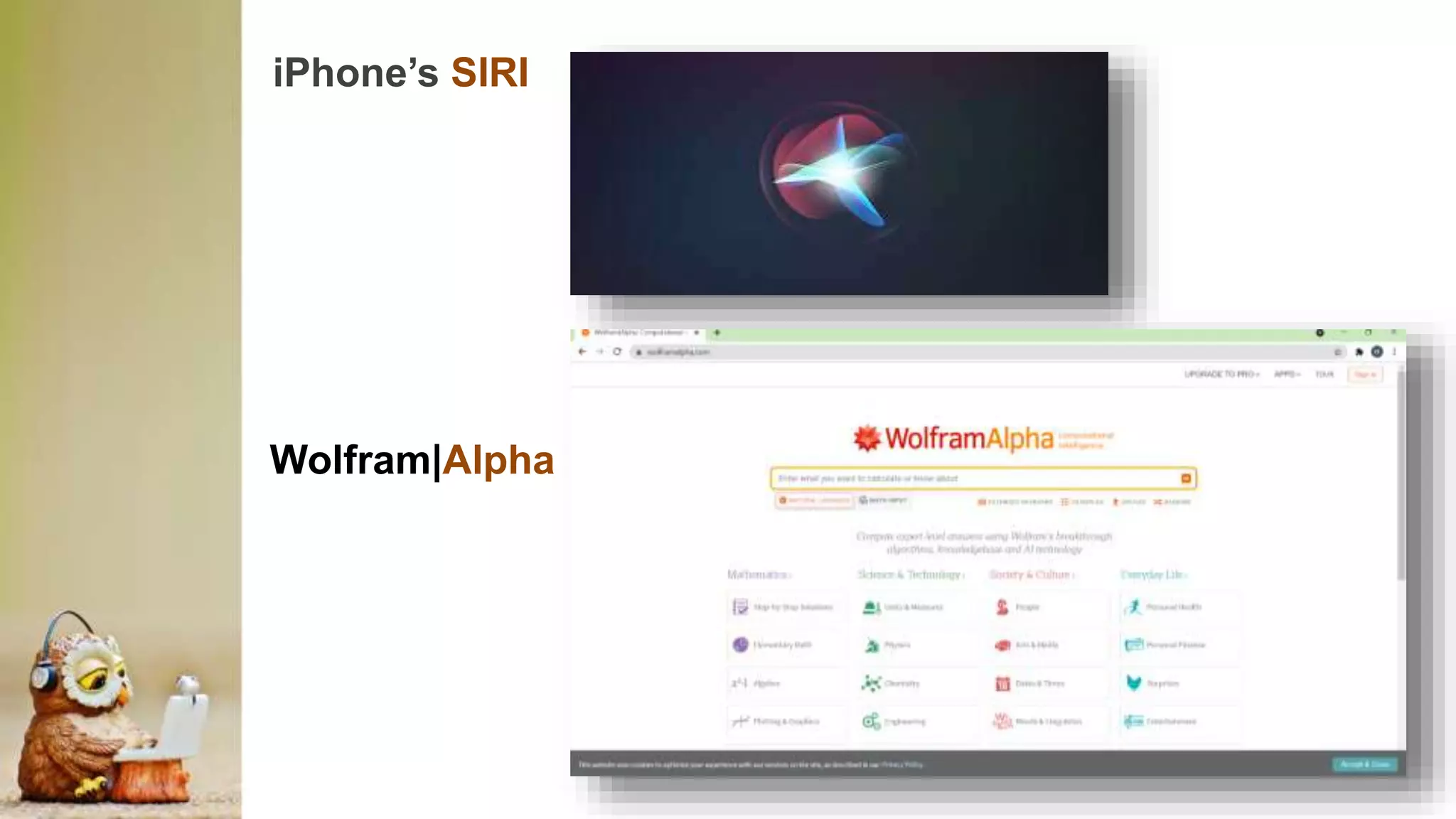
iPhone’s SIRI
Wolfram|Alpha
Types of Web Pages
Several Problems with Web 3.0
1. Compatibility
2. Security
3. Vastness
4. Vagueness
5. Logic
Trends in ICT
1. Convergence
Six types of Social Media
- Social Networks
2. Social Media
- Bookmarking Sites
- Social News
- Media Sharing
- Microblogging
- Bloggs and Forums
Trends in ICT
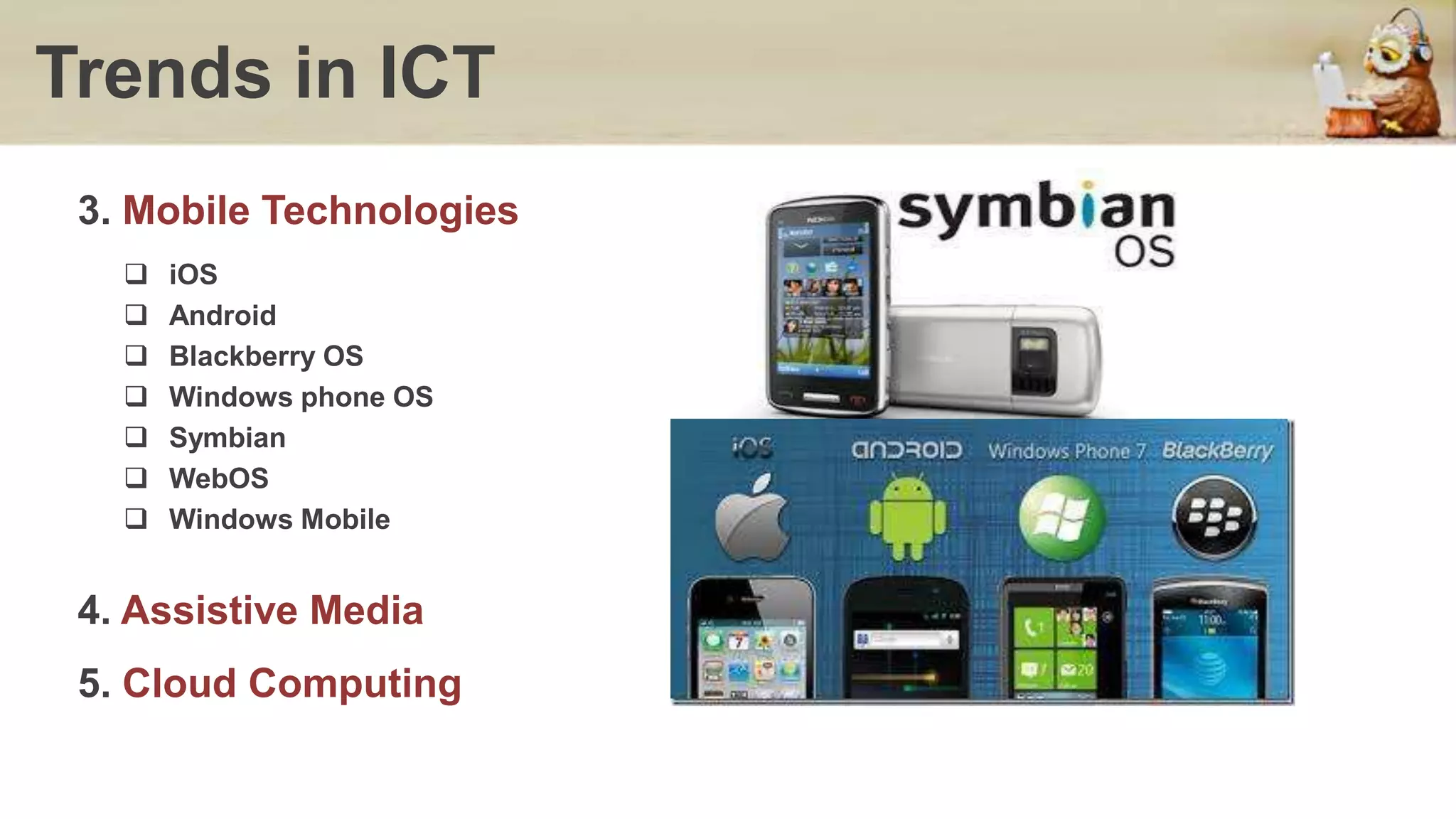
3. Mobile Technologies
 iOS
 Android
 Blackberry OS
 Windows phone OS
 Symbian
 WebOS
 Windows Mobile
4. Assistive Media
5. Cloud Computing
E-Tech_Q1_Mod1_ICT in the Context of Global Communication.pptx

E-Tech_Q1_Mod1_ICT in the Context of Global Communication.pptx

  • 1.
    ICT in theContext of Global Communication EMPOWERMENT TECHNOLOGY Created by: Norwin C. Adriatico, GARSHS Teacher I
  • 2.
    - Identify diverseonline platforms and sites; Objectives: - compare and contrast the differences between diverse online platform sites and content to best achieve specific class objectives or address situational challenges; - evaluate existing online creation tools, platforms and applications in developing ICT content.
  • 3.
    The Internet - Isa global system of interconnected computer networks that uses the internet protocol suite (TCP/IP) to communicate between networks and devices.
  • 4.
  • 5.
    The World WideWeb - Is an information system on the Internet that allows documents to be connected to other documents by hypertext links, enabling the user to search for information by moving from one document to another.
  • 6.
  • 7.
    Web 1.0 orThe Web Types of Web Pages - It is the first stage of the World Wide Web evolution. It is a flat or stationary page since it cannot be manipulated by the user. Characteristics: - Can be used for broadcast; - information are static or read only; - focuses on the organization of information; - ownership of the content; - Interaction is limited to web forms; - searching is just for directories / folders; - limited to web banners for advertising; - only uses html or ftp;
  • 9.
    Types of WebPages - It allows users to interact with the page, the user may be able to comment or create a user account. Most websites that we visit today are Web 2.0. Web 2.0 or The Social Web Characteristics: - Communication is interactive; - information is dynamic; - focuses on the virtual community; - there is sharing of content; - users can use web applications; - tags or keywords works well in searches; - advertising is interactive; - uses flash / java / xml.
  • 10.
    Features of Web2.0 - Folksonomy - Rich User Experience - User Participation - Long Tail - Software as a Service - Mass Participation
  • 11.
    Types of WebPages - Is the evolution of third-generation internet services that is a blend of Semantic web, Microformats, Artificial Intelligence, Data Mining, Natural Language Search and Machine Learning Technologies. Web 3.0 or Semantic Web Characteristics: - Communication is engaging; - information can be both portable and personal; - focuses on the individual; - has immersive content; - uses smart applications; - searches are based on context or relevance; - advertising is based on user’s behavior; - uses RDF (Resource Description Framework) / RDFS / OWL (Web Ontology Language).
  • 12.
  • 13.
    Types of WebPages Several Problems with Web 3.0 1. Compatibility 2. Security 3. Vastness 4. Vagueness 5. Logic
  • 14.
    Trends in ICT 1.Convergence Six types of Social Media - Social Networks 2. Social Media - Bookmarking Sites - Social News - Media Sharing - Microblogging - Bloggs and Forums
  • 15.
    Trends in ICT 3.Mobile Technologies  iOS  Android  Blackberry OS  Windows phone OS  Symbian  WebOS  Windows Mobile 4. Assistive Media 5. Cloud Computing