Download to read offline


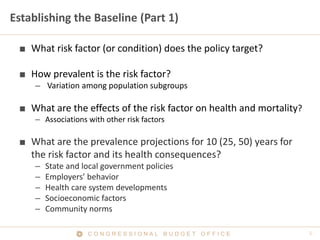


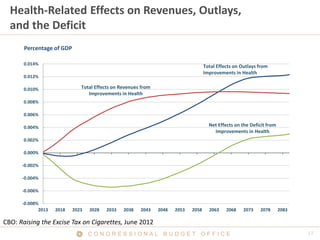


The Congressional Budget Office (CBO) estimates the budgetary impacts of prevention policies by: 1) Establishing baselines for health risks, spending, and outcomes and projecting them over time. 2) Estimating behavioral responses to policies and how these affect health. 3) Calculating how changes in health, spending, and the economy feedback into federal spending and revenues over decades. The CBO uses this framework to analyze policies like cigarette taxes, estimating long-term effects on outcomes like longevity, spending, the deficit, and challenges in the evidence.


