The
FEDERAL
BUDGET
IN 2013
CATEGORIES of
the BUDGET
DEFICITS and
the DEBT
Mandatory
Spending
Consists primarily of
benefit programs for
which laws set eligibility
rules and benefit formulas
Consists of spending that
lawmakers control through
annual appropriation acts
Consists of the government’s
interest payments on debt held by
the public, offset by interest
income the government receives
Funds collected from the public
that arise from the government’s
exercise of its sovereign powers
Deficit in 2013 as a
percentage of GDP
Debt held by the
public as a percentage of
GDP, on average,
over the past 40 years
Net Interest Revenues
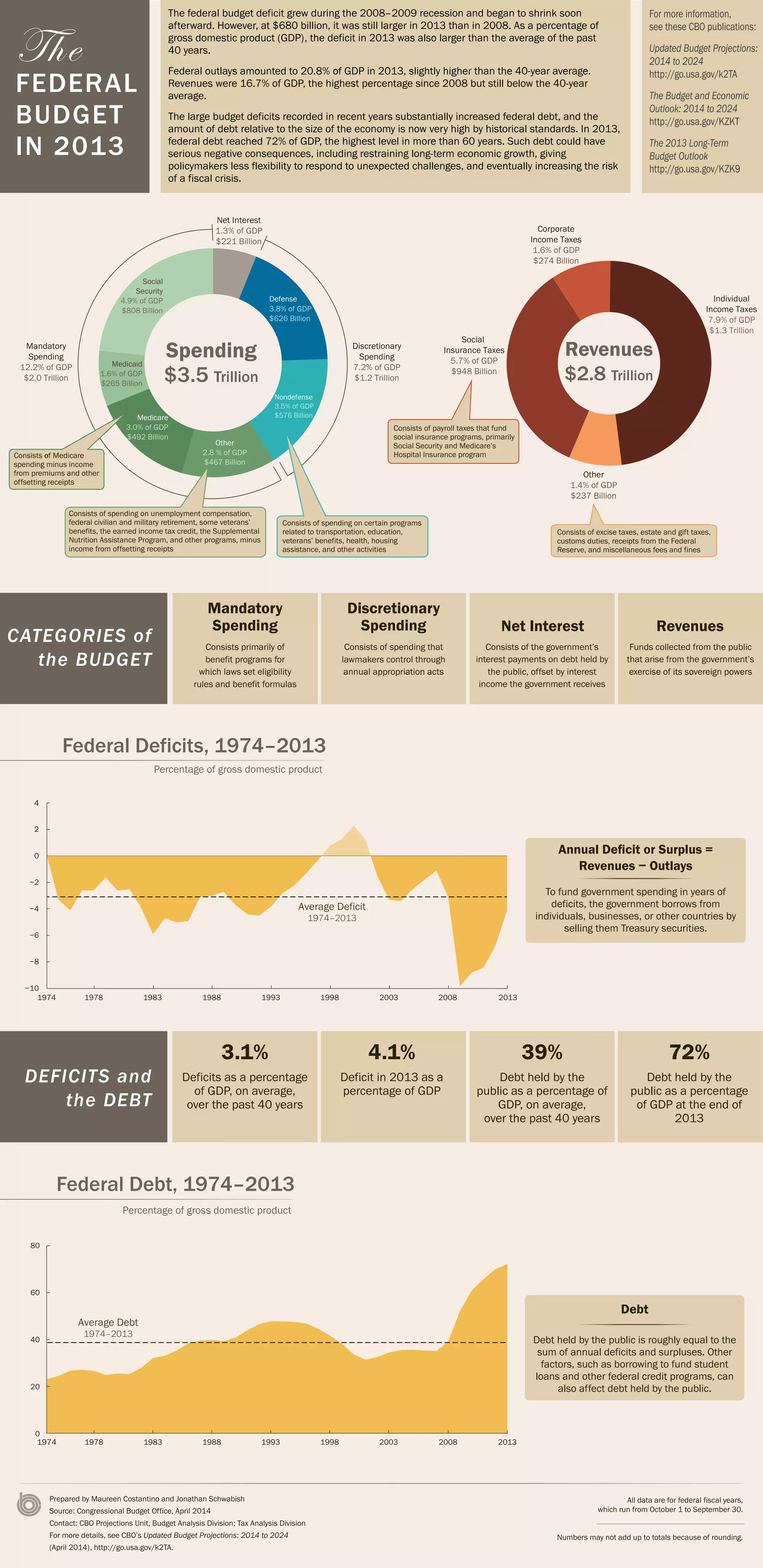
The federal budget deficit grew during the 2008–2009 recession and began to shrink soon
afterward. However, at $680 billion, it was still larger in 2013 than in 2008. As a percentage of
gross domestic product (GDP), the deficit in 2013 was also larger than the average of the past
40 years.
Federal outlays amounted to 20.8% of GDP in 2013, slightly higher than the 40-year average.
Revenues were 16.7% of GDP, the highest percentage since 2008 but still below the 40-year
average.
The large budget deficits recorded in recent years substantially increased federal debt, and the
amount of debt relative to the size of the economy is now very high by historical standards. In 2013,
federal debt reached 72% of GDP, the highest level in more than 60 years. Such debt could have
serious negative consequences, including restraining long-term economic growth, giving
policymakers less flexibility to respond to unexpected challenges, and eventually increasing the risk
of a fiscal crisis.
Deficits as a percentage
of GDP, on average,
over the past 40 years
Debt held by the
public as a percentage
of GDP at the end of
2013
72%39%4.1%3.1%
Prepared by Maureen Costantino and Jonathan Schwabish
Source: Congressional Budget Office, April 2014
Contact: CBO Projections Unit, Budget Analysis Division; Tax Analysis Division
For more details, see CBO’s Updated Budget Projections: 2014 to 2024
(April 2014), http://go.usa.gov/k2TA.
All data are for federal fiscal years,
which run from October 1 to September 30.
Numbers may not add up to totals because of rounding.
Discretionary
Spending
For more information,
see these CBO publications:
Updated Budget Projections:
2014 to 2024
http://go.usa.gov/k2TA
The Budget and Economic
Outlook: 2014 to 2024
http://go.usa.gov/KZKT
The 2013 Long-Term
Budget Outlook
http://go.usa.gov/KZK9
Social
Security
4.9% of GDP
$808 Billion
Net Interest
1.3% of GDP
$221 Billion
Defense
3.8% of GDP
$626 Billion
Nondefense
3.5% of GDP
$576 Billion
Medicaid
1.6% of GDP
$265 Billion
Other
2.8 % of GDP
$467 Billion
Consists of spending on certain programs
related to transportation, education,
veterans’ benefits, health, housing
assistance, and other activities
Consists of spending on unemployment compensation,
federal civilian and military retirement, some veterans’
benefits, the earned income tax credit, the Supplemental
Nutrition Assistance Program, and other programs, minus
income from offsetting receipts
Spending
$3.5 Trillion
Mandatory
Spending
12.2% of GDP
$2.0 Trillion
Discretionary
Spending
7.2% of GDP
$1.2 Trillion
Medicare
3.0% of GDP
$492 Billion
Consists of Medicare
spending minus income
from premiums and other
offsetting receipts
Social
Insurance Taxes
5.7% of GDP
$948 Billion
Corporate
Income Taxes
1.6% of GDP
$274 Billion
Individual
Income Taxes
7.9% of GDP
$1.3 Trillion
Other
1.4% of GDP
$237 Billion
Revenues
$2.8 Trillion
Consists of payroll taxes that fund
social insurance programs, primarily
Social Security and Medicare’s
Hospital Insurance program
Consists of excise taxes, estate and gift taxes,
customs duties, receipts from the Federal
Reserve, and miscellaneous fees and fines
Annual Deficit or Surplus =
Revenues − Outlays
To fund government spending in years of
deficits, the government borrows from
individuals, businesses, or other countries by
selling them Treasury securities.
Federal Deficits, 1974–2013
Percentage of gross domestic product
Federal Debt, 1974–2013
Percentage of gross domestic product
1974 1978 1983 1988 1993 1998 2003 2008
−10
−8
−6
−4
−2
0
2
4
Average Deficit
1974–2013
2013
Debt
Debt held by the public is roughly equal to the
sum of annual deficits and surpluses. Other
factors, such as borrowing to fund student
loans and other federal credit programs, can
also affect debt held by the public.
1974 1978 1983 1988 1993 1998 2003 2008 2013
0
20
40
60
80
Average Debt
1974–2013

Infographic: The Federal Budget in 2013

  • 1.
    The FEDERAL BUDGET IN 2013 CATEGORIES of theBUDGET DEFICITS and the DEBT Mandatory Spending Consists primarily of benefit programs for which laws set eligibility rules and benefit formulas Consists of spending that lawmakers control through annual appropriation acts Consists of the government’s interest payments on debt held by the public, offset by interest income the government receives Funds collected from the public that arise from the government’s exercise of its sovereign powers Deficit in 2013 as a percentage of GDP Debt held by the public as a percentage of GDP, on average, over the past 40 years Net Interest Revenues The federal budget deficit grew during the 2008–2009 recession and began to shrink soon afterward. However, at $680 billion, it was still larger in 2013 than in 2008. As a percentage of gross domestic product (GDP), the deficit in 2013 was also larger than the average of the past 40 years. Federal outlays amounted to 20.8% of GDP in 2013, slightly higher than the 40-year average. Revenues were 16.7% of GDP, the highest percentage since 2008 but still below the 40-year average. The large budget deficits recorded in recent years substantially increased federal debt, and the amount of debt relative to the size of the economy is now very high by historical standards. In 2013, federal debt reached 72% of GDP, the highest level in more than 60 years. Such debt could have serious negative consequences, including restraining long-term economic growth, giving policymakers less flexibility to respond to unexpected challenges, and eventually increasing the risk of a fiscal crisis. Deficits as a percentage of GDP, on average, over the past 40 years Debt held by the public as a percentage of GDP at the end of 2013 72%39%4.1%3.1% Prepared by Maureen Costantino and Jonathan Schwabish Source: Congressional Budget Office, April 2014 Contact: CBO Projections Unit, Budget Analysis Division; Tax Analysis Division For more details, see CBO’s Updated Budget Projections: 2014 to 2024 (April 2014), http://go.usa.gov/k2TA. All data are for federal fiscal years, which run from October 1 to September 30. Numbers may not add up to totals because of rounding. Discretionary Spending For more information, see these CBO publications: Updated Budget Projections: 2014 to 2024 http://go.usa.gov/k2TA The Budget and Economic Outlook: 2014 to 2024 http://go.usa.gov/KZKT The 2013 Long-Term Budget Outlook http://go.usa.gov/KZK9 Social Security 4.9% of GDP $808 Billion Net Interest 1.3% of GDP $221 Billion Defense 3.8% of GDP $626 Billion Nondefense 3.5% of GDP $576 Billion Medicaid 1.6% of GDP $265 Billion Other 2.8 % of GDP $467 Billion Consists of spending on certain programs related to transportation, education, veterans’ benefits, health, housing assistance, and other activities Consists of spending on unemployment compensation, federal civilian and military retirement, some veterans’ benefits, the earned income tax credit, the Supplemental Nutrition Assistance Program, and other programs, minus income from offsetting receipts Spending $3.5 Trillion Mandatory Spending 12.2% of GDP $2.0 Trillion Discretionary Spending 7.2% of GDP $1.2 Trillion Medicare 3.0% of GDP $492 Billion Consists of Medicare spending minus income from premiums and other offsetting receipts Social Insurance Taxes 5.7% of GDP $948 Billion Corporate Income Taxes 1.6% of GDP $274 Billion Individual Income Taxes 7.9% of GDP $1.3 Trillion Other 1.4% of GDP $237 Billion Revenues $2.8 Trillion Consists of payroll taxes that fund social insurance programs, primarily Social Security and Medicare’s Hospital Insurance program Consists of excise taxes, estate and gift taxes, customs duties, receipts from the Federal Reserve, and miscellaneous fees and fines Annual Deficit or Surplus = Revenues − Outlays To fund government spending in years of deficits, the government borrows from individuals, businesses, or other countries by selling them Treasury securities. Federal Deficits, 1974–2013 Percentage of gross domestic product Federal Debt, 1974–2013 Percentage of gross domestic product 1974 1978 1983 1988 1993 1998 2003 2008 −10 −8 −6 −4 −2 0 2 4 Average Deficit 1974–2013 2013 Debt Debt held by the public is roughly equal to the sum of annual deficits and surpluses. Other factors, such as borrowing to fund student loans and other federal credit programs, can also affect debt held by the public. 1974 1978 1983 1988 1993 1998 2003 2008 2013 0 20 40 60 80 Average Debt 1974–2013