

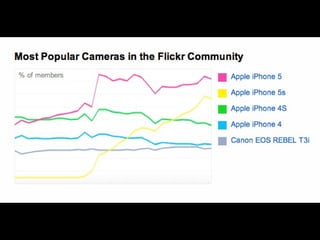











From Flickr to Snapchat: The challenge of
analysing images on social media
Farida Vis, Information School
University of Sheffield
@flygirltwo
Images posses the ability to grab our attention
Social media companies know this
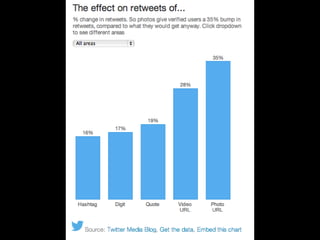
Images are key to engagement
750 MILLION
IMAGES
SHARED
DAILY
Camera: used to be for special occasions
Smartphone: always with us
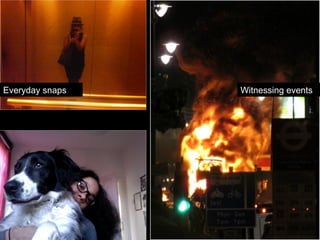
Everyday snaps Witnessing events
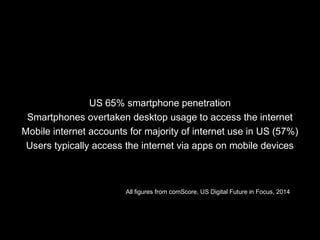
US 65% smartphone penetration
Smartphones overtaken desktop usage to access the internet
Mobile internet accounts for majority of internet use in US (57%)
Users typically access the internet via apps on mobile devices
All figures from comScore, US Digital Future in Focus, 2014
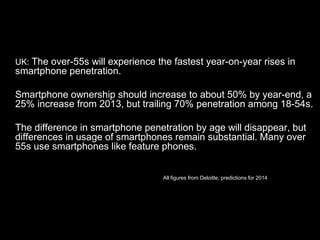
UK: The over-55s will experience the fastest year-on-year rises in
smartphone penetration.
Smartphone ownership should increase to about 50% by year-end, a
25% increase from 2013, but trailing 70% penetration among 18-54s.
The difference in smartphone penetration by age will disappear, but
differences in usage of smartphones remain substantial. Many over
55s use smartphones like feature phones.
All figures from Deloitte, predictions for 2014
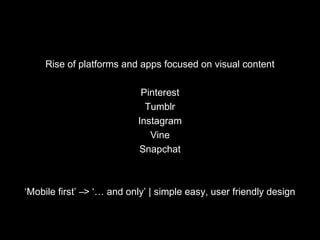
Rise of platforms and apps focused on visual content
Pinterest
Tumblr
Instagram
Vine
Snapchat
‘Mobile first’ –> ‘… and only’ | simple easy, user friendly design
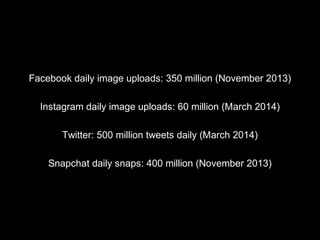
Facebook daily image uploads: 350 million (November 2013)
Instagram daily image uploads: 60 million (March 2014)
Twitter: 500 million tweets daily (March 2014)
Snapchat daily snaps: 400 million (November 2013)
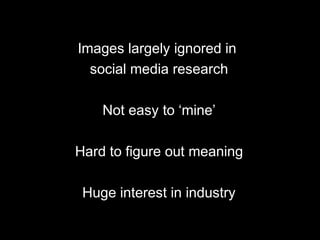
Images largely ignored in
social media research
Not easy to ‘mine’
Hard to figure out meaning
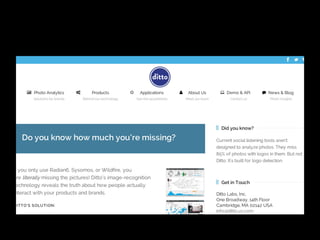
Huge interest in industry
Images in crisis communication
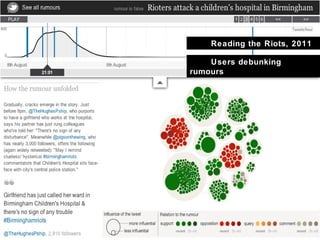
Social Reading the Riots, 2011
Social Users debunking
rumours
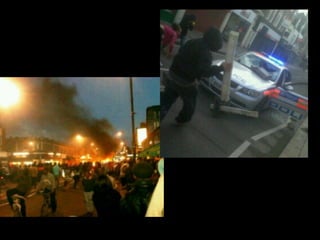
Image sharing during the 2011 UK riots
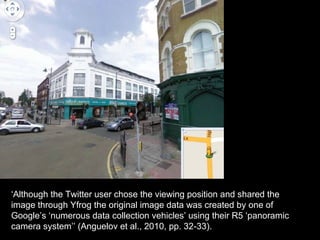
‘Although the Twitter user chose the viewing position and shared the
image through Yfrog the original image data was created by one of
Google’s ‘numerous data collection vehicles’ using their R5 ‘panoramic
camera system’’ (Anguelov et al., 2010, pp. 32-33).
The burning bus: 57 unique URLs
Hurricane Sandy
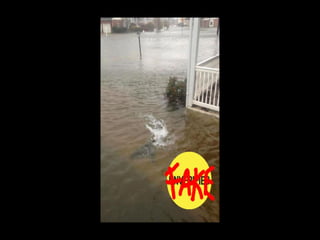
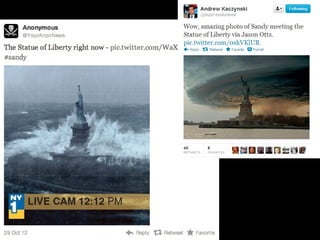
Image sharing practices during crises: fakes
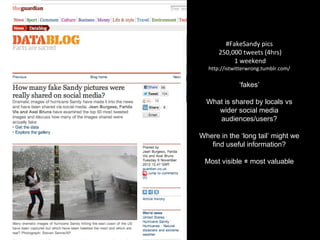
#FakeSandy pics
250,000 tweets (4hrs)
1 weekend
http://istwitterwrong.tumblr.com/
‘fakes’
What is shared by locals vs
wider social media
audiences/users?
Where in the ‘long tail’ might we
find useful information?
Most visible most valuable≠
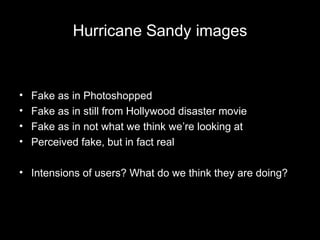
Hurricane Sandy images
• Fake as in Photoshopped
• Fake as in still from Hollywood disaster movie
• Fake as in not what we think we’re looking at
• Perceived fake, but in fact real
• Intensions of users? What do we think they are doing?
"Picturing the Social: transforming our
understanding of images in social media and
Big Data research.”
ESRC Transformative Research grant
Farida Vis (PI) – Media and Communication
Simon Faulkner – Art History/Visual Culture
James Aulich - Art History/Visual Culture
Olga Gorgiunova – Software Studies/Sociology
Mike Thelwall – Information Science/software
Francesco D’Orazio – Industry/Media/software
+ Research Associate – Digital Ethnography
“Qualitative data on a quantitative scale”
(D’Orazio, 2013)
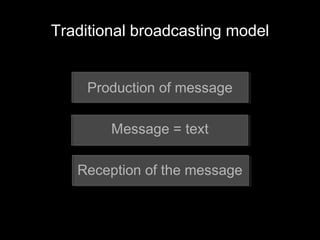
Traditional broadcasting model
Production of message
Message = text
Reception of the message
Building new theory and method
Structures
Users
Content
Structures
Users
Content
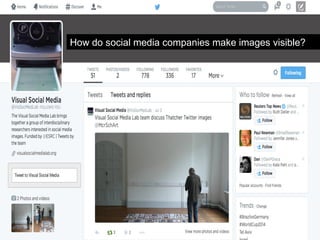
How do social media companies make images visible?
Address the quantitative magnitude and the
qualitative intensity of social media image
production and circulation
• Screen Shot 2014-07-09 at 06.05.51
Doing interdisciplinarity
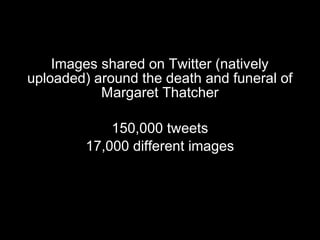
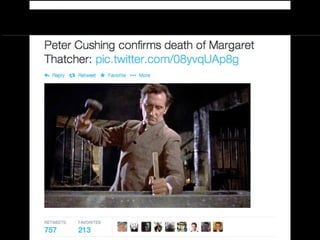
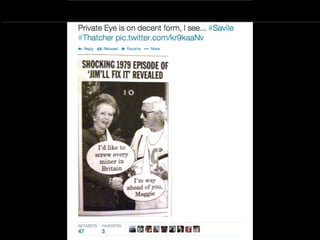
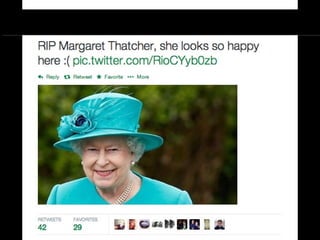
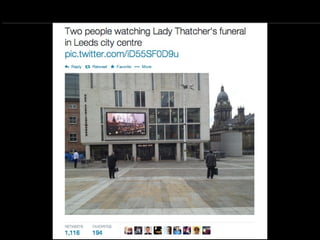
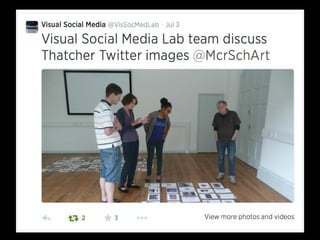
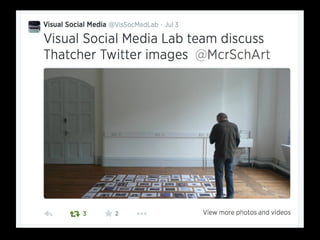
Images shared on Twitter (natively
uploaded) around the death and funeral of
Margaret Thatcher
150,000 tweets
17,000 different images
Seeing like software/like a human
How are images sorted and organised?
How do we select what to look at?
How do these images circulate/
Where have they come from?
How do we (re)present them?
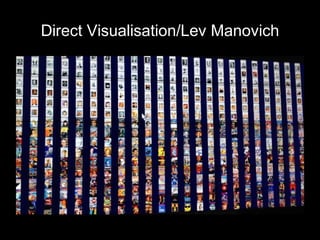
Direct Visualisation/Lev Manovich
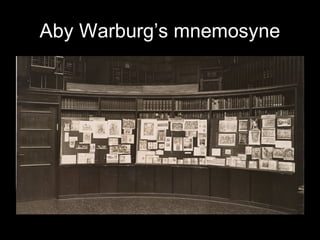
Aby Warburg’s mnemosyne
visualsocialmedialab.org
@VisSocMedLab
f.vis@sheffield.ac.uk
@flygirltwo

ESRC Research Methods Festival - From Flickr to Snapchat: The challenge of analysing images on social media

  • 1.
    From Flickr toSnapchat: The challenge of analysing images on social media Farida Vis, Information School University of Sheffield @flygirltwo
  • 2.
    Images posses theability to grab our attention
  • 3.
  • 4.
    Images are keyto engagement
  • 5.
  • 8.
    Camera: used tobe for special occasions Smartphone: always with us
  • 9.
  • 10.
    US 65% smartphonepenetration Smartphones overtaken desktop usage to access the internet Mobile internet accounts for majority of internet use in US (57%) Users typically access the internet via apps on mobile devices All figures from comScore, US Digital Future in Focus, 2014
  • 11.
    UK: The over-55swill experience the fastest year-on-year rises in smartphone penetration. Smartphone ownership should increase to about 50% by year-end, a 25% increase from 2013, but trailing 70% penetration among 18-54s. The difference in smartphone penetration by age will disappear, but differences in usage of smartphones remain substantial. Many over 55s use smartphones like feature phones. All figures from Deloitte, predictions for 2014
  • 12.
    Rise of platformsand apps focused on visual content Pinterest Tumblr Instagram Vine Snapchat ‘Mobile first’ –> ‘… and only’ | simple easy, user friendly design
  • 13.
    Facebook daily imageuploads: 350 million (November 2013) Instagram daily image uploads: 60 million (March 2014) Twitter: 500 million tweets daily (March 2014) Snapchat daily snaps: 400 million (November 2013)
  • 16.
    Images largely ignoredin social media research Not easy to ‘mine’ Hard to figure out meaning Huge interest in industry
  • 21.
    Images in crisiscommunication
  • 22.
    Social Reading theRiots, 2011 Social Users debunking rumours
  • 23.
    Image sharing duringthe 2011 UK riots
  • 27.
    ‘Although the Twitteruser chose the viewing position and shared the image through Yfrog the original image data was created by one of Google’s ‘numerous data collection vehicles’ using their R5 ‘panoramic camera system’’ (Anguelov et al., 2010, pp. 32-33).
  • 28.
    The burning bus:57 unique URLs
  • 29.
    Hurricane Sandy Image sharingpractices during crises: fakes
  • 34.
    #FakeSandy pics 250,000 tweets(4hrs) 1 weekend http://istwitterwrong.tumblr.com/ ‘fakes’ What is shared by locals vs wider social media audiences/users? Where in the ‘long tail’ might we find useful information? Most visible most valuable≠
  • 35.
    Hurricane Sandy images •Fake as in Photoshopped • Fake as in still from Hollywood disaster movie • Fake as in not what we think we’re looking at • Perceived fake, but in fact real • Intensions of users? What do we think they are doing?
  • 36.
    "Picturing the Social:transforming our understanding of images in social media and Big Data research.” ESRC Transformative Research grant
  • 37.
    Farida Vis (PI)– Media and Communication Simon Faulkner – Art History/Visual Culture James Aulich - Art History/Visual Culture Olga Gorgiunova – Software Studies/Sociology Mike Thelwall – Information Science/software Francesco D’Orazio – Industry/Media/software + Research Associate – Digital Ethnography
  • 38.
    “Qualitative data ona quantitative scale” (D’Orazio, 2013)
  • 39.
    Traditional broadcasting model Productionof message Message = text Reception of the message
  • 40.
    Building new theoryand method Structures Users Content
  • 41.
  • 42.
    How do socialmedia companies make images visible?
  • 43.
    Address the quantitativemagnitude and the qualitative intensity of social media image production and circulation
  • 44.
    • Screen Shot2014-07-09 at 06.05.51
  • 45.
  • 46.
    Images shared onTwitter (natively uploaded) around the death and funeral of Margaret Thatcher 150,000 tweets 17,000 different images
  • 53.
    Seeing like software/likea human How are images sorted and organised? How do we select what to look at? How do these images circulate/ Where have they come from? How do we (re)present them?
  • 54.
  • 55.
  • 56.