ESN
Erasmus Student Network
What is ESN?
We are approximately 12.000 members in
about 300 local sections
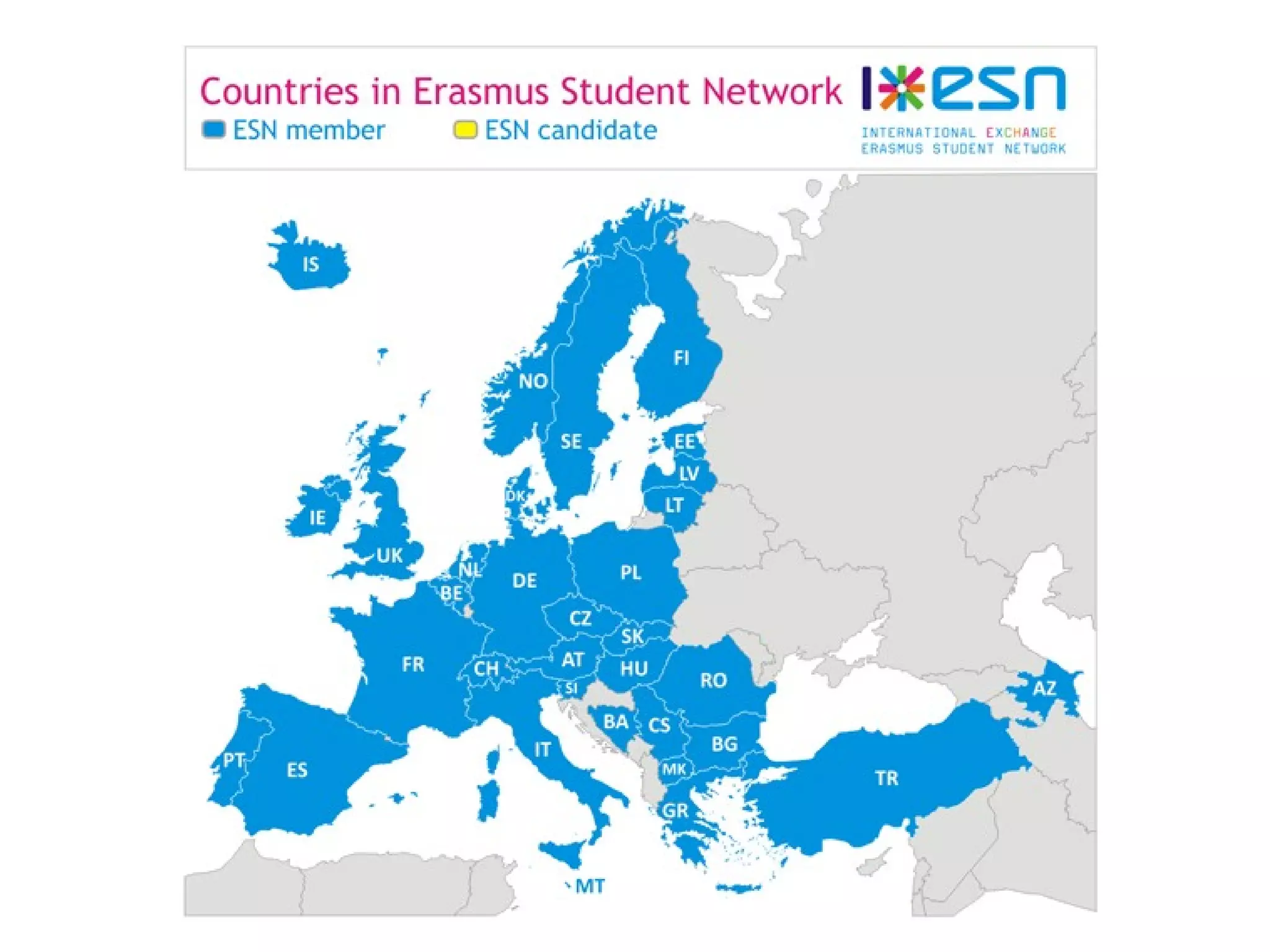
ESN is present in 32 countries of Europe
ESN members work on a volunteer base
Aims:
• offering services to exchange students
• developing and supporting student
exchange
home page: http://esn.org e-mail: board@esn.org
3
Who are we for?
Homecoming students
reintegration with home country after returning
from exchange period
International students
integration in the local community, cultural and
social events, trips, parties, buddy/mentor
system, language projects
Future international students
motivation to international experience, insight
to different cultures, etc.
home page: http://esn.org e-mail: board@esn.org5
How ESN works?
ESN is operating at three structural levels:
• Local Structures
(example: section ESN Maribor)
• National Structure
(example: all sections from ESN Slovenia)
• International Structure
(example: Annual General Meeting – all the
sections together, International Board and
Council of National Representatives)
home page: http://esn.org e-mail: board@esn.org6
International level
Annual General Meeting
Council of National Representatives (CNR)
International Board (IB)
Board supporters:
• ESN Secretary
• EVS Volunteer
• Committees
• Liaison Offices to European Youth Forum and Council
of Europe
• ESNSurvey team
home page: http://esn.org e-mail: board@esn.org7
Examples of ESN Projects
Give20
ESNSurvey
PRIME (Problem of Recognition In Making
Erasmus)
ExchangeAbility
home page: http://esn.org e-mail: board@esn.org8
Give20
Fundraising campaign on behalf of UNICEF
ESN local sections and members, together with the
international students, raising funds through:
• Regular and special activities
• National and international events
Money will be donated through UNICEF to Bhutan to:
• Improve the situation of local children
• Facilitate their access to education
• Build schools and provide school equipment
For more information, visit www.give20.eu
home page: http://esn.org e-mail: board@esn.org9
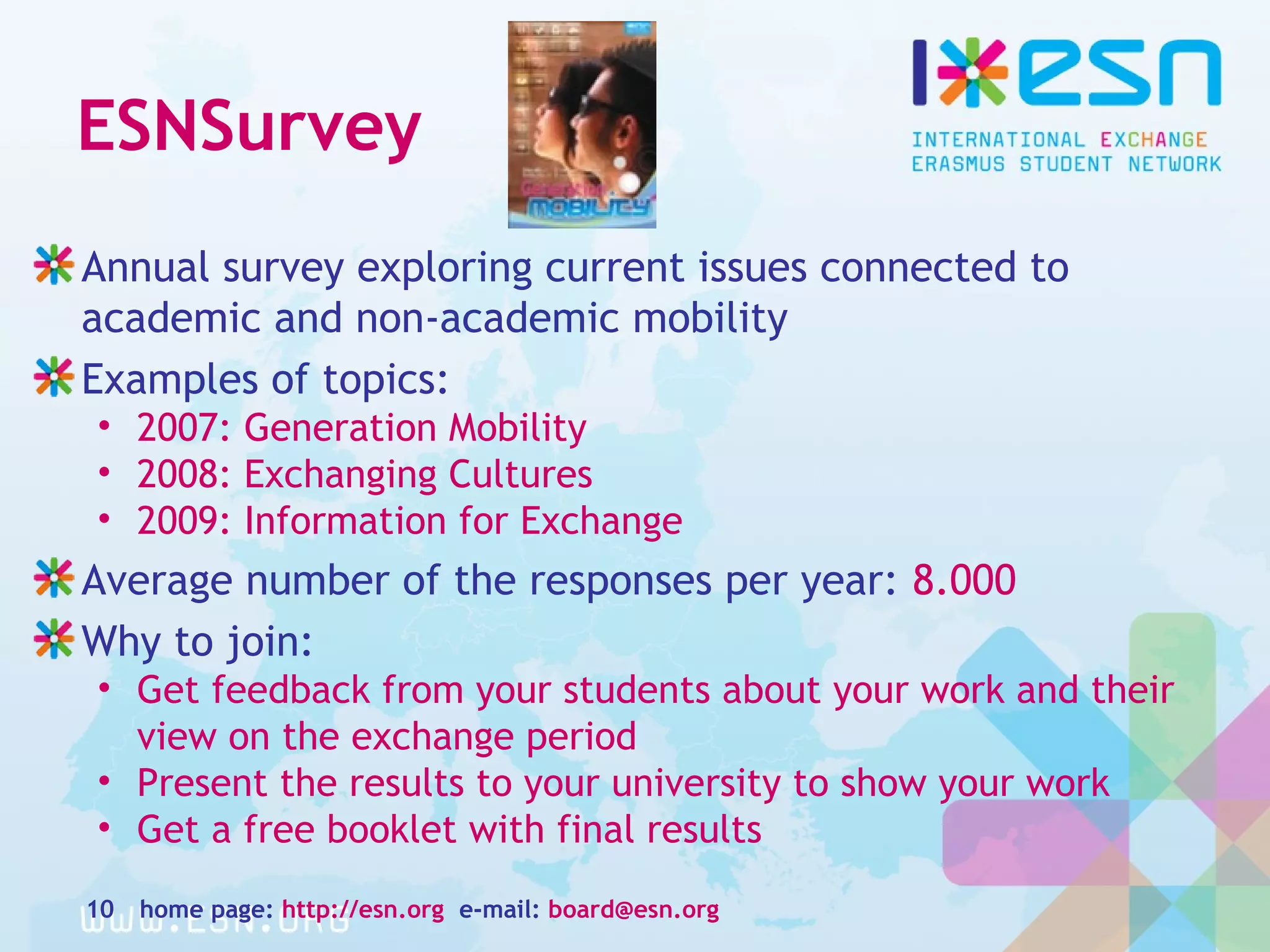
ESNSurvey
Annual survey exploring current issues connected to
academic and non-academic mobility
Examples of topics:
• 2007: Generation Mobility
• 2008: Exchanging Cultures
• 2009: Information for Exchange
Average number of the responses per year: 8.000
Why to join:
• Get feedback from your students about your work and their
view on the exchange period
• Present the results to your university to show your work
• Get a free booklet with final results
home page: http://esn.org e-mail: board@esn.org10
PRIME
An in-depth qualitative research among about 100
European universities to:
• Describe the current situation in the field of
recognition and identify the obstacles
• Point out the true causes of the problems in the
recognition of studies of exchange students
• Collect best examples and worst practices
• Provide recommendations and suggestions for
improvements
For more information, contact:
• Prime-coordinator@esn.org or prime-
secretariat@esn.org
home page: http://esn.org e-mail: board@esn.org11
ExchangeAbility
ESN project in collaboration with the European
Disability Forum (EDF)
Aim of the project is to increase the mobility of
disabled students
Involve a local disabled student in the activities
of your section with the support from ESN
International, European Disability Forum and your
home university
home page: http://esn.org e-mail: board@esn.org12
Contacts
International Board
board@esn.org
Council of National Representatives
cnr@esn.org
National Representative
[name_of_country]@esn.org
Section
[e-mail of your local section]
home page: http://esn.org e-mail: board@esn.org13
THANK YOU FOR
ATTENTION

Esn generalpresentation sept2009

  • 1.
  • 3.
    What is ESN? Weare approximately 12.000 members in about 300 local sections ESN is present in 32 countries of Europe ESN members work on a volunteer base Aims: • offering services to exchange students • developing and supporting student exchange home page: http://esn.org e-mail: board@esn.org 3
  • 5.
    Who are wefor? Homecoming students reintegration with home country after returning from exchange period International students integration in the local community, cultural and social events, trips, parties, buddy/mentor system, language projects Future international students motivation to international experience, insight to different cultures, etc. home page: http://esn.org e-mail: board@esn.org5
  • 6.
    How ESN works? ESNis operating at three structural levels: • Local Structures (example: section ESN Maribor) • National Structure (example: all sections from ESN Slovenia) • International Structure (example: Annual General Meeting – all the sections together, International Board and Council of National Representatives) home page: http://esn.org e-mail: board@esn.org6
  • 7.
    International level Annual GeneralMeeting Council of National Representatives (CNR) International Board (IB) Board supporters: • ESN Secretary • EVS Volunteer • Committees • Liaison Offices to European Youth Forum and Council of Europe • ESNSurvey team home page: http://esn.org e-mail: board@esn.org7
  • 8.
    Examples of ESNProjects Give20 ESNSurvey PRIME (Problem of Recognition In Making Erasmus) ExchangeAbility home page: http://esn.org e-mail: board@esn.org8
  • 9.
    Give20 Fundraising campaign onbehalf of UNICEF ESN local sections and members, together with the international students, raising funds through: • Regular and special activities • National and international events Money will be donated through UNICEF to Bhutan to: • Improve the situation of local children • Facilitate their access to education • Build schools and provide school equipment For more information, visit www.give20.eu home page: http://esn.org e-mail: board@esn.org9
  • 10.
    ESNSurvey Annual survey exploringcurrent issues connected to academic and non-academic mobility Examples of topics: • 2007: Generation Mobility • 2008: Exchanging Cultures • 2009: Information for Exchange Average number of the responses per year: 8.000 Why to join: • Get feedback from your students about your work and their view on the exchange period • Present the results to your university to show your work • Get a free booklet with final results home page: http://esn.org e-mail: board@esn.org10
  • 11.
    PRIME An in-depth qualitativeresearch among about 100 European universities to: • Describe the current situation in the field of recognition and identify the obstacles • Point out the true causes of the problems in the recognition of studies of exchange students • Collect best examples and worst practices • Provide recommendations and suggestions for improvements For more information, contact: • Prime-coordinator@esn.org or prime- secretariat@esn.org home page: http://esn.org e-mail: board@esn.org11
  • 12.
    ExchangeAbility ESN project incollaboration with the European Disability Forum (EDF) Aim of the project is to increase the mobility of disabled students Involve a local disabled student in the activities of your section with the support from ESN International, European Disability Forum and your home university home page: http://esn.org e-mail: board@esn.org12
  • 13.
    Contacts International Board board@esn.org Council ofNational Representatives cnr@esn.org National Representative [name_of_country]@esn.org Section [e-mail of your local section] home page: http://esn.org e-mail: board@esn.org13
  • 14.