
A Buyers Guide to an Enterprise Service Bus


                                Kasun Indrasiri
                                Associate Technical Lead
                                WSO2 Inc.
Overview

• Enterprise Service Bus (ESB) - What and Why?
• Selecting an ESB
• Do you really need an ESB?
• Core Functionalities of an ESB
• Why WSO2 ESB?
• Features of WSO2 ESB
• Conclusion
ESB - What?

• Enterprise Service Bus (ESB)
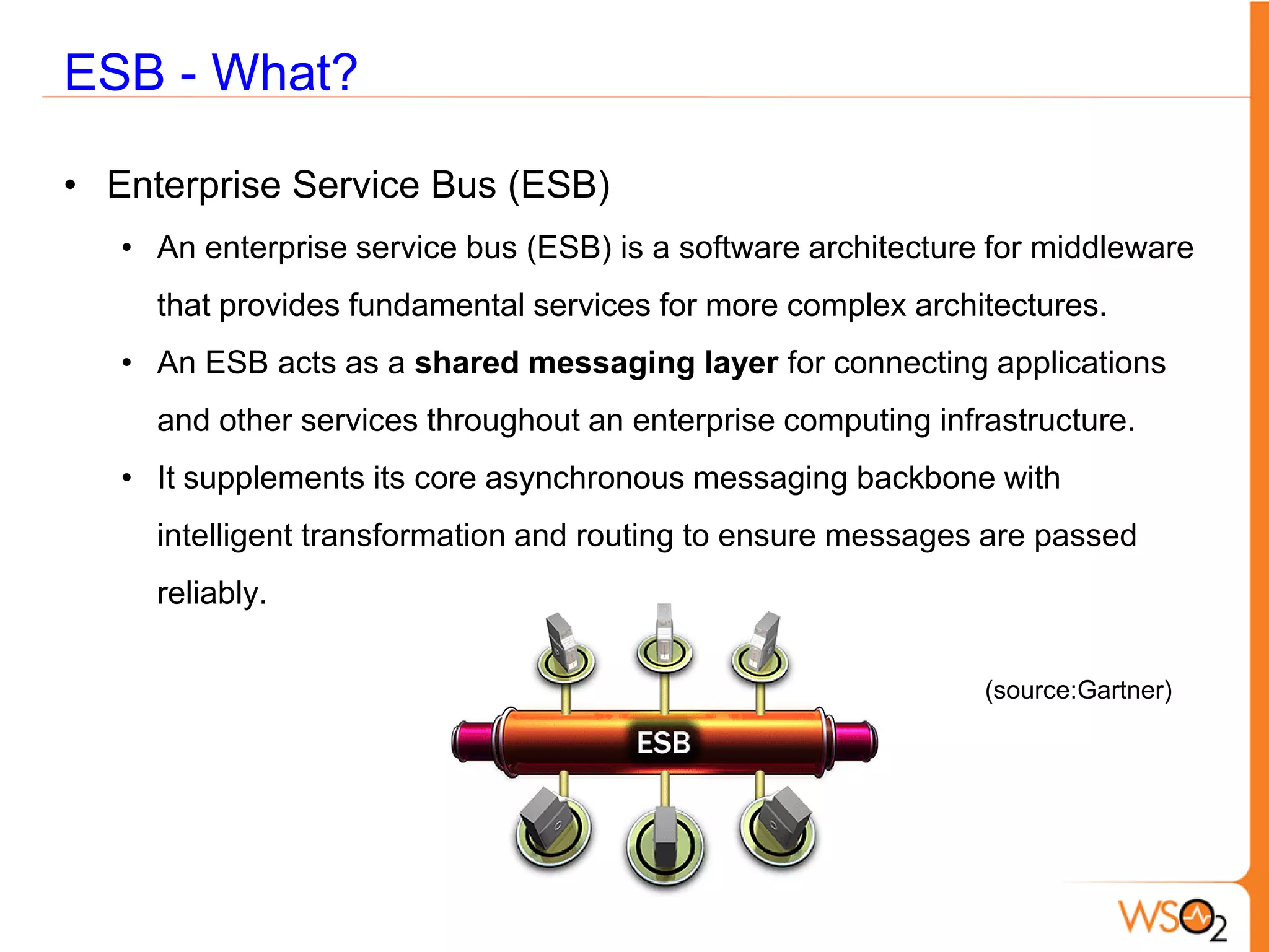
   • An enterprise service bus (ESB) is a software architecture for middleware
     that provides fundamental services for more complex architectures.
   • An ESB acts as a shared messaging layer for connecting applications
     and other services throughout an enterprise computing infrastructure.
   • It supplements its core asynchronous messaging backbone with
     intelligent transformation and routing to ensure messages are passed
     reliably.

                                                               (source:Gartner)
ESB - Why?

• Why ESB?
  • Service Mediation
  • Transformations
  • Routing
  • Validations
  • Event Management
  • Interactions
  • QoS – Security, Reliability, Throttling
  • Service Hosting
  • Service Orchestration
Selecting an ESB

• It’s challenging!
   • Number of Complex ESB products
   • Discrete features and capabilities.
   • The architecture requirements for SOA and ESB rapidly
     vary.
   • There are no standards, that define ESB capabilities.
Do you really need an ESB?

• Integrating more than a few application and more new
  applications will be introduced to the system.
• Mediate Messages based on various business requirements
• Supporting various protocols and standards
• Virtualization of different services offered by diverse applications
• Various QoS requirements
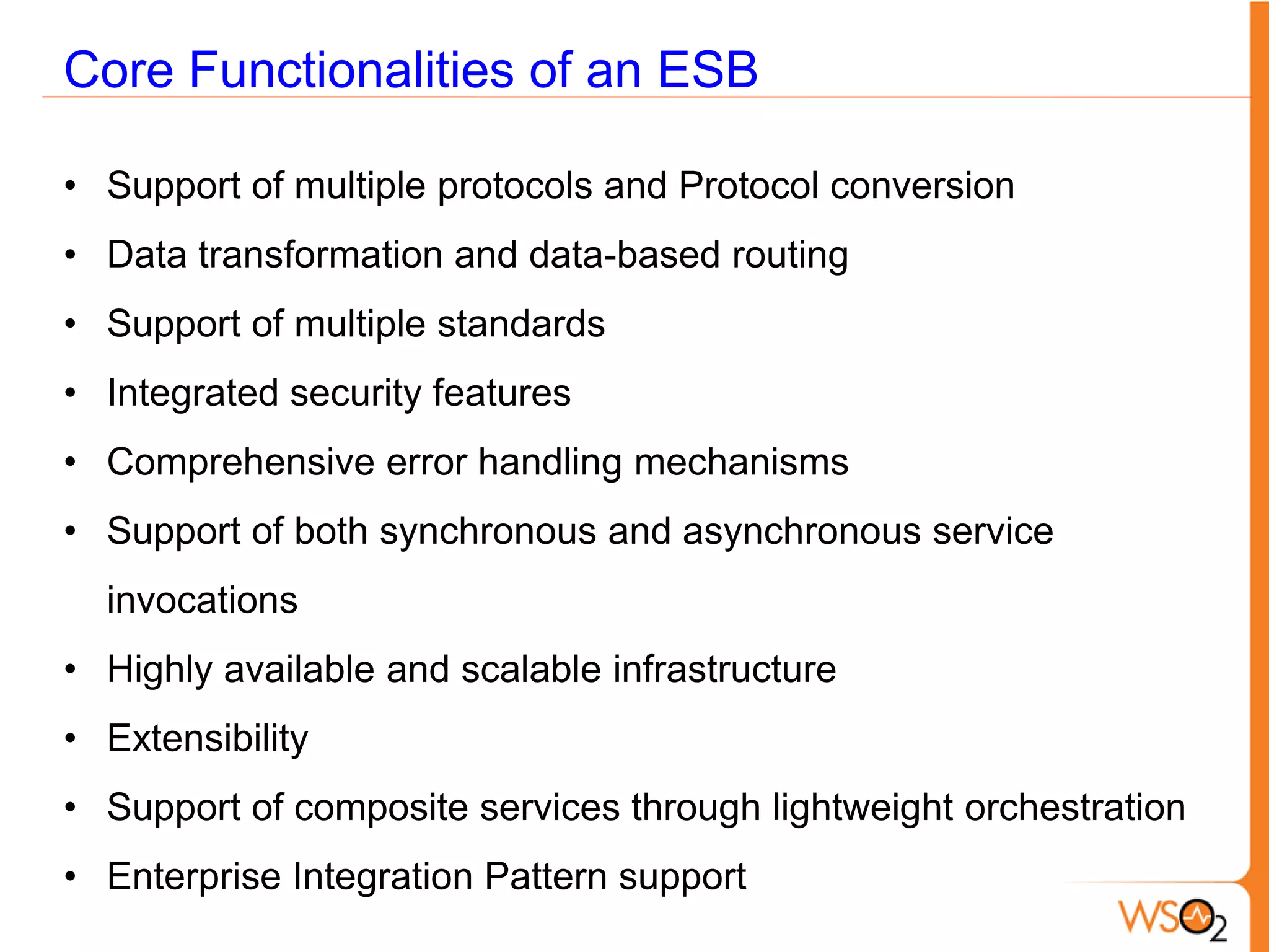
Core Functionalities of an ESB

• Support of multiple protocols and Protocol conversion
• Data transformation and data-based routing
• Support of multiple standards
• Integrated security features
• Comprehensive error handling mechanisms
• Support of both synchronous and asynchronous service
  invocations
• Highly available and scalable infrastructure
• Extensibility
• Support of composite services through lightweight orchestration
• Enterprise Integration Pattern support
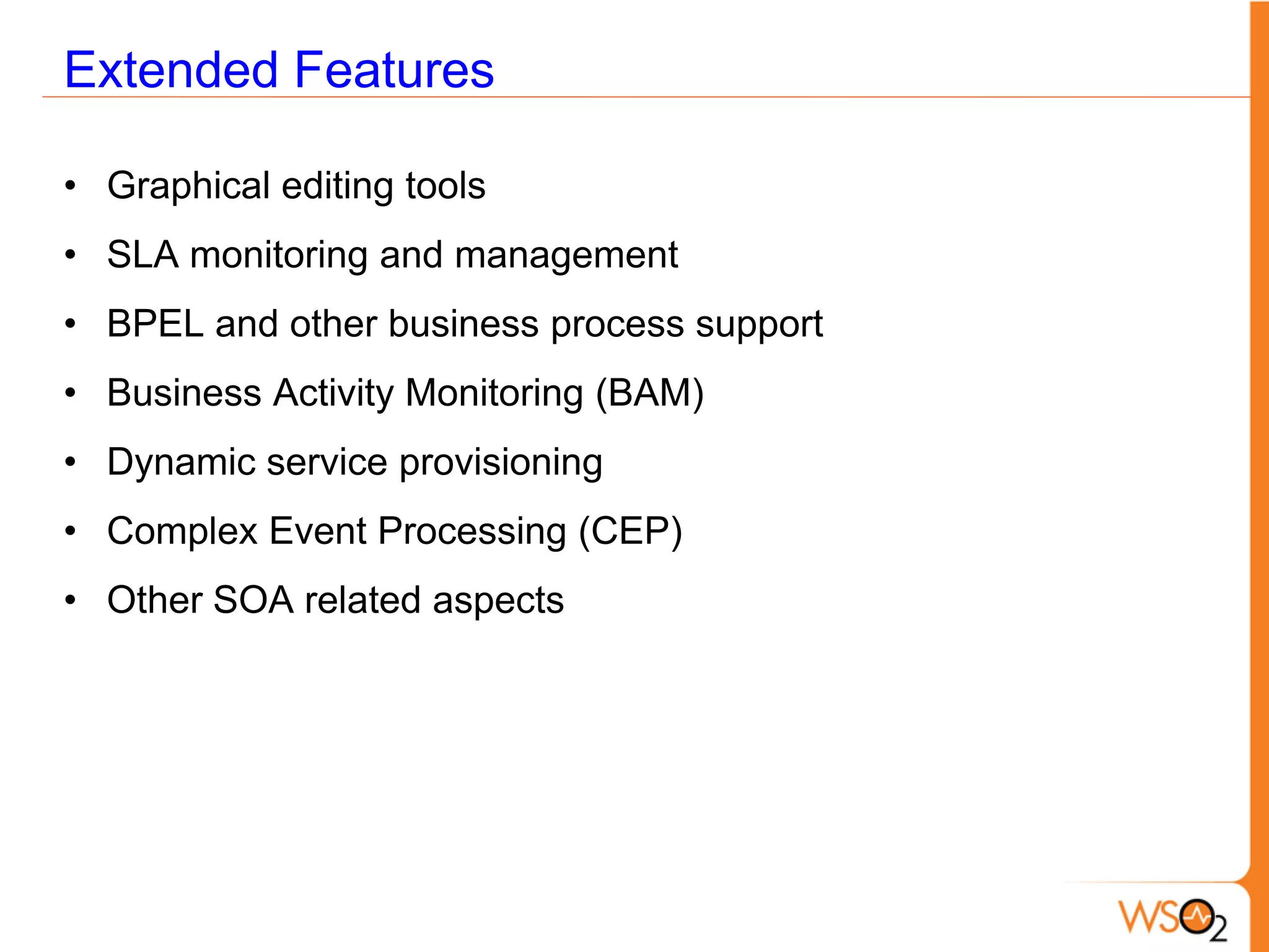
Extended Features

• Graphical editing tools
• SLA monitoring and management
• BPEL and other business process support
• Business Activity Monitoring (BAM)
• Dynamic service provisioning
• Complex Event Processing (CEP)
• Other SOA related aspects
Why WSO2 ESB?

• Lightweight
• Supports all the core functionalities of an ESB
• A part of a complete SOA platform
• 100% Free and Open Source under Apache License 2
• Comprehensive support from the developers who built the
  product
• Go Cloud Native
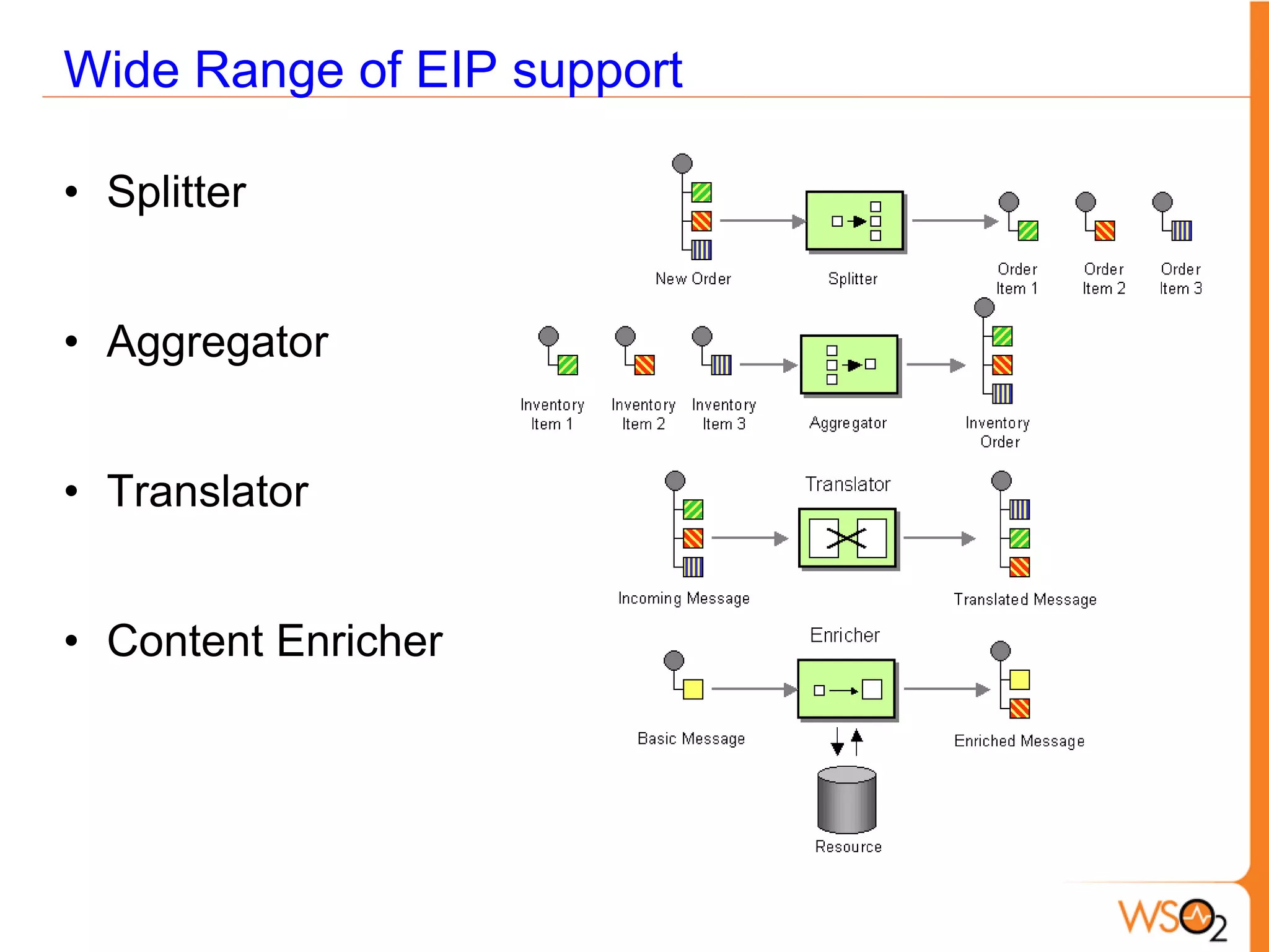
Wide Range of EIP support

• Splitter


• Aggregator


• Translator


• Content Enricher
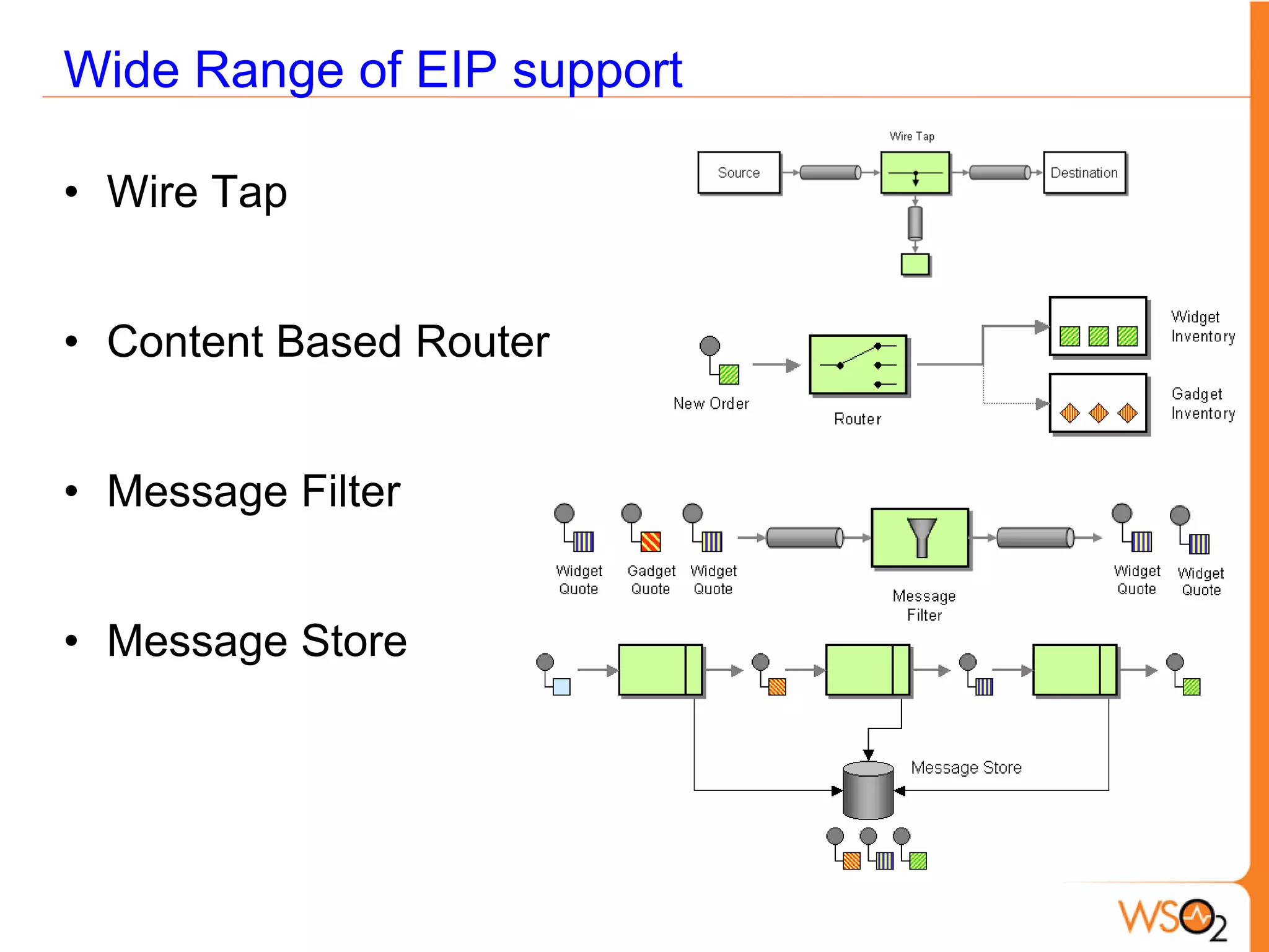
Wide Range of EIP support

• Wire Tap


• Content Based Router


• Message Filter


• Message Store
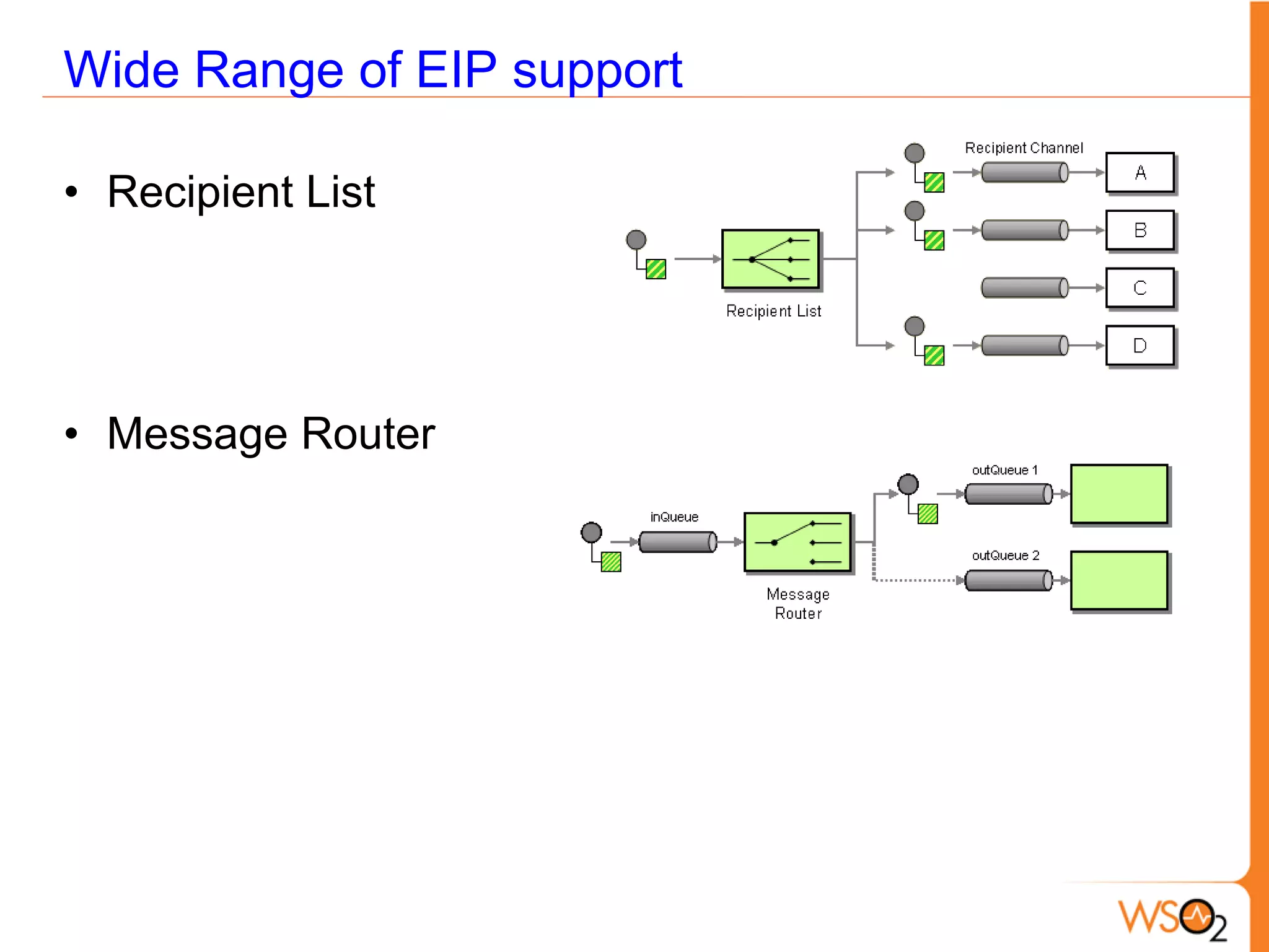
Wide Range of EIP support

• Recipient List


• Message Router
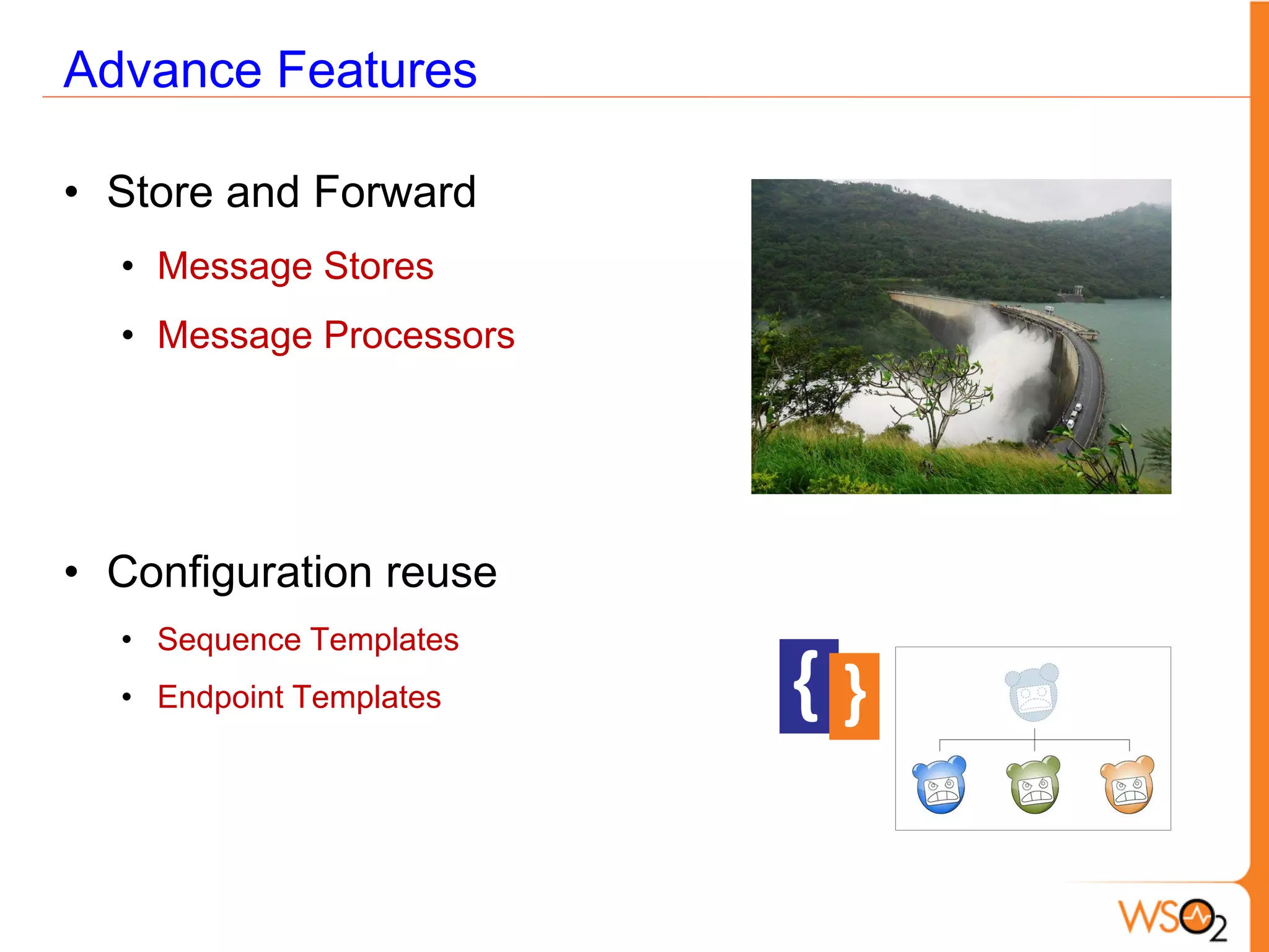
Advance Features

• Store and Forward
  • Message Stores
  • Message Processors


• Configuration reuse
  • Sequence Templates
  • Endpoint Templates
Protocols and Conversions

• Various Protocols and Conversions
  • Transports
     • HTTP/S, POP/IMAP, SMTP, JMS, AMQP, FIX, Raw TCP, Raw UDP,
      SAP, File transports (FTP/SFTP/CIFS), SAP IDOC/BAPI

  • Content interchange formats
     • SOAP 1.1, SOAP 1.2, POX, HTML, Plain text, binary, JSON, Hessian

  • REST API for all RESTful invocations
     • A new feature that will be available in the upcoming release.
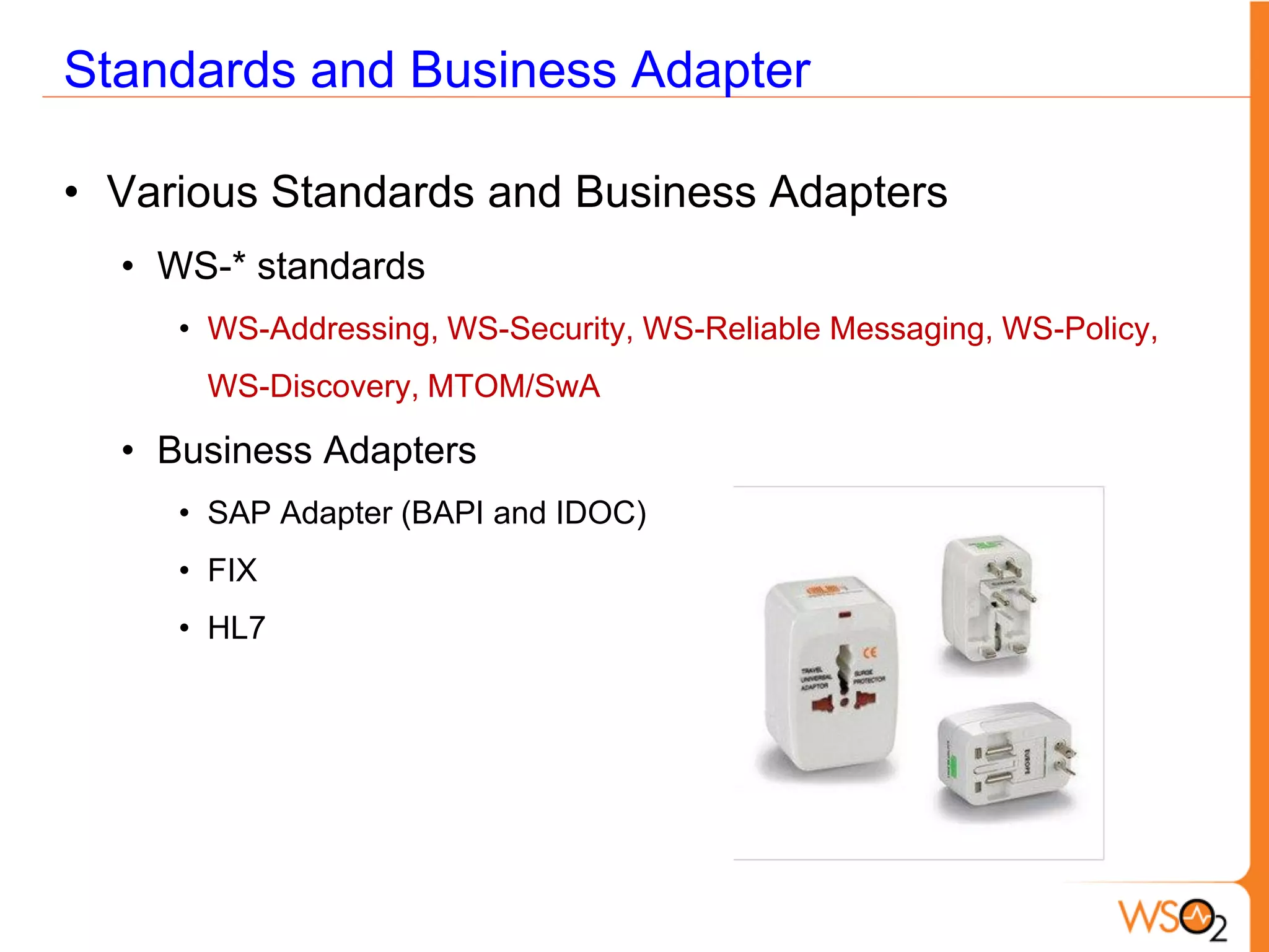
Standards and Business Adapter

• Various Standards and Business Adapters
  • WS-* standards
     • WS-Addressing, WS-Security, WS-Reliable Messaging, WS-Policy,
      WS-Discovery, MTOM/SwA

  • Business Adapters
     • SAP Adapter (BAPI and IDOC)
     • FIX
     • HL7
Message Transformations and QoS

• Transformations
  • xslt,xquery,smooks


• QoS
  • Security Features
     • 16 security scenarios
     • XACML, SAML 2.0, WS-Security and many more with WSO2-IS
        features
  • Reliable Messaging
  • Throttling
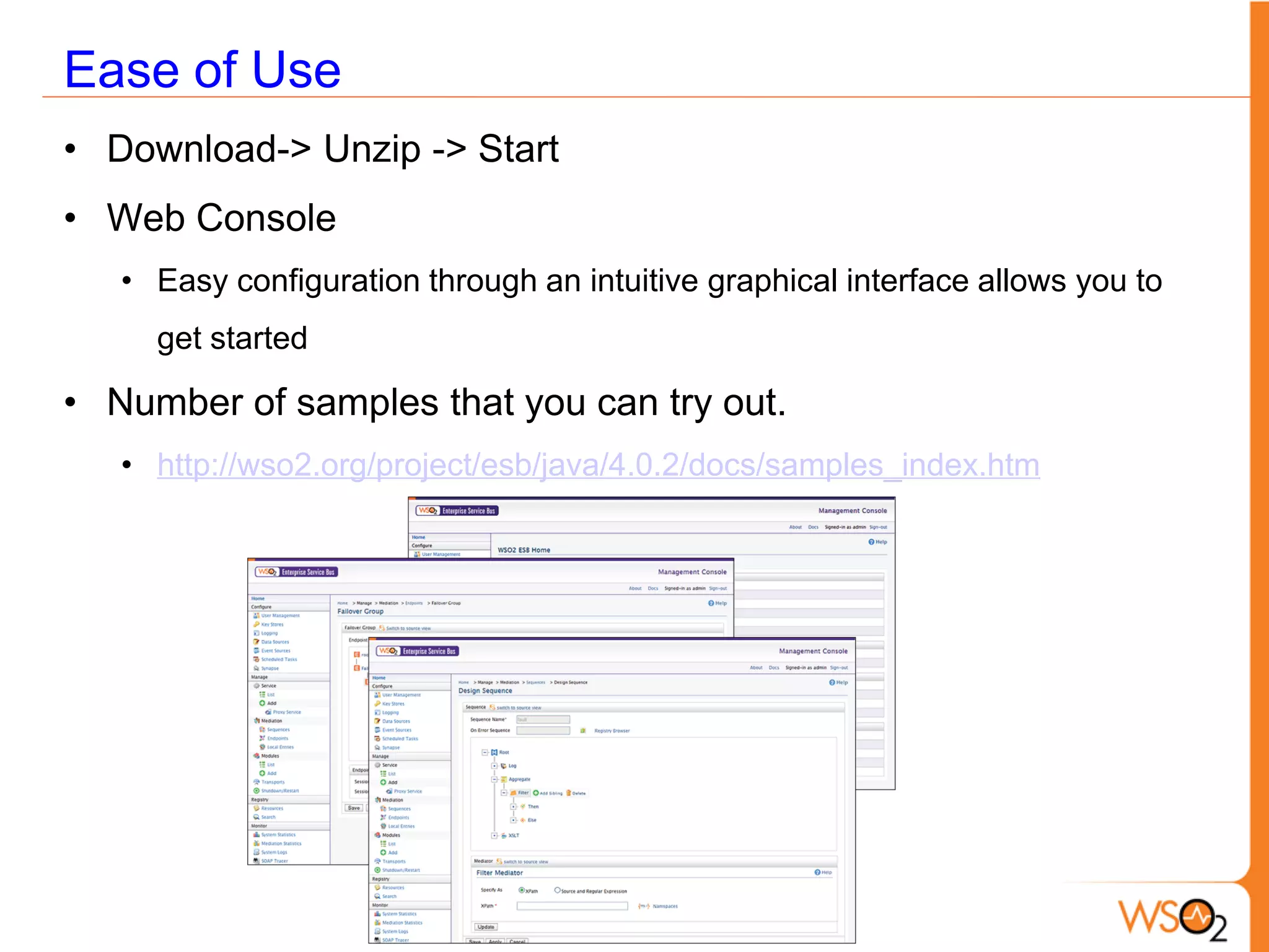
Ease of Use
• Download-> Unzip -> Start
• Web Console
   • Easy configuration through an intuitive graphical interface allows you to
     get started

• Number of samples that you can try out.
   • http://wso2.org/project/esb/java/4.0.2/docs/samples_index.htm
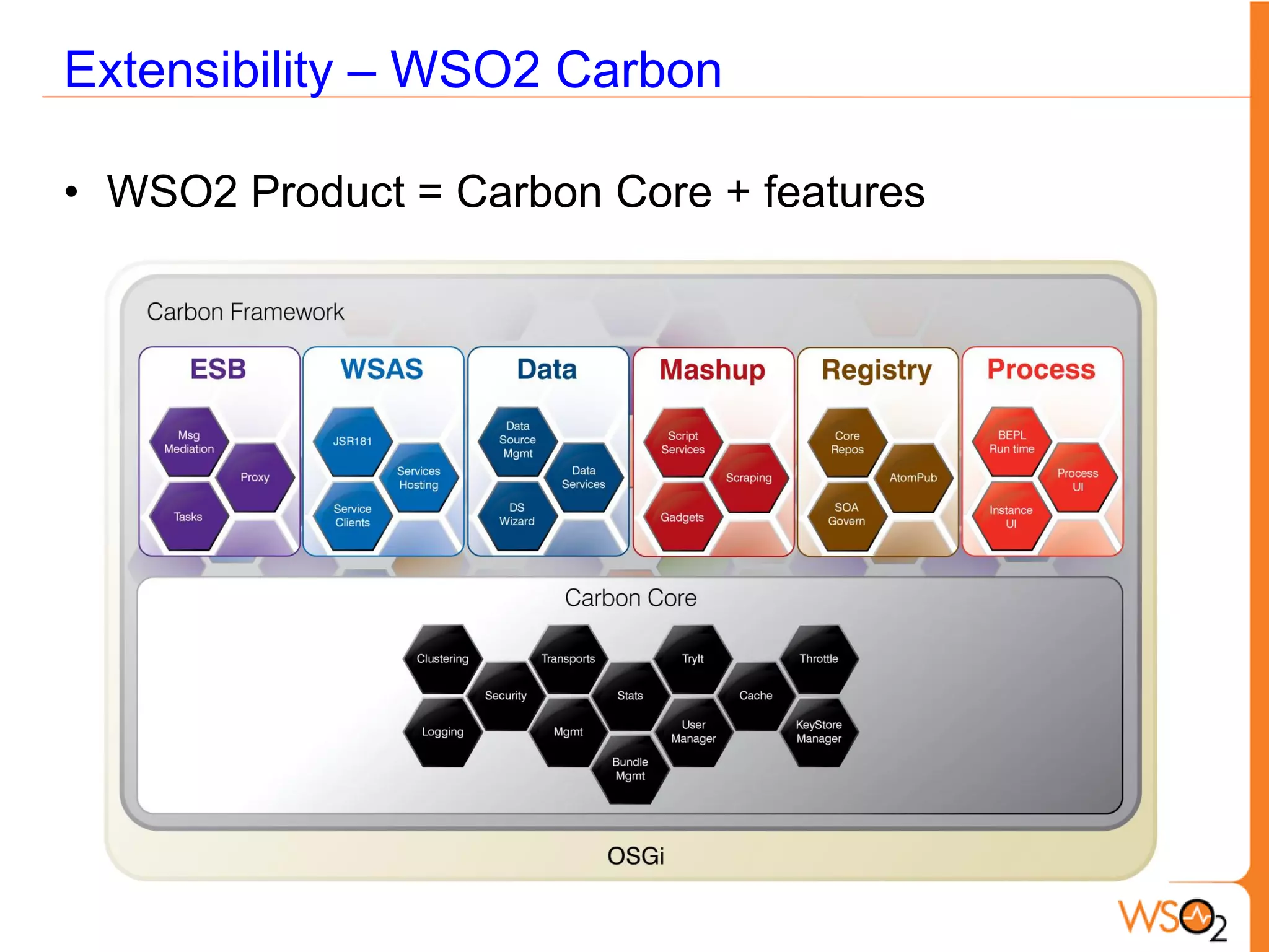
Extensibility – WSO2 Carbon

• WSO2 Product = Carbon Core + features
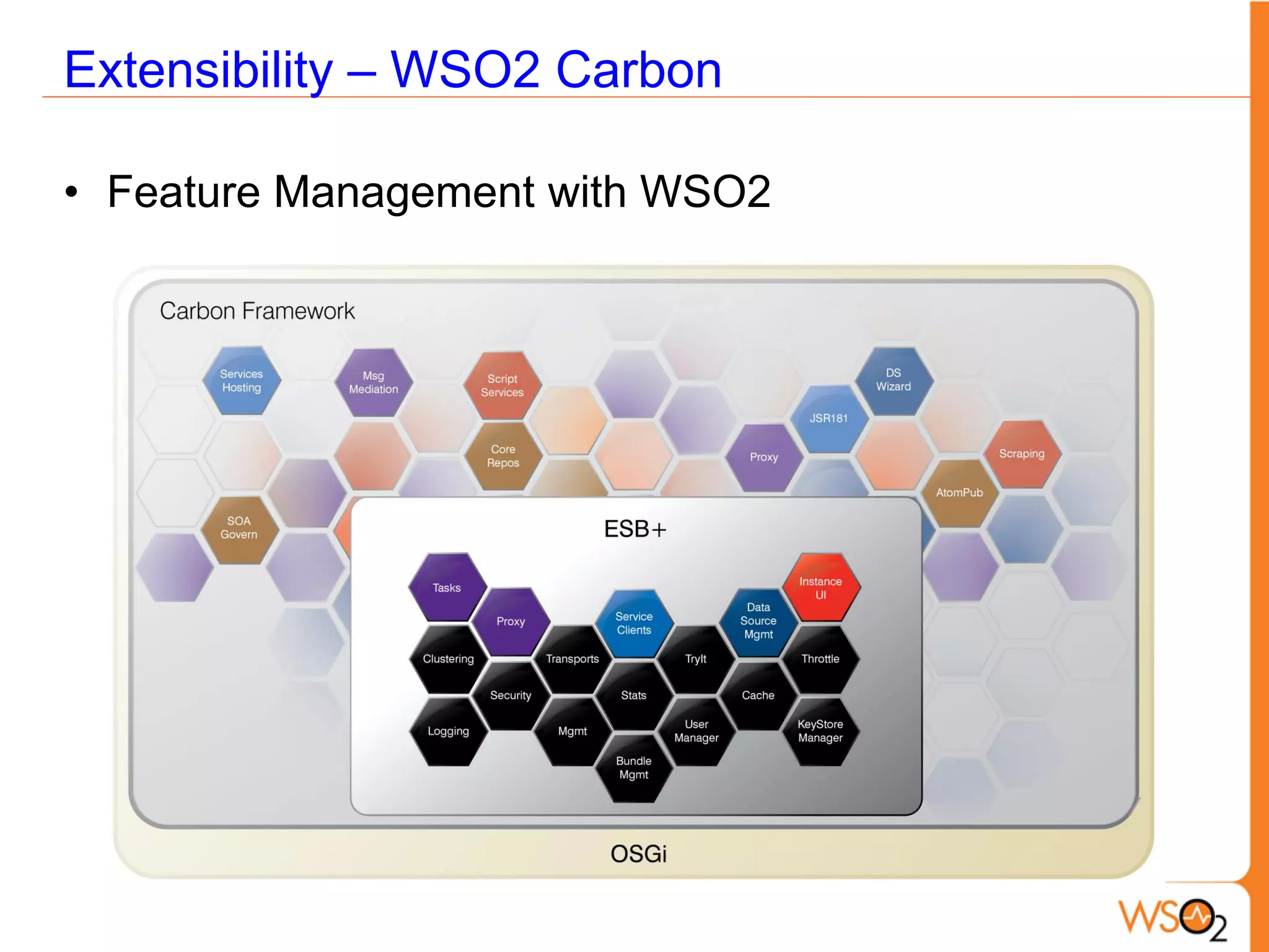
Extensibility – WSO2 Carbon

• Feature Management with WSO2
Extensibility – WSO2 Carbon

• Implement your own
   • Custom Mediators, Scheduled Tasks, Message Stores and Message
     Processors

• Xpath Extensions
• Message Builders and Formatters to support proprietary
  protocols
HA, Clustering and Governance Aspects

• Clustering based on WSO2 Governance Registry
• Deployment Synchronizer
• Carbon Applications (cApp)
• Life Cycle Management
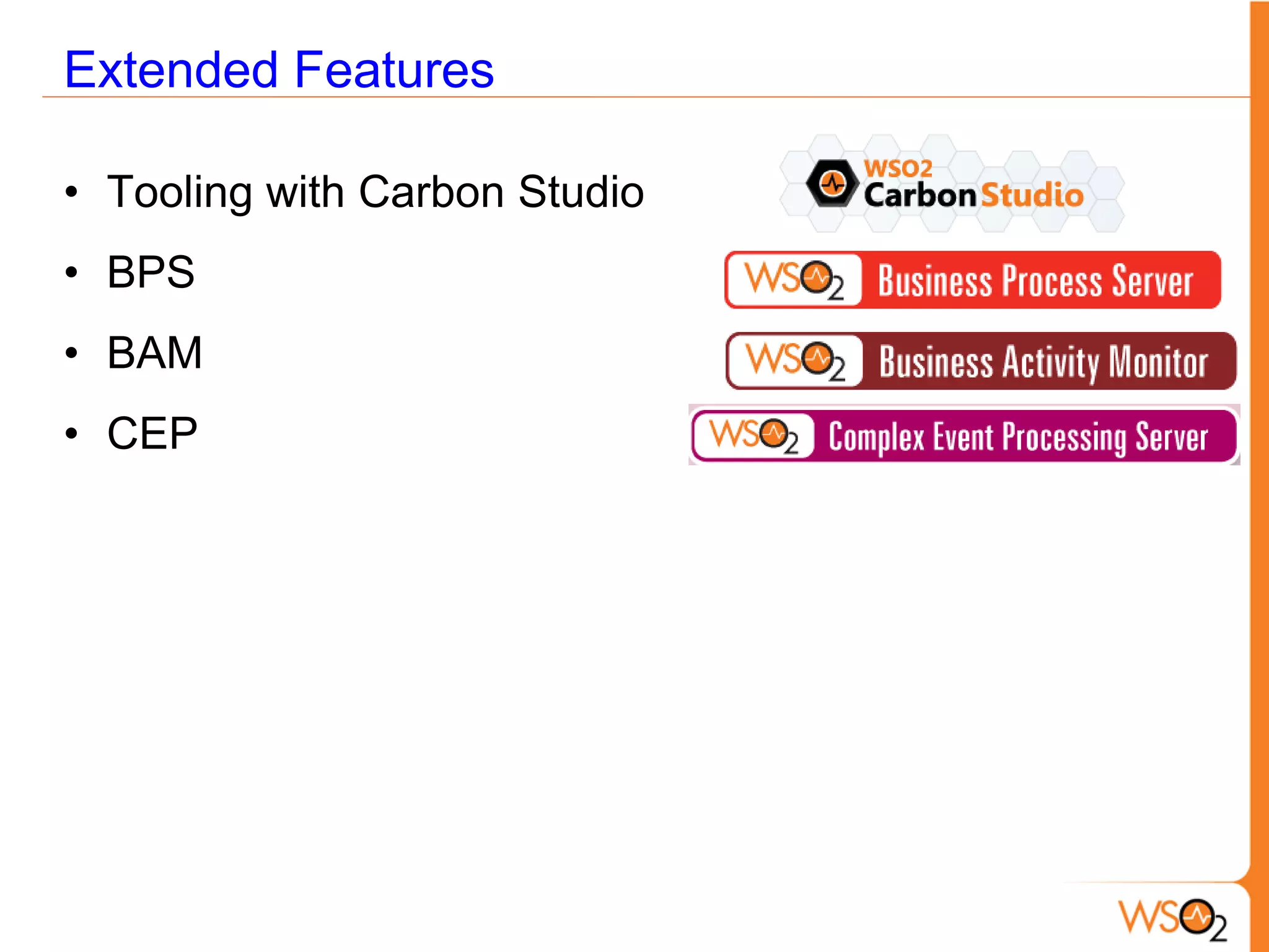
Extended Features

• Tooling with Carbon Studio
• BPS
• BAM
• CEP
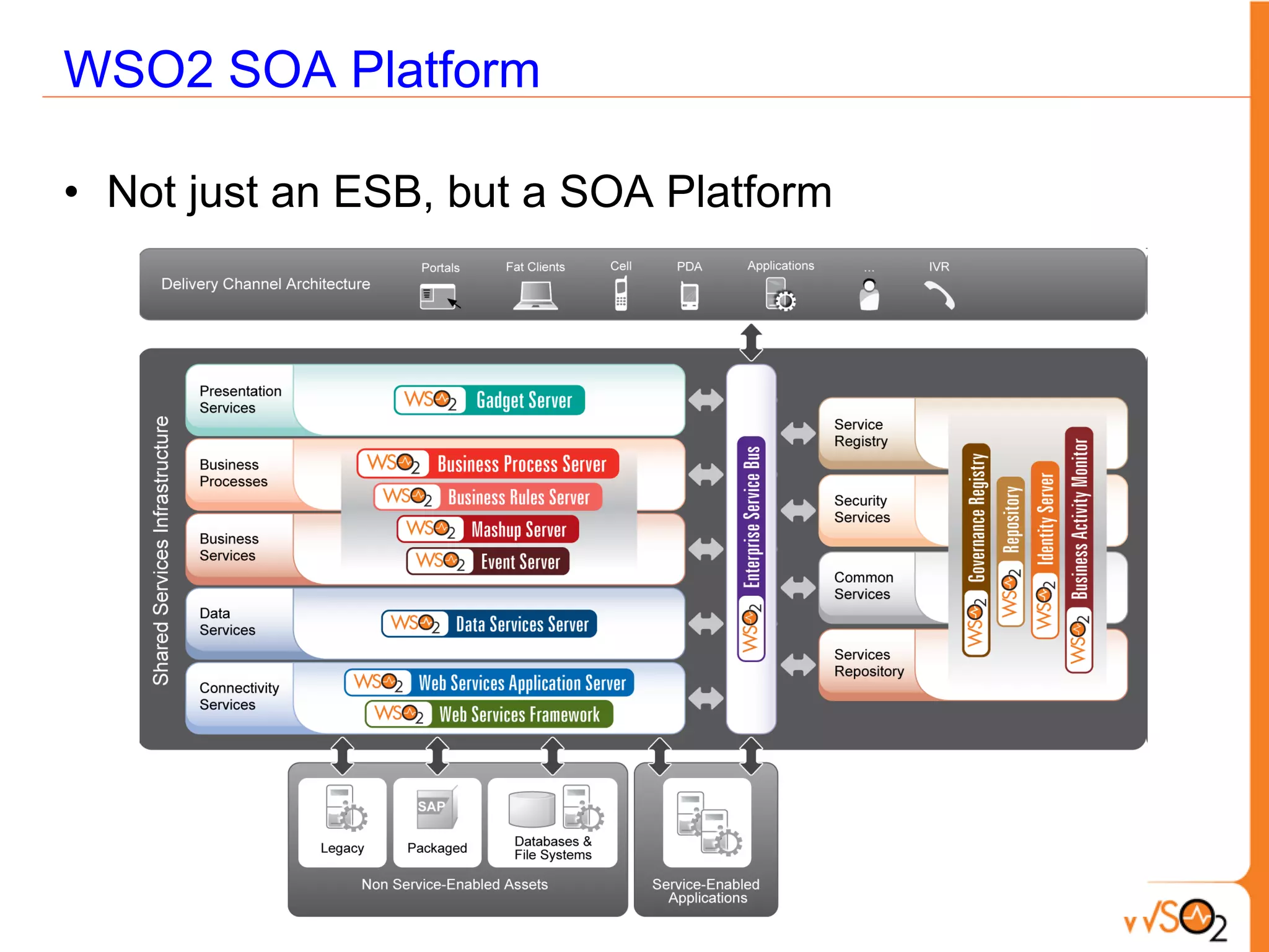
WSO2 SOA Platform

• Not just an ESB, but a SOA Platform
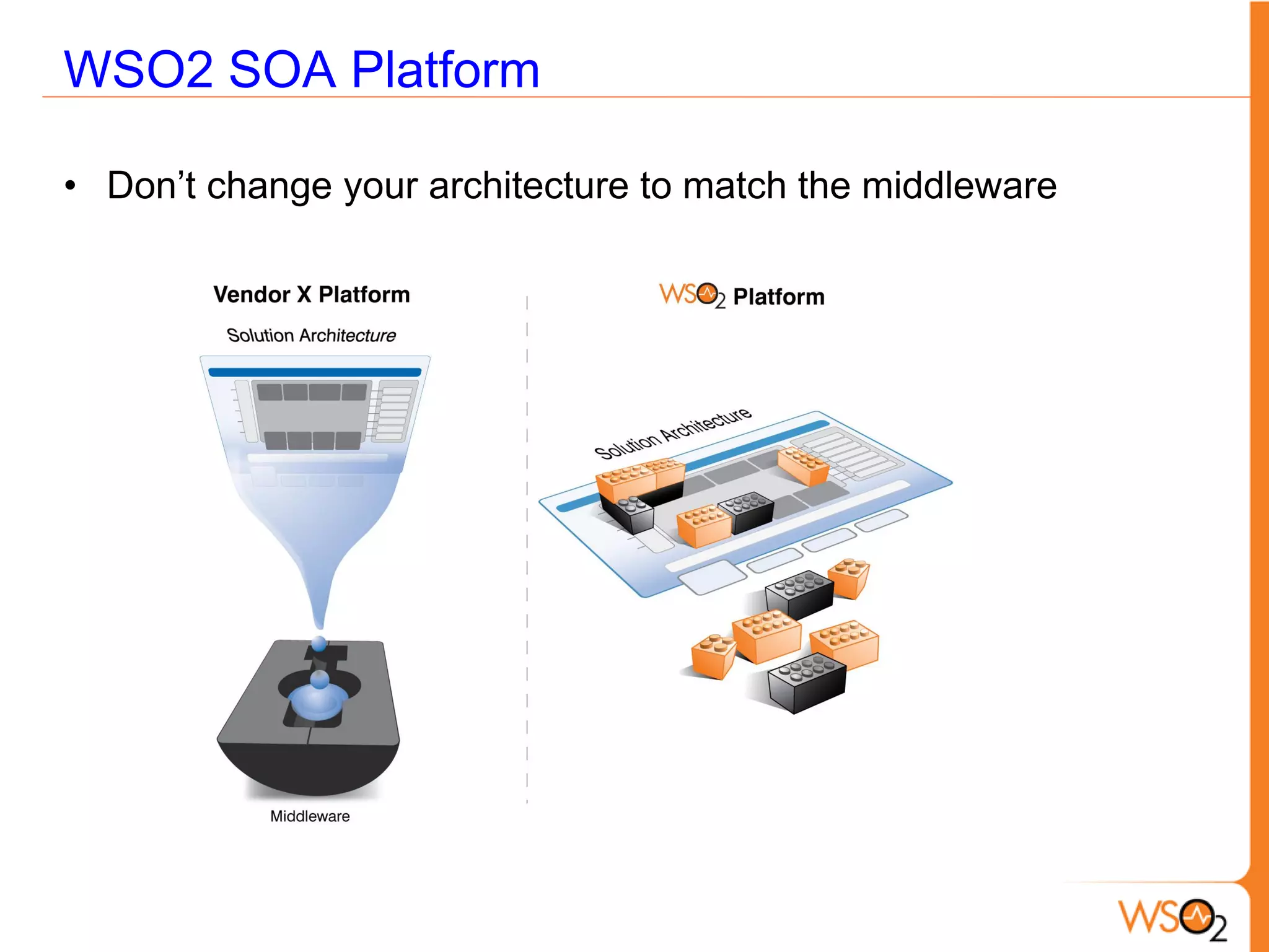
WSO2 SOA Platform

• Don’t change your architecture to match the middleware
Proven Case Studies

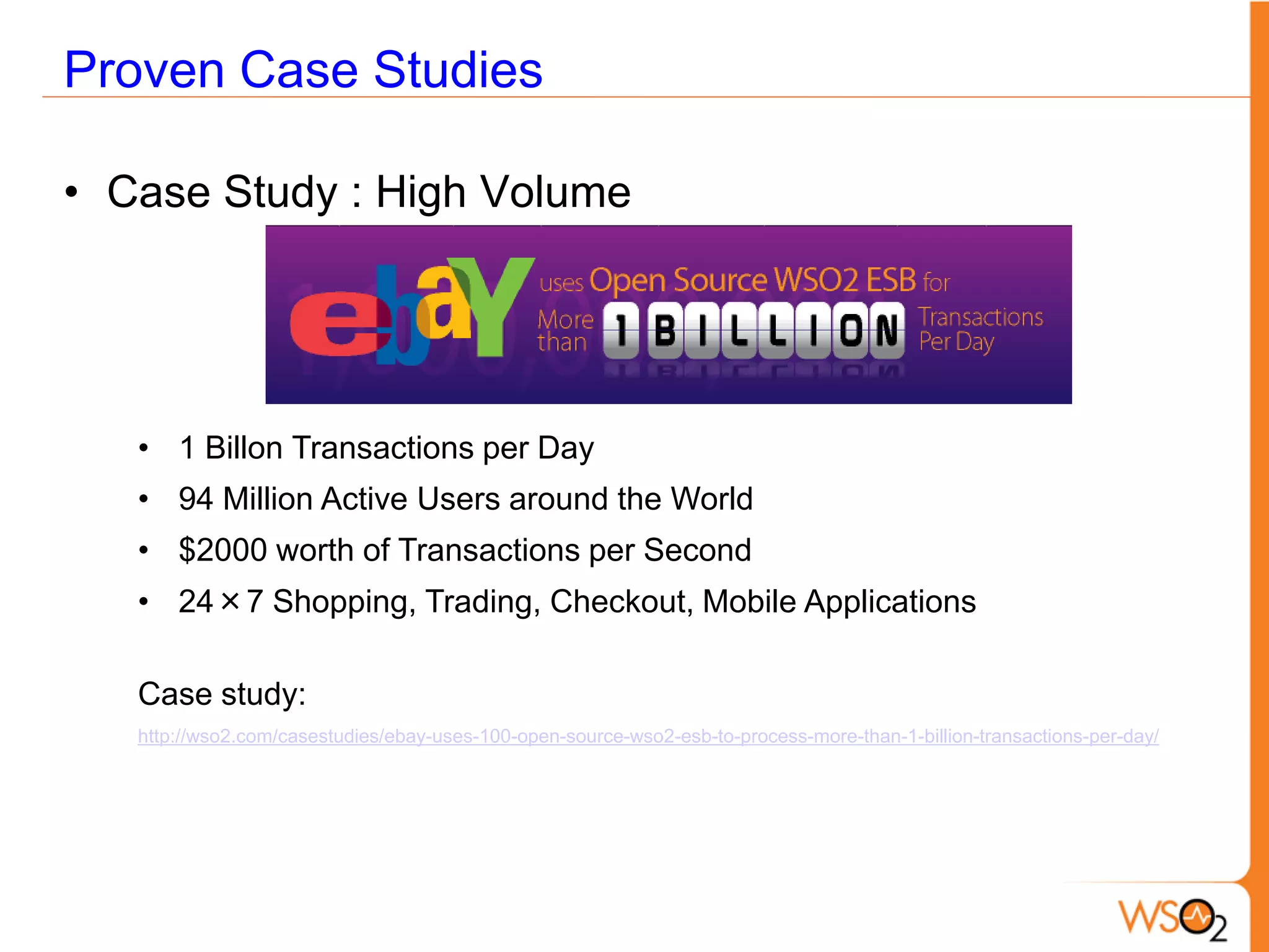
• Case Study : High Volume


   • 1 Billon Transactions per Day
   • 94 Million Active Users around the World
   • $2000 worth of Transactions per Second
   • 24×7 Shopping, Trading, Checkout, Mobile Applications

   Case study:
   http://wso2.com/casestudies/ebay-uses-100-open-source-wso2-esb-to-process-more-than-1-billion-transactions-per-day/
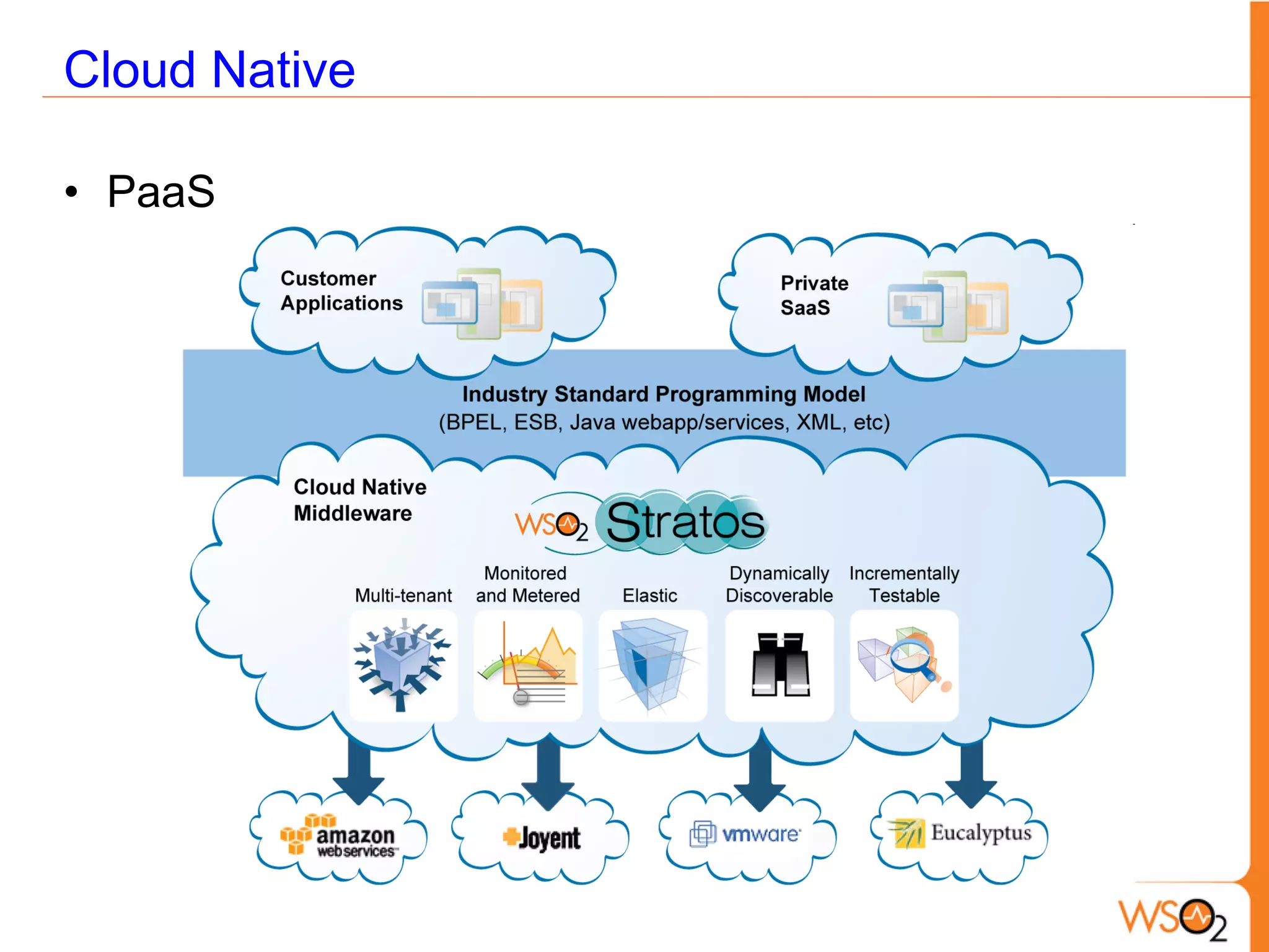
Cloud Native

• PaaS
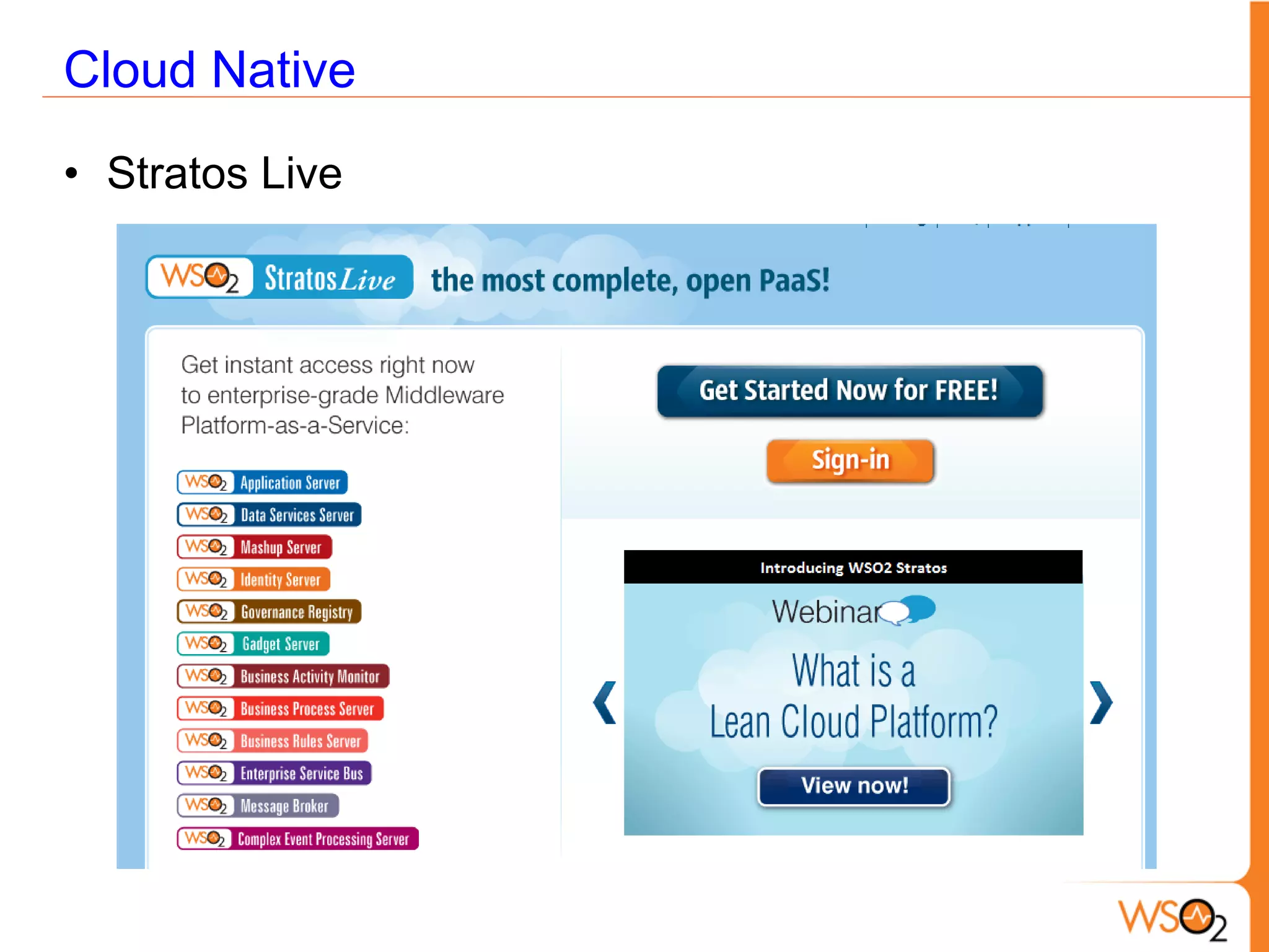
Cloud Native
• Stratos Live
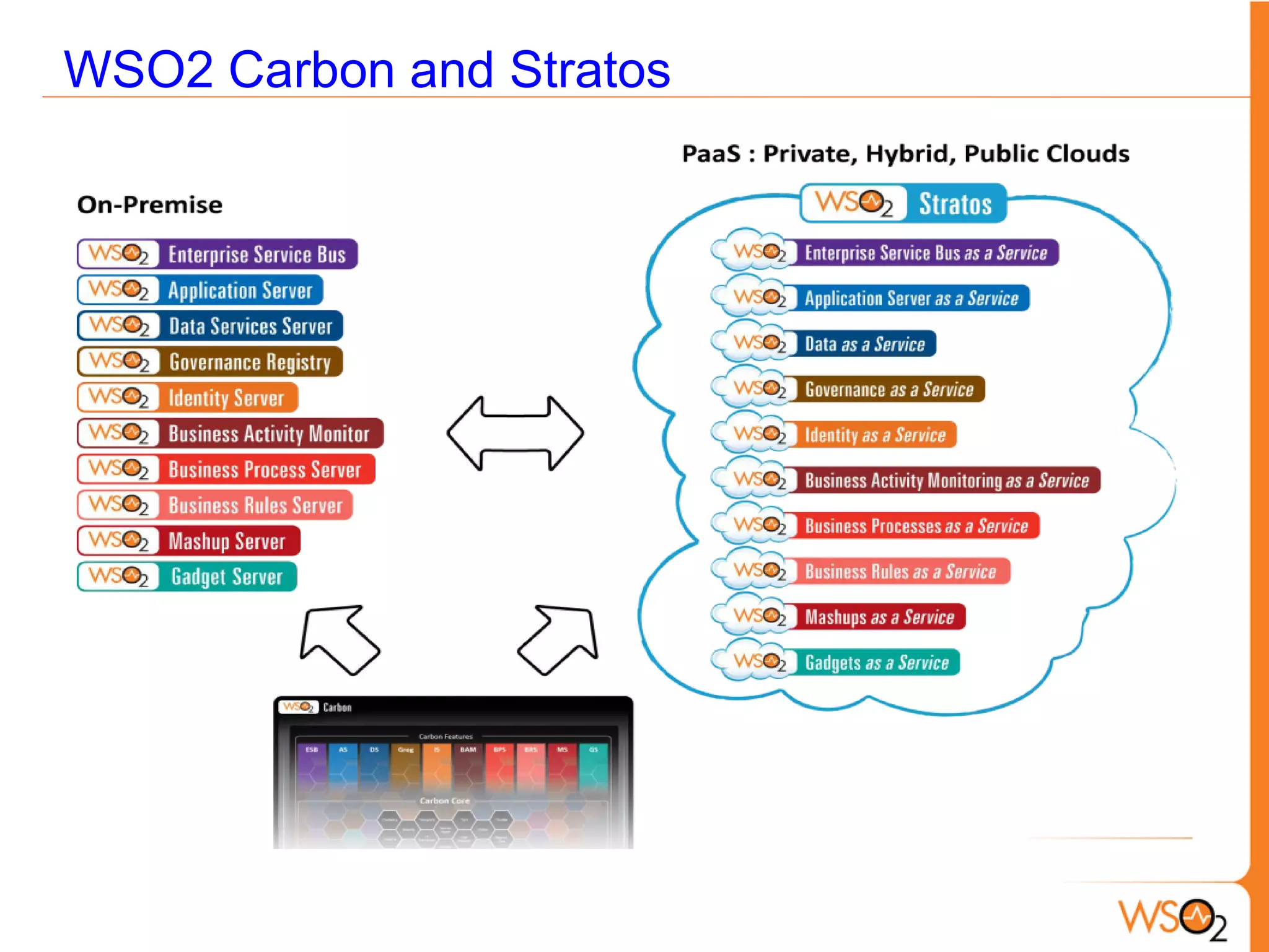
WSO2 Carbon and Stratos
Conclusion

• Time
• Fit
• Support
Q&A
Selected Customers
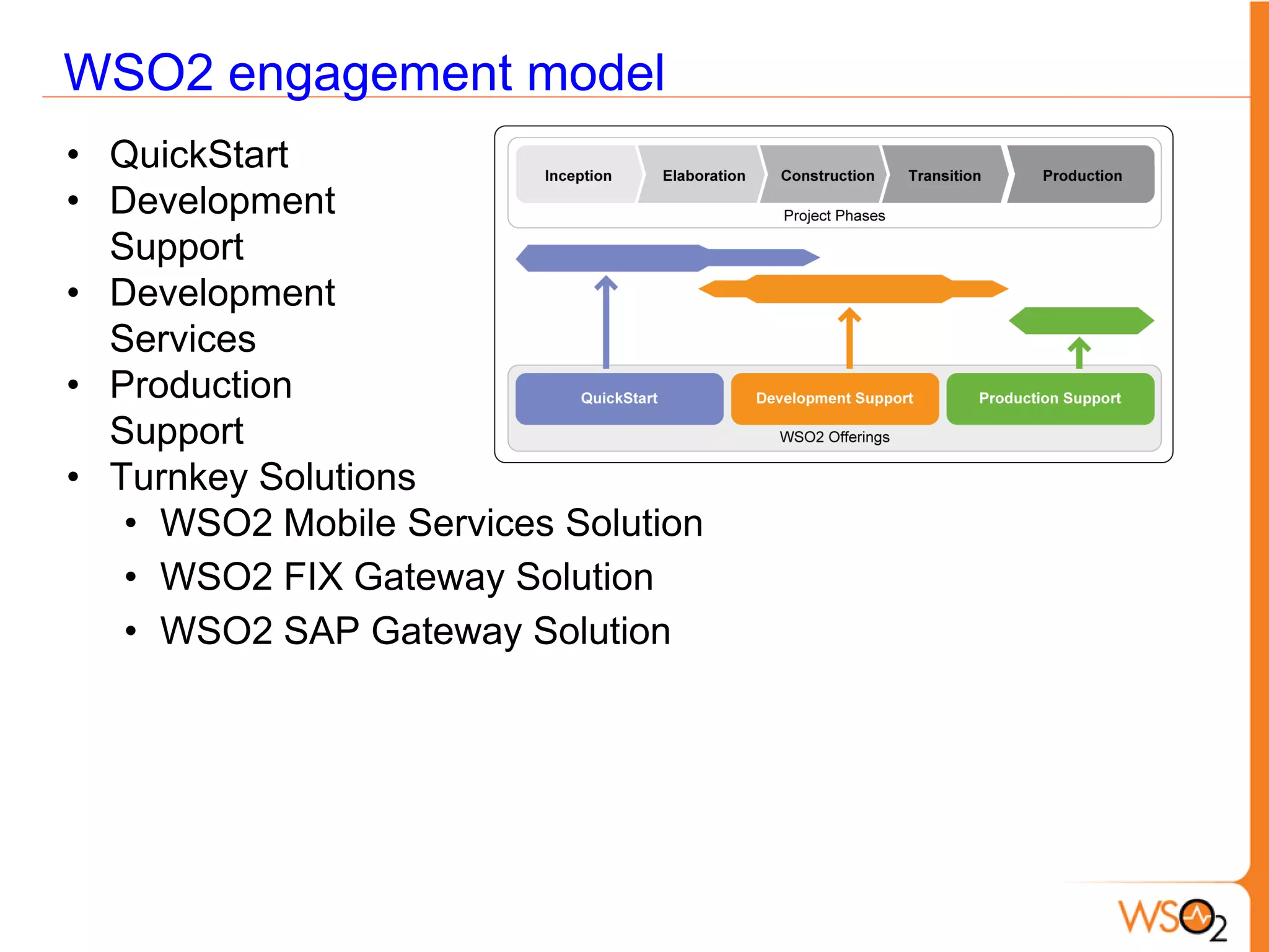
WSO2 engagement model
• QuickStart
• Development
  Support
• Development
  Services
• Production
  Support
• Turnkey Solutions
   • WSO2 Mobile Services Solution
   • WSO2 FIX Gateway Solution
   • WSO2 SAP Gateway Solution
Thank You.

Esb buyers guide_final

  • 1.
    A Buyers Guideto an Enterprise Service Bus Kasun Indrasiri Associate Technical Lead WSO2 Inc.
  • 2.
    Overview • Enterprise ServiceBus (ESB) - What and Why? • Selecting an ESB • Do you really need an ESB? • Core Functionalities of an ESB • Why WSO2 ESB? • Features of WSO2 ESB • Conclusion
  • 3.
    ESB - What? •Enterprise Service Bus (ESB) • An enterprise service bus (ESB) is a software architecture for middleware that provides fundamental services for more complex architectures. • An ESB acts as a shared messaging layer for connecting applications and other services throughout an enterprise computing infrastructure. • It supplements its core asynchronous messaging backbone with intelligent transformation and routing to ensure messages are passed reliably. (source:Gartner)
  • 4.
    ESB - Why? •Why ESB? • Service Mediation • Transformations • Routing • Validations • Event Management • Interactions • QoS – Security, Reliability, Throttling • Service Hosting • Service Orchestration
  • 5.
    Selecting an ESB •It’s challenging! • Number of Complex ESB products • Discrete features and capabilities. • The architecture requirements for SOA and ESB rapidly vary. • There are no standards, that define ESB capabilities.
  • 6.
    Do you reallyneed an ESB? • Integrating more than a few application and more new applications will be introduced to the system. • Mediate Messages based on various business requirements • Supporting various protocols and standards • Virtualization of different services offered by diverse applications • Various QoS requirements
  • 7.
    Core Functionalities ofan ESB • Support of multiple protocols and Protocol conversion • Data transformation and data-based routing • Support of multiple standards • Integrated security features • Comprehensive error handling mechanisms • Support of both synchronous and asynchronous service invocations • Highly available and scalable infrastructure • Extensibility • Support of composite services through lightweight orchestration • Enterprise Integration Pattern support
  • 8.
    Extended Features • Graphicalediting tools • SLA monitoring and management • BPEL and other business process support • Business Activity Monitoring (BAM) • Dynamic service provisioning • Complex Event Processing (CEP) • Other SOA related aspects
  • 9.
    Why WSO2 ESB? •Lightweight • Supports all the core functionalities of an ESB • A part of a complete SOA platform • 100% Free and Open Source under Apache License 2 • Comprehensive support from the developers who built the product • Go Cloud Native
  • 10.
    Wide Range ofEIP support • Splitter • Aggregator • Translator • Content Enricher
  • 11.
    Wide Range ofEIP support • Wire Tap • Content Based Router • Message Filter • Message Store
  • 12.
    Wide Range ofEIP support • Recipient List • Message Router
  • 13.
    Advance Features • Storeand Forward • Message Stores • Message Processors • Configuration reuse • Sequence Templates • Endpoint Templates
  • 14.
    Protocols and Conversions •Various Protocols and Conversions • Transports • HTTP/S, POP/IMAP, SMTP, JMS, AMQP, FIX, Raw TCP, Raw UDP, SAP, File transports (FTP/SFTP/CIFS), SAP IDOC/BAPI • Content interchange formats • SOAP 1.1, SOAP 1.2, POX, HTML, Plain text, binary, JSON, Hessian • REST API for all RESTful invocations • A new feature that will be available in the upcoming release.
  • 15.
    Standards and BusinessAdapter • Various Standards and Business Adapters • WS-* standards • WS-Addressing, WS-Security, WS-Reliable Messaging, WS-Policy, WS-Discovery, MTOM/SwA • Business Adapters • SAP Adapter (BAPI and IDOC) • FIX • HL7
  • 16.
    Message Transformations andQoS • Transformations • xslt,xquery,smooks • QoS • Security Features • 16 security scenarios • XACML, SAML 2.0, WS-Security and many more with WSO2-IS features • Reliable Messaging • Throttling
  • 17.
    Ease of Use •Download-> Unzip -> Start • Web Console • Easy configuration through an intuitive graphical interface allows you to get started • Number of samples that you can try out. • http://wso2.org/project/esb/java/4.0.2/docs/samples_index.htm
  • 18.
    Extensibility – WSO2Carbon • WSO2 Product = Carbon Core + features
  • 19.
    Extensibility – WSO2Carbon • Feature Management with WSO2
  • 20.
    Extensibility – WSO2Carbon • Implement your own • Custom Mediators, Scheduled Tasks, Message Stores and Message Processors • Xpath Extensions • Message Builders and Formatters to support proprietary protocols
  • 21.
    HA, Clustering andGovernance Aspects • Clustering based on WSO2 Governance Registry • Deployment Synchronizer • Carbon Applications (cApp) • Life Cycle Management
  • 22.
    Extended Features • Toolingwith Carbon Studio • BPS • BAM • CEP
  • 23.
    WSO2 SOA Platform •Not just an ESB, but a SOA Platform
  • 24.
    WSO2 SOA Platform •Don’t change your architecture to match the middleware
  • 25.
    Proven Case Studies •Case Study : High Volume • 1 Billon Transactions per Day • 94 Million Active Users around the World • $2000 worth of Transactions per Second • 24×7 Shopping, Trading, Checkout, Mobile Applications Case study: http://wso2.com/casestudies/ebay-uses-100-open-source-wso2-esb-to-process-more-than-1-billion-transactions-per-day/
  • 26.
  • 27.
  • 28.
  • 29.
  • 30.
  • 31.
  • 32.
    WSO2 engagement model •QuickStart • Development Support • Development Services • Production Support • Turnkey Solutions • WSO2 Mobile Services Solution • WSO2 FIX Gateway Solution • WSO2 SAP Gateway Solution
  • 33.