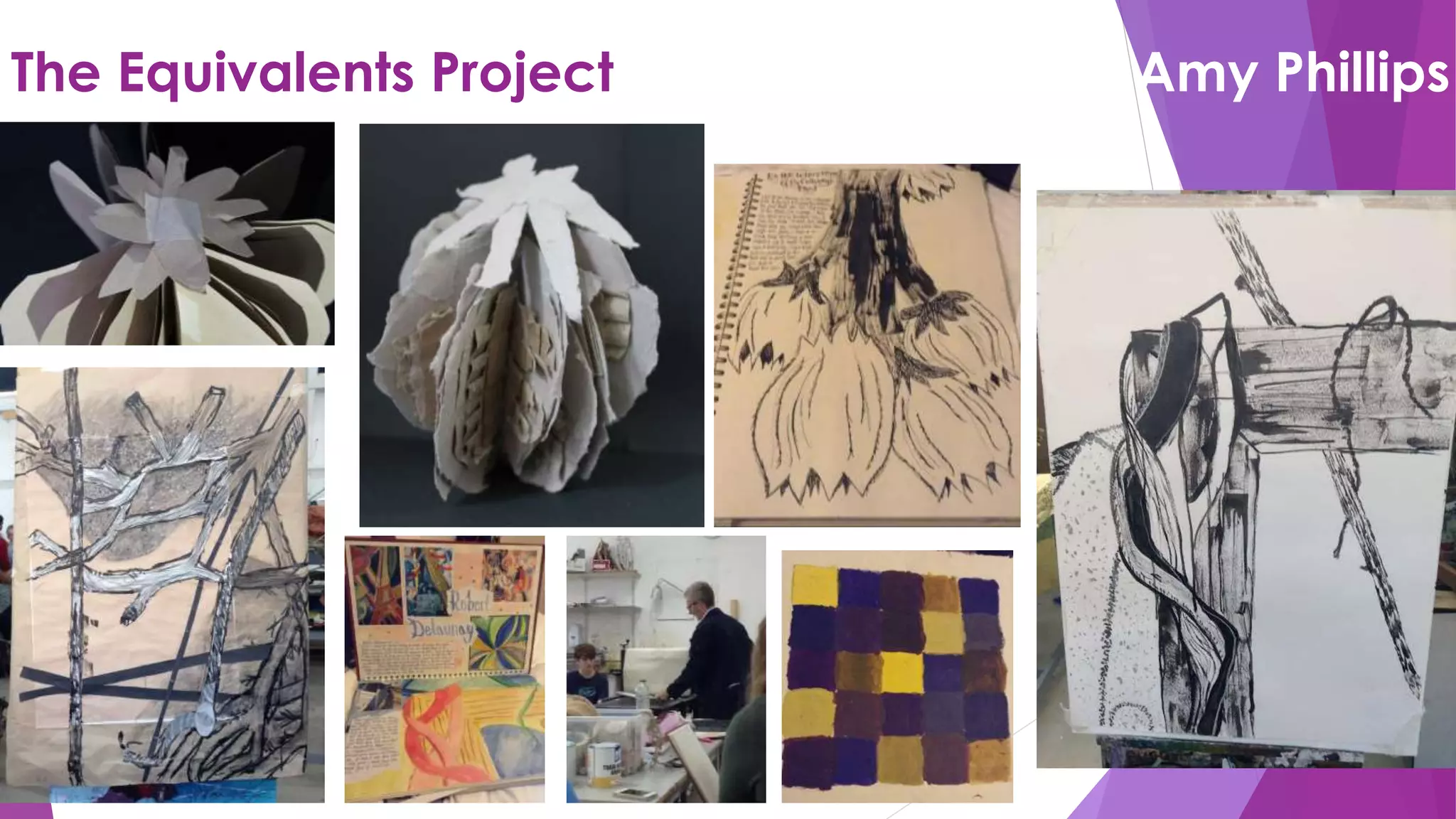
The Equivalents Project Amy Phillips
Primary and Secondary sources 
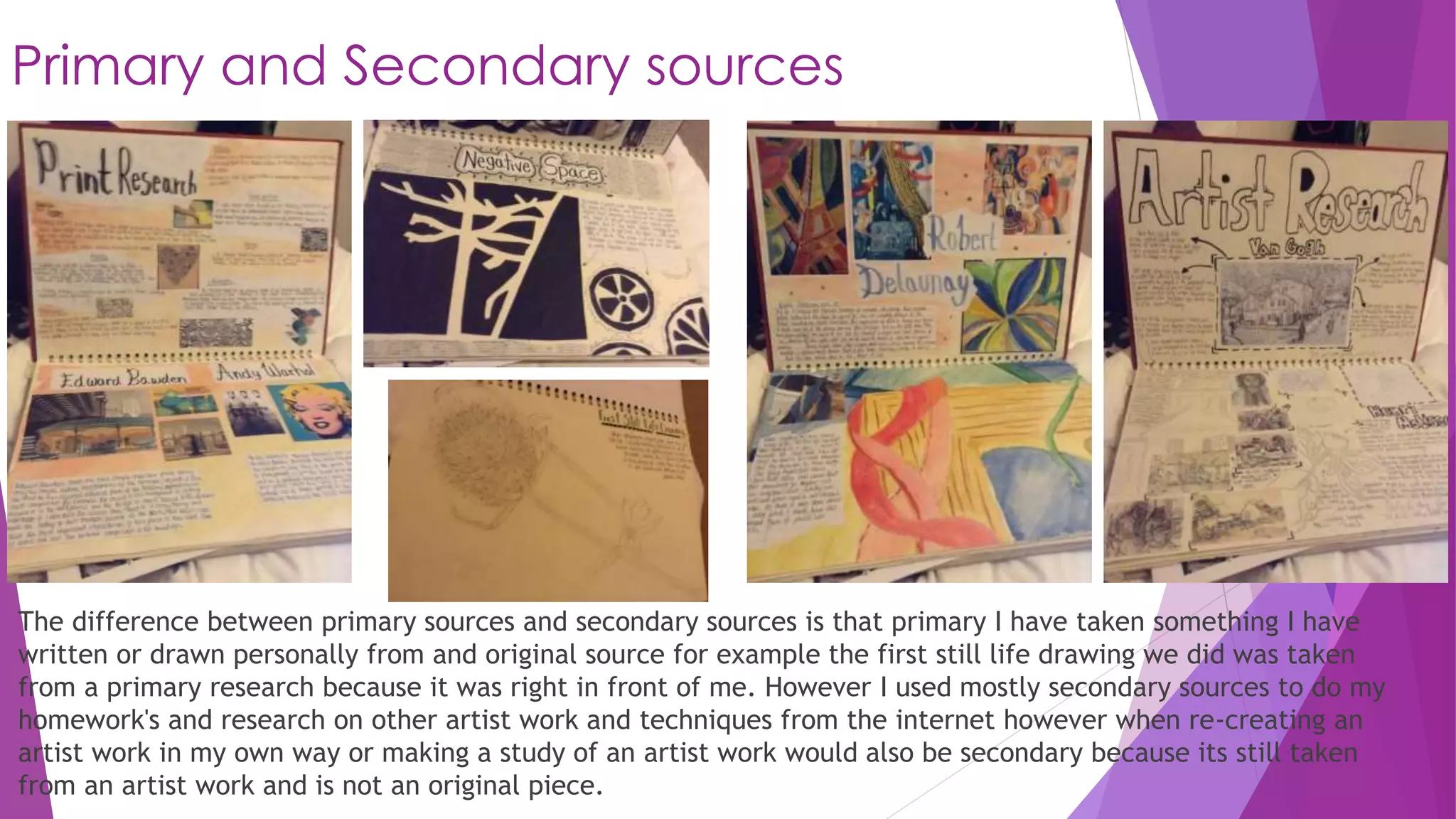
The difference between primary sources and secondary sources is that primary I have taken something I have 
written or drawn personally from and original source for example the first still life drawing we did was taken 
from a primary research because it was right in front of me. However I used mostly secondary sources to do my 
homework's and research on other artist work and techniques from the internet however when re-creating an 
artist work in my own way or making a study of an artist work would also be secondary because its still taken 
from an artist work and is not an original piece.
Using Formal Elements 
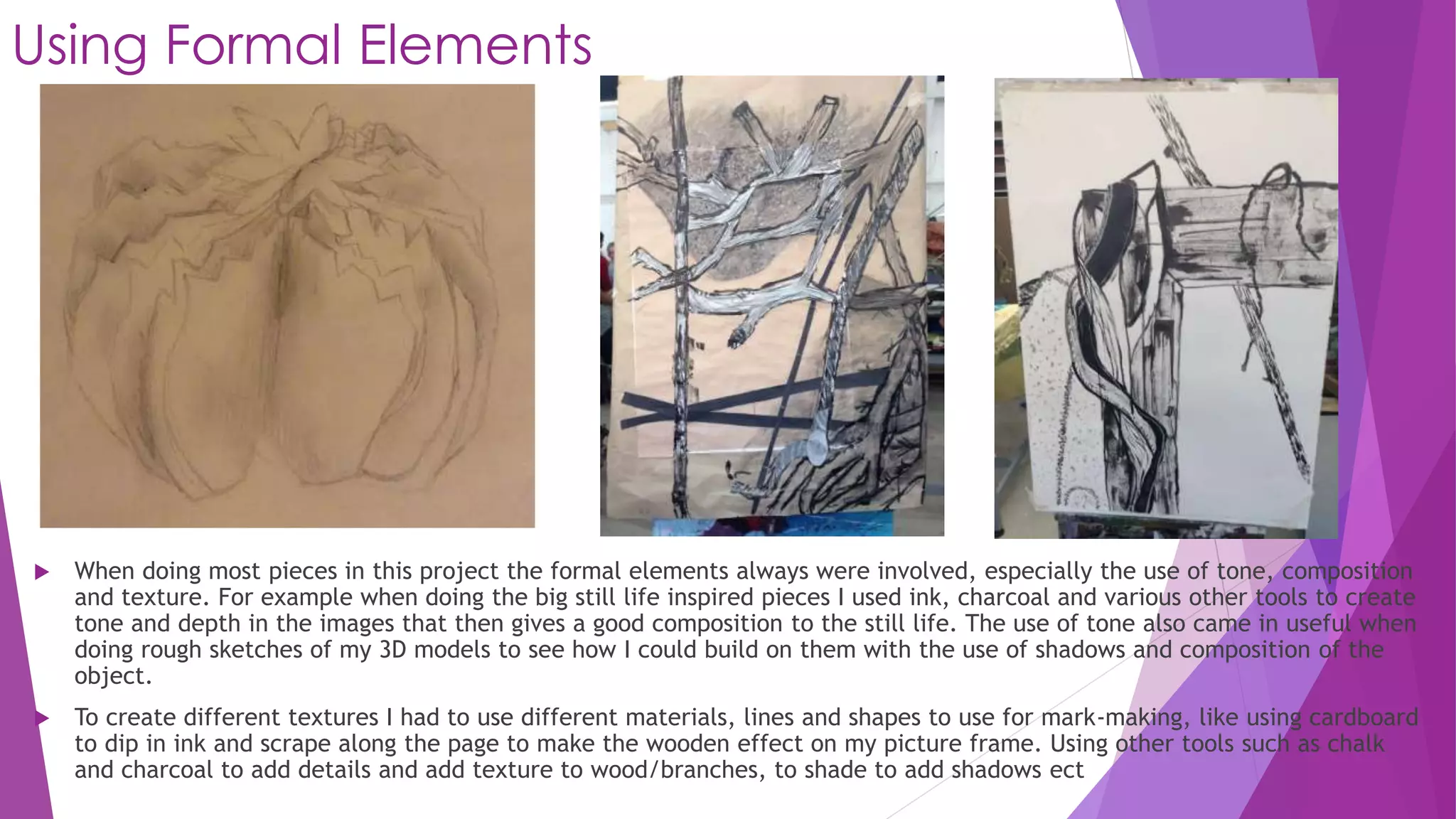
 When doing most pieces in this project the formal elements always were involved, especially the use of tone, composition 
and texture. For example when doing the big still life inspired pieces I used ink, charcoal and various other tools to create 
tone and depth in the images that then gives a good composition to the still life. The use of tone also came in useful when 
doing rough sketches of my 3D models to see how I could build on them with the use of shadows and composition of the 
object. 
 To create different textures I had to use different materials, lines and shapes to use for mark-making, like using cardboard 
to dip in ink and scrape along the page to make the wooden effect on my picture frame. Using other tools such as chalk 
and charcoal to add details and add texture to wood/branches, to shade to add shadows ect
Slide 4 - add your own title here 
Assessment criteria: An example and commentary of how you have used visual 
language in your work and how it has been influenced by others’ work. 
Examples: Homework research and studies produced such as ‘in the style 
of…painting, collage work, sculpture research and development, cubism, 
photography
Materials and Techniques 
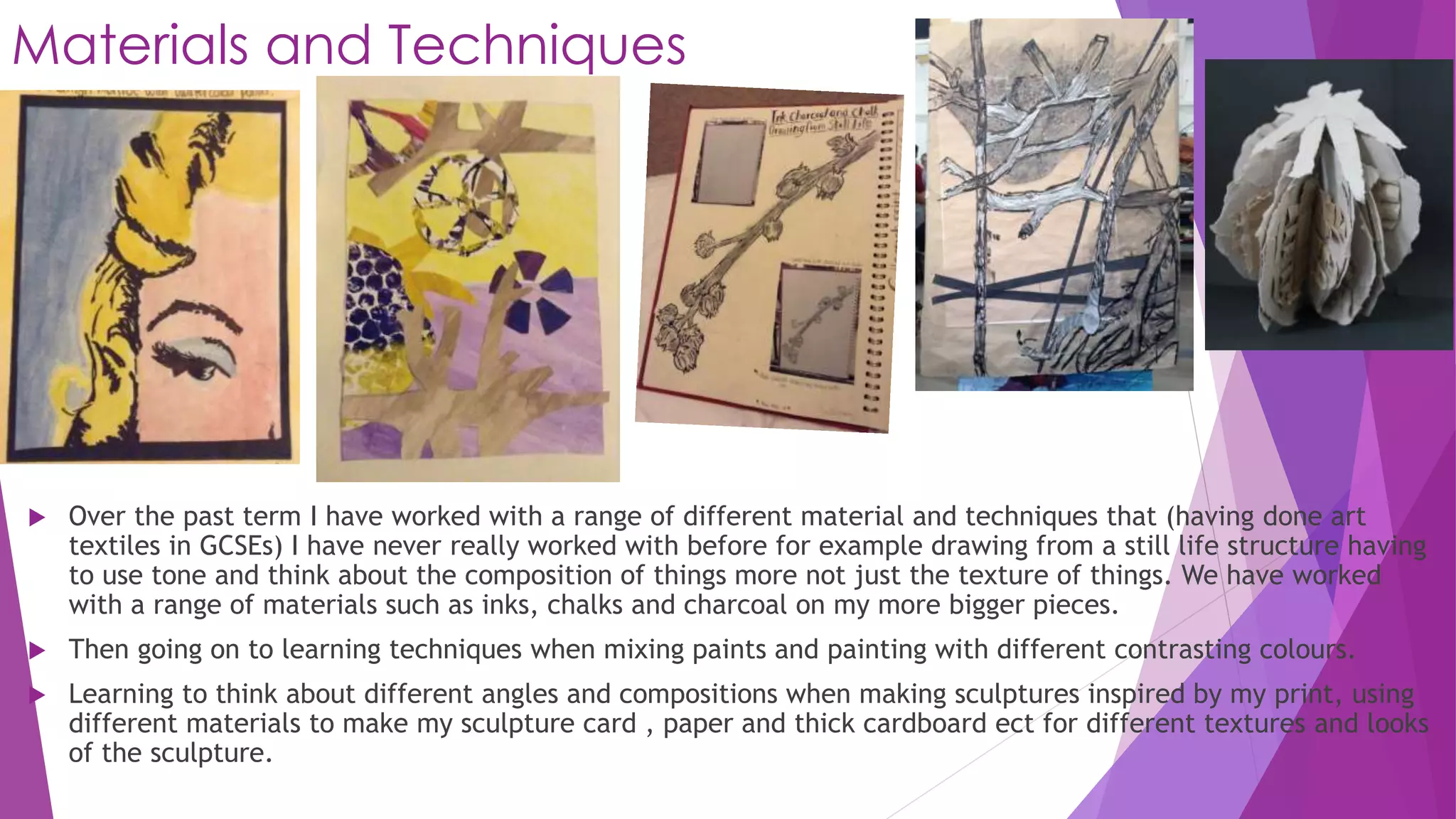
 Over the past term I have worked with a range of different material and techniques that (having done art 
textiles in GCSEs) I have never really worked with before for example drawing from a still life structure having 
to use tone and think about the composition of things more not just the texture of things. We have worked 
with a range of materials such as inks, chalks and charcoal on my more bigger pieces. 
 Then going on to learning techniques when mixing paints and painting with different contrasting colours. 
 Learning to think about different angles and compositions when making sculptures inspired by my print, using 
different materials to make my sculpture card , paper and thick cardboard ect for different textures and looks 
of the sculpture.
Health and safety 
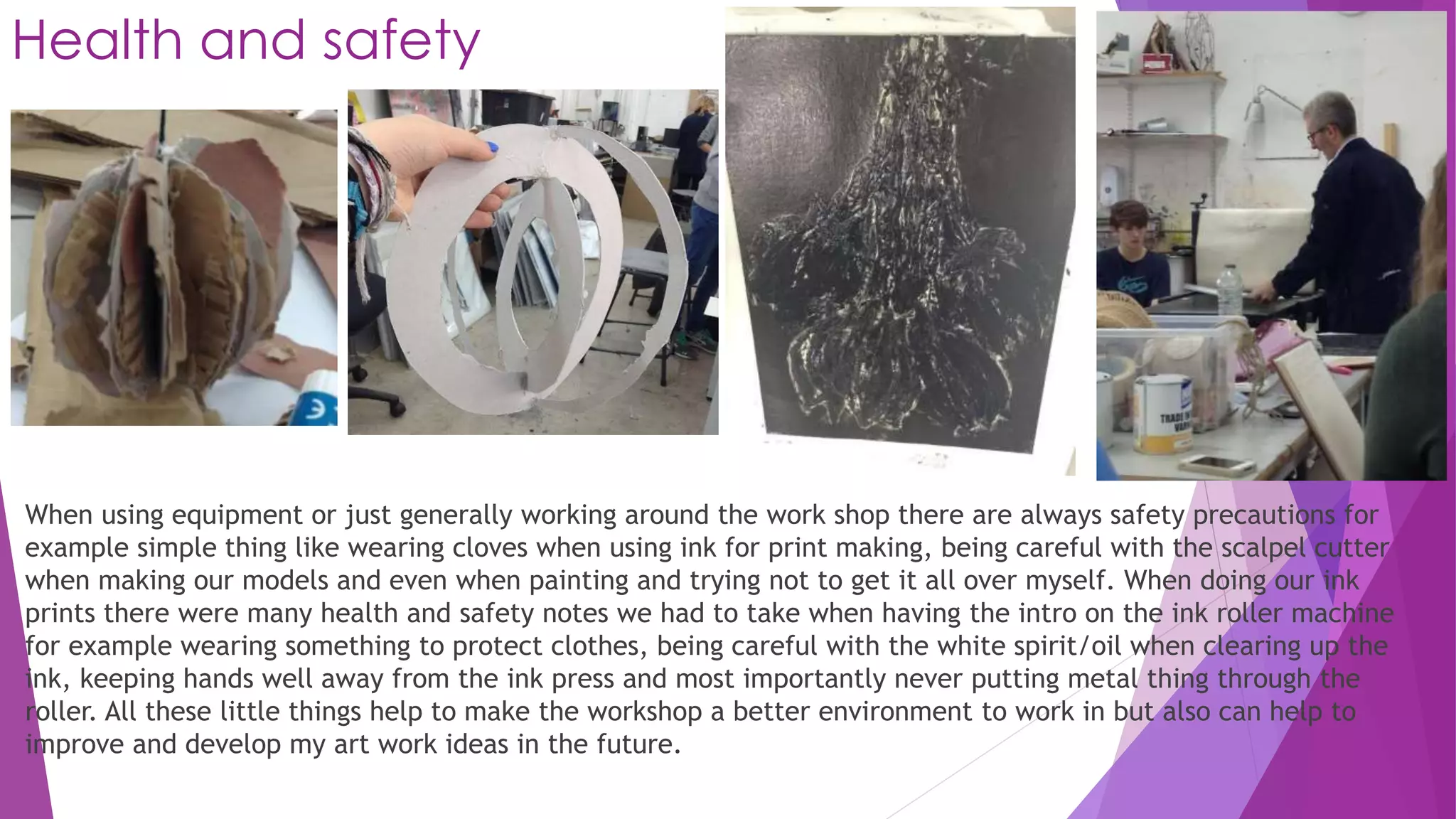
When using equipment or just generally working around the work shop there are always safety precautions for 
example simple thing like wearing cloves when using ink for print making, being careful with the scalpel cutter 
when making our models and even when painting and trying not to get it all over myself. When doing our ink 
prints there were many health and safety notes we had to take when having the intro on the ink roller machine 
for example wearing something to protect clothes, being careful with the white spirit/oil when clearing up the 
ink, keeping hands well away from the ink press and most importantly never putting metal thing through the 
roller. All these little things help to make the workshop a better environment to work in but also can help to 
improve and develop my art work ideas in the future.
Evaluation Summary 
Assessment criteria: evaluation of your work is vital to your development as an 
artist/designer –it is important to question your approach, what have you learnt, 
how have you developed an idea and what you would do differently in future to 
improve. 
Evaluation of the use visual language in your work and how it was informed by 
looking at others’ approach (Unit 1) 
Analyse and evaluate the creative potential and limitations of your use of 
materials, techniques and technology (Unit 2) 
Evaluation: this includes on-going annotation in sketchbook and final project 
evaluation. Write bullet points and support with examples of your work 
See link on the art & design website 
Project Evaluation Sheet

Equivalents project summary

  • 1.
  • 2.
    Primary and Secondarysources The difference between primary sources and secondary sources is that primary I have taken something I have written or drawn personally from and original source for example the first still life drawing we did was taken from a primary research because it was right in front of me. However I used mostly secondary sources to do my homework's and research on other artist work and techniques from the internet however when re-creating an artist work in my own way or making a study of an artist work would also be secondary because its still taken from an artist work and is not an original piece.
  • 3.
    Using Formal Elements  When doing most pieces in this project the formal elements always were involved, especially the use of tone, composition and texture. For example when doing the big still life inspired pieces I used ink, charcoal and various other tools to create tone and depth in the images that then gives a good composition to the still life. The use of tone also came in useful when doing rough sketches of my 3D models to see how I could build on them with the use of shadows and composition of the object.  To create different textures I had to use different materials, lines and shapes to use for mark-making, like using cardboard to dip in ink and scrape along the page to make the wooden effect on my picture frame. Using other tools such as chalk and charcoal to add details and add texture to wood/branches, to shade to add shadows ect
  • 4.
    Slide 4 -add your own title here Assessment criteria: An example and commentary of how you have used visual language in your work and how it has been influenced by others’ work. Examples: Homework research and studies produced such as ‘in the style of…painting, collage work, sculpture research and development, cubism, photography
  • 5.
    Materials and Techniques  Over the past term I have worked with a range of different material and techniques that (having done art textiles in GCSEs) I have never really worked with before for example drawing from a still life structure having to use tone and think about the composition of things more not just the texture of things. We have worked with a range of materials such as inks, chalks and charcoal on my more bigger pieces.  Then going on to learning techniques when mixing paints and painting with different contrasting colours.  Learning to think about different angles and compositions when making sculptures inspired by my print, using different materials to make my sculpture card , paper and thick cardboard ect for different textures and looks of the sculpture.
  • 6.
    Health and safety When using equipment or just generally working around the work shop there are always safety precautions for example simple thing like wearing cloves when using ink for print making, being careful with the scalpel cutter when making our models and even when painting and trying not to get it all over myself. When doing our ink prints there were many health and safety notes we had to take when having the intro on the ink roller machine for example wearing something to protect clothes, being careful with the white spirit/oil when clearing up the ink, keeping hands well away from the ink press and most importantly never putting metal thing through the roller. All these little things help to make the workshop a better environment to work in but also can help to improve and develop my art work ideas in the future.
  • 7.
    Evaluation Summary Assessmentcriteria: evaluation of your work is vital to your development as an artist/designer –it is important to question your approach, what have you learnt, how have you developed an idea and what you would do differently in future to improve. Evaluation of the use visual language in your work and how it was informed by looking at others’ approach (Unit 1) Analyse and evaluate the creative potential and limitations of your use of materials, techniques and technology (Unit 2) Evaluation: this includes on-going annotation in sketchbook and final project evaluation. Write bullet points and support with examples of your work See link on the art & design website Project Evaluation Sheet