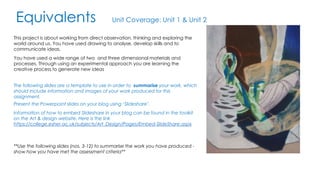
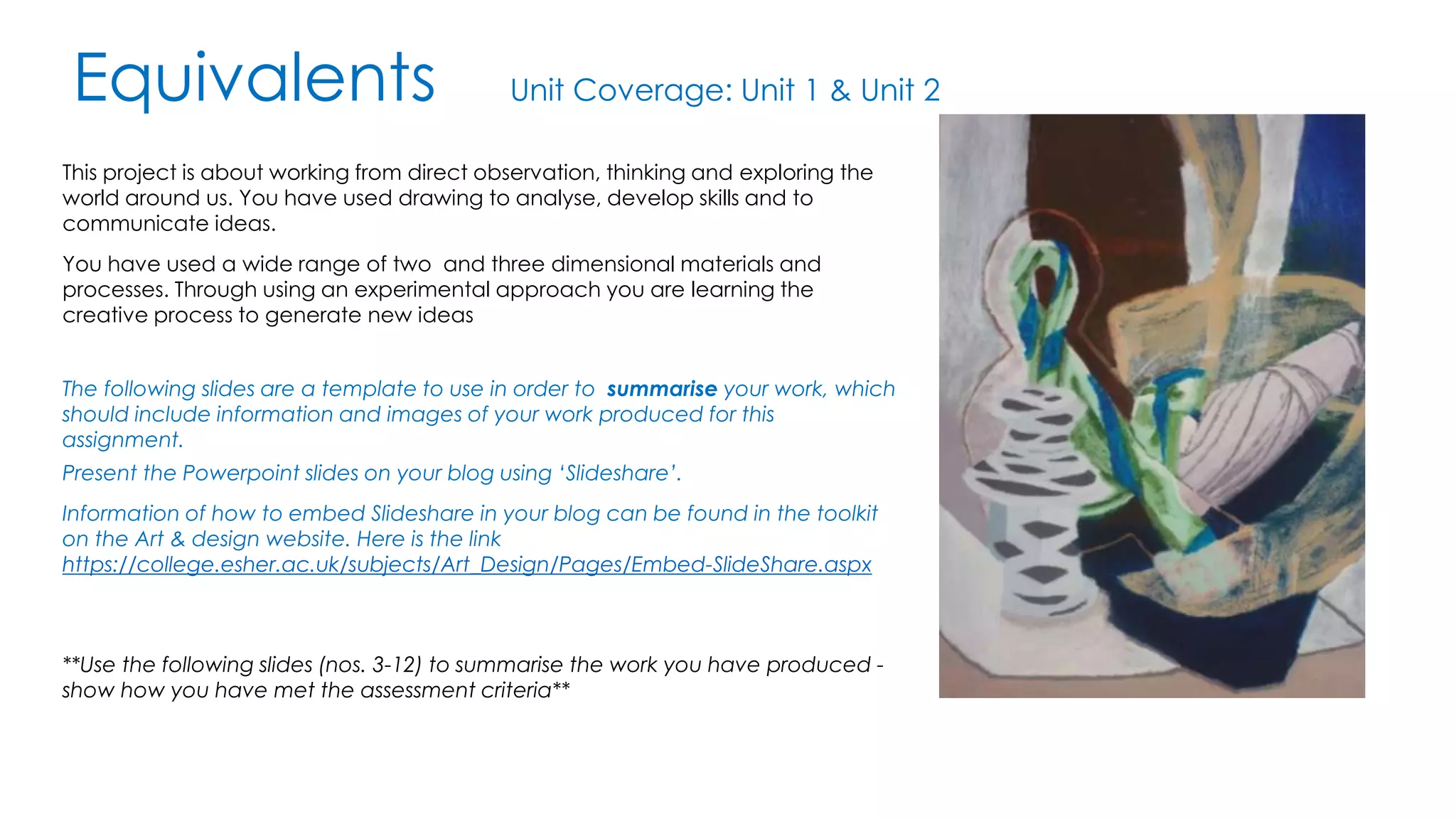
Equivalents Unit Coverage: Unit 1 & Unit 2 
This project is about working from direct observation, thinking and exploring the 
world around us. You have used drawing to analyse, develop skills and to 
communicate ideas. 
You have used a wide range of two and three dimensional materials and 
processes. Through using an experimental approach you are learning the 
creative process to generate new ideas 
The following slides are a template to use in order to summarise your work, which 
should include information and images of your work produced for this 
assignment. 
Present the Powerpoint slides on your blog using ‘Slideshare’. 
Information of how to embed Slideshare in your blog can be found in the toolkit 
on the Art & design website. Here is the link 
https://college.esher.ac.uk/subjects/Art_Design/Pages/Embed-SlideShare.aspx 
**Use the following slides (nos. 3-12) to summarise the work you have produced - 
show how you have met the assessment criteria**
Equivalents Unit Coverage: Unit 1 & Unit 2 
The assignment is designed to produced opportunities to produce evidence for these units 
Unit 1: 
2D 3D Visual Language 
You need to produce work, which 
demonstrates development of skills and 
creativity in using visual language 
The work should be organised and 
annotated to show your evaluative skills 
and development over time. Also 
experimentation with mark-making and 
object-making techniques, formal 
elements and sources. 
Evidence should be from contextual 
studies, developmental and/or final 
project work 
Unit 2: 
Materials, Techniques and Processes 
Produce work, which 
demonstrates your understanding 
of skills in using media, materials, 
techniques, processes and 
associated technology. This should 
include; samples, trials, notes, 
records and exploratory project 
work
The Equivalents Project 
Joseph Richards 
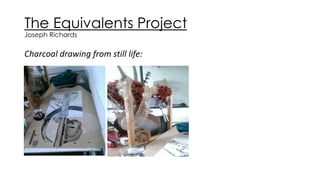
Charcoal drawing from still life:
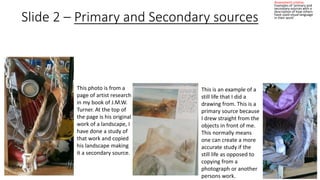
Slide 2 – Primary and Secondary sources 
Assessment criteria: 
Examples of ‘primary and 
secondary sources with a 
description of how others 
have used visual language 
in their work’ 
This is an example of a 
still life that I did a 
drawing from. This is a 
primary source because 
I drew straight from the 
objects in front of me. 
This normally means 
one can create a more 
accurate study if the 
still life as opposed to 
copying from a 
photograph or another 
persons work. 
This photo is from a 
page of artist research 
in my book of J.M.W. 
Turner. At the top of 
the page is his original 
work of a landscape, I 
have done a study of 
that work and copied 
his landscape making 
it a secondary source.
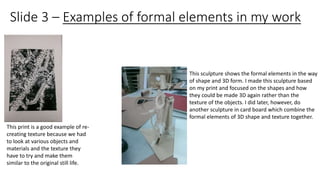
Slide 3 – Examples of formal elements in my work 
This print is a good example of re-creating 
texture because we had 
to look at various objects and 
materials and the texture they 
have to try and make them 
similar to the original still life. 
This sculpture shows the formal elements in the way 
of shape and 3D form. I made this sculpture based 
on my print and focused on the shapes and how 
they could be made 3D again rather than the 
texture of the objects. I did later, however, do 
another sculpture in card board which combine the 
formal elements of 3D shape and texture together.
Slide 4 - add your own title here 
Assessment criteria: An example and 
commentary of how you have used visual 
language in your work and how it has been 
influenced by others’ work. 
Examples: Homework research and studies 
produced such as ‘in the style of…painting, 
collage work, sculpture research and 
development, cubism, photography 
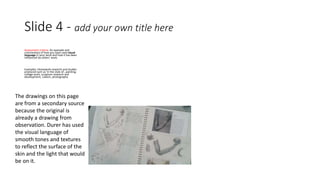
The drawings on this page 
are from a secondary source 
because the original is 
already a drawing from 
observation. Durer has used 
the visual language of 
smooth tones and textures 
to reflect the surface of the 
skin and the light that would 
be on it.
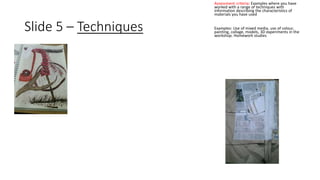
Slide 5 – Techniques 
Assessment criteria: Examples where you have 
worked with a range of techniques with 
information describing the characteristics of 
materials you have used 
Examples: Use of mixed media, use of colour, 
painting, collage, models, 3D experiments in the 
workshop. Homework studies
Slide 6 – Health and safety 
In the workshop there are various machines and setups that can be potentially very dangerous. The main 
rules of the workshop is to wear an apron and goggles when using most of the machinery, there is also no 
running eating or drinking allowed. There is also other precautions that should be taken before starting to use 
some of the machines around the workshop. For instance the spot soldering iron machine requires you to war 
gloves so you aren’t at risk of burning yourself. You must also be careful using sanding machines and keep 
whatever you are sanding flat so it does not get caught and fly out your hand. 
There are also health and safety rules around the art room. For example the printing press, you have to be 
careful not to turn it too much so the table does not fall out of the press. It is also important not to get your 
fingers caught in the press because it will crush them. There is also basic safety like clearing up spilt paints or 
water and not wasting any of the resources provided by the art room.
Evaluation 
This project was to try lots of different techniques of creating similar objects of 
still life. I feel the general project went well but it was definitely difficult and 
more work than I expected because of the move from GCSE to A-level. I think if I 
did this project again I wold be more organised in the way I approached it with 
better recording of what I have done and more experiments of what I might do. 
My use of language was influenced positively when looking at other artists work, 
making studies od their work and doing research. However, some if the visual 
language used in my other pieces could be improved, for example my print that I 
did from making a printing plate. I fell this print and printing plate was too 
inaccurate to the still life it was based on and the textures especially were to 
different and irregular. 
I enjoyed the varied use of materials throughout my project and I feel they 
showed I good variety of skill and potential. On the other hand, works like my 
paper sculpture and my acrylic paintings based on still life could be improved 
and done with more care, they were rushed and not as god as I would have like 
and if I was to re-do my paper sculpture then I would vase it of I different part of 
my print or different objects from still life. 
Overall, I think I could do better in the next project and if I re-did the project I 
could improve it a lot by taking a different approach and making my pieces more 
accurate.

Summary of my first project, Equivalents

  • 1.
    Equivalents Unit Coverage:Unit 1 & Unit 2 This project is about working from direct observation, thinking and exploring the world around us. You have used drawing to analyse, develop skills and to communicate ideas. You have used a wide range of two and three dimensional materials and processes. Through using an experimental approach you are learning the creative process to generate new ideas The following slides are a template to use in order to summarise your work, which should include information and images of your work produced for this assignment. Present the Powerpoint slides on your blog using ‘Slideshare’. Information of how to embed Slideshare in your blog can be found in the toolkit on the Art & design website. Here is the link https://college.esher.ac.uk/subjects/Art_Design/Pages/Embed-SlideShare.aspx **Use the following slides (nos. 3-12) to summarise the work you have produced - show how you have met the assessment criteria**
  • 2.
    Equivalents Unit Coverage:Unit 1 & Unit 2 The assignment is designed to produced opportunities to produce evidence for these units Unit 1: 2D 3D Visual Language You need to produce work, which demonstrates development of skills and creativity in using visual language The work should be organised and annotated to show your evaluative skills and development over time. Also experimentation with mark-making and object-making techniques, formal elements and sources. Evidence should be from contextual studies, developmental and/or final project work Unit 2: Materials, Techniques and Processes Produce work, which demonstrates your understanding of skills in using media, materials, techniques, processes and associated technology. This should include; samples, trials, notes, records and exploratory project work
  • 3.
    The Equivalents Project Joseph Richards Charcoal drawing from still life:
  • 4.
    Slide 2 –Primary and Secondary sources Assessment criteria: Examples of ‘primary and secondary sources with a description of how others have used visual language in their work’ This is an example of a still life that I did a drawing from. This is a primary source because I drew straight from the objects in front of me. This normally means one can create a more accurate study if the still life as opposed to copying from a photograph or another persons work. This photo is from a page of artist research in my book of J.M.W. Turner. At the top of the page is his original work of a landscape, I have done a study of that work and copied his landscape making it a secondary source.
  • 5.
    Slide 3 –Examples of formal elements in my work This print is a good example of re-creating texture because we had to look at various objects and materials and the texture they have to try and make them similar to the original still life. This sculpture shows the formal elements in the way of shape and 3D form. I made this sculpture based on my print and focused on the shapes and how they could be made 3D again rather than the texture of the objects. I did later, however, do another sculpture in card board which combine the formal elements of 3D shape and texture together.
  • 6.
    Slide 4 -add your own title here Assessment criteria: An example and commentary of how you have used visual language in your work and how it has been influenced by others’ work. Examples: Homework research and studies produced such as ‘in the style of…painting, collage work, sculpture research and development, cubism, photography The drawings on this page are from a secondary source because the original is already a drawing from observation. Durer has used the visual language of smooth tones and textures to reflect the surface of the skin and the light that would be on it.
  • 7.
    Slide 5 –Techniques Assessment criteria: Examples where you have worked with a range of techniques with information describing the characteristics of materials you have used Examples: Use of mixed media, use of colour, painting, collage, models, 3D experiments in the workshop. Homework studies
  • 8.
    Slide 6 –Health and safety In the workshop there are various machines and setups that can be potentially very dangerous. The main rules of the workshop is to wear an apron and goggles when using most of the machinery, there is also no running eating or drinking allowed. There is also other precautions that should be taken before starting to use some of the machines around the workshop. For instance the spot soldering iron machine requires you to war gloves so you aren’t at risk of burning yourself. You must also be careful using sanding machines and keep whatever you are sanding flat so it does not get caught and fly out your hand. There are also health and safety rules around the art room. For example the printing press, you have to be careful not to turn it too much so the table does not fall out of the press. It is also important not to get your fingers caught in the press because it will crush them. There is also basic safety like clearing up spilt paints or water and not wasting any of the resources provided by the art room.
  • 9.
    Evaluation This projectwas to try lots of different techniques of creating similar objects of still life. I feel the general project went well but it was definitely difficult and more work than I expected because of the move from GCSE to A-level. I think if I did this project again I wold be more organised in the way I approached it with better recording of what I have done and more experiments of what I might do. My use of language was influenced positively when looking at other artists work, making studies od their work and doing research. However, some if the visual language used in my other pieces could be improved, for example my print that I did from making a printing plate. I fell this print and printing plate was too inaccurate to the still life it was based on and the textures especially were to different and irregular. I enjoyed the varied use of materials throughout my project and I feel they showed I good variety of skill and potential. On the other hand, works like my paper sculpture and my acrylic paintings based on still life could be improved and done with more care, they were rushed and not as god as I would have like and if I was to re-do my paper sculpture then I would vase it of I different part of my print or different objects from still life. Overall, I think I could do better in the next project and if I re-did the project I could improve it a lot by taking a different approach and making my pieces more accurate.