INTRODUCTION
 E payment is a subset of an e-commerce
transaction to include electronic
payment for buying and selling goods or
services offered through the Internet.
 Generally we think of electronic
payments as referring to online transactions
on the internet, there are actually many
forms of electronic payments.
3
TRADITIONAL PAYMENT METHODS
Payment: The transfer of money from one
individual or legal entity to another
 Cash
 Personal Cheques
 Money orders (Bank note)
 Credit cards
 Debit cards
4
SELECTION OF PAYMENT METHOD
 Based on:
Convenience
Trace-ability
Repudiation
Financial risk
Fraud protection
 Attacks on traditional methods?
5
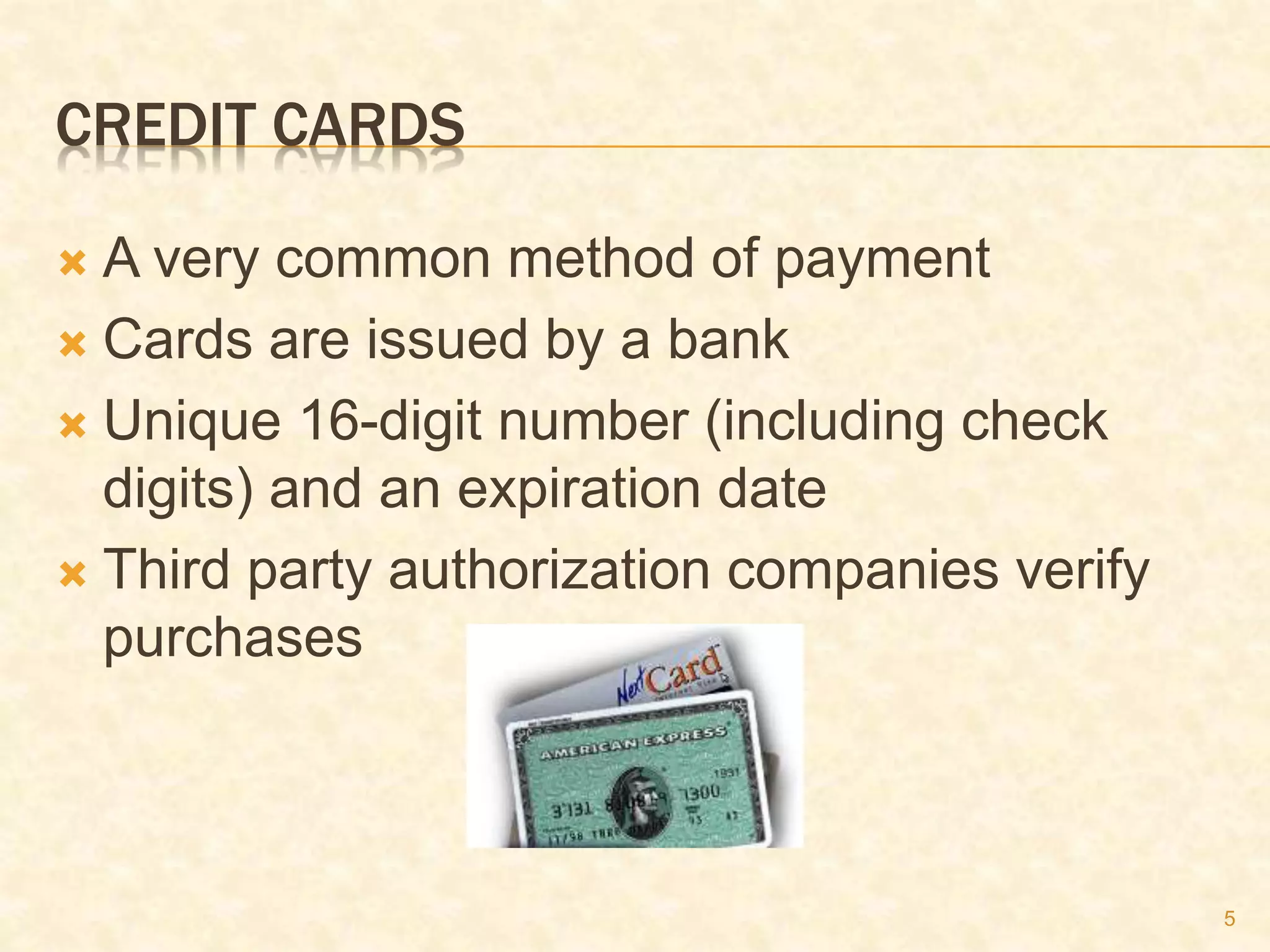
CREDIT CARDS
 A very common method of payment
 Cards are issued by a bank
 Unique 16-digit number (including check
digits) and an expiration date
 Third party authorization companies verify
purchases
6
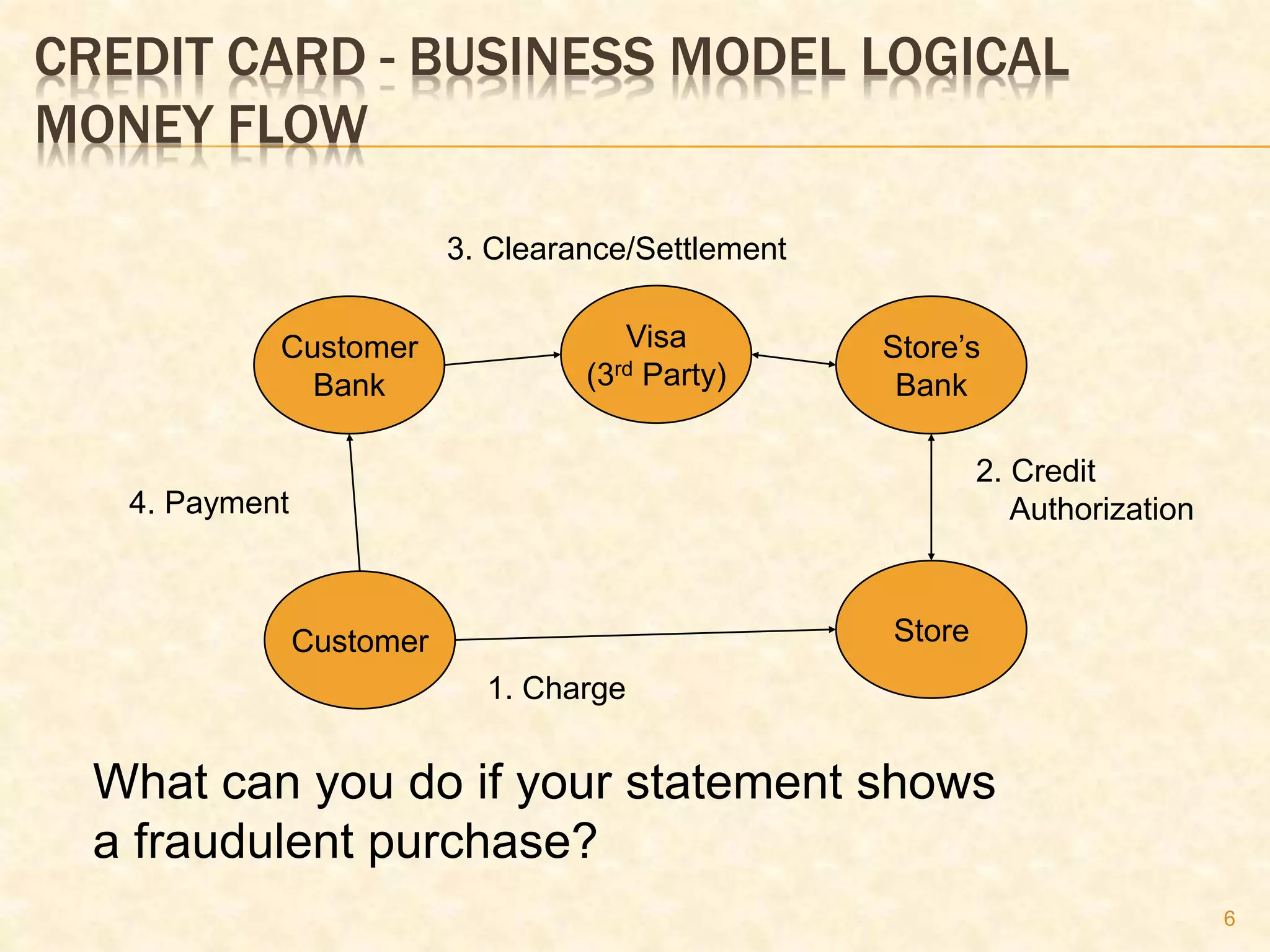
CREDIT CARD - BUSINESS MODEL LOGICAL
MONEY FLOW
Customer
Customer
Bank
Store
Visa
(3rd Party)
1. Charge
2. Credit
Authorization
3. Clearance/Settlement
4. Payment
What can you do if your statement shows
a fraudulent purchase?
Store’s
Bank
7
REQUIREMENTS OFE-PAYMENT METHODS
 Enable an honest customer to convince a seller to
accept payment
 Prevent a dishonest customer from making
unauthorized or fraudulent payments
 Ensure the privacy of honest participants
 Scalable to very large numbers of customers
 Integrate with existing and evolving systems
NOT EASY!
8
E-PAYMENT PROS/CONS
 Pros:
 Potential for great flexibility
 Low transaction costs
 Rapid and diverse purchase power
 Cons:
 Perfect copying of transactions is possible
 Vulnerability to world-wide attack
 Lack of anonymity, potential for privacy intrusion
9
VARIOUS E-PAYMENT METHODS
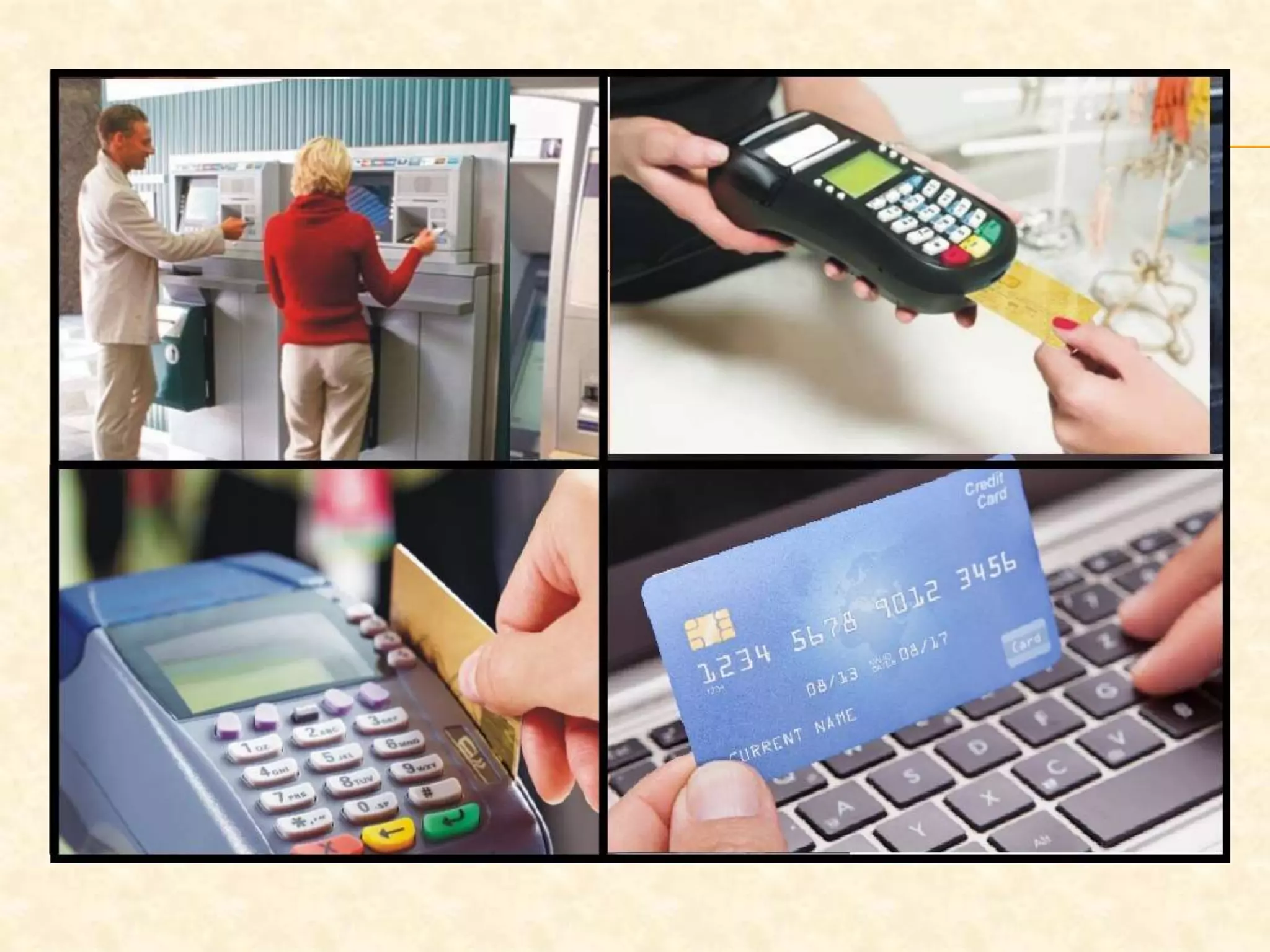
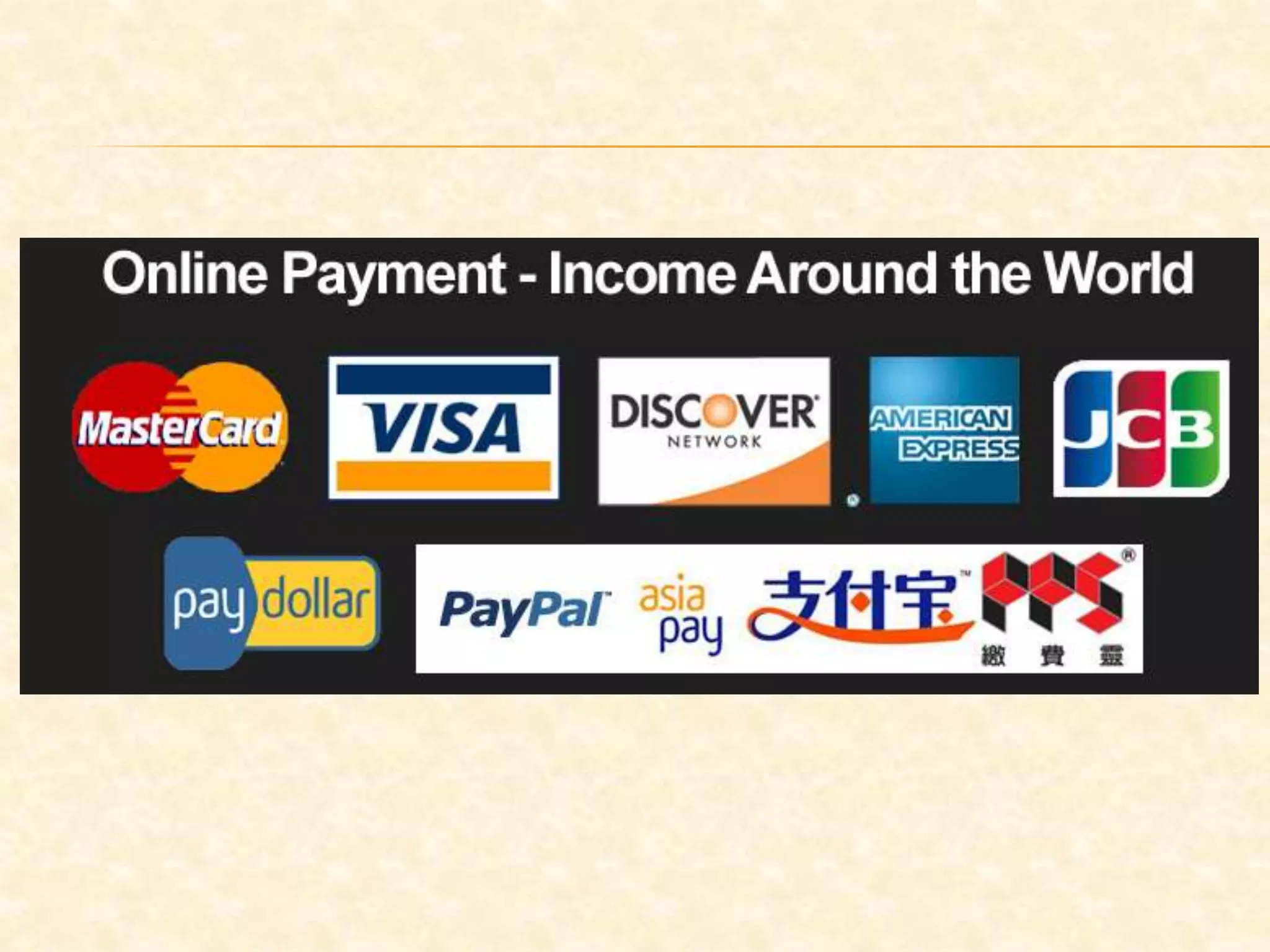
 Credit and Debit card
 Digital Currency
 E-Wallets
 Peer-to-Peer Methods
 Smart card
 Micro-payments
 B2B
11
CREDIT CARD FRAUD
 A major problem for E-commerce
 The merchant has no legal proof of purchase
unless the buyer uses authentication
certificate
 Companys such as Visa, nochargeback.com
and CyberCash (now VeriSign) are working to
limit fraud:
 Visa has established high risk business models
and best practices info for merchants
 Nochargeback.com has lists of fraudlent cards, e-
mail addresses and postal addresses
 VeriSign/CyberCash has employed AI to catch
frauders
12
DIGITAL CURRENCY
 Digital cash accounts like traditional bank accounts
 Buyers deposit cash in the account and spend it at
E-Commerce sites (acct # is passed using secure
proprietary protocol)
 E-Comm merchants can feel sure of payment
 Customers do not need a credit card and spending
is limited to account balance
 www.ecash.com
13
E-WALLETS
 Established by financial institutions in
partnership with member E-Commerce sites
 Allows customer to submit billing and
shipping info with one click at member sites
 Also can store e-Cheques, e-Cash and credit
card information
 Not as popular as originally projected
 Entrypoint’s InfoGate offers an e-wallet
14
PEER-TO-PEER METHODS
 Digital cash via email (eCash.com)
 PayPal.com – digital payment system
 Acts as a trusted third party (e.g. auction purchase)
 To send money:
 Sender sets up an account and requests to send payment
 Sender places payment into the receivers account by credit-card
 Reciever is notified of payment via email
 Receiver can transfer funds to bank account or request a cheque
 There is also a request payment method
 FOR FREE .. ? What is the their business model ?
16
SMART CARDS
 Cards with computer chips embedded on their
faces – very common in Europe
 Used for health care, transportation, ID, retail, pay
phones, loyalty programs, banking machines
 Smart card readers interface with card and request
user PIN for access
 Bank machines can load cards with cash and then
merchants can download cash from card
 Returns anonymity of purchase to customer
 GemPlus, MasterCard are leading supplier of SCs
17
MICRO-PAYMENTS
 Long distance phone call charge is an example of a
micro-payment
 Digital Equipment Corporatiion (DEC) researchers
originally envisioned MPs:
 Payment per newspaper article ($0.005)
 Payment by stock quote ($0.001)
 Payment per click (Qpass, Inc)
 Has not been popular, instead advertisers pay for
info, or customers pay flat rates … Why?
18
WHY HAVE MICRO-PAYMENTS FAILED?
 Overly complicated for customer and
business – technology & accounting
 Income is very dependent on customer use
(difficulties in cashflow management)
 Customer anxiety – could act as a deterent
 Difficulties in standardization – lost of
different approaches, variant media
19
B2B
 B2B transactions are the fastest area of $ growth
on the web
 B2B transactions are substantially larger than B2C
 Paymantech is major provider:
 24/7 availability, all manner of EFT supported
 many management tools and reporting methods
 Ecredit.com offers real-time automated credit
approval and financing
 TradeCard offers comprehensive B2B E-commerce
facilities on an international scale
.
Questions..??
Thank yu
Harshit, Rajat & Yash

Electronic payment System

  • 2.
    INTRODUCTION  E paymentis a subset of an e-commerce transaction to include electronic payment for buying and selling goods or services offered through the Internet.  Generally we think of electronic payments as referring to online transactions on the internet, there are actually many forms of electronic payments.
  • 3.
    3 TRADITIONAL PAYMENT METHODS Payment:The transfer of money from one individual or legal entity to another  Cash  Personal Cheques  Money orders (Bank note)  Credit cards  Debit cards
  • 4.
    4 SELECTION OF PAYMENTMETHOD  Based on: Convenience Trace-ability Repudiation Financial risk Fraud protection  Attacks on traditional methods?
  • 5.
    5 CREDIT CARDS  Avery common method of payment  Cards are issued by a bank  Unique 16-digit number (including check digits) and an expiration date  Third party authorization companies verify purchases
  • 6.
    6 CREDIT CARD -BUSINESS MODEL LOGICAL MONEY FLOW Customer Customer Bank Store Visa (3rd Party) 1. Charge 2. Credit Authorization 3. Clearance/Settlement 4. Payment What can you do if your statement shows a fraudulent purchase? Store’s Bank
  • 7.
    7 REQUIREMENTS OFE-PAYMENT METHODS Enable an honest customer to convince a seller to accept payment  Prevent a dishonest customer from making unauthorized or fraudulent payments  Ensure the privacy of honest participants  Scalable to very large numbers of customers  Integrate with existing and evolving systems NOT EASY!
  • 8.
    8 E-PAYMENT PROS/CONS  Pros: Potential for great flexibility  Low transaction costs  Rapid and diverse purchase power  Cons:  Perfect copying of transactions is possible  Vulnerability to world-wide attack  Lack of anonymity, potential for privacy intrusion
  • 9.
    9 VARIOUS E-PAYMENT METHODS Credit and Debit card  Digital Currency  E-Wallets  Peer-to-Peer Methods  Smart card  Micro-payments  B2B
  • 11.
    11 CREDIT CARD FRAUD A major problem for E-commerce  The merchant has no legal proof of purchase unless the buyer uses authentication certificate  Companys such as Visa, nochargeback.com and CyberCash (now VeriSign) are working to limit fraud:  Visa has established high risk business models and best practices info for merchants  Nochargeback.com has lists of fraudlent cards, e- mail addresses and postal addresses  VeriSign/CyberCash has employed AI to catch frauders
  • 12.
    12 DIGITAL CURRENCY  Digitalcash accounts like traditional bank accounts  Buyers deposit cash in the account and spend it at E-Commerce sites (acct # is passed using secure proprietary protocol)  E-Comm merchants can feel sure of payment  Customers do not need a credit card and spending is limited to account balance  www.ecash.com
  • 13.
    13 E-WALLETS  Established byfinancial institutions in partnership with member E-Commerce sites  Allows customer to submit billing and shipping info with one click at member sites  Also can store e-Cheques, e-Cash and credit card information  Not as popular as originally projected  Entrypoint’s InfoGate offers an e-wallet
  • 14.
    14 PEER-TO-PEER METHODS  Digitalcash via email (eCash.com)  PayPal.com – digital payment system  Acts as a trusted third party (e.g. auction purchase)  To send money:  Sender sets up an account and requests to send payment  Sender places payment into the receivers account by credit-card  Reciever is notified of payment via email  Receiver can transfer funds to bank account or request a cheque  There is also a request payment method  FOR FREE .. ? What is the their business model ?
  • 16.
    16 SMART CARDS  Cardswith computer chips embedded on their faces – very common in Europe  Used for health care, transportation, ID, retail, pay phones, loyalty programs, banking machines  Smart card readers interface with card and request user PIN for access  Bank machines can load cards with cash and then merchants can download cash from card  Returns anonymity of purchase to customer  GemPlus, MasterCard are leading supplier of SCs
  • 17.
    17 MICRO-PAYMENTS  Long distancephone call charge is an example of a micro-payment  Digital Equipment Corporatiion (DEC) researchers originally envisioned MPs:  Payment per newspaper article ($0.005)  Payment by stock quote ($0.001)  Payment per click (Qpass, Inc)  Has not been popular, instead advertisers pay for info, or customers pay flat rates … Why?
  • 18.
    18 WHY HAVE MICRO-PAYMENTSFAILED?  Overly complicated for customer and business – technology & accounting  Income is very dependent on customer use (difficulties in cashflow management)  Customer anxiety – could act as a deterent  Difficulties in standardization – lost of different approaches, variant media
  • 19.
    19 B2B  B2B transactionsare the fastest area of $ growth on the web  B2B transactions are substantially larger than B2C  Paymantech is major provider:  24/7 availability, all manner of EFT supported  many management tools and reporting methods  Ecredit.com offers real-time automated credit approval and financing  TradeCard offers comprehensive B2B E-commerce facilities on an international scale
  • 20.
  • 21.