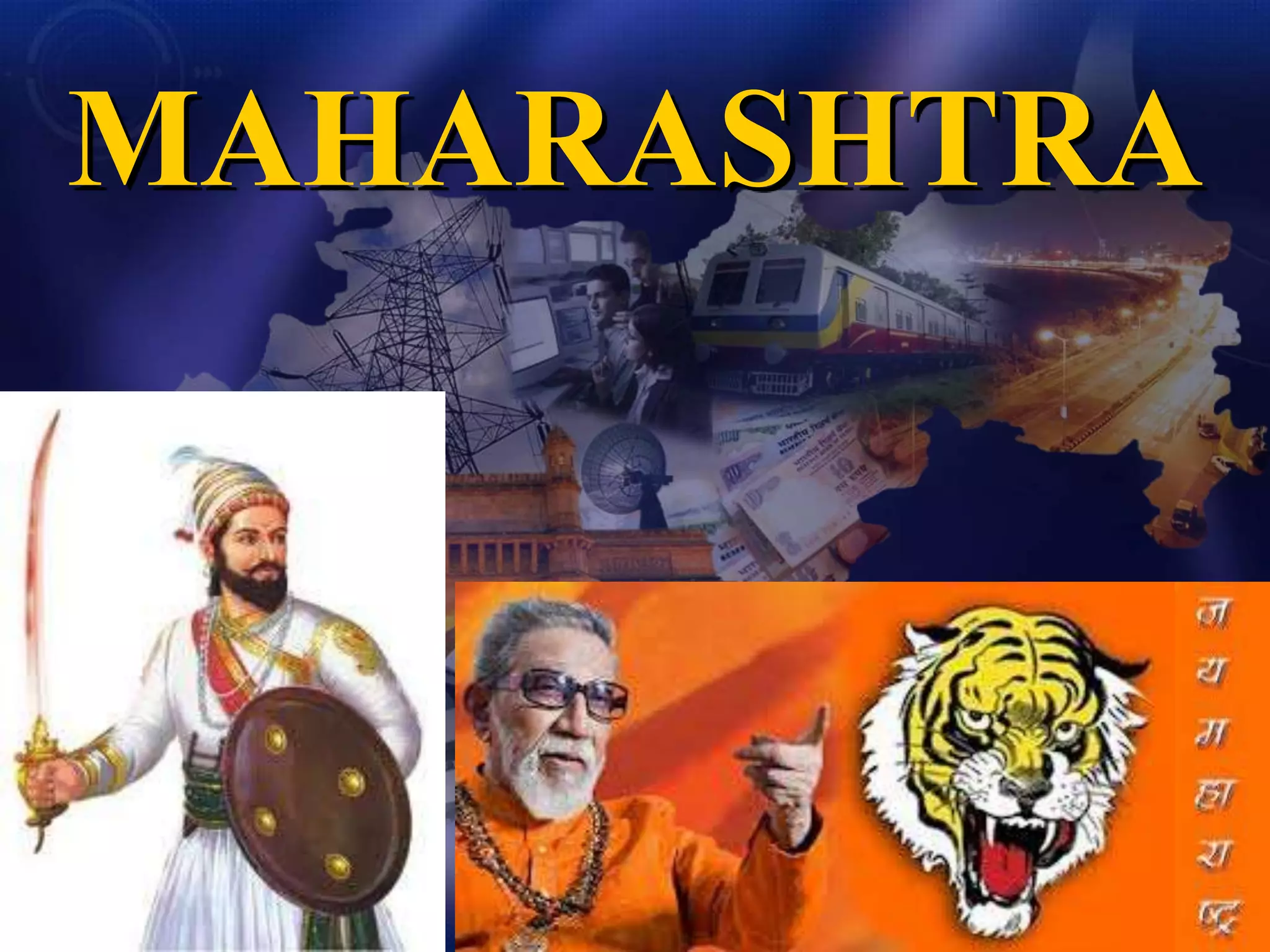
MAHARASHTRA
LARGE, LITERATE AND URBANIZED 
 India’s 2nd largest State 
 308,000 sq kms, from coast to central India 
 110 m people (9%), more than most countries 
 42% Urban, against India’s 28% 
 Young, 67% below 34 years 
 Literacy 77% (India: 65%), sharp increase in 
female literacy in last decade
Geography 
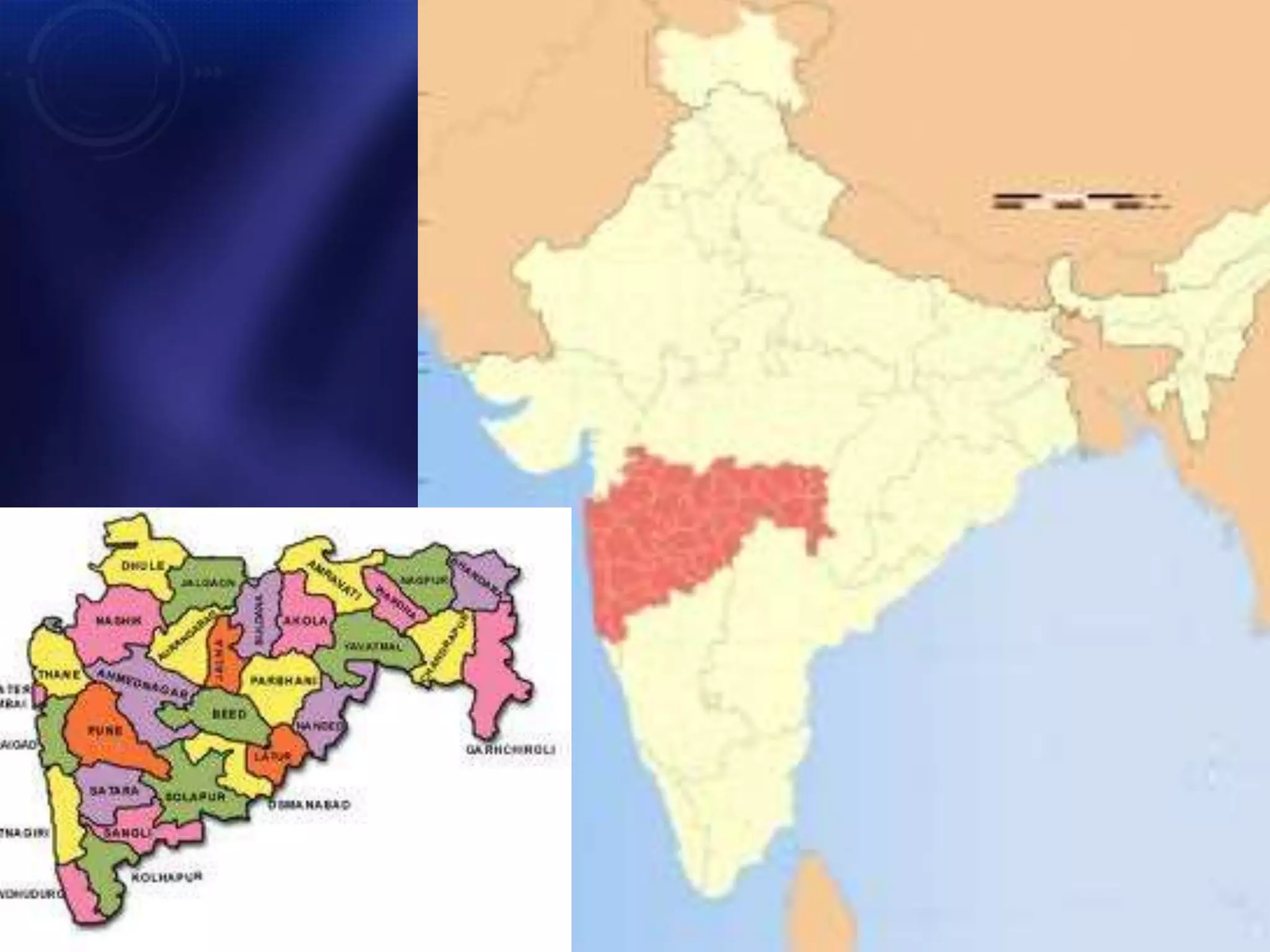
• Maharashtra encompasses an area of 308,000 km² 
(119,000 mi²), and is the third largest state in India. It 
is bordered by the states of Madhya Pradesh to the 
north, Chhattisgarh to the east, Andhra Pradesh to the 
south east, Karnataka to the south, and Goa to the 
southwest. 
• The state of Gujarat lies to the northwest, with the 
Union territory of Dadra and Nagar Haveli sandwiched 
in between. The Arabian Sea makes up Maharashtra's 
west coast.
• The Western Ghats form one of the 
three watersheds of India, from which many South 
Indian rivers originate, notable among them 
being Godavari River, and Krishna River, which 
flow eastward into the Bay of Bengal. 
• The Western Ghats better known as Sahyadri, are 
a hilly range running parallel to the coast, at an 
average elevation of 1,200 metres (4,000 ft). To the 
east of the Ghats lies the flat Deccan Plateau.
Religion 
• Hinduism 
Hindus form 83.2% of total population . 
• Islam 
Islam is the second largest religion with 12 per cent of the 
population. 
• Buddhism 
Comprises 6 % in Maharastra's total population. 
• Jains 
• Christians 
• Judaism 
• Zoroastrians
Language 
• Marathi is the official language of Maharashtra. Other 
languages that are the native language of more than one 
percent of the population are: 
• Language Percentage in state 
• Marathi 68.89 
• Hindi 11.50 
• Urdu 7.13 
• Gujarati 2.39 
• Telugu 1.45 
• Kannada 1.3 
• Other languages 4.6
Climate & Agriculture 
• Maharashtra has typical monsoon climate, with hot, rainy and 
cold weather seasons. Tropical conditions prevail all over the 
state, and even the hill stations are not that cold. Dew, frost, 
hail can also be happened sometimes according to the 
seasonal weather. 
• Approximately 140-145 lakh hectares of land is cultivated in 
the kharif season and 60-65 lakh hectares is cultivated 
in rabbi season. 
• Main Cash Crops 
Cotton, sugarcane, tobacco, turmeric and vegetables are the 
main cash crops in Maharashtra. Since industries like textile 
mills and sugar factories are dependent on cotton and 
sugarcane, these cash crops are considered most important.
• Horticulture 
The climate of Maharashtra is conducive for horticulture, as 
inadequate rainfall does not have an adverse effect on 
production of fruits. 
• Fruit-production constitutes 25% of the total agricultural 
produce in the State. Approximately, 103 lakh tons of fruits are 
produced every year. Maharashtra ranks first in the country in 
the production of fruits. 
• Bananas constitute 25% of the total fruit-production in the 
country, whereas the production of grapes, pomegranates and 
oranges is highest in Maharashtra as compared to other parts 
of the country. Other fruits like mango, coconut, cashew-nuts 
are also produced to a large extent in Maharashtra.
Culture 
• As Maharashtra is a vast state, the people of this colourfull 
state wears different types of costumes, take different 
cuisines, has different forms of dances and music according 
to the physical features of their locality. 
• Costumes of Maharashtra : Generally, men wear dhoti and 
pheta in olden days, while women wear choli and saree..In 
urban areas like bombay, pune western outfits are very 
popular among youths due to strong Presence of Bollywood 
industry.
Festivals of Maharashtra 
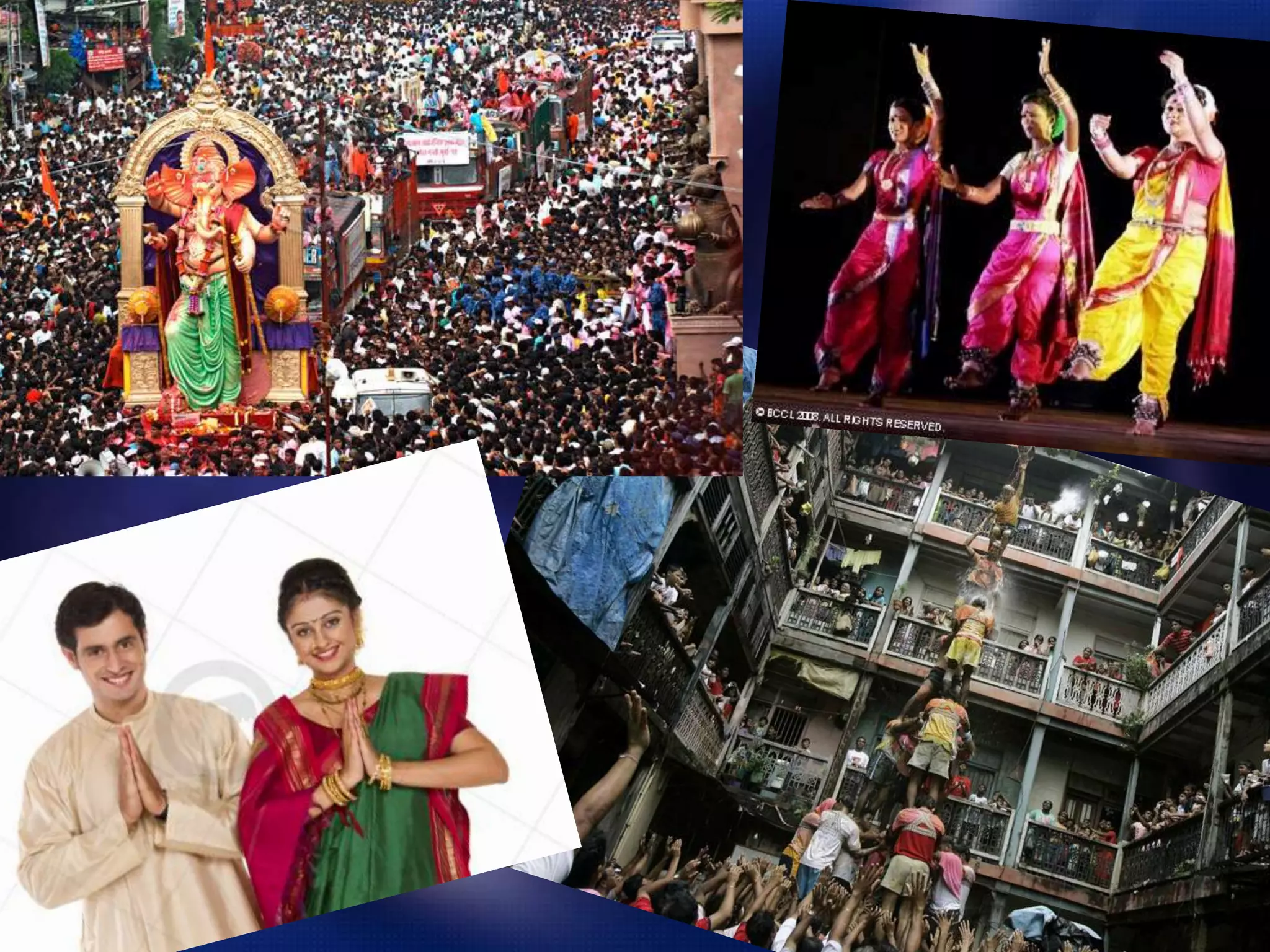
• Being multicultural state maharashtra enjoys ‘n’ 
no.’s of festivals ranging from : 
• Ganesh Chaturthi (Most widely celebrated) 
• Janamashti 
• Dipwali 
• Maha Shivratri 
• Id-ul-fitr 
• X-mas 
• Buddh Purnima
Dances of Maharashtra 
• 
Gifted with its rich culture and traditions, Maharashtra has 
different types of dance forms. Povada is the dance form 
that showcases the lifetime achievements of the Maratha 
ruler Shivaji Maharaj. 
Music of Maharashtra 
• 
Every festive occasion is accompanied by song, music and 
dance in Maharashtra. Talking about the music of 
Maharashtra won't complete without the mention of Natya 
Sangeet, numerous folk songs and its great saint poets.
Cuisines 
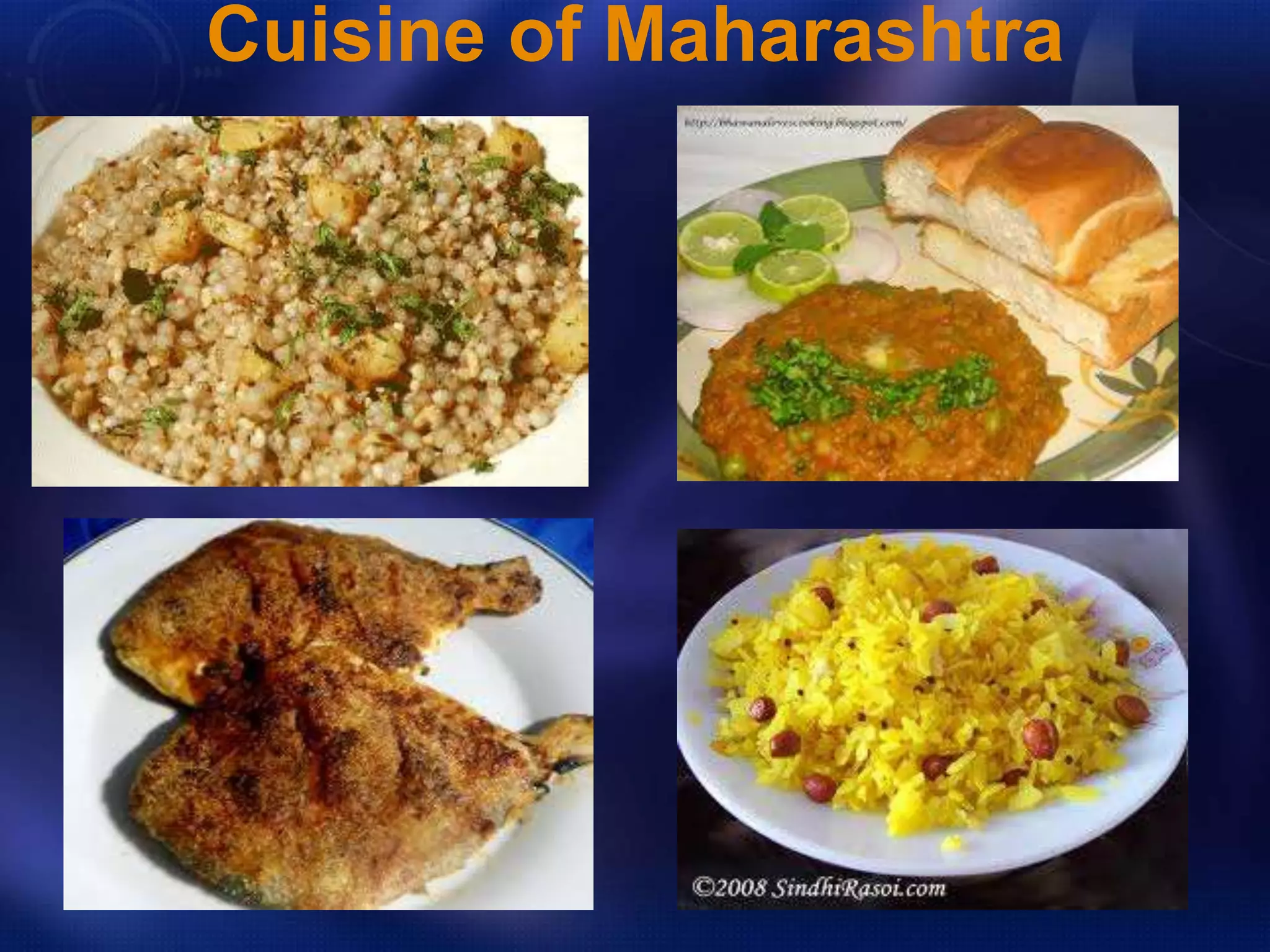
• Maharashtrian cuisine comprises the coastal Konkan cuisine 
and the Varadi cuisine of interior Maharashtra. Marathi food 
uses a variety of vegetables, fish, coconuts, peanuts and 
cashew nuts. Peanut oil is the main cooking medium, the 
cardinal principle is that oil should not be visible in a dish and 
therefore vegetables are usually steamed. Taat Vadhany-(a 
method offsetting food on the plate) is the traditional and 
aesthetic way of serving food on a tvaata (plate). 
• Staple dishes are the - 
Poli or Chapati - Unleavened bread made of wheat flour, more 
common in urban areas. 
Bhakri - Bread made of all kinds of flours, mainly jowar and 
bajra, form part of daily food in rural areas.
• Rice - Rice is eaten throughout Maharashtra and is a large part 
of the daily meal, although Maharashtrians are not totally 
dependent on rice only. Normally meals contain some form of 
bread, some bhaji (sabzi) and some rice with dal. 
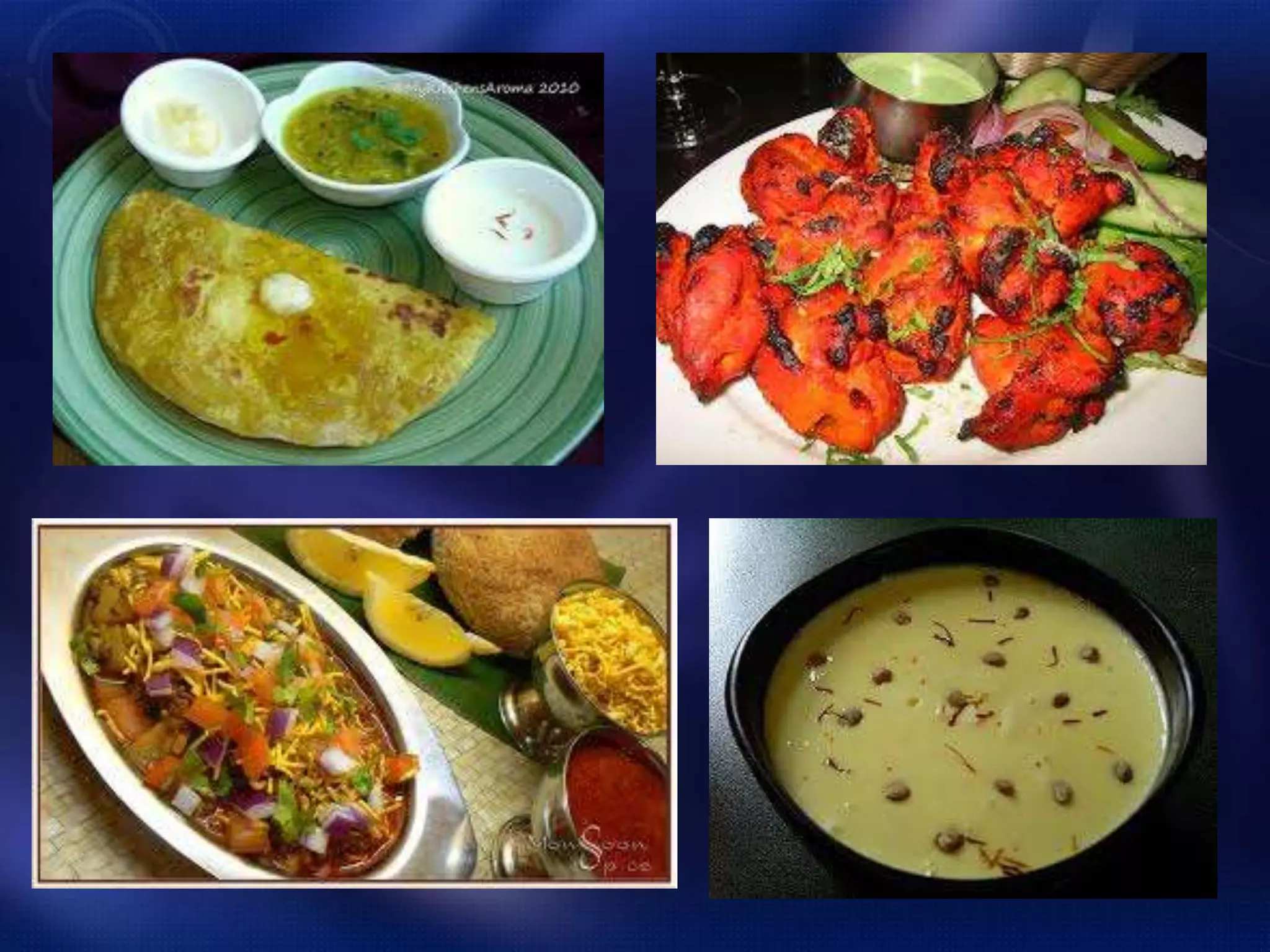
• Various snacks of Maharashtra : 
• Chivda Pohay 
• Upma Puran poli 
• Vada pav Matar-usal- pav 
• Misal Pav Pav bhaji 
• Sabudana Khichadi Khichdi 
• Bakarwadi Bhadang 
• Shira Chana daliche
Cuisine of Maharashtra
Maharashtra gateway to india  presentation

Maharashtra gateway to india presentation

  • 1.
  • 2.
    LARGE, LITERATE ANDURBANIZED  India’s 2nd largest State  308,000 sq kms, from coast to central India  110 m people (9%), more than most countries  42% Urban, against India’s 28%  Young, 67% below 34 years  Literacy 77% (India: 65%), sharp increase in female literacy in last decade
  • 3.
    Geography • Maharashtraencompasses an area of 308,000 km² (119,000 mi²), and is the third largest state in India. It is bordered by the states of Madhya Pradesh to the north, Chhattisgarh to the east, Andhra Pradesh to the south east, Karnataka to the south, and Goa to the southwest. • The state of Gujarat lies to the northwest, with the Union territory of Dadra and Nagar Haveli sandwiched in between. The Arabian Sea makes up Maharashtra's west coast.
  • 5.
    • The WesternGhats form one of the three watersheds of India, from which many South Indian rivers originate, notable among them being Godavari River, and Krishna River, which flow eastward into the Bay of Bengal. • The Western Ghats better known as Sahyadri, are a hilly range running parallel to the coast, at an average elevation of 1,200 metres (4,000 ft). To the east of the Ghats lies the flat Deccan Plateau.
  • 6.
    Religion • Hinduism Hindus form 83.2% of total population . • Islam Islam is the second largest religion with 12 per cent of the population. • Buddhism Comprises 6 % in Maharastra's total population. • Jains • Christians • Judaism • Zoroastrians
  • 7.
    Language • Marathiis the official language of Maharashtra. Other languages that are the native language of more than one percent of the population are: • Language Percentage in state • Marathi 68.89 • Hindi 11.50 • Urdu 7.13 • Gujarati 2.39 • Telugu 1.45 • Kannada 1.3 • Other languages 4.6
  • 8.
    Climate & Agriculture • Maharashtra has typical monsoon climate, with hot, rainy and cold weather seasons. Tropical conditions prevail all over the state, and even the hill stations are not that cold. Dew, frost, hail can also be happened sometimes according to the seasonal weather. • Approximately 140-145 lakh hectares of land is cultivated in the kharif season and 60-65 lakh hectares is cultivated in rabbi season. • Main Cash Crops Cotton, sugarcane, tobacco, turmeric and vegetables are the main cash crops in Maharashtra. Since industries like textile mills and sugar factories are dependent on cotton and sugarcane, these cash crops are considered most important.
  • 9.
    • Horticulture Theclimate of Maharashtra is conducive for horticulture, as inadequate rainfall does not have an adverse effect on production of fruits. • Fruit-production constitutes 25% of the total agricultural produce in the State. Approximately, 103 lakh tons of fruits are produced every year. Maharashtra ranks first in the country in the production of fruits. • Bananas constitute 25% of the total fruit-production in the country, whereas the production of grapes, pomegranates and oranges is highest in Maharashtra as compared to other parts of the country. Other fruits like mango, coconut, cashew-nuts are also produced to a large extent in Maharashtra.
  • 11.
    Culture • AsMaharashtra is a vast state, the people of this colourfull state wears different types of costumes, take different cuisines, has different forms of dances and music according to the physical features of their locality. • Costumes of Maharashtra : Generally, men wear dhoti and pheta in olden days, while women wear choli and saree..In urban areas like bombay, pune western outfits are very popular among youths due to strong Presence of Bollywood industry.
  • 12.
    Festivals of Maharashtra • Being multicultural state maharashtra enjoys ‘n’ no.’s of festivals ranging from : • Ganesh Chaturthi (Most widely celebrated) • Janamashti • Dipwali • Maha Shivratri • Id-ul-fitr • X-mas • Buddh Purnima
  • 14.
    Dances of Maharashtra • Gifted with its rich culture and traditions, Maharashtra has different types of dance forms. Povada is the dance form that showcases the lifetime achievements of the Maratha ruler Shivaji Maharaj. Music of Maharashtra • Every festive occasion is accompanied by song, music and dance in Maharashtra. Talking about the music of Maharashtra won't complete without the mention of Natya Sangeet, numerous folk songs and its great saint poets.
  • 15.
    Cuisines • Maharashtriancuisine comprises the coastal Konkan cuisine and the Varadi cuisine of interior Maharashtra. Marathi food uses a variety of vegetables, fish, coconuts, peanuts and cashew nuts. Peanut oil is the main cooking medium, the cardinal principle is that oil should not be visible in a dish and therefore vegetables are usually steamed. Taat Vadhany-(a method offsetting food on the plate) is the traditional and aesthetic way of serving food on a tvaata (plate). • Staple dishes are the - Poli or Chapati - Unleavened bread made of wheat flour, more common in urban areas. Bhakri - Bread made of all kinds of flours, mainly jowar and bajra, form part of daily food in rural areas.
  • 16.
    • Rice -Rice is eaten throughout Maharashtra and is a large part of the daily meal, although Maharashtrians are not totally dependent on rice only. Normally meals contain some form of bread, some bhaji (sabzi) and some rice with dal. • Various snacks of Maharashtra : • Chivda Pohay • Upma Puran poli • Vada pav Matar-usal- pav • Misal Pav Pav bhaji • Sabudana Khichadi Khichdi • Bakarwadi Bhadang • Shira Chana daliche
  • 17.