Digital Banking in
India
Operation, Payments and Clearing
Supratik Nag
Content
• Overview of ‘Digital’ from Banking Perspectives
• ‘SMAC’ Philosophy
• Digital Banking Journey in India
• Digital Banking Products and Services
• Digital Banking Landscape
• Digital Banking Technology
• Digital Banking SWOT
• Digital Banking Operation
• Ecosystem
• Maturity Models
• Operating Models
• Digital Payments
• Evolution of Consumer Digital Payments
• Differentiators of Payments Gateways
• Digital payment types and Clearing
• Case Study on Social Inclusion
• Roads Ahead
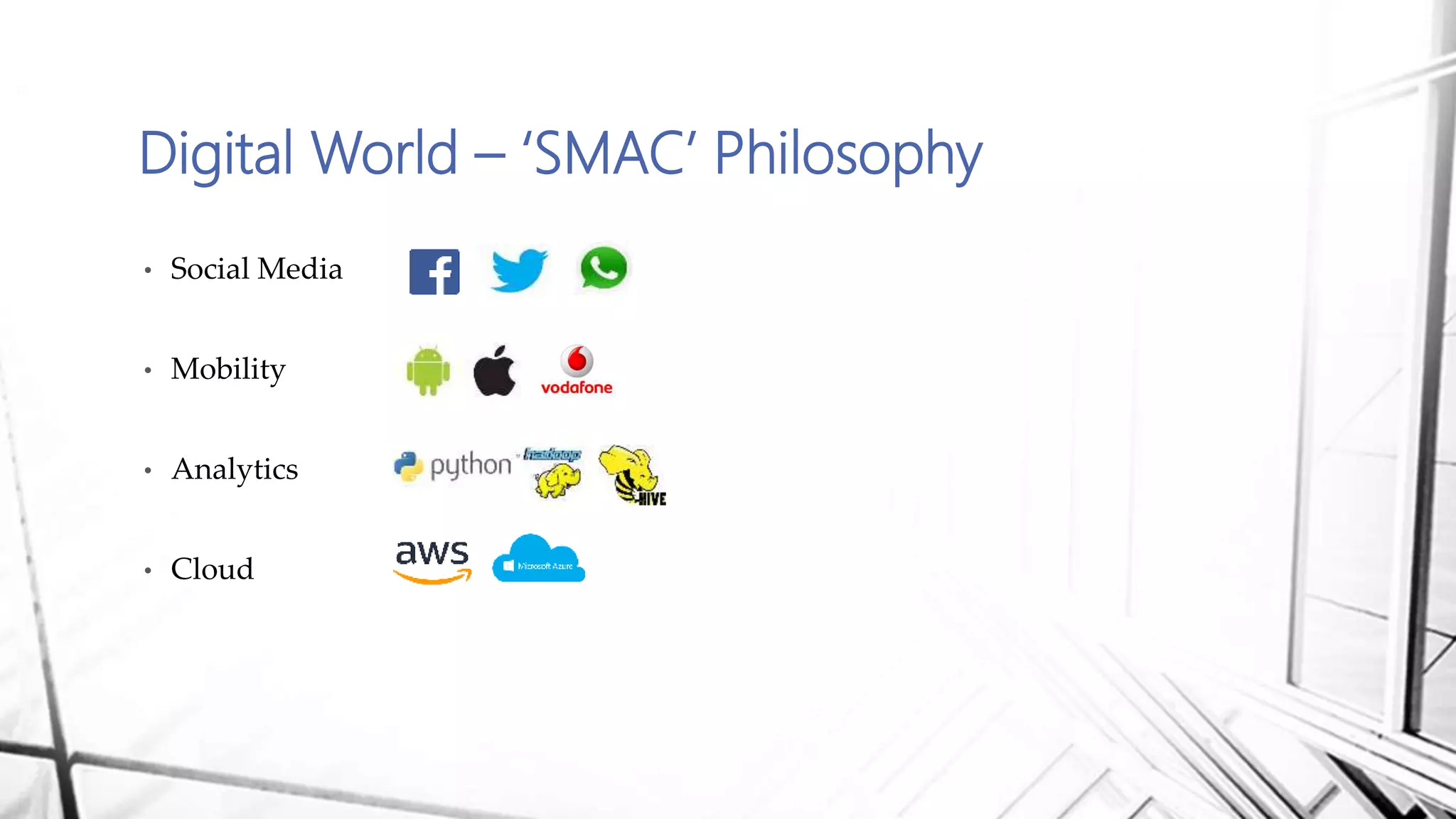
Digital World – ‘SMAC’ Philosophy
• Social Media
• Mobility
• Analytics
• Cloud
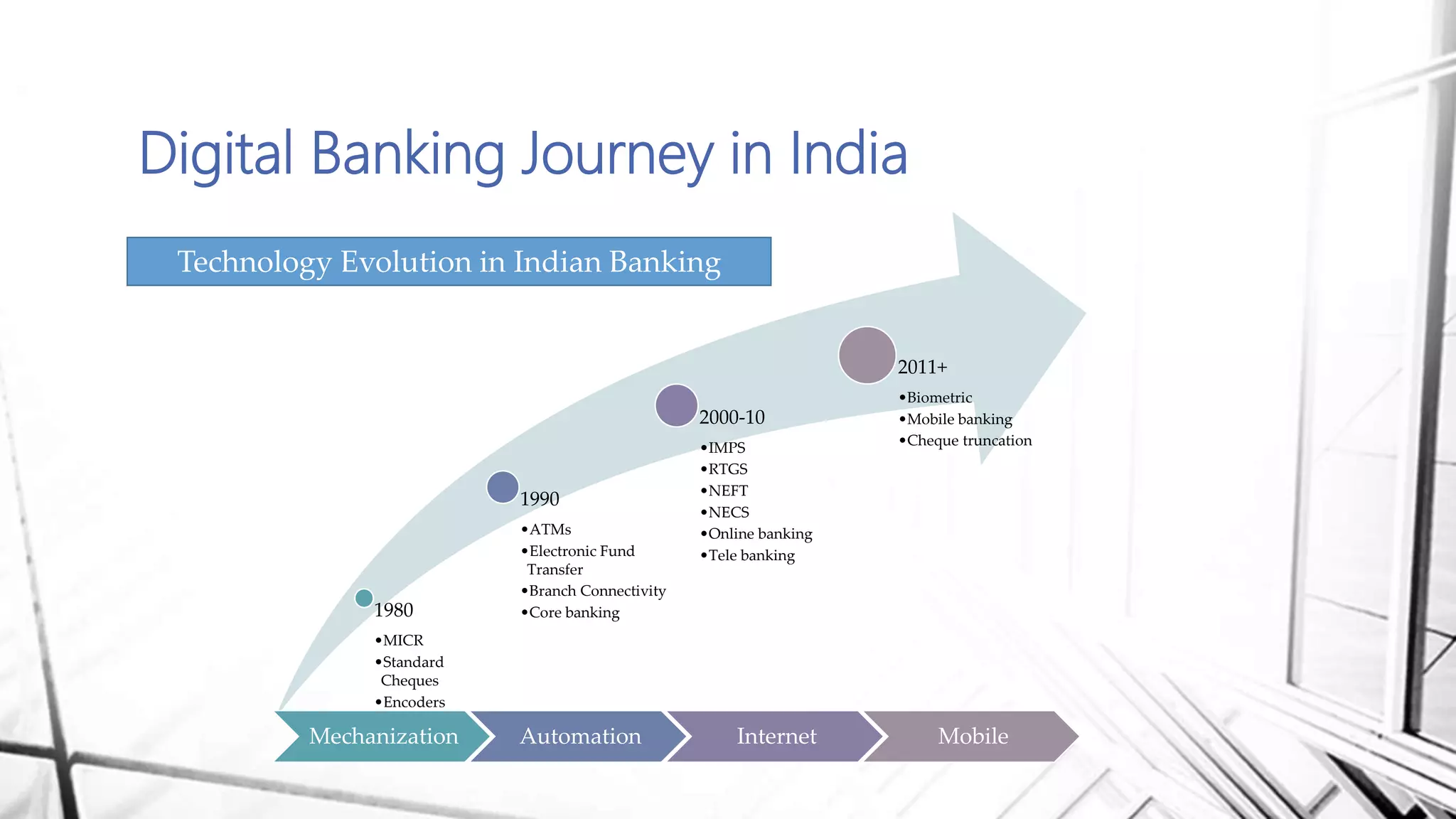
Digital Banking Journey in India
1980
•MICR
•Standard
Cheques
•Encoders
1990
•ATMs
•Electronic Fund
Transfer
•Branch Connectivity
•Core banking
2000-10
•IMPS
•RTGS
•NEFT
•NECS
•Online banking
•Tele banking
2011+
•Biometric
•Mobile banking
•Cheque truncation
Mechanization Automation Internet Mobile
Technology Evolution in Indian Banking
Digital Banking Evolution
• Ongoing technology/ digital evolution
• Entry of non-traditional players
• More demanding customer expectation
• “Enabling” regulation and ‘Digital
India’ initiatives
Four Seismic causes
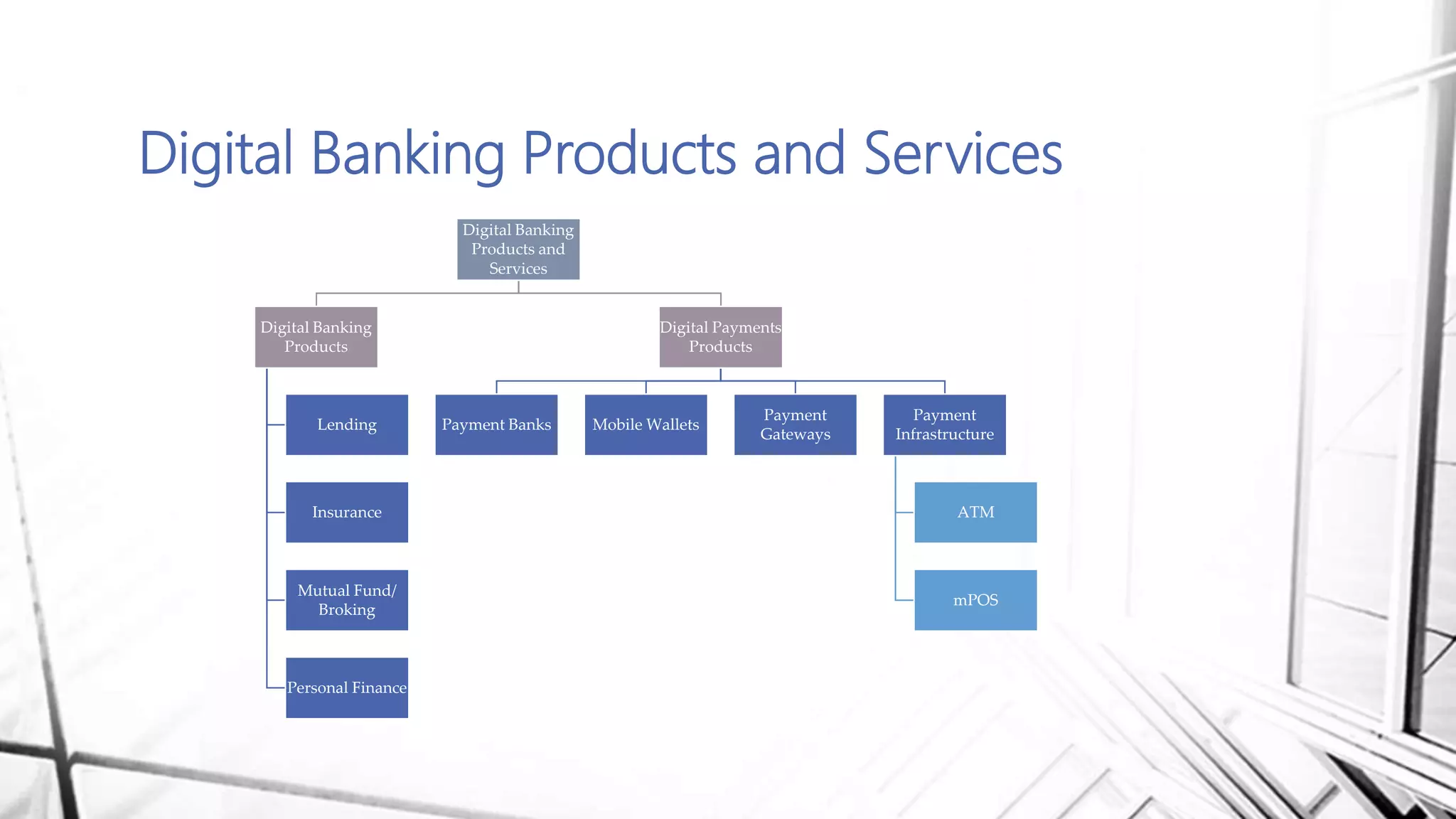
Digital Banking Products and Services
Digital Banking
Products and
Services
Digital Banking
Products
Lending
Insurance
Mutual Fund/
Broking
Personal Finance
Digital Payments
Products
Payment Banks Mobile Wallets
Payment
Gateways
Payment
Infrastructure
ATM
mPOS
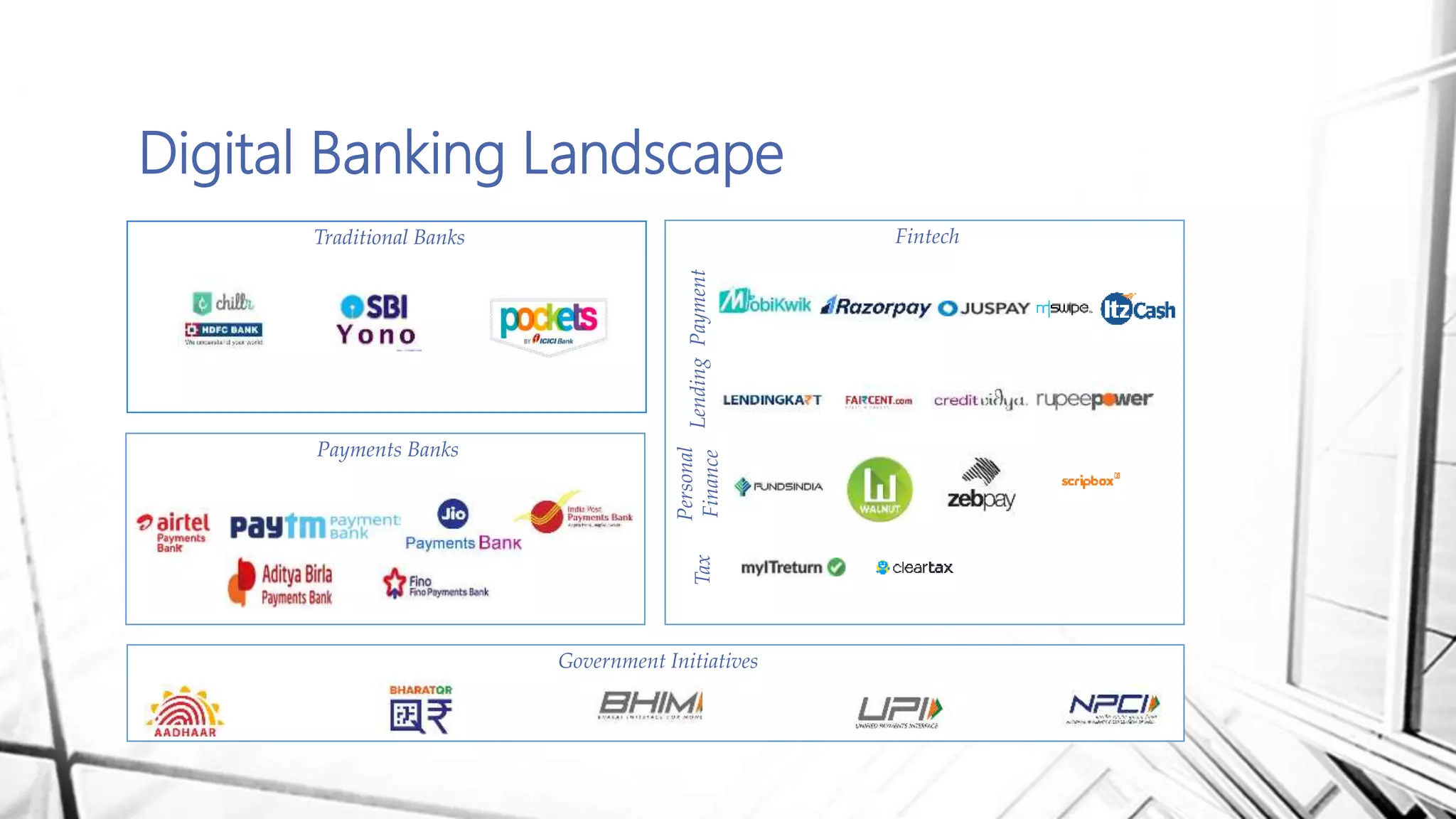
Digital Banking Landscape
Traditional Banks
Payments Banks
Fintech
PaymentLending
Personal
FinanceTax
Government Initiatives
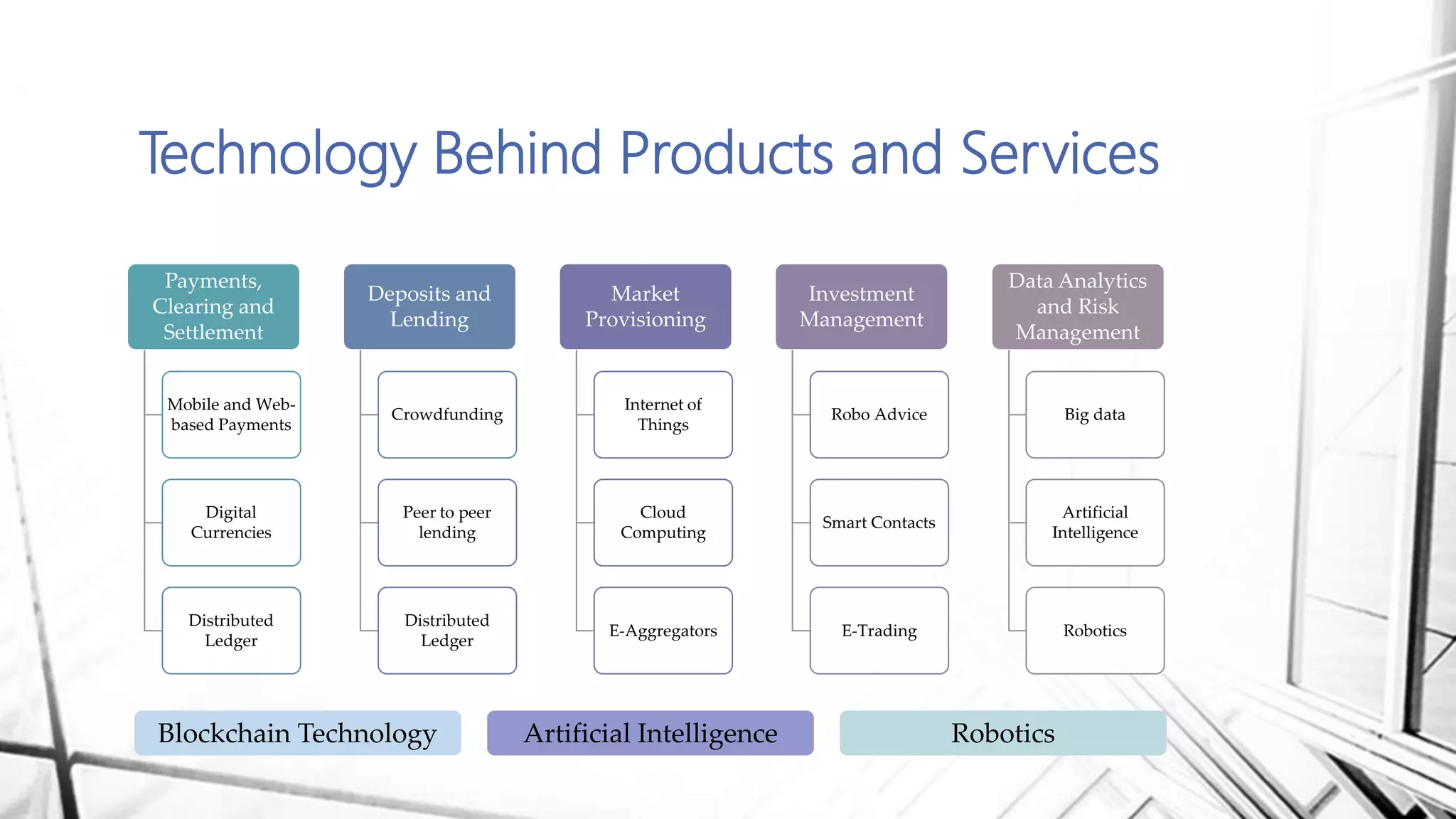
Technology Behind Products and Services
Payments,
Clearing and
Settlement
Mobile and Web-
based Payments
Digital
Currencies
Distributed
Ledger
Deposits and
Lending
Crowdfunding
Peer to peer
lending
Distributed
Ledger
Market
Provisioning
Internet of
Things
Cloud
Computing
E-Aggregators
Investment
Management
Robo Advice
Smart Contacts
E-Trading
Data Analytics
and Risk
Management
Big data
Artificial
Intelligence
Robotics
Blockchain Technology RoboticsArtificial Intelligence
Digital Banking SWOT Analysis
•Increasing awareness of digital
banking benefits
•Better infrastructure by RBI and
Government initiatives
•Higher growth in smartphone user
and cheaper network
•Better customer services and
advices provided by branch
banking
•Any security related issues and
news
•‘Personal touch’ by branches
•Security concern over digital
mode
•Slowly growing acceptance
towards digital banking and
payments
•Demographics with age group
above 45 less inclined towards
digital world
•24X7 availability
•Faster and low cost transaction
•Provide better convenience and
more efficiency
Strength Weakness
OpportunityThreat
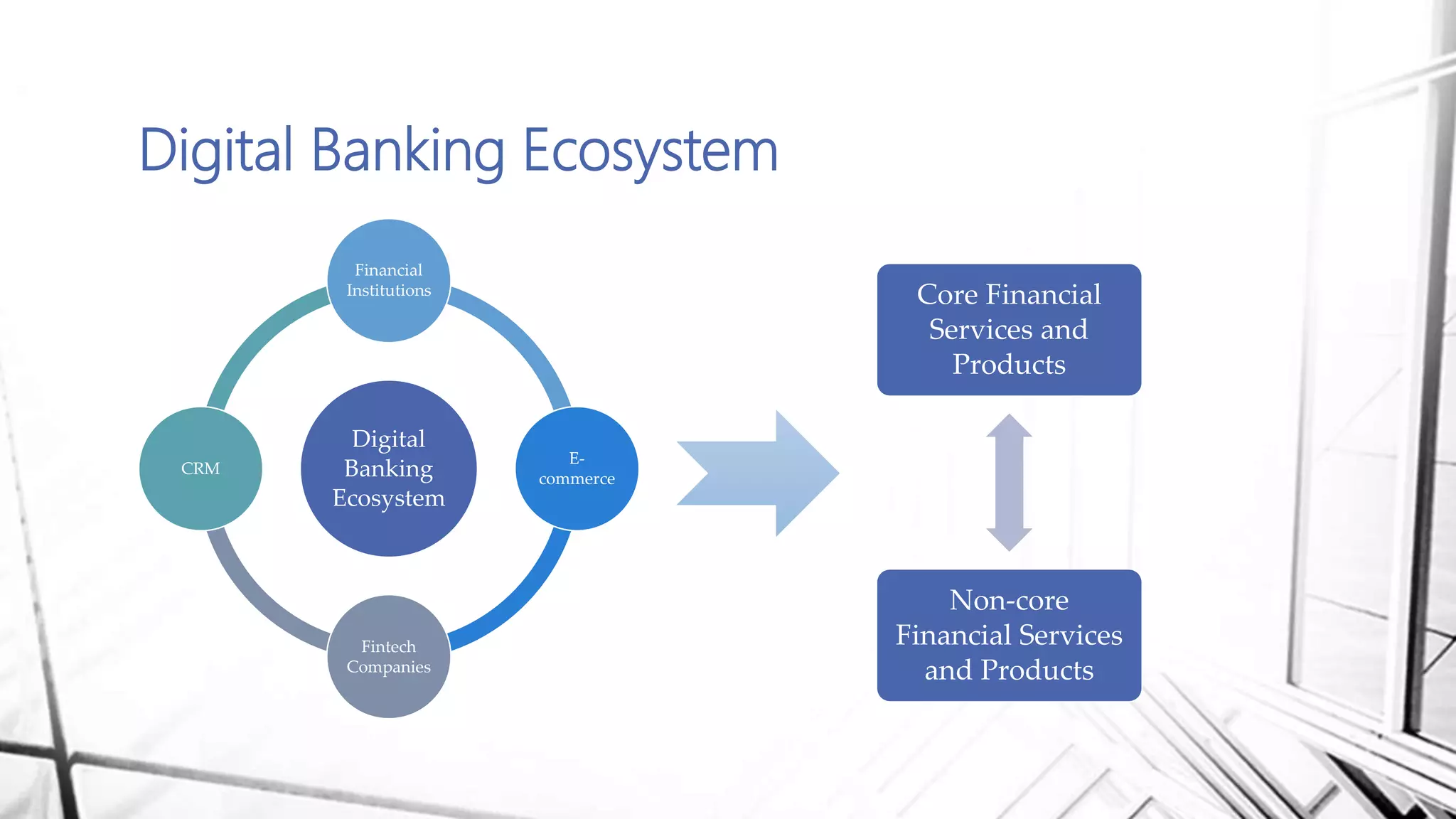
Digital Banking Ecosystem
Digital
Banking
Ecosystem
Financial
Institutions
E-
commerce
Fintech
Companies
CRM
Core Financial
Services and
Products
Non-core
Financial Services
and Products
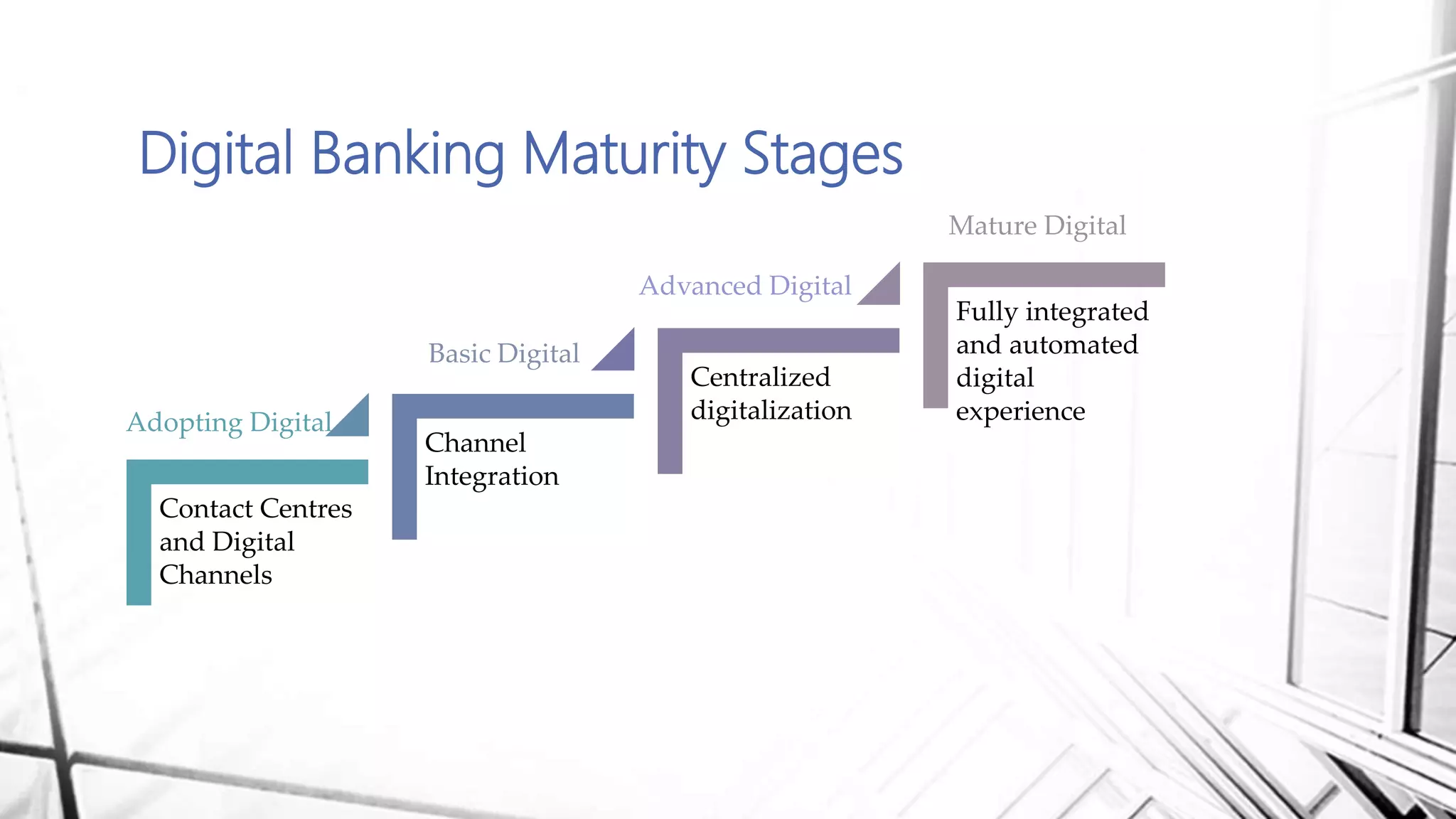
Digital Banking Maturity Stages
Contact Centres
and Digital
Channels
Channel
Integration
Centralized
digitalization
Fully integrated
and automated
digital
experienceAdopting Digital
Basic Digital
Advanced Digital
Mature Digital
Digital Banking Operating Model
Federated
Model
•Starting
digital
transition
•Separate
digital
initiatives by
different
business
departments
/ lines
Shared Service
Centre Model
•Reached
minimum level
of maturity
•Capitalize on
available know-
how, harmonise
methodology
and foster
communication
Competency
Centre Model
•Central
dedicated
body to
manage
strategic
digital
initiatives
across
business
lines
•Bring in new
capabilities
to anticipate
new future
trends
Core Digital
Model
•Fully digital
companies
and/or profit
centres
organized
around
digital core
platform
•Attract new
generation
of customers
with digital
cash
operation
Adopting Digital Basic Digital Advanced Digital Mature Digital
Evolution of Consumer Digital Payments
Single
Channel
Closed
Multi-
channel
Open,
Fragmented
Multi-
device,
social
Online Mobile Internet of Things
2000-2014 2015-2019 2020+
Payment Gateways
Payment gateways cost (Setup, Annual fees, Transaction fee etc)
Time to setup
User interface of gateway
Payment options (Credit/ Debt Cards, Netbanking, UPI etc)
Aftersales support
Banks
Third
Party
Vendor
Differentiators
Digital Payments Types and Clearing
Card
Payments
•Credit, Debt
and Prepaid
e - Payments
•NEFT
•RTGS
•IMPS
•ECS
Mobile
Payment
•Mobile wallet
to wallet
transfer
USSD
•National
Unified USSD
Platform
•Unstructured
Supplementar
y Service
Data
AEPS
•Aadhaar
Enabled
Payment
System
UPI
•Unified
Payment
Interface
•BHIM
Cards Clearing
Scheme
National
Clearing House
Mobile Wallet NPCI NPCI NPCI
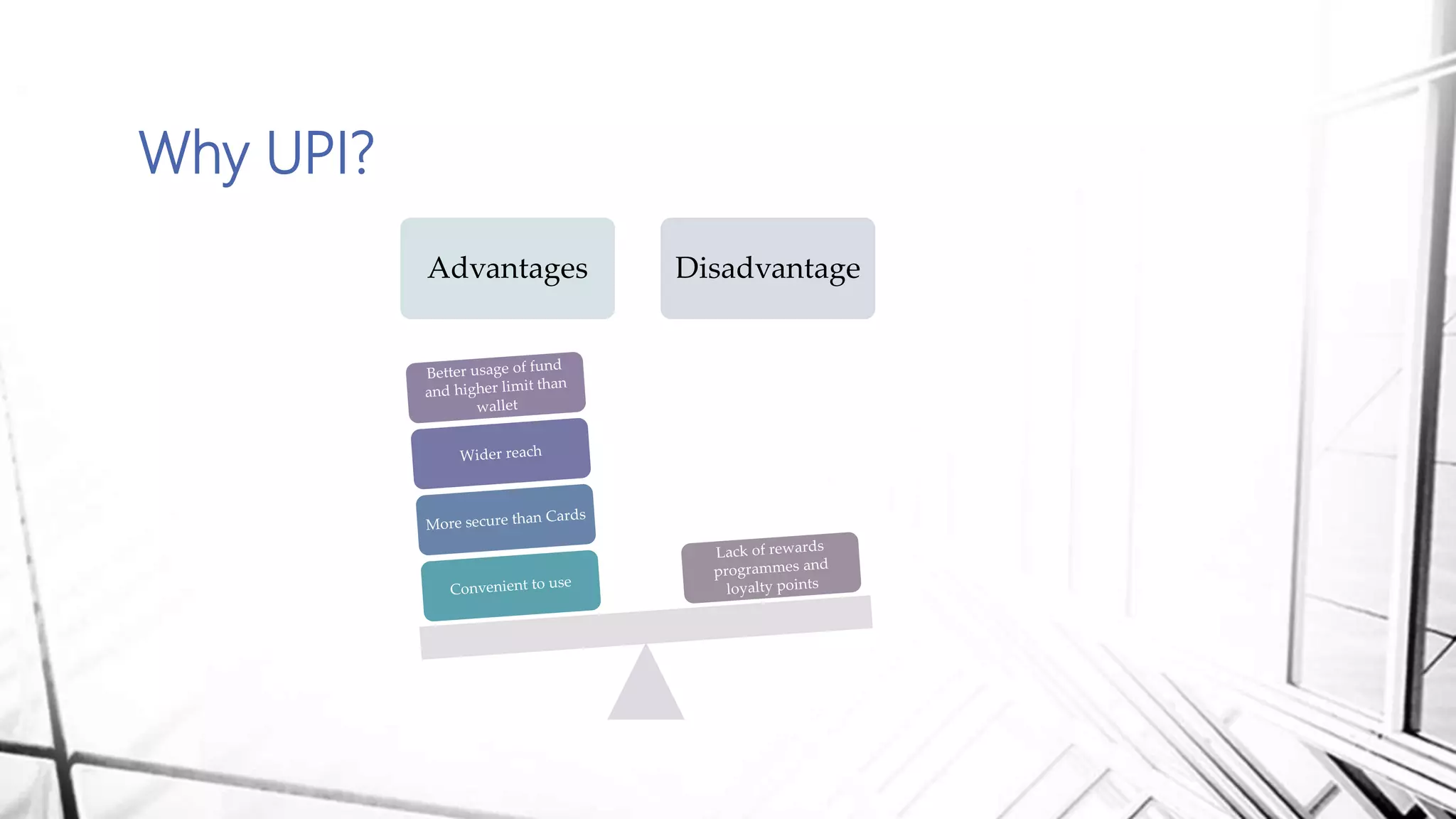
Why UPI?
Advantages Disadvantage
Case study on Social Inclusion
• https://youtu.be/9e2MDpH3KwA
Roads Ahead…
• Next-generation payment structures, such as mobile wallets, payments
banks, Bharat QR, and electronic authentication, have created new forms
of digital payment channels and servicing capabilities.
• Further, the government is further nudging the country toward cashless
payments by restricting values of cash transaction and provide
incentives towards digital payments.
• By 2022 digital payments will be more than cash transactions and two-
third of this will be through UPI, Mobile Wallet and Rupay Cards which
shows a tectonic shift in payments from traditional types.
• Regulatory framework to mitigate risk concern in digital banking and
digital payments and strengthen customer confidence.
Digital banking in India - Operation, Payments and Clearing

Digital banking in India - Operation, Payments and Clearing

  • 1.
    Digital Banking in India Operation,Payments and Clearing Supratik Nag
  • 2.
    Content • Overview of‘Digital’ from Banking Perspectives • ‘SMAC’ Philosophy • Digital Banking Journey in India • Digital Banking Products and Services • Digital Banking Landscape • Digital Banking Technology • Digital Banking SWOT • Digital Banking Operation • Ecosystem • Maturity Models • Operating Models • Digital Payments • Evolution of Consumer Digital Payments • Differentiators of Payments Gateways • Digital payment types and Clearing • Case Study on Social Inclusion • Roads Ahead
  • 3.
    Digital World –‘SMAC’ Philosophy • Social Media • Mobility • Analytics • Cloud
  • 4.
    Digital Banking Journeyin India 1980 •MICR •Standard Cheques •Encoders 1990 •ATMs •Electronic Fund Transfer •Branch Connectivity •Core banking 2000-10 •IMPS •RTGS •NEFT •NECS •Online banking •Tele banking 2011+ •Biometric •Mobile banking •Cheque truncation Mechanization Automation Internet Mobile Technology Evolution in Indian Banking
  • 5.
    Digital Banking Evolution •Ongoing technology/ digital evolution • Entry of non-traditional players • More demanding customer expectation • “Enabling” regulation and ‘Digital India’ initiatives Four Seismic causes
  • 6.
    Digital Banking Productsand Services Digital Banking Products and Services Digital Banking Products Lending Insurance Mutual Fund/ Broking Personal Finance Digital Payments Products Payment Banks Mobile Wallets Payment Gateways Payment Infrastructure ATM mPOS
  • 7.
    Digital Banking Landscape TraditionalBanks Payments Banks Fintech PaymentLending Personal FinanceTax Government Initiatives
  • 8.
    Technology Behind Productsand Services Payments, Clearing and Settlement Mobile and Web- based Payments Digital Currencies Distributed Ledger Deposits and Lending Crowdfunding Peer to peer lending Distributed Ledger Market Provisioning Internet of Things Cloud Computing E-Aggregators Investment Management Robo Advice Smart Contacts E-Trading Data Analytics and Risk Management Big data Artificial Intelligence Robotics Blockchain Technology RoboticsArtificial Intelligence
  • 9.
    Digital Banking SWOTAnalysis •Increasing awareness of digital banking benefits •Better infrastructure by RBI and Government initiatives •Higher growth in smartphone user and cheaper network •Better customer services and advices provided by branch banking •Any security related issues and news •‘Personal touch’ by branches •Security concern over digital mode •Slowly growing acceptance towards digital banking and payments •Demographics with age group above 45 less inclined towards digital world •24X7 availability •Faster and low cost transaction •Provide better convenience and more efficiency Strength Weakness OpportunityThreat
  • 10.
  • 11.
    Digital Banking MaturityStages Contact Centres and Digital Channels Channel Integration Centralized digitalization Fully integrated and automated digital experienceAdopting Digital Basic Digital Advanced Digital Mature Digital
  • 12.
    Digital Banking OperatingModel Federated Model •Starting digital transition •Separate digital initiatives by different business departments / lines Shared Service Centre Model •Reached minimum level of maturity •Capitalize on available know- how, harmonise methodology and foster communication Competency Centre Model •Central dedicated body to manage strategic digital initiatives across business lines •Bring in new capabilities to anticipate new future trends Core Digital Model •Fully digital companies and/or profit centres organized around digital core platform •Attract new generation of customers with digital cash operation Adopting Digital Basic Digital Advanced Digital Mature Digital
  • 13.
    Evolution of ConsumerDigital Payments Single Channel Closed Multi- channel Open, Fragmented Multi- device, social Online Mobile Internet of Things 2000-2014 2015-2019 2020+
  • 14.
    Payment Gateways Payment gatewayscost (Setup, Annual fees, Transaction fee etc) Time to setup User interface of gateway Payment options (Credit/ Debt Cards, Netbanking, UPI etc) Aftersales support Banks Third Party Vendor Differentiators
  • 15.
    Digital Payments Typesand Clearing Card Payments •Credit, Debt and Prepaid e - Payments •NEFT •RTGS •IMPS •ECS Mobile Payment •Mobile wallet to wallet transfer USSD •National Unified USSD Platform •Unstructured Supplementar y Service Data AEPS •Aadhaar Enabled Payment System UPI •Unified Payment Interface •BHIM Cards Clearing Scheme National Clearing House Mobile Wallet NPCI NPCI NPCI
  • 16.
  • 17.
    Case study onSocial Inclusion • https://youtu.be/9e2MDpH3KwA
  • 18.
    Roads Ahead… • Next-generationpayment structures, such as mobile wallets, payments banks, Bharat QR, and electronic authentication, have created new forms of digital payment channels and servicing capabilities. • Further, the government is further nudging the country toward cashless payments by restricting values of cash transaction and provide incentives towards digital payments. • By 2022 digital payments will be more than cash transactions and two- third of this will be through UPI, Mobile Wallet and Rupay Cards which shows a tectonic shift in payments from traditional types. • Regulatory framework to mitigate risk concern in digital banking and digital payments and strengthen customer confidence.